Kansas Aging Parent Package
Overview of this form package
The Kansas Aging Parent Package is designed to help families assist their aging parents in organizing vital legal affairs as they enter later stages of life. This comprehensive package includes state-specific and multi-state documents to prepare and protect your aging parent from health, financial, and post-death matters. Unlike generic forms, this package is specifically tailored to meet the unique needs of Kansas residents while also accommodating broader requirements.
Forms provided in this package
- Last Will and Testament
- General Durable Power of Attorney for Property and Finances or Financial Effective Immediately
- Statutory Durable Power of Attorney for Health Care
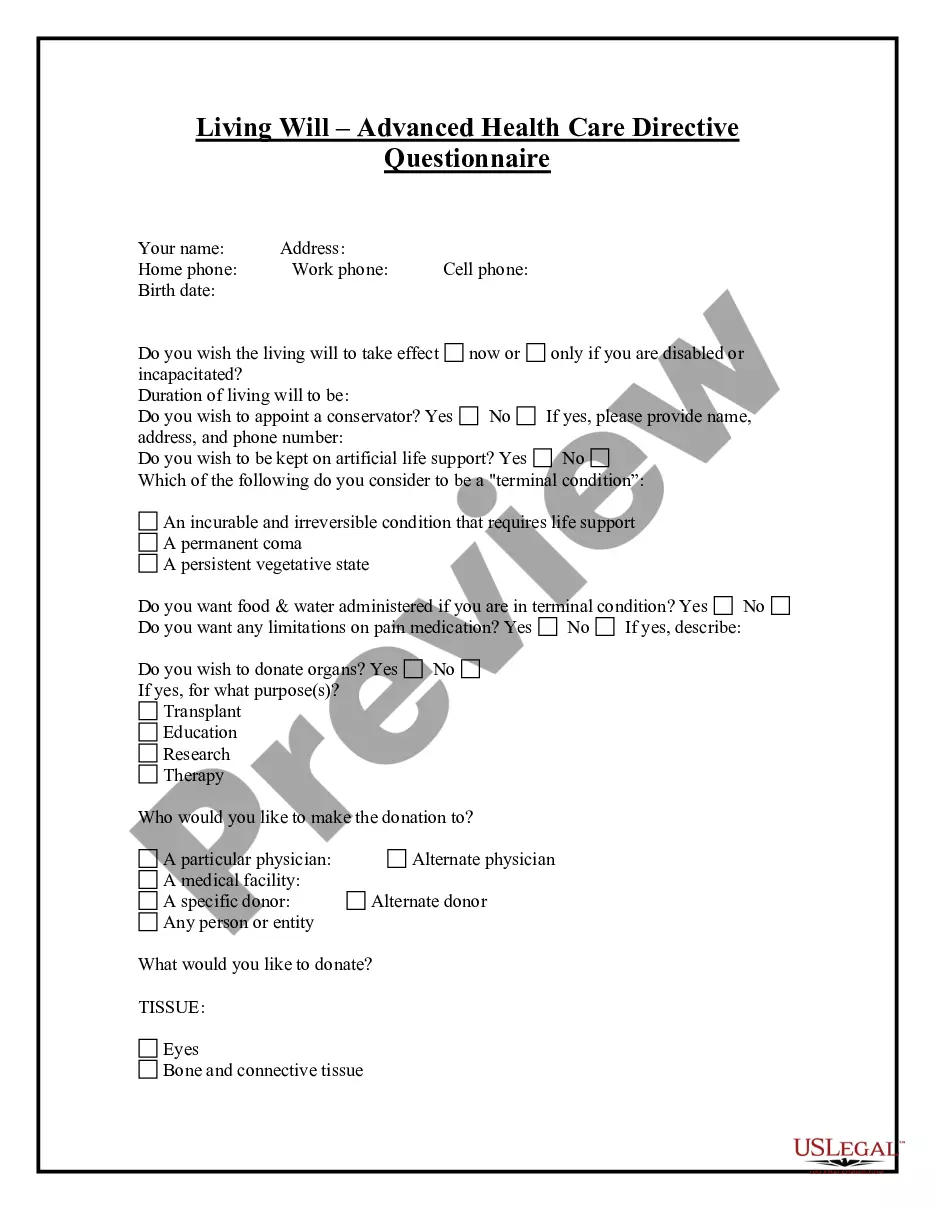
- Statutory Living Will - Declaration
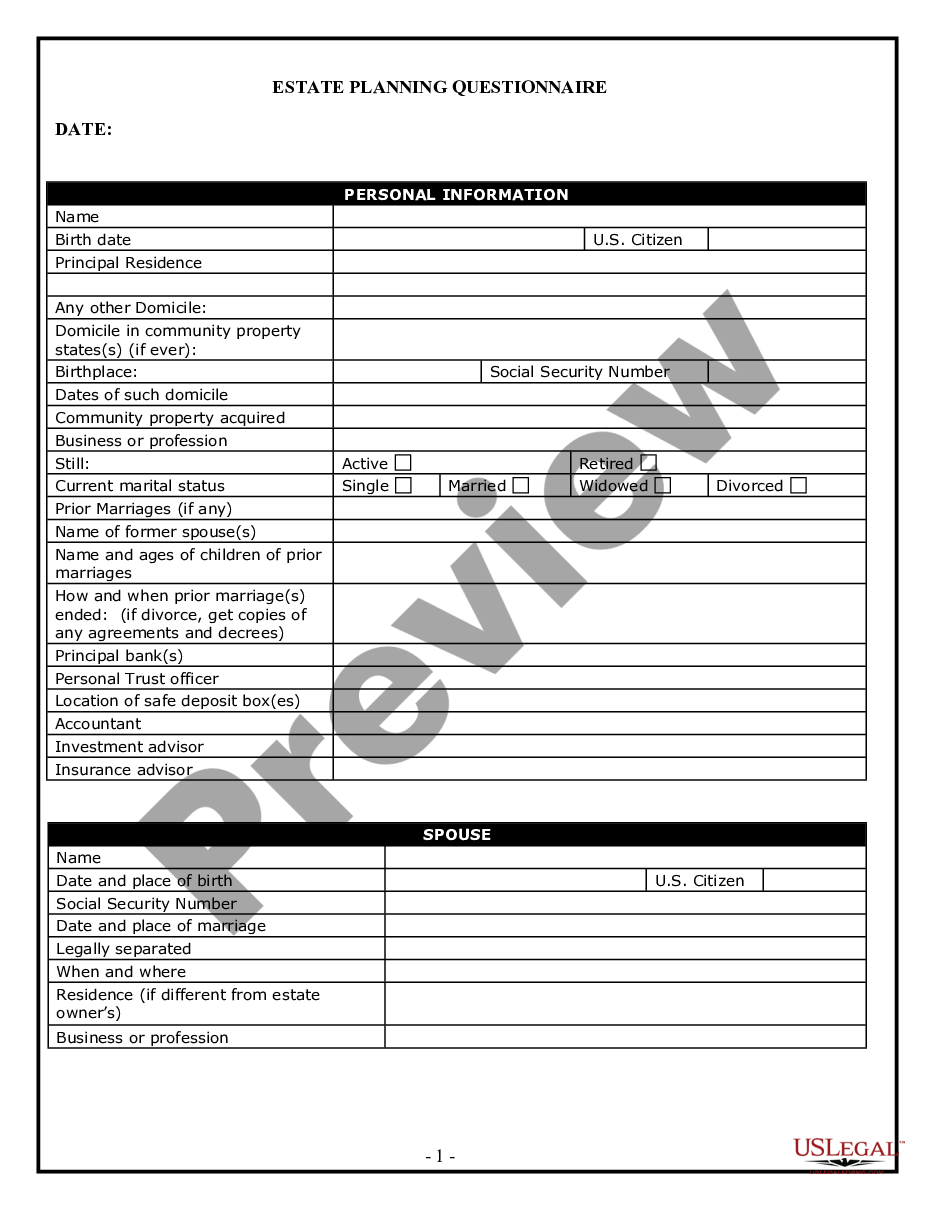
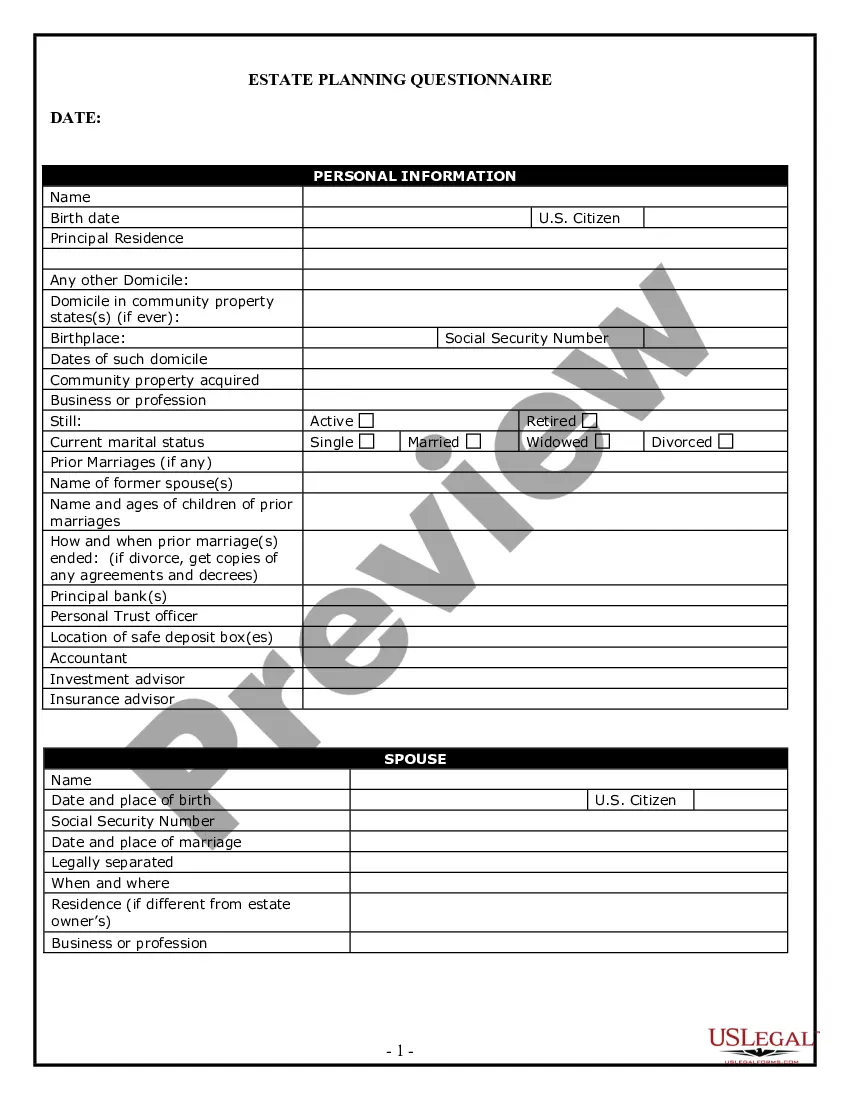
- Estate Planning Questionnaire and Worksheets
- Personal Care Agreement for Home Healthcare by a Nursing Service
- Personal Property Inventory
- Financial Statement Form - Husband and Wife Joint
- Personal Planning Information and Document Inventory Worksheets - A Legal Life Document




When to use this form package
This form package is essential in various situations, including:
- When your aging parent needs to establish a Last Will and Testament.
- If your parent requires medical decision-making directives for healthcare preferences.
- When financial management and asset designation are necessary due to declining health.
- If there is a need to inventory personal property for estate planning purposes.
- When engaging home healthcare services for medical or daily living assistance.
Who this form package is for
- Adult children managing the legal affairs of their aging parents.
- Caregivers assisting elderly individuals with estate planning.
- Individuals planning for the future health and financial decisions of a parent.
- Family members involved in the coordination of healthcare and financial services for an elderly relative.
Steps to complete these forms
- Review all forms provided in the package to understand each document's purpose.
- Gather necessary information related to your aging parent, including financial data and medical preferences.
- Fill out the forms clearly, ensuring that all parties are correctly identified.
- Enter accurate dates and signatures where required, and double-check for completeness.
- Store the completed documents in a secure location, such as a safe deposit box or personal home safe.
Do documents in this package require notarization?
Forms in this package typically do not require notarization unless required by local law. However, it is always advisable to check specific state regulations regarding notarization for certain documents, such as powers of attorney and wills.
Get your form ready online
Our built-in tools help you complete, sign, share, and store your documents in one place.
Make edits, fill in missing information, and update formatting in US Legal Forms—just like you would in MS Word.
Download a copy, print it, send it by email, or mail it via USPS—whatever works best for your next step.
Sign and collect signatures with our SignNow integration. Send to multiple recipients, set reminders, and more. Go Premium to unlock E-Sign.
If this form requires notarization, complete it online through a secure video call—no need to meet a notary in person or wait for an appointment.
We protect your documents and personal data by following strict security and privacy standards.

Make edits, fill in missing information, and update formatting in US Legal Forms—just like you would in MS Word.

Download a copy, print it, send it by email, or mail it via USPS—whatever works best for your next step.

Sign and collect signatures with our SignNow integration. Send to multiple recipients, set reminders, and more. Go Premium to unlock E-Sign.

If this form requires notarization, complete it online through a secure video call—no need to meet a notary in person or wait for an appointment.

We protect your documents and personal data by following strict security and privacy standards.
Mistakes to watch out for
- Failing to sign or date the forms properly.
- Not discussing decisions with the aging parent before completion.
- Overlooking the need for witnesses or notarization where applicable.
- Neglecting to update forms when circumstances change.
Why use this package online
- Convenient access allows you to fill out forms at your own pace.
- Many documents are editable, making it easy to customize according to specific needs.
- Reliable templates designed by licensed attorneys ensure legal compliance.
- Downloadable forms allow you to securely store legal documents digitally and physically.
Main things to remember
- The Kansas Aging Parent Package helps manage legal affairs for aging parents.
- Essential documents include wills, health directives, and financial powers of attorney.
- This package is tailored for Kansas residents, complying with state laws.
- Online access simplifies form completion and organization.
Looking for another form?


Form popularity
FAQ
Does Medicare Pay for Caregivers? Your Guide to At-Home Healthcare. Medicare typically doesn't pay for in-home caregivers for personal care or housekeeping if that's the only care you need. Medicare may pay for short-term caregivers if you also need medical care to recover from surgery, an illness, or an injury.
No, they aren't. As such, many seniors often end up paying all their money to the assisted living facility, especially if they live long enough in the facility.Additionally, the fact that many senior citizens think that an assisted living facility will take all their money is almost universally based on hearsay.
Medicaid does not generally cover assisted living or continuing care retirement communities (with the exception of their skilled nursing units). It pays for care only at nursing homes and Individuals with Intellectual Disability Facilities. In Kansas, Medicaid may cover home and community-based services.
Many government programs allow family members of veterans and people with disabilities to get paid for caring for them.Long-Term Care Insurance allows family members to be paid as caregivers. But some policies won't pay family members who live with the person they're caring for.
Almost all state Medicaid programs will cover some assisted living costs for eligible residents. However, similar to Medicare, Medicaid does not pay for the cost of living in an assisted living community. For qualified seniors, Medicaid does pay for these assisted living services: Nursing care.
Commonly, it is an adult child who is paid via Medicaid to provide care, but some states, such as Alabama, Arizona, California, Colorado, Delaware, Florida, Hawaii, Kentucky, Minnesota, Montana, New Hampshire, New Jersey, North Dakota, Oklahoma, Oregon, and Wisconsin, even provide funds for spouses to be paid
The Aid and Attendance Pension benefit is another program available in Texas that can be used to pay family members to provide care. At the forefront, it should be mentioned that this program is only relevant for war-time veterans or their surviving spouses who require assistance with their activities of daily living.
All pre-2013 Medicaid services are now provided through the KanCare health plans. These include physical health services such as doctor appointments and hospital visits, behavioral health services, dental and vision care, pharmacy, transportation, and nursing facility care.
Program Description Under this program, certain family members can be paid to provide caregiving services. Services provided under this program that do not require medical training are available to be self-directed. This includes personal care and homemaker services.