Kansas Statutory Living Will - Declaration
What this document covers
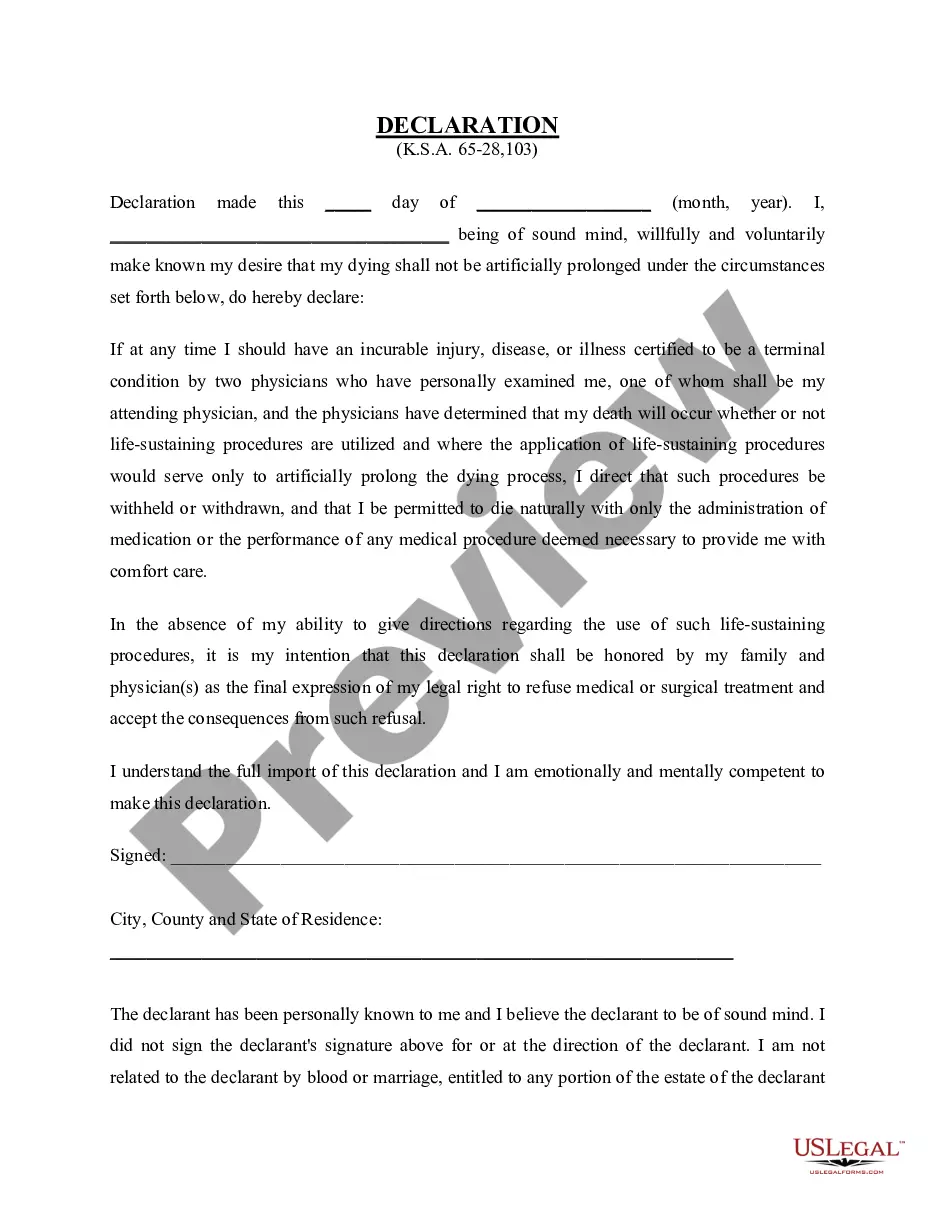
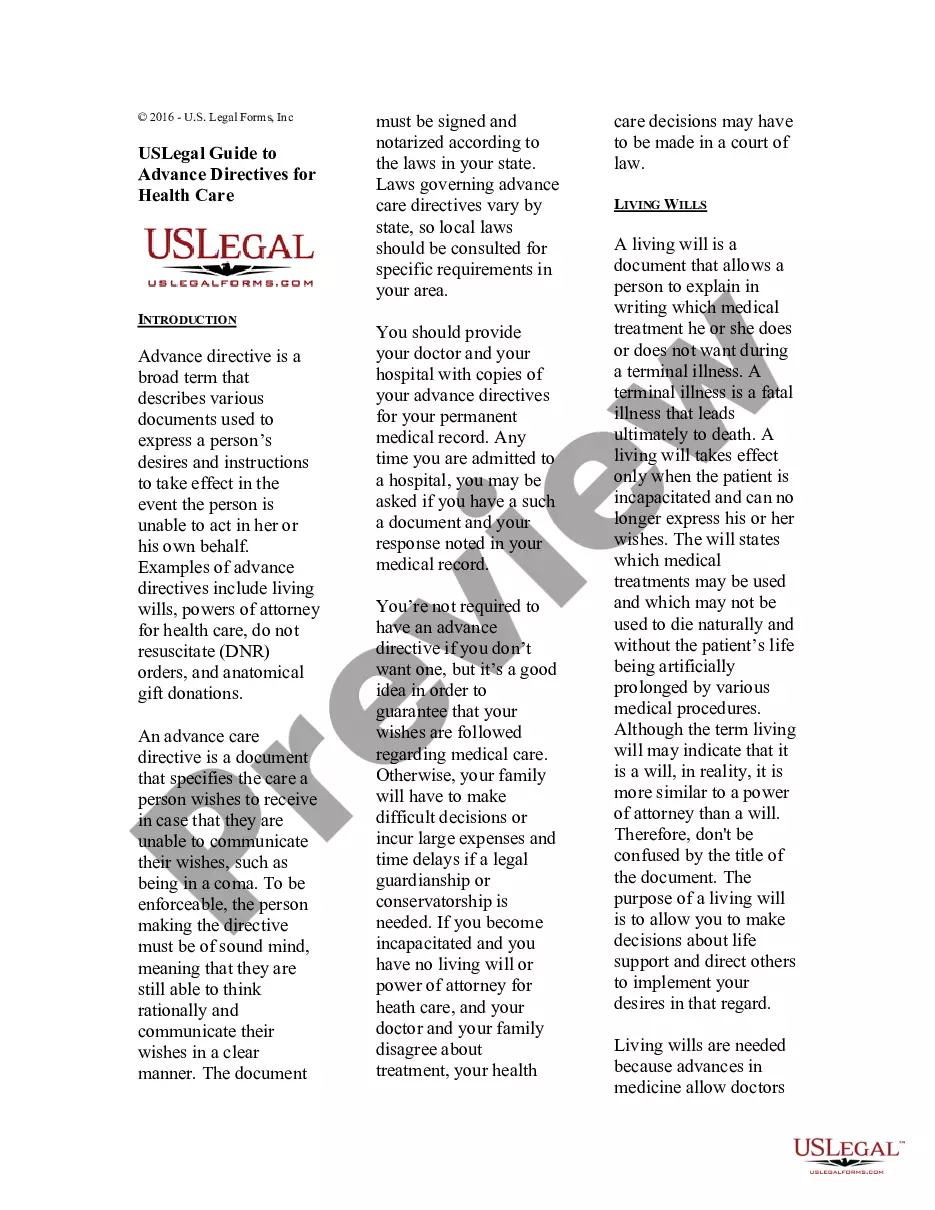
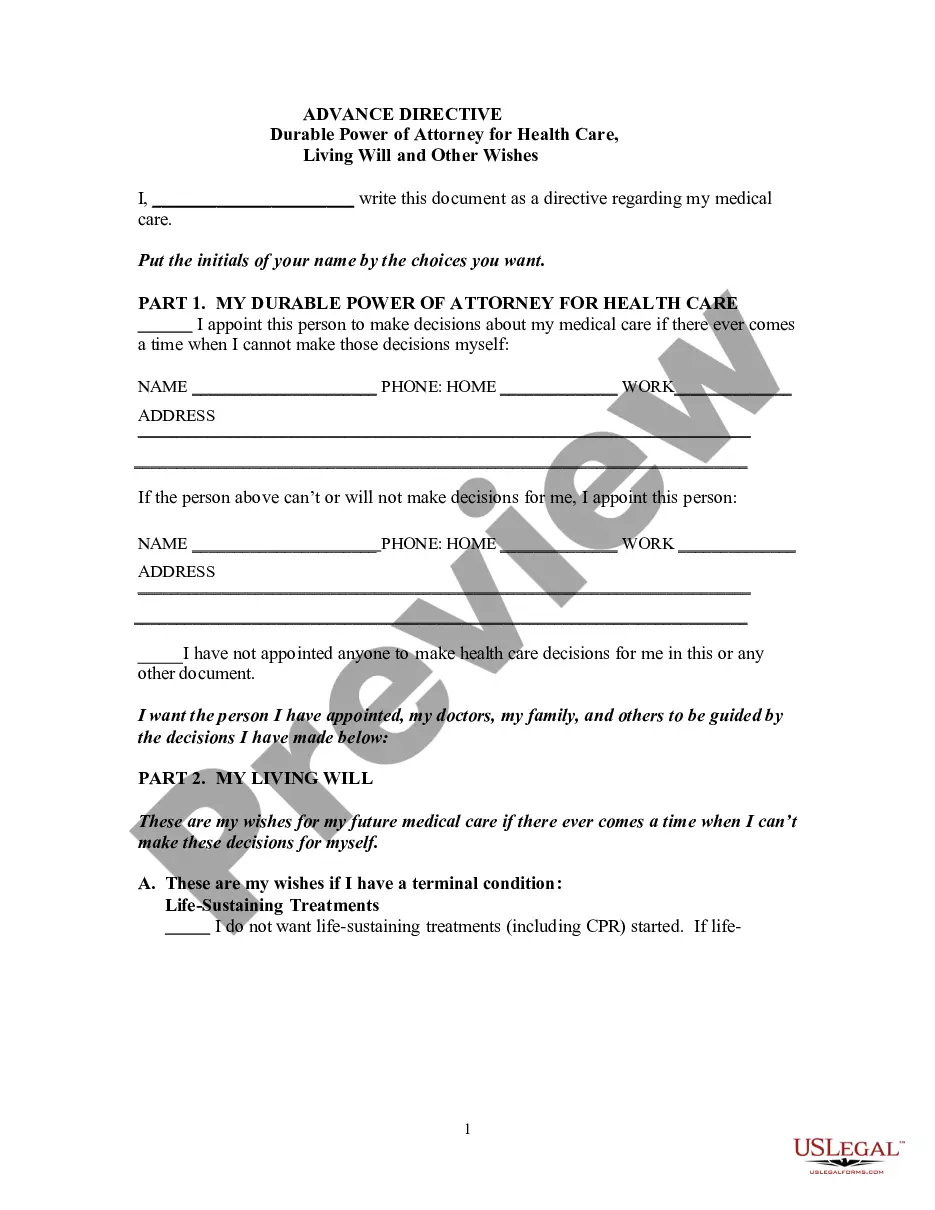
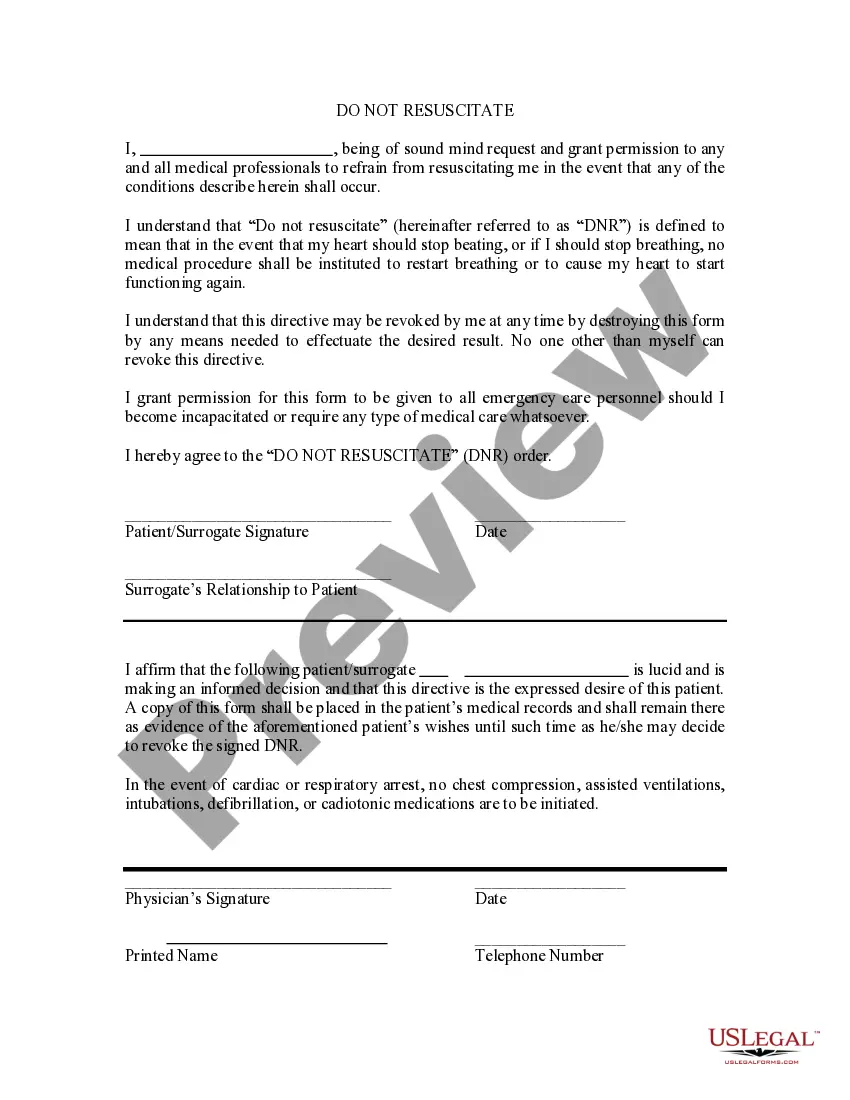
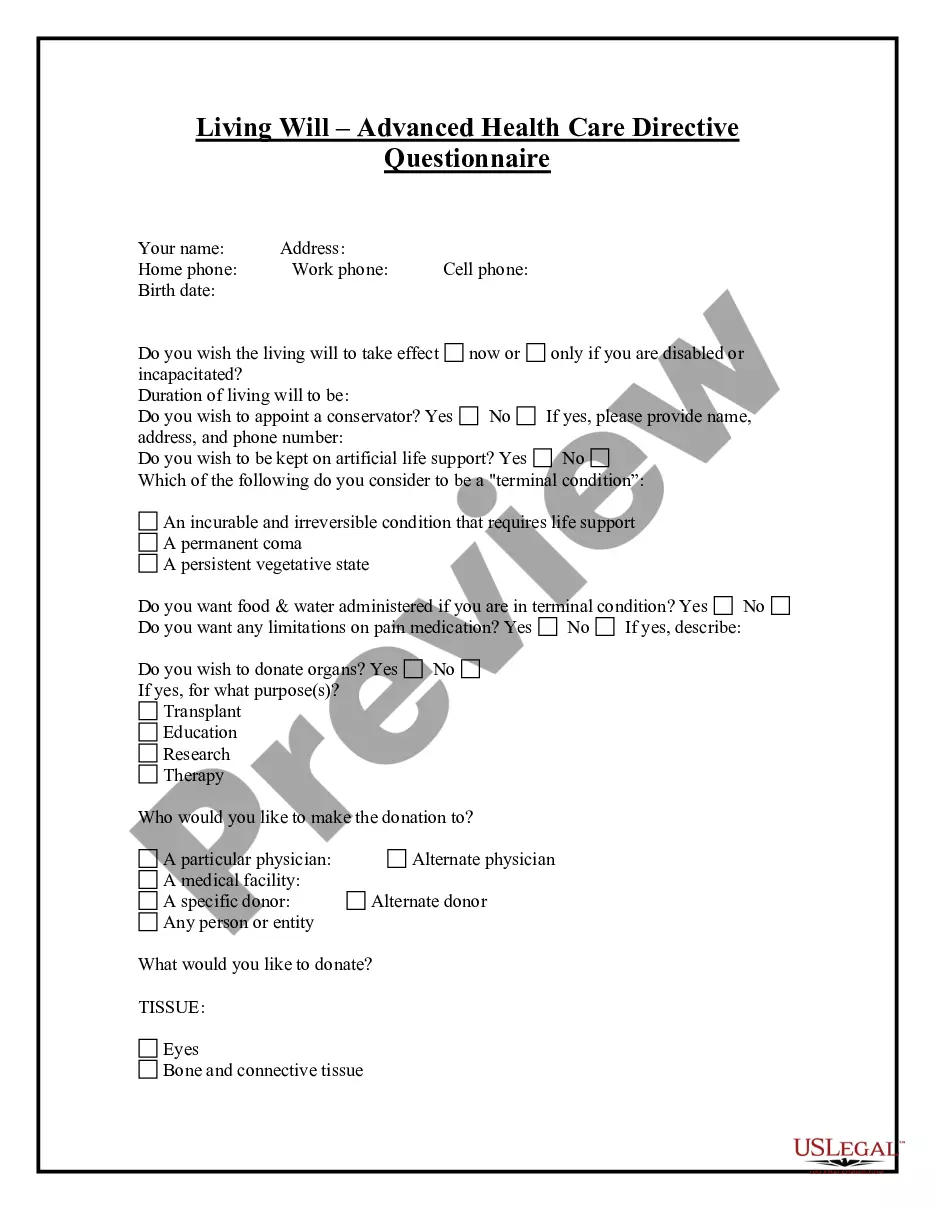
The Statutory Living Will - Declaration is a legal document that expresses your wishes regarding life-sustaining medical treatments in the event you become unable to communicate your preferences due to a terminal condition. This form allows you to instruct your family and healthcare providers about your desire to forgo life support measures, ensuring that your wishes are respected when you cannot speak for yourself. Unlike general living wills, this document is specifically tailored to comply with Kansas law, providing clarity on your healthcare decisions during critical moments.
Key components of this form
- Declaration date: Establishes when the document is executed.
- Declarant's full name: Identifies the person making the declaration.
- Conditions for withholding treatment: Specifies the circumstances under which life-prolonging procedures should be withheld.
- Consent confirmation: Affirms that the declarant is of sound mind and understands the implications of the declaration.
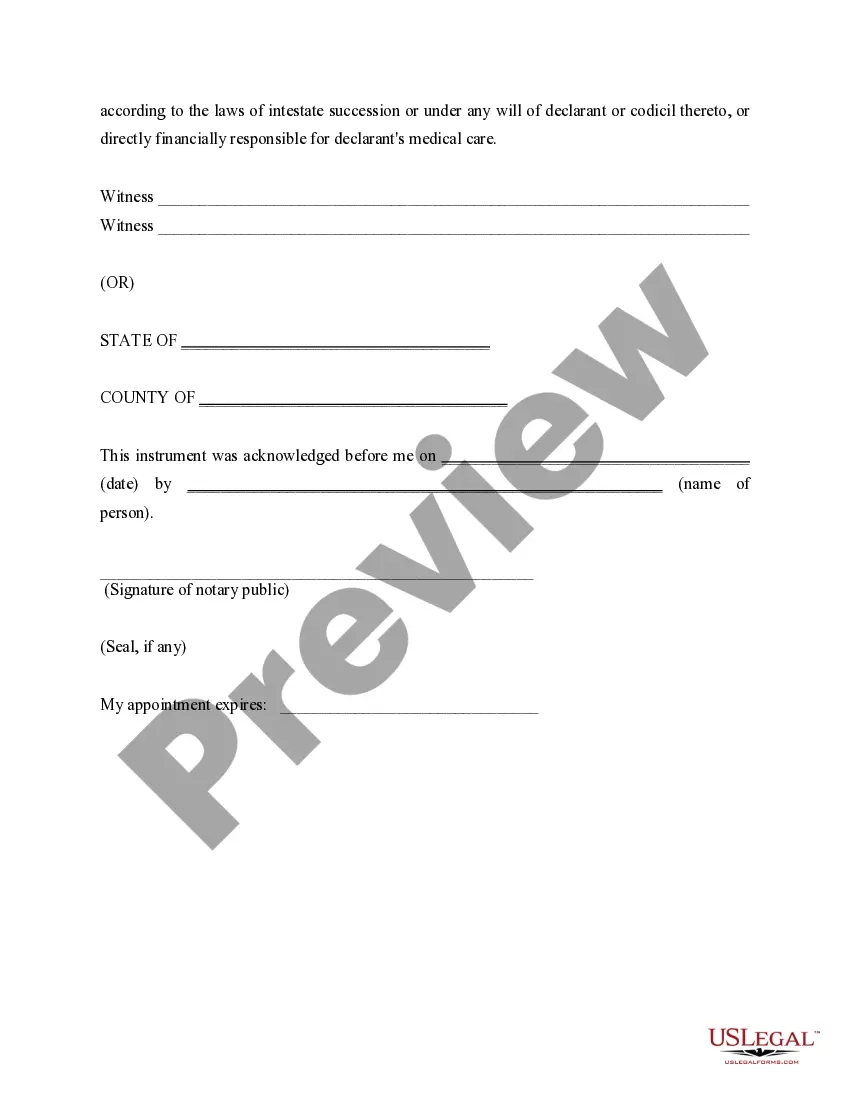
- Witness signatures: Requires two witnesses to validate the document, ensuring no conflicts of interest.
- Notary acknowledgement: May include notarization to further verify the declaration's authenticity.
When to use this form
This form should be used when you want to specify your healthcare treatment preferences in the event of a terminal illness or condition that renders you unable to communicate. It is particularly relevant for individuals with significant health risks or those who wish to ensure their rights to refuse life support are honored. Using this document can help alleviate the decision-making burden on family members during emotionally challenging times.
Intended users of this form
- Individuals who want to make their end-of-life medical wishes clear.
- People diagnosed with terminal illnesses or chronic conditions.
- Anyone seeking to ensure that their healthcare preferences are respected by family and medical providers.
- Adults who are emotionally and mentally competent to make informed decisions about their healthcare.
Instructions for completing this form
- Enter the date you are completing the form at the beginning of the document.
- Clearly print your full name in the designated area.
- Specify the terminal conditions under which you would refuse life-sustaining treatments.
- Sign the declaration indicating that you understand its consequences.
- Have two witnesses sign the form, confirming they are not related to you or financially responsible for your care.
- If applicable, arrange for a notary to acknowledge the document to enhance its legal standing.
Notarization guidance
This form does not typically require notarization unless specified by local law. However, having it notarized can provide an additional layer of legitimacy and assurance that your wishes are honored.
Get your form ready online
Our built-in tools help you complete, sign, share, and store your documents in one place.
Make edits, fill in missing information, and update formatting in US Legal Forms—just like you would in MS Word.
Download a copy, print it, send it by email, or mail it via USPS—whatever works best for your next step.
Sign and collect signatures with our SignNow integration. Send to multiple recipients, set reminders, and more. Go Premium to unlock E-Sign.
If this form requires notarization, complete it online through a secure video call—no need to meet a notary in person or wait for an appointment.
We protect your documents and personal data by following strict security and privacy standards.

Make edits, fill in missing information, and update formatting in US Legal Forms—just like you would in MS Word.

Download a copy, print it, send it by email, or mail it via USPS—whatever works best for your next step.

Sign and collect signatures with our SignNow integration. Send to multiple recipients, set reminders, and more. Go Premium to unlock E-Sign.

If this form requires notarization, complete it online through a secure video call—no need to meet a notary in person or wait for an appointment.

We protect your documents and personal data by following strict security and privacy standards.
Avoid these common issues
- Failing to complete the form in its entirety, leading to ambiguity.
- Not signing the document or obtaining the required witness signatures.
- Using the form without understanding its legal implications or specific state requirements.
- Neglecting to discuss the contents of the declaration with family or healthcare providers.
Why use this form online
- Convenience of downloading and filling out the form at your own pace.
- Editability allows for adjustments to be made easily to reflect your wishes accurately.
- Access to legal templates drafted by licensed attorneys ensures compliance with state laws.
- Time-saving compared to seeking legal assistance in person, allowing for quicker completion of important documents.
Legal use & context
- The declaration is enforceable under Kansas law and reflects the individual's right to refuse unwanted medical treatment.
- It should be stored in a location known to your family members or healthcare proxies for easy access in emergencies.
Key takeaways
- The Statutory Living Will - Declaration allows you to express your wishes regarding medical treatment at the end of life.
- This form is specific to Kansas and should be completed with adherence to state requirements.
- Proper execution, including signatures from witnesses or a notary, is essential for validity.
Looking for another form?




Form popularity
FAQ
Two witnesses or a notary required for a living will advance directive. Two witnesses required for a living will. Durable power of attorney for health care decisions requires a notary if you are granting your agent power to direct your burial or cremation, if not then you only need two witnesses.
Step 1 Decide Your Treatment Options. Step 2 Choose Your End-of-Life Decisions. Step 3 Select a Health Care Agent (Optional) Step 4 Signing the Form. Step 1 Download Your Living Will. Step 2 Health Care Directive. Step 3 Life Support. Step 4 Life-Sustaining Treatment.
To be valid, a living will must meet state requirements regarding notarization or witnesses. A living will can be revoked at any time. The document can take effect as soon as it's signed, or only when it's determined that the person can no longer communicate his or her wishes about treatment.
You do not need a lawyer to make a living will, although you can get one from a lawyer if you prefer to. Every state has its own requirements for making a living will, so if you make one on your own, make sure you find a form that meets your state's requirements.
Living will. A living will is a written, legal document that spells out medical treatments you would and would not want to be used to keep you alive, as well as your preferences for other medical decisions, such as pain management or organ donation. In determining your wishes, think about your values.
Step 1 Download Your Living Will. Download in Adobe PDF, Microsoft Word (. Step 2 Health Care Directive. Step 3 Life Support. Step 4 Life-Sustaining Treatment. Step 5 End of Life Wishes. Step 6 Medical Power of Attorney. Step 7 Witness Acknowledgment. Step 8 Notary Acknowledgment.
Choose an online legal services provider or locate a will template. Carefully consider your distribution wishes. Identify a personal representative/executor. Understand the requirements to make your will legal. Make sure someone else knows about your will. Consult a lawyer if you have a more complicated estate.
The cost of setting up a living will varies from state to state, depending on whether it must be witnessed by a notary. Costs typically fall between $250-$500 to hire a lawyer to draft the living will, while forms can be self-completed for between $45 and $75.
Wills and Estate Planning However, you must sign your Living Will in the presence of a witness or notary who must also sign the document.Make sure you talk with your agent about the instructions and wishes written in the Living Will before a medical crisis occurs.