Kansas Quitclaim Deed from Husband to Himself and Wife

What this document covers
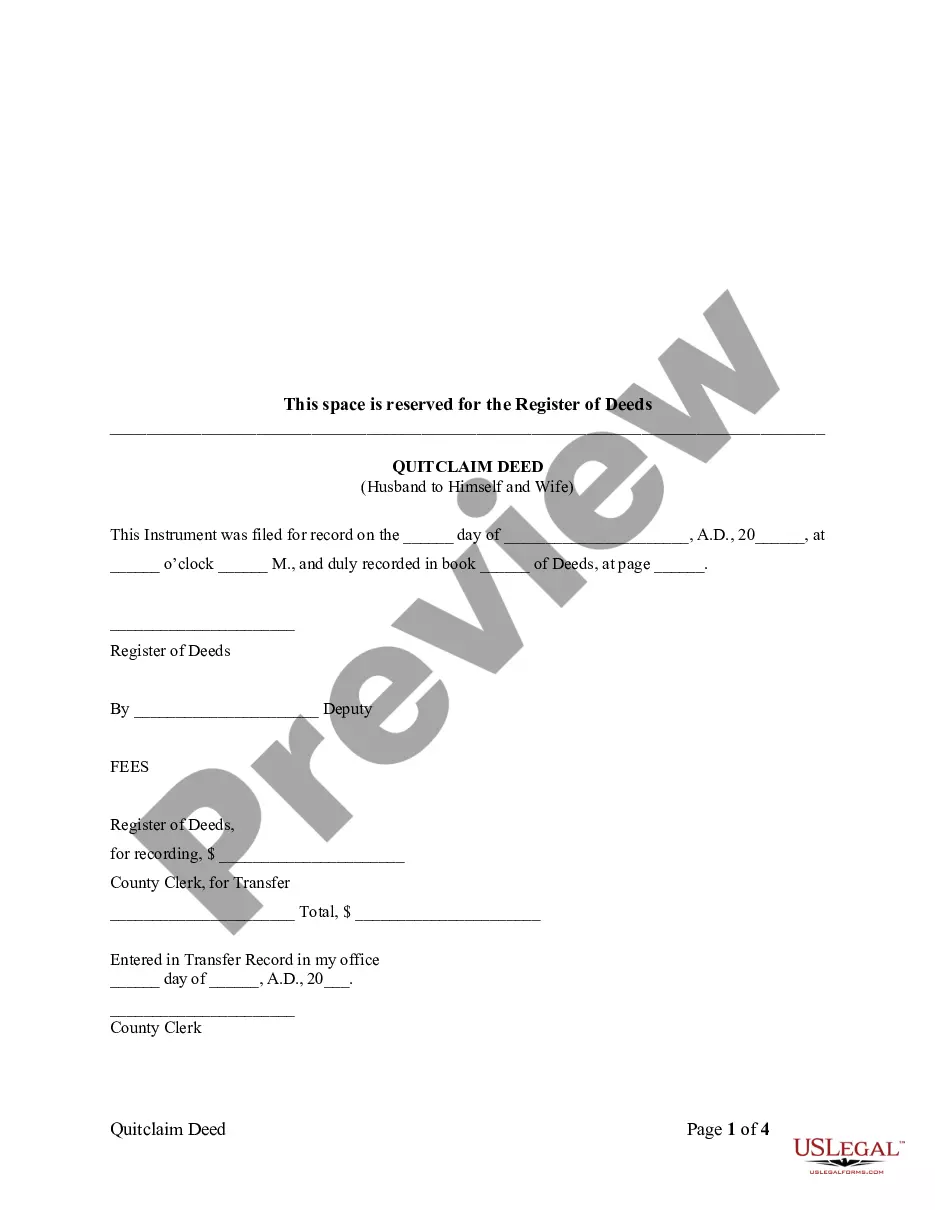
The Quitclaim Deed from Husband to Himself and Wife is a legal document that allows a husband to transfer ownership of real estate to himself and his wife. Unlike other types of deeds, a quitclaim deed does not guarantee the title's validity. This form is specifically designed for couples who want to ensure that both spouses hold joint ownership of their property, simplifying the transfer process while retaining rights to any oil, gas, or minerals beneath the property, if applicable.
Form components explained
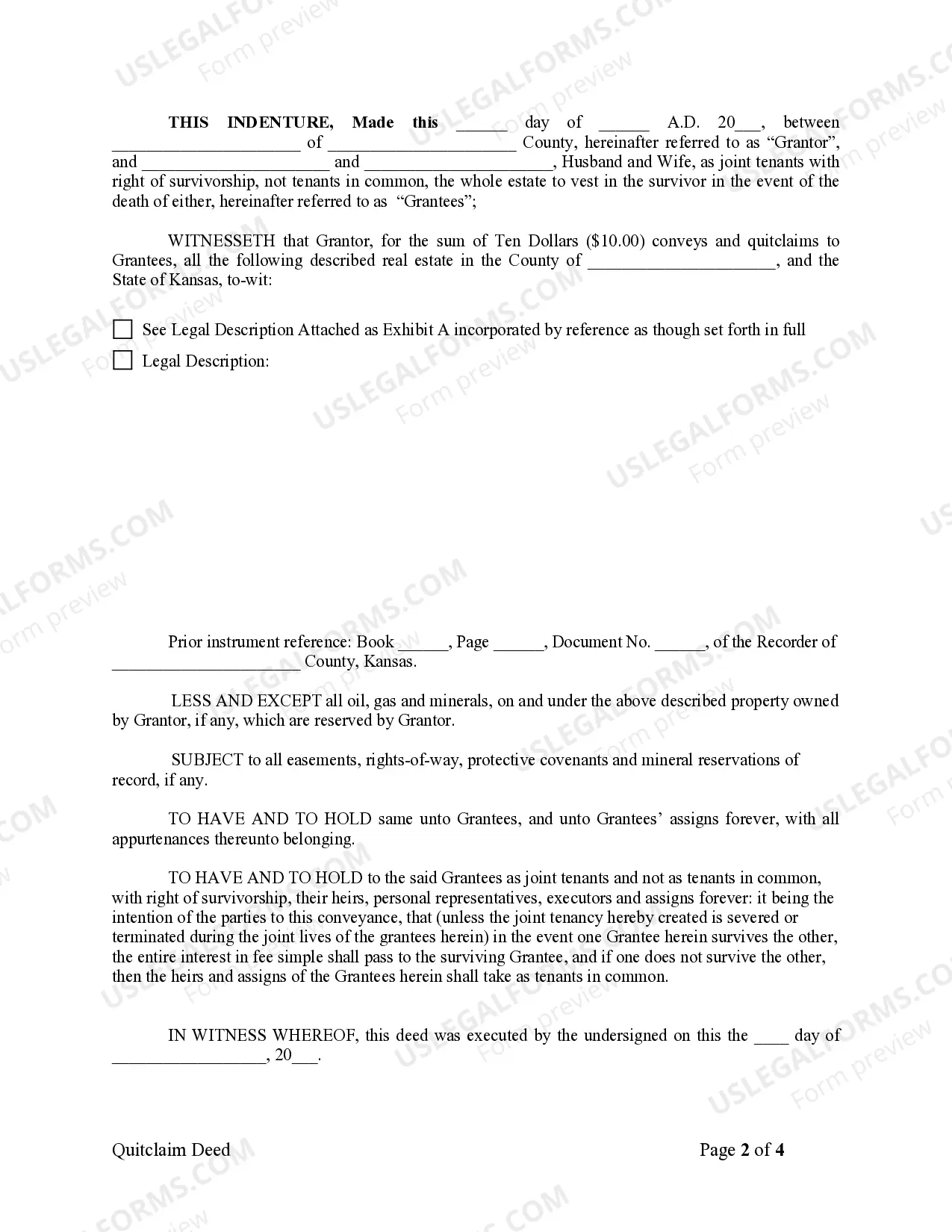
- Grantor and Grantee Information: Includes names and addresses of the husband (Grantor) and his wife (Grantees).
- Property Description: A legal description of the property being transferred, referenced as Exhibit A.
- Consideration: States the transfer is made for a nominal sum of Ten Dollars.
- Joint Tenancy Clause: Establishes that the property is held as joint tenants with right of survivorship.
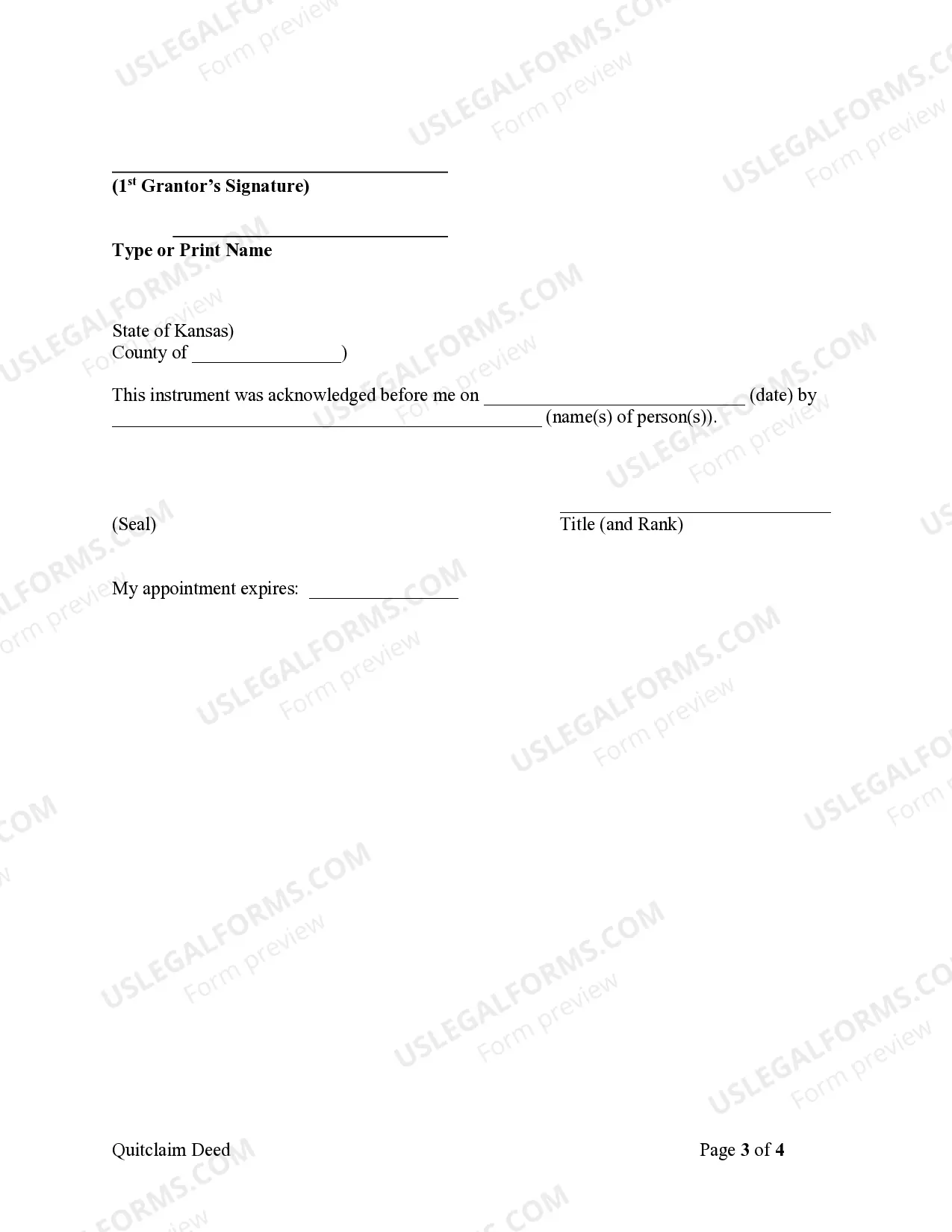
- Notarization Requirement: Specifies the need for notarization to validate the deed.




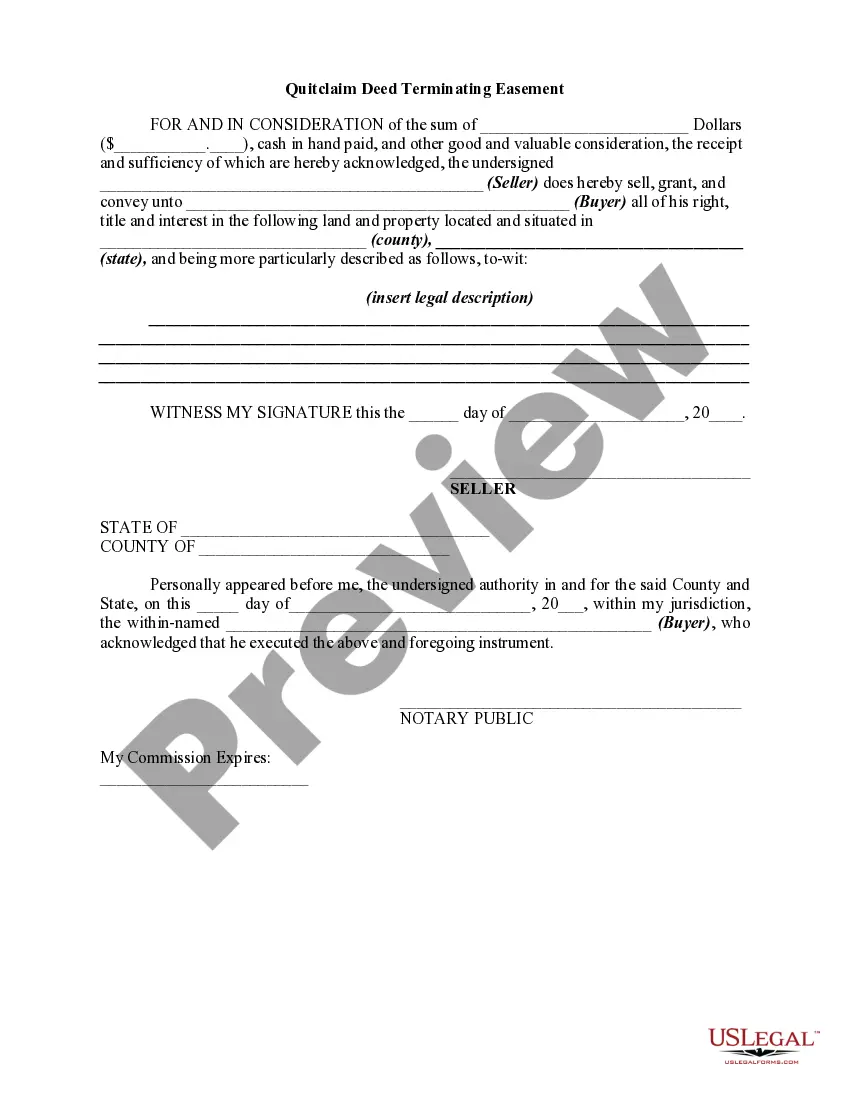


When to use this document
This form should be used when a husband wishes to formally transfer property ownership to himself and his wife, particularly in situations of marriage, joint ownership arrangements, or estate planning. It is ideal for couples who want to ensure that ownership automatically transfers to the surviving spouse in the event of one partner's death, protecting the interests of both parties.
Who needs this form
This quitclaim deed is suitable for:
- Married couples seeking to clarify or establish joint ownership of real estate.
- Individuals looking to transfer property within their family without engaging in a complex legal process.
- Homeowners wanting to include their spouse in the property title for estate planning purposes.
Completing this form step by step
- Identify the parties: Enter the full names and addresses of the Grantor (husband) and Grantees (husband and wife).
- Specify the property: Provide the legal description of the property being conveyed, referencing Exhibit A.
- Enter the date: Fill in the date of execution of the quitclaim deed.
- Include consideration: State the nominal amount of Ten Dollars as consideration for the transfer.
- Signatures: Have the Grantor(s) sign the deed in the presence of a notary public.
Notarization requirements for this form
Yes, this form must be notarized to be legally valid. Notarization helps to authenticate the document, ensuring that the signatories are who they claim to be. US Legal Forms offers secure online notarization available 24/7, making it easy to complete this step from home.
Get your form ready online
Our built-in tools help you complete, sign, share, and store your documents in one place.
Make edits, fill in missing information, and update formatting in US Legal Forms—just like you would in MS Word.
Download a copy, print it, send it by email, or mail it via USPS—whatever works best for your next step.
Sign and collect signatures with our SignNow integration. Send to multiple recipients, set reminders, and more. Go Premium to unlock E-Sign.
If this form requires notarization, complete it online through a secure video call—no need to meet a notary in person or wait for an appointment.
We protect your documents and personal data by following strict security and privacy standards.

Make edits, fill in missing information, and update formatting in US Legal Forms—just like you would in MS Word.

Download a copy, print it, send it by email, or mail it via USPS—whatever works best for your next step.

Sign and collect signatures with our SignNow integration. Send to multiple recipients, set reminders, and more. Go Premium to unlock E-Sign.

If this form requires notarization, complete it online through a secure video call—no need to meet a notary in person or wait for an appointment.

We protect your documents and personal data by following strict security and privacy standards.
Mistakes to watch out for
- Not providing a complete legal description of the property.
- Failing to have the document signed before a notary public.
- Omitting the consideration amount when filling out the form.
- Not clarifying the joint tenancy status, which can lead to disputes over ownership.
Advantages of online completion
- Convenience: Easily accessible from home without the need for an attorney visit.
- Editability: The form can be customized to fit specific needs and details.
- Reliability: Documents drafted by licensed attorneys ensure compliance with legal standards.
Main things to remember
- This form is essential for transferring property from a husband to himself and his wife.
- It creates a joint tenancy with right of survivorship, beneficial for estate planning.
- Ensure all parties' information and the legal description are correctly filled out.
- Diligently follow state-specific requirements for legality and recording.
- Utilizing online options can streamline the process and ensure compliance.
Looking for another form?


Form popularity
FAQ
A quitclaim deed transfers title but makes no promises at all about the owner's title.A person who signs a quitclaim deed to transfer property they do not own results in no title at all being transferred since there is no actual ownership interest. The quitclaim deed only transfers the type of title you own.
A quitclaim deed is dangerous if you don't know anything about the person giving you the property. You should be sure that a person actually has rights to a property before signing it over with a quitclaim deed.
Transfer property quickly and easily using this simple legal form. You can use a quitclaim deed to:transfer property you own by yourself into co-ownership with someone else. change the way owners hold title to the property.
A quitclaim deed affects ownership and the name on the deed, not the mortgage. Because quitclaim deeds expose the grantee to certain risks, they are most often used between family members and where there is no exchange of money.Quitclaim deeds transfer title but do not affect mortgages.
But you might be wondering if an owner can transfer a deed to another person without a real estate lawyer. The answer is yes. Parties to a transaction are always free to prepare their own deeds.A quitclaim deed, for example, is far simpler than a warranty deed.
A quitclaim deed is a deed (proof of ownership) that is passed from a grantor (the existing property owner) to a grantee (the new property owner) that does not have a warranty.A quitclaim deed has no guarantees for the grantor or grantee.
The drawback, quite simply, is that quitclaim deeds offer the grantee/recipient no protection or guarantees whatsoever about the property or their ownership of it. Maybe the grantor did not own the property at all, or maybe they only had partial ownership.
Quitclaim deeds are most often used to transfer property between family members.Examples include when an owner gets married and wants to add a spouse's name to the title or deed, or when the owners divorce and one spouse's name is removed from the title or deed.
A signed quit claim deed overrides a will, because the property covered by the deed is not part of the estate at your mother's death.The deed needed to be notarized to be valid.