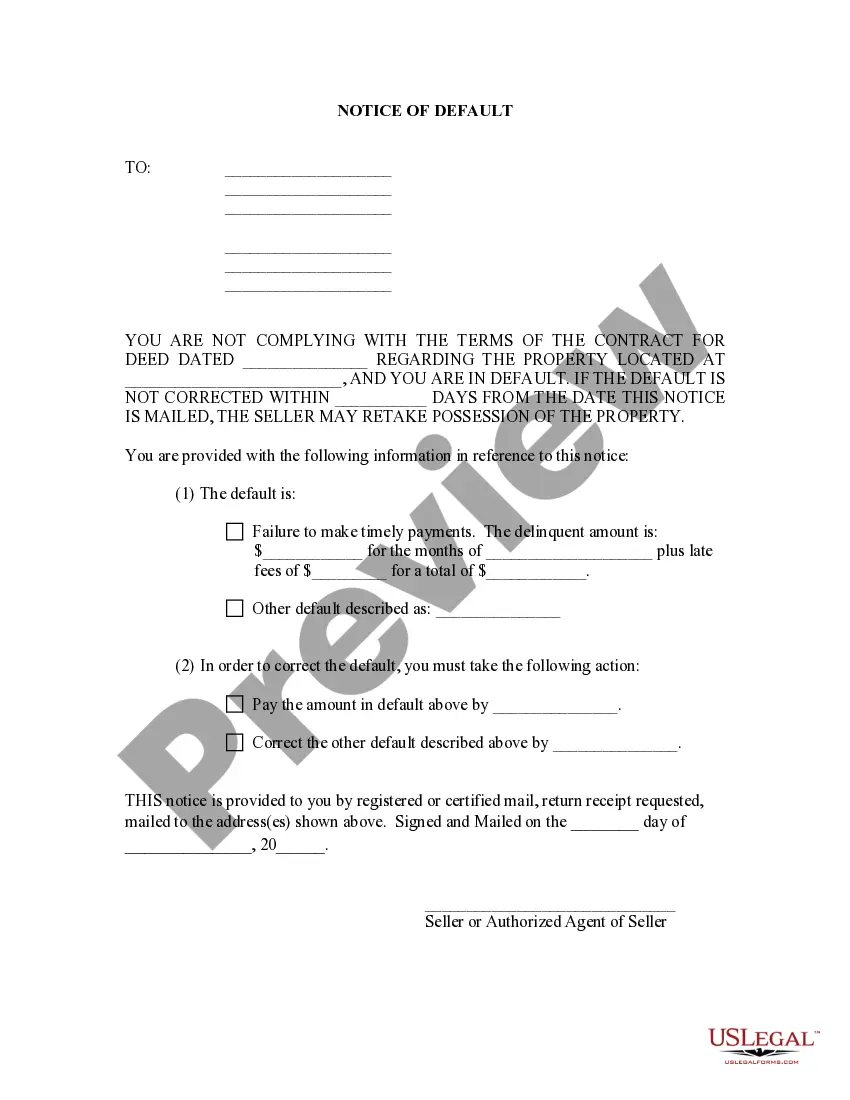
Alabama Complaint for Divorce - Minor Children
What this document covers
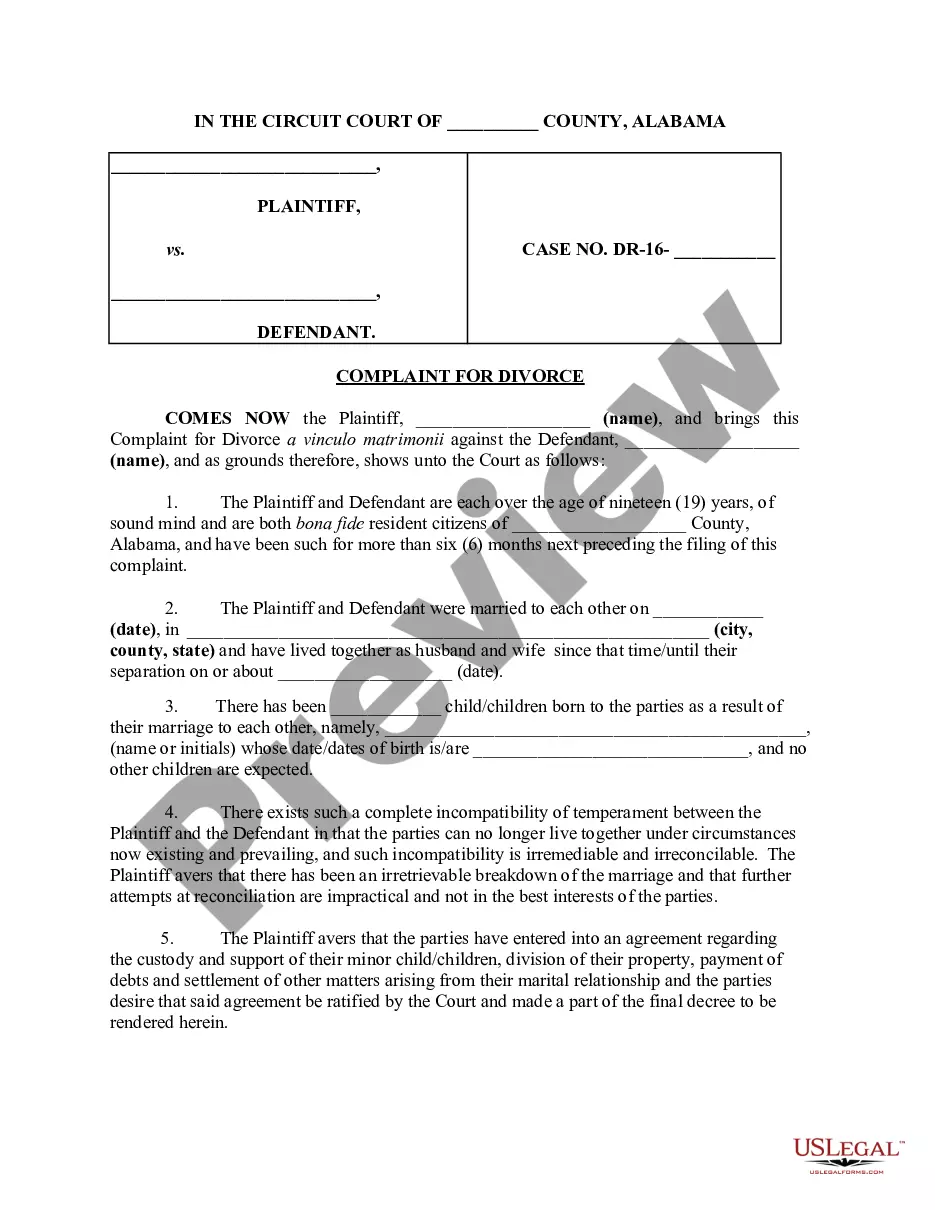
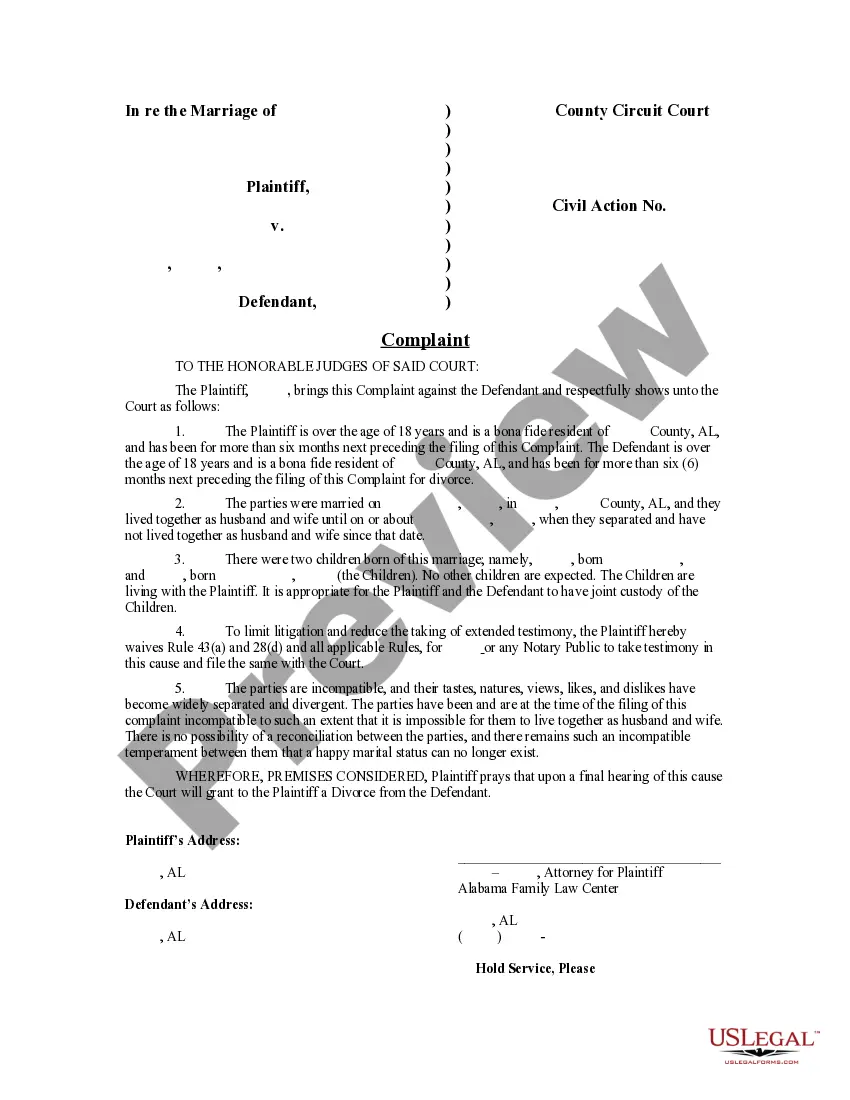
The Complaint for Divorce - Minor Children is a legal document filed by one spouse to initiate divorce proceedings when minor children are involved. This form not only requests the court to dissolve the marriage but also addresses any additional relief sought, such as child custody arrangements. It is distinct from other divorce forms that do not account for children or those that involve division of assets and debts.
Form components explained
- Parties' information: Details about the plaintiff and defendant, including names, addresses, and dates of birth.
- Marital history: Information about the marriage date and the county where it took place.
- Grounds for divorce: A statement confirming the irretrievable breakdown of the marriage.
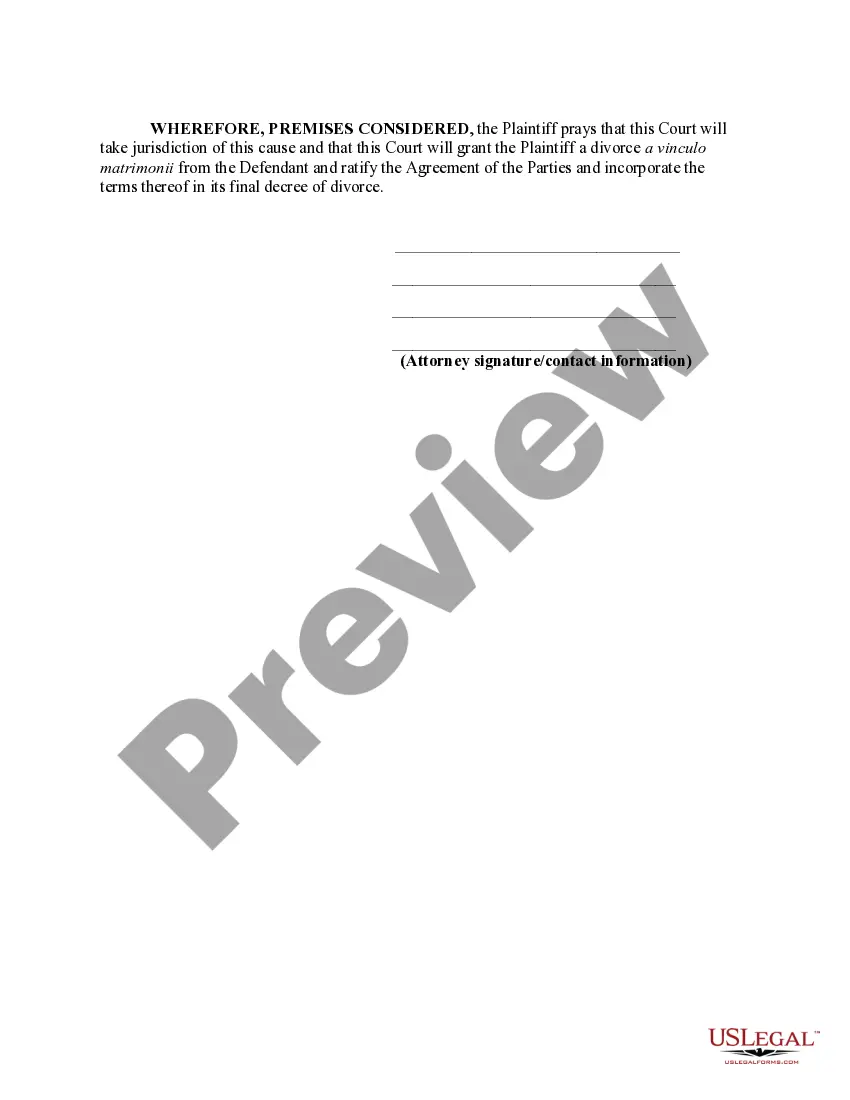
- Requests to the court: Options for the plaintiff to select what relief they are seeking, such as ending the marriage and restoring a former name.
- Notarization requirement: Section to be signed in front of a notary to validate the complaint.

When this form is needed
This form is used when a couple with minor children wishes to terminate their marriage. It is essential when the parties have agreed that the marriage cannot be salvaged and when one spouse seeks legal recognition of this divorce in the court system. If child custody or visitation rights are to be addressed, this form lays the groundwork for those arrangements.
Who needs this form
- Individuals who are married and have minor children from the marriage.
- Spouses who have decided to pursue divorce due to an irretrievable breakdown of the marital relationship.
- Individuals who wish to file for divorce without significant assets or debts to divide.
Steps to complete this form
- Identify the parties: Fill in your name and your spouse's name as the plaintiff and defendant, respectively.
- Complete personal information: Enter mailing addresses, phone numbers, and dates of birth for both parties.
- Detail marital history: Provide the marriage date and location within Alabama.
- State grounds for divorce: Confirm the irretrievable breakdown of the marriage in the designated section.
- Select requests: Mark the relevant boxes for the relief you are seeking from the court.
- Sign in front of a notary: Finalize the form by signing and obtaining a notary's acknowledgment.
Is notarization required?
Yes, this form must be notarized to be legally valid. All signatures in the complaint require a notary's acknowledgment to verify authenticity and ensure the proper filing of the document in court.
Get your form ready online
Our built-in tools help you complete, sign, share, and store your documents in one place.
Make edits, fill in missing information, and update formatting in US Legal Forms—just like you would in MS Word.
Download a copy, print it, send it by email, or mail it via USPS—whatever works best for your next step.
Sign and collect signatures with our SignNow integration. Send to multiple recipients, set reminders, and more. Go Premium to unlock E-Sign.
If this form requires notarization, complete it online through a secure video call—no need to meet a notary in person or wait for an appointment.
We protect your documents and personal data by following strict security and privacy standards.

Make edits, fill in missing information, and update formatting in US Legal Forms—just like you would in MS Word.

Download a copy, print it, send it by email, or mail it via USPS—whatever works best for your next step.

Sign and collect signatures with our SignNow integration. Send to multiple recipients, set reminders, and more. Go Premium to unlock E-Sign.

If this form requires notarization, complete it online through a secure video call—no need to meet a notary in person or wait for an appointment.

We protect your documents and personal data by following strict security and privacy standards.
Avoid these common issues
- Not providing complete and accurate personal information for both parties.
- Failing to specify all relief sought or omitting checkboxes.
- Neglecting to sign the form in front of a notary public.
- Using outdated versions of the complaint that may not align with current laws.
Why complete this form online
- Convenient access from any location, allowing you to complete the form at your own pace.
- Editability enables you to customize the form efficiently based on your specific circumstances.
- Reliable templates drafted by licensed attorneys to ensure compliance with legal standards.
Quick recap
- This form is essential for initiating a divorce when minor children are involved.
- Completing the form accurately is crucial to facilitate a smooth legal process.
- Notarization is required to validate the form in Alabama.
Looking for another form?
Form popularity
FAQ
The Alabama Complaint for Divorce - Minor Children is a filing used to start divorce proceedings when there are minor children. It requests that the court dissolve the marriage and may seek child-related relief, such as custody or visitation, while laying the groundwork for related arrangements and any other relief the plaintiff wants, such as restoring a former name. It must be notarized to be valid.
This form does not determine how assets are divided. The Alabama Complaint for Divorce - Minor Children is used to initiate the case and seek relief like custody or name restoration. Asset division is typically addressed later, either in separate filings or during a court hearing, rather than in this initial complaint.
A common mistake is failing to complete all required fields or to have the complaint properly signed and notarized. This form requires accurate parties’ information, marital history, grounds, and requested relief; omissions or an unsigned document can delay the proceedings and may necessitate re-filing.
This form addresses divorce with minor children and may address custody, but it does not itself set child support. Alabama Rule 32 concerns child support procedures outside this complaint. For support orders, parties typically pursue separate filings or court orders in addition to this form.
This form does not establish asset restrictions. It focuses on initiating a divorce and obtaining relief related to minor children, such as custody or visitation. Asset division is handled through other filings, agreements, or later court orders as the case progresses.
The Minor Children version is specifically designed for cases with children and includes relief options related to custody and visitation, along with a notarization requirement. The standard form typically does not address child-related arrangements and may not include the same custody-focused provisions.