Indiana Warranty Deed from Individual to Corporation
What this document covers
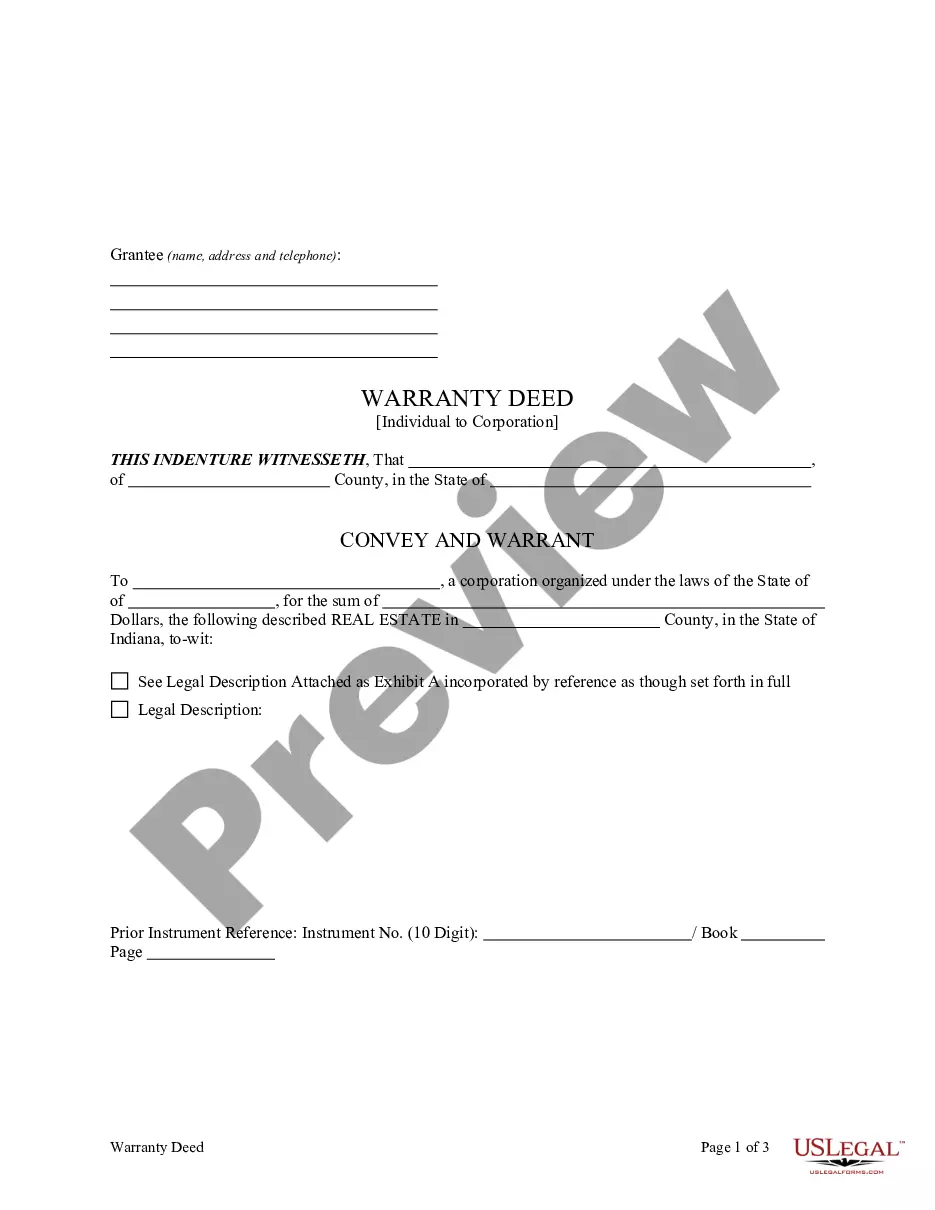
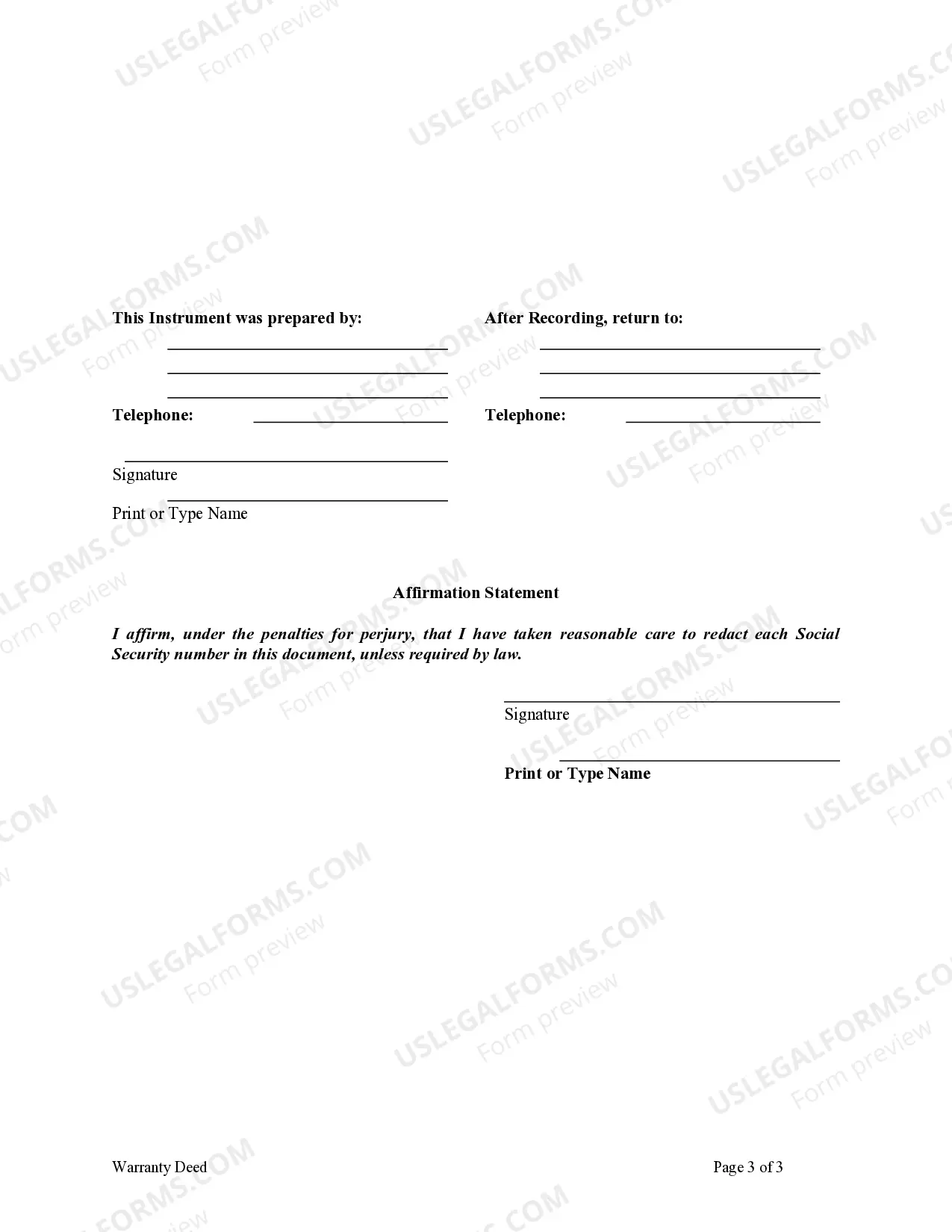
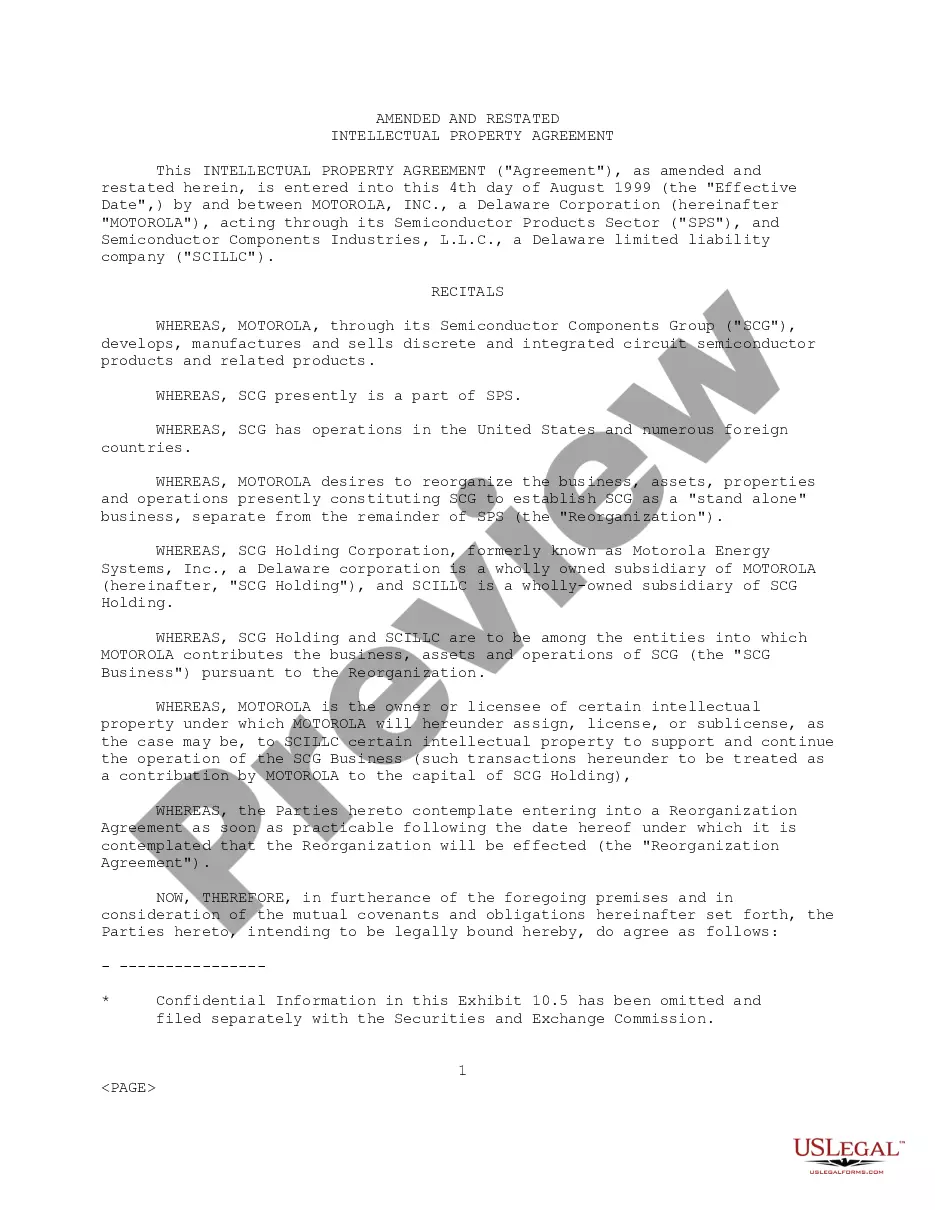
A Warranty Deed from Individual to Corporation is a legal document that facilitates the transfer of property ownership from an unmarried individual (the grantor) to a corporation (the grantee). This form is essential for ensuring that the corporation receives clear and marketable title to the property, distinguishing it from other forms of deeds which may not provide the same level of warranty regarding ownership and rights. This warranty deed provides a guarantee that the property is free from any legal claims, which is crucial for business transactions involving real estate.
Main sections of this form
- Parties involved: Identification of the grantor (individual) and grantee (corporation).
- Legal description of the property: Detailed information specifying the real estate being transferred.
- Consideration: The payment or value involved in the transaction.
- Warranties: Clauses assuring that the grantor holds clear title and provides certain legal guarantees.
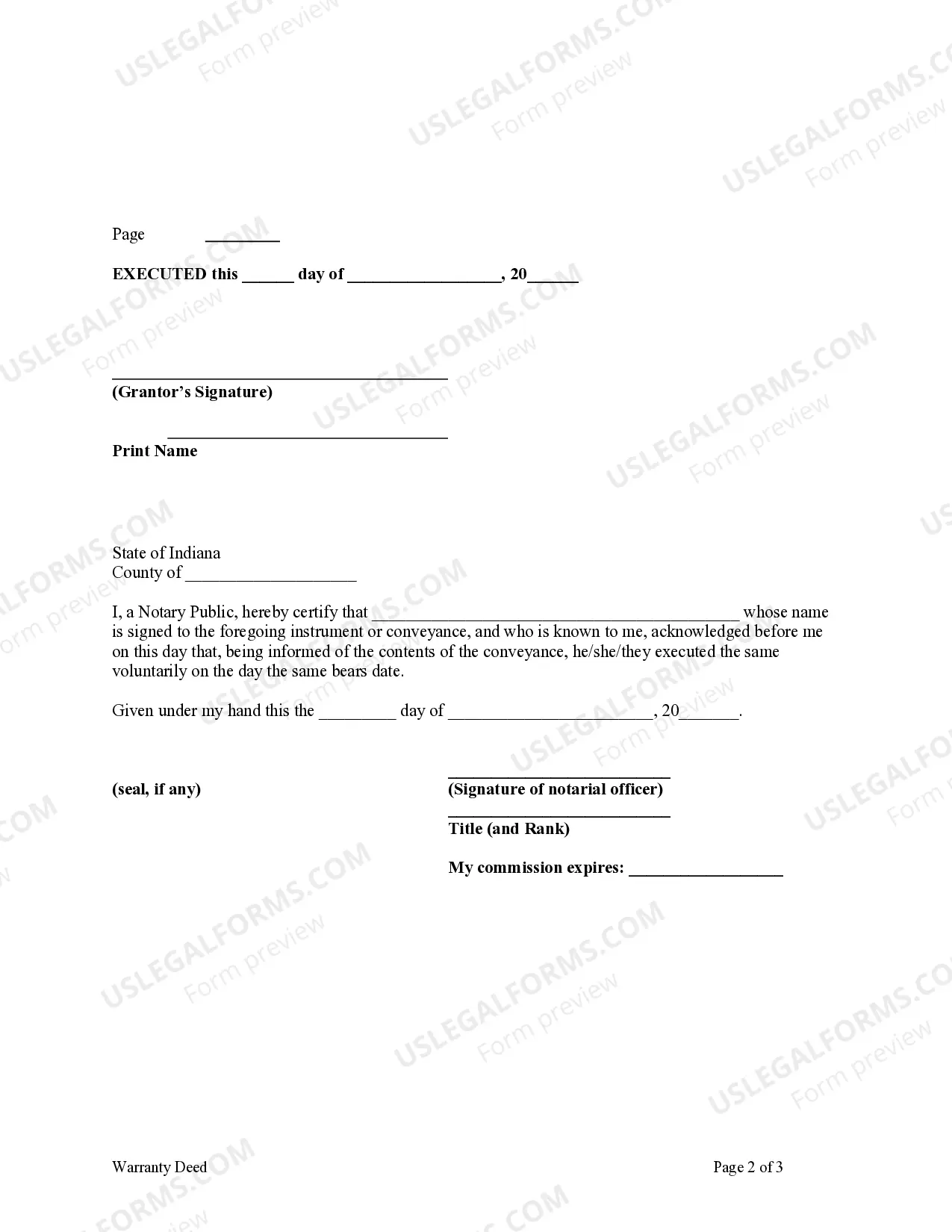
- Signatures and dates: Required for validation of the transfer.


When to use this document
This form is necessary when an unmarried individual wishes to transfer ownership of real property to a corporation. Typical scenarios include a sole proprietor transferring their business property to a newly formed corporation for liability protection or operational reasons.
Who this form is for
- Individuals who own real estate and want to transfer it to a corporation.
- Business owners forming a corporation and requiring a legal transfer of property ownership.
- Real estate professionals handling transactions between individuals and corporations.
How to prepare this document
- Identify the parties: Clearly indicate the full legal names of the grantor and grantee.
- Specify the property: Provide a detailed legal description of the property being transferred.
- Enter the consideration: Fill in the amount of payment or value exchanged for the property.
- Review warranties: Ensure the warranties included accurately reflect ownership status and rights.
- Obtain signatures: Ensure all parties sign and date the document in the appropriate sections.
Does this document require notarization?
This form does not typically require notarization unless specified by local law. However, it is always advisable to check state-specific requirements to ensure legal validity.
Get your form ready online
Our built-in tools help you complete, sign, share, and store your documents in one place.
Make edits, fill in missing information, and update formatting in US Legal Forms—just like you would in MS Word.
Download a copy, print it, send it by email, or mail it via USPS—whatever works best for your next step.
Sign and collect signatures with our SignNow integration. Send to multiple recipients, set reminders, and more. Go Premium to unlock E-Sign.
If this form requires notarization, complete it online through a secure video call—no need to meet a notary in person or wait for an appointment.
We protect your documents and personal data by following strict security and privacy standards.

Make edits, fill in missing information, and update formatting in US Legal Forms—just like you would in MS Word.

Download a copy, print it, send it by email, or mail it via USPS—whatever works best for your next step.

Sign and collect signatures with our SignNow integration. Send to multiple recipients, set reminders, and more. Go Premium to unlock E-Sign.

If this form requires notarization, complete it online through a secure video call—no need to meet a notary in person or wait for an appointment.

We protect your documents and personal data by following strict security and privacy standards.
Avoid these common issues
- Failing to include a complete legal description of the property.
- Not obtaining all necessary signatures.
- Leaving out the consideration amount.
- Misidentifying the parties involved in the transaction.
Benefits of completing this form online
- Convenience of immediate downloading for quick use.
- Editability allows for easy customization to fit specific needs.
- Access to forms drafted by licensed attorneys ensures reliability and legal compliance.
Looking for another form?






Form popularity
FAQ
The Indiana warranty deed is a form of deed that provides an unlimited warranty of title. It makes an absolute guarantee that the current owner has good title to the property.
An Indiana quitclaim deed is a legally binding document that allows a property's owner to sell or transfer the real estate to another party, a buyer, without any promise about the title.
Retrieve your original deed. Get the appropriate deed form. Draft the deed. Sign the deed before a notary. Record the deed with the county recorder. Obtain the new original deed.
Discuss the terms of the deed with the new owners. Hire a real estate attorney to prepare the deed. Review the deed. Sign the deed in front of a notary public, with witnesses present. File the deed on public record.
Locate the prior deed to the property. Create the new deed. Sign the new deed. Record the original deed.
Typically, the lender will provide you with a copy of the deed of trust after the closing. The original warranty deeds are often mailed to the grantee after they are recorded. These are your original copies and should be kept in a safe place, such as a fireproof lockbox or a safe deposit box at a financial institution.
Signing (§ 32-21-2-3) All deed must be executed by one of the following: judge, clerk of a court of record, county auditor, county recorder, notary public, mayor of a city in Indiana or any other state, commissioner appointed in a state other than Indiana by the governor of Indiana, clerk of the city county council
The original deed is returned to the owner of the property from the office of the recorder after proper entry. The office of the Recorder of Deeds maintains a set of indexes about each deed recorded, for an easy search. Almost all states have a grantor-grantee index including a reference to all documents recorded.
Contrary to normal expectations, the Deed DOES NOT have to be recorded to be effective or to show delivery, and because of that, the Deed DOES NOT have to be signed in front of a Notary Public. However, if you plan to record it, then it does have to be notarized as that is a County Recorder requirement.