Security Agreement Granting Security Interest in Aircraft Engine
Understanding this form
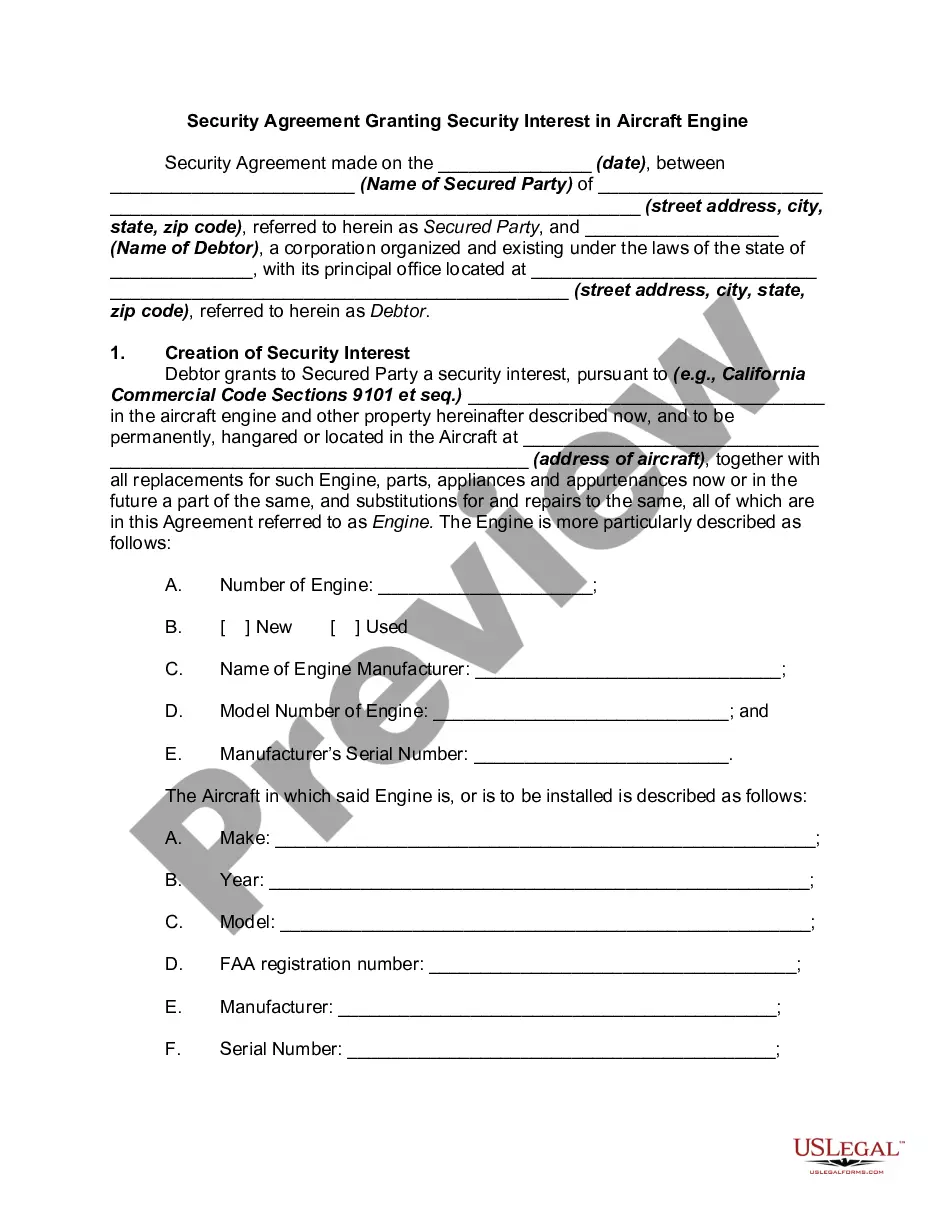
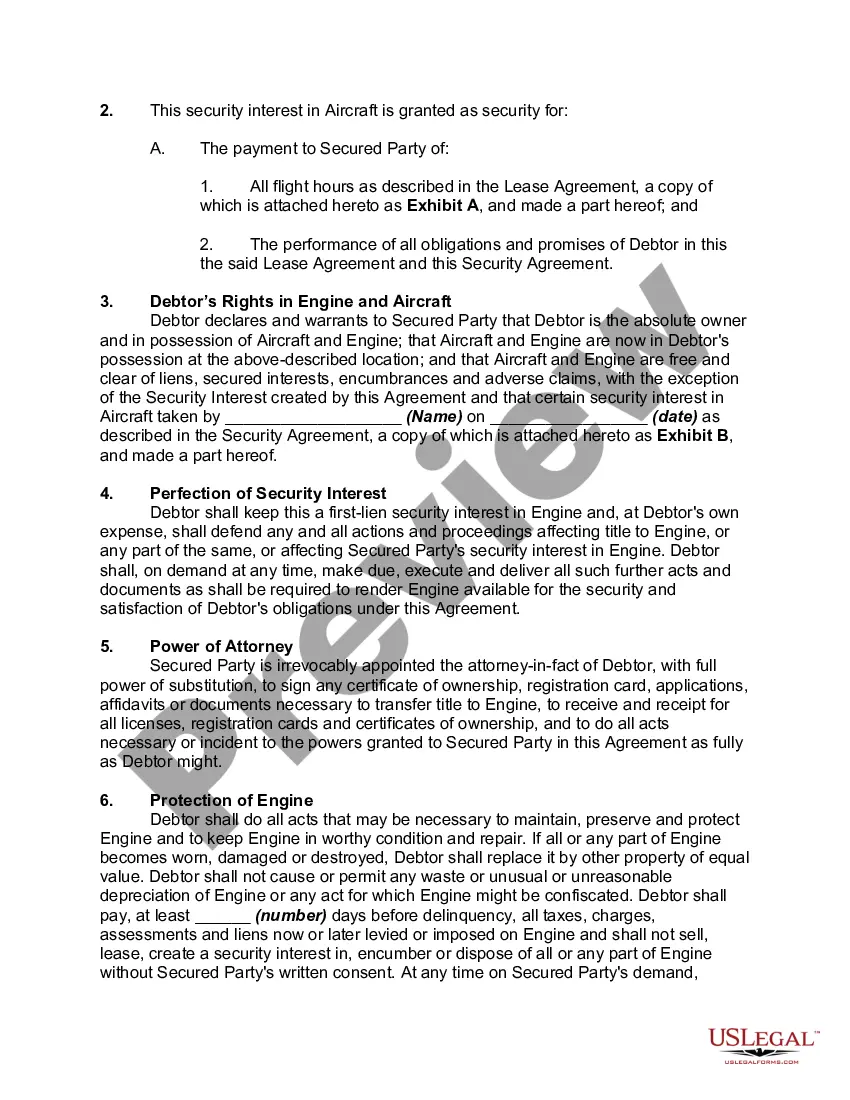
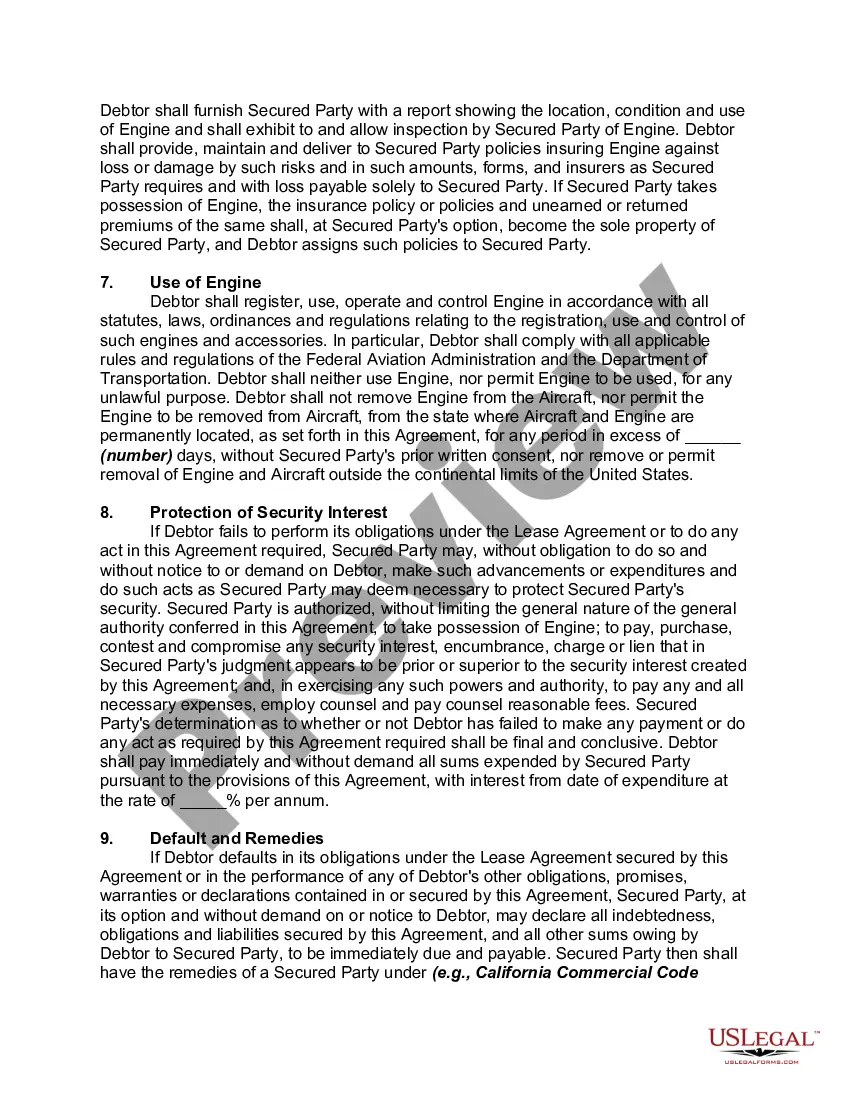
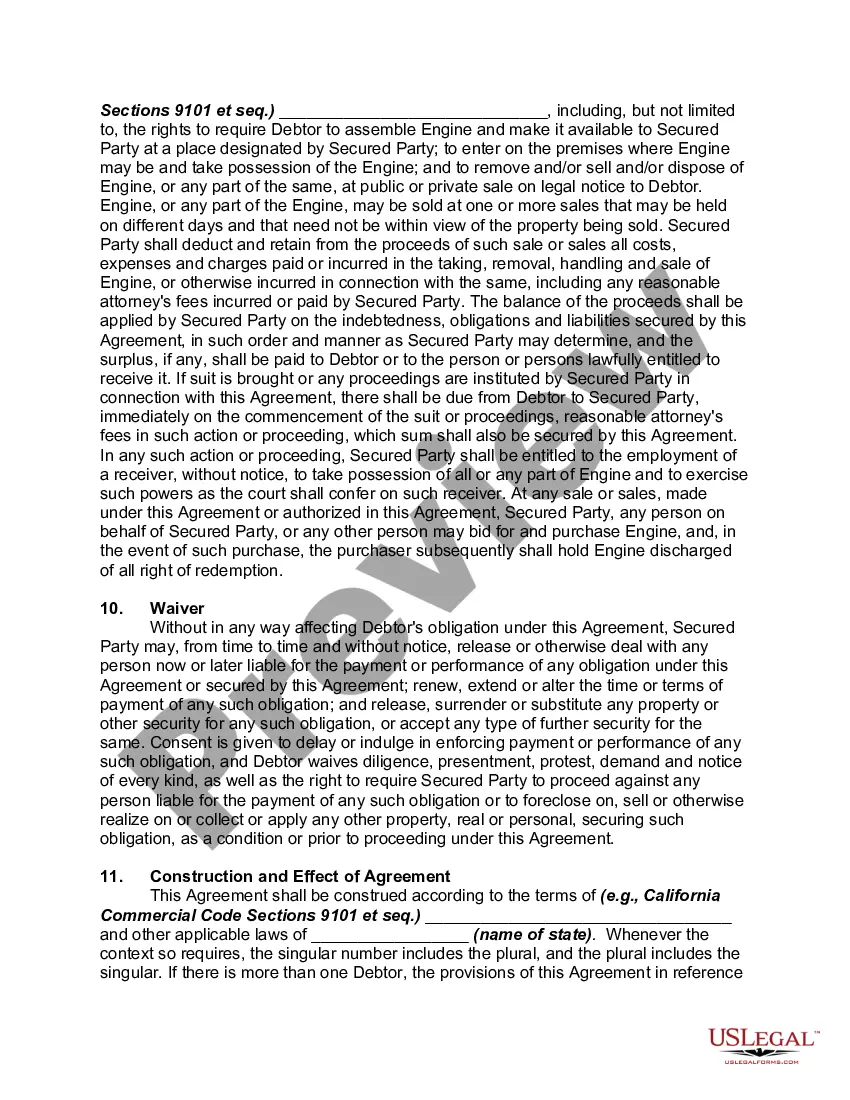
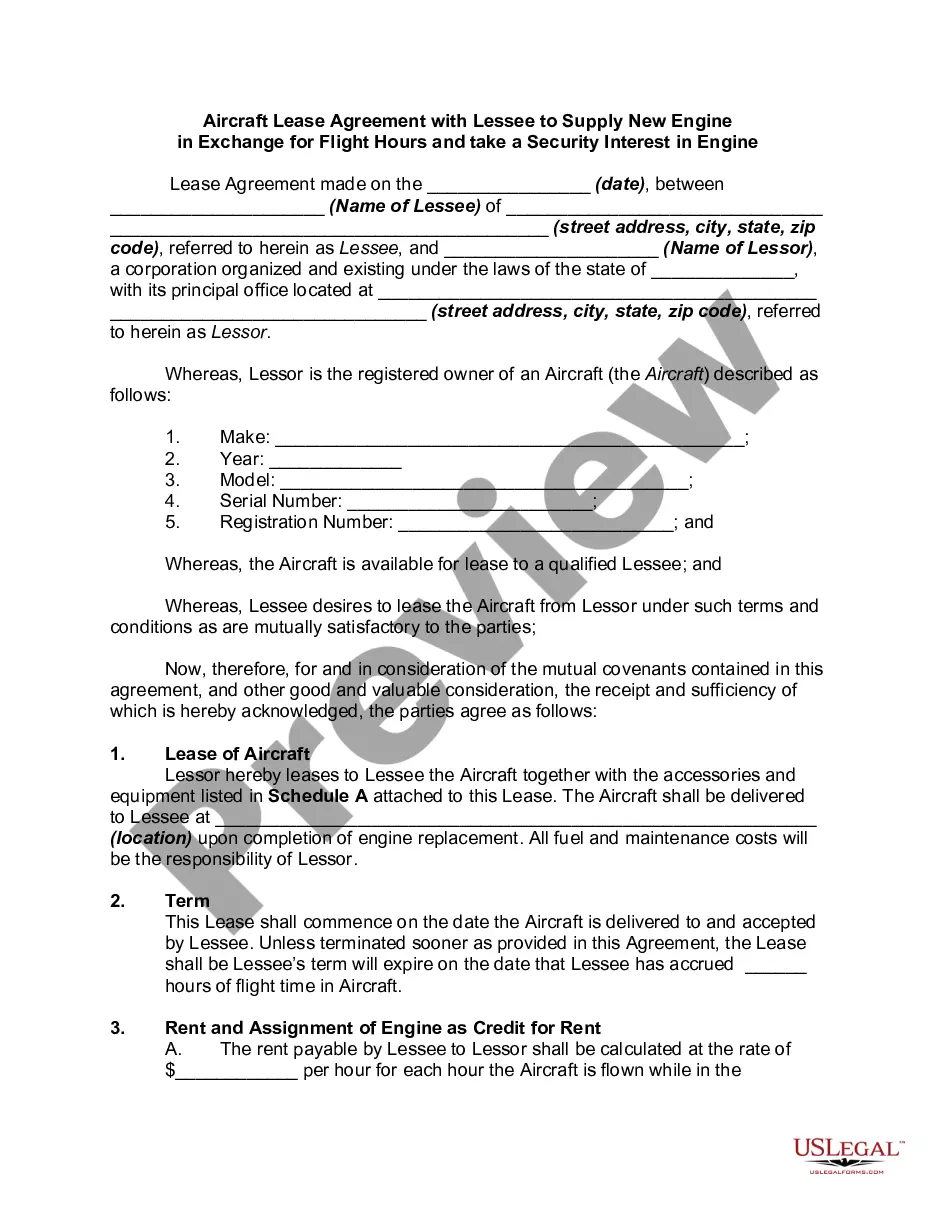
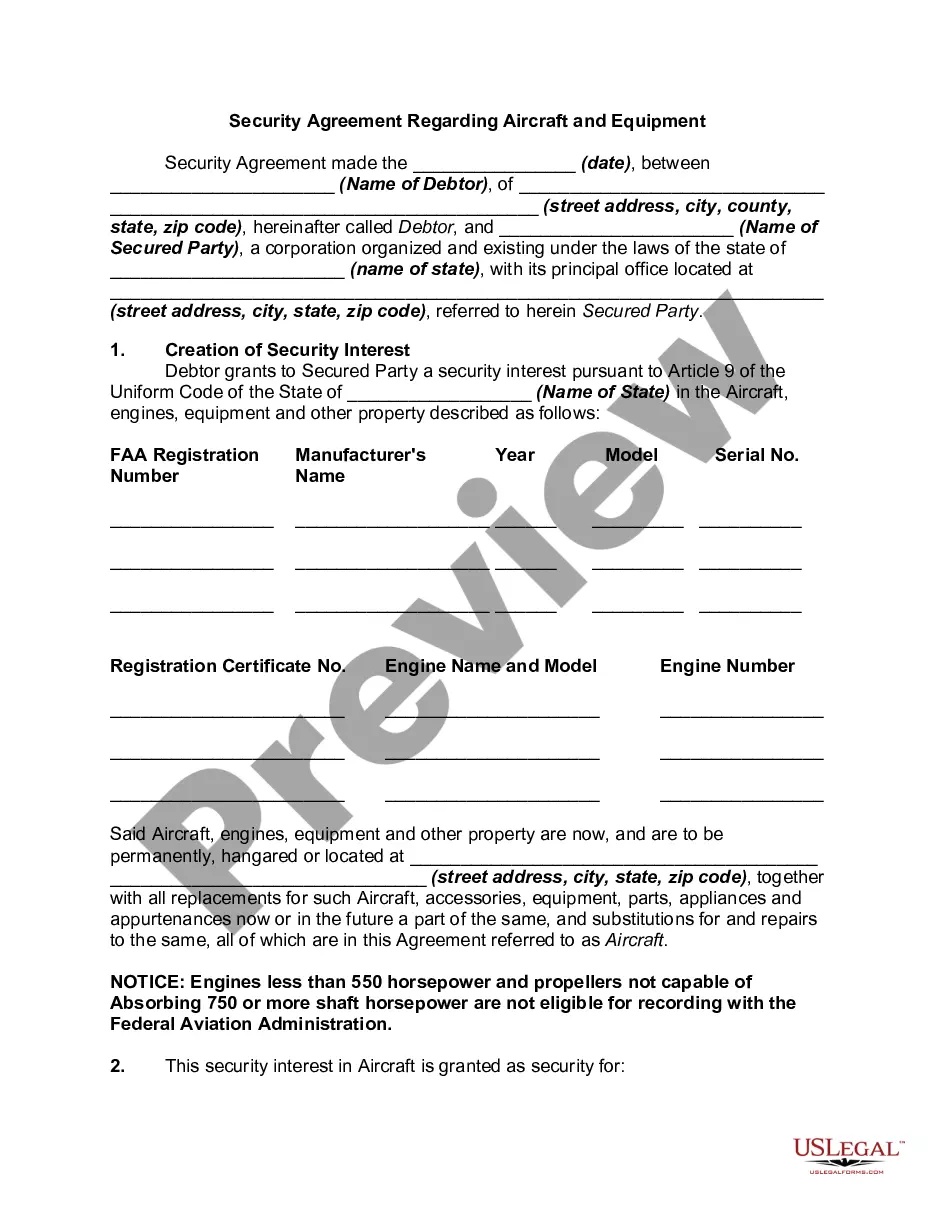
The Security Agreement Granting Security Interest in Aircraft Engine is a legal document that establishes a secured interest in an aircraft engine between a lender (Secured Party) and a borrower (Debtor). This form is essential for compliance with federal laws regarding the perfection of security interests in aircraft engines, which differs from similar agreements for other types of collateral.
Form components explained
- Date and parties involved in the agreement.
- Details regarding the aircraft engine including its description, manufacturer, and serial number.
- Terms specifying the security interest created and the obligations secured.
- Rights and warranties of the debtor regarding ownership and condition of the engine.
- Procedures for perfection of the security interest and protections for the secured party.
- Default terms and remedies available to the secured party in case of non-compliance.

When to use this document
This form should be used when a borrower seeks to secure a loan or credit with their aircraft engine as collateral. It is applicable in situations where compliance with federal requirements is necessary for perfecting the security interest, ensuring legal recognition of the lender's rights should the borrower default.
Who should use this form
- Aircraft owners looking to secure financing using their engine as collateral.
- Lending institutions or individuals providing loans secured by an aircraft engine.
- Corporations involved in aviation financing or leasing arrangements.
How to complete this form
- Identify the parties involved by providing full names and addresses for both the secured party and debtor.
- Describe the aircraft engine, including its specifications and location.
- Specify the obligations secured by this agreement, detailing any related lease agreements.
- Include any existing liens or claims against the engine that may affect the security interest.
- Ensure all required signatures are provided, and consider notarization if necessary.
Does this document require notarization?
This form does not typically require notarization unless specified by local law. However, including notarization can add an extra layer of legal validity and protection in case of disputes.
Get your form ready online
Our built-in tools help you complete, sign, share, and store your documents in one place.
Make edits, fill in missing information, and update formatting in US Legal Forms—just like you would in MS Word.
Download a copy, print it, send it by email, or mail it via USPS—whatever works best for your next step.
Sign and collect signatures with our SignNow integration. Send to multiple recipients, set reminders, and more. Go Premium to unlock E-Sign.
If this form requires notarization, complete it online through a secure video call—no need to meet a notary in person or wait for an appointment.
We protect your documents and personal data by following strict security and privacy standards.

Make edits, fill in missing information, and update formatting in US Legal Forms—just like you would in MS Word.

Download a copy, print it, send it by email, or mail it via USPS—whatever works best for your next step.

Sign and collect signatures with our SignNow integration. Send to multiple recipients, set reminders, and more. Go Premium to unlock E-Sign.

If this form requires notarization, complete it online through a secure video call—no need to meet a notary in person or wait for an appointment.

We protect your documents and personal data by following strict security and privacy standards.
Common mistakes to avoid
- Failing to accurately describe the engine or aircraft, which can affect the enforceability of the agreement.
- Neglecting to identify existing liens, which can lead to disputes about priority of claims.
- Not securing the necessary signatures, particularly from corporate officers if the debtor is a corporation.
Benefits of using this form online
- Convenient access to legally vetted documents that save time and effort.
- Editability allows for customization to meet specific needs and circumstances.
- Reliable templates ensure compliance with current federal regulations governing security interests in aircraft.
Key takeaways
- A Security Agreement is essential for establishing a secure interest in an aircraft engine.
- Correct completion of the form is critical to ensure legality and enforceability.
- Consult local laws to ensure all jurisdictional requirements are met.
Looking for another form?
Form popularity
FAQ
A security interest means that if you don't make the mortgage payments as agreed, or if you break your agreement with the lender, the lender can take your home and sell it to pay off the loan. You give the lender this right when you sign your closing forms.
Attachment is essentially the moment when a security interest becomes enforceable against a Debtor.
The security agreement must: give the names of the parties to the agreement. contain words which state that the aircraft owner grants the secured party a security interest in the collateral.contain the ink signature(s) of the debtor/aircraft owner(s) showing signer's title, as appropriate.
For a security interest to attach, the following events must have occurred: (A) value must have been given by the Secured Party; (B) the Debtor must have rights in the collateral; and (C) the Secured Party must have been granted a security interest in the collateral.
A security agreement is a document that provides a lender a security interest in a specified asset or property that is pledged as collateral. Security agreements often contain covenants that outline provisions for the advancement of funds, a repayment schedule, or insurance requirements.
Mortgage and security interest are two similar terms, both referring to a collateral created in order to secure a debt by one party to the other.The basic difference is that mortgage is a traditional way of securing obligations under the common law, typically used in property transactions.
Security agreements and financing statements are often confused with one another. The primary difference is that the financing statement largely serves as notice that a creditor possesses security interest in the debtor's assets or property. The financing statement is not a contract.
A security interest is a legal right granted by a debtor to a creditor over the debtor's property (usually referred to as the collateral) which enables the creditor to have recourse to the property if the debtor defaults in making payment or otherwise performing the secured obligations.
The three requirements of: giving value, debtor rights in the collateral, and an authenticated security agreement apply to the most common types of collateral, such as equipment, inventory and even payments due under a contract.