California Complaint for Breach of Contract for Failure to Disclose Condition of Property
What this document covers
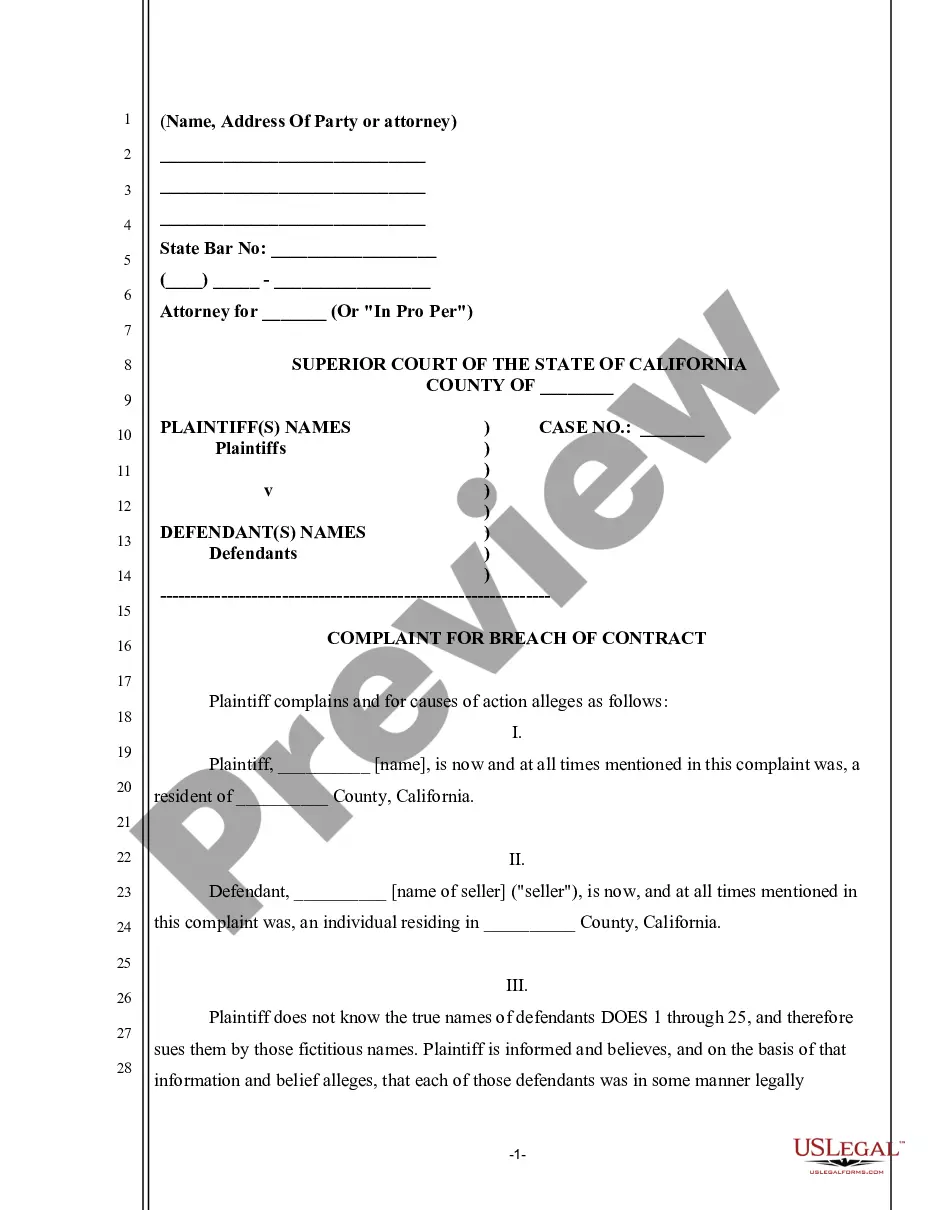
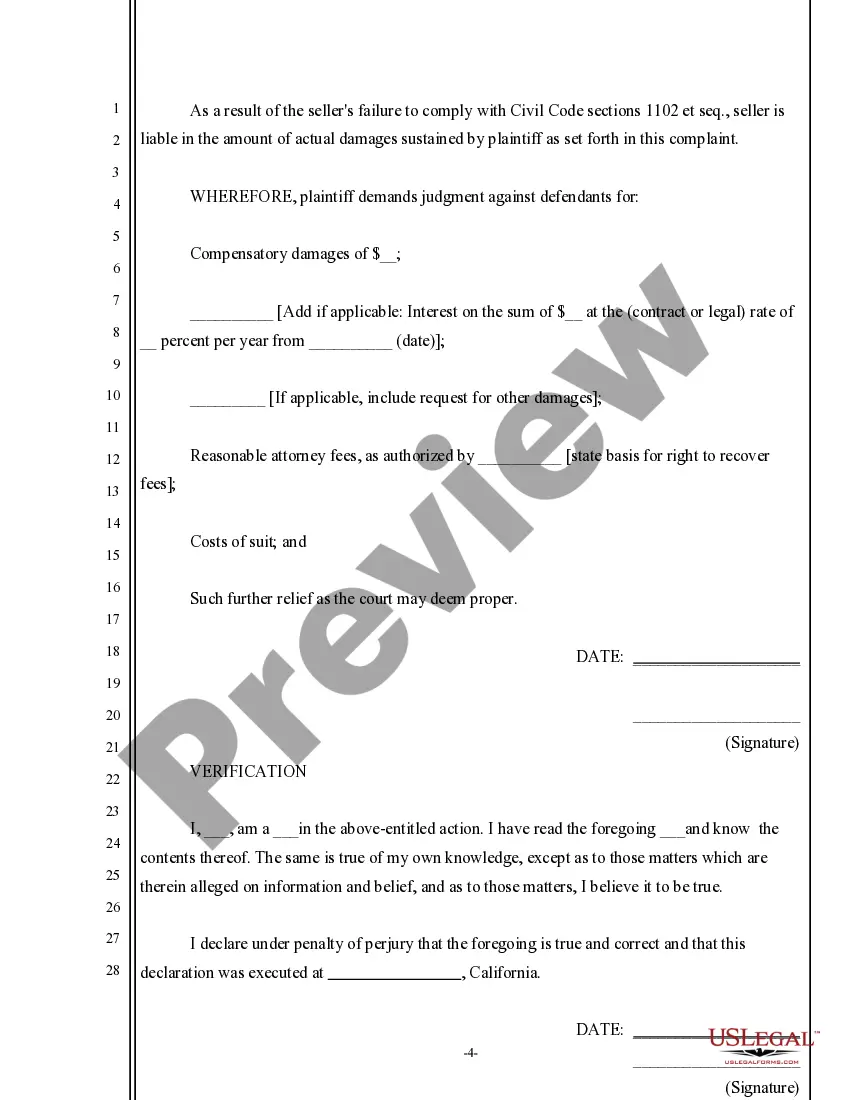
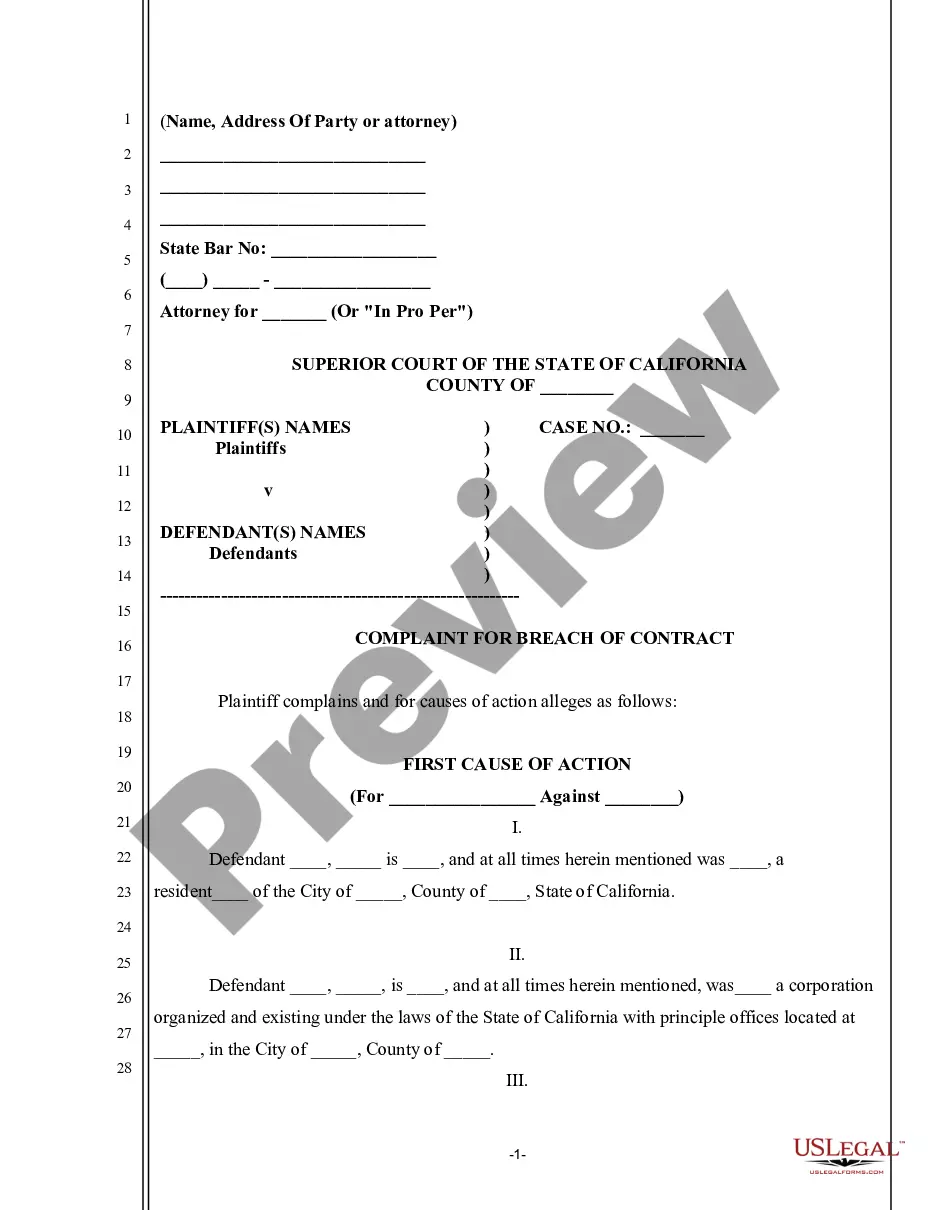
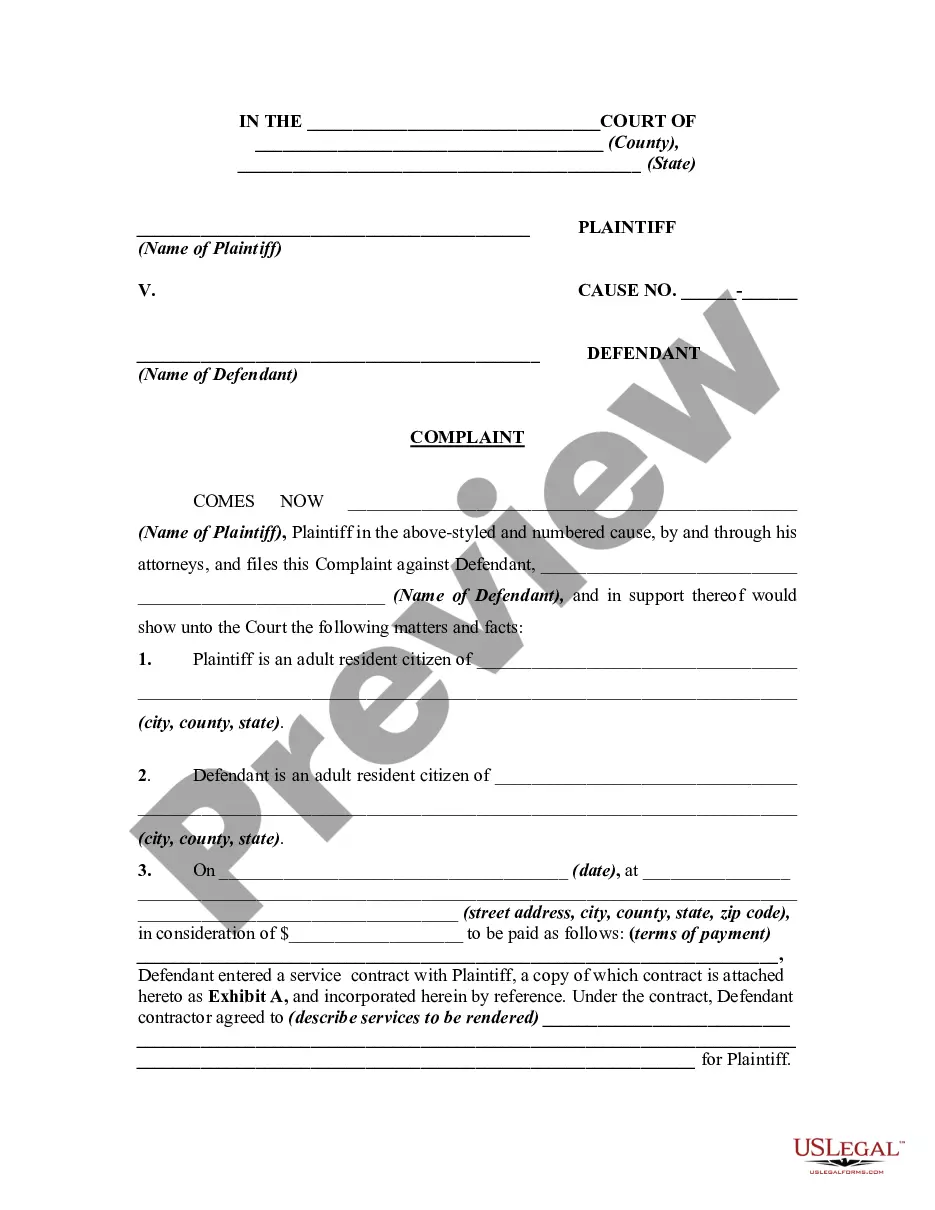
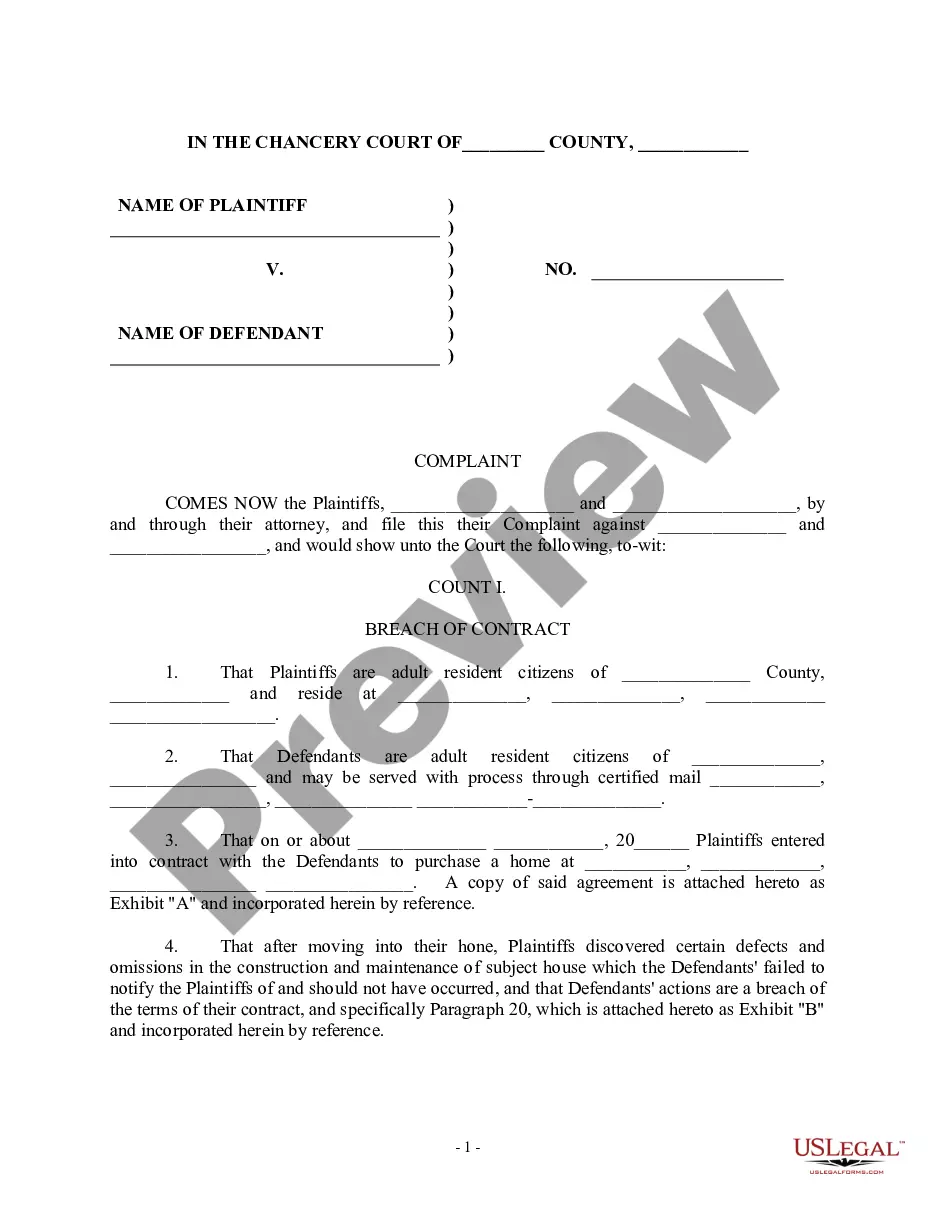
This form is a Complaint for Breach of Contract for Failure to Disclose Condition of Property. It is used when a buyer alleges that a property seller failed to disclose important information about the condition of the property, potentially violating the terms of their contract. This form is essential for seeking legal recourse to claim compensatory damages and attorney fees due to the seller's breach of duty.
Form components explained
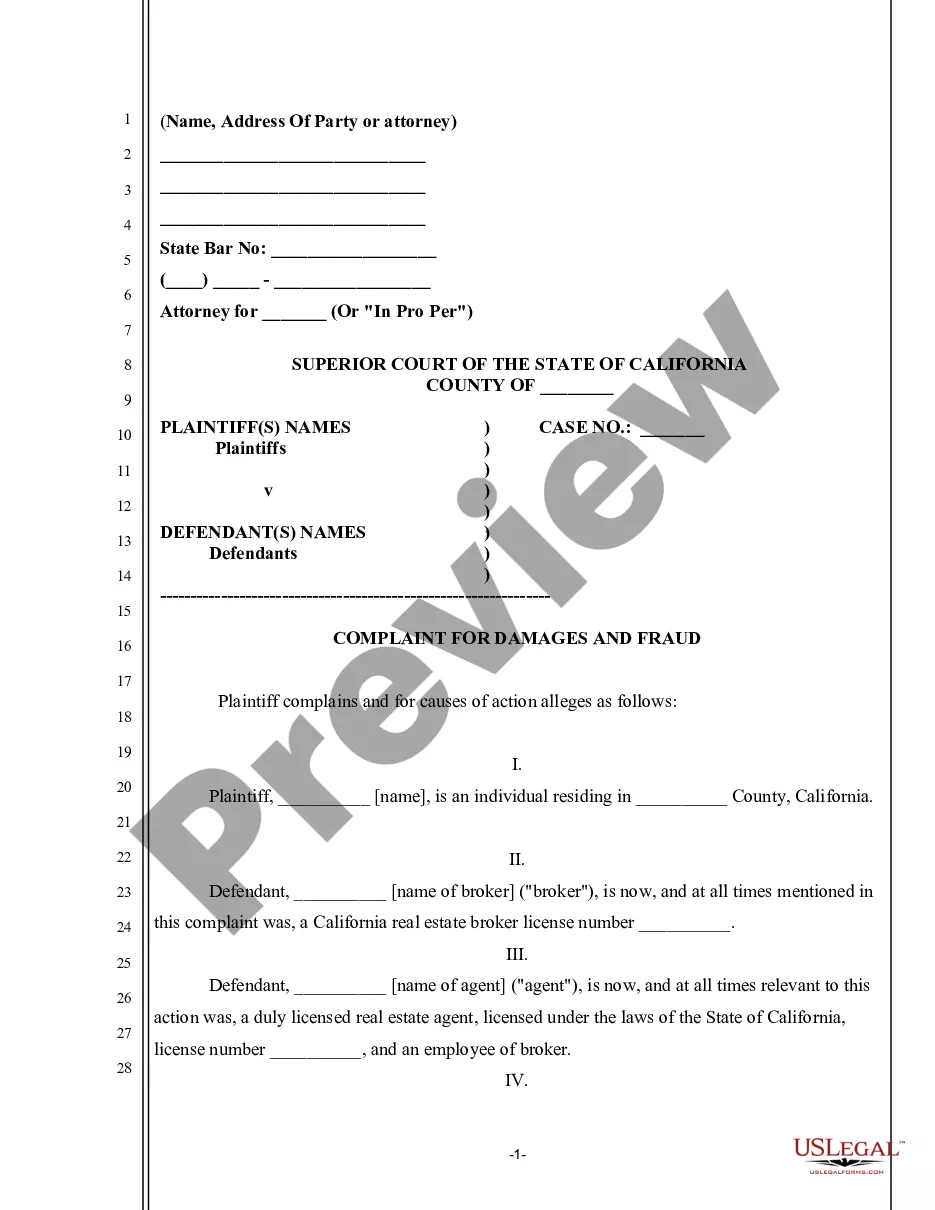
- Identification of the parties involved: Plaintiff and Defendant
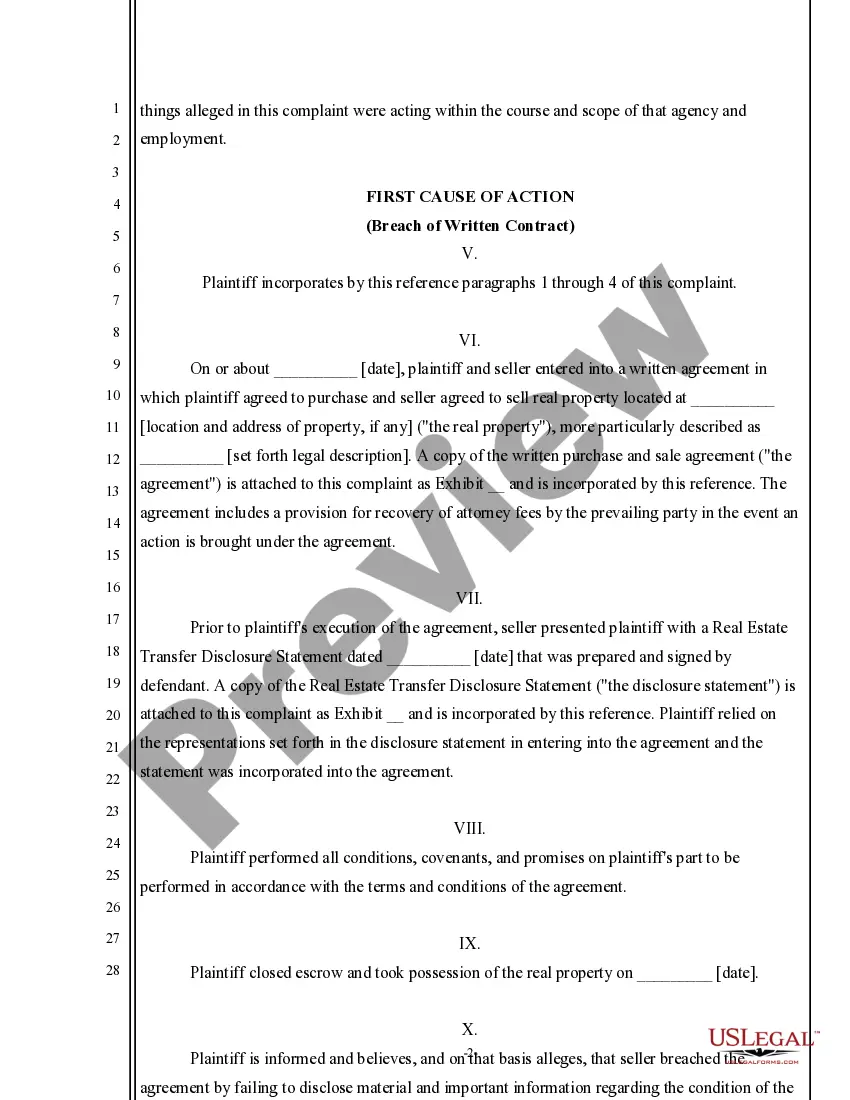
- Details of the real estate transaction: Purchase agreement, property description, and closing date
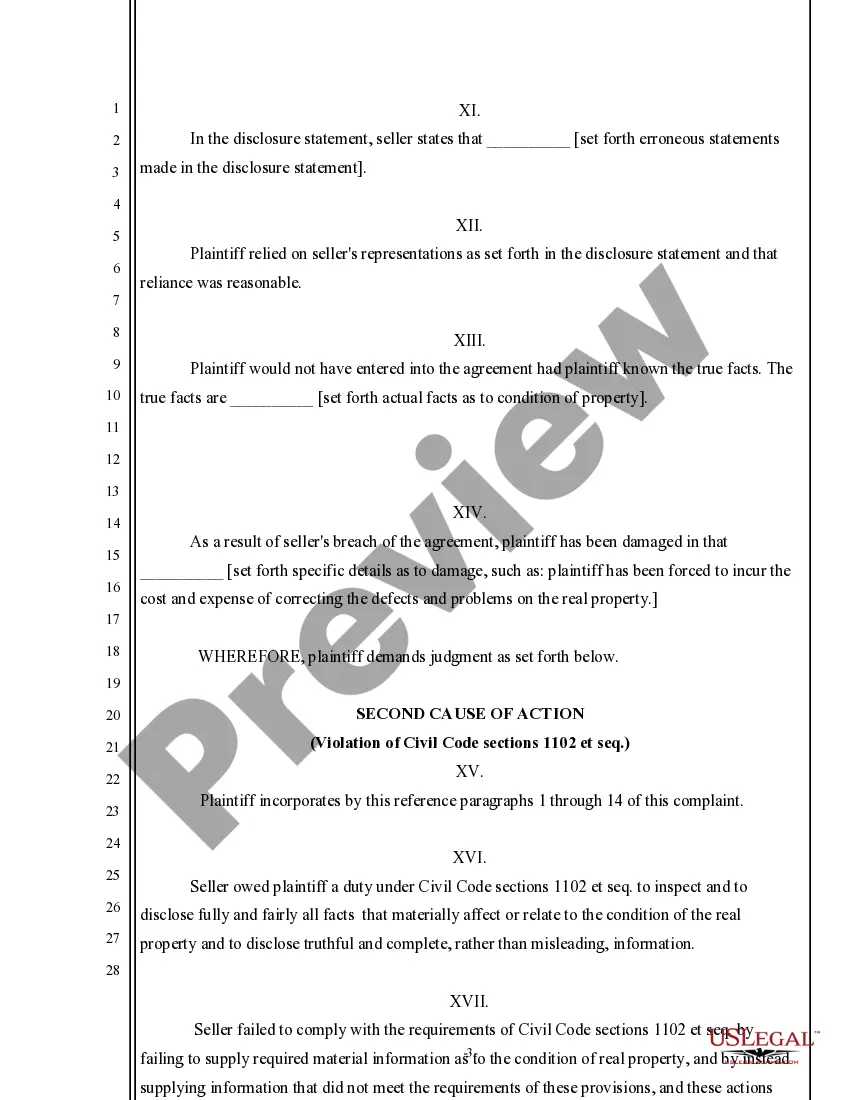
- Allegations of breach: Specific failures to disclose property conditions
- Claims for damages: Amount sought, interest, and attorney fees
- Verification section: Declaration of truthfulness by the plaintiff
Situations where this form applies
This form should be used when a buyer discovers that a seller has not disclosed material information about the property's condition after the sale has been completed. Typical scenarios include situations where issues such as structural problems, environmental hazards, or violations of housing codes were not shared prior to the sale. This form allows the buyer to formally seek compensation through the court system.
Who needs this form
- Homebuyers who believe they have been misled about the condition of a property
- Individuals representing themselves (pro per) or those with legal counsel
- Parties involved in real estate transactions where disclosure is mandatory under state law
Completing this form step by step
- Identify the plaintiff and defendant, including names and addresses.
- Specify the details of the property involved in the transaction, including the legal description.
- Enter the date the real estate agreement was signed and any relevant disclosure dates.
- Cite specific failures of the seller in disclosing property conditions.
- Detail the damages incurred and list the compensation sought from the court.
- Sign and date the form to verify its accuracy and truthfulness.
Does this form need to be notarized?
This form usually doesn’t need to be notarized. However, local laws or specific transactions may require it. Our online notarization service, powered by Notarize, lets you complete it remotely through a secure video session, available 24/7.
Get your form ready online
Our built-in tools help you complete, sign, share, and store your documents in one place.
Make edits, fill in missing information, and update formatting in US Legal Forms—just like you would in MS Word.
Download a copy, print it, send it by email, or mail it via USPS—whatever works best for your next step.
Sign and collect signatures with our SignNow integration. Send to multiple recipients, set reminders, and more. Go Premium to unlock E-Sign.
If this form requires notarization, complete it online through a secure video call—no need to meet a notary in person or wait for an appointment.
We protect your documents and personal data by following strict security and privacy standards.

Make edits, fill in missing information, and update formatting in US Legal Forms—just like you would in MS Word.

Download a copy, print it, send it by email, or mail it via USPS—whatever works best for your next step.

Sign and collect signatures with our SignNow integration. Send to multiple recipients, set reminders, and more. Go Premium to unlock E-Sign.

If this form requires notarization, complete it online through a secure video call—no need to meet a notary in person or wait for an appointment.

We protect your documents and personal data by following strict security and privacy standards.
Mistakes to watch out for
- Failing to provide complete and accurate property details.
- Not clearly citing all breaches or omissions made by the seller.
- Omitting documentation, such as the purchase agreement or disclosure statements.
- Neglecting to verify the truthfulness of the information declared in the verification section.
Benefits of completing this form online
- Convenience of completing the form digitally from anywhere at any time.
- Editable templates allow for easy customization based on individual circumstances.
- Reliability, with forms drafted by licensed attorneys to ensure legal compliance.
Legal use & context
- This complaint is used in civil law to establish claims for damages resulting from a breach of contract.
- Legal representation is recommended to navigate the complexities of filing a complaint in court.
- Understanding the rights and obligations under California real estate laws is crucial when utilizing this form.
Summary of main points
- The form is specifically designed for cases involving undisclosed property conditions in California.
- Accurate and detailed information is essential for a successful complaint.
- Potential claimants should be aware of their rights related to property disclosures and follow the legal procedures accordingly.
Looking for another form?

Form popularity
FAQ
In California, certain serious crimes have no statute of limitations. These include murder, certain sexual offenses, and crimes resulting in death. If you encounter significant issues related to a property, understanding these legal nuances can be pivotal in framing your complaint and ensuring it aligns with state laws. By being aware of the legal landscape surrounding the California complaint for breach of contract for failure to disclose condition of property, you can better navigate your rights.
In California, the five-year statute of limitations applies to many civil actions, including breaches of written contracts. This means that you have five years from the date of the breach to file your legal claim. If you believe the seller failed to disclose vital information about the condition of the property, it’s essential to act within this timeframe to file a California complaint for breach of contract for failure to disclose condition of property. Being timely can make a significant difference in the outcome of your case.
In California, seller disclosures remain valid for as long as the property is owned by the seller and until the close of the sale. Typically, disclosures must be provided to potential buyers before they enter into a contract. If there are changes in the property's condition, the seller is required to update these disclosures promptly. Accurate disclosures help prevent California complaints for breach of contract for failure to disclose condition of property.
The burden of proof for breach of contract in California requires the claimant to prove their case by a preponderance of the evidence. This means you must show that it is more likely than not that the breach occurred, as in your California Complaint for Breach of Contract for Failure to Disclose Condition of Property. Clarity and strong evidence are key components in effectively demonstrating your case. Being confident in your presentation can significantly influence the outcome.
To prove a breach of contract in California, you must establish that a valid contract existed, demonstrate how the other party breached it, and show that you suffered damages as a result. This involves collecting relevant evidence, such as contracts, correspondence, and witness statements. Incorporating these elements into your California Complaint for Breach of Contract for Failure to Disclose Condition of Property can enhance your credibility in court. Focus on presenting a comprehensive and compelling case.
Writing a breach of contract complaint involves outlining the essential elements: the parties involved, the contract terms, the alleged breach, and the damages incurred. It is crucial to be clear and persuasive, focusing on relevant facts that support your California Complaint for Breach of Contract for Failure to Disclose Condition of Property. Using a platform like US Legal Forms can streamline this process by providing templates and guidance tailored to your legal needs. This support can save you time and ensure completeness.
The burden of proof for a breach of contract lies with the plaintiff, or the person filing the complaint. In your California Complaint for Breach of Contract for Failure to Disclose Condition of Property, you must provide sufficient evidence to prove that a contract existed, it was breached, and you suffered damages. Understanding this process can empower you to prepare your case effectively. Thus, gathering strong evidence should be a priority.
In California, the statute of limitations for most breach of contract claims is four years from the date of the breach. This means if you believe you have a claim related to failure to disclose property conditions, you must file your complaint within this timeframe. Taking timely action is essential to preserve your rights, so consult with legal experts early on. Addressing these matters promptly can significantly impact your success.
Three essential elements must exist for a breach of contract claim: an enforceable contract, a breach by one party, and damages resulting from that breach. In your California Complaint for Breach of Contract for Failure to Disclose Condition of Property, you must articulate how these elements apply to your situation. Clearly demonstrating these aspects will be vital for the success of your case. Each element plays a crucial role in proving your claim.
To establish a breach of contract, you need to present clear evidence of the agreement and the breach itself. This could include written contracts, emails, or other documents that demonstrate the terms of the agreement and the failure to comply with those terms. Recognizing the significance of documentation will strengthen your California Complaint for Breach of Contract for Failure to Disclose Condition of Property. Accurate evidence will support your position in any legal proceedings.