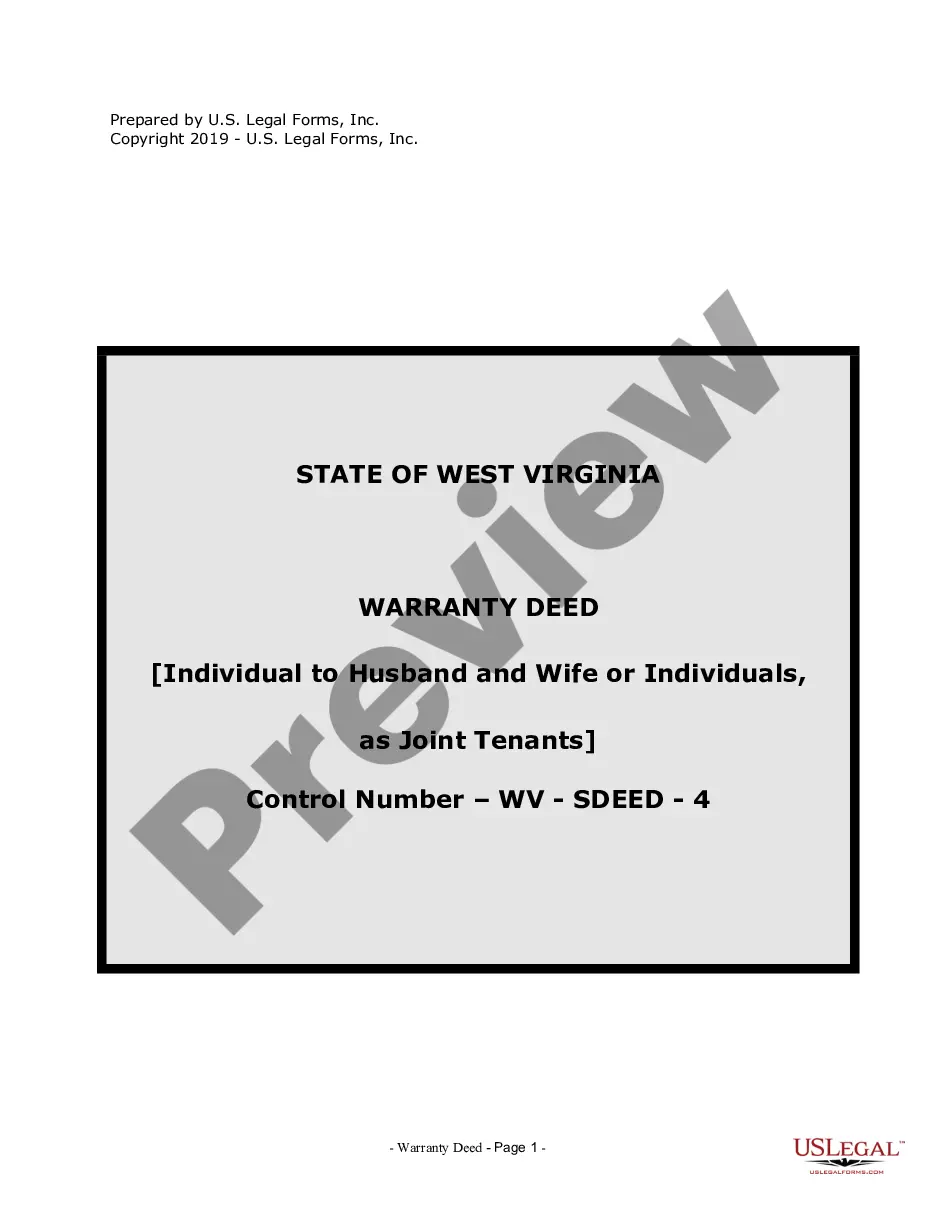
West Virginia Warranty Deed Converting Separate or Joint Property to Joint Tenancy
Understanding this form
The Warranty Deed Converting Separate or Joint Property to Joint Tenancy is a legal document used to convert property ownership into joint tenancy. This form establishes ownership by two or more parties with rights of survivorship, meaning if one owner passes away, their share automatically transfers to the surviving owner(s). This differs from other forms of property ownership, such as tenancy in common, where there is no automatic transfer of ownership upon death.
Main sections of this form
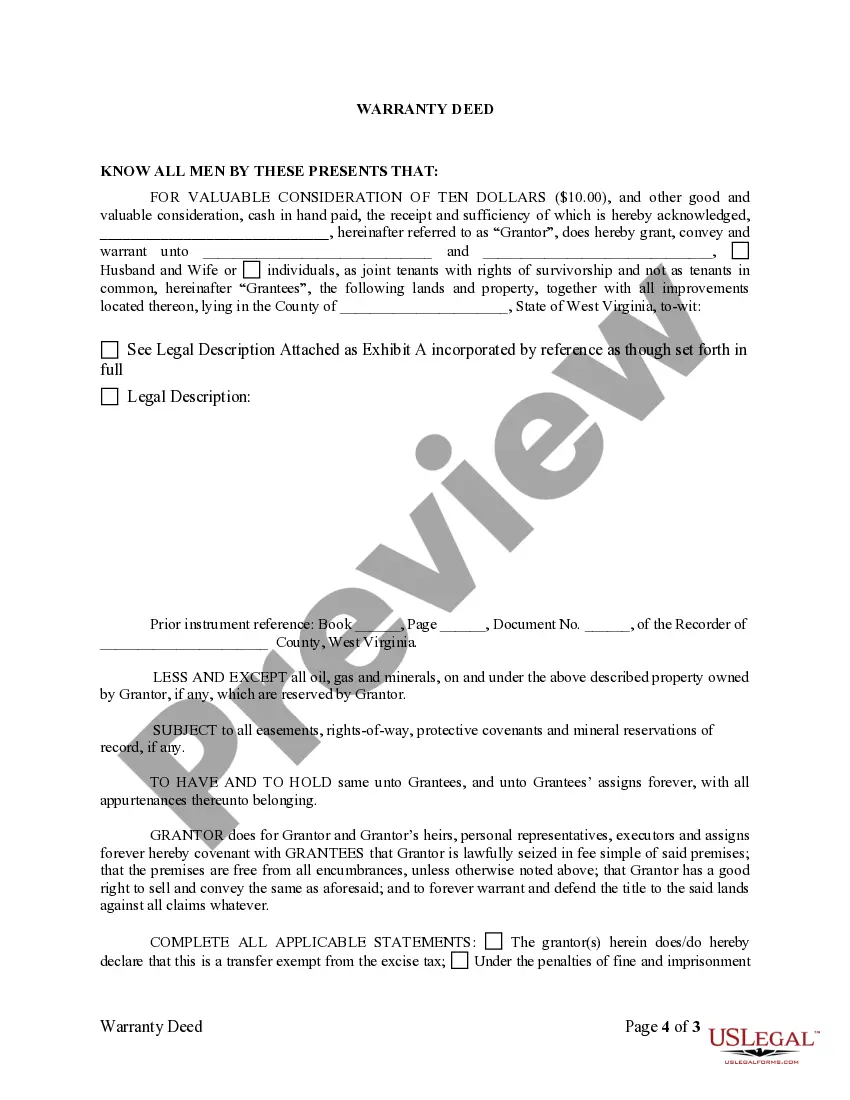
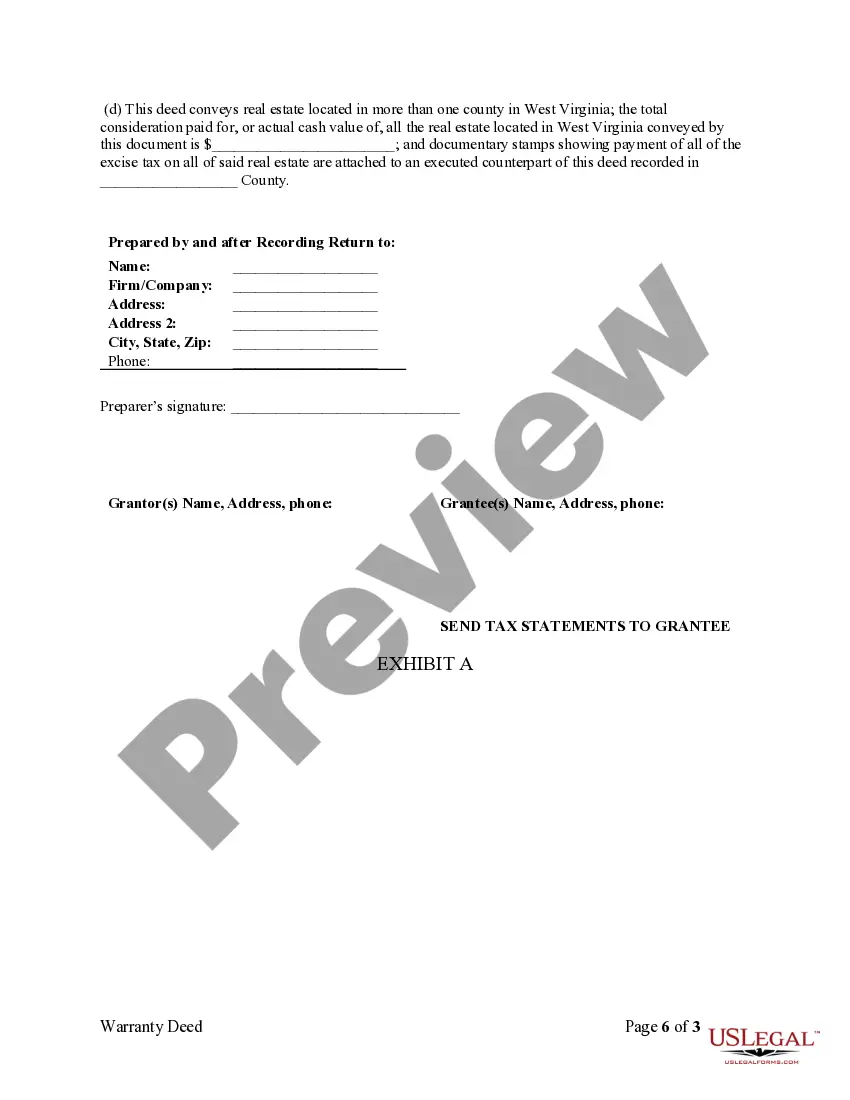
- Names of the Grantor(s) and Grantee(s): Identifies the current owner(s) and the new joint tenants.
- Description of the property: Detailed legal description of the property being transferred.
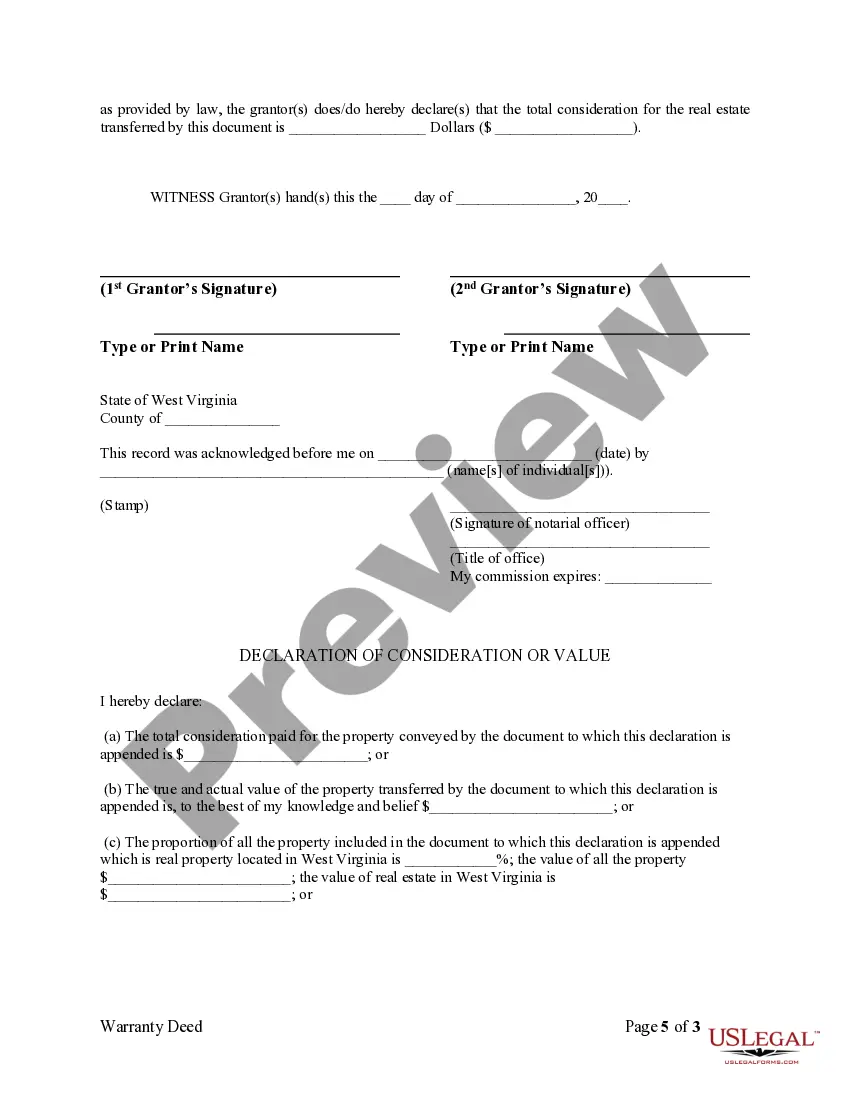
- Consideration statement: Indicates the value exchanged for the transfer, usually a nominal amount.
- Signatures: Requires signatures from all Grantor(s) and Grantee(s), with a date of execution.
- Notary acknowledgment: Certifies that the signing parties appeared before a notary public.

When to use this form
This form is needed when individuals want to change the way they hold title to a property, specifically when converting separate property or existing joint property into joint tenancy. Common scenarios include married couples wanting to ensure that ownership automatically passes to the surviving spouse, or when friends or family members wish to hold property together with survivorship rights.
Who this form is for
Eligible users of this form include:
- Married couples who currently own property separately or jointly and wish to convert it into joint tenancy.
- Individuals who want to establish joint tenancy ownership with a partner, family member, or friend.
- Property owners wanting to ensure seamless transfer of property rights upon death without the need for probate.
Steps to complete this form
- Identify the parties: Fill in the names of the Grantor(s) and Grantee(s) accurately.
- Specify the property: Include a detailed legal description of the property being transferred.
- State the consideration: Indicate the total amount exchanged for the property transfer.
- Obtain signatures: Ensure all Grantors sign the document in the appropriate sections.
- Notarize the deed: Have the document signed in the presence of a notary public for legal validation.
Notarization guidance
This document requires notarization to meet legal standards. US Legal Forms provides secure online notarization powered by Notarize, allowing you to complete the process through a verified video call, available 24/7.
Get your form ready online
Our built-in tools help you complete, sign, share, and store your documents in one place.
Make edits, fill in missing information, and update formatting in US Legal Forms—just like you would in MS Word.
Download a copy, print it, send it by email, or mail it via USPS—whatever works best for your next step.
Sign and collect signatures with our SignNow integration. Send to multiple recipients, set reminders, and more. Go Premium to unlock E-Sign.
If this form requires notarization, complete it online through a secure video call—no need to meet a notary in person or wait for an appointment.
We protect your documents and personal data by following strict security and privacy standards.

Make edits, fill in missing information, and update formatting in US Legal Forms—just like you would in MS Word.

Download a copy, print it, send it by email, or mail it via USPS—whatever works best for your next step.

Sign and collect signatures with our SignNow integration. Send to multiple recipients, set reminders, and more. Go Premium to unlock E-Sign.

If this form requires notarization, complete it online through a secure video call—no need to meet a notary in person or wait for an appointment.

We protect your documents and personal data by following strict security and privacy standards.
Typical mistakes to avoid
- Not including a complete legal description of the property, which can lead to future disputes.
- Failing to have the deed notarized, which may invalidate the document.
- Not signing the form where required, which could lead to challenges in property ownership.
- Using incorrect terms or not distinguishing between joint tenancy and tenancy in common.
Benefits of using this form online
- Convenience: Access and complete the form at your own pace from home.
- Editability: Easily make corrections before finalizing the document.
- Reliability: Use reputable legal templates drafted by licensed attorneys, ensuring you have quality documentation.
Looking for another form?

Form popularity
FAQ
You can apply to court to change your ex-partner's tenancy to your name, or remove their name from a joint tenancy. You can apply for a 'transfer of tenancy' if: your landlord refuses to change your tenancy. your tenancy doesn't allow a transfer.
To create a joint tenancy, all you need to do is put the right words on the title document, such as a deed to real estate, a car's title slip, or the signature card establishing a bank account.
If you look at the registered title to your own jointly owned property and the text isn't shown on it, you own it as joint tenants. If it is there, you own it as tenants-in-common.This title is dealt with by Land Registry, Sample Town Office.
The name and address of the seller (called the grantor) The name and address of the buyer (called the grantee) A legal description of the property (found on the previous deed) A statement that the grantor is transferring the property to the grantee.
Which statement applies to both joint tenancy and tenancy by the entirety? The last survivor becomes a severalty owner. A deed signed by one owner will convey a fractional interest. A deed will not convey any interest unless signed by both spouses.
Serve a written notice of the change (a 'notice of severance') on the other owners - a conveyancer can help you do this. Download and fill in form SEV to register a restriction without the other owners' agreement. Prepare any supporting documents you need to include.
The name and address of the seller (called the grantor) The name and address of the buyer (called the grantee) A legal description of the property (found on the previous deed) A statement that the grantor is transferring the property to the grantee.
To make the form legally binding, you must sign it in front of a notary public. You must then file your signed and notarized deed with the county office that's in charge of recording property documents. Once the grantee signs the warranty deed, he/she legally has ownership and claim to the property.
In order to terminate a joint tenancy, one of the four unities must be destroyed. You may do this by conveying your joint tenancy interest to any third person. This can be done through gift or sale. Upon termination, a tenancy in common is formed between the third person and the remaining co-tenant(s).