West Virginia Residential Rental Lease Application
Understanding this form
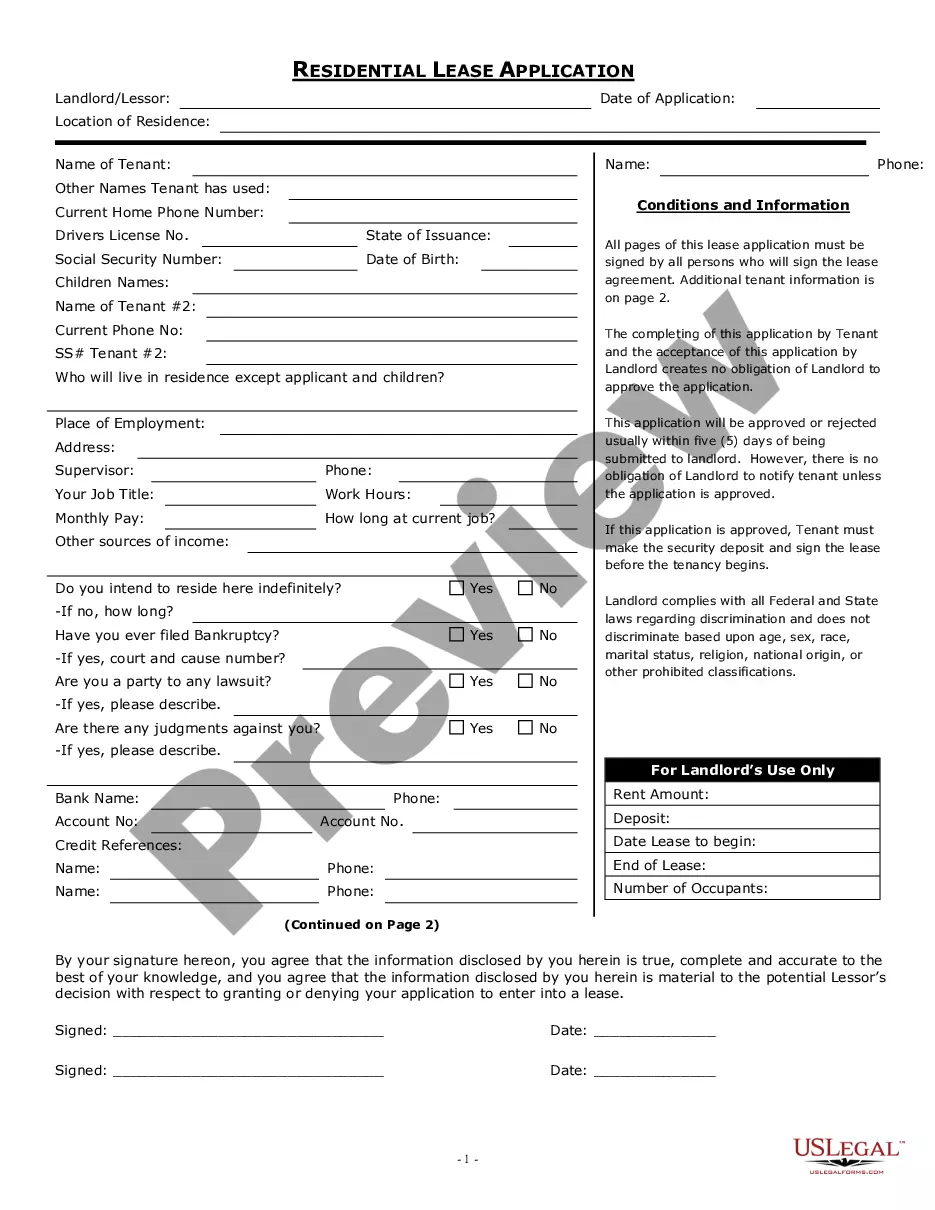
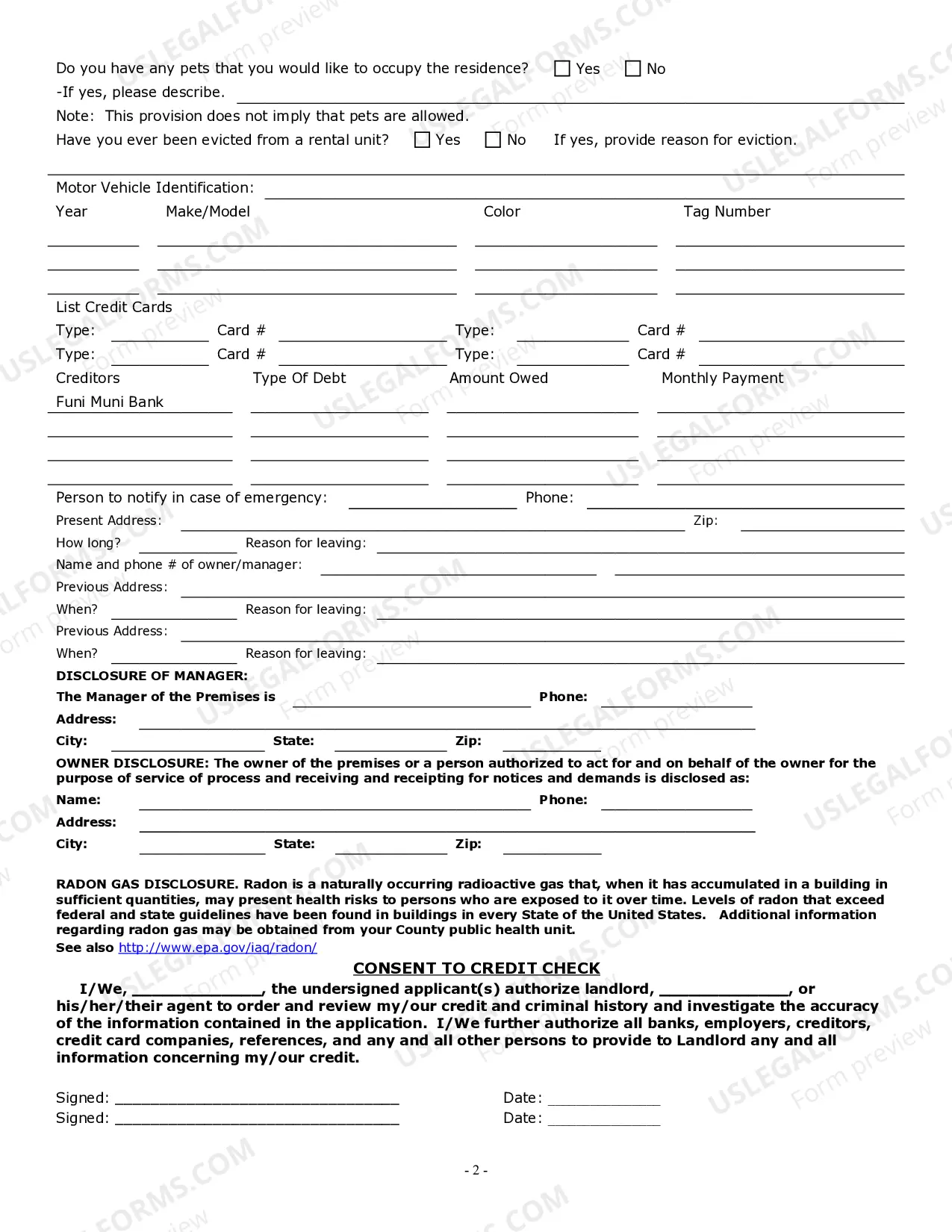
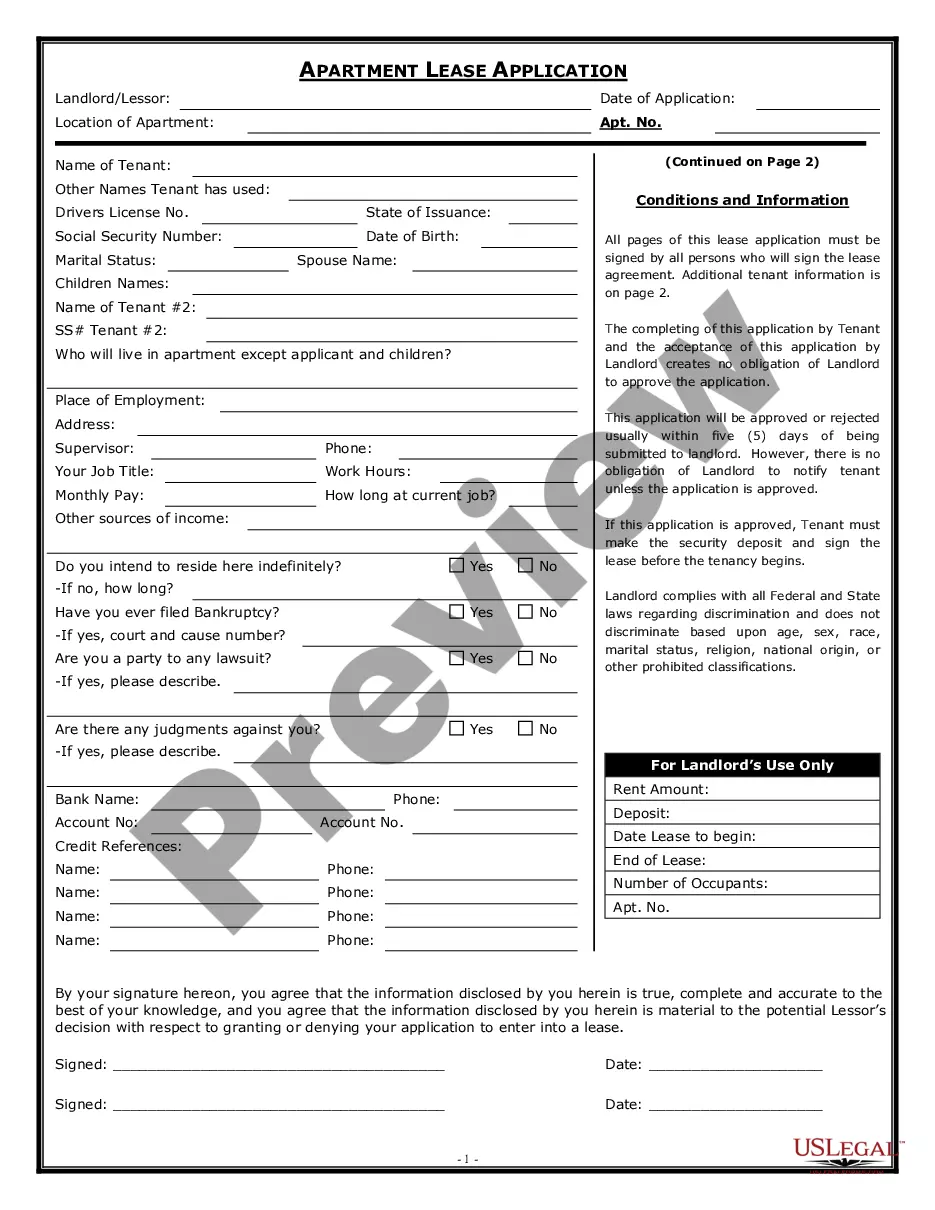
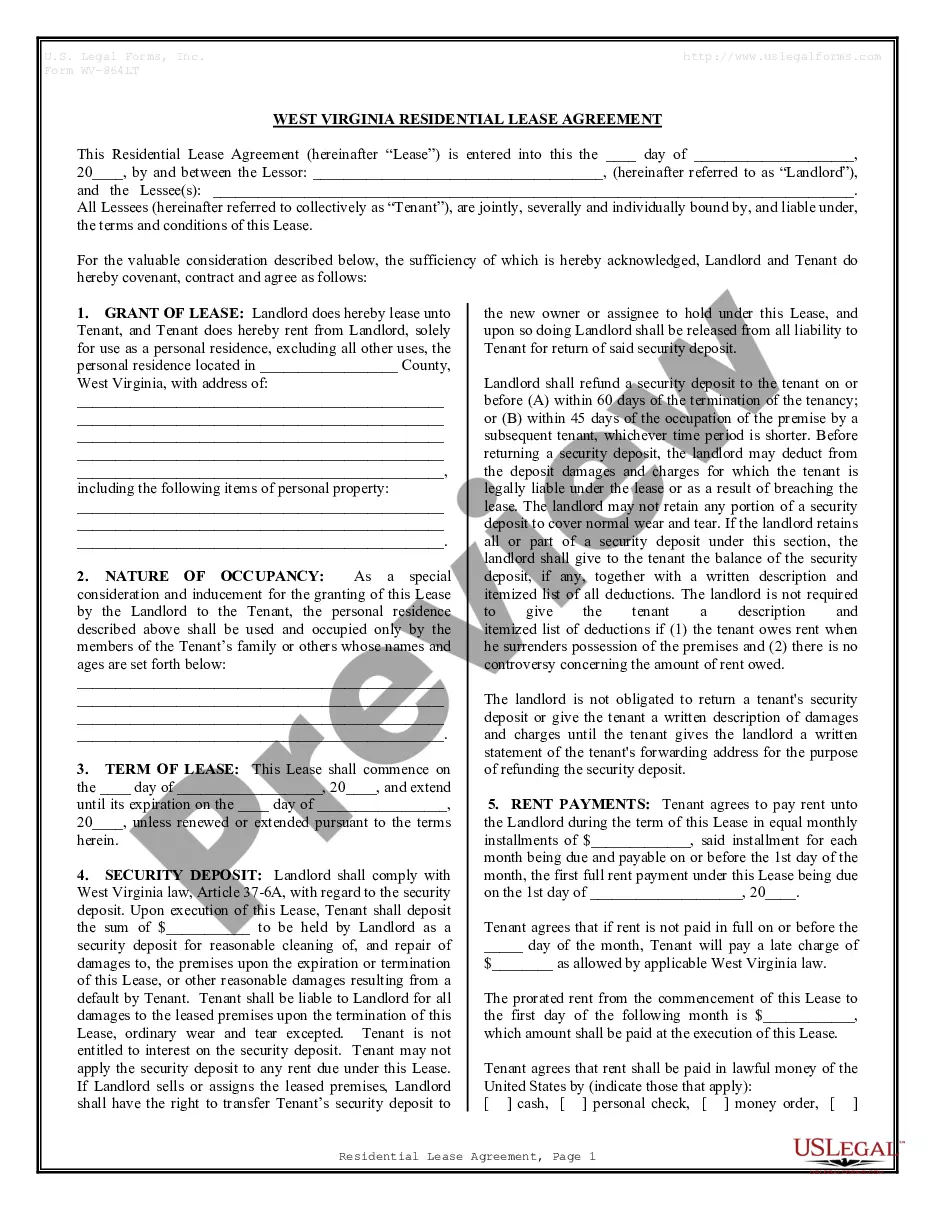
The Residential Rental Lease Application is designed for landlords to evaluate potential tenants. This form allows the applicant, typically a tenant, to provide necessary information along with disclosures and an authorization for the release of information. Unlike other rental forms, this application specifically facilitates background checks and informs the landlord's decision-making process regarding lease approvals.
Main sections of this form
- Applicant information: Personal details about the prospective tenant.
- Consent for credit and background checks: Authorization for the landlord to obtain reports.
- Disclosure sections: Information regarding rental policies and legal obligations.
- Signature and date fields: To validate the application and confirm truthfulness of the information provided.
- Landlord evaluation section: A space for landlords to document their decision metrics.
Situations where this form applies
This application should be used whenever a prospective tenant wishes to rent a residential property. It is essential during the leasing process to gather pertinent information prior to signing a rental agreement, helping landlords assess the suitability of applicants and make informed decisions.
Who should use this form
This form is intended for:
- Landlords seeking to screen potential tenants before signing a lease.
- Prospective tenants applying for residential rental properties.
- Property management professionals involved in tenant applications.
Completing this form step by step
- Identify the applicant(s): Fill in the required personal information of the prospective tenant.
- Authorize checks: Sign the consent section allowing for credit and background checks.
- Provide disclosures: Read and acknowledge the required disclosures regarding rental policies.
- Review information: Double-check for accuracy and completeness before submission.
- Submit the application: Deliver the completed form to the landlord for evaluation.
Notarization guidance
This form does not typically require notarization unless specified by local law. Ensure to verify your local requirements before submission for any specific notarization needs.
Get your form ready online
Our built-in tools help you complete, sign, share, and store your documents in one place.
Make edits, fill in missing information, and update formatting in US Legal Forms—just like you would in MS Word.
Download a copy, print it, send it by email, or mail it via USPS—whatever works best for your next step.
Sign and collect signatures with our SignNow integration. Send to multiple recipients, set reminders, and more. Go Premium to unlock E-Sign.
If this form requires notarization, complete it online through a secure video call—no need to meet a notary in person or wait for an appointment.
We protect your documents and personal data by following strict security and privacy standards.

Make edits, fill in missing information, and update formatting in US Legal Forms—just like you would in MS Word.

Download a copy, print it, send it by email, or mail it via USPS—whatever works best for your next step.

Sign and collect signatures with our SignNow integration. Send to multiple recipients, set reminders, and more. Go Premium to unlock E-Sign.

If this form requires notarization, complete it online through a secure video call—no need to meet a notary in person or wait for an appointment.

We protect your documents and personal data by following strict security and privacy standards.
Mistakes to watch out for
- Omitting essential personal information or details.
- Not signing the consent for credit and background checks.
- Providing inaccurate or false information which may lead to application denial.
- Failing to review the form for completeness before submission.
Why use this form online
- Convenience: Easily access and complete the form from home at any time.
- Editability: Modify the form as necessary before final submission.
- Reliability: Use up-to-date legal templates reviewed by licensed attorneys.
Looking for another form?
Form popularity
FAQ
Names of all tenants. Limits on occupancy. Term of the tenancy. Rent. Deposits and fees. Repairs and maintenance. Entry to rental property. Restrictions on tenant illegal activity.
Terms. The lease should state the length of the agreement. Rent. The amount of rent and when it is due. Deposits and fees. The names of all tenants. Occupancy limits. Restrictions on disruptive activity. Pets. Maintenance and repairs.
A rental application is a form that provides the information necessary for a landlord or property owner to determine a tenant's creditworthiness and their ability to pay their rent reliably.
Collect each party's information. Include specifics about your property. Consider all of the property's utilities and services. Know the terms of your lease. Set the monthly rent amount and due date. Calculate any additional fees. Determine a payment method. Consider your rights and obligations.
The lease agreement or contract offered by the landlord once the application has been approved is a legally binding document. It becomes legally binding once it is signed by the applicants and landlord.It also explains what items the landlord is responsible for and what the tenants are responsible for.
As long as the contract spells out specific details and both parties have signed that they agree to the contract's terms, a handwritten contract is legally binding and enforceable in court.
If you're thinking of renting out your property, or you're a tenant, and the current owner doesn't already have an agreement drawn up, it's possible to create your own rental contract.
1Name the parties. A simple rental agreement form needs to name the parties signing the lease and where they live.2Describe the premises.3Define the term of the lease.4Set how much rent is owed.5Assign a security deposit amount.6Finalize the lease.
The short answer is yes. Handwritten contracts are slightly impractical when you could just type them up, but they are completely legal if written properly. In fact, they're even preferable to verbal contracts in many ways.