Florida Warranty Deed from Two Trusts (Concurrent Owners) to Two Individuals
Overview of this form
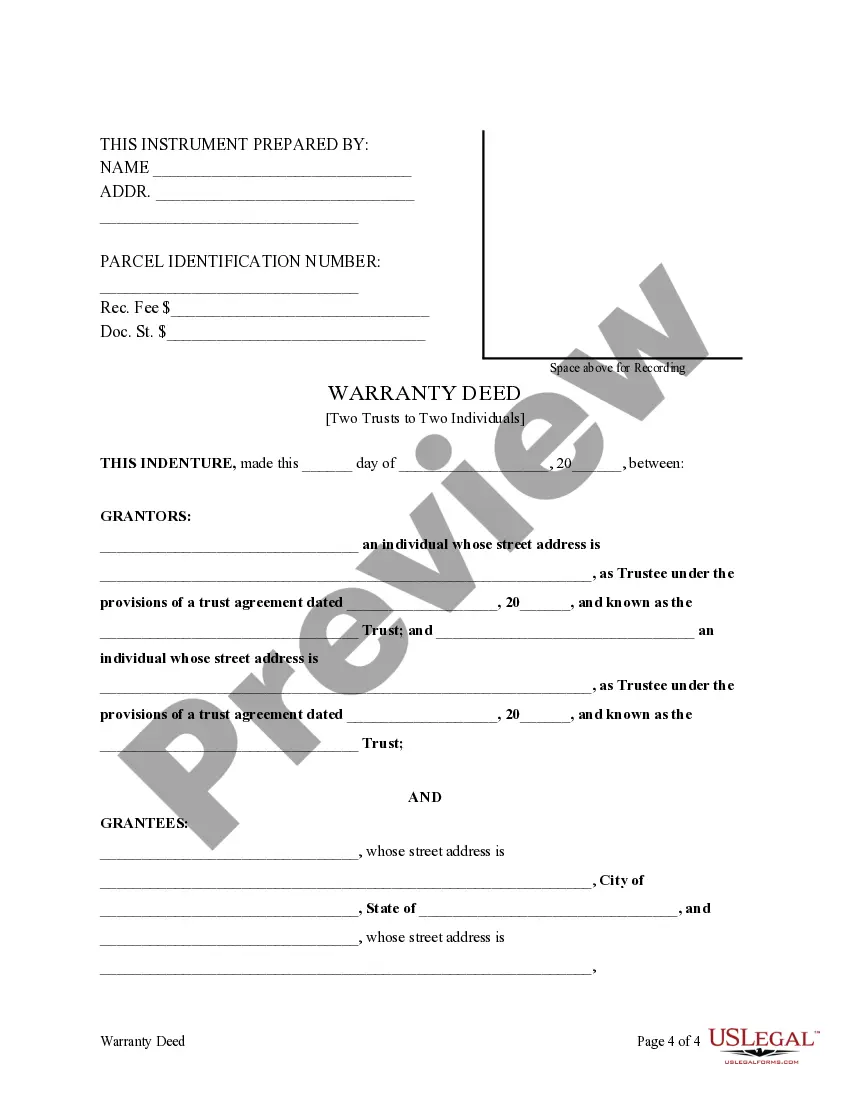
This Warranty Deed from Two Trusts to Two Individuals is a legal document used to transfer real estate ownership from two trusts to two individuals. It ensures that the grantors, the trusts, are conveying a clear title to the grantees, the individuals, while complying with state laws. This form specifically addresses concurrent ownership, allowing for various types of property ownership arrangements.
Main sections of this form
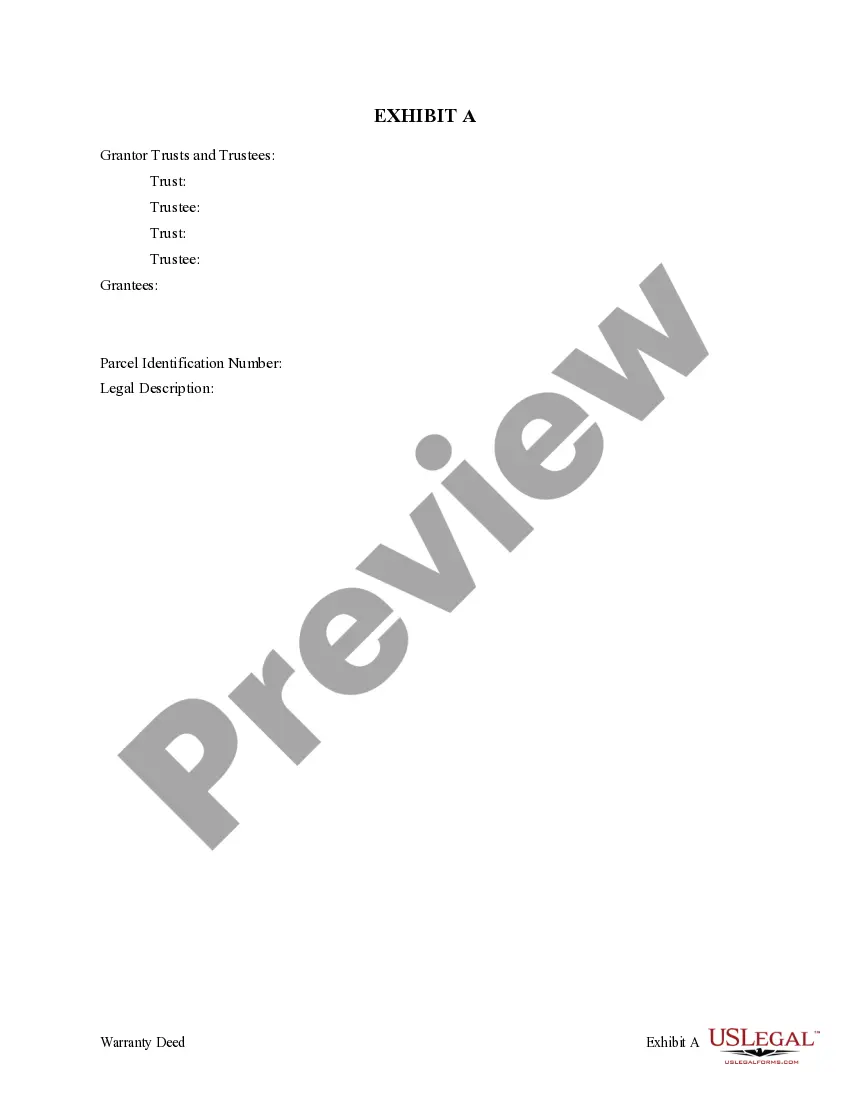
- Identification of grantors (the trusts) and grantees (the individuals).
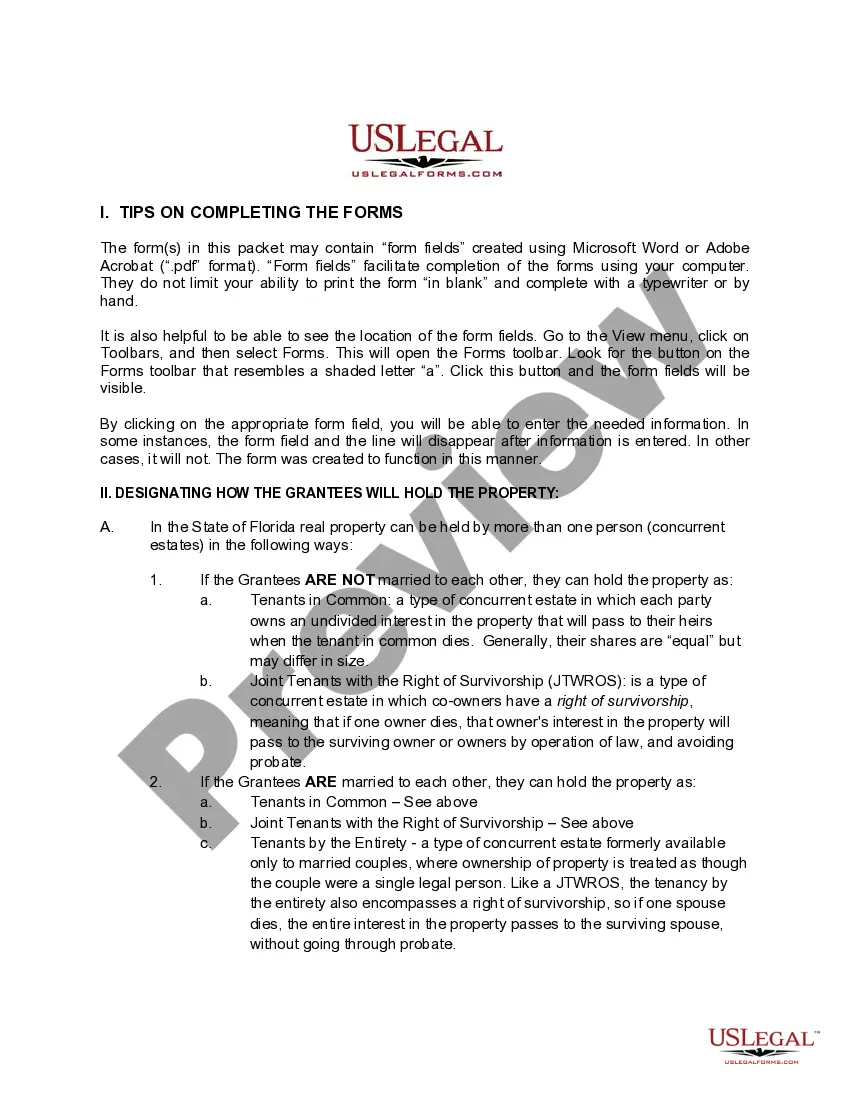
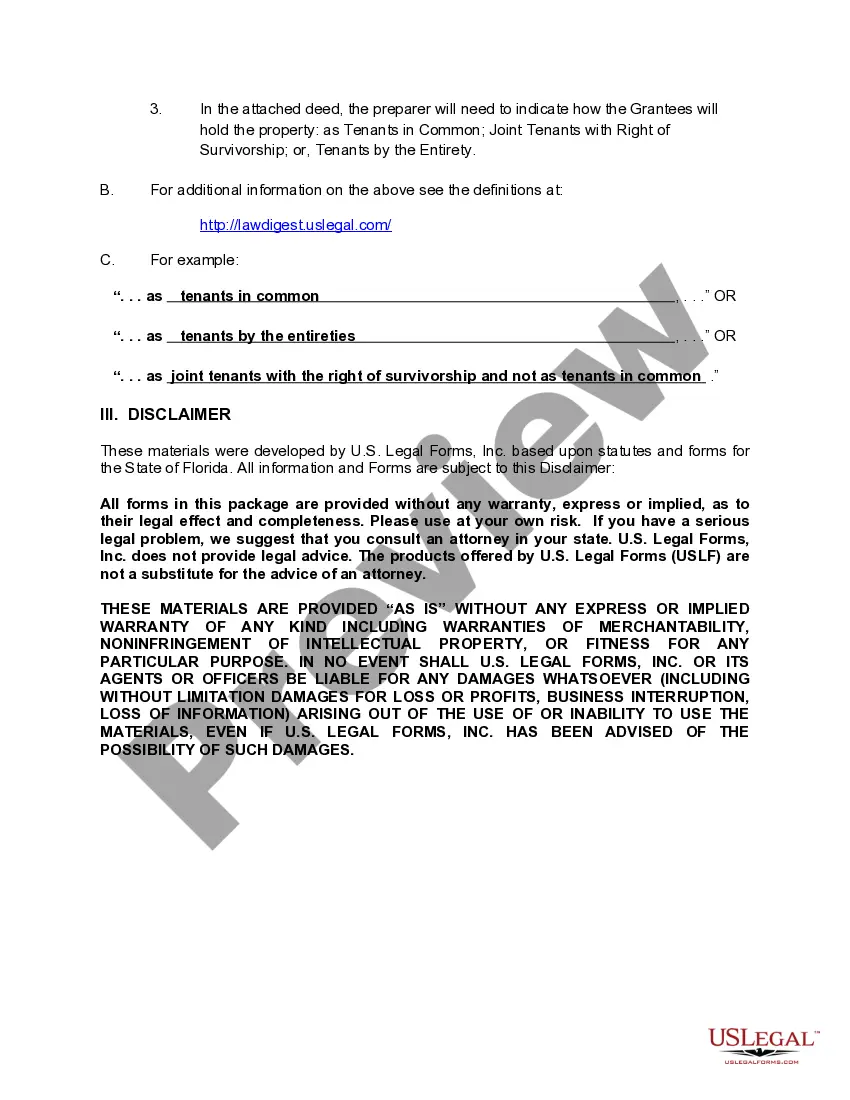
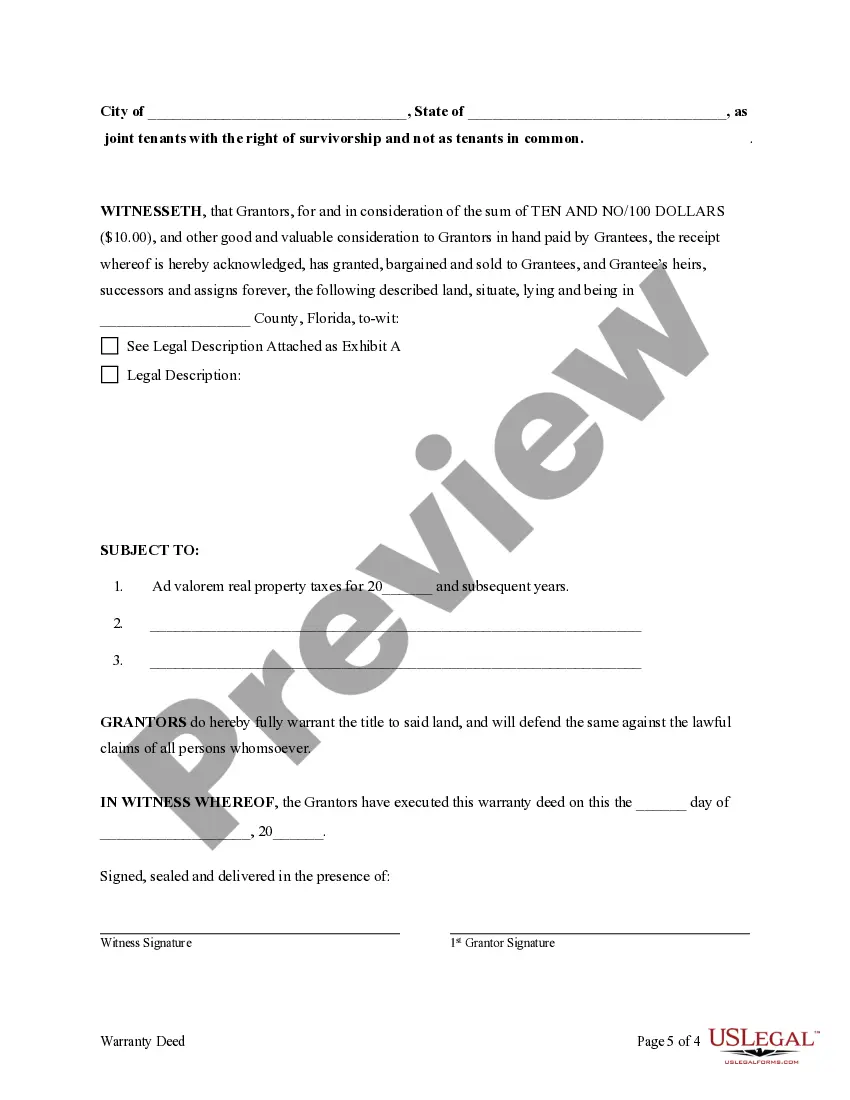
- Specification of how the grantees will hold the property (e.g., tenants in common, joint tenants with right of survivorship, tenants by the entirety).
- Legal description of the property being conveyed.
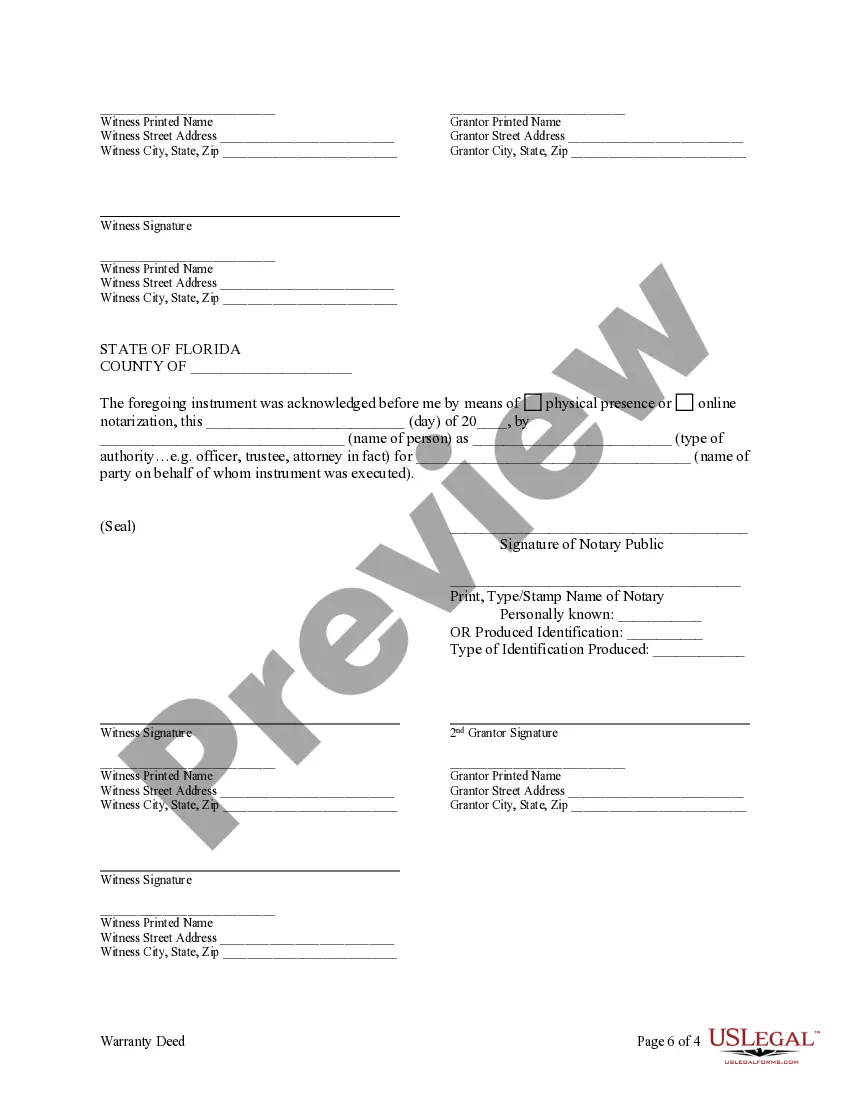
- Signatures of the grantors and witnesses for validity.
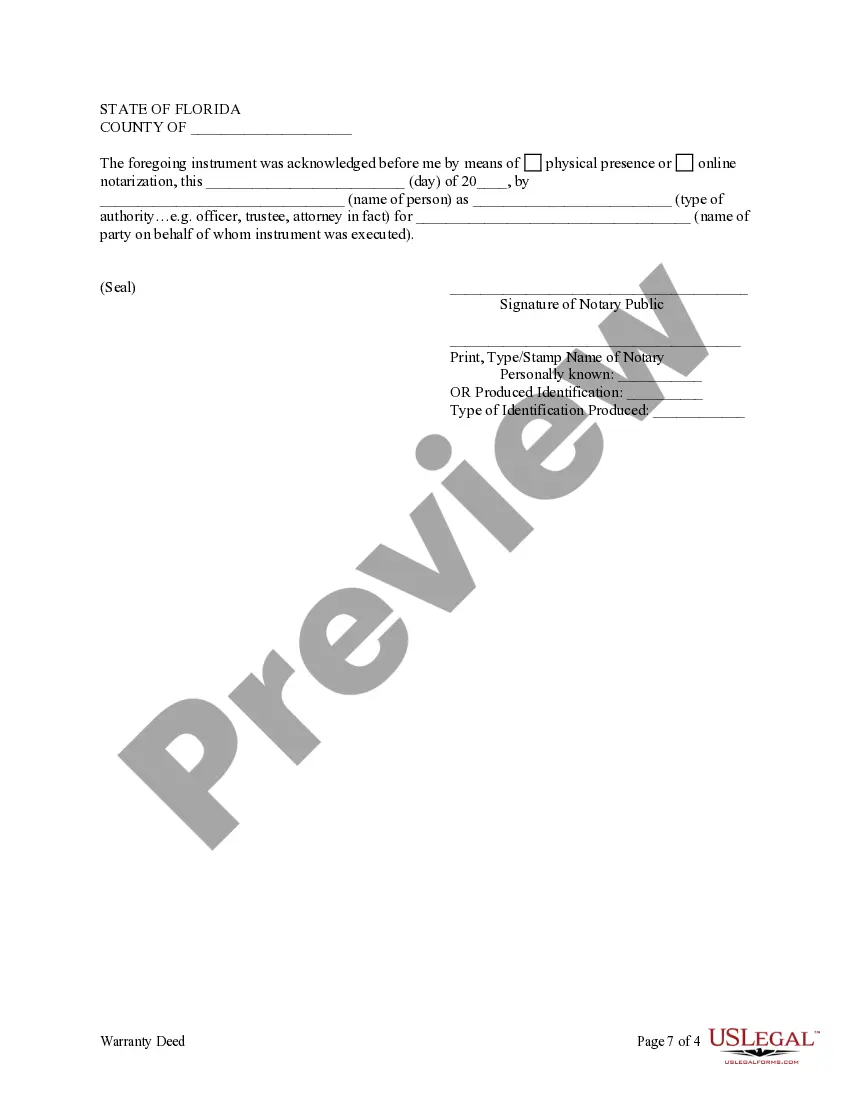
- Space for notarization to authenticate the document.




When this form is needed
This form should be used when two trusts wish to transfer property ownership to two individuals. It is particularly relevant in estate planning scenarios, when property needs to be conveyed to heirs, or when trusts are being settled or dissolved. It can also be used in cases where real estate ownership needs to be clarified or documented for estate purposes.
Who this form is for
This form is suitable for:
- Trustees of two trusts who are transferring property.
- Individuals receiving property from the trusts.
- Estate planners and real estate professionals managing property transfers.
Completing this form step by step
- Identify the grantors (trusts) and grantees (individuals) by entering their names and addresses.
- Specify how the grantees will hold the property, selecting from tenants in common, joint tenants with right of survivorship, or tenants by the entirety.
- Provide a complete legal description of the property being conveyed.
- Ensure that grantors sign the deed in the presence of witnesses.
- Include a section for notarization to validate the document legally.
Notarization guidance
Yes, this form must be notarized to be legally valid. This ensures that the identity of the grantors is verified, which adds a layer of security to the transaction. US Legal Forms offers integrated online notarization services, allowing users to notarize their documents securely via video call, making the process quick and convenient.
Get your form ready online
Our built-in tools help you complete, sign, share, and store your documents in one place.
Make edits, fill in missing information, and update formatting in US Legal Forms—just like you would in MS Word.
Download a copy, print it, send it by email, or mail it via USPS—whatever works best for your next step.
Sign and collect signatures with our SignNow integration. Send to multiple recipients, set reminders, and more. Go Premium to unlock E-Sign.
If this form requires notarization, complete it online through a secure video call—no need to meet a notary in person or wait for an appointment.
We protect your documents and personal data by following strict security and privacy standards.

Make edits, fill in missing information, and update formatting in US Legal Forms—just like you would in MS Word.

Download a copy, print it, send it by email, or mail it via USPS—whatever works best for your next step.

Sign and collect signatures with our SignNow integration. Send to multiple recipients, set reminders, and more. Go Premium to unlock E-Sign.

If this form requires notarization, complete it online through a secure video call—no need to meet a notary in person or wait for an appointment.

We protect your documents and personal data by following strict security and privacy standards.
Typical mistakes to avoid
- Failing to provide a complete legal description of the property.
- Not indicating how the grantees will hold the property.
- Neglecting to obtain necessary signatures from witnesses or a notary public.
- Using outdated versions of the form that do not comply with current law.
Benefits of using this form online
- Convenient access to professionally drafted legal forms from anywhere.
- Easily editable to suit specific needs, reducing the risk of errors.
- Compliance with state laws ensures that the form is valid and enforceable.
Looking for another form?


Form popularity
FAQ
Yes, multiple people can be on one deed, allowing them to share ownership of the property. This is common in arrangements such as a Florida Warranty Deed from Two Trusts (Concurrent Owners) to Two Individuals. However, it's important to ensure that all parties understand their obligations and rights to avoid disputes in the future.
Adding someone to a deed can complicate ownership and create potential conflicts. For instance, both owners must agree on decisions related to the property, which can lead to disagreements. Additionally, a Florida Warranty Deed from Two Trusts (Concurrent Owners) to Two Individuals can affect future inheritance, asset division, and potential tax implications, so it's essential to consider these factors carefully.
Yes, you can add a name to a warranty deed, but the process involves legal documentation. To modify a Florida Warranty Deed from Two Trusts (Concurrent Owners) to Two Individuals, the current owners must agree to the change and formally execute a new deed. This ensures that the added individual shares the ownership rights and responsibilities of the property.
When two people are on a deed, it is called joint ownership. This typically means that both individuals share the rights and responsibilities associated with the property. In the context of a Florida Warranty Deed from Two Trusts (Concurrent Owners) to Two Individuals, both owners have equal claims to the property and can transfer their interests, but only with mutual consent.
If one owner of a jointly owned property dies, the property typically transfers to the surviving owner through a legal process called 'right of survivorship.' This means the deceased's share automatically goes to the remaining owner, without going through probate. For properties held under a Florida Warranty Deed from Two Trusts (Concurrent Owners) to Two Individuals, this process is straightforward, preserving the intent of the owners. Consider consulting US Legal Forms for clear guidelines on handling such situations.
To add a person to a property deed in Florida, you will need to prepare a new deed, often called a Florida Warranty Deed from Two Trusts (Concurrent Owners) to Two Individuals. This requires knowledge of property law and specific state regulations. You can complete this process through an online service, such as US Legal Forms, which provides templates and guidance to help ensure compliance with Florida law.
When you add someone to your house deed, this process is known as 'adding a grantee.' It typically involves creating a new Florida Warranty Deed from Two Trusts (Concurrent Owners) to Two Individuals. This legal documentation ensures both parties have ownership rights to the property. Utilizing a professional service, like US Legal Forms, simplifies this process and ensures all necessary details are accurately included.
A form of multiple ownership that includes the right of survivorship is joint tenancy. In joint tenancy, if one owner passes away, their share automatically transfers to the remaining owner without going through probate. This can be effectively established through a Florida Warranty Deed from Two Trusts (Concurrent Owners) to Two Individuals, ensuring smooth transitions of property ownership.
To transfer a warranty deed in Florida, you must prepare a new warranty deed that clearly states the transfer of ownership. The document should be signed, notarized, and filed with the county Clerk of Court. Using a Florida Warranty Deed from Two Trusts (Concurrent Owners) to Two Individuals simplifies this process and ensures that the transfer is legally recognized.
You can split jointly owned property by agreeing on a buyout, selling the property, or signing a formal agreement that details the division of the assets. Utilizing a Florida Warranty Deed from Two Trusts (Concurrent Owners) to Two Individuals can help clarify the terms and execute the transfer smoothly. Always ensure that the agreement is legally documented to protect both parties.