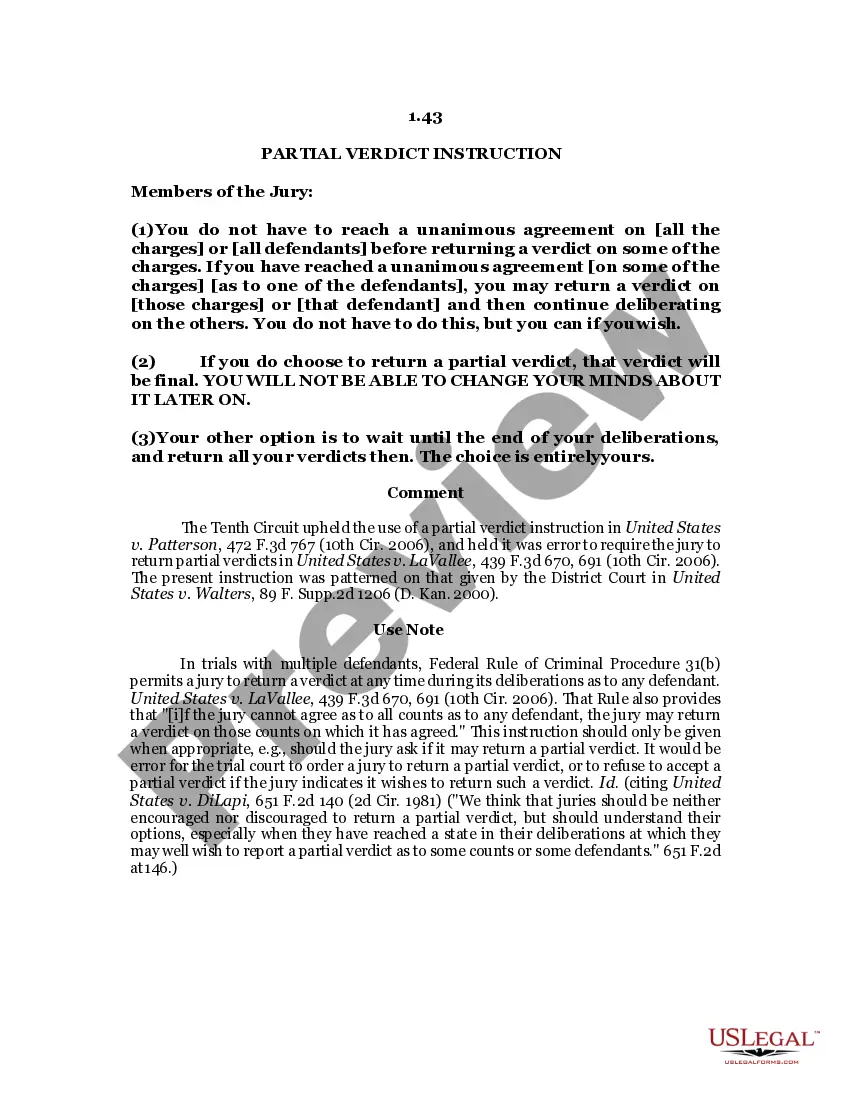
PARTIAL VERDICT INSTRUCTION
Understanding this form
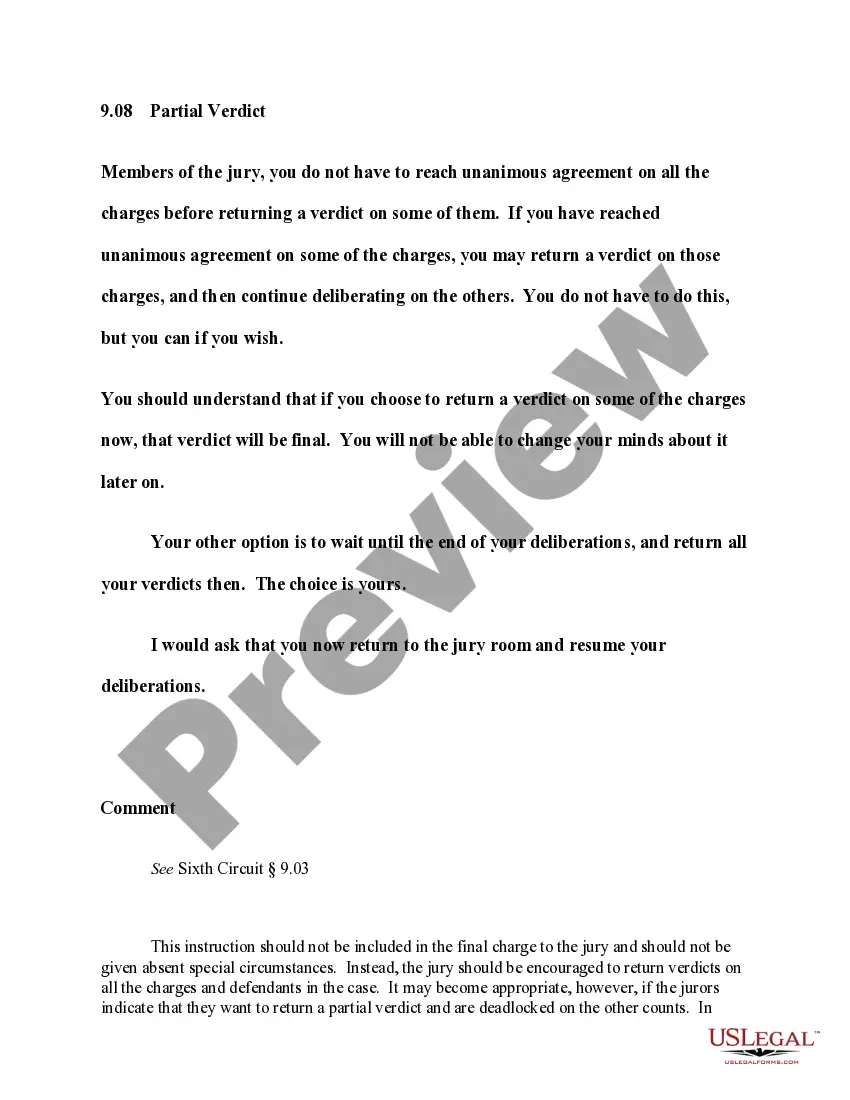
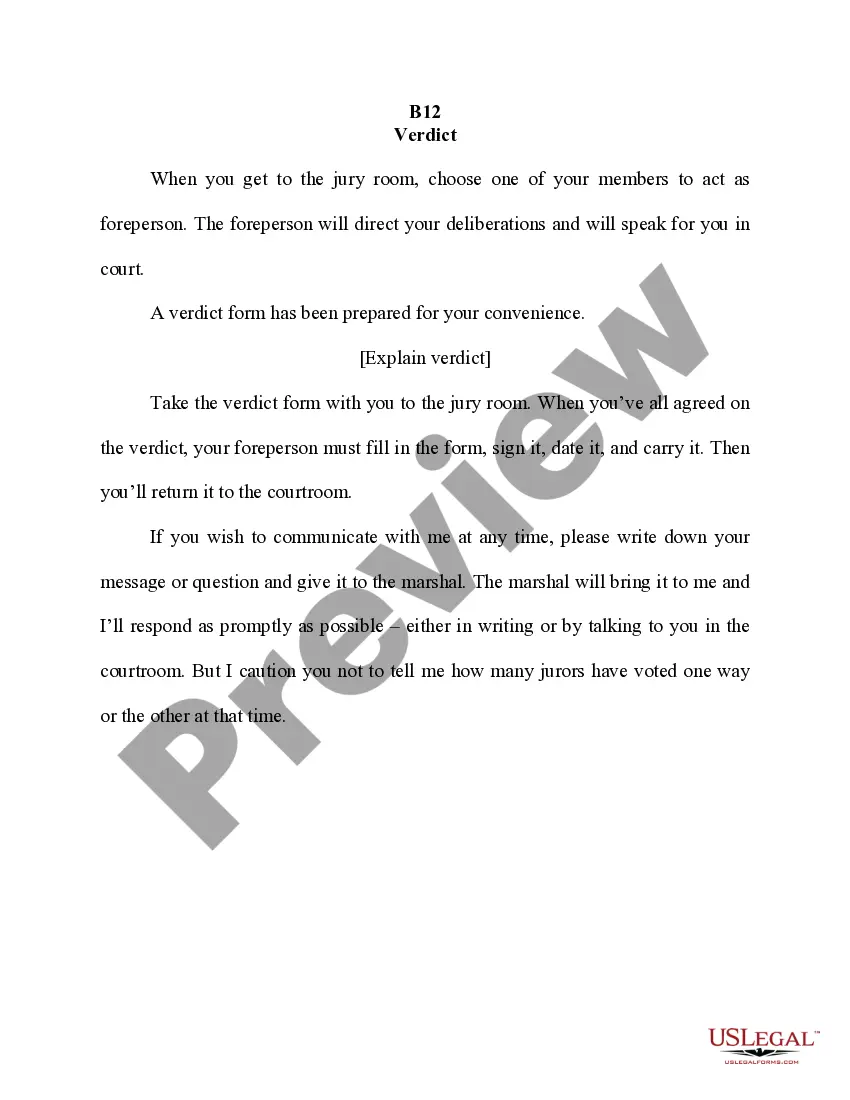
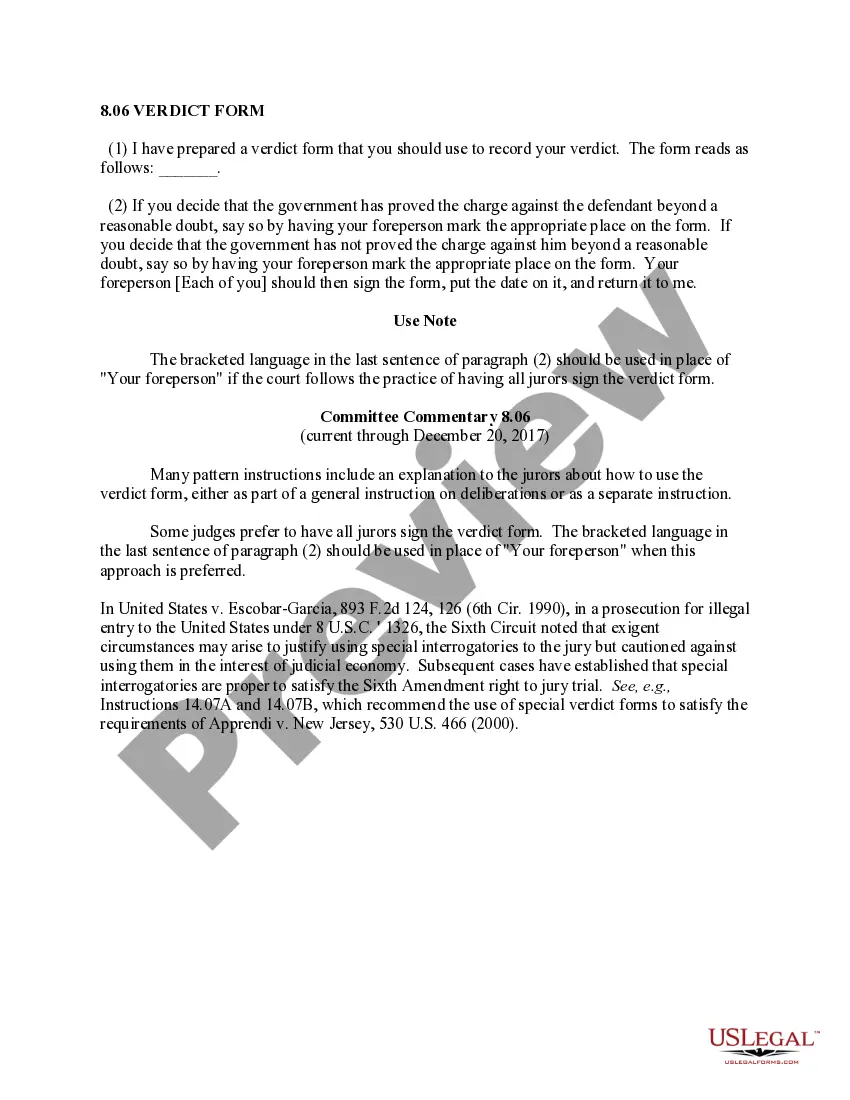
The Partial Verdict Instruction is a legal document used in jury trials that allows a jury to return a verdict on some charges or defendants even if they have not reached a consensus on all issues. This instruction clarifies that jurors can choose to deliver a partial verdict and continue deliberating on other charges. It serves to inform the jury of their options, helping them navigate the deliberation process effectively.
Main sections of this form
- Instruction for the jury regarding the ability to return a partial verdict.
- Clarification that the partial verdict is final and cannot be changed later.
- Indication that jurors can continue deliberating on remaining charges.
When this form is needed
This form is used during jury deliberations in criminal trials when jurors have reached agreements on some charges but not others. It is particularly relevant in cases with multiple defendants or various charges, where a jury may feel confident about certain aspects of the case but require more time to deliberate on others.
Intended users of this form
This instruction is intended for:
- Juries in criminal trials facing multiple charges or defendants.
- Judges presiding over criminal trials who need to instruct the jury on their options.
How to prepare this document
- Ensure all jury members understand they are not required to reach a unanimous verdict on all charges.
- Discuss any charges or defendants you are ready to deliver a verdict for.
- Draft the partial verdict based on the agreed-upon charges or defendants.
- Finalize the document and confirm that all jurors agree with the decision made.
Does this form need to be notarized?
This form usually doesn’t need to be notarized. However, local laws or specific transactions may require it. Our online notarization service, powered by Notarize, lets you complete it remotely through a secure video session, available 24/7.
Get your form ready online
Our built-in tools help you complete, sign, share, and store your documents in one place.
Make edits, fill in missing information, and update formatting in US Legal Forms—just like you would in MS Word.
Download a copy, print it, send it by email, or mail it via USPS—whatever works best for your next step.
Sign and collect signatures with our SignNow integration. Send to multiple recipients, set reminders, and more. Go Premium to unlock E-Sign.
If this form requires notarization, complete it online through a secure video call—no need to meet a notary in person or wait for an appointment.
We protect your documents and personal data by following strict security and privacy standards.

Make edits, fill in missing information, and update formatting in US Legal Forms—just like you would in MS Word.

Download a copy, print it, send it by email, or mail it via USPS—whatever works best for your next step.

Sign and collect signatures with our SignNow integration. Send to multiple recipients, set reminders, and more. Go Premium to unlock E-Sign.

If this form requires notarization, complete it online through a secure video call—no need to meet a notary in person or wait for an appointment.

We protect your documents and personal data by following strict security and privacy standards.
Avoid these common issues
- Not recognizing that a partial verdict cannot be changed once delivered.
- Confusion about whether all charges or all defendants need unanimous agreement.
Why use this form online
- Convenient access to drafted instructions tailored by licensed attorneys.
- Immediate download and printing options for jury use.
- Editable format allows for customization based on trial specifics.
Legal use & context
- This instruction is valid under the Federal Rules of Criminal Procedure.
- Judges must ensure jurors understand their right to return a partial verdict without undue pressure to decide on all matters.
Looking for another form?

Form popularity
FAQ
Trial Jury Trials are generally public, but jury deliberations are private. Defendants have the right to appear, testify, and call witnesses on their behalf. Final outcome is a verdict, in favor of plaintiff or defendant in a civil case, or guilty/not guilty in a criminal case.
Rule 31. Jury Verdict (a) Return. The jury must return its verdict to a judge in open court.(b) Partial Verdicts, Mistrial, and Retrial. (c) Lesser Offense or Attempt. A defendant may be found guilty of any of the following: (d) Jury Poll.
Criminal law A verdict of guilty in a criminal case is generally requires evidence to be tested and true beyond reasonable doubt and is normally followed by a judgment of conviction rendered by judge, which in turn be followed by sentencing.
In a criminal trial, the jury votes as guilty or not guilty. It's important to distinguish this from guilty vs. innocent. The jury is not supposed to decide if the defendant is innocent, but only if he or she has been proven guilty beyond a reasonable doubt.
A partial verdict is when a jury reaches a decision on some of the charges or defendants in a trial, but not all of them. This can happen when the jury is unable to agree on all of the charges or defendants.
The term ?partial verdict? is used here to refer to the situation in which the jury after some deliberation returns a verdict as to only some of the counts or some of the defendants prior to the remaining matters before it.
Rule 31. Jury Verdict (a) Return. The jury must return its verdict to a judge in open court.(b) Partial Verdicts, Mistrial, and Retrial. (c) Lesser Offense or Attempt. A defendant may be found guilty of any of the following: (d) Jury Poll.
There are several types of verdicts that are imposed in a civil trial: General Verdict. Special Verdict. Directed Verdict.