Oklahoma Local Form 7055-1B Motion for Default Judgment
What is this form?
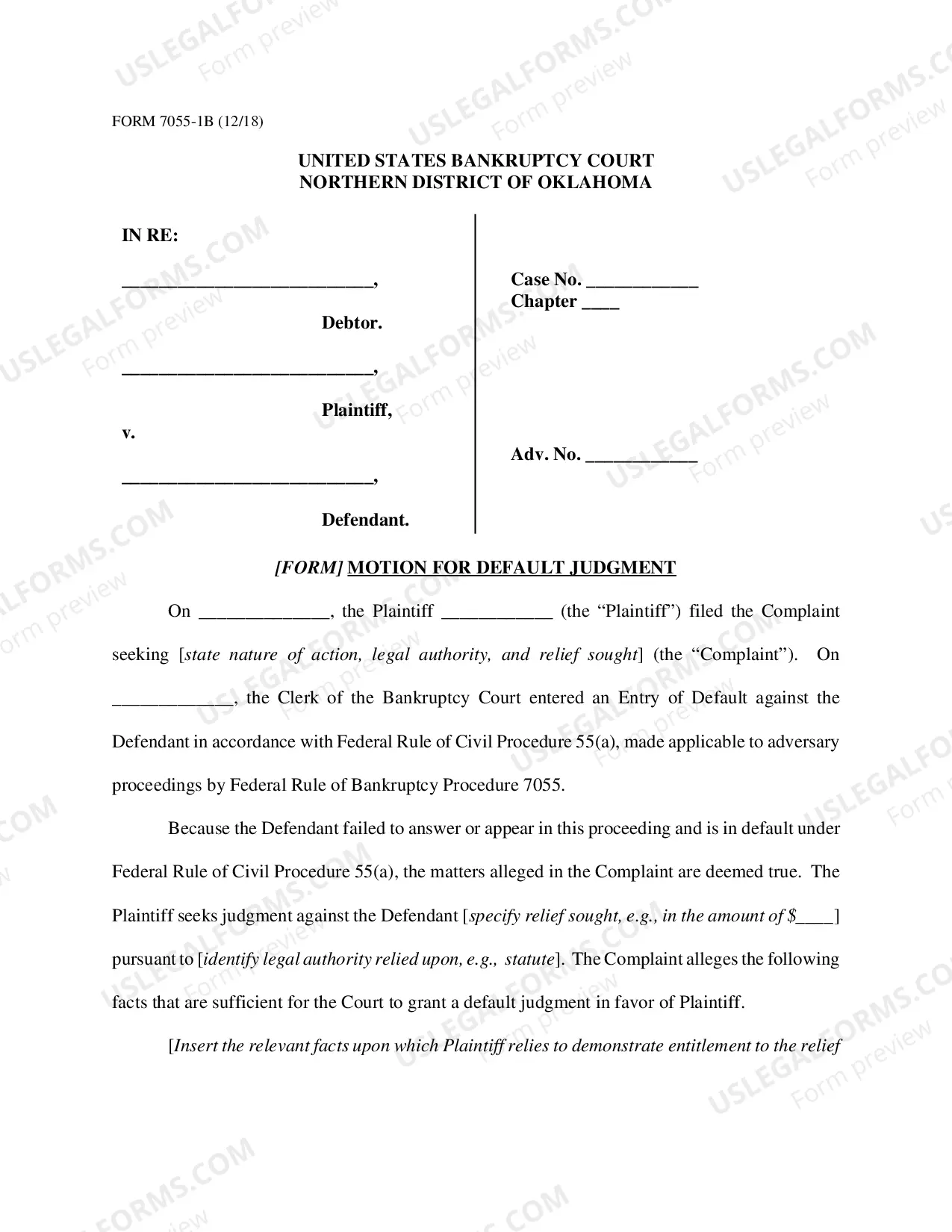
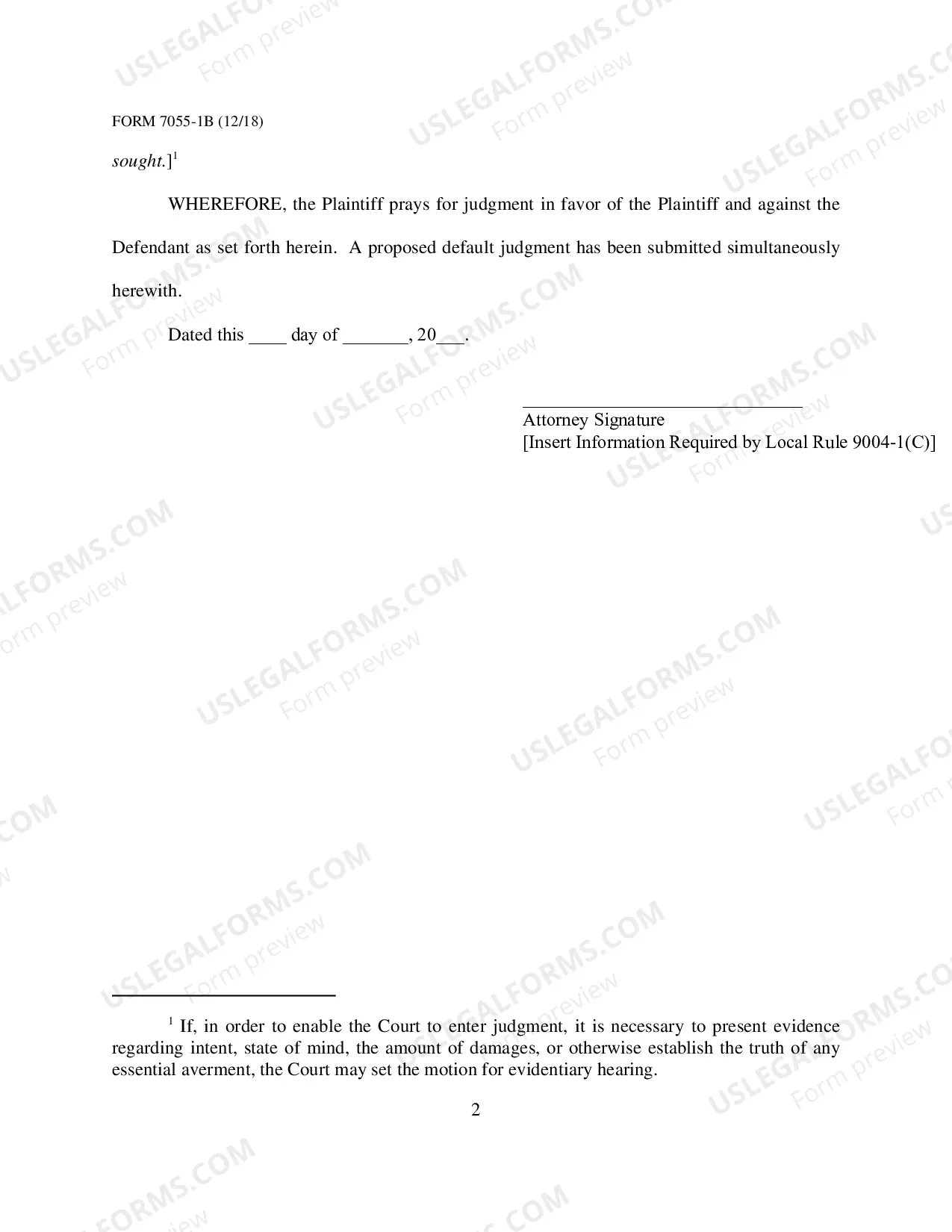
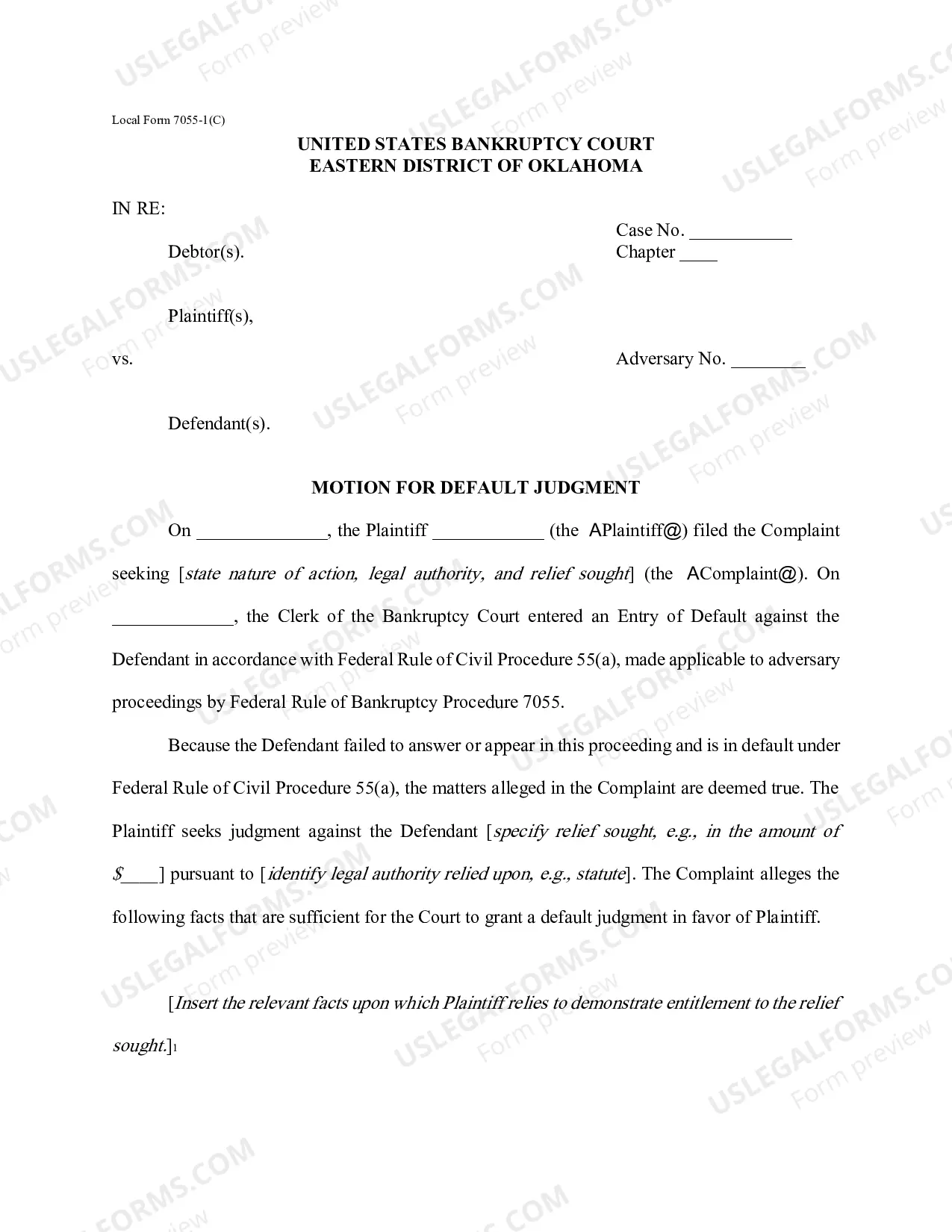
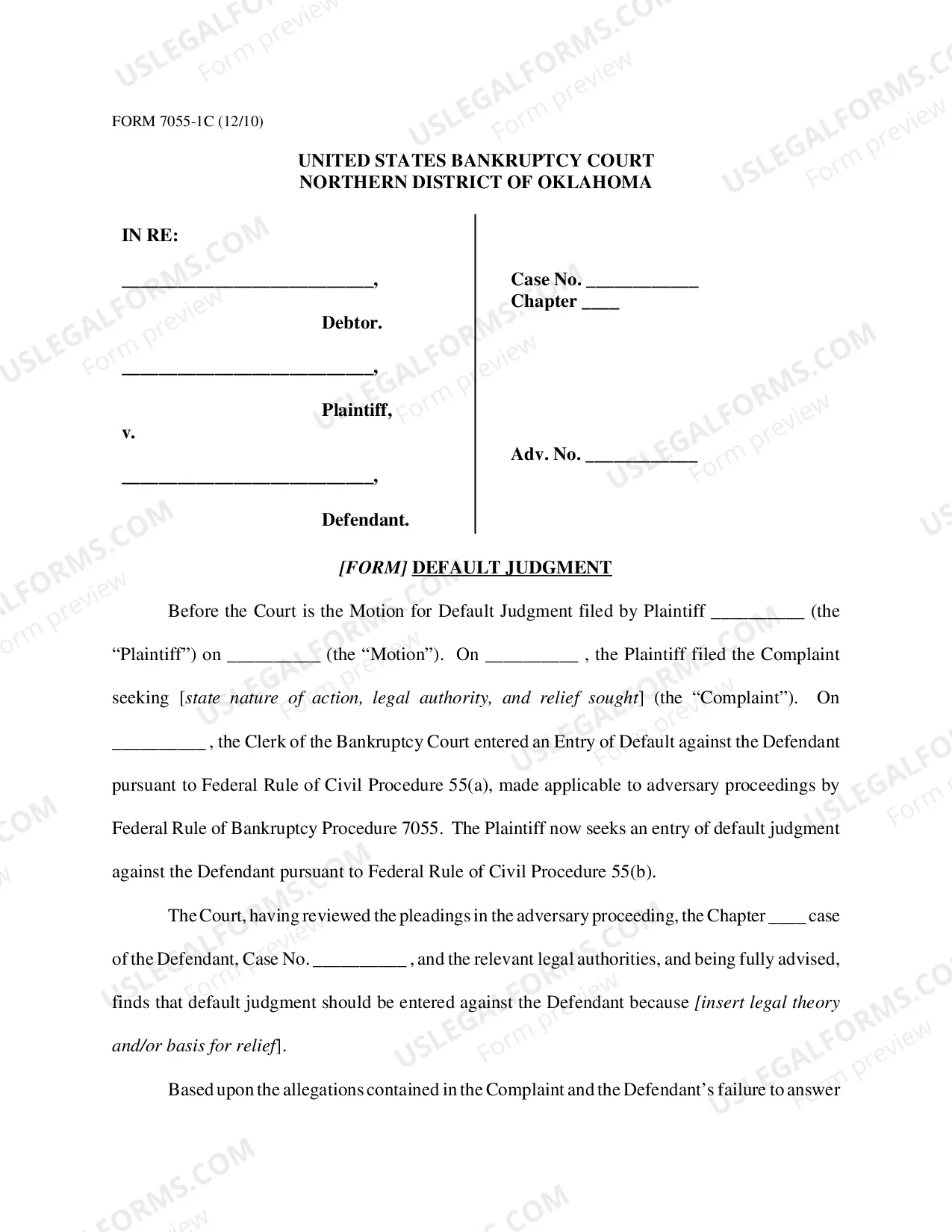
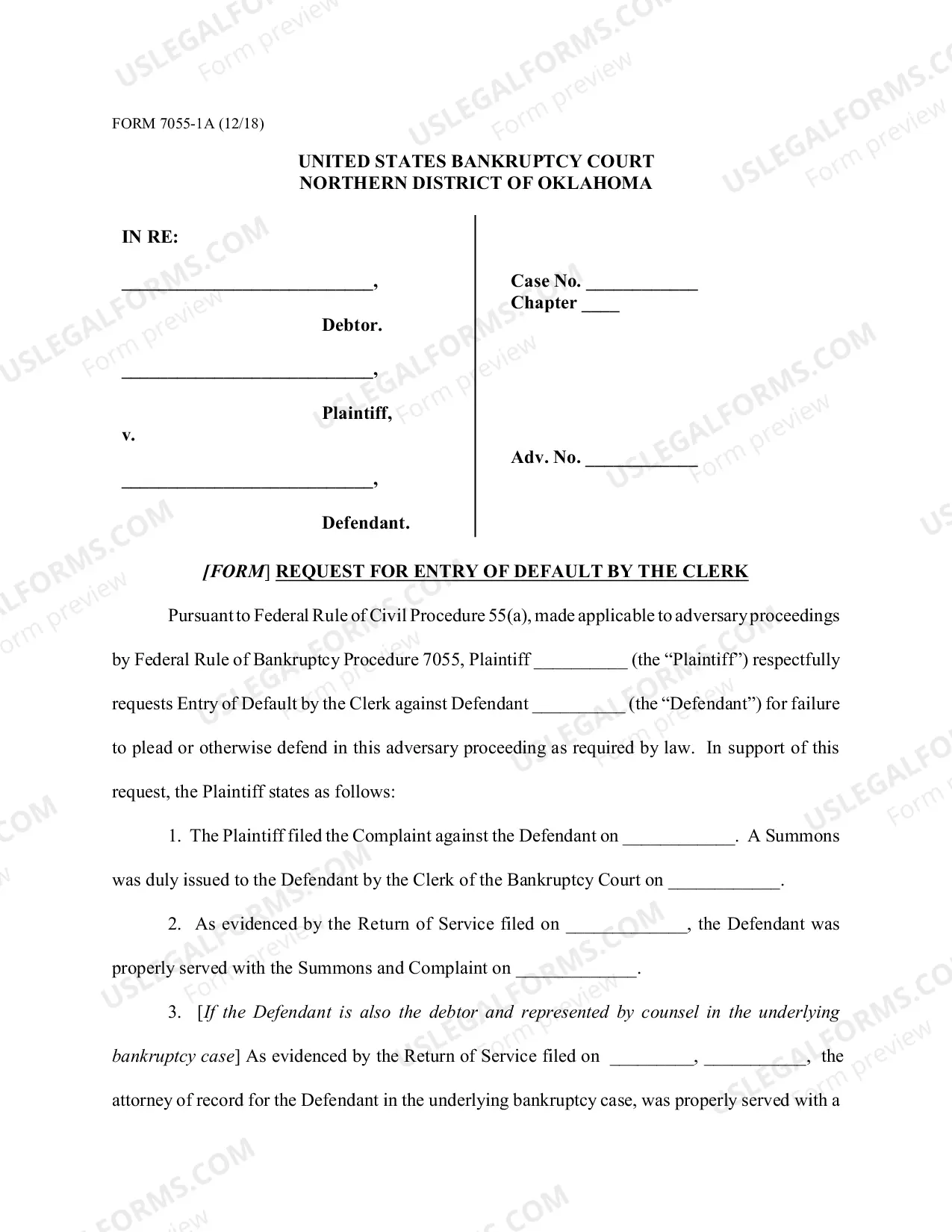
The Local Form 7055-1B Motion for Default Judgment is a legal document used in bankruptcy court to request a judgment against a defendant who has failed to respond or appear in a legal proceeding. This form is significant as it allows a plaintiff to seek a default judgment, thereby facilitating a resolution when the defendant is not contesting the claims. It stands out from other forms by focusing specifically on cases where the defendant has not submitted a defense.
Form components explained
- Caption: Identifies the court, case number, and parties involved.
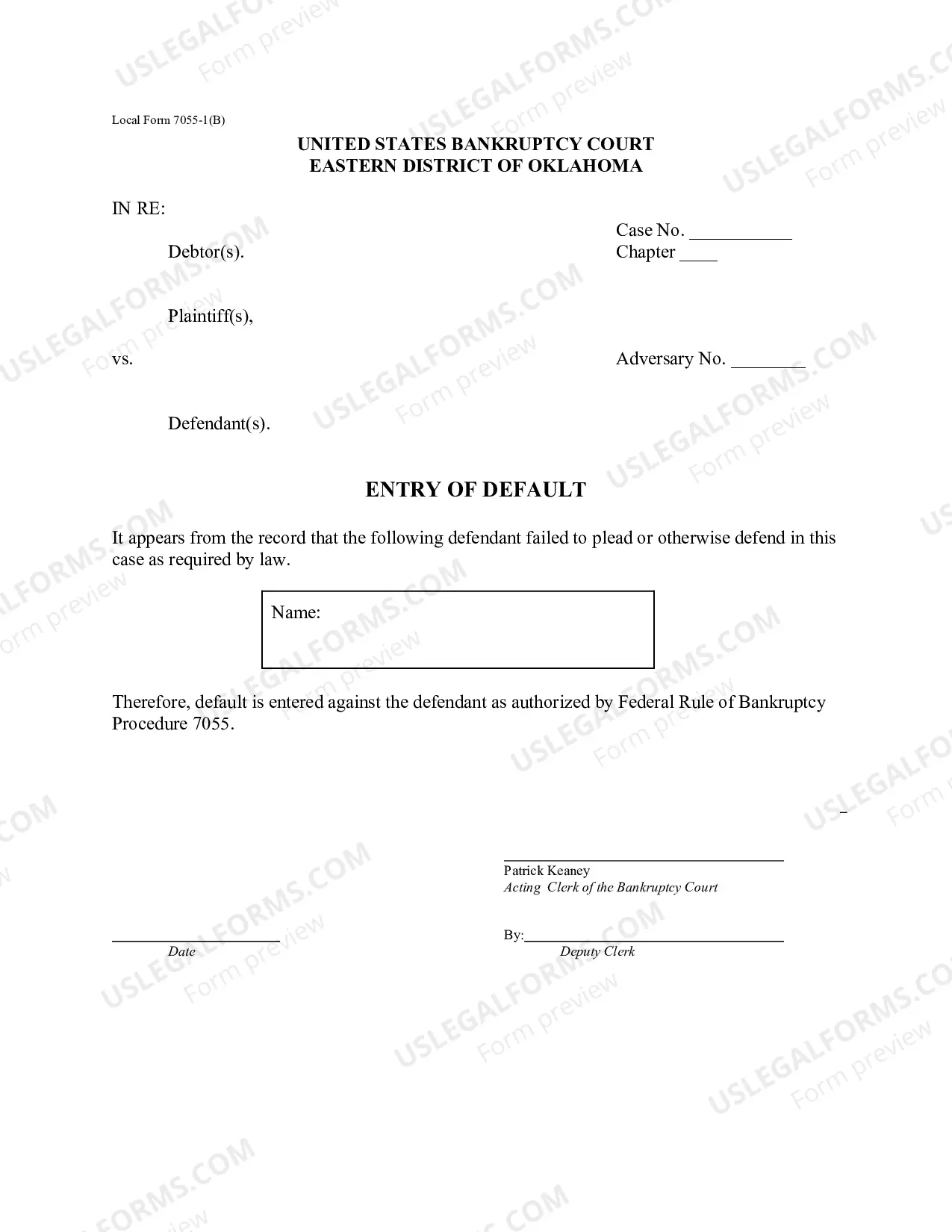
- Entry of Default: Confirms that a default has been entered against the defendant.
- Nature of Action: Describes the legal basis for the complaint and the relief sought.
- Evidentiary Statements: Allows the court to conduct a hearing if necessary to establish facts.
- Signature Line: Where the attorney representing the plaintiff signs and dates the document.
When to use this document
This form should be utilized when a plaintiff has filed a complaint in bankruptcy court and the defendant has failed to respond or appear before the court. If the clerk has entered an entry of default due to the defendant's inaction, the plaintiff can move forward with obtaining a default judgment by using this form. It is essential in situations where the plaintiff seeks to enforce their legal rights without the defendant's participation.
Who can use this document
- Plaintiffs in a bankruptcy case who are seeking a default judgment
- Attorneys representing plaintiffs in adversary proceedings
- Individuals handling their own bankruptcy cases without legal representation
How to complete this form
- Identify the plaintiff and defendant, and enter their names in the caption section.
- Provide the case number and court details as listed in your initial filing.
- State the nature of the action and specify the relief sought in the designated section.
- Include the date when the entry of default was issued against the defendant.
- Sign the form and provide any additional information required as per local rules.
Notarization guidance
This form does not typically require notarization unless specified by local law. Therefore, the completed form can be filed directly without the need for a notary's signature.
Get your form ready online
Our built-in tools help you complete, sign, share, and store your documents in one place.
Make edits, fill in missing information, and update formatting in US Legal Forms—just like you would in MS Word.
Download a copy, print it, send it by email, or mail it via USPS—whatever works best for your next step.
Sign and collect signatures with our SignNow integration. Send to multiple recipients, set reminders, and more. Go Premium to unlock E-Sign.
If this form requires notarization, complete it online through a secure video call—no need to meet a notary in person or wait for an appointment.
We protect your documents and personal data by following strict security and privacy standards.

Make edits, fill in missing information, and update formatting in US Legal Forms—just like you would in MS Word.

Download a copy, print it, send it by email, or mail it via USPS—whatever works best for your next step.

Sign and collect signatures with our SignNow integration. Send to multiple recipients, set reminders, and more. Go Premium to unlock E-Sign.

If this form requires notarization, complete it online through a secure video call—no need to meet a notary in person or wait for an appointment.

We protect your documents and personal data by following strict security and privacy standards.
Avoid these common issues
- Failing to provide complete and accurate information about the defendant.
- Not attaching a proposed judgment or supporting documents when required.
- Submitting the motion without verifying the entry of default.
- Missing signature or any required attorney information.
Why use this form online
- Convenient access allows you to fill out and download the form at any time.
- Online forms can be easily edited before printing or submission.
- Users benefit from reliable, attorney-drafted templates that follow legal standards.
Legal use & context
- This form is enforceable in the bankruptcy context, specifically within the Northern District of Oklahoma.
- It is essential for moving forward in cases where the defendant has not participated.
- The court relies on the accuracy of information provided to grant a default judgment.
- The Local Form 7055-1B is crucial for obtaining a default judgment in bankruptcy cases.
- Ensure all information is accurately completed to avoid mistakes that could delay proceedings.
- This form must be used in adherence to specific local rules of the Northern District of Oklahoma.
Looking for another form?
Form popularity
FAQ
75.01. The trial court retains control over judgments during the thirty-day period after entry of judgment and may, after giving the parties an opportunity to be heard and for good cause, vacate, reopen, correct, amend, or modify its judgment within that time.
Motion to Vacate, Set Aside, or Correct the Judgment or Sentence: This form is used to ask the court to vacate, set aside or correct a judgment or sentence in a criminal case where the crime was a felony.
You have 20 days from the date the Plaintiff can prove you were served to file an answer to the Petition with the court where the case is filed and send a copy to the Plaintiff. If you do not file an answer within 20 days, you are technically in default.
(a) Acknowledgment of Satisfaction. When any judgment or decree is satisfied, the judgment creditor shall immediately file an acknowledgment of satisfaction.
A default judgment cannot be directly appealed. A defendant must file a motion to set aside the judgment and then appeal from the court's ruling on that motion.
A default judgment (also known as judgment by default) is a ruling granted by a judge or court in favor of a plaintiff in the event that the defendant in a legal case fails to respond to a court summons or does not appear in court.
The motion must include an affidavit of the party in default (i) stating facts showing that the party in default has a good defense to the allegations in the pleading, and (ii) showing ?good cause? as to why the party in default failed to appear in court or to file an answer to the pleading.
An entry of default is the first step to obtaining a default judgment against a party, and allows you to proceed in the action without further notice or input from the opposing party.