Florida Quitclaim Deed - Individual to a Trust
About this form
The Quitclaim Deed - Individual to a Trust is a legal document that enables an individual (the Grantor) to transfer their interest in a property to a trust (the Grantee). This form is unique because it solely conveys the ownership interest without guaranteeing the title, distinguishing it from other types of deeds like warranty deeds that provide more legal assurances. This form complies with the statutory laws of Florida and is typically used for estate planning or transferring property into a trust for management and distribution purposes.
Main sections of this form
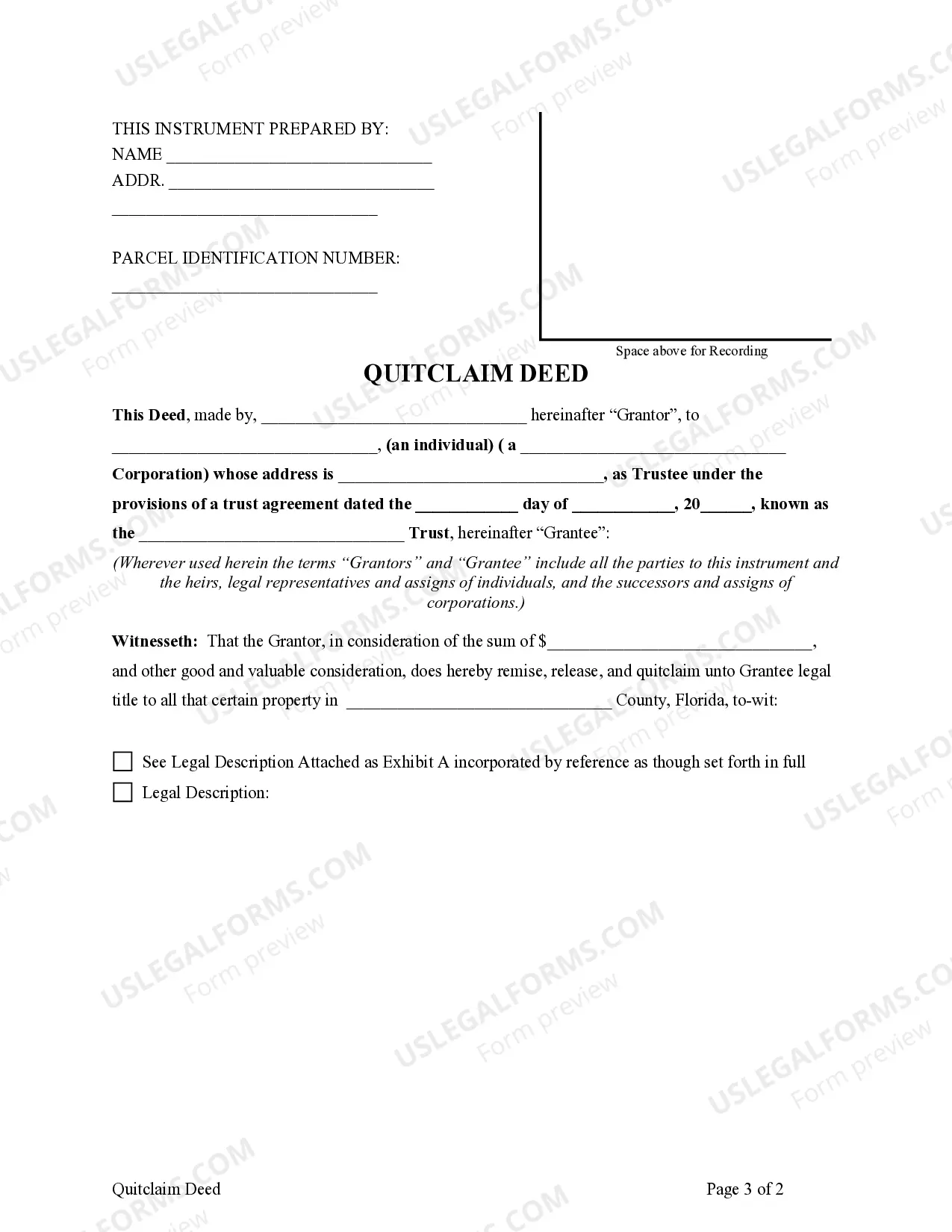
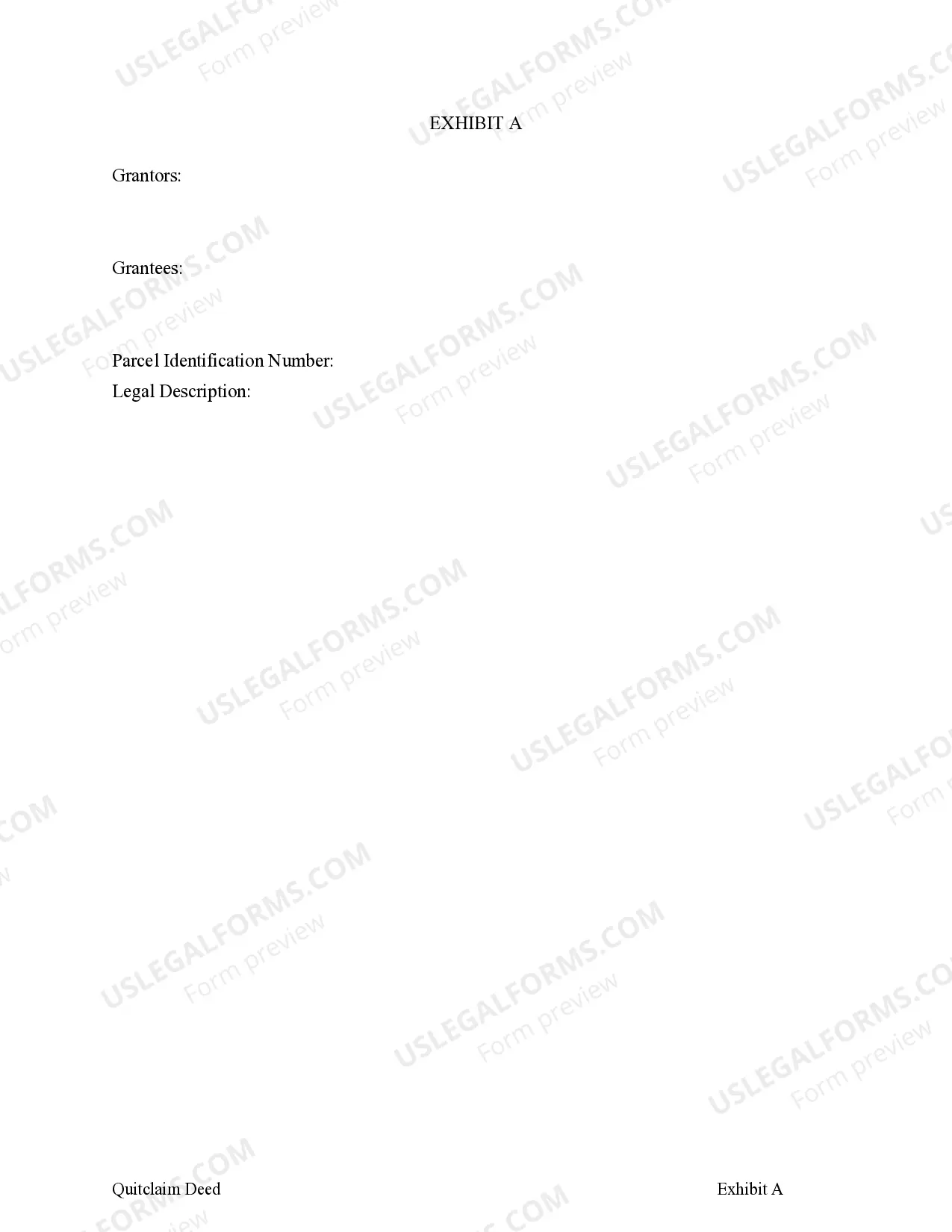
- Details of the Grantor and Grantee, including their names and addresses.
- A description of the property being transferred, including a legal description.
- Consideration amount, which is the value exchanged for the property.
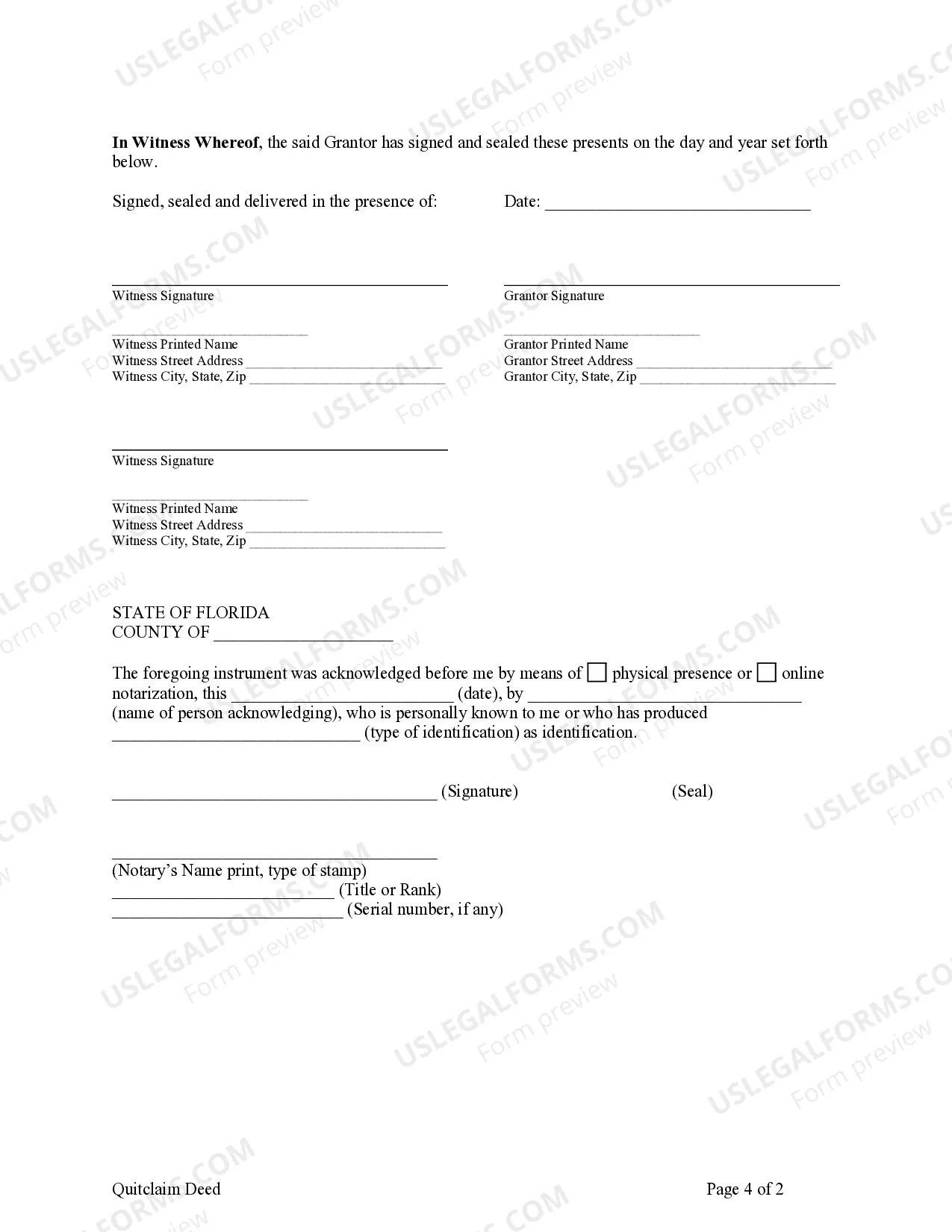
- Sections for signatures of the Grantor and witnesses to validate the deed.
- A notary acknowledgment section to provide legal confirmation of the signing.




When to use this document
This form should be used when an individual wants to transfer ownership of a property to a trust they have established. Common scenarios include estate planning, where property is placed into a trust to facilitate management or distribution upon death, or when changing property ownership for asset protection purposes. It is particularly useful for those seeking to simplify the transfer process and avoid probate.
Intended users of this form
- Individuals looking to place their real estate assets into a trust.
- Trustees of an existing trust wishing to receive property from an individual.
- Individuals engaging in estate planning who want to streamline property transfer processes.
- Anyone seeking to clarify property ownership without legal disputes.
How to complete this form
- Identify the parties involved: enter the names and addresses of the Grantor and the trust as the Grantee.
- Specify the property: provide a detailed legal description of the property being transferred.
- Enter the consideration: indicate the amount exchanged for the property transfer.
- Gather signatures: ensure the Grantor signs and dates the document in the presence of witnesses.
- Complete the notary section: have the deed notarized to validate the execution of the document.
Is notarization required?
Yes, this form must be notarized to be legally valid. Notarization provides an additional layer of security by confirming the identities of the individuals signing the deed. U.S. Legal Forms offers integrated online notarization services that allow you to complete this step conveniently and securely via a video call, eliminating the need for in-person visits.
Get your form ready online
Our built-in tools help you complete, sign, share, and store your documents in one place.
Make edits, fill in missing information, and update formatting in US Legal Forms—just like you would in MS Word.
Download a copy, print it, send it by email, or mail it via USPS—whatever works best for your next step.
Sign and collect signatures with our SignNow integration. Send to multiple recipients, set reminders, and more. Go Premium to unlock E-Sign.
If this form requires notarization, complete it online through a secure video call—no need to meet a notary in person or wait for an appointment.
We protect your documents and personal data by following strict security and privacy standards.

Make edits, fill in missing information, and update formatting in US Legal Forms—just like you would in MS Word.

Download a copy, print it, send it by email, or mail it via USPS—whatever works best for your next step.

Sign and collect signatures with our SignNow integration. Send to multiple recipients, set reminders, and more. Go Premium to unlock E-Sign.

If this form requires notarization, complete it online through a secure video call—no need to meet a notary in person or wait for an appointment.

We protect your documents and personal data by following strict security and privacy standards.
Common mistakes
- Failing to include a complete legal description of the property.
- Not having the deed notarized, which may invalidate the transfer.
- Leaving out witness signatures required for the validity of the deed.
- Incorrectly entering the names or addresses of the Grantor or Grantee.
Advantages of online completion
- Convenience of downloading and filling out the document at your own pace.
- Editable fields that allow for accurate completion without handwriting concerns.
- Accessibility from anywhere, saving time and effort compared to traditional legal services.
- Instant availability of a legally compliant form drafted by experts.
Legal use & context
- This deed is recognized as a legal instrument for transferring property ownership in Florida.
- It serves as evidence of a transfer of interest but does not guarantee title, which may lead to potential legal issues if the Grantor's title is defective.
- Using a quitclaim deed is common in transactions among family members or between trusts, as it simplifies the transfer process.
Quick recap
- A Quitclaim Deed - Individual to a Trust facilitates property transfer without guarantees.
- Completion requires attention to the specific legal description and proper notarization.
- This form is ideal for estate planning and simple property transfers.
- Always consider state-specific requirements and ensure all signatures are properly obtained.
Looking for another form?

Form popularity
FAQ
This form transfers a property interest from an individual (Grantor) to a trust (Grantee) using a quitclaim deed, carrying no warranties about title or property condition. Use it for estate planning or asset management when you want to move real estate into a trust without guarantees, while ensuring the deed complies with Florida statutory laws.
The Florida Quitclaim Deed - Individual to a Trust transfers property by the Grantor signing the deed, naming the Grantee as the trust and providing a legal property description and consideration. The deed conveys the ownership interest to the trust without warranties. Use this form to effect the transfer; ensure grantor and trust information is accurate.
Yes. The Florida Quitclaim Deed - Individual to a Trust is designed to transfer property from an individual (Grantor) to a trust (Grantee) via a quitclaim deed, with no warranties about title. The form includes grantor and grantee information, a property description, consideration, and spaces for signatures.
Common mistakes include failing to correctly fill out Grantor Information or Grantee Information, using an inaccurate or incomplete Property Description, omitting the Consideration, or missing or improperly executed Signatures. Because this form transfers to a trust without warranties, accuracy in these fields is essential to ensure a valid transfer.
A key downside is that a quitclaim transfer conveys title without warranties, so problems with the title may not be protected by the deed itself. Transferring to a trust can affect how you manage or refinance the property and may have tax or probate implications. Consider consulting an attorney for guidance.
The Florida Quitclaim Deed - Individual to a Trust conveys property to a trust using a quitclaim mechanism and includes no warranties about title or condition. A warranty deed, by contrast, provides guarantees that the grantor holds clear title and will defend it. The form emphasizes the absence of warranties and the transfer to a trust.