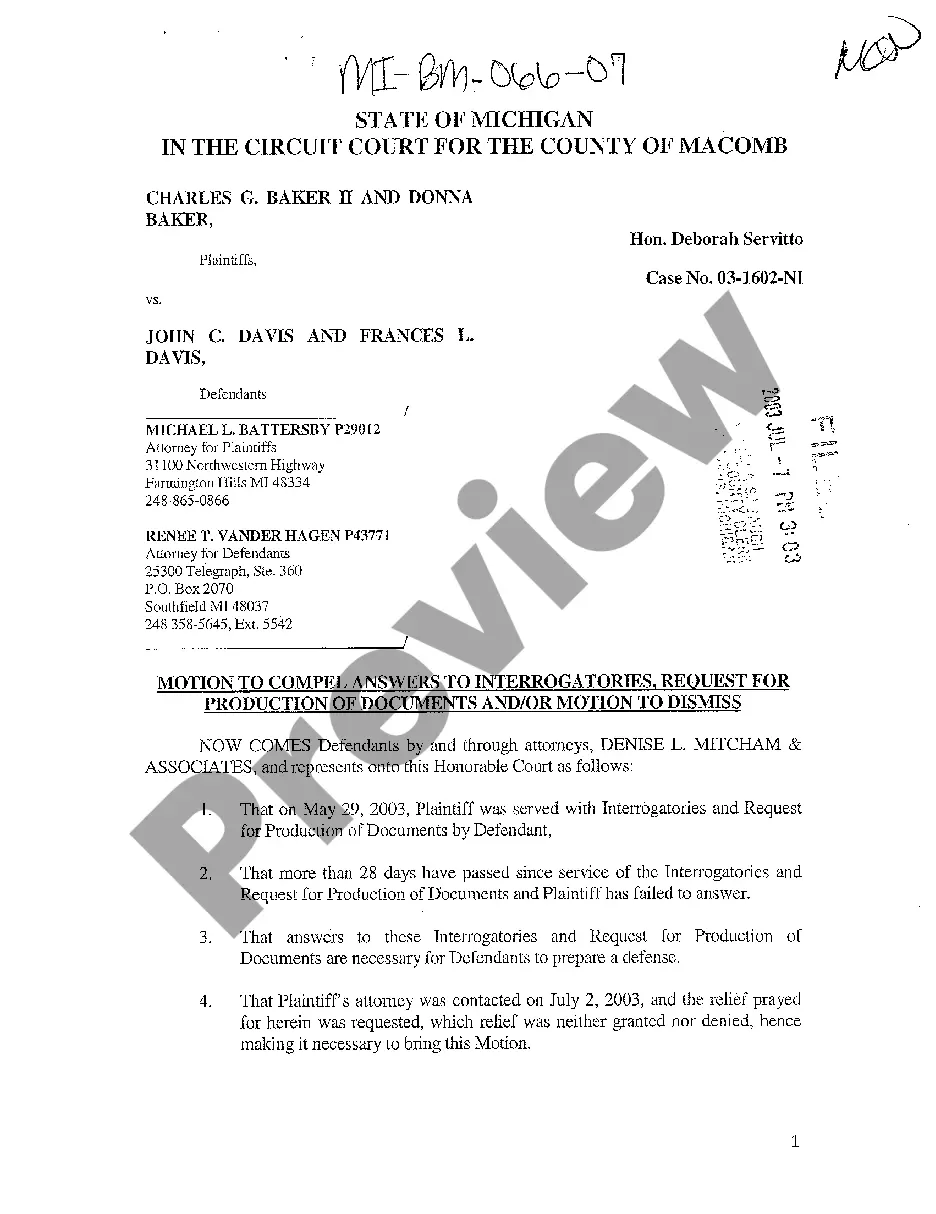
Response to Motion for Partial Summary Judgment in Support of Hospital's Summary Judgment Motion
Overview of this form
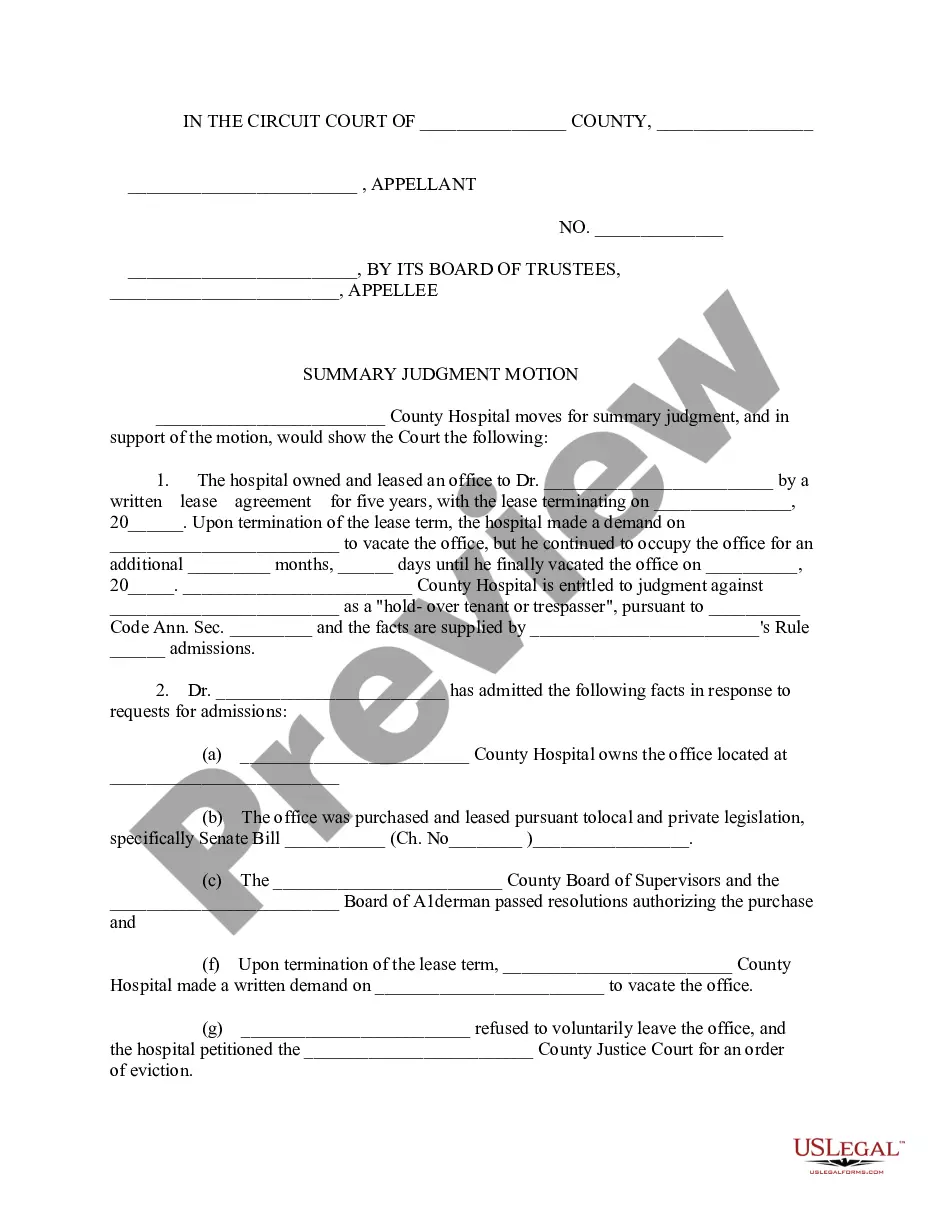
This form is the Response to Motion for Partial Summary Judgment, specifically designed for cases involving disputes related to leased office space. It serves as the plaintiff's formal response to a defendant's motion seeking partial summary judgment, countering their claims and supporting the hospital's own motion for summary judgment. This form is essential for articulating legal arguments and outlining the relevant facts in a structured manner, differentiating itself from other summary judgment forms by focusing on leased property issues.
Main sections of this form
- Title and identification of the parties involved in the lawsuit.
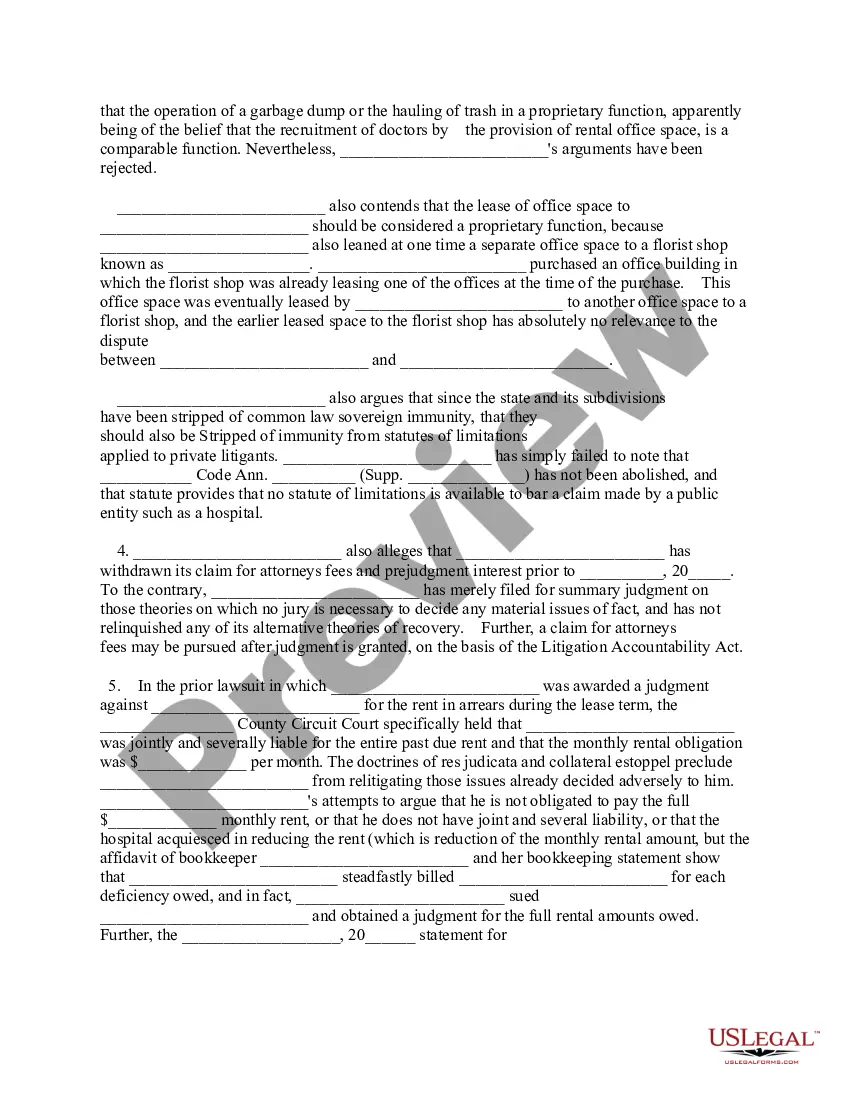
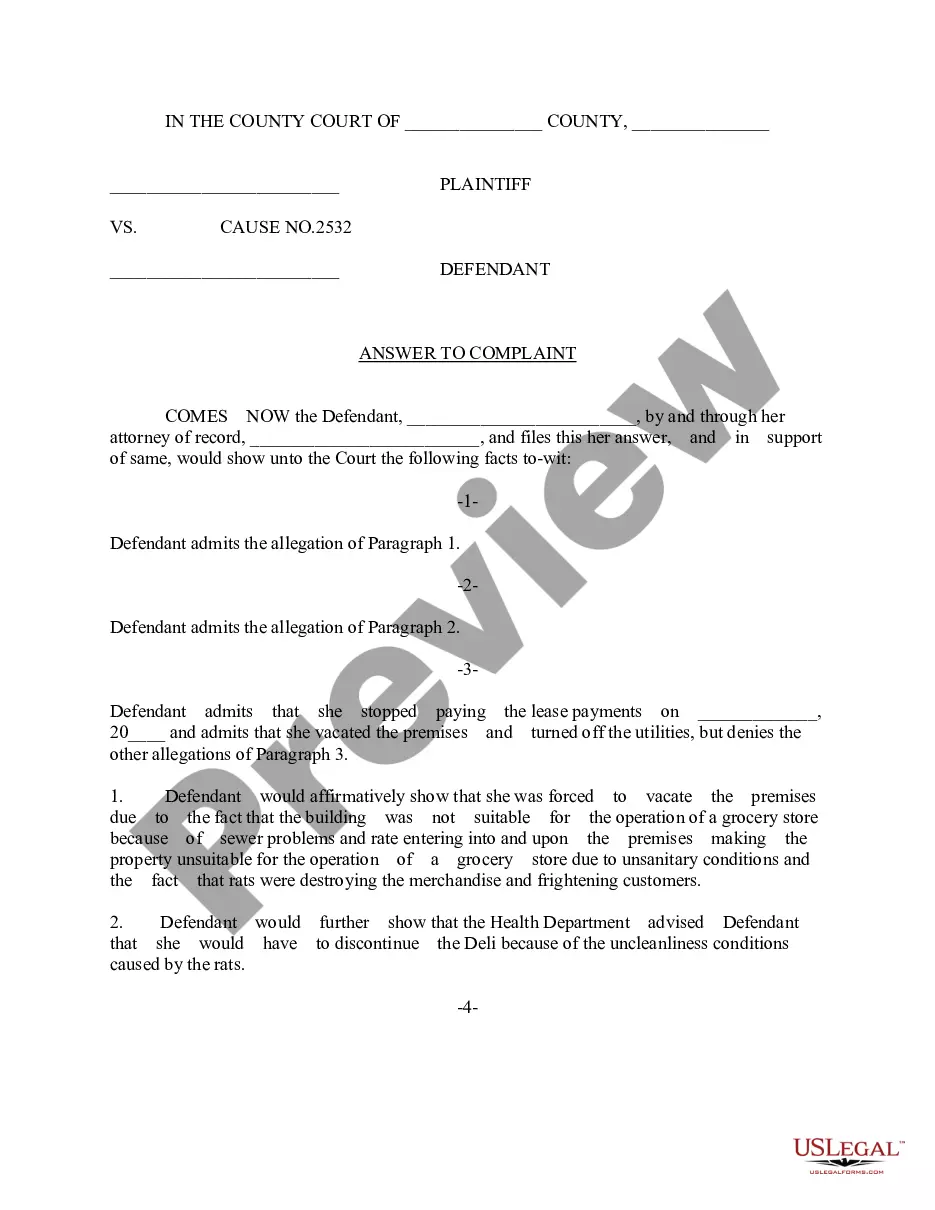
- Statement of facts relating to the lease agreement and the dispute over rental payments.
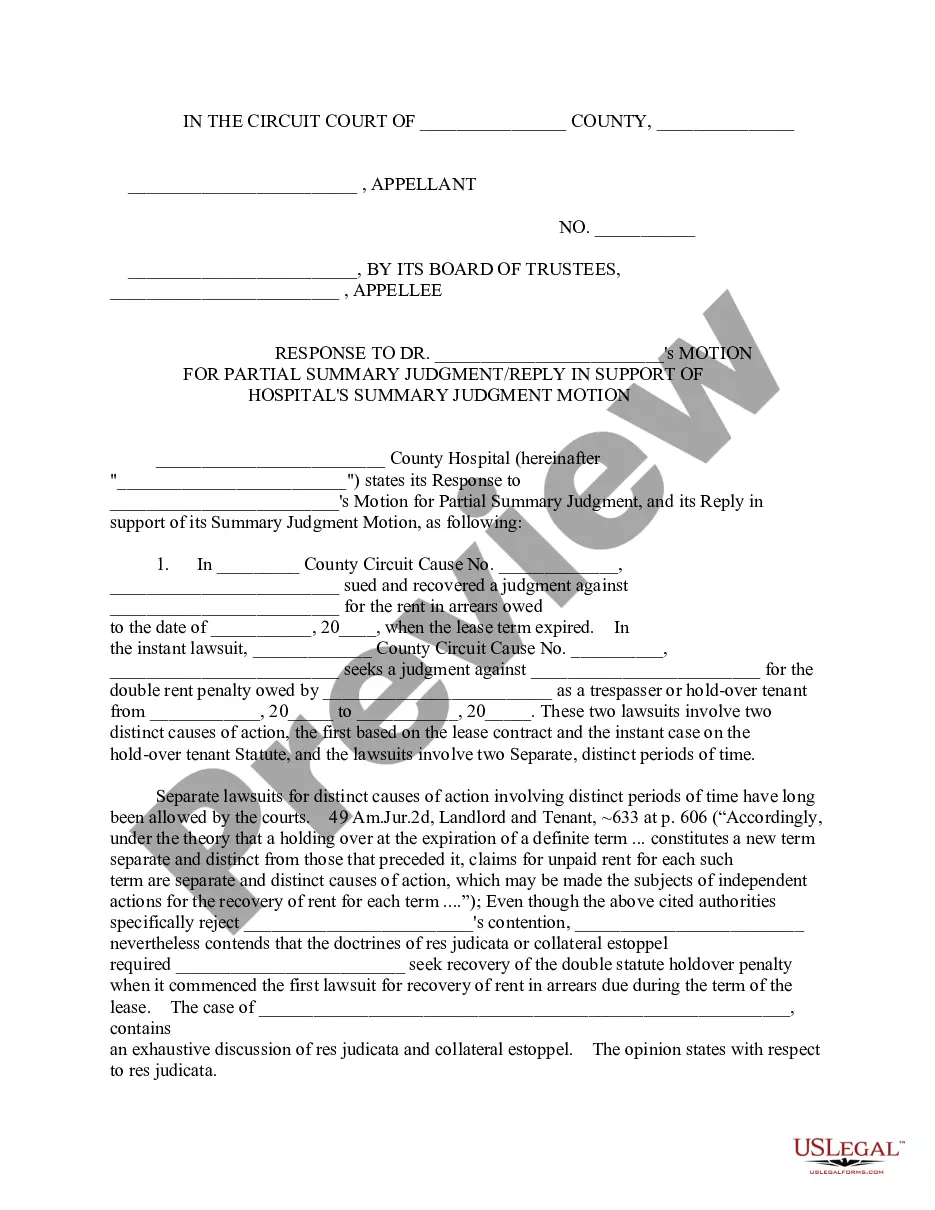
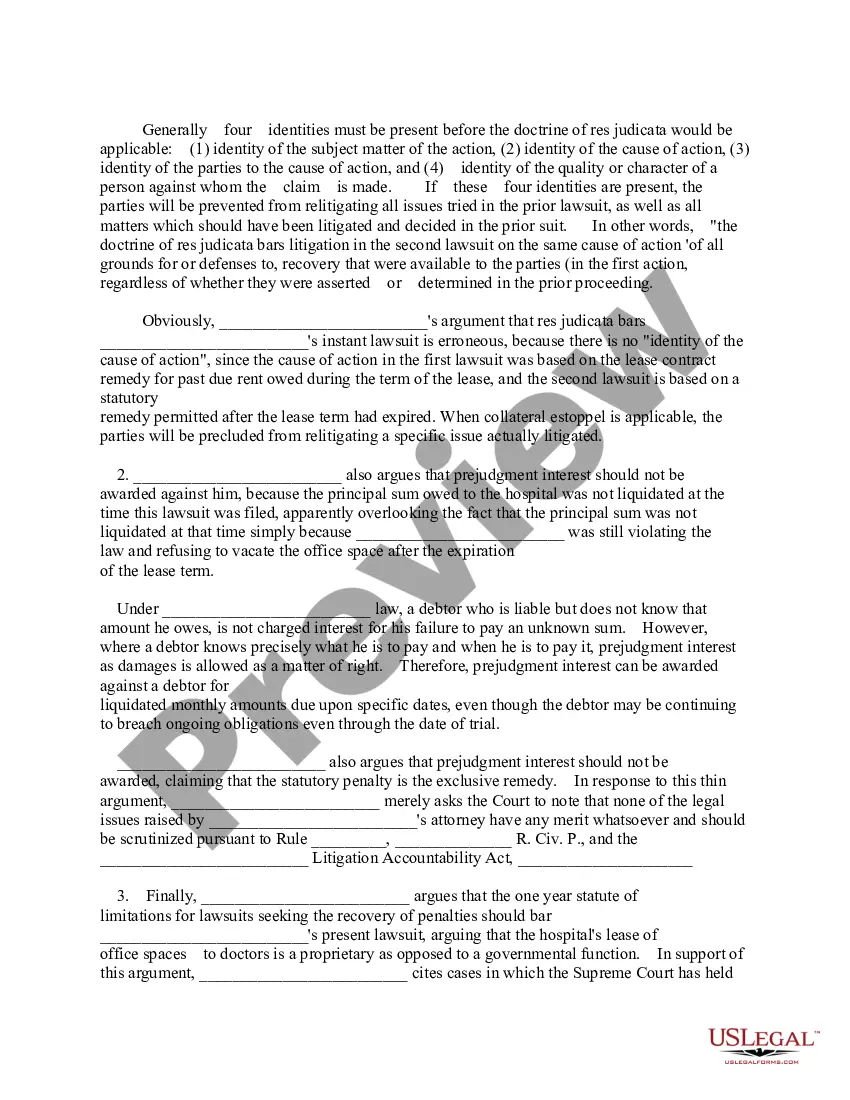
- Legal arguments addressing the defendant's claims regarding res judicata and collateral estoppel.
- Requests for relief, including a demand for court judgment in favor of the hospital.
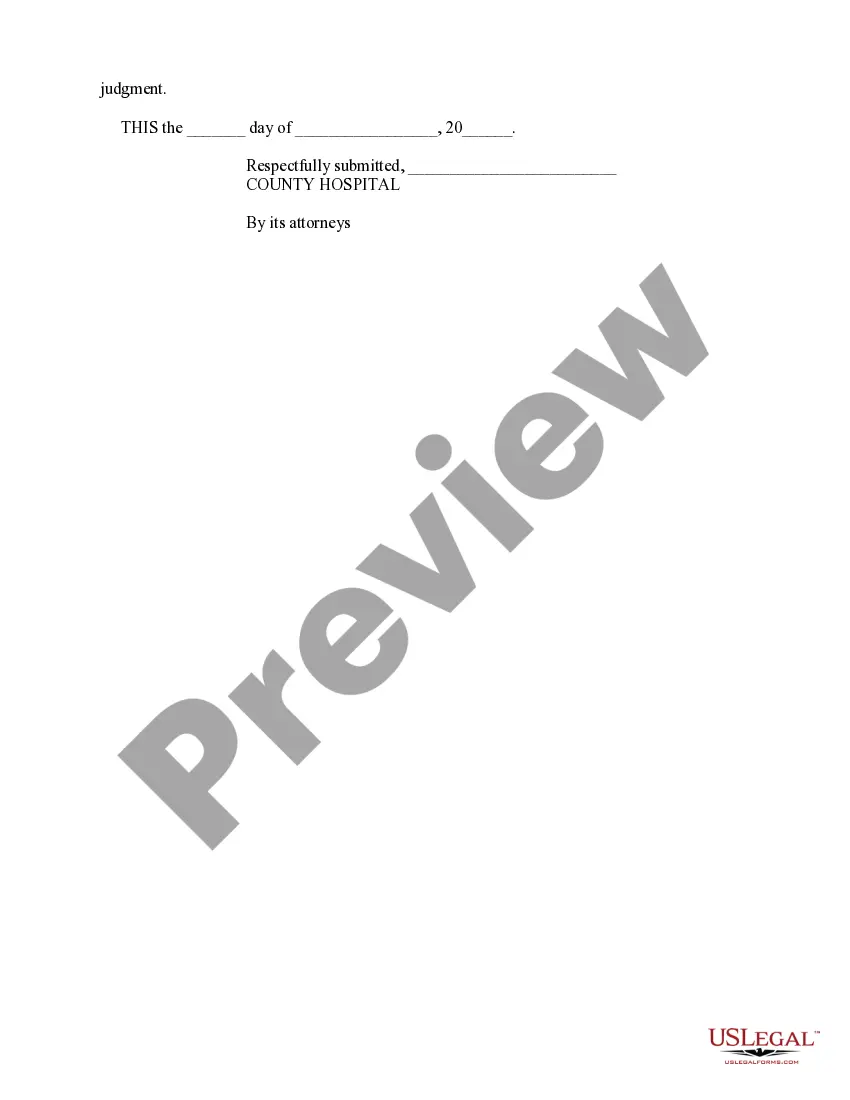
- Signature line for the hospital's authorized representative and attorneys.
When to use this document
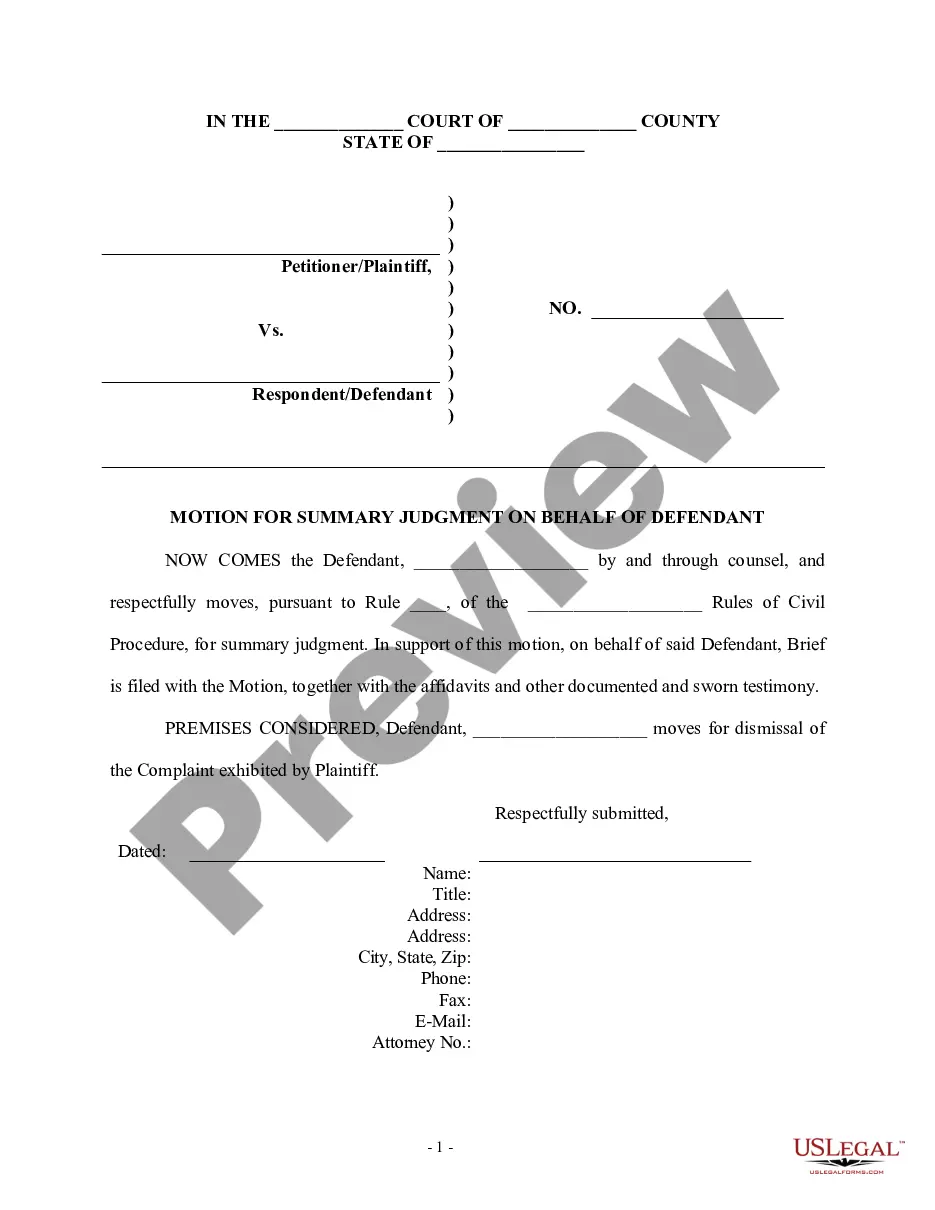
This form should be used when the plaintiff, typically a hospital, needs to respond to a motion for partial summary judgment filed by a defendant in a lawsuit concerning the lease of office space. Situations may arise where the defendant seeks to claim that summary judgment should be granted in their favor regarding certain aspects of the case, prompting the plaintiff to formally contest this motion and outline their arguments for why it should be denied.
Who should use this form
- Hospitals or healthcare facilities involved in landlord-tenant disputes.
- Legal representatives or attorneys handling cases related to leased property and rental payment disputes.
- Plaintiffs in lawsuits where a summary judgment motion has been filed against them.
How to complete this form
- Identify the parties involved by filling in the appellant and appellee names.
- Provide the case number and court details at the top of the form.
- Clearly state the facts of the lease agreement and the basis for your dispute.
- Respond to the defendant's claims by addressing each point raised in their motion.
- Sign and date the document as required, ensuring the proper authority has executed it.
Does this document require notarization?
Notarization is generally not required for this form. However, certain states or situations might demand it. You can complete notarization online through US Legal Forms, powered by Notarize, using a verified video call available anytime.
Get your form ready online
Our built-in tools help you complete, sign, share, and store your documents in one place.
Make edits, fill in missing information, and update formatting in US Legal Forms—just like you would in MS Word.
Download a copy, print it, send it by email, or mail it via USPS—whatever works best for your next step.
Sign and collect signatures with our SignNow integration. Send to multiple recipients, set reminders, and more. Go Premium to unlock E-Sign.
If this form requires notarization, complete it online through a secure video call—no need to meet a notary in person or wait for an appointment.
We protect your documents and personal data by following strict security and privacy standards.

Make edits, fill in missing information, and update formatting in US Legal Forms—just like you would in MS Word.

Download a copy, print it, send it by email, or mail it via USPS—whatever works best for your next step.

Sign and collect signatures with our SignNow integration. Send to multiple recipients, set reminders, and more. Go Premium to unlock E-Sign.

If this form requires notarization, complete it online through a secure video call—no need to meet a notary in person or wait for an appointment.

We protect your documents and personal data by following strict security and privacy standards.
Common mistakes to avoid
- Failing to properly identify all parties involved in the dispute.
- Not providing sufficient detail in the factual background of the case.
- Ignoring procedural rules related to deadlines for filing responses.
- Neglecting to address all arguments raised by the defendant in their motion.
- Signatures not being affixed by the authorized representative of the hospital.
Why complete this form online
- Immediate access to the form allows for faster response time.
- Easy to edit fields ensure that all necessary information is included.
- Reliability from professionally drafted templates by licensed attorneys.
- Convenience of downloading and printing or filing electronically as needed.
Legal use & context
- This form provides a legally recognized response to a motion for summary judgment, which is a crucial aspect of civil litigation.
- It must be completed following the specific rules of court where the case is filed to be enforceable.
- Understanding legal arguments such as res judicata and collateral estoppel is vital for its effective use.
Main things to remember
- This form is specifically for responding to motions regarding lease disputes.
- Accurate completion of the form requires understanding of legal arguments and applicable statutes.
- Utilizing this form correctly can significantly impact the outcome of landlord-tenant litigation.
Looking for another form?


Form popularity
FAQ
A response must be in writing and include the same supporting documents as a motion for summary judgment. The opposition to the motion for summary judgment should also include a statement of facts showing the dispute and supporting documents.
If the motion is granted, the judgment on the issue or case is deemed to be a final judgment from which a party may seek an appeal. The court of appeal can reverse the grant of summary judgment and reinstate the claim in the lower court. However, this is rarely done and most summary judgments are upheld on appeal.
The response to the Motion must be filed at least 7 days prior to any hearing. The Response should contain an affidavit specifically creating a fact issue in the case.
Summary judgment motions do have a timeline for filing and response. First, a summary judgment motion must be on file at least 21 days before it can be heard. (TRCP 166a) Second, any opposing affidavits or written response should be on file no later than 7 days before the hearing.
How Is Summary Judgment Granted? Summary judgment is granted when there are no other facts to be tried.Summary judgment is granted when the facts can be decided upon without needing to go to trial, where the opposing party would lose due to a lack of evidence.
A motion for summary judgment filed by an opposing party claims that you cannot prevail in the case because there is no legal dispute or your claim is without merit or a defense. Failure to respond to a motion for summary judgment can result in your case being dismissed or a judgment being rendered against you.
Rule 56 of the Federal Rules of Civil Procedure governs summary judgment for federal courts. Under Rule 56, in order to succeed in a motion for summary judgment, a movant must show 1) that there is no genuine dispute as to any material fact, and 2) that the movant is entitled to judgment as a matter of law.
What happens during a motion for summary judgment hearing? Once the motion and response has been filed, the judge will read both and then preside over a hearing. At the hearing, each party will be given a certain amount of time to reiterate their argument in front of the judge.
A summary judgement occurs when, in a civil case, one party wants to move to a court decision without a trial.When a motion for summary judgement is granted, it indicates there is sufficient evidence to declare one party the clear winner.