Wisconsin General Partnership Package
About this form package
The Wisconsin General Partnership Package contains essential legal forms designed to assist you in forming, managing, and dissolving a general partnership. This package is tailored specifically for partnerships operating within the state of Wisconsin, distinguishing it from other generic partnership form packages. The included forms are customizable to meet the unique needs of your partnership.
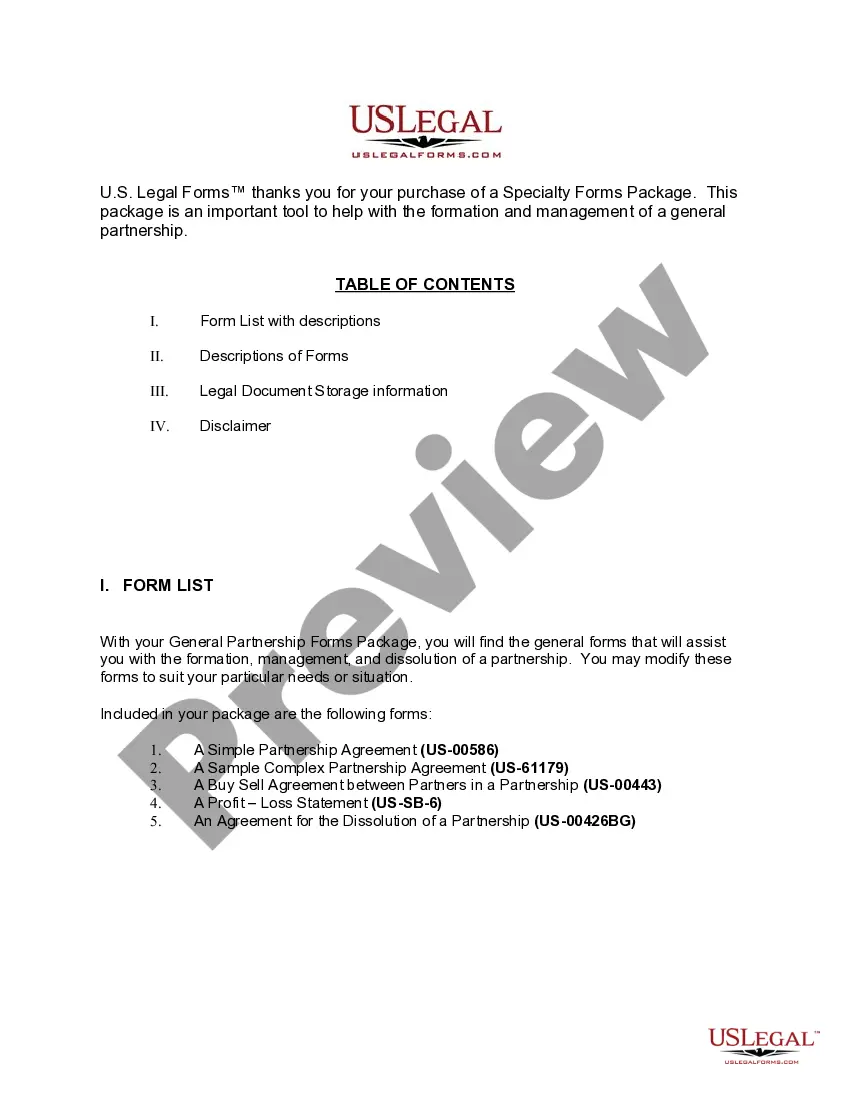
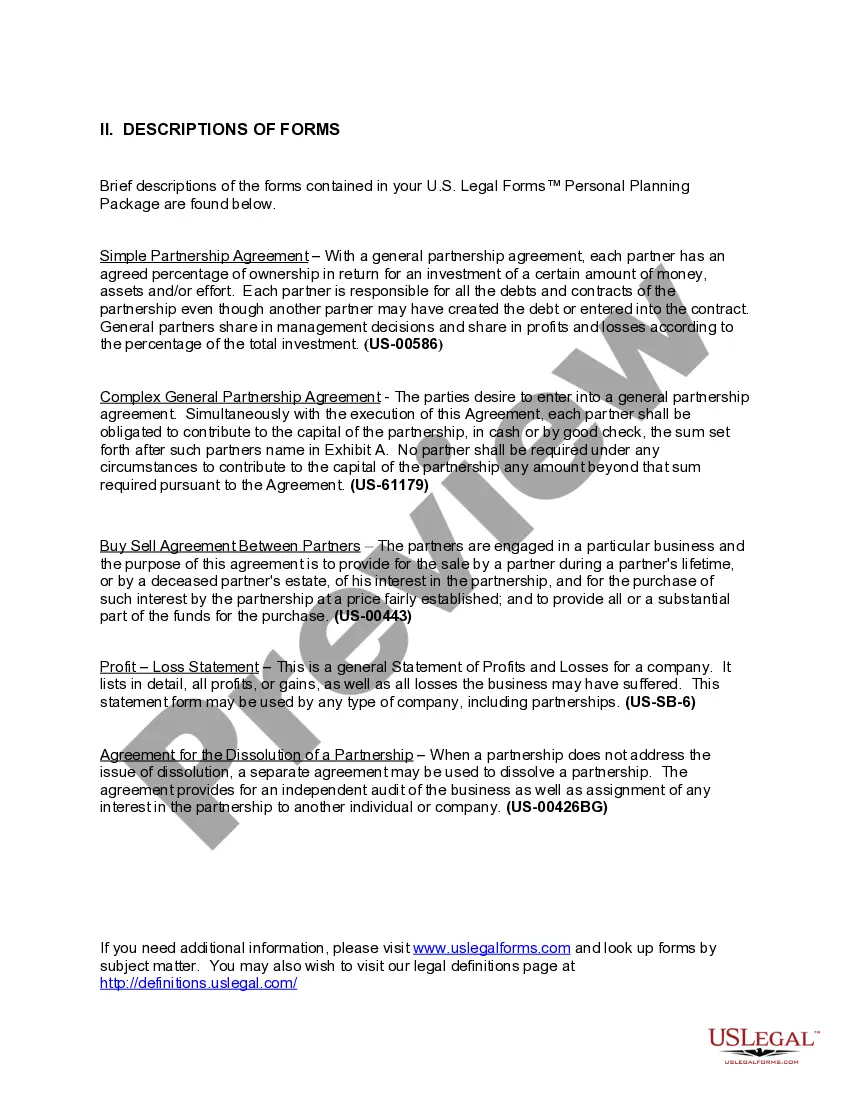
Forms included in this package
- Agreement for the Dissolution of a Partnership
- Registration of Firm Name Application
- I.R.S. Form SS-4 (to obtain your federal identification number)
- Buy Sell Agreement Between Partners of a Partnership
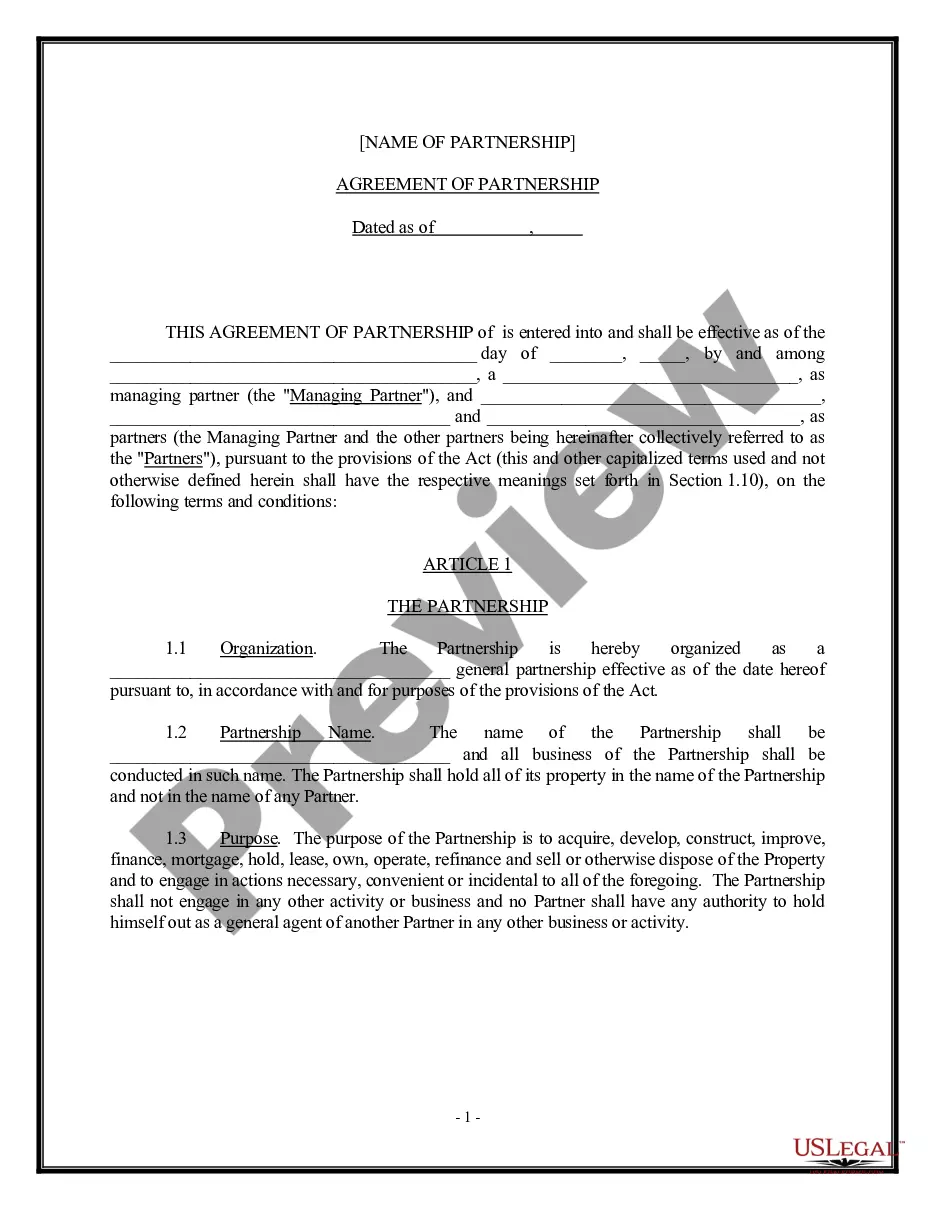
- Simple Partnership Agreement
- Sample Business Plan Template
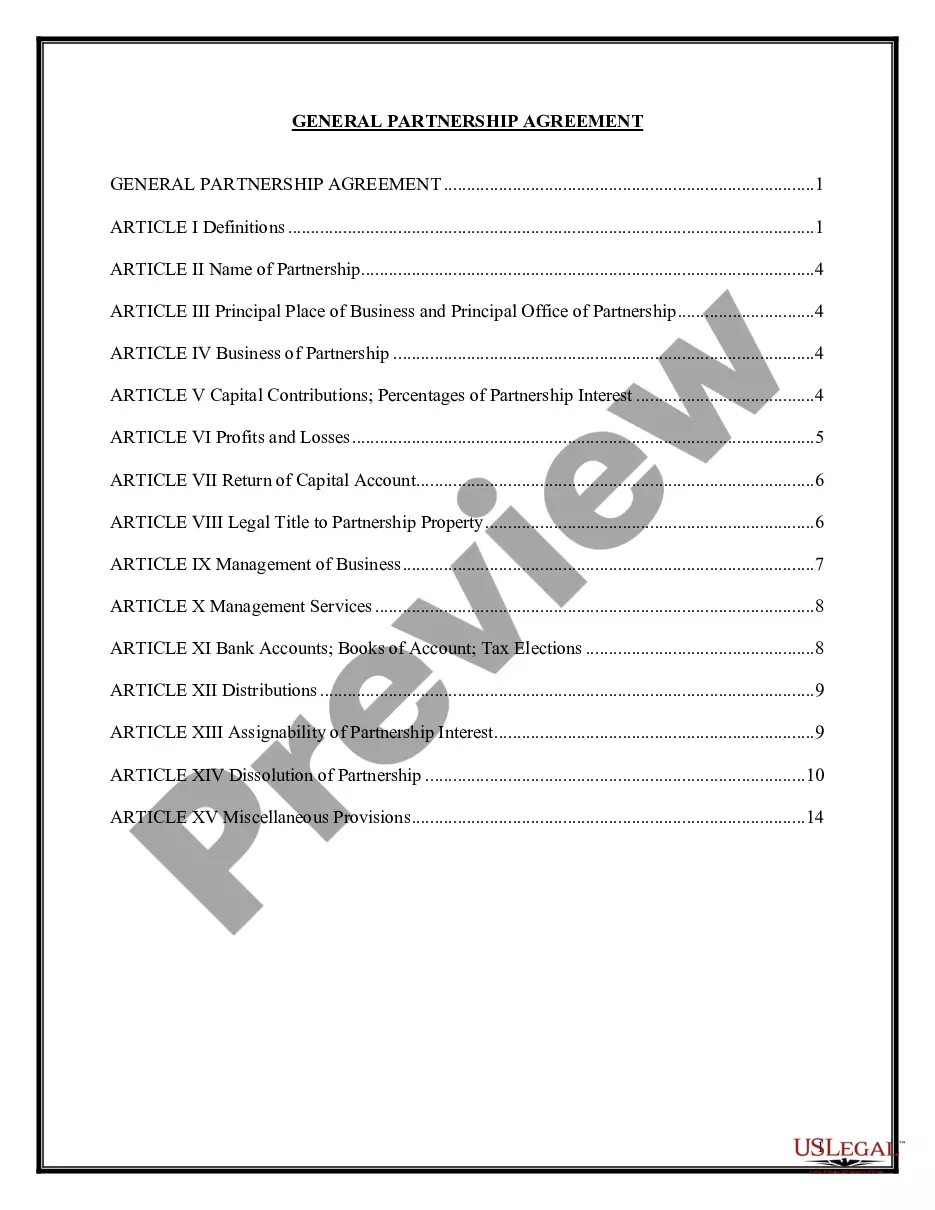
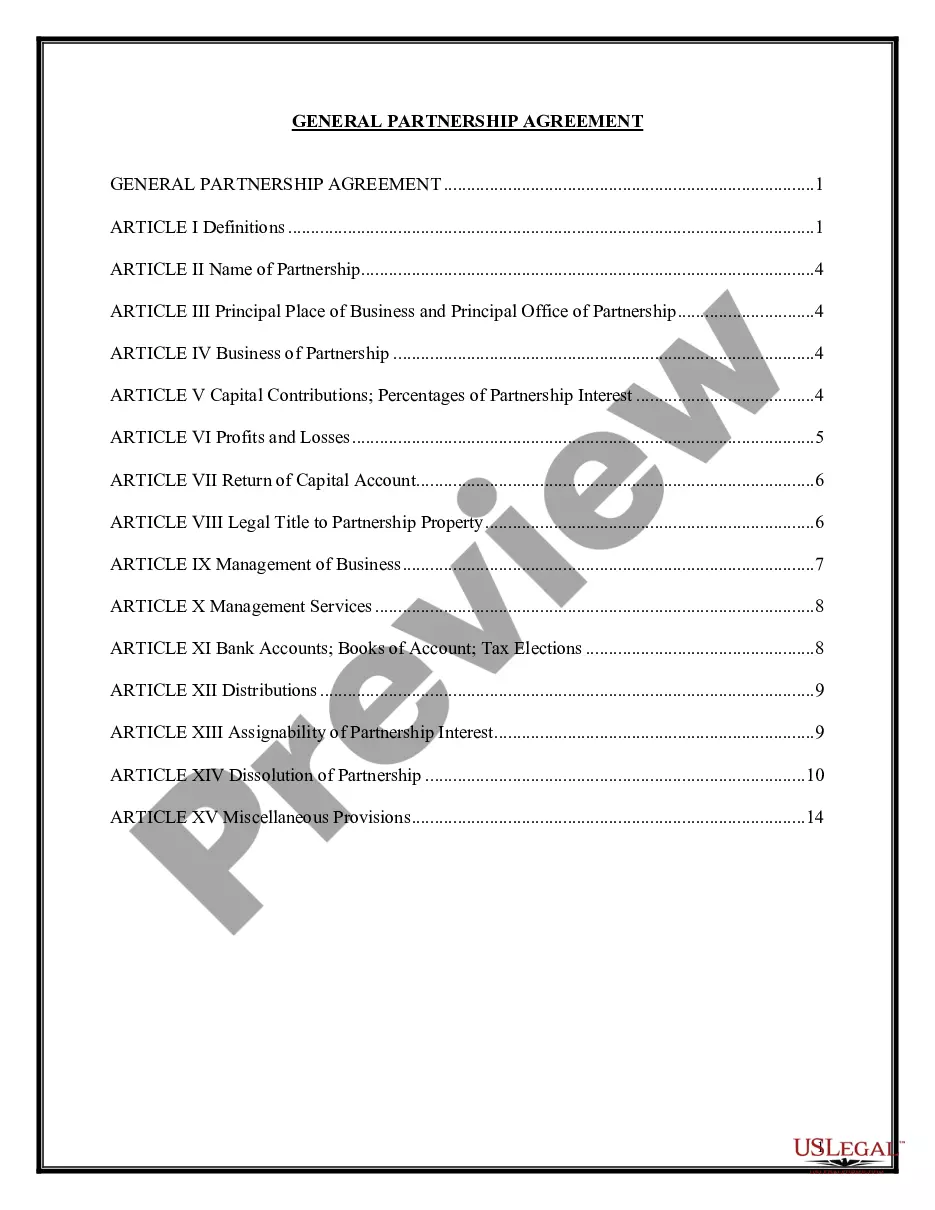
- General Partnership Agreement - Complex
- Checklist for Starting Up a New Business
- Profit and Loss Statement
- Business Startup Costs
- Employment or Work Application - General
- Stand Alone Confidentiality and Noncompetition Agreement with Employee
- Self-Employed Independent Contractor Employment Agreement - General

Common use cases
This form package is useful in various situations, including:
- When you are starting a new partnership and need a formal agreement.
- If you are modifying an existing partnership and require updated legal documents.
- When the partners wish to outline the terms of profit sharing and management responsibilities.
- If a partner is leaving the partnership or if the partnership is being dissolved.
Who should use this form package
- Business partners seeking to establish a new general partnership.
- Existing partners looking to revise their partnership agreements.
- Individuals wanting to clarify financial arrangements between partners.
- Partnerships needing to formalize a dissolution process.
Instructions for completing these forms
- Review the included forms carefully.
- Identify the type of partnership agreement that best suits your needs.
- Fill in the required information, such as partner names and contributions.
- Ensure all partners sign the completed agreements.
- Store the documents securely for future reference.
Notarization details for included forms
Forms in this package typically do not require notarization unless required by local law. Always check specific jurisdictional requirements to ensure compliance.
Get your form ready online
Our built-in tools help you complete, sign, share, and store your documents in one place.
Make edits, fill in missing information, and update formatting in US Legal Forms—just like you would in MS Word.
Download a copy, print it, send it by email, or mail it via USPS—whatever works best for your next step.
Sign and collect signatures with our SignNow integration. Send to multiple recipients, set reminders, and more. Go Premium to unlock E-Sign.
If this form requires notarization, complete it online through a secure video call—no need to meet a notary in person or wait for an appointment.
We protect your documents and personal data by following strict security and privacy standards.

Make edits, fill in missing information, and update formatting in US Legal Forms—just like you would in MS Word.

Download a copy, print it, send it by email, or mail it via USPS—whatever works best for your next step.

Sign and collect signatures with our SignNow integration. Send to multiple recipients, set reminders, and more. Go Premium to unlock E-Sign.

If this form requires notarization, complete it online through a secure video call—no need to meet a notary in person or wait for an appointment.

We protect your documents and personal data by following strict security and privacy standards.
Common mistakes
- Failing to include all partners' names and contributions in the agreement.
- Not having all partners sign the documents.
- Forgetting to outline specific terms regarding profit sharing and responsibilities.
- Neglecting to address the process for dissolution in the partnership agreement.
Benefits of using this package online
- Convenience of accessing and downloading forms from anywhere at any time.
- Customizable forms that can be tailored to meet your partnership's specific needs.
- Reliable templates drafted by licensed attorneys to ensure legality and enforceability.
Legal use & context
- Partnership agreements are legal contracts that define the roles and responsibilities of each partner.
- Buy-sell agreements establish protocols for transferring ownership shares in a partnership, protecting both the partnership and its partners.
- Properly executed dissolution agreements ensure that all legal obligations are settled, mitigating future disputes.
What to keep in mind
- The Wisconsin General Partnership Package includes essential forms for partnership formation and management.
- It caters specifically to the regulations in Wisconsin, ensuring compliance and legality.
- Users can save time and money by accessing a complete package rather than purchasing individual forms.
Looking for another form?




Form popularity
FAQ
No Separate Business Entity from Partners. Partners' Personal Assets Unprotected. Partners Liable for Each Others' Actions. Partnership Terminated Upon Death or Withdrawal of One of the Partners.
A partnership is a form of business where two or more people share ownership, as well as the responsibility for managing the company and the income or losses the business generates.There are three types of partnerships: General partnership. Limited partnership. Joint venture.
Aside from formation requirements, the main difference between a partnership and an LLC is that partners are personally liable for any business debts of the partnership -- meaning that creditors of the partnership can go after the partners' personal assets -- while members (owners) of an LLC are not personally liable
The general partner is responsible for the management of the partnership and the limited partner is generally an investor only. Limited partners are often referred to as silent partners. They invest capital in exchange for a portion of the profits of the partnership.
There are three relatively common partnership types: general partnership (GP), limited partnership (LP) and limited liability partnership (LLP).
General Partnership: Limited Partnership: Limited Liability Partnership (L.L.P): Partnership at Will: Particular Partnership:
There are disadvantages to general partnerships, principally liability.Each partner is also liable for the debts incurred by the actions of other partners. Because of this potential personal liability, general partnerships are limited in their ability to raise money and attract investors.
LLC partnership (also known as a multi-member LLC) Limited liability partnership (LLP) Limited partnership (LP) General partnership (GP)
Types of Partnership General Partnership, Limited Partnership, Limited Liability Partnership and Public Private Partnership.