Wisconsin Aging Parent Package
What is this form package?
The Wisconsin Aging Parent Package is a comprehensive set of legal documents designed to assist individuals in managing the legal affairs of their aging parents. This package provides both state-specific and multi-state forms, ensuring that your parent has the essential tools to protect their health, finances, and estate during their later years. Unlike other form packages, this one focuses specifically on the unique needs of aging parents, facilitating proactive planning and organization as they transition into a later stage of life.
What’s included in this form package
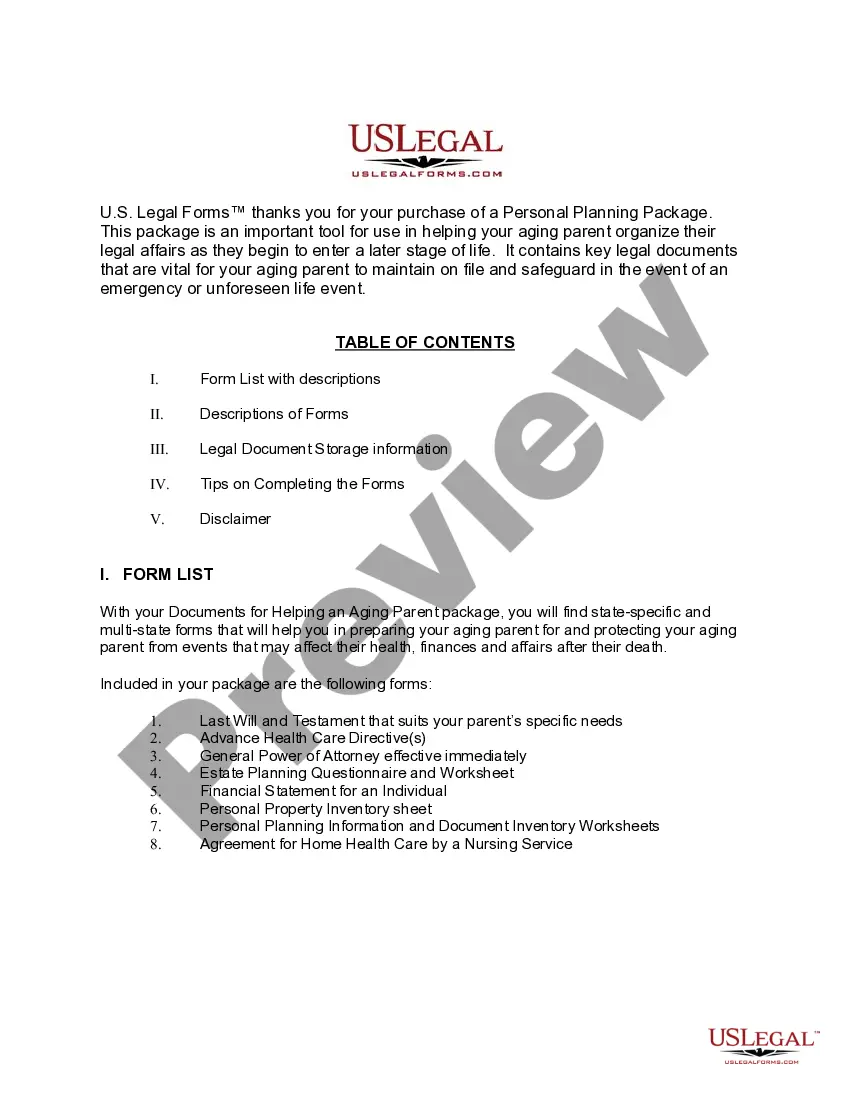
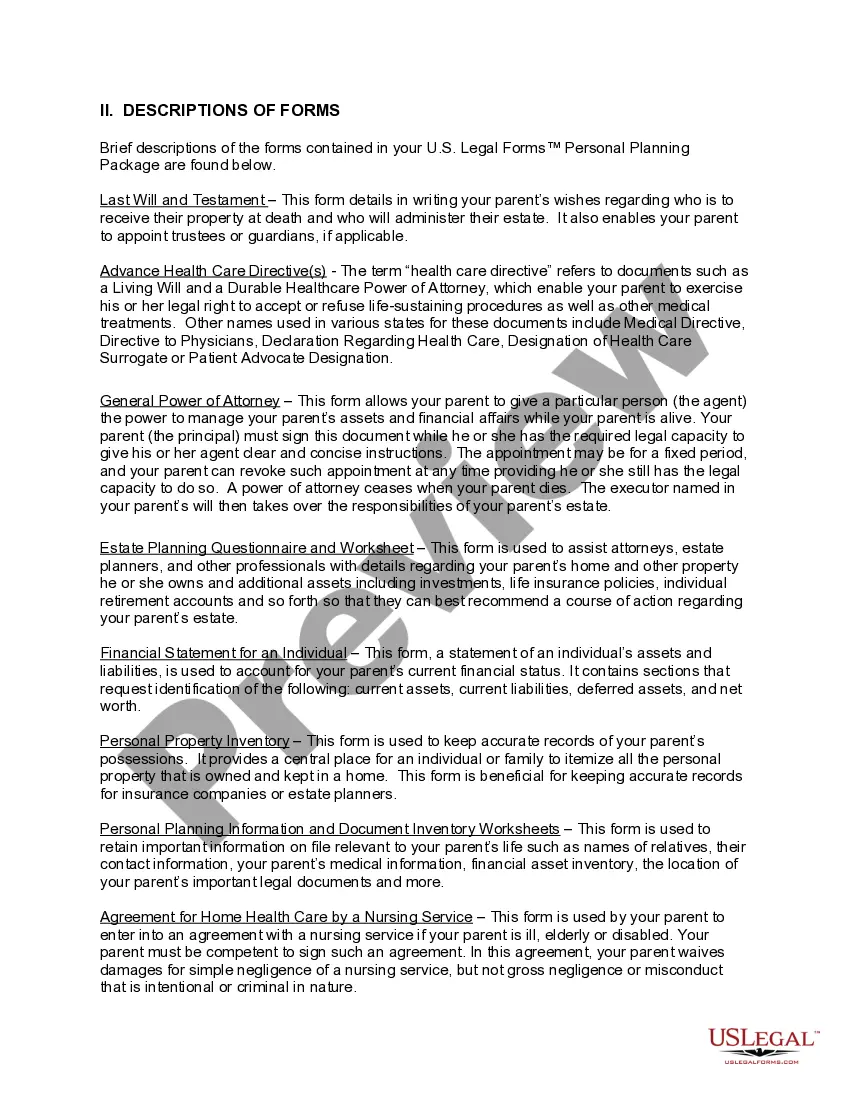
- Last Will and Testament
- General Durable Power of Attorney for Property and Finances or Financial Effective Immediately
- Statutory Power of Attorney for Health Care
- Statutory Living Will - Declaration to Healthcare Professionals
- Estate Planning Questionnaire and Worksheets
- Personal Care Agreement for Home Healthcare by a Nursing Service
- Personal Property Inventory
- Financial Statement Form - Husband and Wife Joint
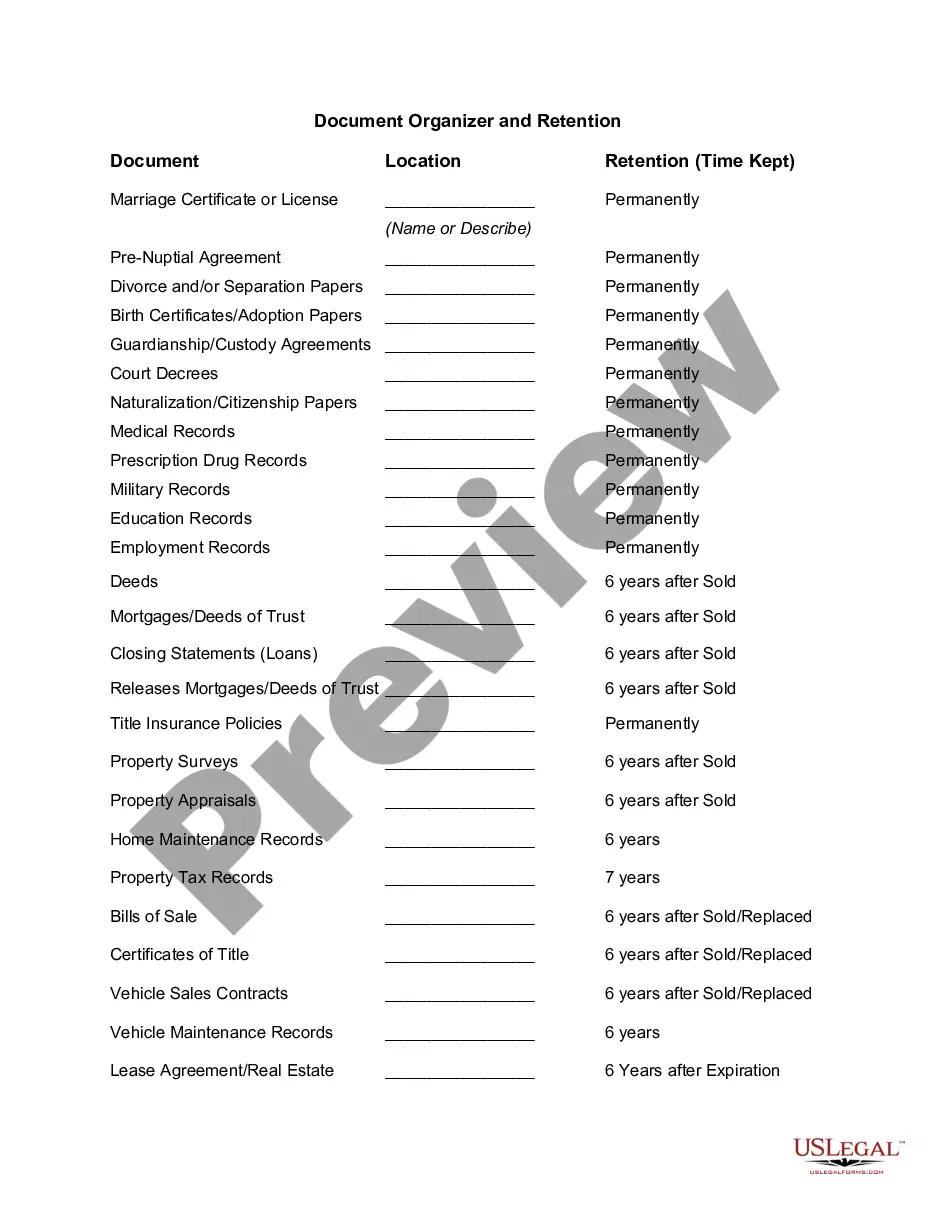
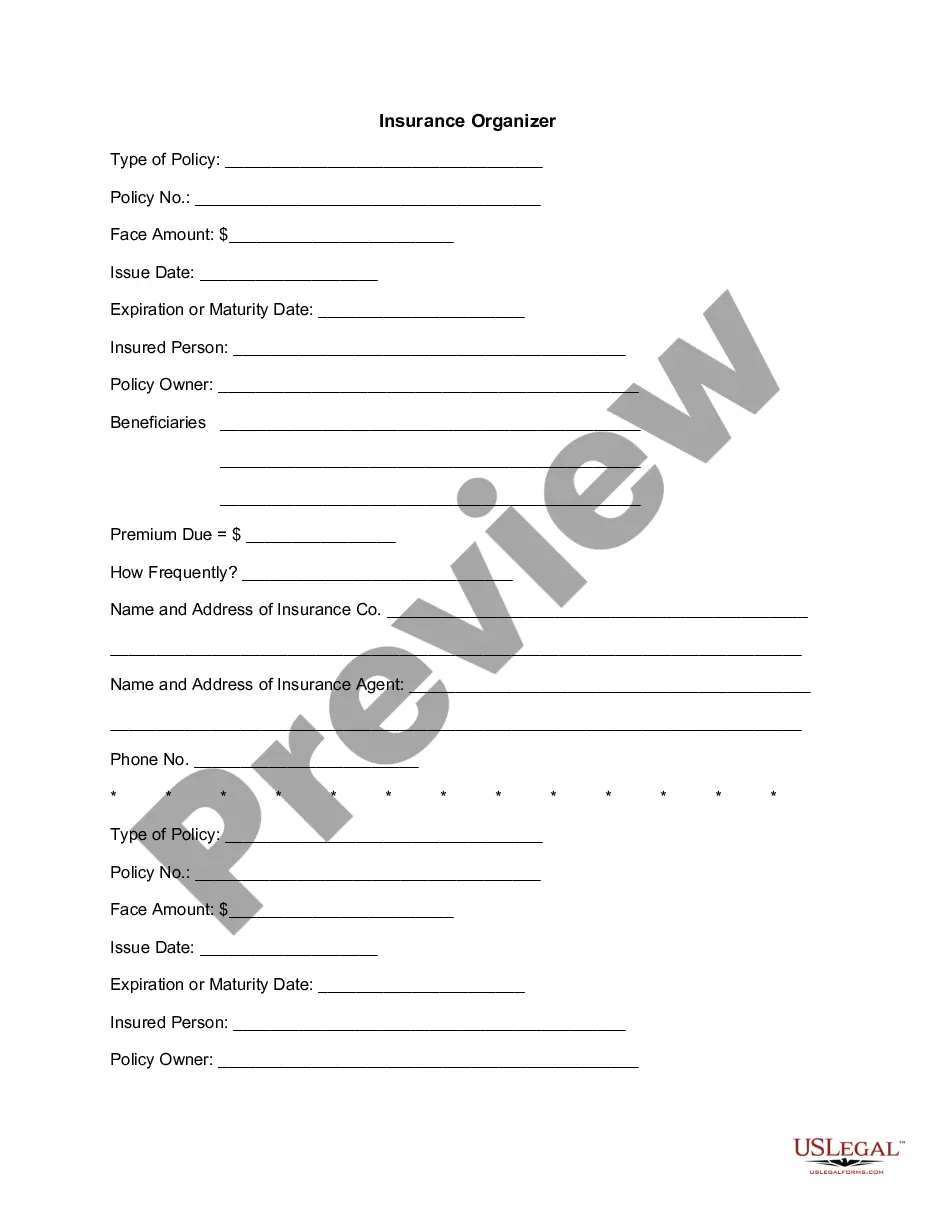
- Personal Planning Information and Document Inventory Worksheets - A Legal Life Document



When to use this form package
This package is particularly useful in scenarios where:
- Your aging parent needs assistance in creating or updating important legal documents.
- Health issues arise, requiring decisions about medical care and living arrangements.
- Your family wants to ensure that financial matters are clearly defined and managed.
- You are preparing for possible emergencies or unforeseen life events affecting your parent.
Intended users of this form package
- Adult children of aging parents looking to organize their parentsâ legal affairs.
- Caregivers managing the health and finances of elderly individuals.
- Individuals seeking to prepare legally binding documents for their own future needs.
- Family members involved in estate planning and management of an aging relative's property.
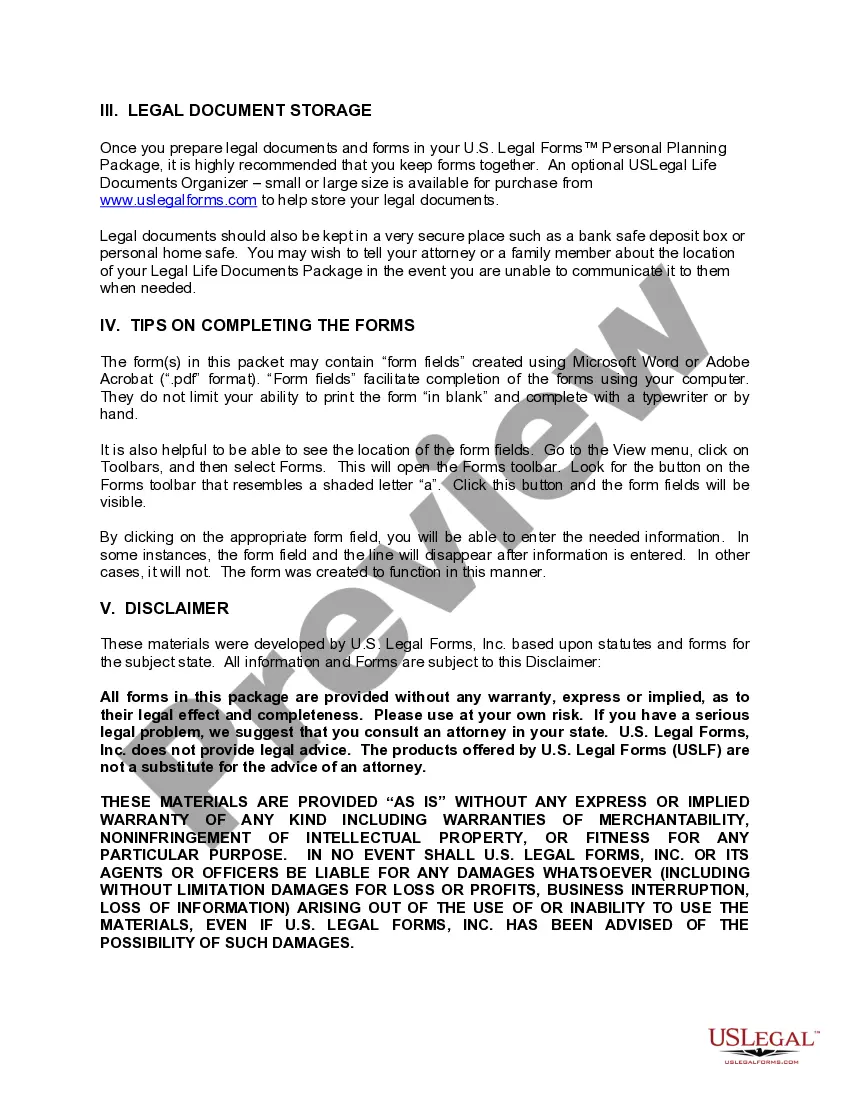
Steps to complete these forms
- Review the included forms in the package carefully.
- Fill out personal and relevant information for each document where indicated.
- Ensure that any necessary witnesses are present when signing the Last Will and Testament.
- Consult with a trusted family member or legal advisor if needed.
- Store completed documents in a safe and accessible location for future reference.
Notarization guidance for this package
Forms in this package typically do not require notarization unless required by local law. However, certain documents, such as the Last Will and Testament, may have specific requirements that necessitate witnessing.
Get your form ready online
Our built-in tools help you complete, sign, share, and store your documents in one place.
Make edits, fill in missing information, and update formatting in US Legal Forms—just like you would in MS Word.
Download a copy, print it, send it by email, or mail it via USPS—whatever works best for your next step.
Sign and collect signatures with our SignNow integration. Send to multiple recipients, set reminders, and more. Go Premium to unlock E-Sign.
If this form requires notarization, complete it online through a secure video call—no need to meet a notary in person or wait for an appointment.
We protect your documents and personal data by following strict security and privacy standards.

Make edits, fill in missing information, and update formatting in US Legal Forms—just like you would in MS Word.

Download a copy, print it, send it by email, or mail it via USPS—whatever works best for your next step.

Sign and collect signatures with our SignNow integration. Send to multiple recipients, set reminders, and more. Go Premium to unlock E-Sign.

If this form requires notarization, complete it online through a secure video call—no need to meet a notary in person or wait for an appointment.

We protect your documents and personal data by following strict security and privacy standards.
Avoid these common issues
- Failing to update the documents as circumstances change.
- Not having the forms signed in front of required witnesses if necessary.
- Overlooking state-specific guidelines which may affect the legality of the forms.
- Leaving important sections of the forms blank.
Advantages of online completion
- Convenience: Easily download and complete forms from the comfort of your home.
- Editability: Make necessary changes quickly without the need for reprinting entire documents.
- Reliability: Forms are drafted by licensed attorneys, ensuring they meet legal standards.
Summary of main points
- The Wisconsin Aging Parent Package helps organize essential legal documents for aging parents.
- It addresses critical matters related to health, finance, and estate planning.
- This package includes state-specific forms tailored to Wisconsin laws.
Looking for another form?

Form popularity
FAQ
The Aid and Attendance Pension benefit is another program available in Texas that can be used to pay family members to provide care. At the forefront, it should be mentioned that this program is only relevant for war-time veterans or their surviving spouses who require assistance with their activities of daily living.
The short answer is yes, as long as all parties agree. (To learn how to set up a formal arrangement for payment, see the FCA fact sheet Personal Care Agreements.) If the care receiver is eligible for Medicaid (MediCal in California), it might be possible for you to be paid through In-Home Supportive Services (IHSS).
The Family Care and Family Care Partnership programs are long-term care programs for Wisconsin residents that offer a large variety of supports to help individuals remain living in their homes.Under these programs, some family members can receive payment for the caregiving services they provide to their loved ones.
Commonly, it is an adult child who is paid via Medicaid to provide care, but some states, such as Alabama, Arizona, California, Colorado, Delaware, Florida, Hawaii, Kentucky, Minnesota, Montana, New Hampshire, New Jersey, North Dakota, Oklahoma, Oregon, and Wisconsin, even provide funds for spouses to be paid
Does Medicare Pay for Caregivers? Your Guide to At-Home Healthcare. Medicare typically doesn't pay for in-home caregivers for personal care or housekeeping if that's the only care you need. Medicare may pay for short-term caregivers if you also need medical care to recover from surgery, an illness, or an injury.
Medicaid. Medicaid offers a number of programs in different states that can be used to pay a family caregiver. Veteran Services. Tax Deductions. Local Resources. Long-Term Care Insurance Policies. Paid Leave. Remote Work.
The first and most common Medicaid option is Medicaid Waivers.With this option, the care recipient can choose to receive care from a family member, such as an adult child, and Medicaid will compensate the adult child for providing care for the elderly parent.