Wisconsin Grant of Conservation Easement and Development Rights to Preserve Scenic and Environmentally Significant Areas
About this form
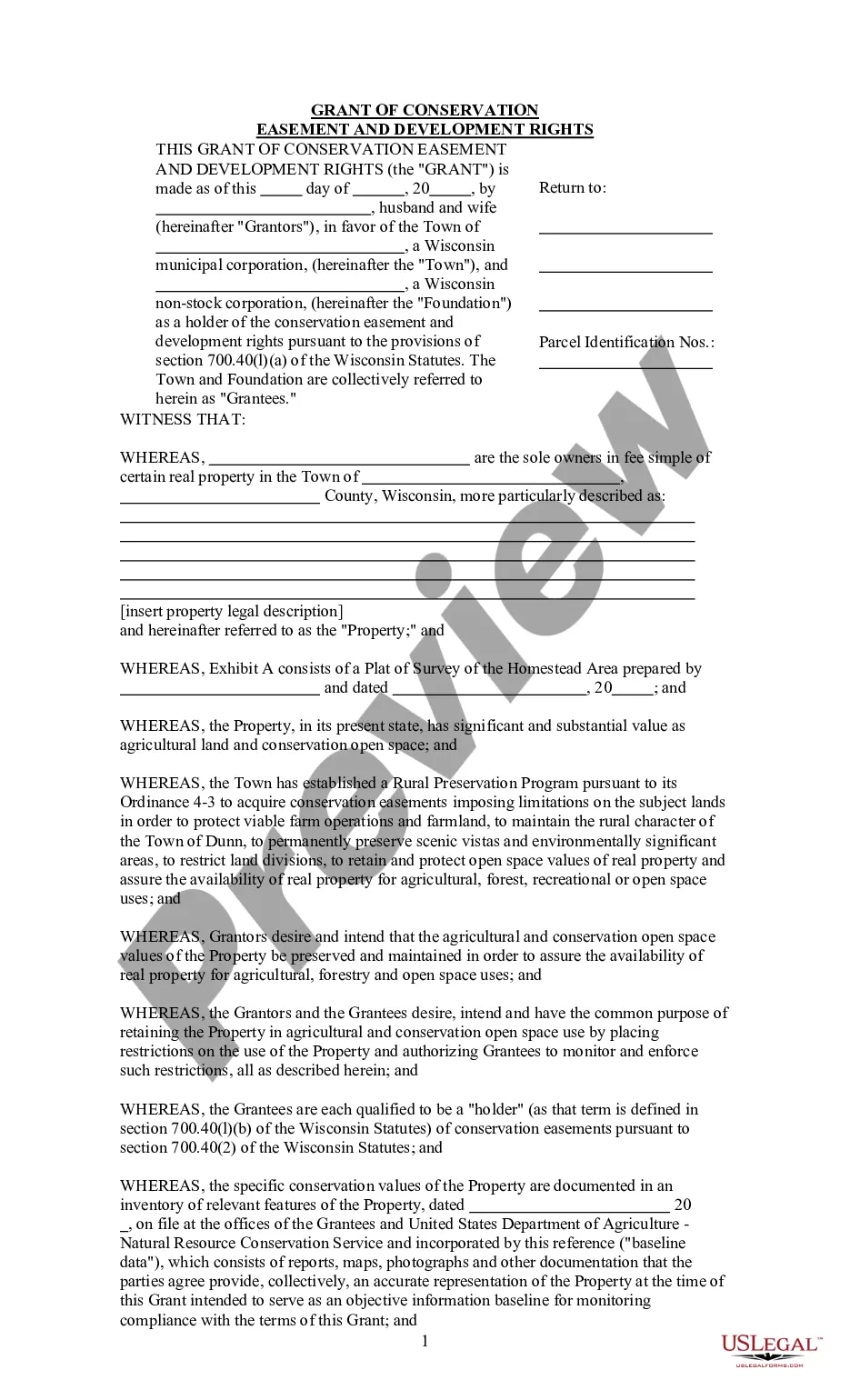
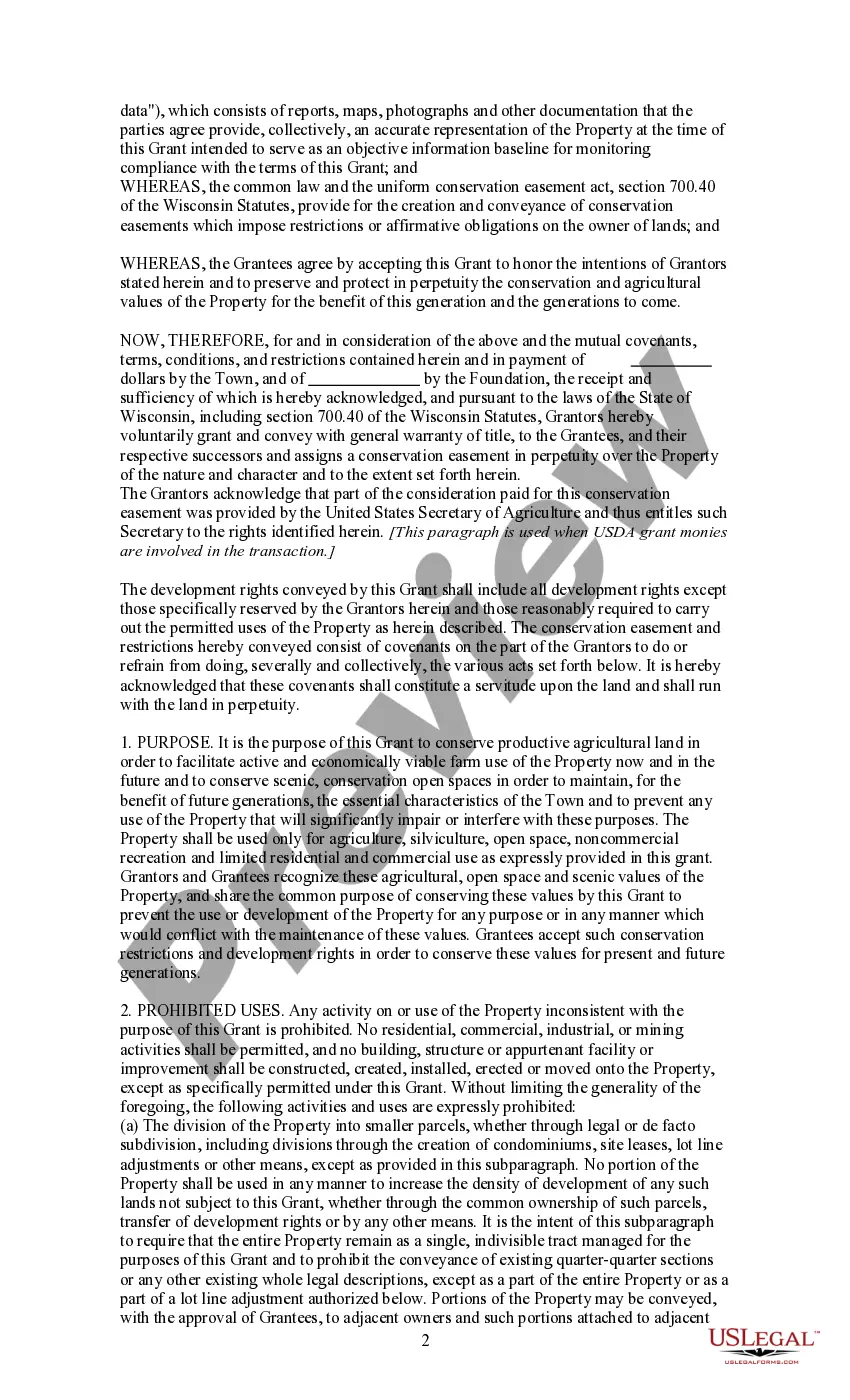
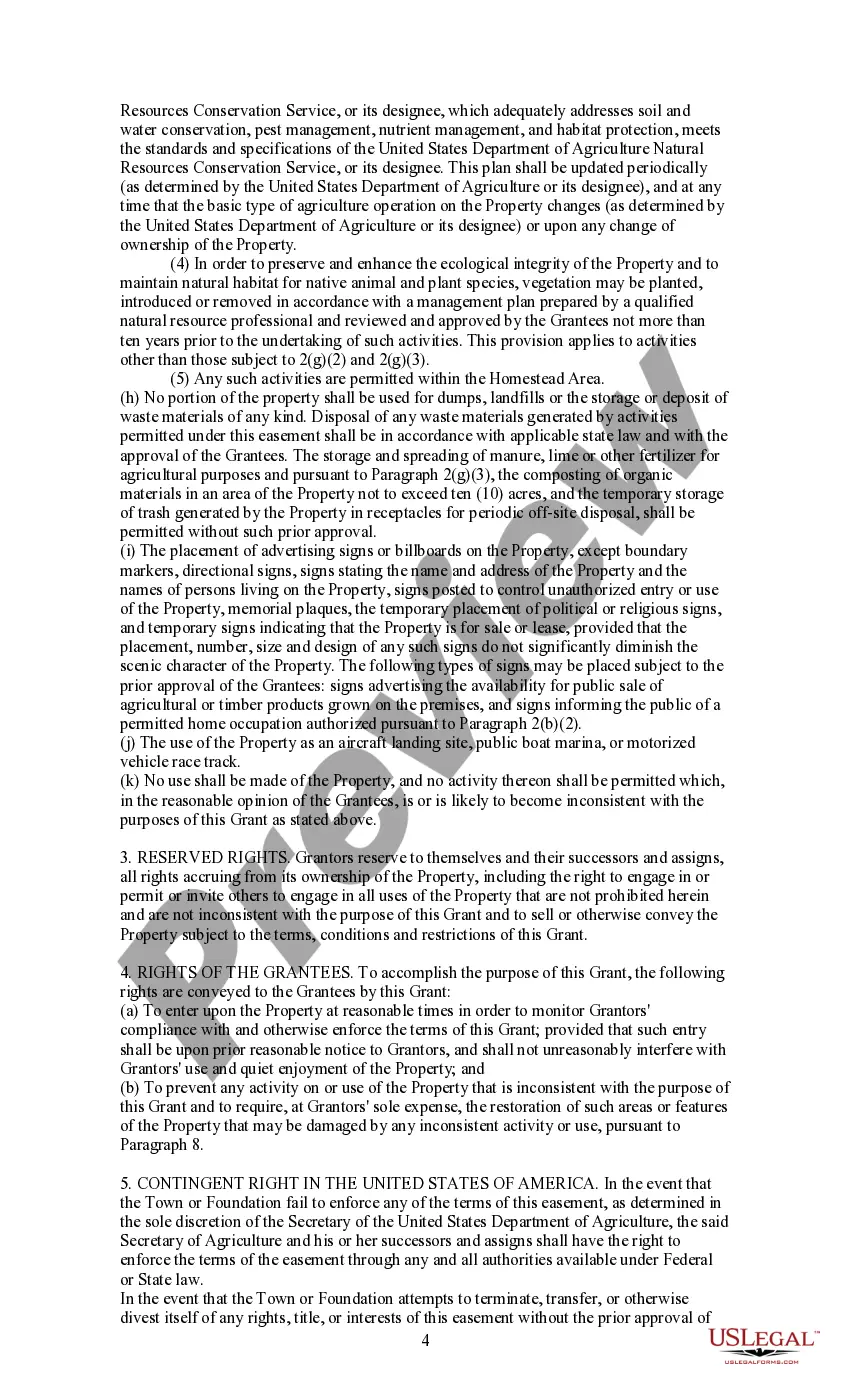
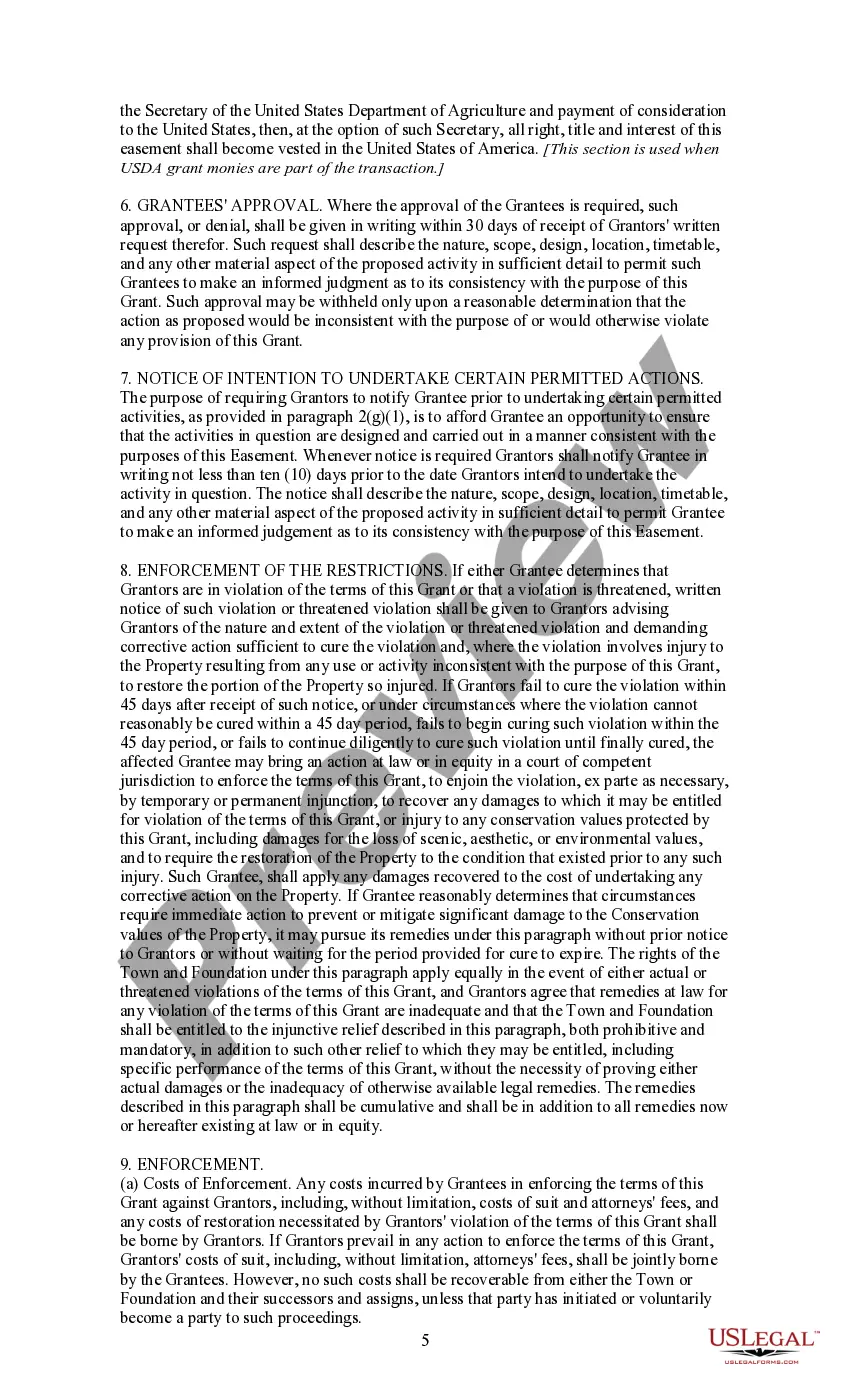
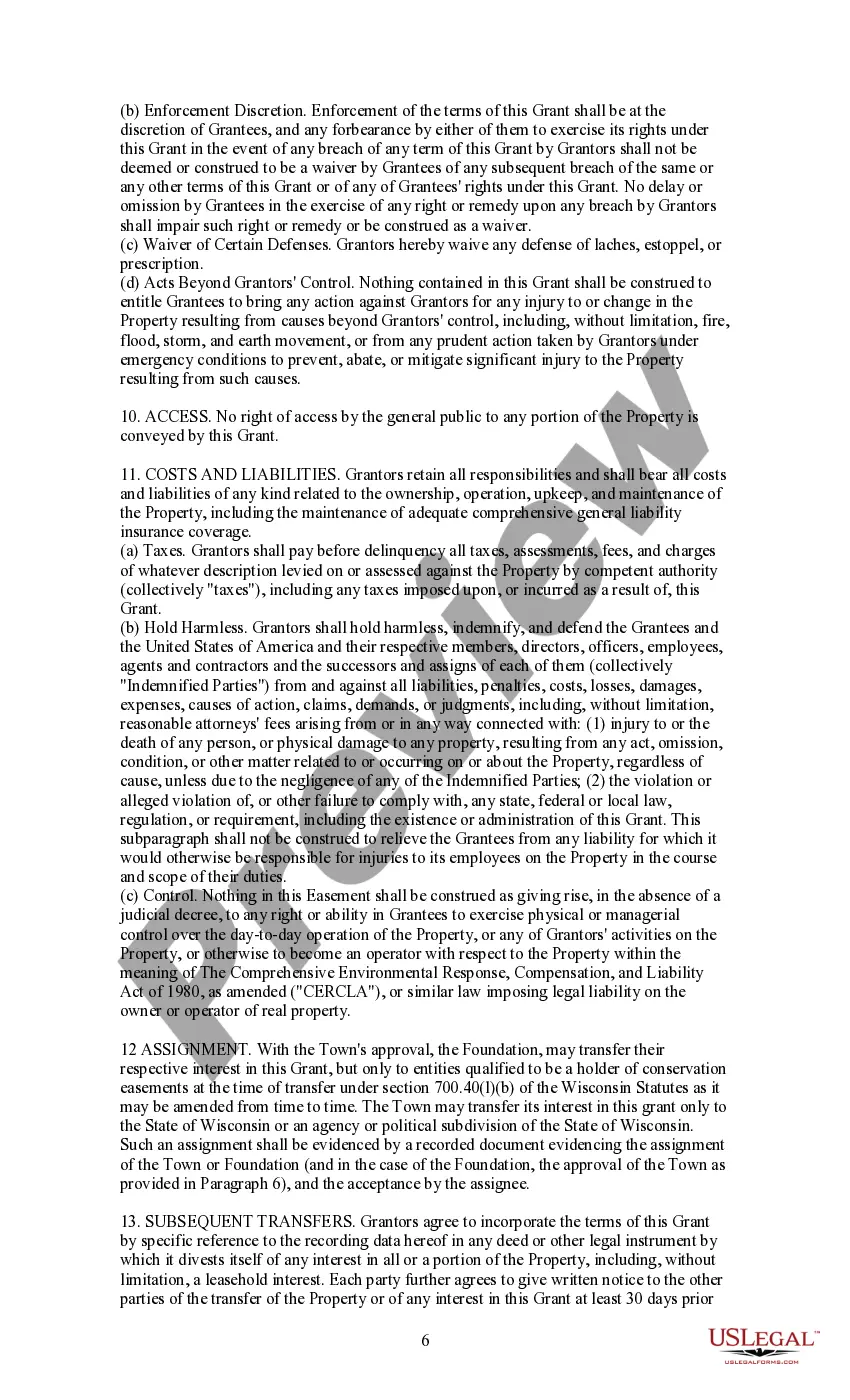
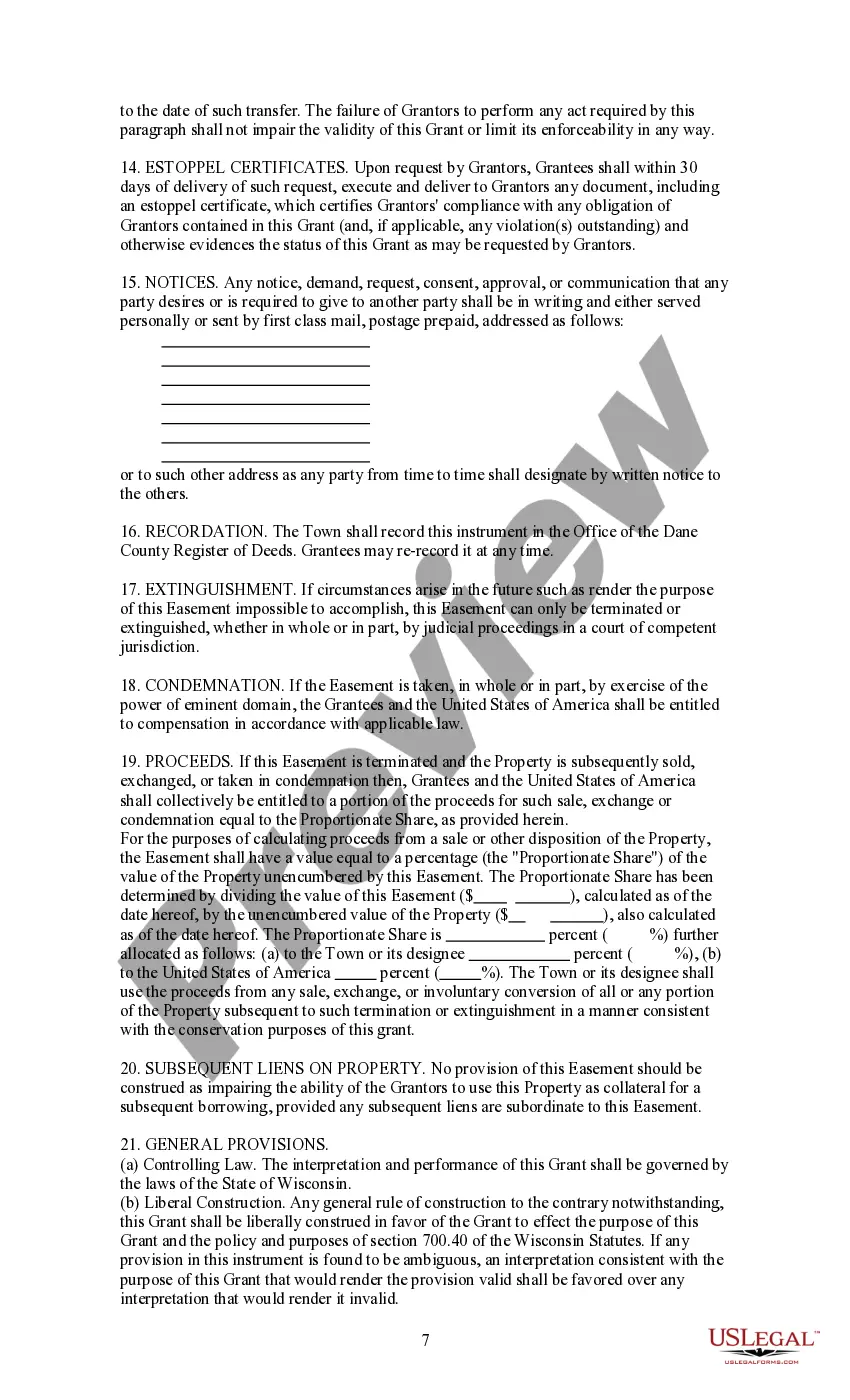
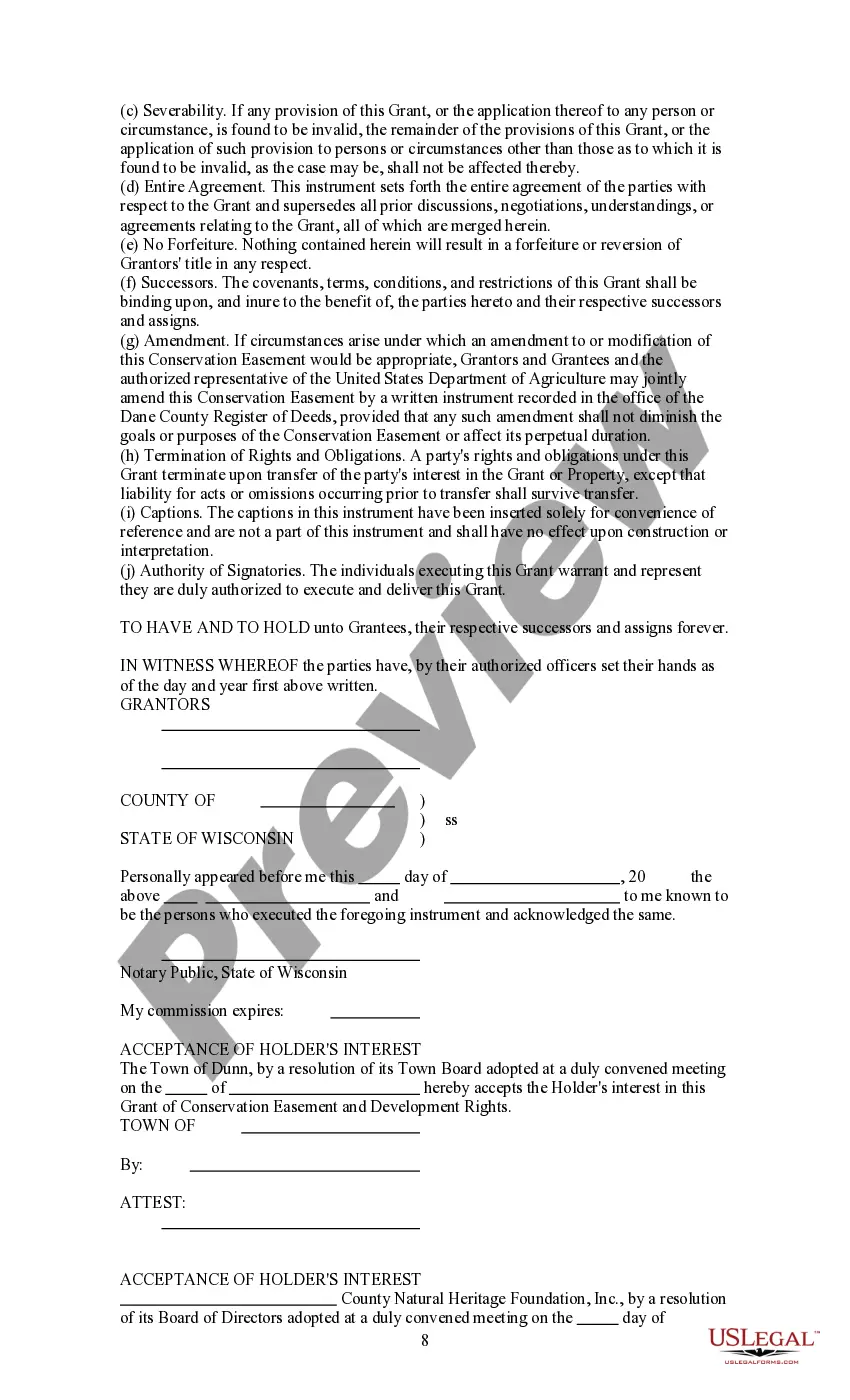
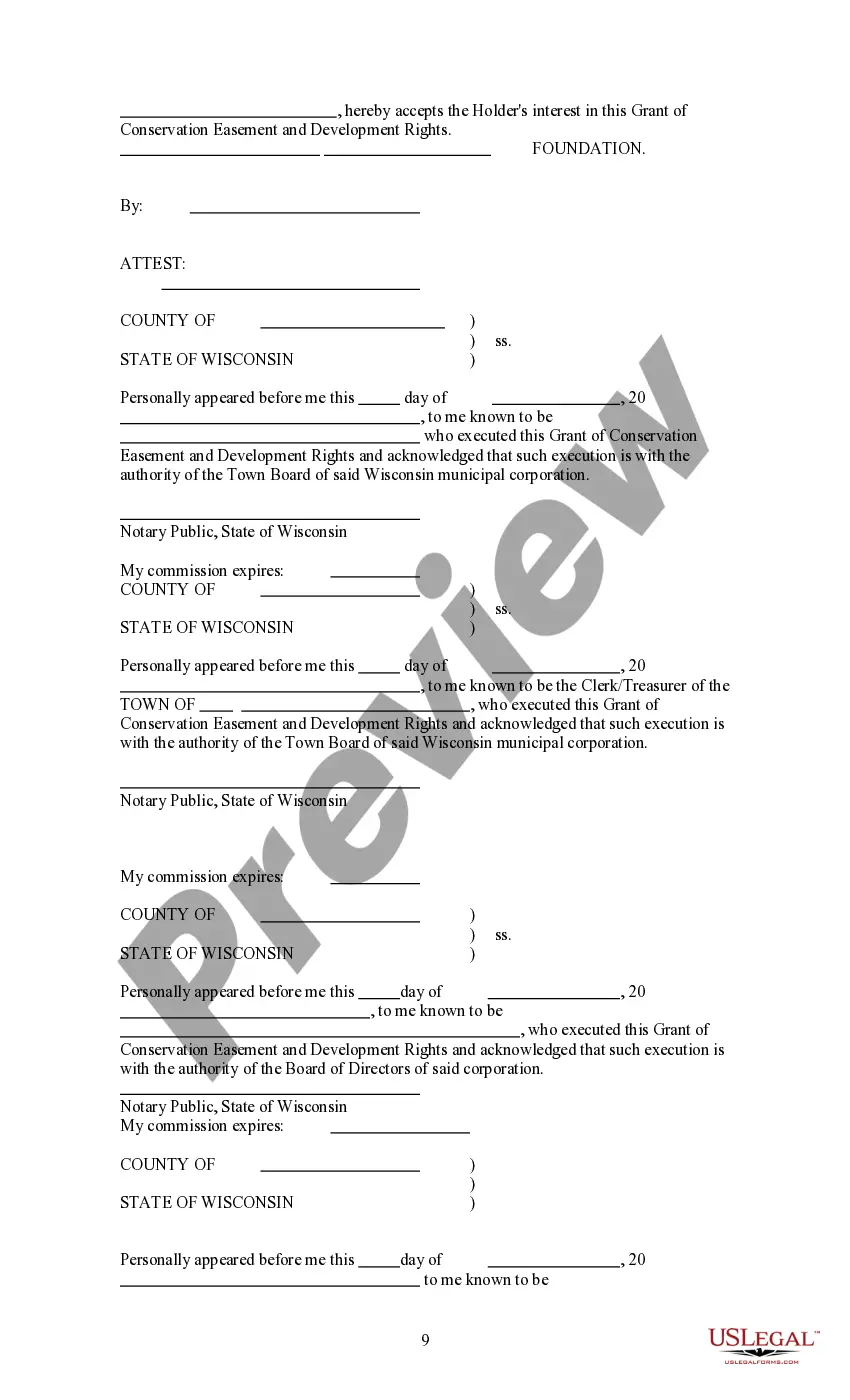
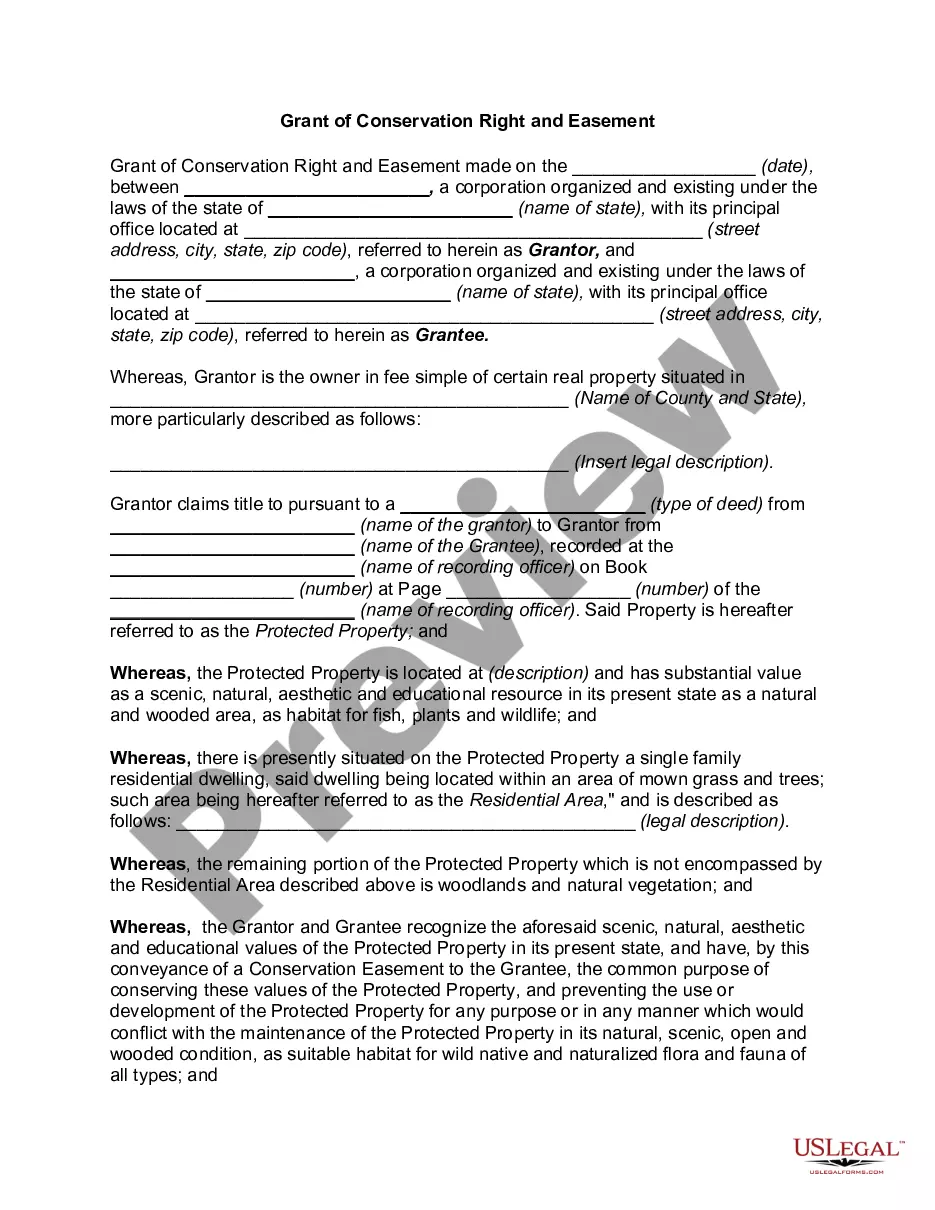
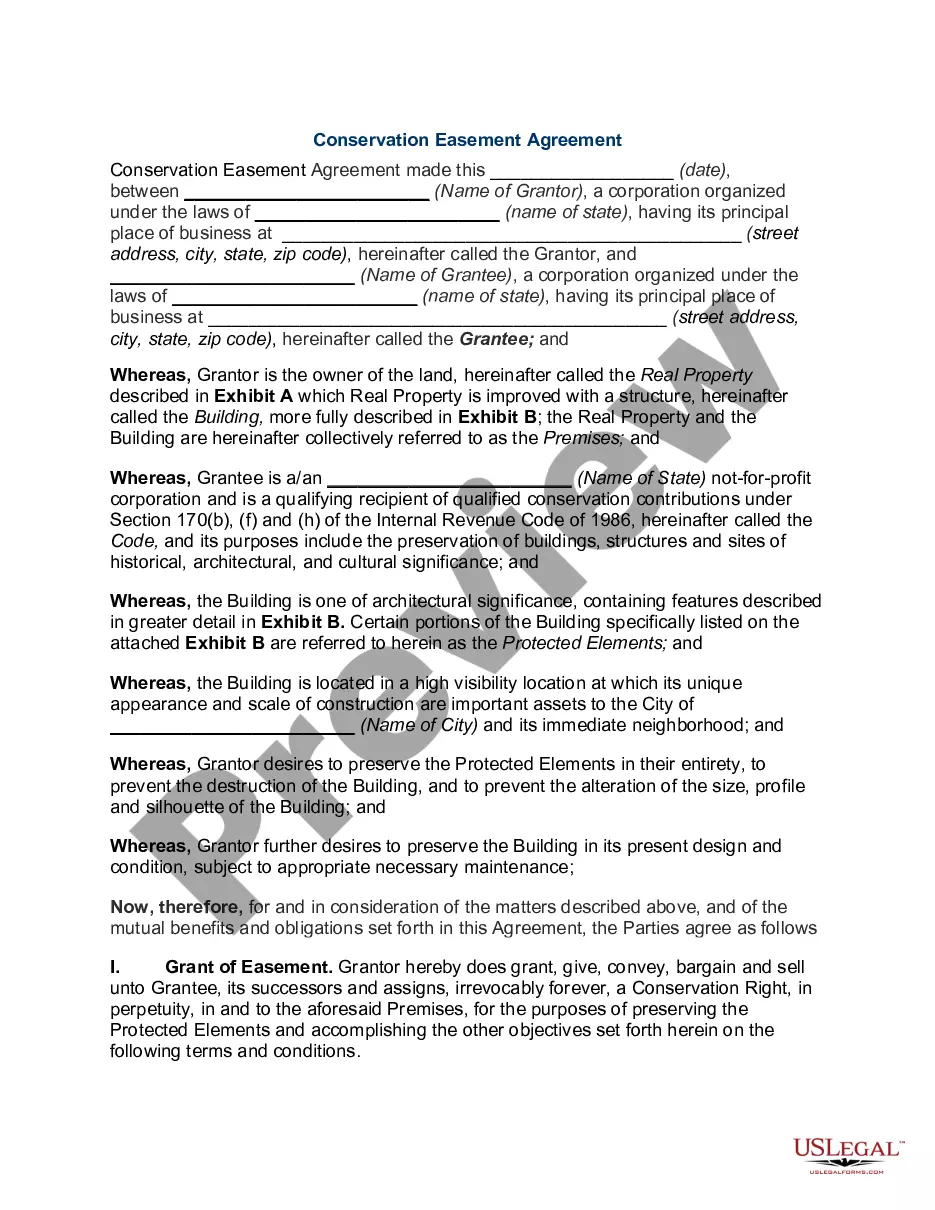
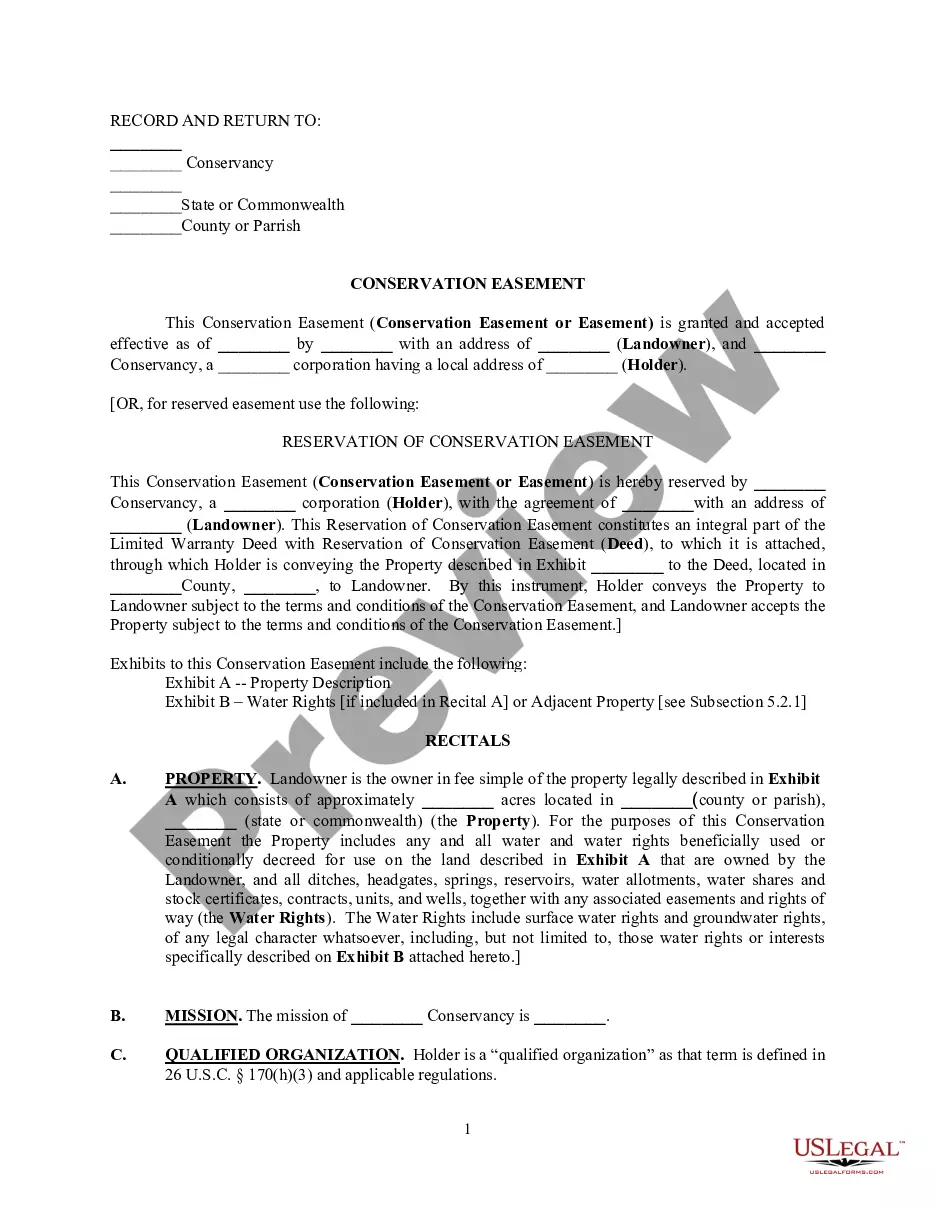
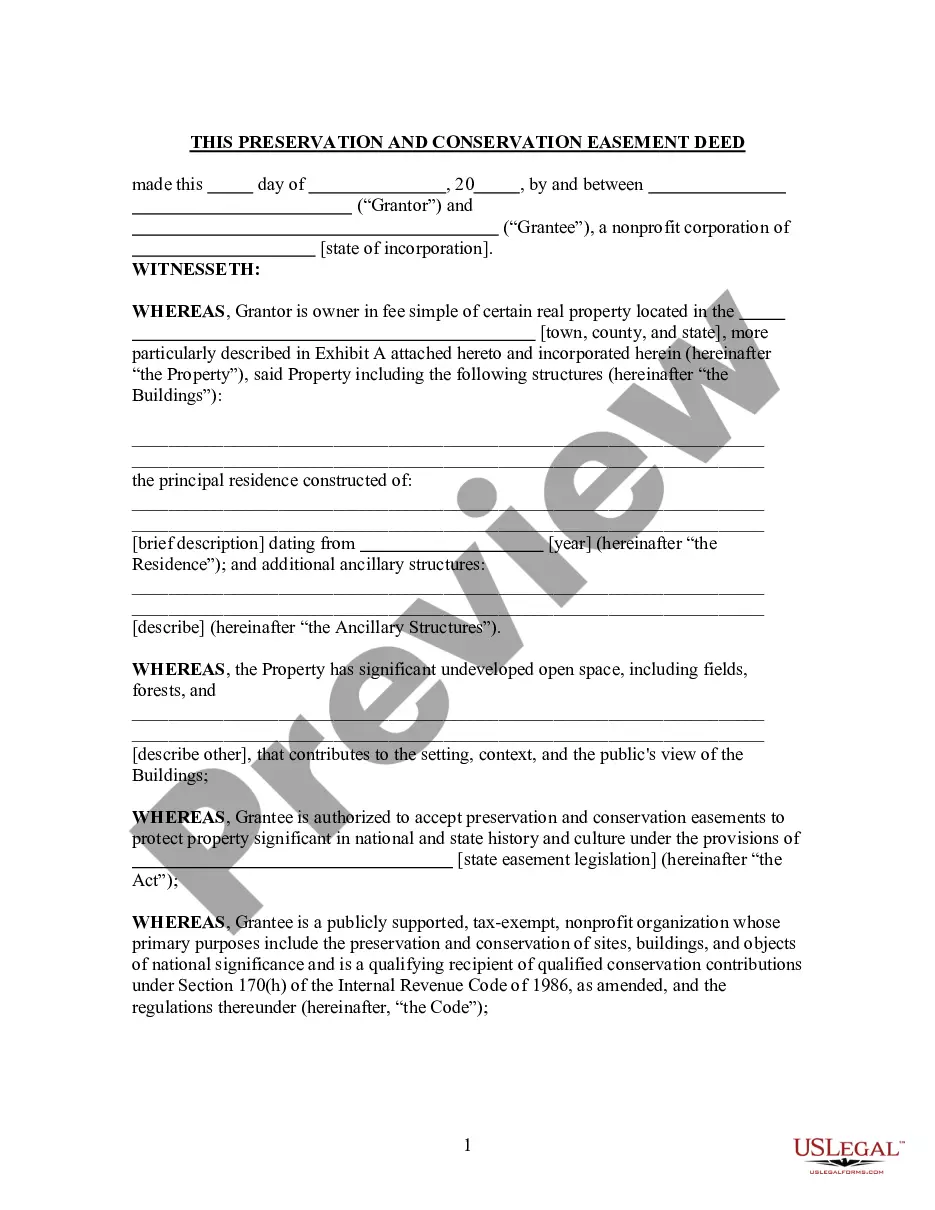
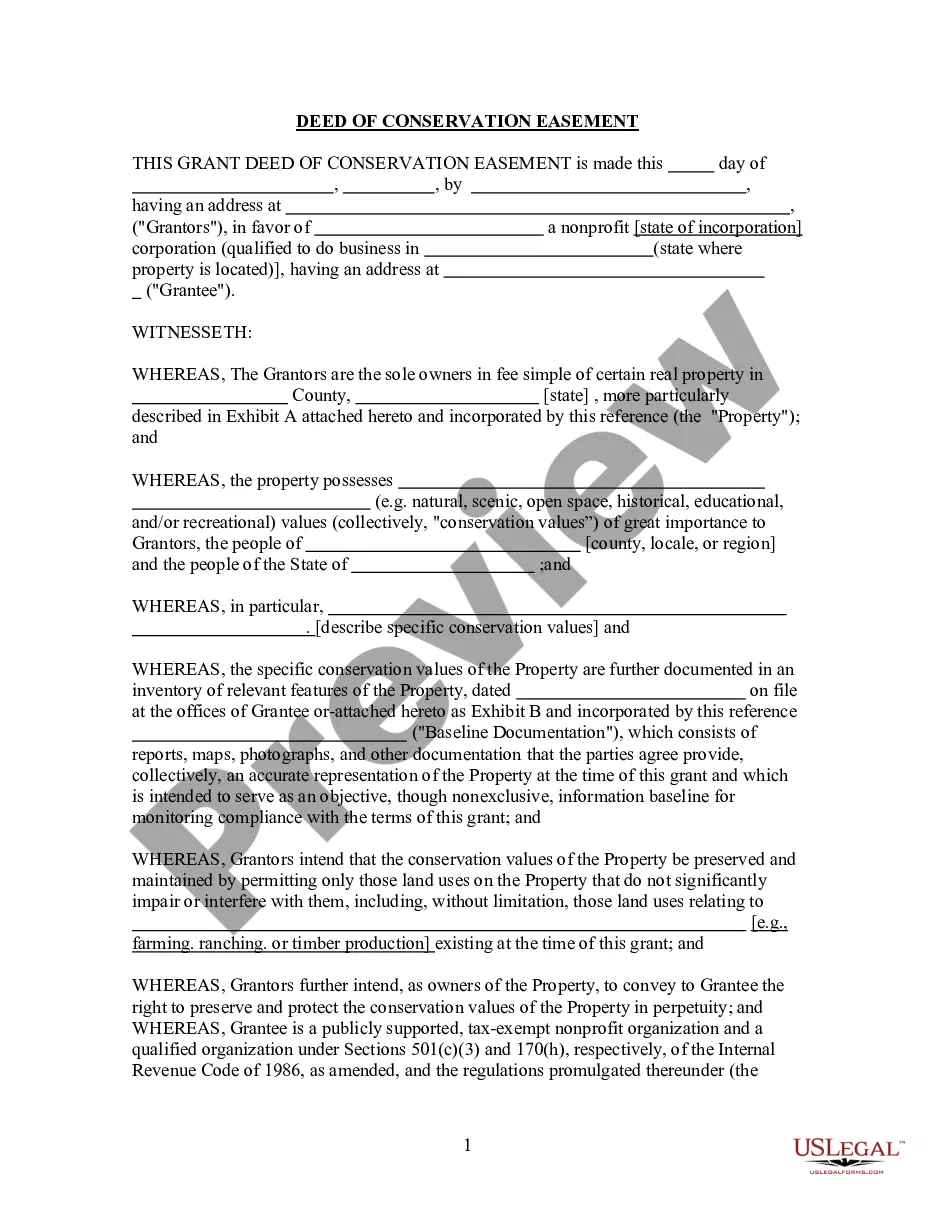
This is a Grant of Conservation Easement and Development Rights to Preserve Scenic and Environmentally Significant Areas. This legal document enables landowners to protect the natural and scenic values of their property by limiting developments and preserving open spaces for agricultural, recreational, and ecological uses. Unlike typical property deeds, this conservation easement focuses specifically on maintaining the integrity of land designated for conservation and preventing activities that could undermine its environmental significance.
Key parts of this document
- Purpose and intent behind the conservation easement.
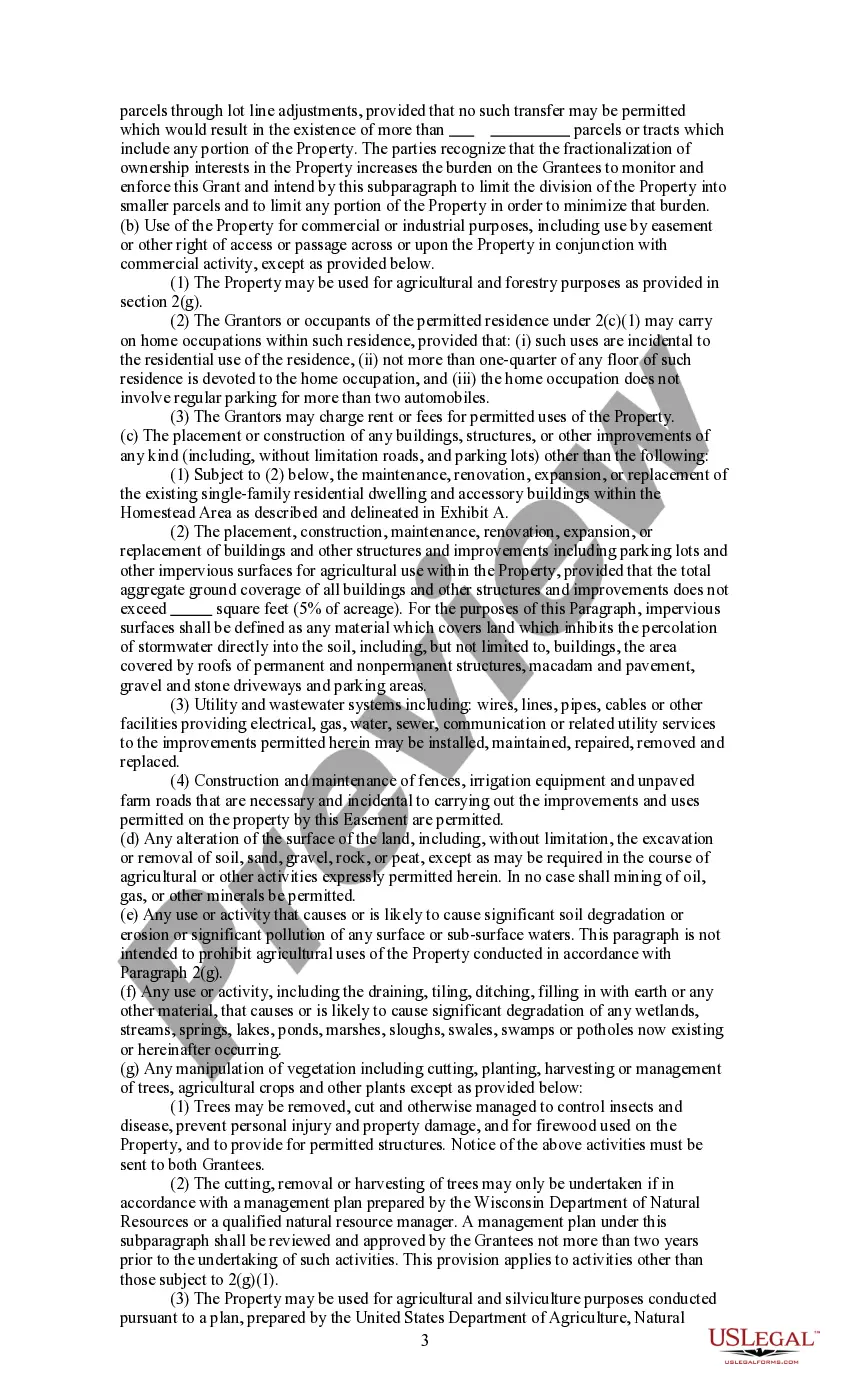
- Restrictions on land use and development activities.
- Reserved rights for the Grantors to maintain certain property uses.
- Enforcement rights granted to the Grantees to ensure compliance.
- Conditions for modifications and termination of the easement.
When to use this form
This form should be used when a landowner wishes to preserve the natural beauty and environmental significance of a property while ensuring its continued use for agriculture, forestry, or recreation. It is especially beneficial in areas where development pressures threaten the local ecological systems, scenic vistas, or community character.
Who can use this document
- Landowners who wish to protect their property for future generations.
- Farmers and landowners in rural areas targeting conservation for agricultural viability.
- Non-profit organizations focused on environmental preservation.
- Local governments seeking to maintain the character of their communities.
How to complete this form
- Identify the Grantors (property owners) and Grantees (conservation holders).
- Specify the property by providing its legal description and boundaries.
- Outline the specific conservation purposes and the intended restrictions on land use.
- Include any reserved rights that the Grantors wish to retain.
- Ensure that both parties sign and date the form to execute the agreement.
Does this form need to be notarized?
To make this form legally binding, it must be notarized. Our online notarization service, powered by Notarize, lets you verify and sign documents remotely through an encrypted video session.
Get your form ready online
Our built-in tools help you complete, sign, share, and store your documents in one place.
Make edits, fill in missing information, and update formatting in US Legal Forms—just like you would in MS Word.
Download a copy, print it, send it by email, or mail it via USPS—whatever works best for your next step.
Sign and collect signatures with our SignNow integration. Send to multiple recipients, set reminders, and more. Go Premium to unlock E-Sign.
If this form requires notarization, complete it online through a secure video call—no need to meet a notary in person or wait for an appointment.
We protect your documents and personal data by following strict security and privacy standards.

Make edits, fill in missing information, and update formatting in US Legal Forms—just like you would in MS Word.

Download a copy, print it, send it by email, or mail it via USPS—whatever works best for your next step.

Sign and collect signatures with our SignNow integration. Send to multiple recipients, set reminders, and more. Go Premium to unlock E-Sign.

If this form requires notarization, complete it online through a secure video call—no need to meet a notary in person or wait for an appointment.

We protect your documents and personal data by following strict security and privacy standards.
Typical mistakes to avoid
- Failing to clearly define the property boundaries, which can lead to enforcement difficulties.
- Not accurately specifying prohibited uses of the property.
- Neglecting to involve qualified professionals when managing the conservation aspects.
- Overlooking the necessity of securing Grantee approval for specific activities.
Benefits of using this form online
- Convenient access to professionally drafted legal documents available for immediate download.
- Editability allows customization based on specific property details and intentions.
- Reliability of documents prepared in accordance with Wisconsin laws.
Looking for another form?
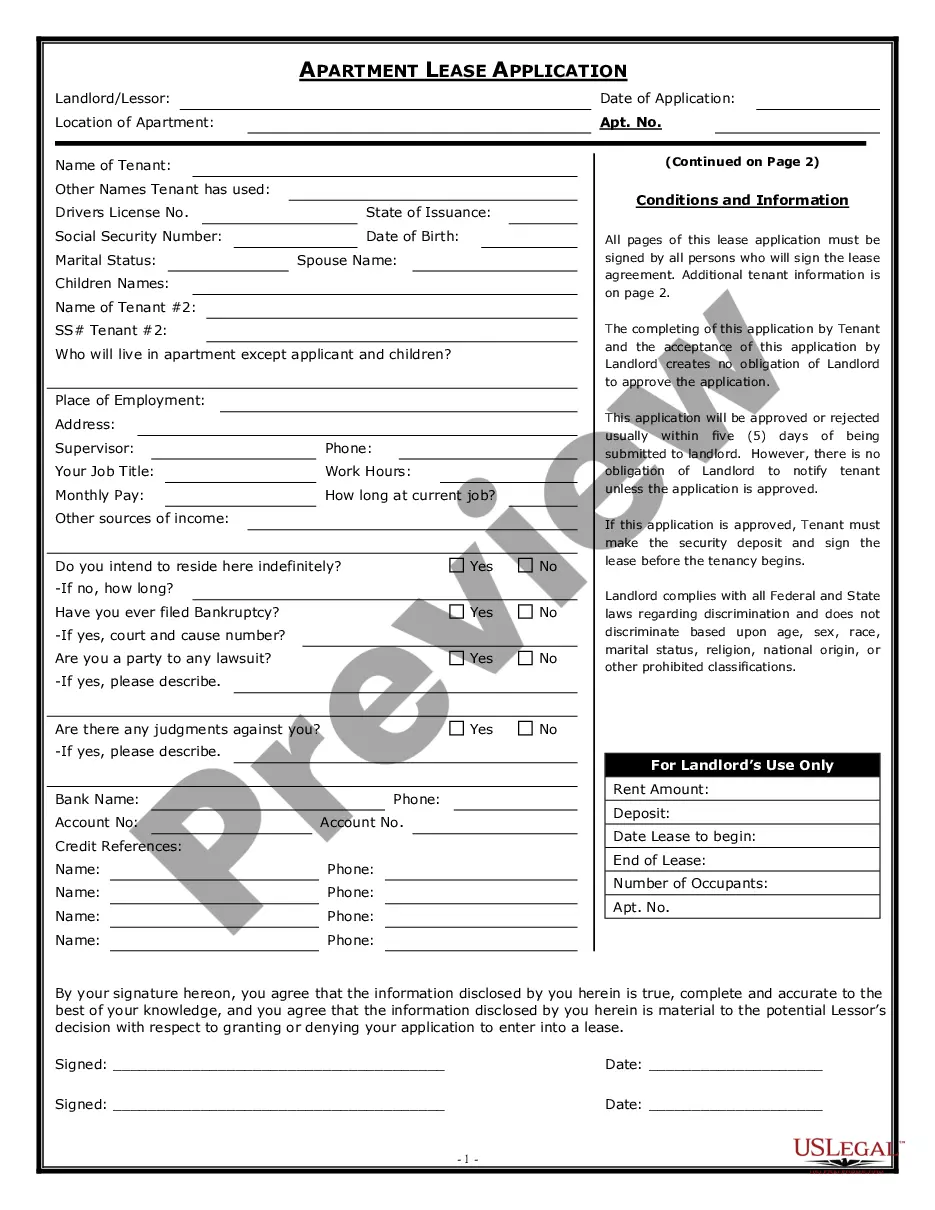
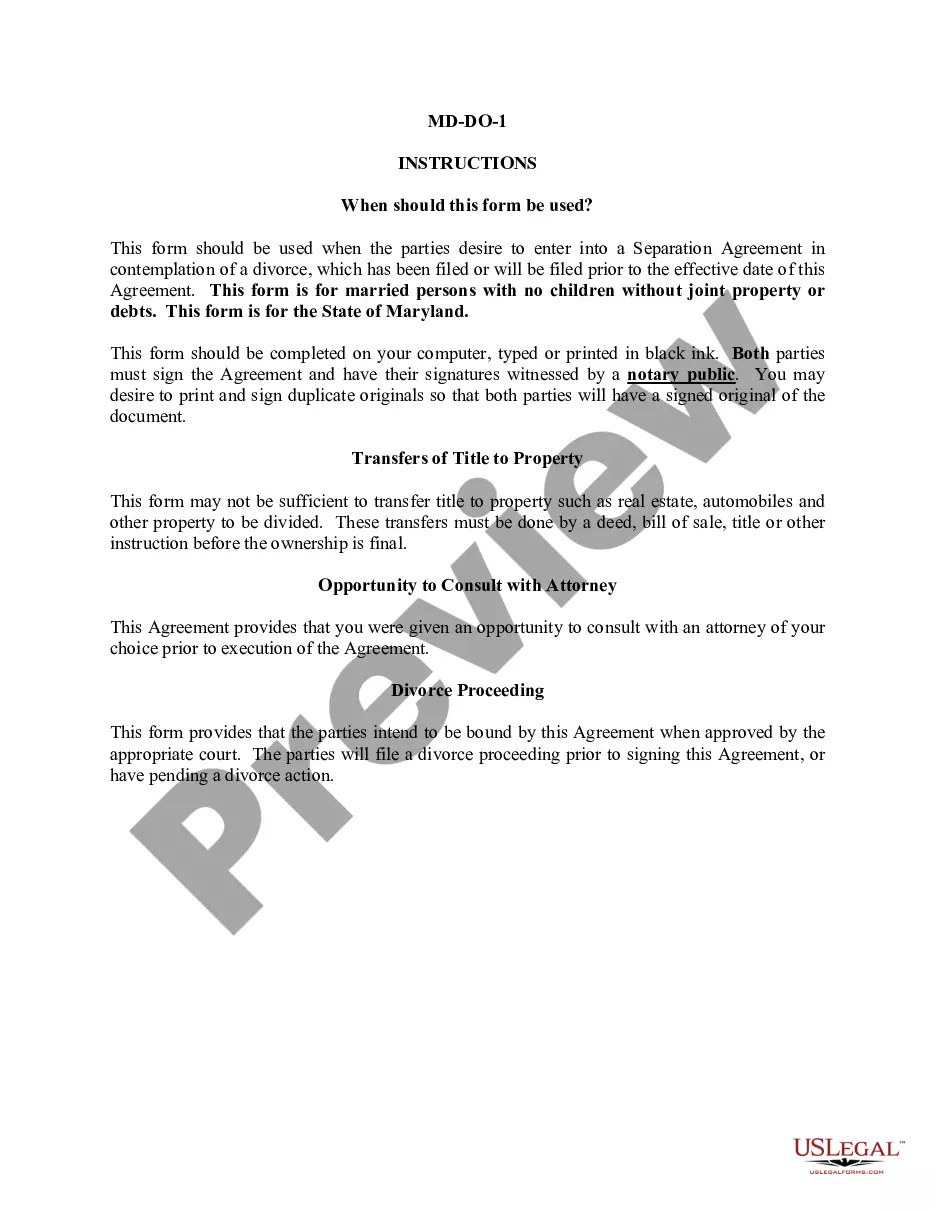
Form popularity
FAQ
The easement places limits on land use to help conserve the property's features. With an easement, the landowner still owns the land and can continues to live on and use it, restrict public access to it, and sell, give or pass the property on to whomever they wish.
When a conservation easement is placed on a property, it typically lowers the property's value for federal estate tax purposes and may decrease estate tax liability. Therefore, easements may help heirs avoid being forced to sell off land to pay estate taxes and enable land to stay in the family.
A conservation easement is a legal agreement in which a Landowner conveys some of the rights associated with ownership of his/her property to an "Easement Holder." The Easement Holder may be a governmental unit or a qualified nonprofit organization.
Under IRS rules, a conservation easement must achieve at least one of the following purposes: preservation of land for outdoor recreation or education of the general public; preservation of natural habitat for fish, wildlife, or plants; preservation of open space, including farmland or forest; or preservation of a
The most common way to protect land is by conservation easement. A conservation easement (also known as a conservation restriction or conservation agreement) is a voluntary, legal agreement between a landowner and a land trust or government agency that permanently limits uses of the land in order to protect its
Decide on your vision. Think about your wishes, needs and objectives for your land. Check out potential partners. Contact land trusts and government agencies that work to assist landowners in your community who are interested in conservation. Get checked out. Take the plunge. Build your partnership.
When you create a conservation easement, you may lose access to certain rights. While you'll likely retain certain surface rights like farming and ranching, development is almost always limited.
Conservation easements are a great idea, in theory. Here's the way they work. Basically, if you are willing to donate your property for the public good, and that donation reduces the value of your property, you get to take a tax deduction equal to the reduction in the value of your property.
The value of the donation of a conservation easement is considered a charitable deduction for income tax purposes. The deduction is up to 50% of the donor's charitable contribution base (adjusted gross income, less net operating loss carryback) for the taxable year.