Washington Order Approving Employment By Trustee-Debtor In Possession
What is this form?
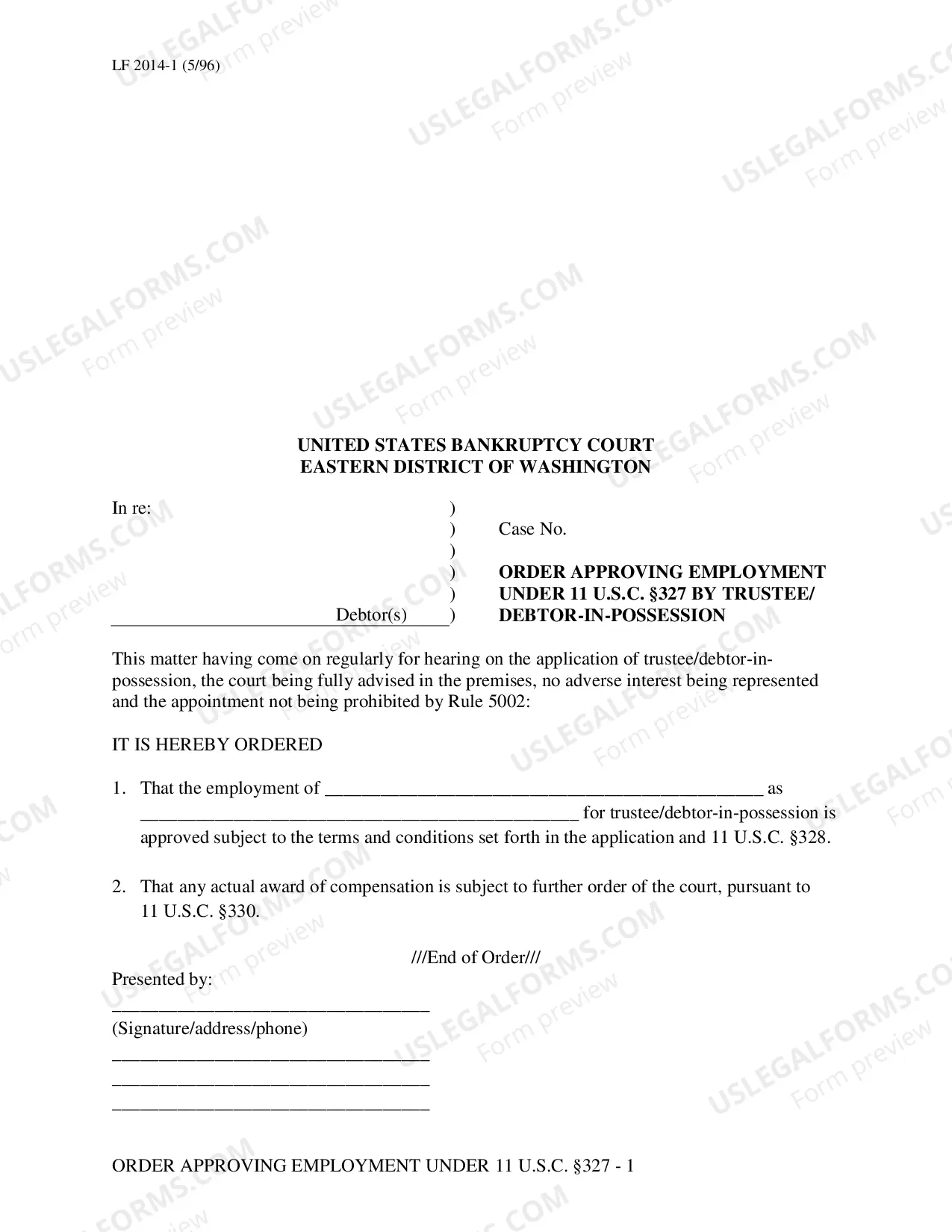
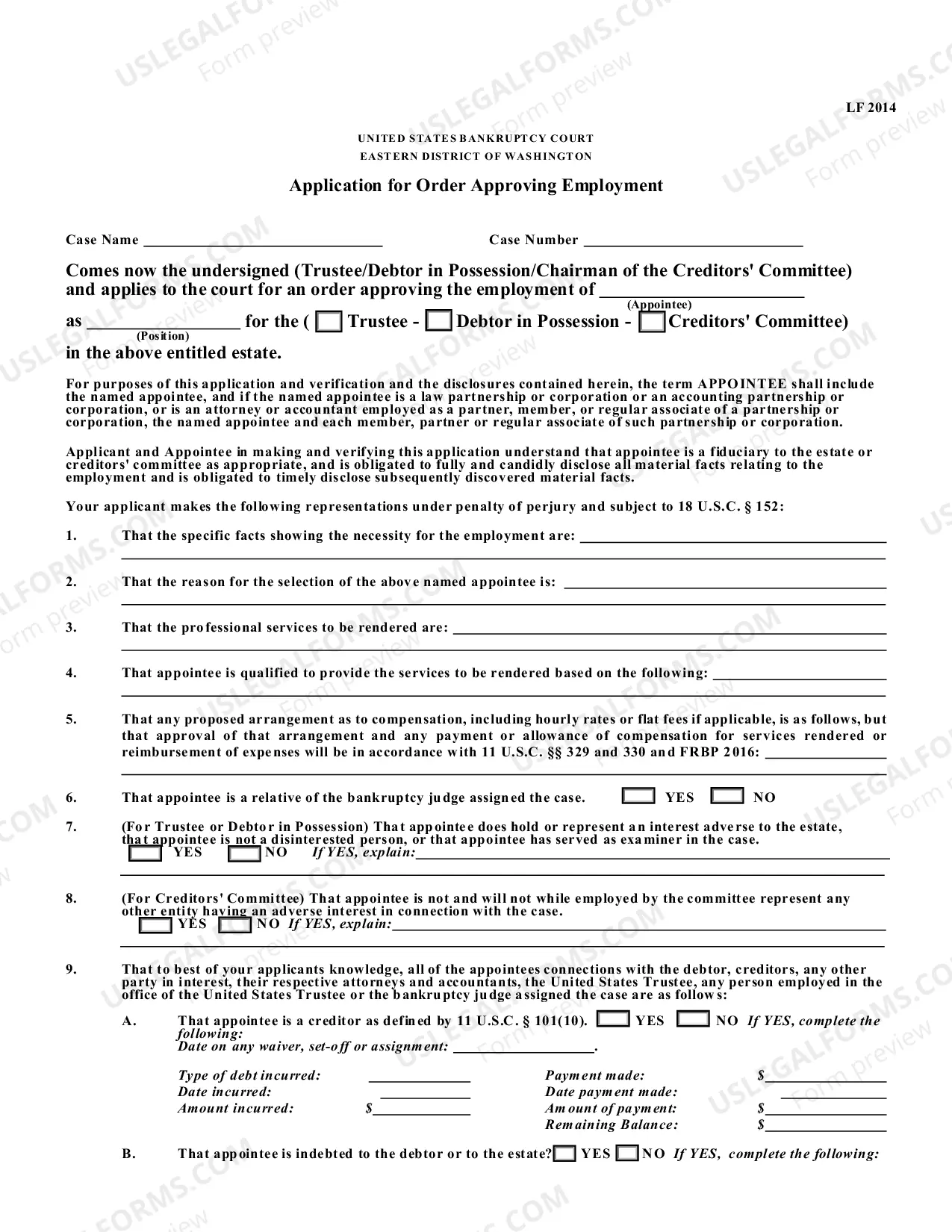
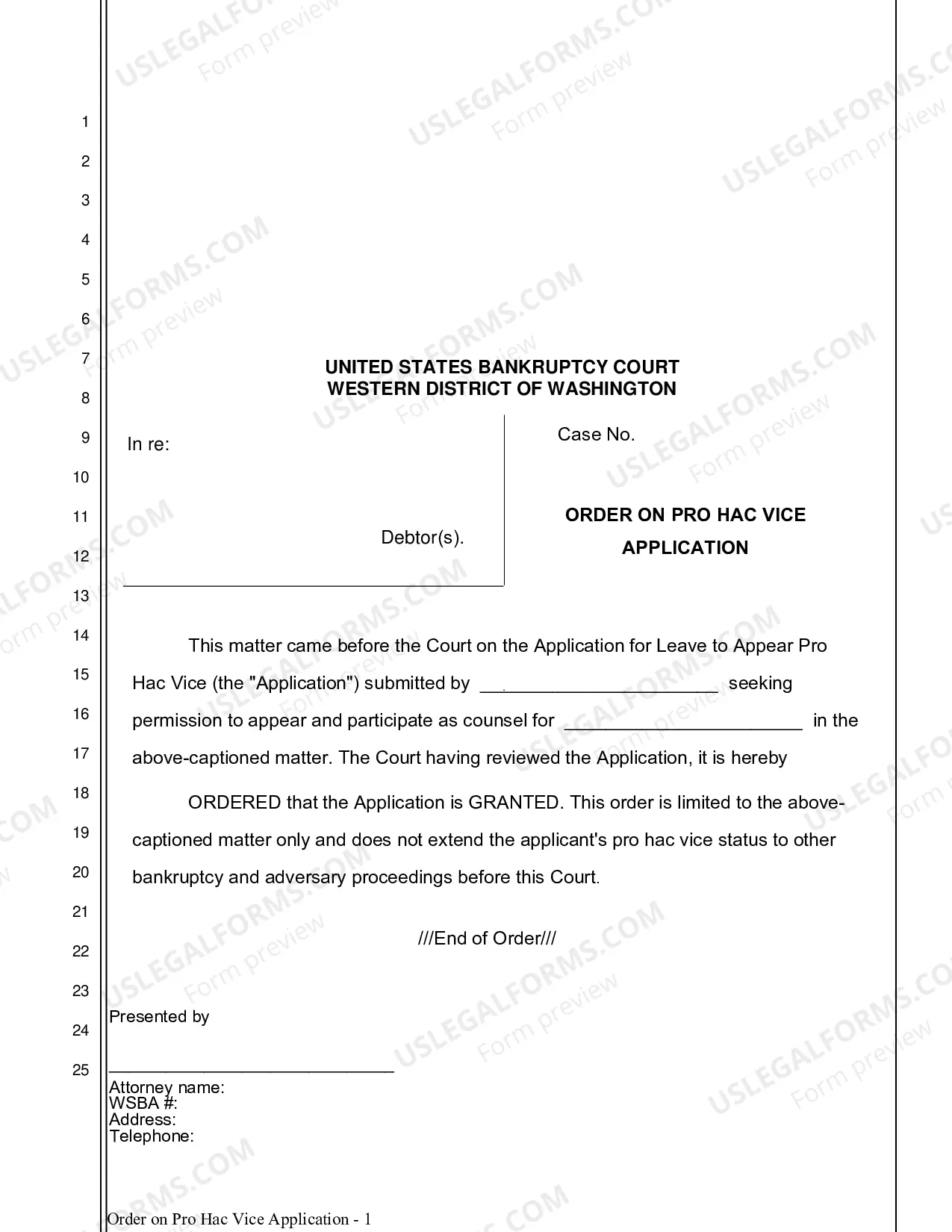
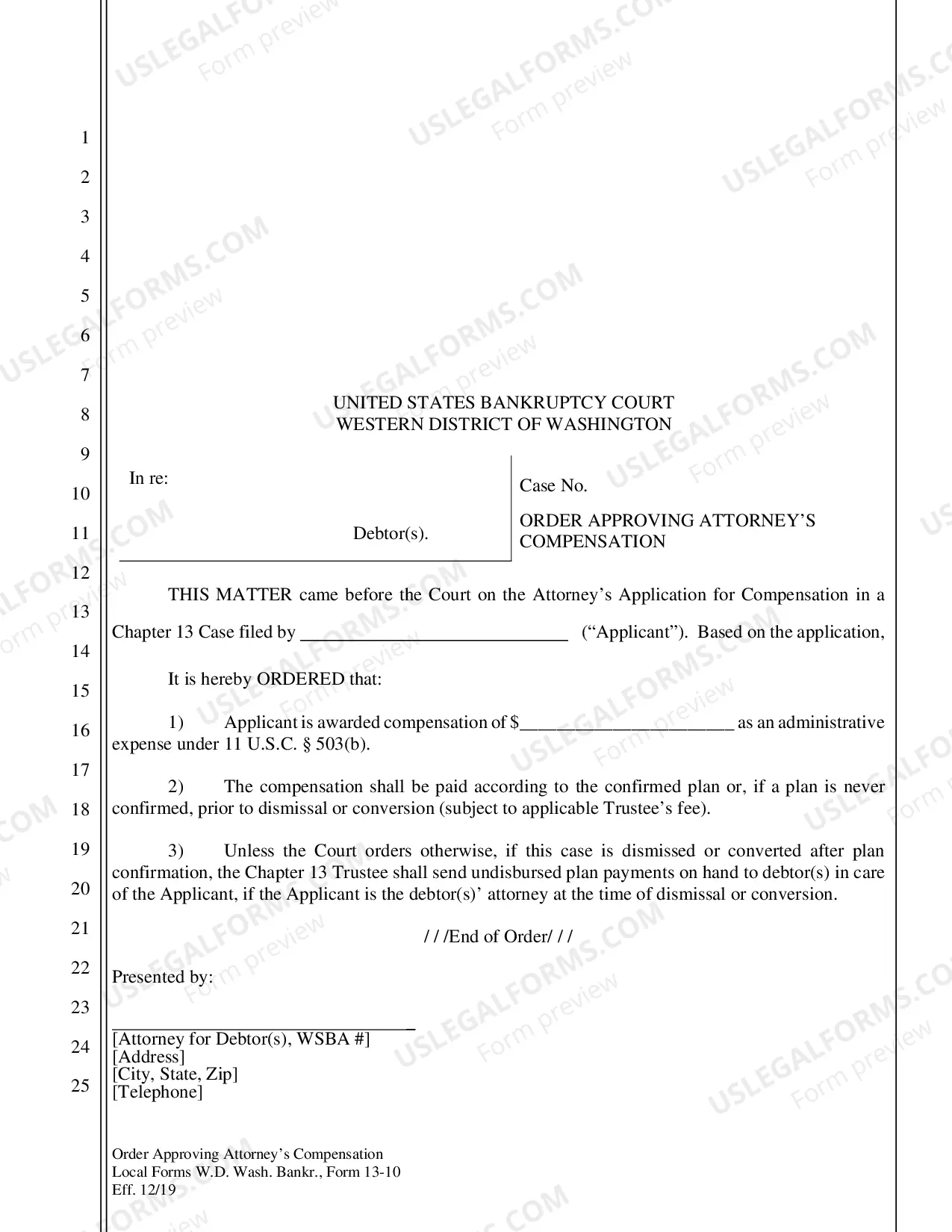
The Order Approving Employment By Trustee-Debtor In Possession is a legal document used in bankruptcy proceedings. It allows a trustee or debtor-in-possession to hire professionals necessary to manage the bankruptcy estate, ensuring these professionals are compensated for their services. This form differs from other employment orders as it specifically outlines the approval under 11 U.S.C. §327, relevant to trustees and debtors-in-possession in bankruptcy cases.
What’s included in this form
- Case number and parties involved in the bankruptcy case.
- Name and role of the professional being employed.
- Approval of employment subject to terms set in the application and relevant statutes.
- Statement that compensation is subject to further court order.
- Space for signatures and contact information of the person presenting the order.
Common use cases
This form is used when a trustee or debtor-in-possession seeks court approval to hire professionals such as accountants, attorneys, or consultants. It is necessary to ensure compliance with legal requirements for employment within bankruptcy proceedings and to guarantee that the professional is compensated for their work under judicial supervision.
Who can use this document
- Trustees managing bankruptcy estates.
- Debtors-in-possession handling their bankruptcy proceedings.
- Legal professionals assisting in bankruptcy cases.
How to prepare this document
- Enter the case number and names of the debtor(s).
- Fill in the name and position of the professional intended for employment.
- Sign and date the form to submit it to the court.
- Ensure all required information complies with 11 U.S.C. §327 and §330.
Does this document require notarization?
This form does not typically require notarization unless specified by local law. However, it is important to check specific requirements in your jurisdiction.
Get your form ready online
Our built-in tools help you complete, sign, share, and store your documents in one place.
Make edits, fill in missing information, and update formatting in US Legal Forms—just like you would in MS Word.
Download a copy, print it, send it by email, or mail it via USPS—whatever works best for your next step.
Sign and collect signatures with our SignNow integration. Send to multiple recipients, set reminders, and more. Go Premium to unlock E-Sign.
If this form requires notarization, complete it online through a secure video call—no need to meet a notary in person or wait for an appointment.
We protect your documents and personal data by following strict security and privacy standards.

Make edits, fill in missing information, and update formatting in US Legal Forms—just like you would in MS Word.

Download a copy, print it, send it by email, or mail it via USPS—whatever works best for your next step.

Sign and collect signatures with our SignNow integration. Send to multiple recipients, set reminders, and more. Go Premium to unlock E-Sign.

If this form requires notarization, complete it online through a secure video call—no need to meet a notary in person or wait for an appointment.

We protect your documents and personal data by following strict security and privacy standards.
Common mistakes
- Failing to include the case number or the names of the debtor(s).
- Not providing sufficient details about the professional being hired.
- Ommiting signatures or dates on the form before submission.
Benefits of completing this form online
- Convenient access to the form at any time.
- Editable format allows for easy customization and accuracy.
- Reassurance that the form complies with current legal standards.
Looking for another form?
Form popularity
FAQ
A debtor in possession or DIP in United States bankruptcy law is a person or corporation who has filed a bankruptcy petition, but remains in possession of property upon which a creditor has a lien or similar security interest. A debtor becomes the debtor in possession after filing the bankruptcy petition.
What Is a Debtor in Possession (DIP)? A debtor in possession (DIP) is a business or individual that has filed for Chapter 11 bankruptcy protection but still holds property to which creditors have a legal claim under a lien or other security interest. A DIP may continue to do business using those assets.
Creditor Trustee means the Person selected to serve as the initial trustee under the Creditor Trust. The Creditor Trustee and his/her terms of employment will be identified in the Plan Supplement.
The debtor in possession may continue to do business using those assets to maintain the asset productivity, but the debtor is doing so on behalf of creditors. Thus, the debtor essentially works as a trustee. The court in certain situations may appoint a trustee, but under Chapter 11 a trustee is not mandatory.
Chapter 11 Many employees may remain at work and continue to be paid and receive benefits. However, some may be laid off. If the laid-off employees are owed wages and benefits they become creditors of the company.
What Is a Debtor in Possession (DIP)? A debtor in possession (DIP) is a business or individual that has filed for Chapter 11 bankruptcy protection but still holds property to which creditors have a legal claim under a lien or other security interest. A DIP may continue to do business using those assets.
The debtor in possession may continue to do business using those assets to maintain the asset productivity, but the debtor is doing so on behalf of creditors. Thus, the debtor essentially works as a trustee. The court in certain situations may appoint a trustee, but under Chapter 11 a trustee is not mandatory.
Yes, it's highly likely that your appointed trustee will check both your personal bank accounts and any business-related bank accounts which you may have under your name.