Colorado General Warranty Deed for a Time Share from a Trust to an Individual Beneficiary
About this form
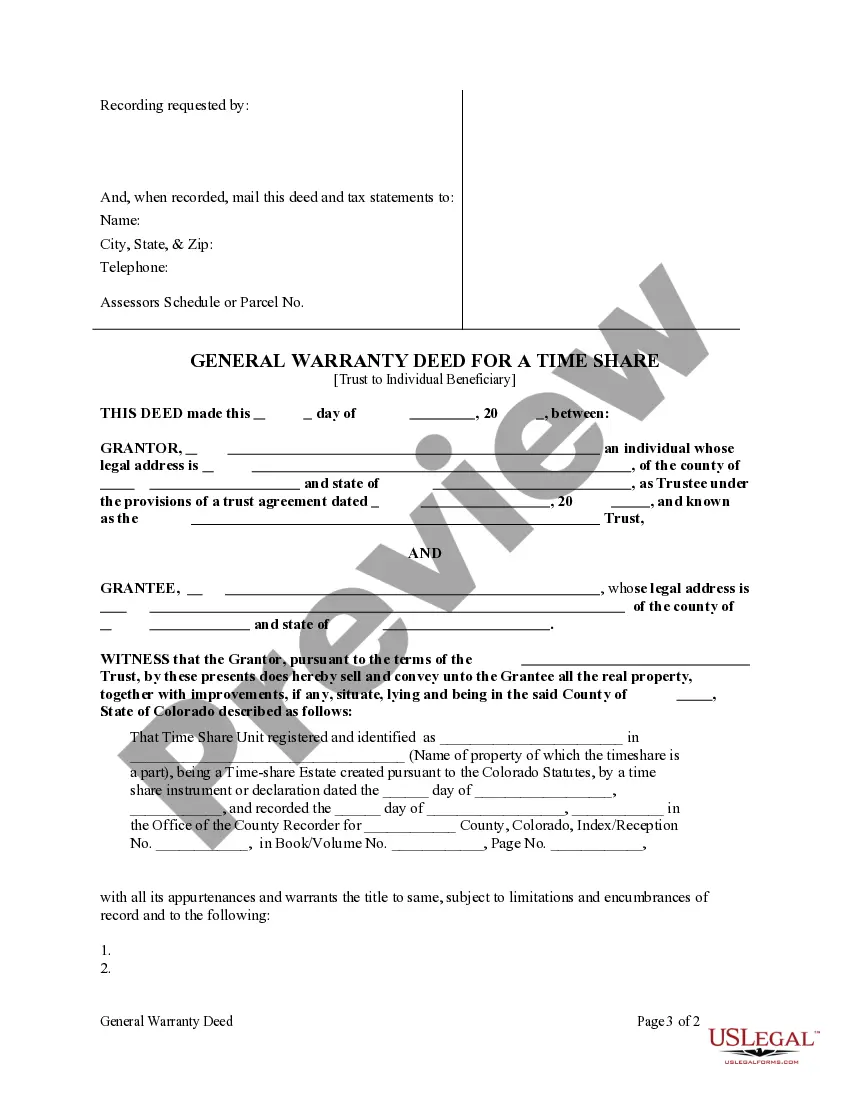
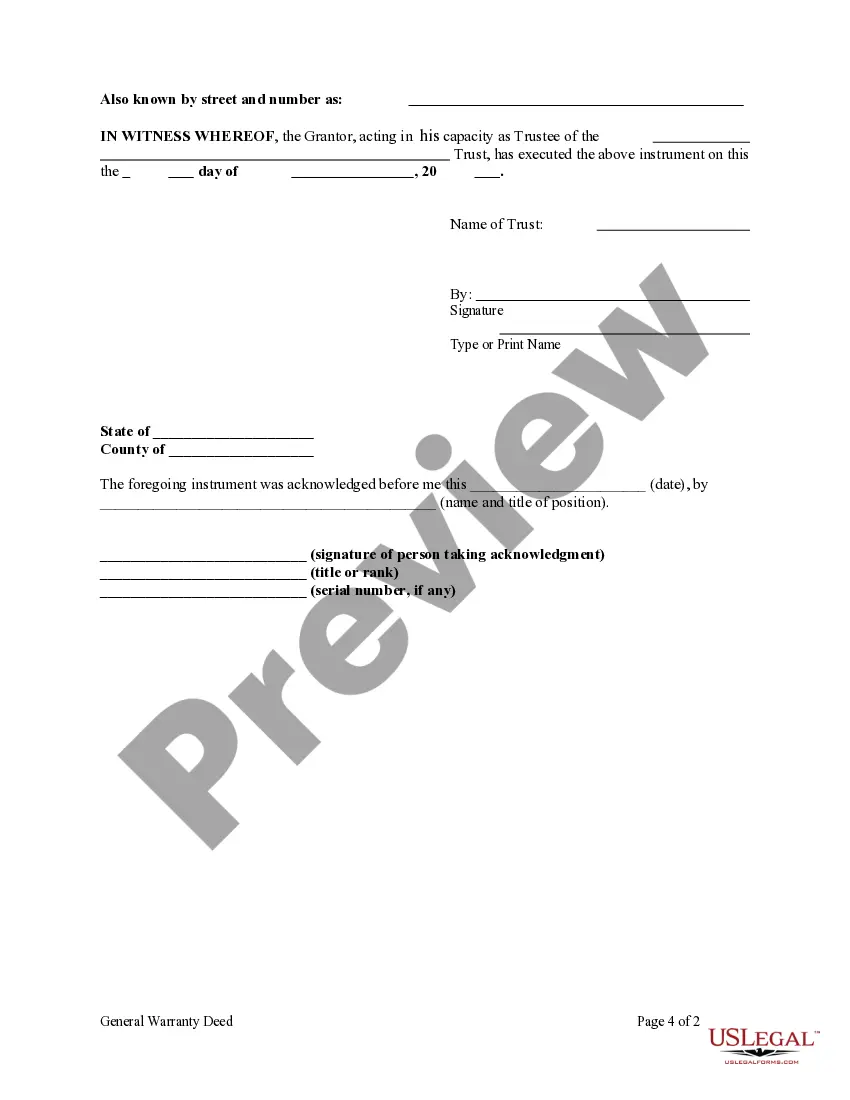
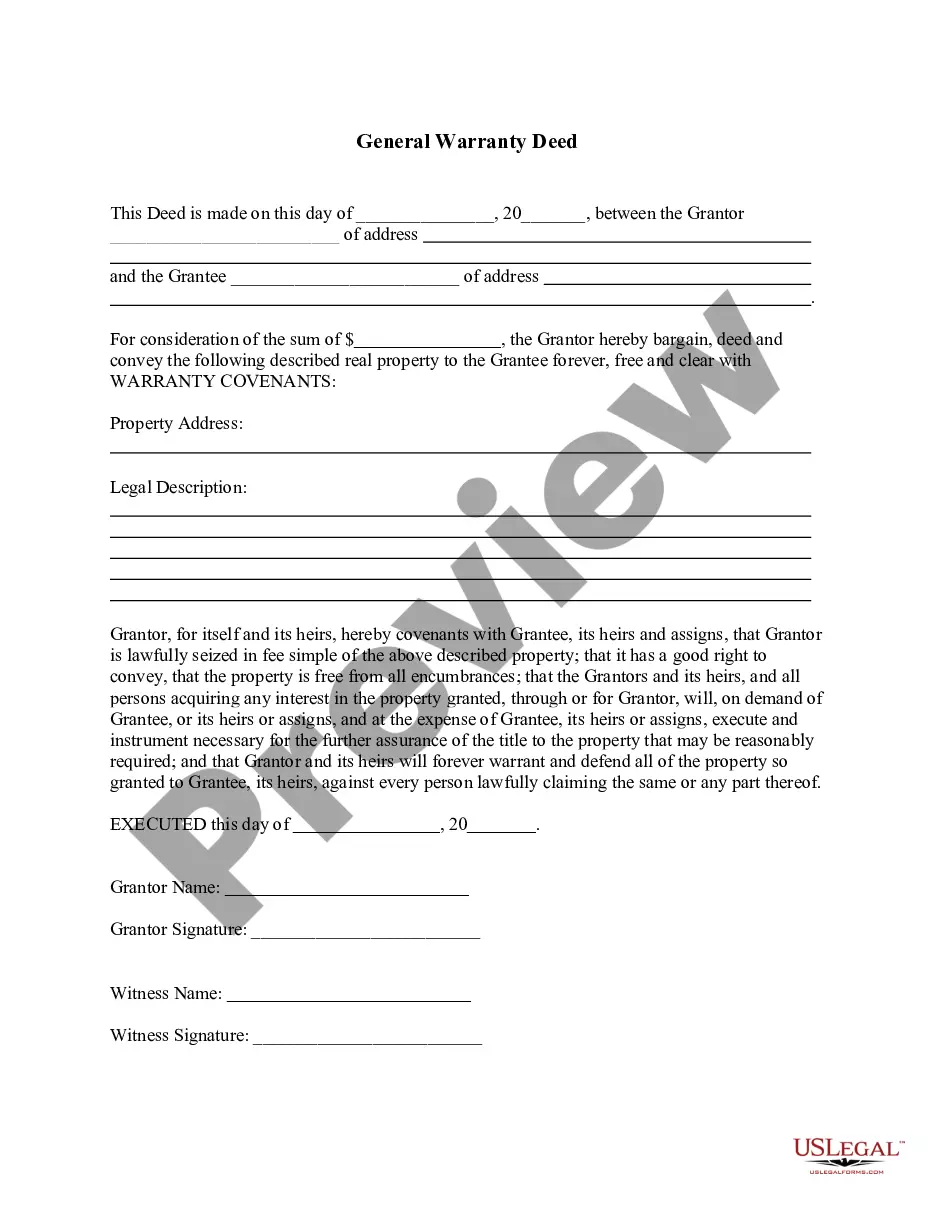
The General Warranty Deed for a Time Share from a Trust to an Individual Beneficiary is a legal document that transfers ownership of a time share property from a trust to a designated beneficiary. This form provides a comprehensive warranty from the grantor, ensuring the title is free from defects and encumbrances. It is distinct from other deeds, as it specifically addresses the unique relationship between a trust and its beneficiaries, making it essential for those involved in such transactions.
Key components of this form
- Identification of the Grantor (Trust) and Grantee (Individual Beneficiary).
- Description of the time share property being conveyed.
- Warranties provided by the Grantor regarding the title.
- Signatures of the Grantor and any required witnesses.
- Date of the transfer to document the transaction timeline.



Situations where this form applies
This form is necessary when a trust is transferring ownership of a time share to an individual beneficiary. It is commonly used in estate planning situations where the trust owns the time share property, ensuring legal compliance with the terms laid out in the trust agreement. Additionally, this form is used when the grantor wishes to guarantee the validity of the property title at the time of transfer.
Who can use this document
This form is suitable for:
- Trustees acting on behalf of a trust that owns a time share.
- Beneficiaries of a trust who are receiving a time share property.
- Individuals looking to ensure the legal transfer of a time share from a trust.
Steps to complete this form
- Identify the parties involved in the transaction (Grantor and Grantee).
- Specify the time share property being transferred, including any legal descriptions.
- Enter the date of the transaction.
- Provide the necessary signatures of the Grantor along with any required witness signatures.
- Ensure the document is properly executed according to state laws to ensure validity.
Does this document require notarization?
This form must be notarized to be legally valid. US Legal Forms provides secure online notarization powered by Notarize, allowing you to complete the process through a verified video call.
Get your form ready online
Our built-in tools help you complete, sign, share, and store your documents in one place.
Make edits, fill in missing information, and update formatting in US Legal Forms—just like you would in MS Word.
Download a copy, print it, send it by email, or mail it via USPS—whatever works best for your next step.
Sign and collect signatures with our SignNow integration. Send to multiple recipients, set reminders, and more. Go Premium to unlock E-Sign.
If this form requires notarization, complete it online through a secure video call—no need to meet a notary in person or wait for an appointment.
We protect your documents and personal data by following strict security and privacy standards.

Make edits, fill in missing information, and update formatting in US Legal Forms—just like you would in MS Word.

Download a copy, print it, send it by email, or mail it via USPS—whatever works best for your next step.

Sign and collect signatures with our SignNow integration. Send to multiple recipients, set reminders, and more. Go Premium to unlock E-Sign.

If this form requires notarization, complete it online through a secure video call—no need to meet a notary in person or wait for an appointment.

We protect your documents and personal data by following strict security and privacy standards.
Avoid these common issues
- Failing to include all required signatures.
- Not providing a sufficient legal description of the property.
- Assuming notarization is not necessary without verifying state requirements.
- Leaving out important dates or details about the transaction.
Benefits of completing this form online
- Convenient access to legal forms from anywhere with internet access.
- Editable templates that can be customized to meet your specific needs.
- Time-saving options to quickly download and fill out the necessary documents.
- Reliability from forms created by licensed attorneys, ensuring legal compliance.
Legal use & context
- This form ensures the property's title is transferred correctly and legally, providing protections to the Grantee.
- General Warranty Deeds are enforceable under state law, ensuring beneficiaries can assert rights to the property.
- Proper execution of this deed protects against any future claims against the title from previous owners.
Main things to remember
- The form facilitates the transfer of a time share from a trust to a beneficiary.
- Proper completion ensures legal protection for all parties involved.
- Check state-specific requirements for any specific rules regarding notarization and other procedural steps.
- Utilizing this form online provides convenience and reliability.
Looking for another form?
Form popularity
FAQ
Yes, Colorado does allow for beneficiary deeds. This type of deed enables property owners to name someone who will inherit their property upon their death, helping to avoid the probate process. For those considering a Colorado General Warranty Deed for a Time Share from a Trust to an Individual Beneficiary, using a beneficiary deed provides a clear path for the transfer of property.
To transfer a property title to a family member in Colorado, you typically need to execute and record a new deed, such as a warranty deed or a beneficiary deed. You will also want to ensure that the deed includes all necessary information about the property and the new owner. Using a Colorado General Warranty Deed for a Time Share from a Trust to an Individual Beneficiary can effectively facilitate this process.
A beneficiary deed is not the same as a survivorship deed. A survivorship deed, or joint tenancy deed, ensures that, upon the death of one owner, the property automatically passes to the surviving owner. In contrast, a beneficiary deed specifically directs how the property will transfer to designated beneficiaries after the owner’s death, making it a crucial tool when considering a Colorado General Warranty Deed for a Time Share from a Trust to an Individual Beneficiary.
In Colorado, a beneficiary deed allows property owners to designate beneficiaries who will inherit property upon their death. This deed must be recorded with the county clerk and recorder to be effective. When executed properly, a Colorado General Warranty Deed for a Time Share from a Trust to an Individual Beneficiary avoids the often lengthy probate process.
While beneficiary deeds offer many benefits, they do have some disadvantages. One major concern is that they may affect your eligibility for Medicaid or other government assistance. Additionally, if the beneficiary is challenged or removed, the deed may create legal complications, which is why understanding the nuances of a Colorado General Warranty Deed for a Time Share from a Trust to an Individual Beneficiary is essential.
Beneficiary deeds are allowed in several states, including Colorado. These deeds provide a way to pass property directly to beneficiaries without going through probate. If you are considering using a Colorado General Warranty Deed for a Time Share from a Trust to an Individual Beneficiary, it’s important to check your state's specific regulations on beneficiary deeds.
To release a deed of trust in Colorado, the lender must file a release document with the local county recorder's office. If your situation involves the Colorado General Warranty Deed for a Time Share, following this process confirms that the borrower has fulfilled their obligations. Seeking help from resources such as uslegalforms can simplify the paperwork involved in this procedure.
Transferring assets from a trust to a beneficiary involves executing the provisions detailed in the trust document. Generally, the trustee can issue a Colorado General Warranty Deed for a Time Share to formally transfer ownership. To ensure all steps are completed correctly, utilizing a reliable platform, like uslegalforms, can be very helpful.
A beneficiary typically inherits the trust property immediately after the death of the trust holder. The Colorado General Warranty Deed for a Time Share establishes this transfer, confirming ownership rights for the beneficiary. However, local laws and trust specifics may affect the timing and terms of ownership.
Yes, it may be necessary to update a deed after someone dies. The update ensures that the property is correctly aligned with the trust's provisions, particularly regarding the Colorado General Warranty Deed for a Time Share from a Trust to an Individual Beneficiary. This process often requires legal assistance to make sure everything is filed correctly.