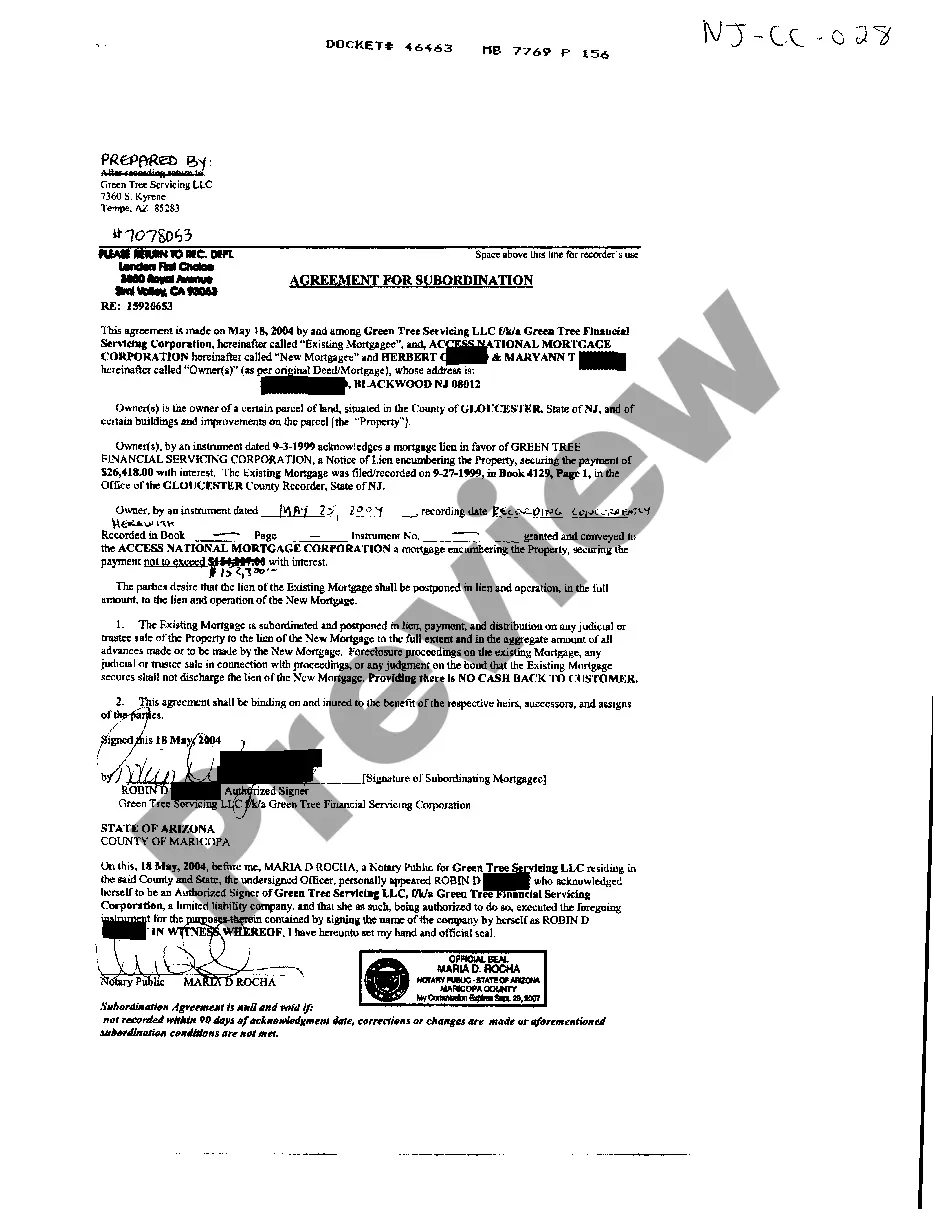
Colorado Notice of Covenant Violation
Overview of this form
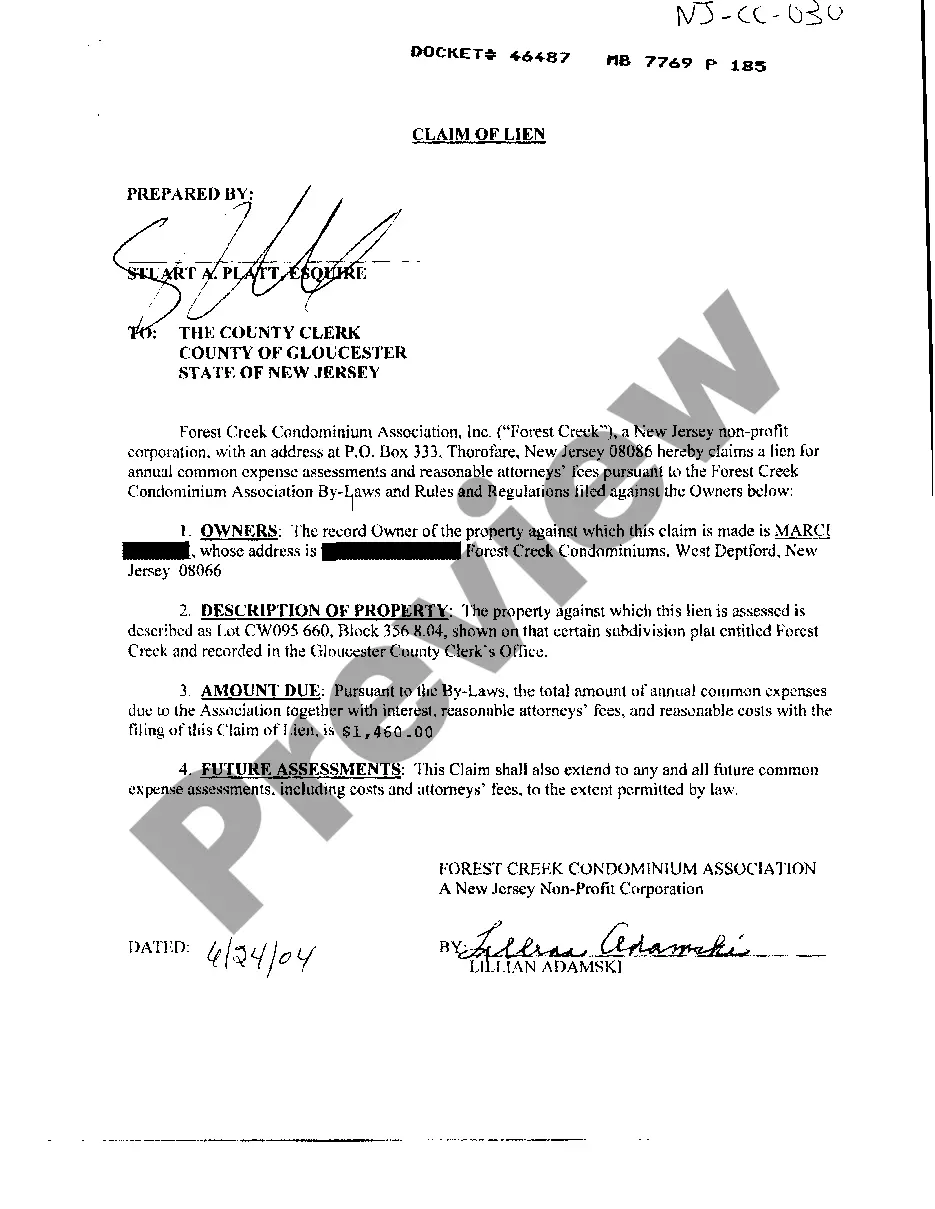
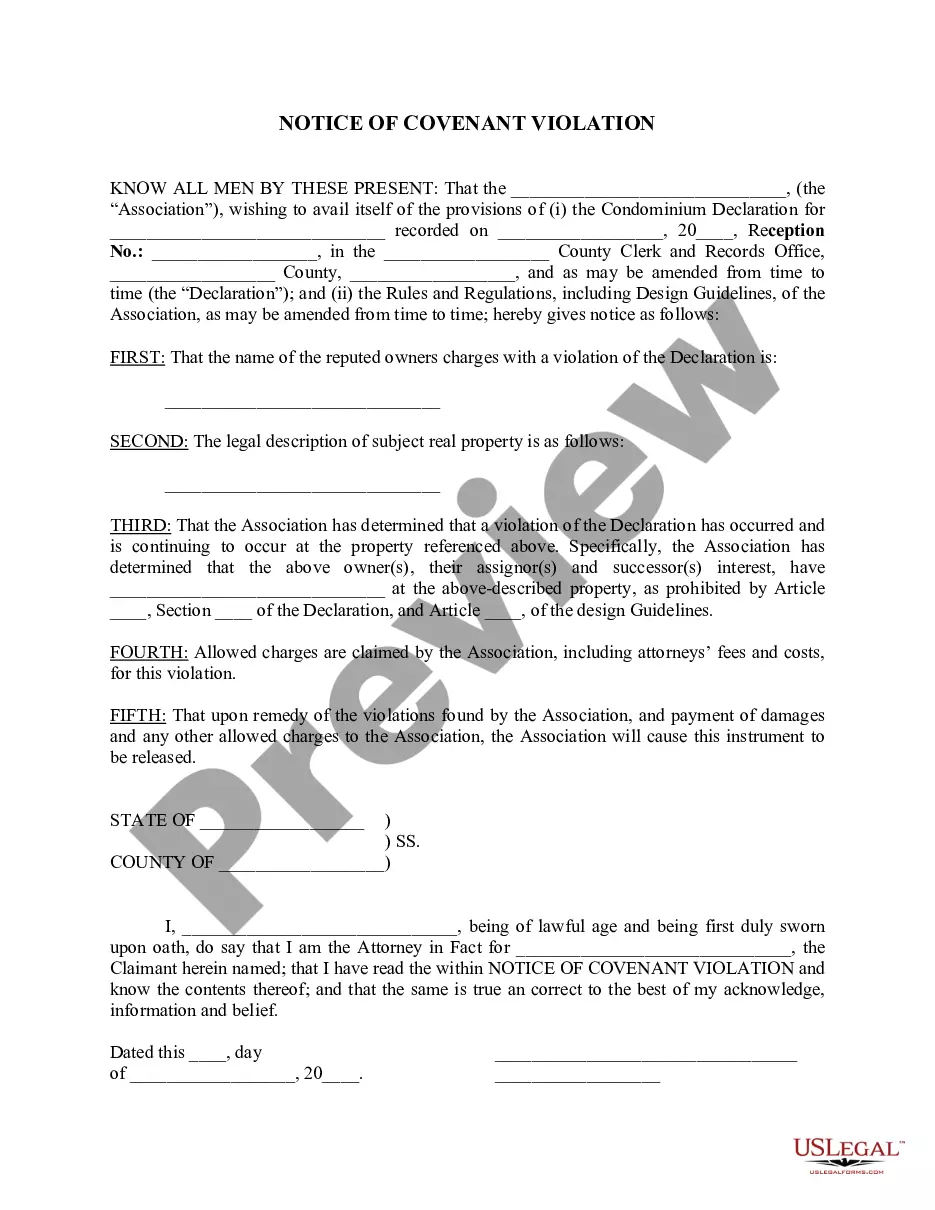
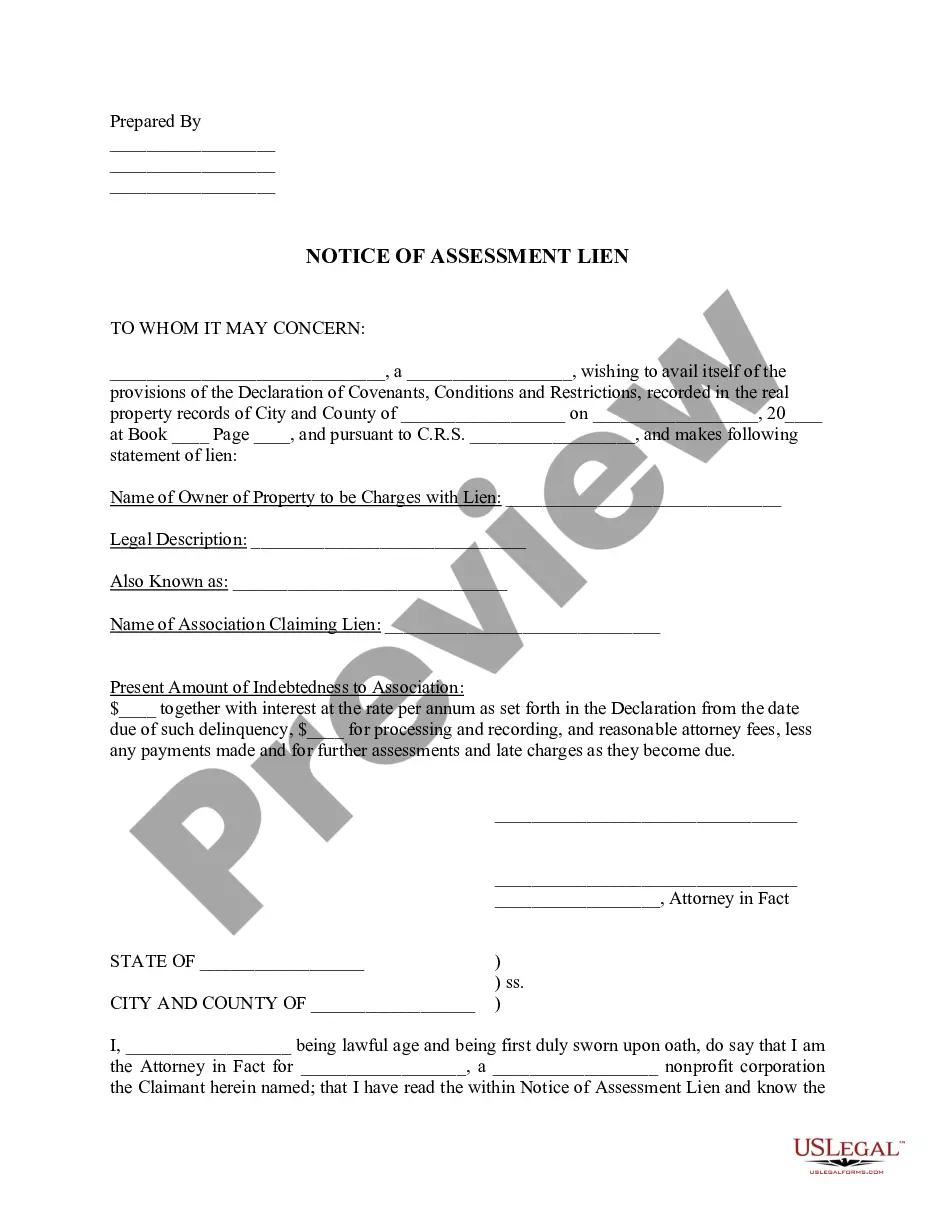
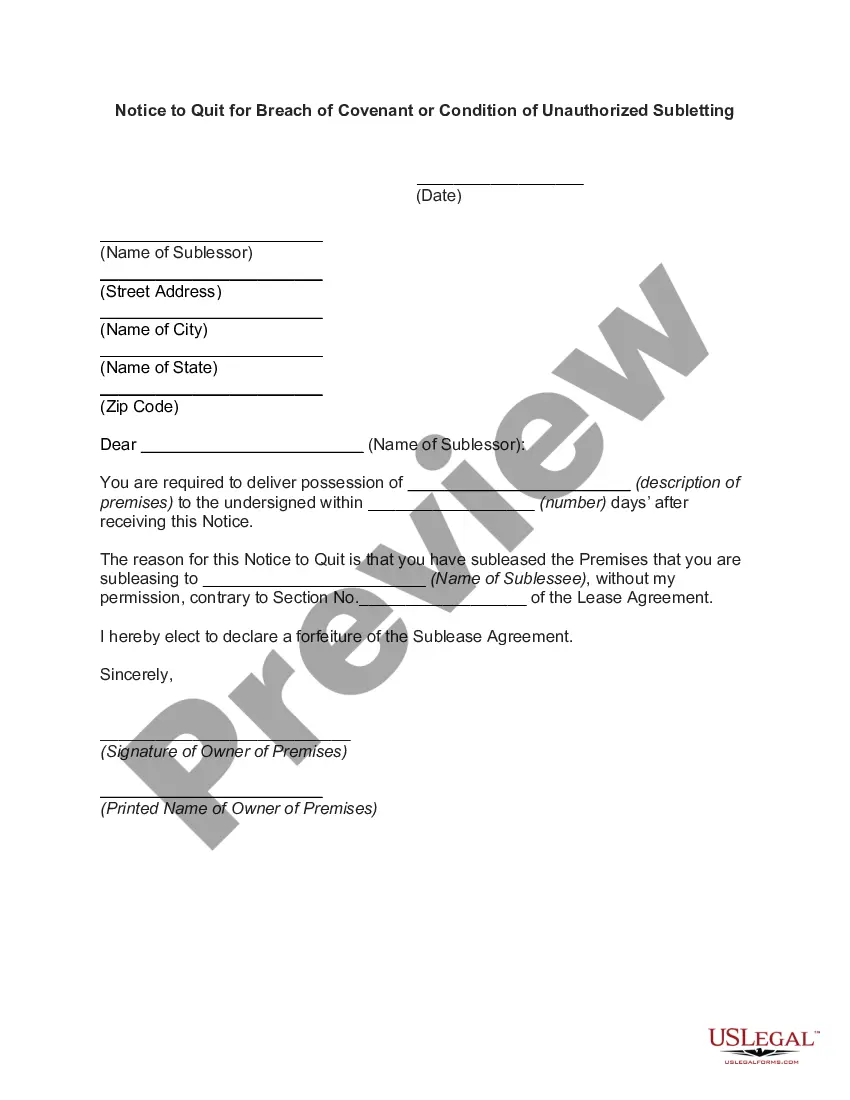
A Notice of Covenant Violation is a legal document filed with the Clerk and Recorder against a property owner when they breach the terms set by an association's covenants. This form notifies the property owner of the violation, clearly outlining the details and providing information on how to remedy the situation. Unlike other property-related forms, this notice specifically addresses violations of community regulations or guidelines established by homeowner or condominium associations.
Form components explained
- Identification of the association issuing the notice.
- Name of the property owners responsible for the violation.
- Legal description of the property in question.
- Details of the specific covenant violation that has occurred.
- Statement regarding any fees or charges owed due to the violation.
- A declaration of the conditions under which the violation may be remedied.
When to use this form
This form should be used when a property owner is found to be in violation of their community's covenants or regulations as defined by the associationâs Declaration. Situations that typically call for this notice include unauthorized alterations to the property, failure to comply with maintenance rules, or any actions that contravene the established guidelines set forth by the association. Filing this notice is often a necessary step before further legal action can be pursued to enforce the covenants.
Intended users of this form
- Homeowners or property owners part of a homeowner or condominium association.
- Board members or authorized representatives of an association.
- Legal professionals representing associations in covenant enforcement matters.
- Property management firms that handle compliance for associations.
Completing this form step by step
- Identify the association by entering its name at the top of the form.
- Fill in the name of the property owner who is alleged to have violated the covenants.
- Provide a legal description of the property where the violation has occurred.
- Specify the details of the violation, referencing the relevant articles from the covenant declaration.
- Outline any fees or penalties associated with the violation.
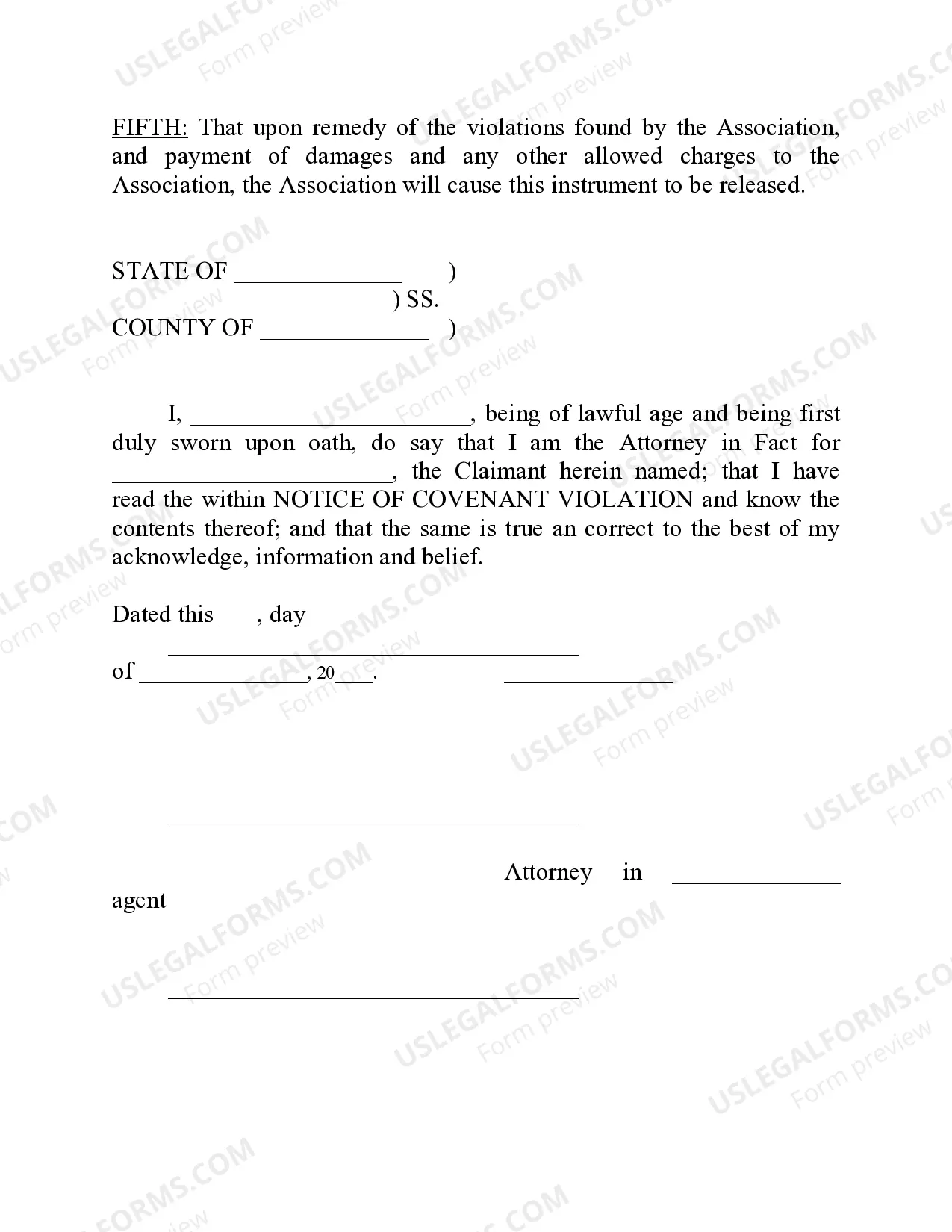
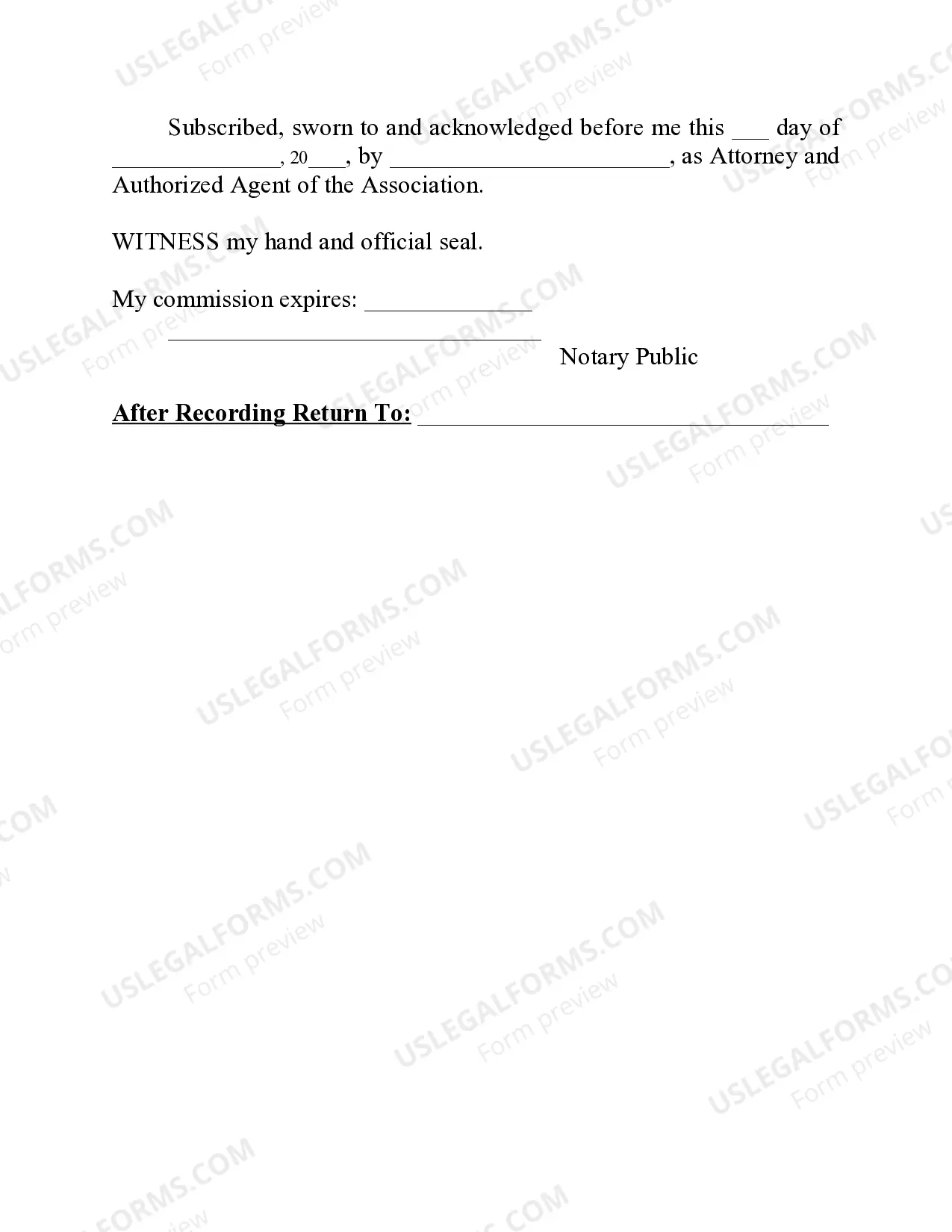
- Sign the form in the designated area before a notary public, if applicable.
Is notarization required?
Yes, this form must be notarized to be legally valid. It is important to have the signature of the authorized agent of the association witnessed by a notary public, ensuring proper legal acknowledgment of the document. US Legal Forms offers integrated online notarization services for your convenience, allowing you to complete this process securely anytime and anywhere, without needing to travel.
Get your form ready online
Our built-in tools help you complete, sign, share, and store your documents in one place.
Make edits, fill in missing information, and update formatting in US Legal Forms—just like you would in MS Word.
Download a copy, print it, send it by email, or mail it via USPS—whatever works best for your next step.
Sign and collect signatures with our SignNow integration. Send to multiple recipients, set reminders, and more. Go Premium to unlock E-Sign.
If this form requires notarization, complete it online through a secure video call—no need to meet a notary in person or wait for an appointment.
We protect your documents and personal data by following strict security and privacy standards.

Make edits, fill in missing information, and update formatting in US Legal Forms—just like you would in MS Word.

Download a copy, print it, send it by email, or mail it via USPS—whatever works best for your next step.

Sign and collect signatures with our SignNow integration. Send to multiple recipients, set reminders, and more. Go Premium to unlock E-Sign.

If this form requires notarization, complete it online through a secure video call—no need to meet a notary in person or wait for an appointment.

We protect your documents and personal data by following strict security and privacy standards.
Typical mistakes to avoid
- Failing to accurately identify the property in question can lead to disputes.
- Not including specific details about the violation, which may leave room for interpretation.
- Omitting required signatures, especially from authorized representatives.
- Neglecting to properly notify the property owner following legal protocols.
Looking for another form?

Form popularity
FAQ
Generally, an HOA should have evidence to support any fines imposed for covenant violations. If you receive a fine without clear justification, you have the right to challenge it. Understanding your rights and the relevant laws is crucial, especially when dealing with a Colorado Notice of Covenant Violation. Engaging resources like uslegalforms can help you formulate a response and seek fair resolution.
HOA covenants are typically enforceable, provided they comply with state laws and are clearly defined in the governing documents. Courts often uphold the authority of HOAs to enforce these rules, as they are meant to maintain property values and community standards. Nevertheless, residents have rights, and understanding these can empower you when faced with a Colorado Notice of Covenant Violation. Always review your HOA’s bylaws for specific enforcement procedures.
To effectively fight an HOA in Colorado, you must understand your rights and the governing documents that outline the HOA's powers. Gather evidence to support your case and consider engaging with fellow homeowners who may share your concerns. Utilizing resources like uslegalforms can provide guidance on how to navigate disputes, particularly when it comes to issues involving a Colorado Notice of Covenant Violation.
Ignoring an HOA violation can lead to increased fines, legal action, or even foreclosure in extreme cases. Associations typically follow a process that escalates with repeated violations, meaning your situation can worsen quickly. If you receive a Colorado Notice of Covenant Violation, it's essential to address it directly to avoid these potential outcomes. Taking proactive steps can help resolve the matter more amicably.
Yes, a covenant can impose fines for violations as part of the homeowners association's enforcement power. These fines are intended to encourage compliance with community rules and can vary based on the nature of the violation. Receiving a fine can be upsetting, especially if you believe it was unwarranted. In such cases, it's wise to review the specific covenant in question and consider your options, including seeking assistance from platforms like uslegalforms.
HB 1137, also known as the Homeowner Association Transparency Act, is legislation designed to enhance the accountability of homeowners associations in Colorado. This bill provides guidelines on how HOAs should handle covenant enforcement, including necessary disclosures and processes for residents. Understanding HB 1137 can help you navigate your rights and responsibilities more easily, especially in the context of a Colorado Notice of Covenant Violation.
Violating a covenant can lead to enforcement actions by your homeowners association, including warnings, fines, or even legal proceedings. The specific consequences depend on the severity of the violation and the governing documents of your HOA. If you've received a Colorado Notice of Covenant Violation, it's crucial to address it promptly to avoid further penalties. Ignoring the matter can escalate the situation and lead to more extensive repercussions.
The new Colorado law for homeowners associations (HOAs) aims to provide more transparency and fairness in governing community rules. This legislation outlines new requirements for how HOAs communicate and enforce covenants. With this law, residents can better understand their rights and obligations, significantly impacting how violations are managed. Make sure to stay informed, as this ties directly to the Colorado Notice of Covenant Violation.
When covenants are breached, the aggrieved party can issue a notice of covenant violation to formally address the issue. This notice typically outlines the violation and requests corrective action. If the breach remains unresolved, further legal actions may follow, highlighting the importance of understanding covenant terms.
A covenant violation occurs when a party does not adhere to the agreed-upon terms outlined in a covenant. This can involve breaches in property use, maintenance, or other obligations set in legal agreements. Recognizing a covenant violation early can help parties take steps to address the issue before it escalates.