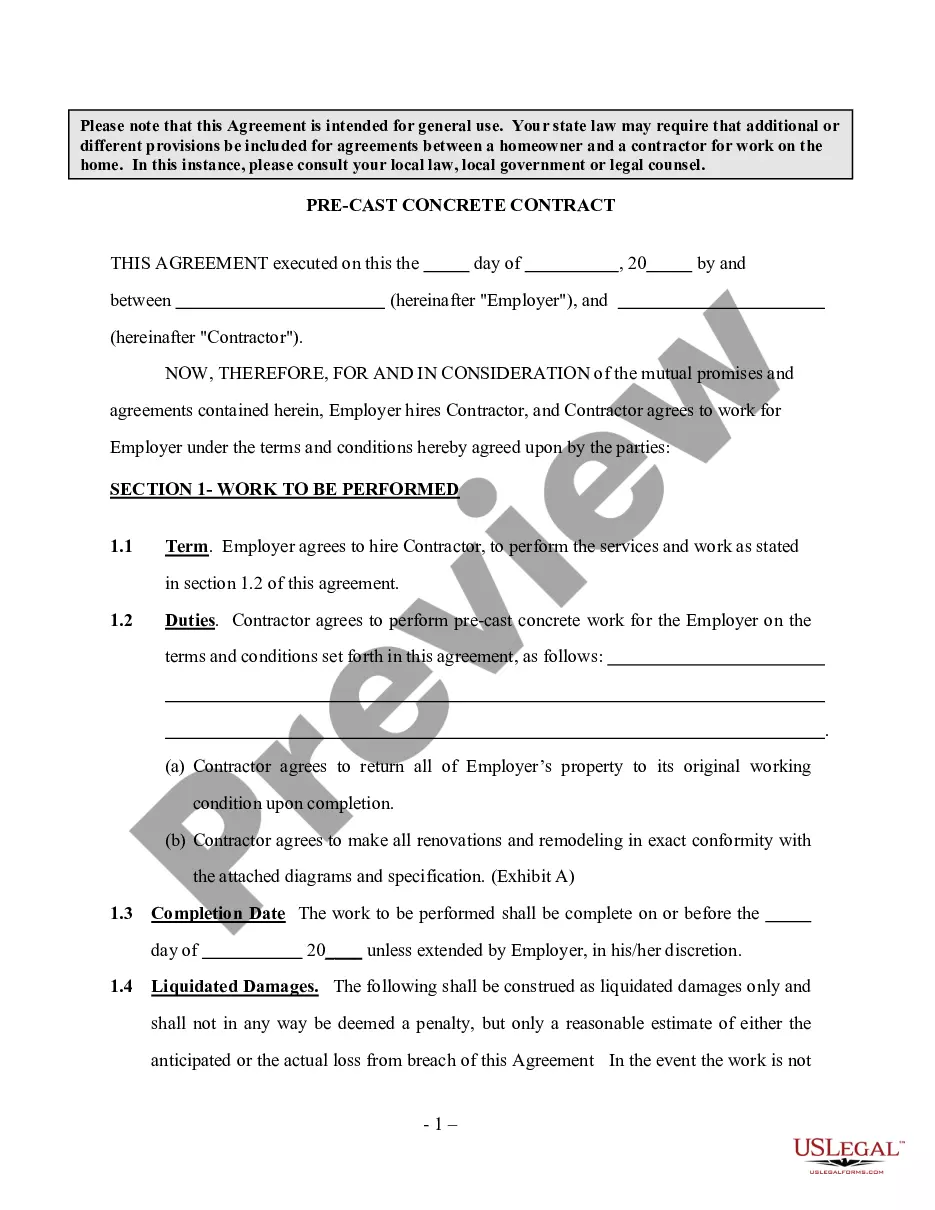
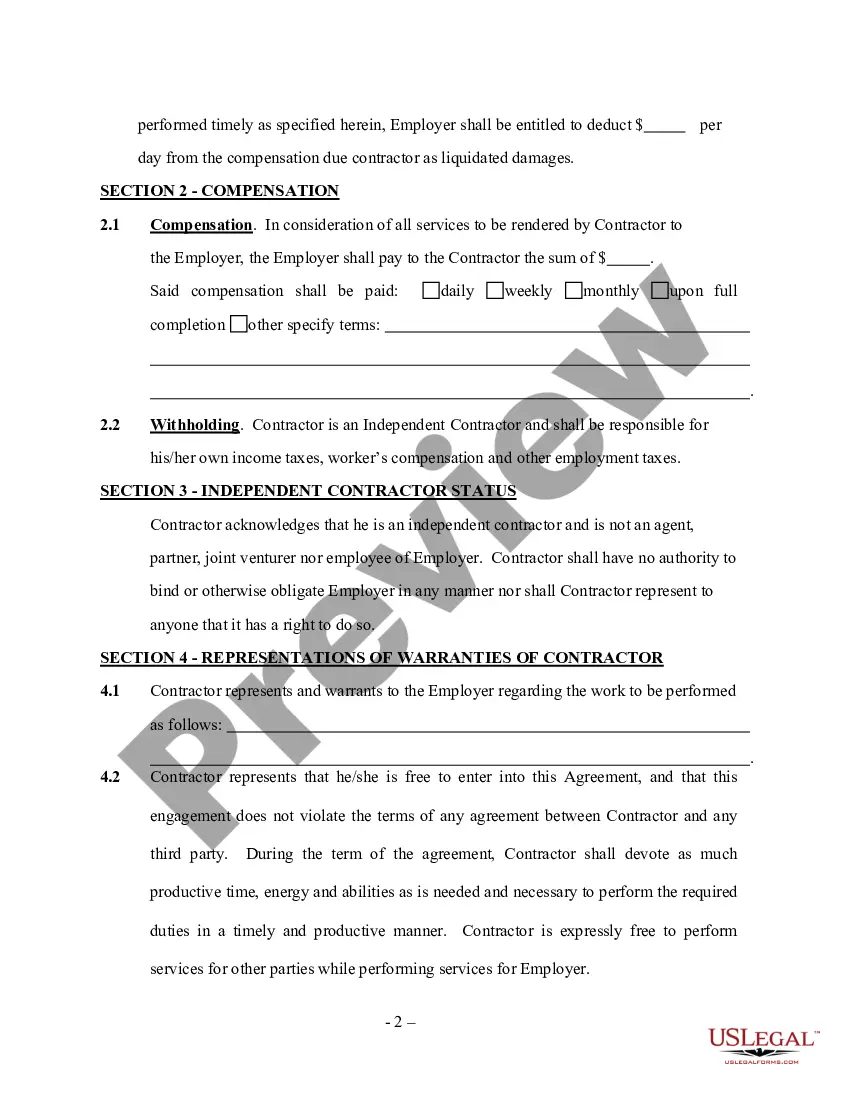
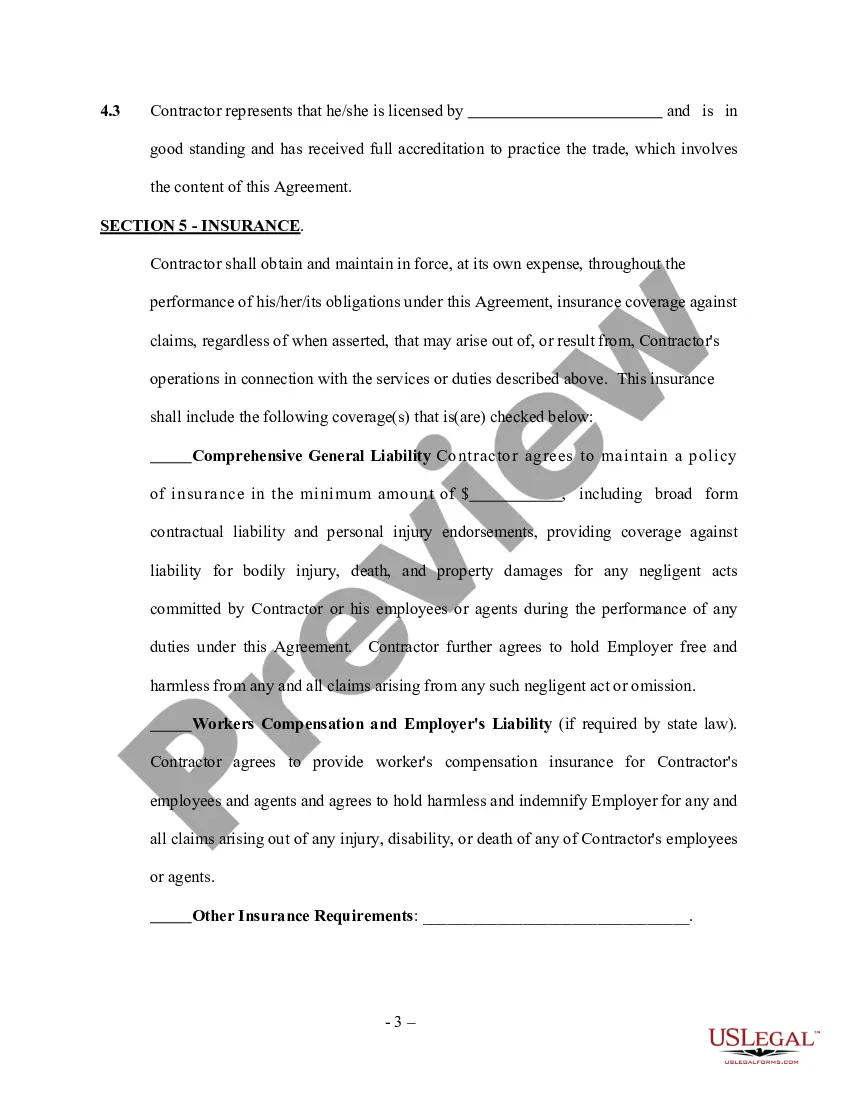
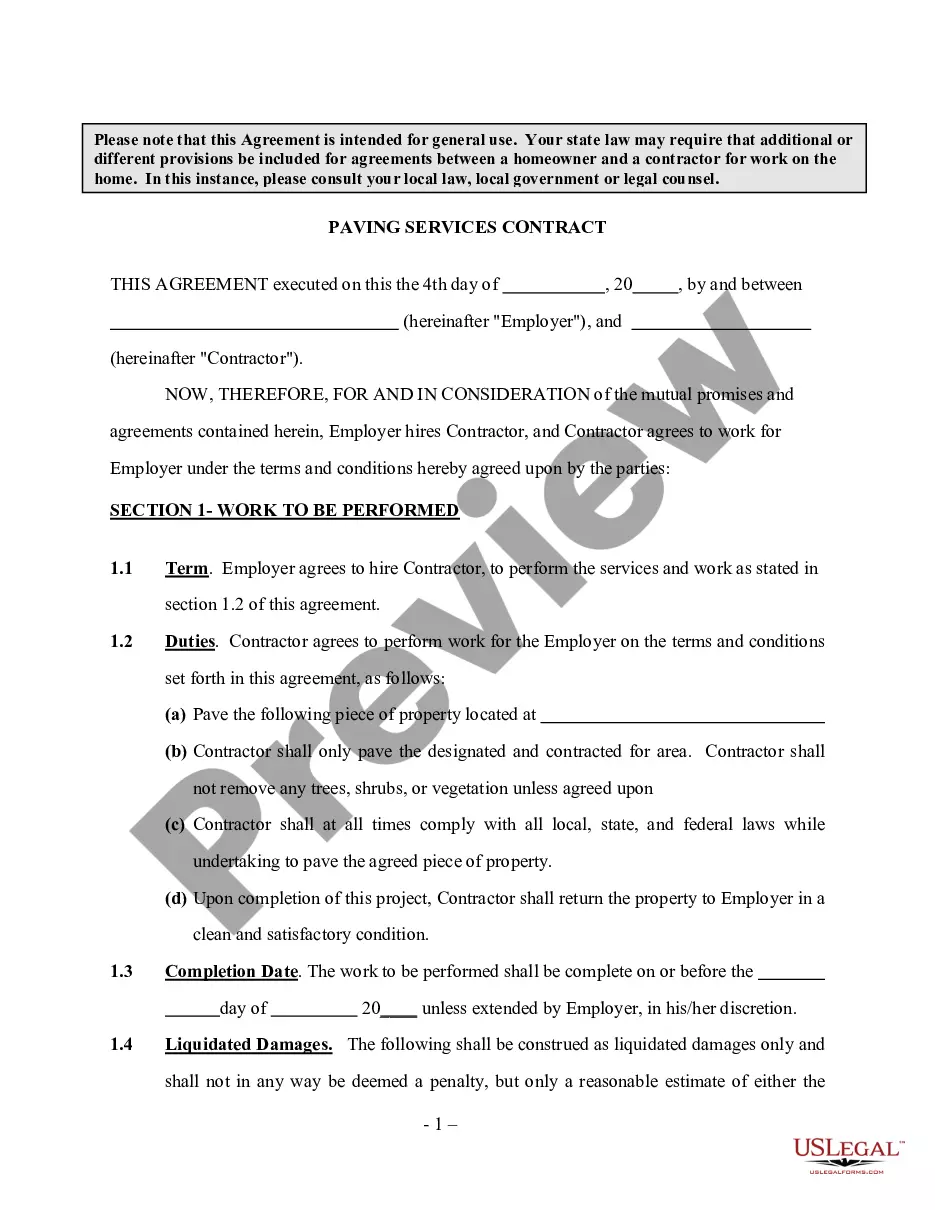
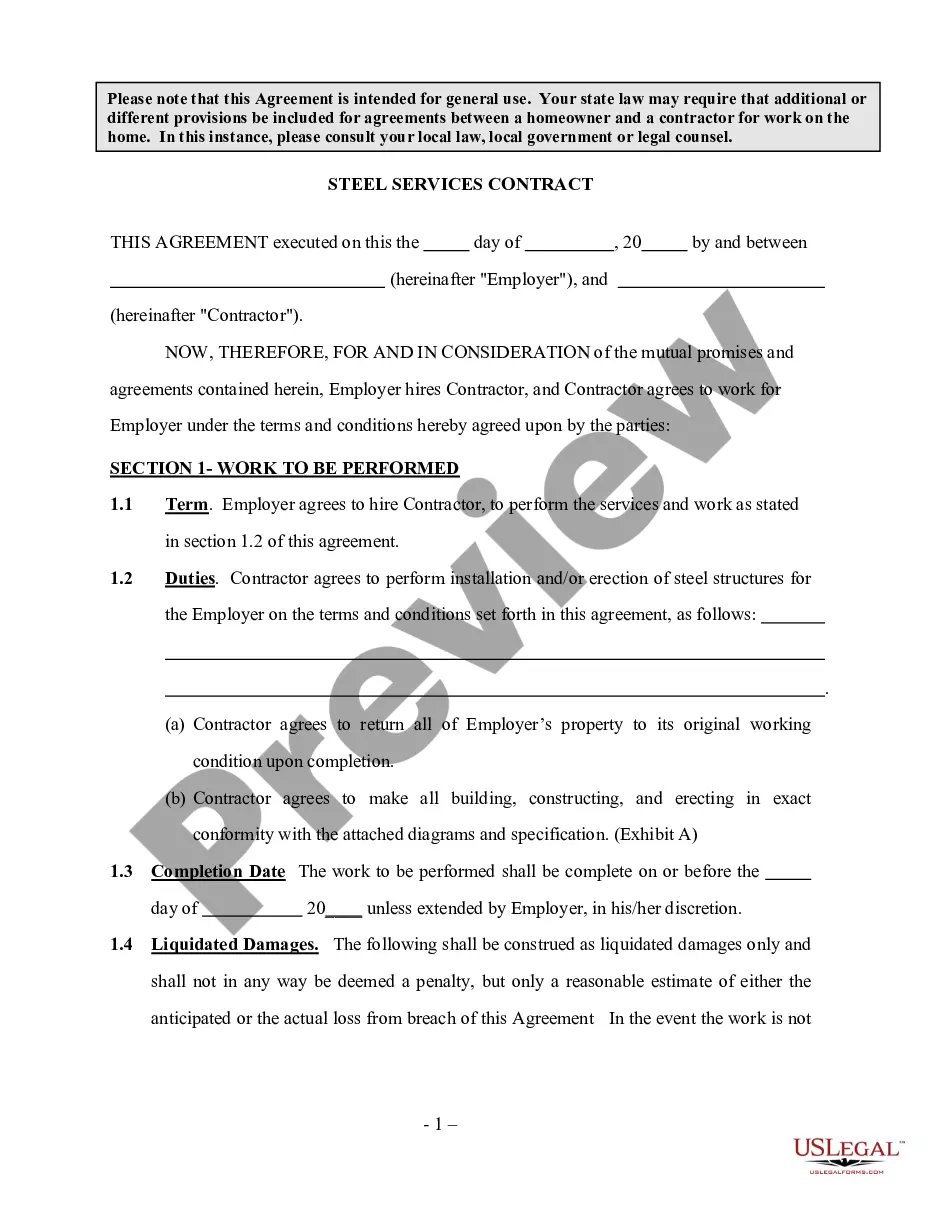
Employer contracts with an independent contractor to install or pre-cast foundation as specified and agreed upon in the contract. Please note that this Agreement is intended for general use. Your state law may require that additional or different provisions be included for agreements between a homeowner and a contractor for work on the home. In this instance, please consult your local law, local government or legal counsel.
Vermont Self-Employed Precast Concrete Contract
State:
Multi-State
Control #:
US-INDC-91
Format:
Word;
Rich Text
Instant download
Description
Free preview
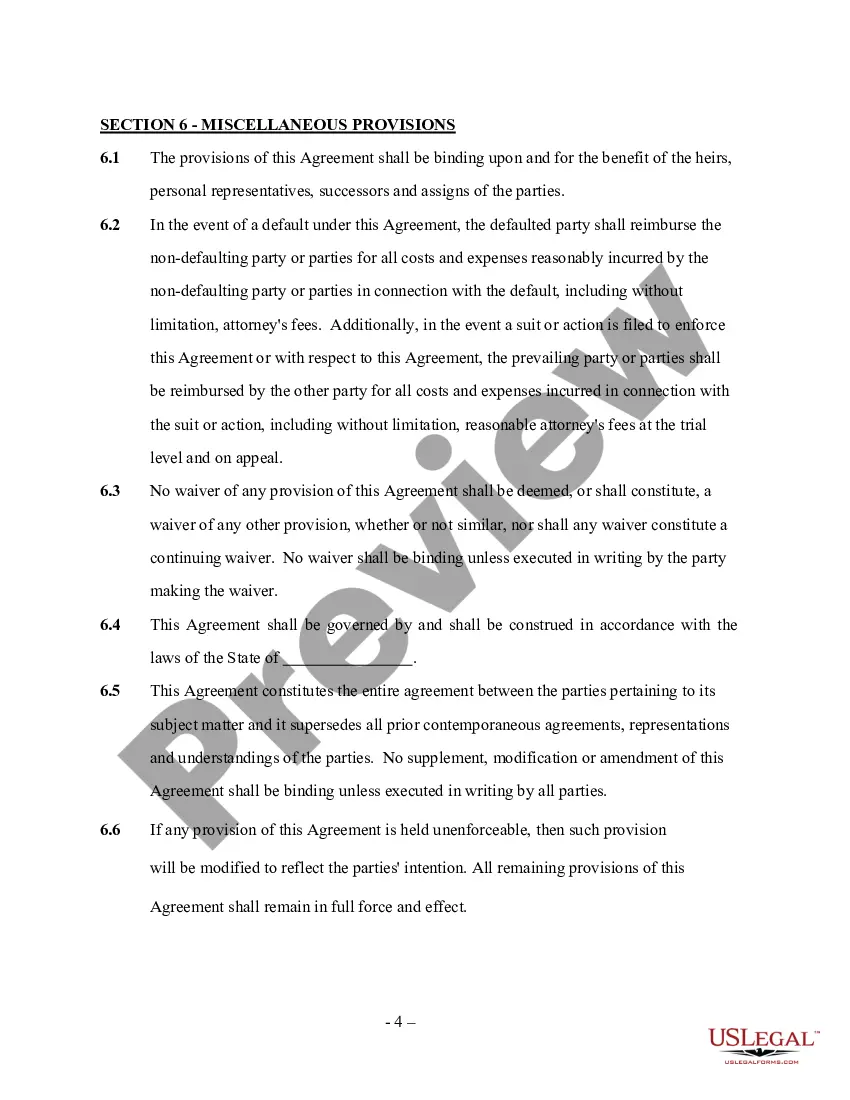
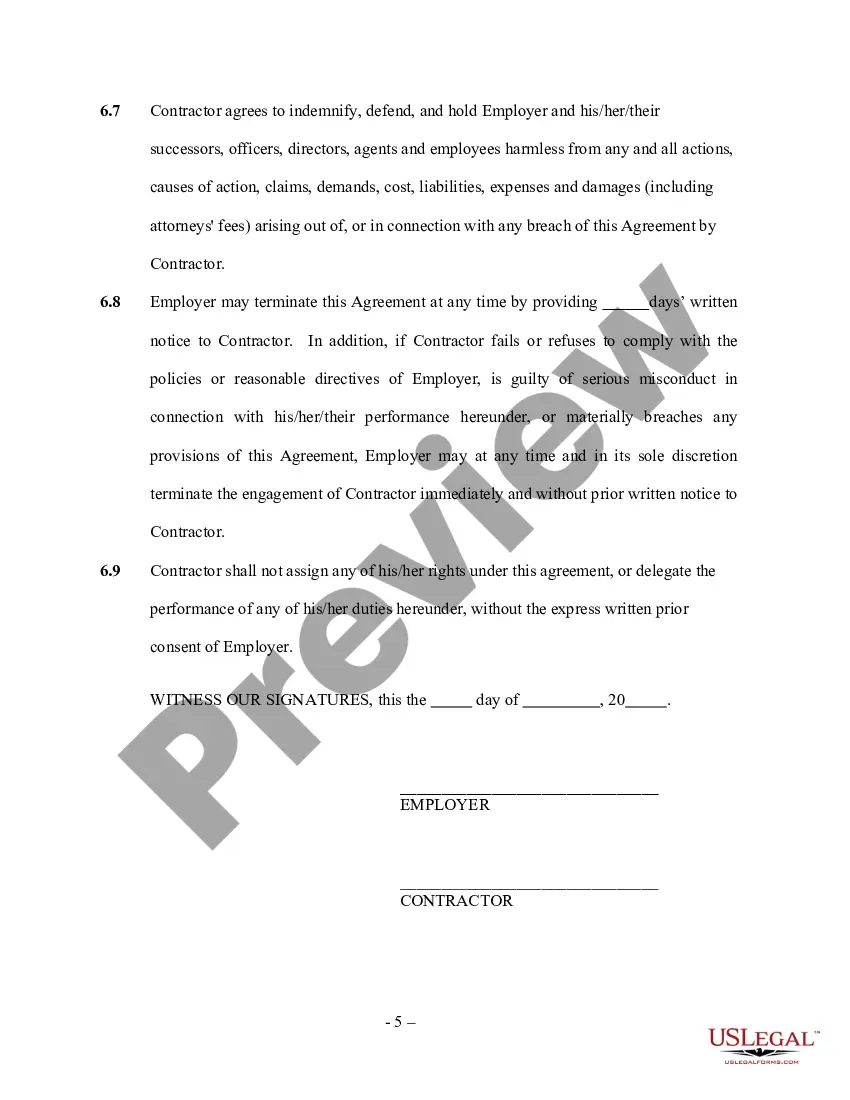
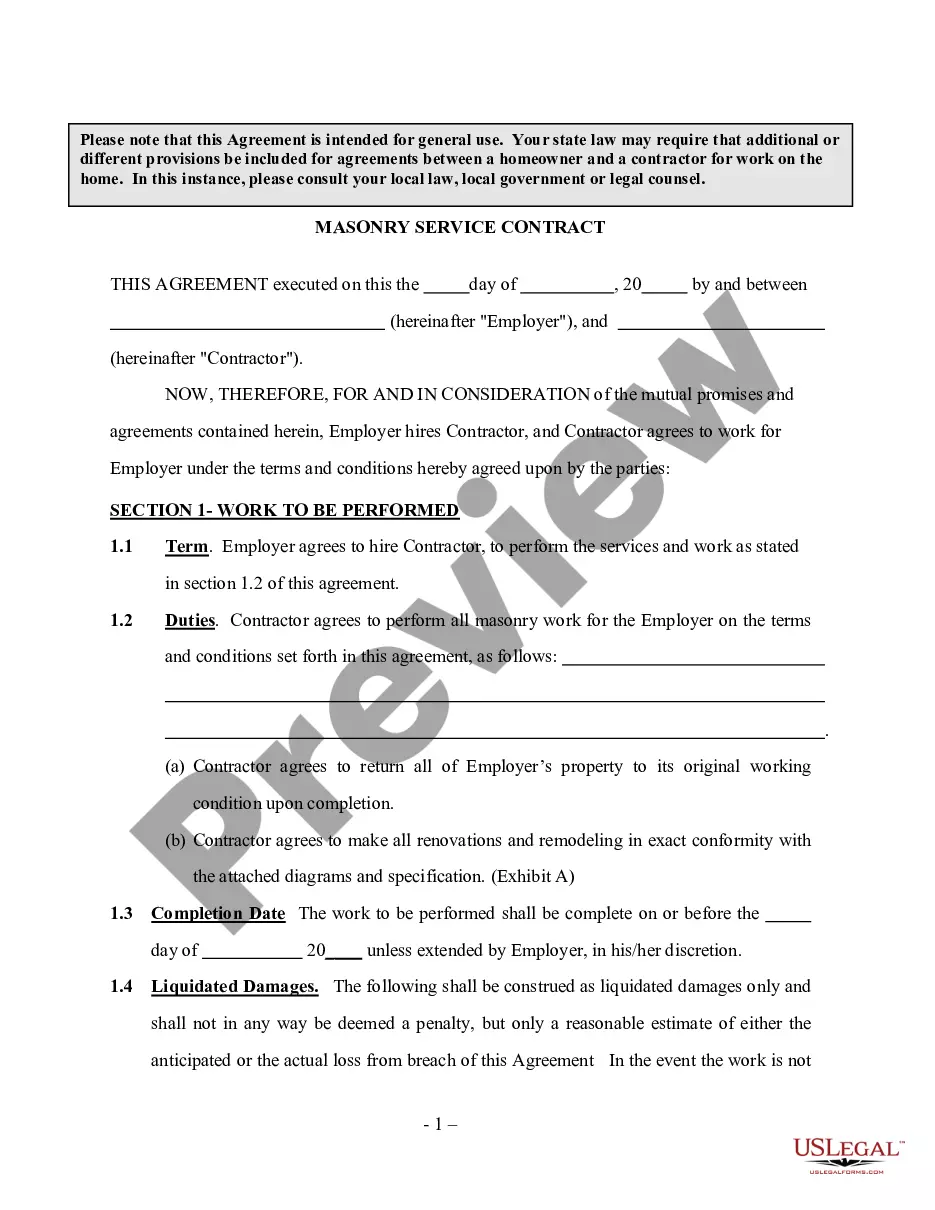
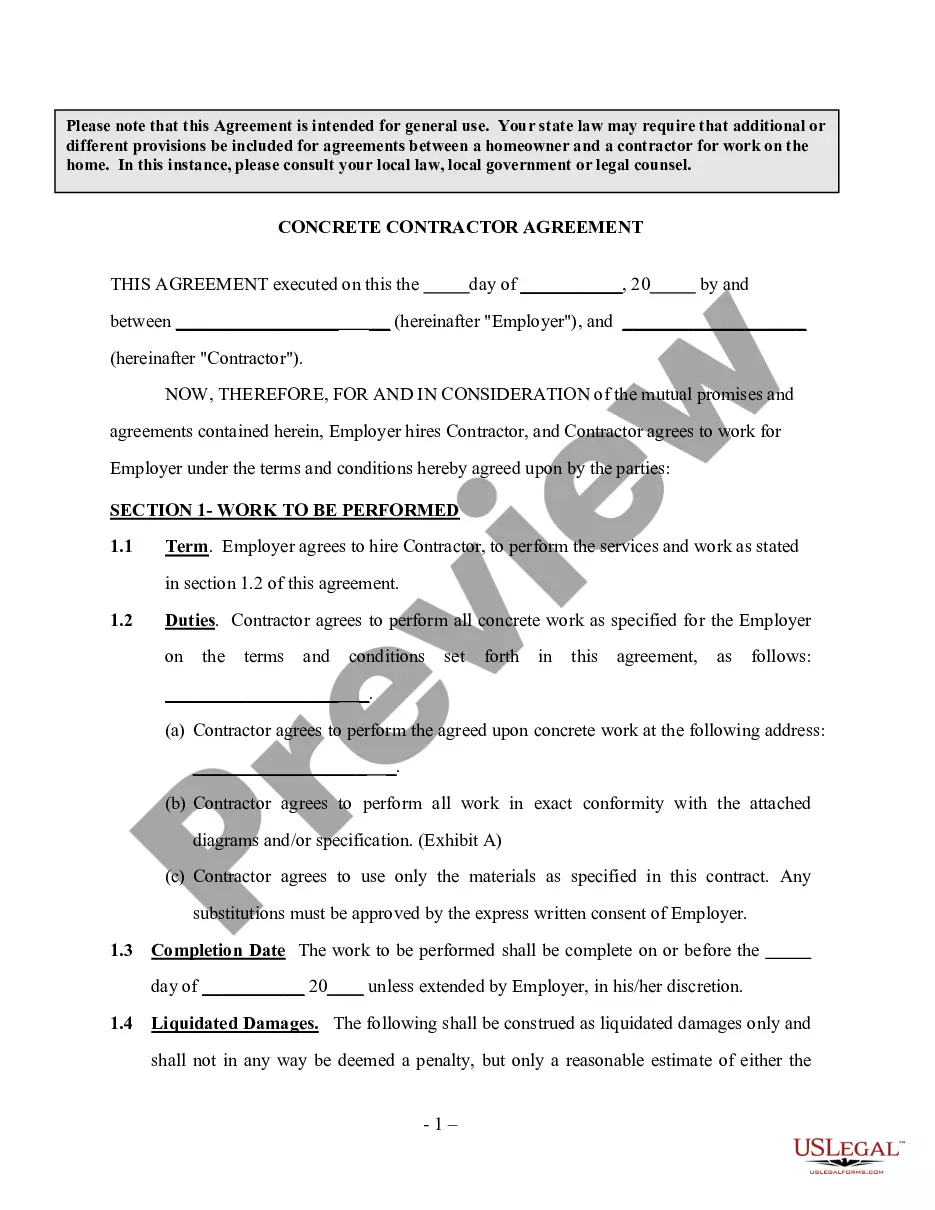







How to fill out Self-Employed Precast Concrete Contract?
It is feasible to spend time online attempting to locate the legal document format that suits the state and federal requirements you desire.
US Legal Forms offers a vast array of legal templates that are reviewed by professionals.
You can easily download or print the Vermont Self-Employed Precast Concrete Contract from the service.
If available, use the Review button to browse the document format as well. To find another version of the form, utilize the Research field to locate the format that meets your needs and requirements. Once you have found the format you want, click Buy now to proceed. Select the pricing plan you prefer, enter your credentials, and register for your account on US Legal Forms. Complete the purchase. You can use your credit card or PayPal account to pay for the legal document. Locate the format in the records and download it to your device. Make alterations to your document if possible. You can fill out, modify, sign, and print the Vermont Self-Employed Precast Concrete Contract. Obtain and print a multitude of document templates using the US Legal Forms website, which provides the largest selection of legal forms. Utilize professional and state-specific templates to manage your business or personal needs.
- If you already possess a US Legal Forms account, you can Log In and click the Obtain button.
- Then, you can fill out, modify, print, or sign the Vermont Self-Employed Precast Concrete Contract.
- Every legal document format you purchase becomes your own permanently.
- To obtain an additional copy of any purchased form, visit the My documents tab and click the corresponding button.
- If you are using the US Legal Forms website for the first time, follow the simple instructions listed below.
- First, ensure that you have selected the correct document format for your region/city of preference.
- Review the form description to verify you have chosen the right document.
Form popularity
FAQ
Contractors in Vermont can earn varying amounts depending on their specialty, experience, and the type of contract they hold, such as a Vermont Self-Employed Precast Concrete Contract. On average, construction contractors in Vermont make competitive wages, with many earning between $50,000 and $70,000 annually. Additionally, factors like project size and complexity can significantly influence earnings. If you're considering a career in construction, knowing these figures can help you plan effectively.
Some states, such as Wyoming and New Hampshire, do not require a general contractor to hold a license. However, it's essential to note that local regulations may still apply. If you're considering a Vermont Self-Employed Precast Concrete Contract, understanding the licensing landscape in different states can be beneficial. Always research specific state requirements to ensure compliance.
The Vermont tax form IN-111 is used for personal income tax reporting. This form is essential for residents and businesses to report their income and calculate state tax liabilities. If you're self-employed and working on a Vermont Self-Employed Precast Concrete Contract, understanding this form can help you manage your finances effectively. Consulting with a tax professional can provide additional guidance.
Yes, contractors are required to obtain a license in Vermont for specific construction activities. This licensing process helps regulate the industry and protect consumers. If you plan to engage in a Vermont Self-Employed Precast Concrete Contract, ensure you fulfill the licensing criteria. This step not only ensures compliance but also builds trust with your clients.
If you operate a business in Vermont, you will likely need to withhold income tax from your employees' wages. This requirement applies to all businesses, including those working under a Vermont Self-Employed Precast Concrete Contract. Regularly consulting with a tax professional can help you navigate these obligations. Being informed ensures you remain compliant and avoid penalties.
Yes, contractors must be licensed in Vermont to perform certain types of work, especially in construction and renovation. This requirement ensures that contractors meet safety and quality standards. If you're considering a Vermont Self-Employed Precast Concrete Contract, having a license can enhance your business's reputation and trustworthiness with clients. Always verify current regulations to stay compliant.
In Vermont, you can perform certain tasks without a contractor's license, such as minor repairs or maintenance. However, for larger projects, especially those involving precast concrete, having a license can provide credibility and protection. Understanding what falls under the Vermont Self-Employed Precast Concrete Contract can help you determine if you need a license. Always check local regulations to avoid potential issues.
A licensed contractor has met specific state requirements and holds a license to perform construction work legally. In contrast, a general contractor manages projects and may oversee various subcontractors. If you're considering a Vermont Self-Employed Precast Concrete Contract, ensure you understand the licensing requirements. This distinction can affect your project's success and compliance.
Yes, you can write your own legally binding contract, provided it meets certain legal requirements. Ensure that the contract includes mutual consent, a lawful purpose, and clear terms. For specific needs, like a Vermont Self-Employed Precast Concrete Contract, using a template from uslegalforms can help ensure your contract complies with local laws.
Writing a simple contract agreement involves stating the purpose of the agreement, outlining obligations of each party, and detailing payment terms. Use straightforward language to avoid confusion. Ensure both parties sign the document. A Vermont Self-Employed Precast Concrete Contract can assist in creating a clear and enforceable agreement.