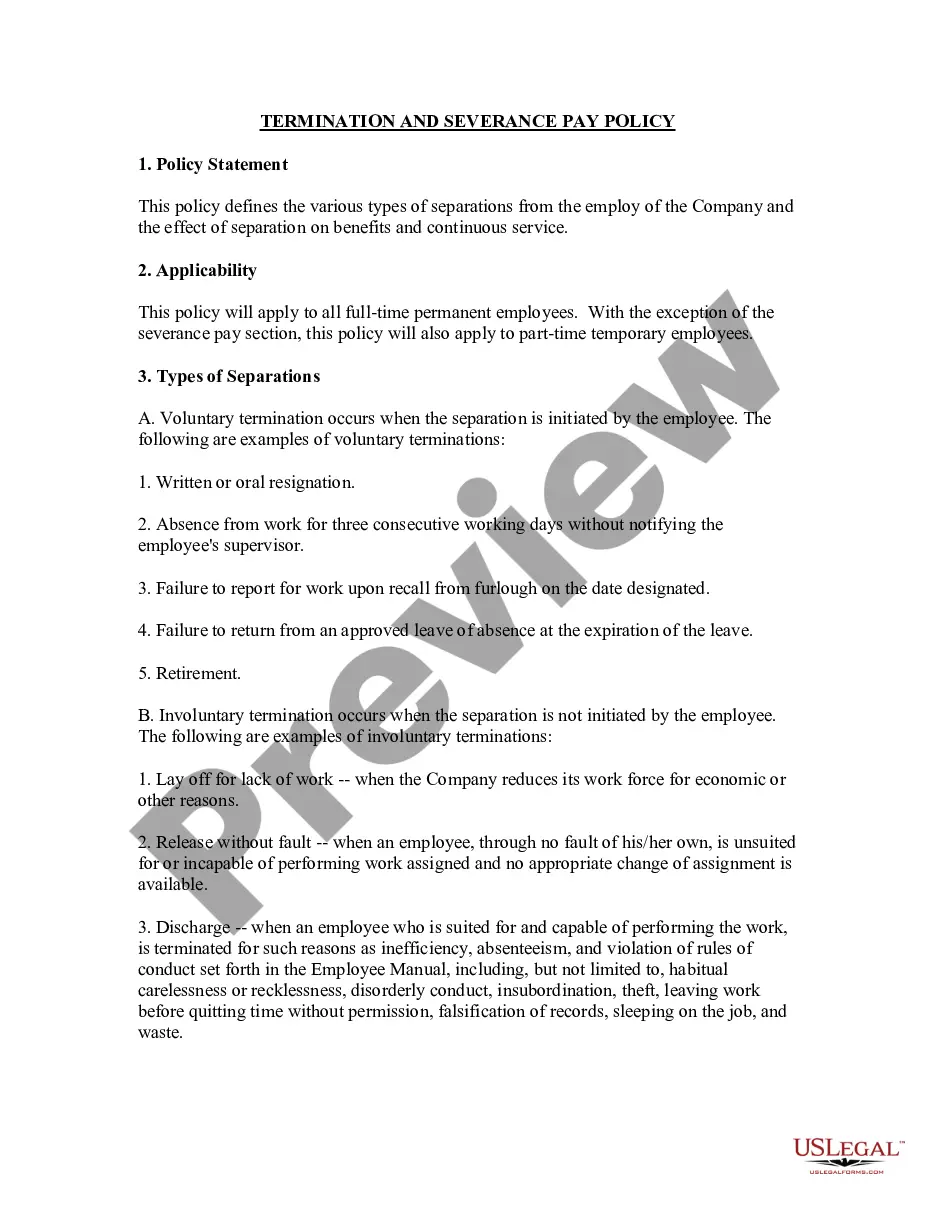
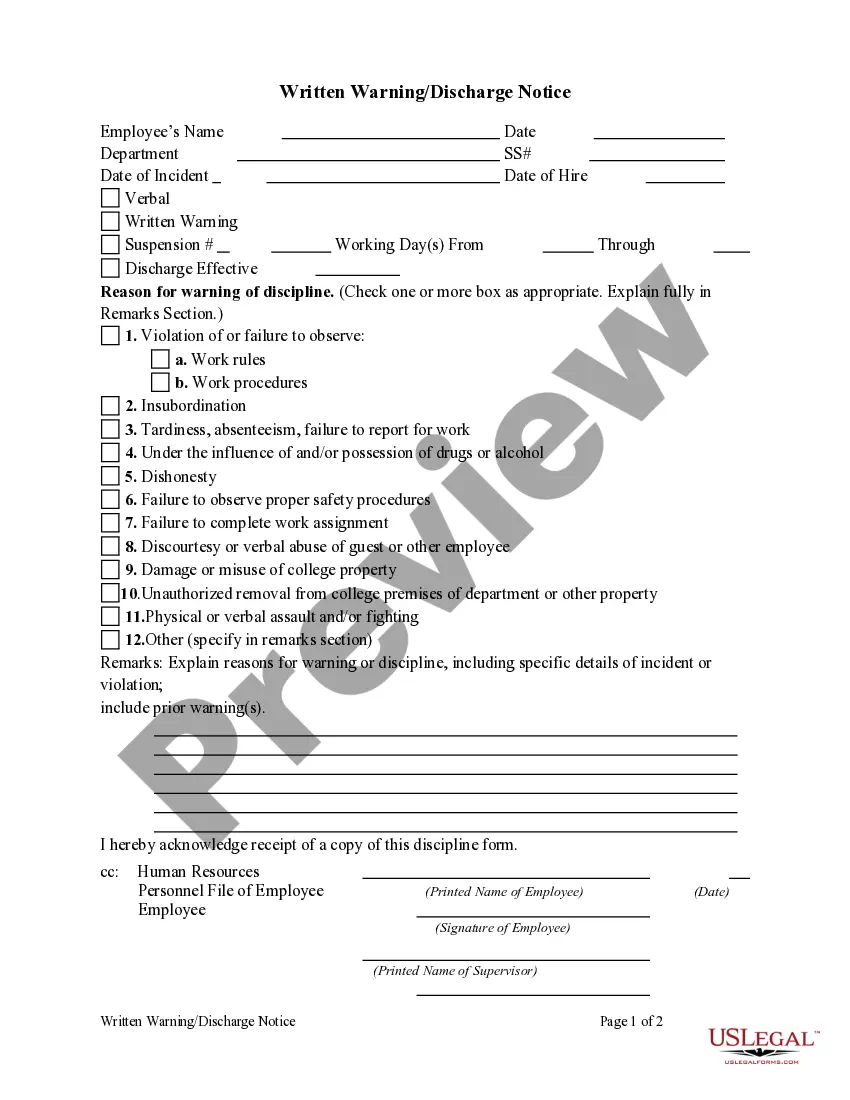
Vermont Written Warning/Discharge Notice
Description
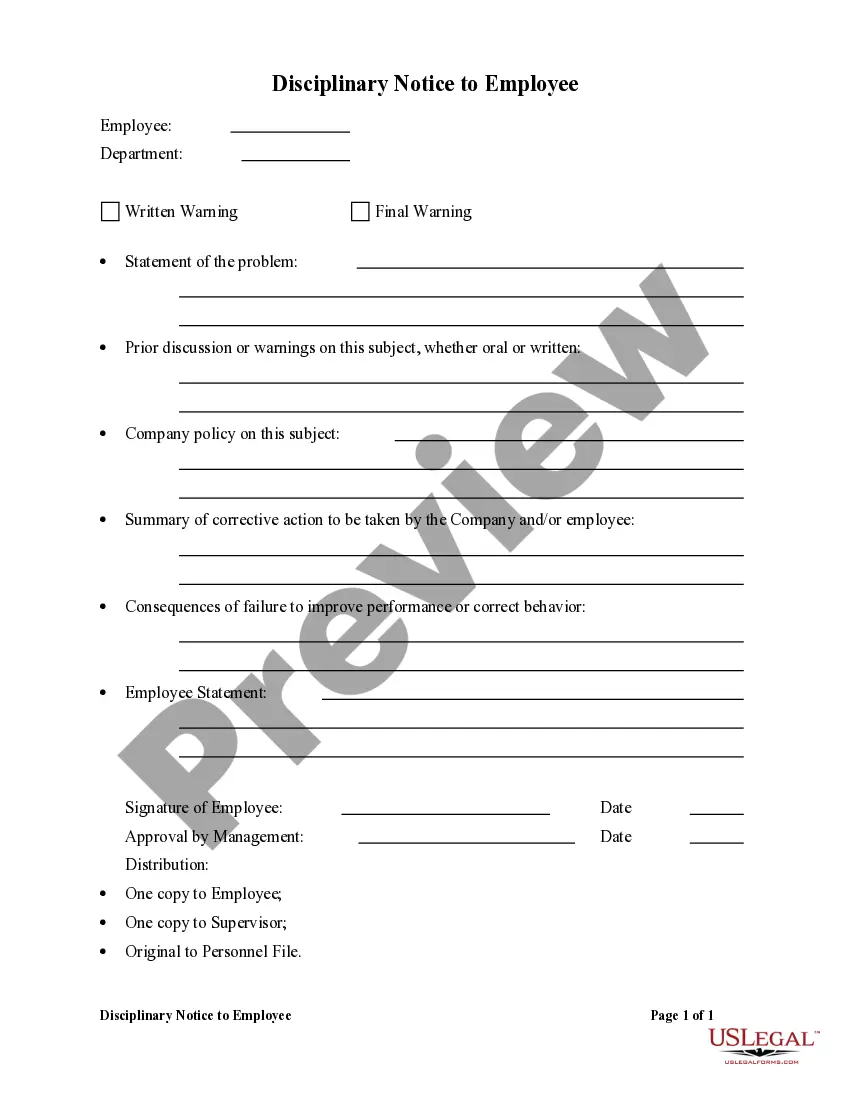
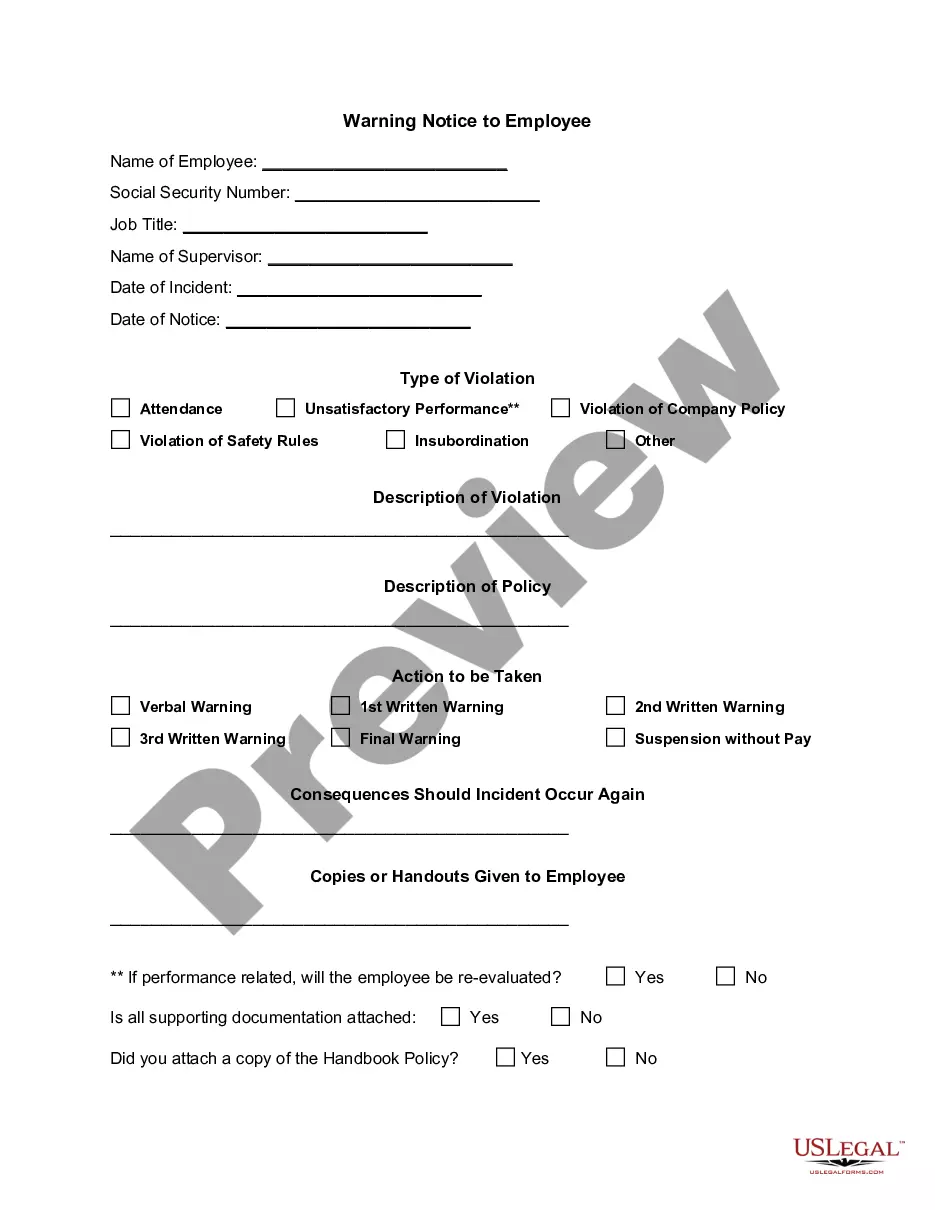
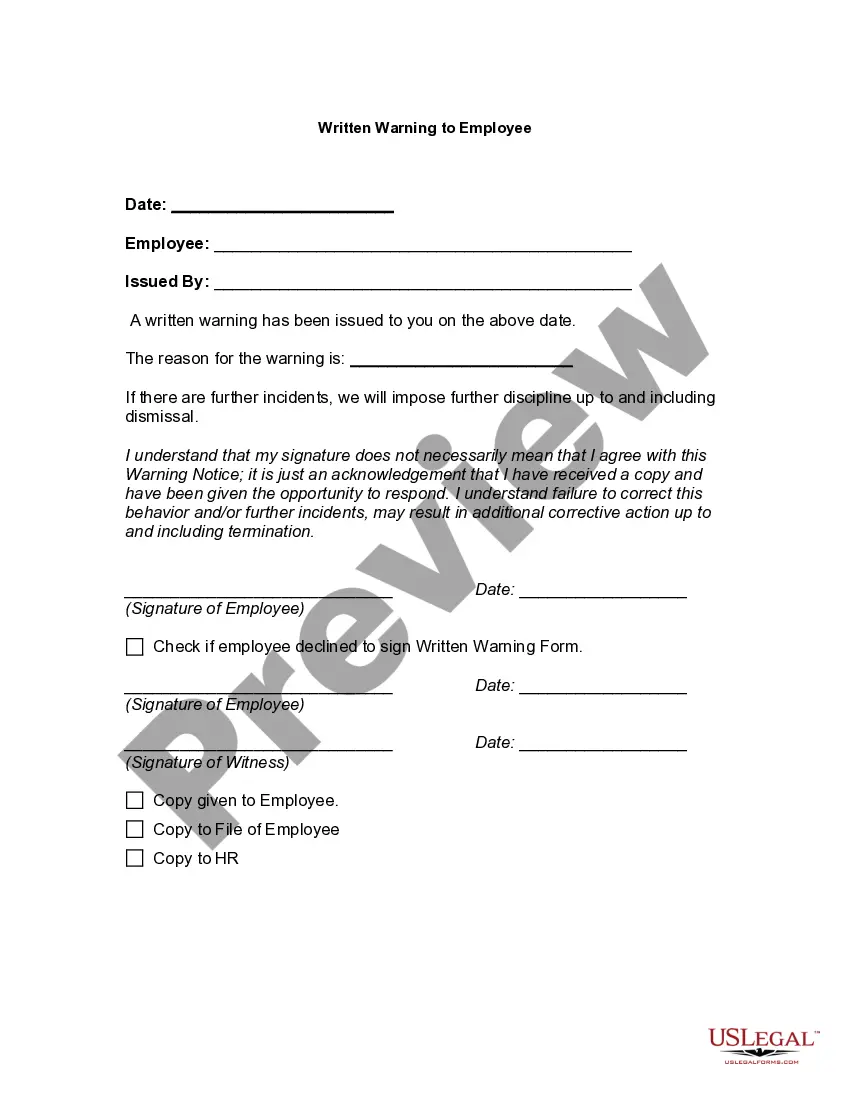
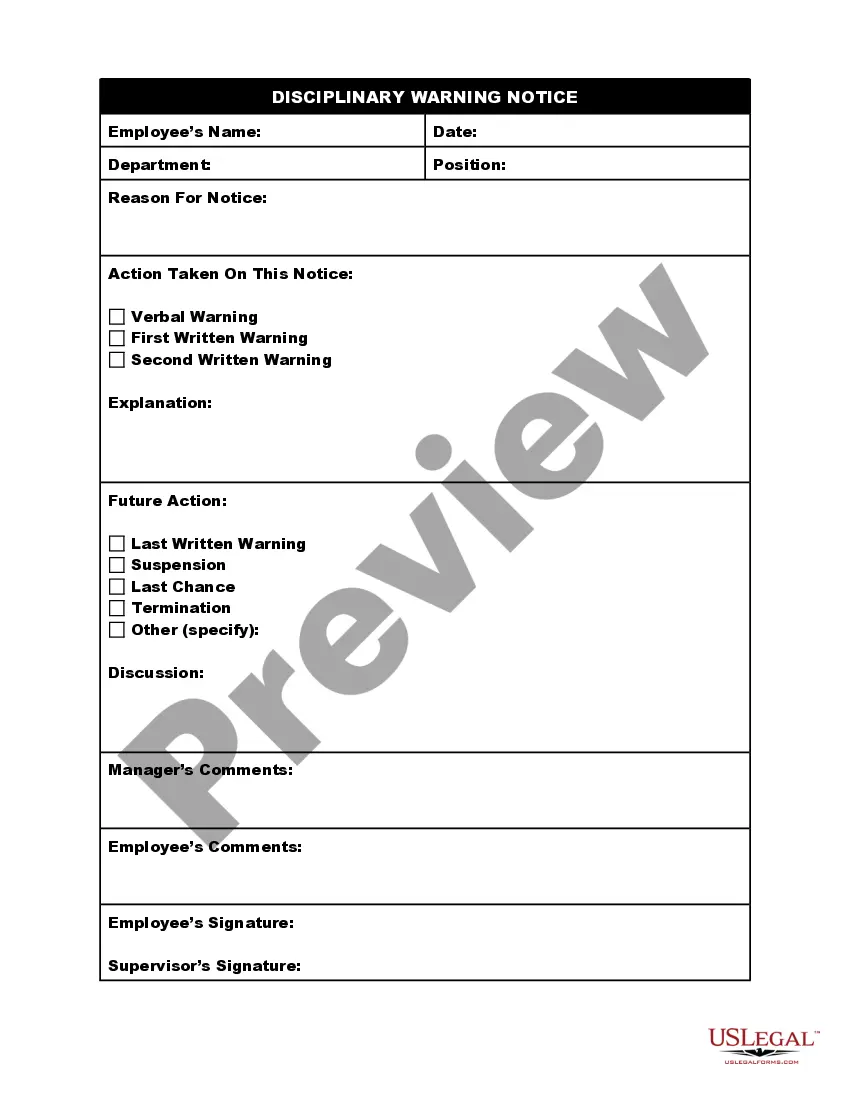
Get your form ready online
Our built-in tools help you complete, sign, share, and store your documents in one place.
Make edits, fill in missing information, and update formatting in US Legal Forms—just like you would in MS Word.
Download a copy, print it, send it by email, or mail it via USPS—whatever works best for your next step.
Sign and collect signatures with our SignNow integration. Send to multiple recipients, set reminders, and more. Go Premium to unlock E-Sign.
If this form requires notarization, complete it online through a secure video call—no need to meet a notary in person or wait for an appointment.
We protect your documents and personal data by following strict security and privacy standards.
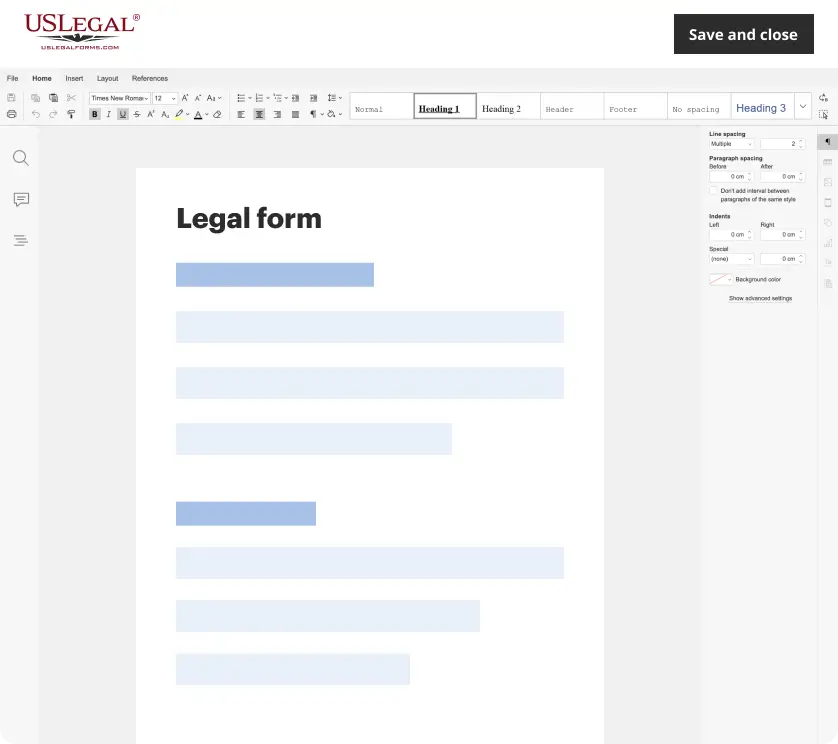
Make edits, fill in missing information, and update formatting in US Legal Forms—just like you would in MS Word.
Download a copy, print it, send it by email, or mail it via USPS—whatever works best for your next step.
Sign and collect signatures with our SignNow integration. Send to multiple recipients, set reminders, and more. Go Premium to unlock E-Sign.
If this form requires notarization, complete it online through a secure video call—no need to meet a notary in person or wait for an appointment.
We protect your documents and personal data by following strict security and privacy standards.
Looking for another form?






How to fill out Written Warning/Discharge Notice?
You might spend hours on the internet searching for the rightful document template that meets the federal and state requirements you will require.
US Legal Forms offers thousands of legitimate forms that are reviewed by professionals.
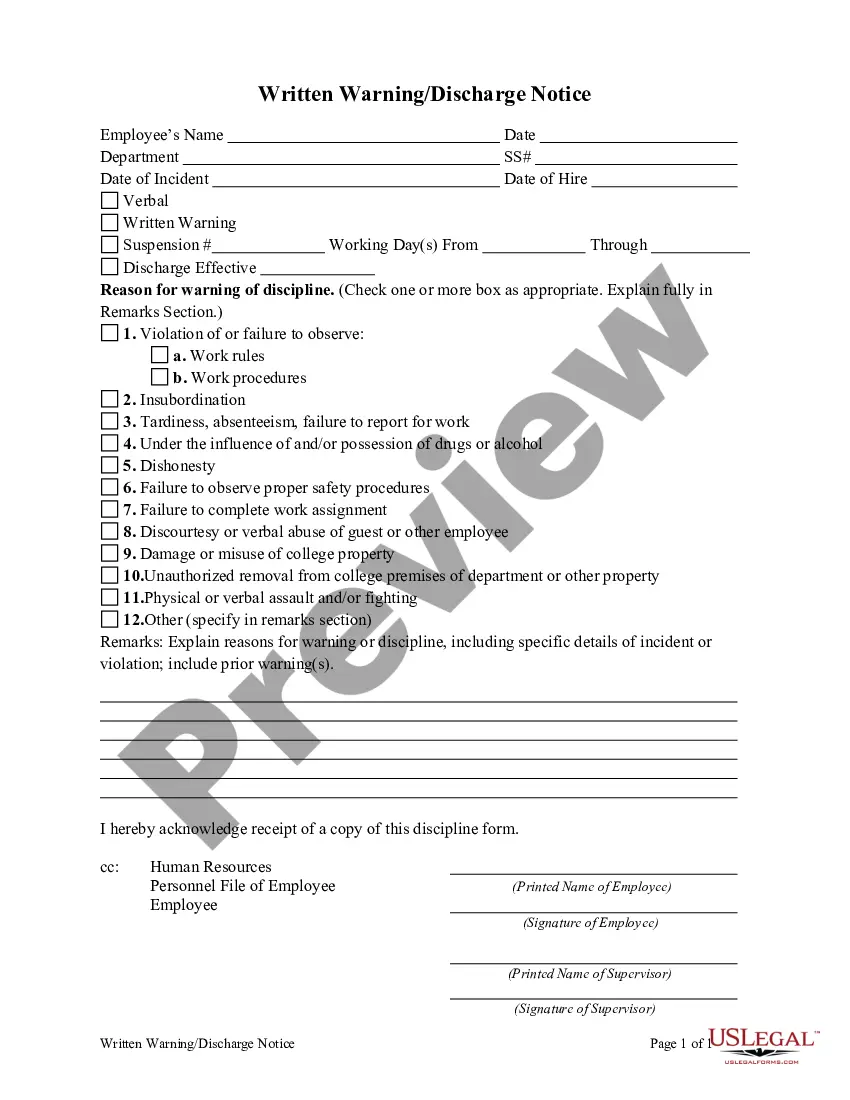
You can conveniently download or print the Vermont Written Warning/Discharge Notice from my services.
If available, utilize the Preview option to view the document template as well.
- If you have a US Legal Forms account already, you can Log In and then select the Obtain option.
- After that, you can complete, modify, print, or sign the Vermont Written Warning/Discharge Notice.
- Every legitimate document template you acquire is your property indefinitely.
- To obtain another copy of any downloaded form, navigate to the My documents tab and click the relevant option.
- If you're using the US Legal Forms site for the first time, follow the simple instructions below.
- First, ensure that you have selected the correct document template for the region/area of your preference.
- Review the form description to confirm you have chosen the appropriate form.
Form popularity
FAQ
Yes, you can sue for wrongful termination in Vermont if your termination violates laws. Employees have rights that protect them from unjust dismissal, and they may seek damages through a lawsuit. It's important to gather evidence, such as a Vermont Written Warning/Discharge Notice, to strengthen your case. Consulting with a legal expert can provide necessary clarity and help navigate the complexities of the claims process.
The compensation for wrongful termination often varies based on several factors. Employees can potentially recover lost wages, benefits, and in some cases, damages for emotional distress. While there is no fixed limit, courts may award significant sums depending on the severity of the wrongful termination. Filing a claim might be complicated, so leveraging resources like a Vermont Written Warning/Discharge Notice for documentation can be immensely helpful.
Wrongful termination in Vermont typically includes firing that violates state or federal law. Terminations based on discrimination, retaliation for reporting illegal activities, or violations of public policy are all considered wrongful. If an employee has received a Vermont Written Warning/Discharge Notice under false pretenses or due to illegitimate reasons, they may have grounds for a wrongful termination claim. It's advisable to seek legal guidance if you believe this has happened to you.
Vermont layoff laws require employers to follow specific protocols, particularly in larger layoffs. Employers must provide adequate notice, often stipulated in the Worker Adjustment and Retraining Notification (WARN) Act. This act ensures employees receive timely information about job loss, allowing them to prepare. Understanding how a Vermont Written Warning/Discharge Notice fits into layoffs can help clarify your rights during these challenging times.
In Vermont, disqualifications from unemployment benefits frequently occur due to certain actions. For example, if a worker is discharged for misconduct, such as theft or violation of company policy, they may not qualify. Additionally, if someone voluntarily quits without good cause, they may find themselves ineligible for benefits. It's crucial to understand how a Vermont Written Warning/Discharge Notice can impact your eligibility for unemployment when you need assistance.
An example of wrongful termination occurs when an employee is fired in violation of their rights. For instance, if a worker receives a Vermont Written Warning/Discharge Notice that cites performance issues, but the actual reason for termination is their gender or age, this could be deemed wrongful. It's essential to understand that claims of wrongful termination can arise based on discrimination, retaliation, or violation of employment agreements. Employees should consult legal resources to understand their protections in Vermont.
Yes, Vermont employers must provide employees with breaks, especially for shifts exceeding 6 hours. Workers are entitled to a 30-minute meal break, which is unpaid, and also have the right to take short breaks throughout their workday. Familiarity with labor laws, including those related to breaks, can prevent misunderstandings and ensure compliance when issuing a Vermont Written Warning/Discharge Notice. This knowledge enhances a respectful workplace.
Vermont has progressive abortion laws that permit the procedure at any time during pregnancy. The state prioritizes the health and autonomy of individuals in making choices about their own bodies. While not directly related, understanding workplace policies can support employees in all aspects of their lives, including navigating situations that may involve the use of a Vermont Written Warning/Discharge Notice in the context of rights and discrimination.
Termination laws in Vermont require employers to follow fair practices and maintain documented policies. Clear guidelines on performance and behavior should be established, ensuring employees understand expectations. The Vermont Written Warning/Discharge Notice serves as a key instrument in this process, providing a record of communications prior to termination. This approach can foster a more supportive work environment.
Firing laws in Vermont allow for at-will employment, meaning either party can terminate the relationship at any time, unless an employment contract states otherwise. However, employers must still comply with anti-discrimination laws. Issuing a proper Vermont Written Warning/Discharge Notice can serve as documentation that the employer followed protocol. This proactive approach can defend against claims of unjust termination.