Vermont Marital Domestic Separation and Property Settlement Agreement no Children parties may have Joint Property or Debts Effective Immediately
Understanding this form
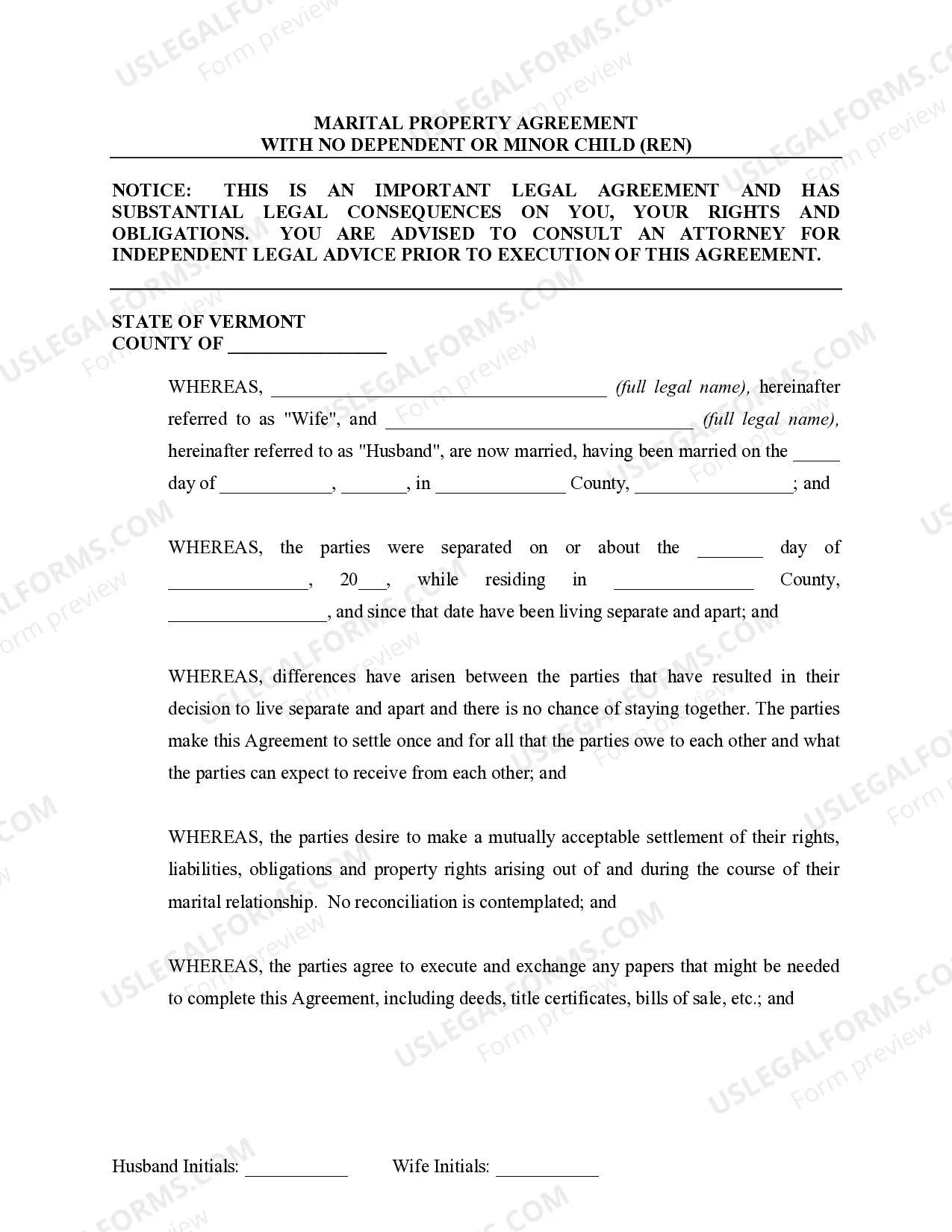
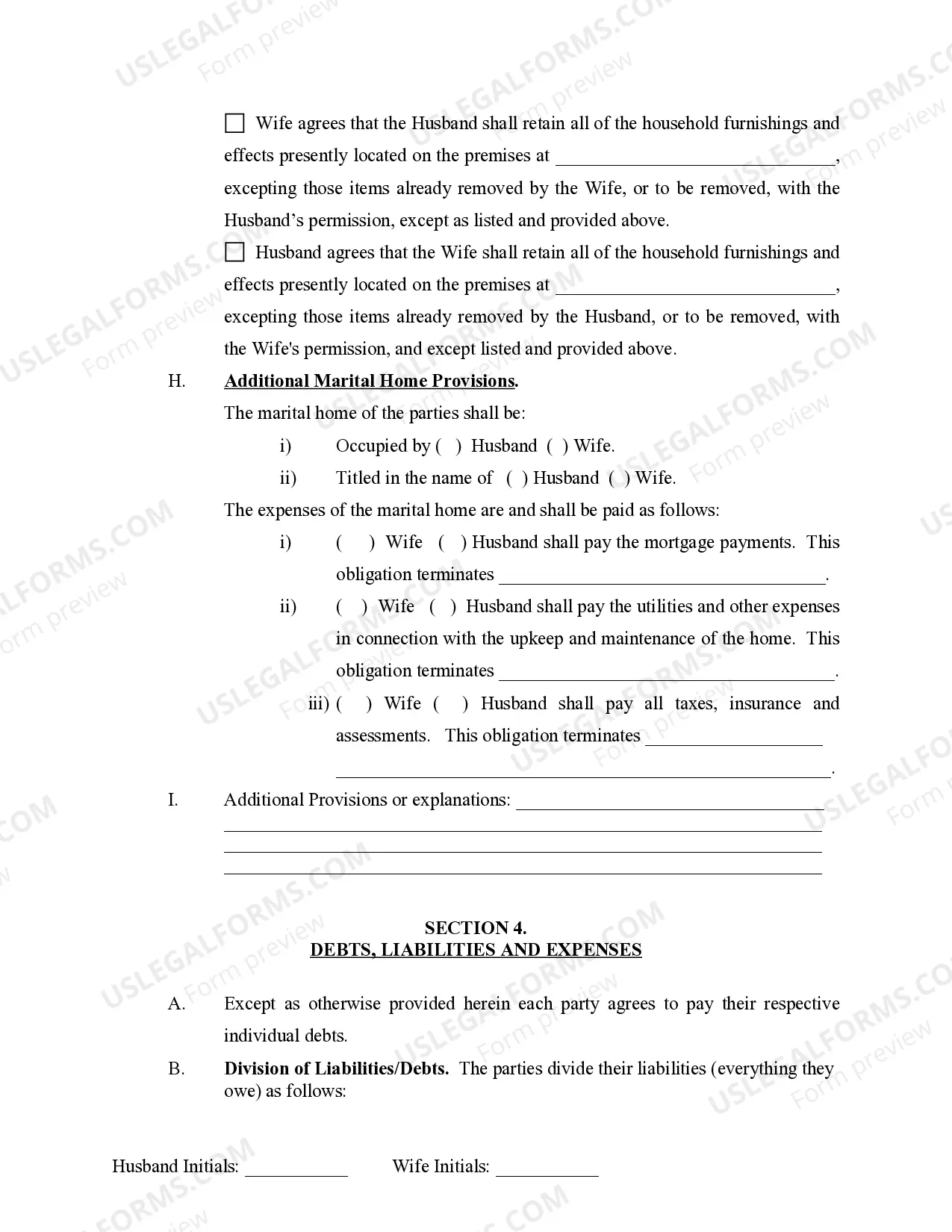
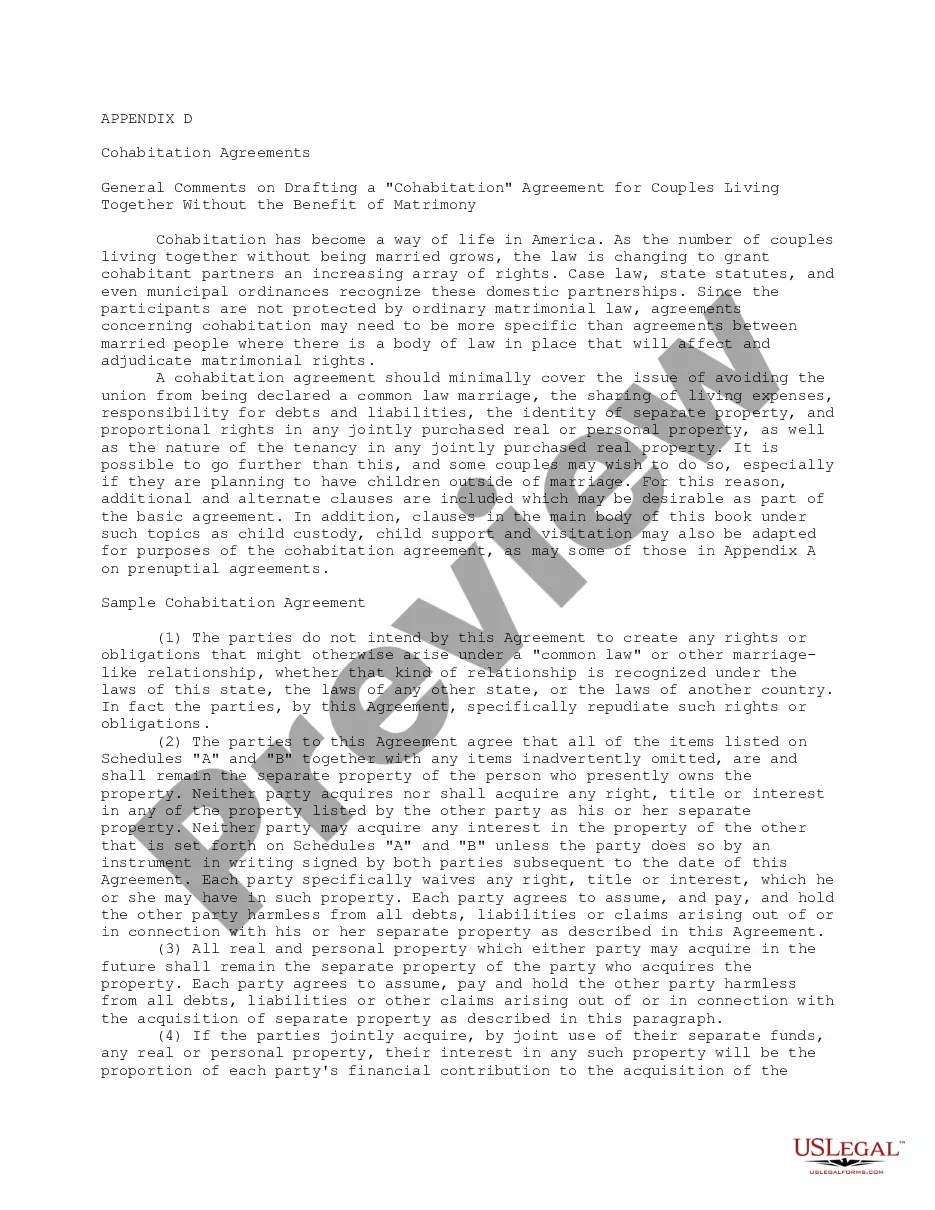
The Marital Domestic Separation and Property Settlement Agreement is designed for married couples without minor children who wish to separate and settle their property and debts. This unique form addresses the division of joint assets and liabilities effectively and is vital for outlining each party's rights and obligations following a separation. Unlike standard divorce agreements, this document serves to formalize the terms of separation immediately, even if a divorce has not yet been filed.
Form components explained
- Statements regarding separation and relinquishment of marital rights.
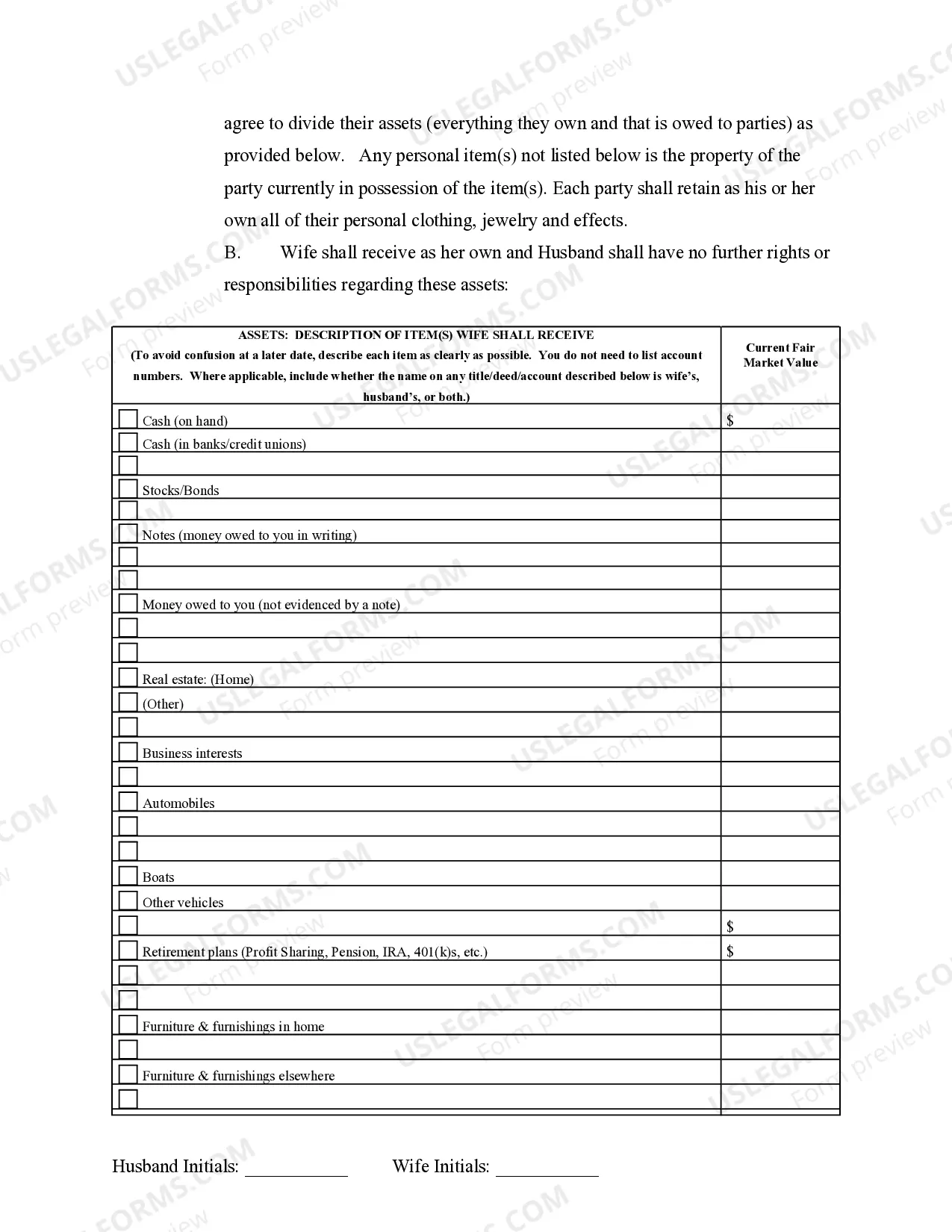
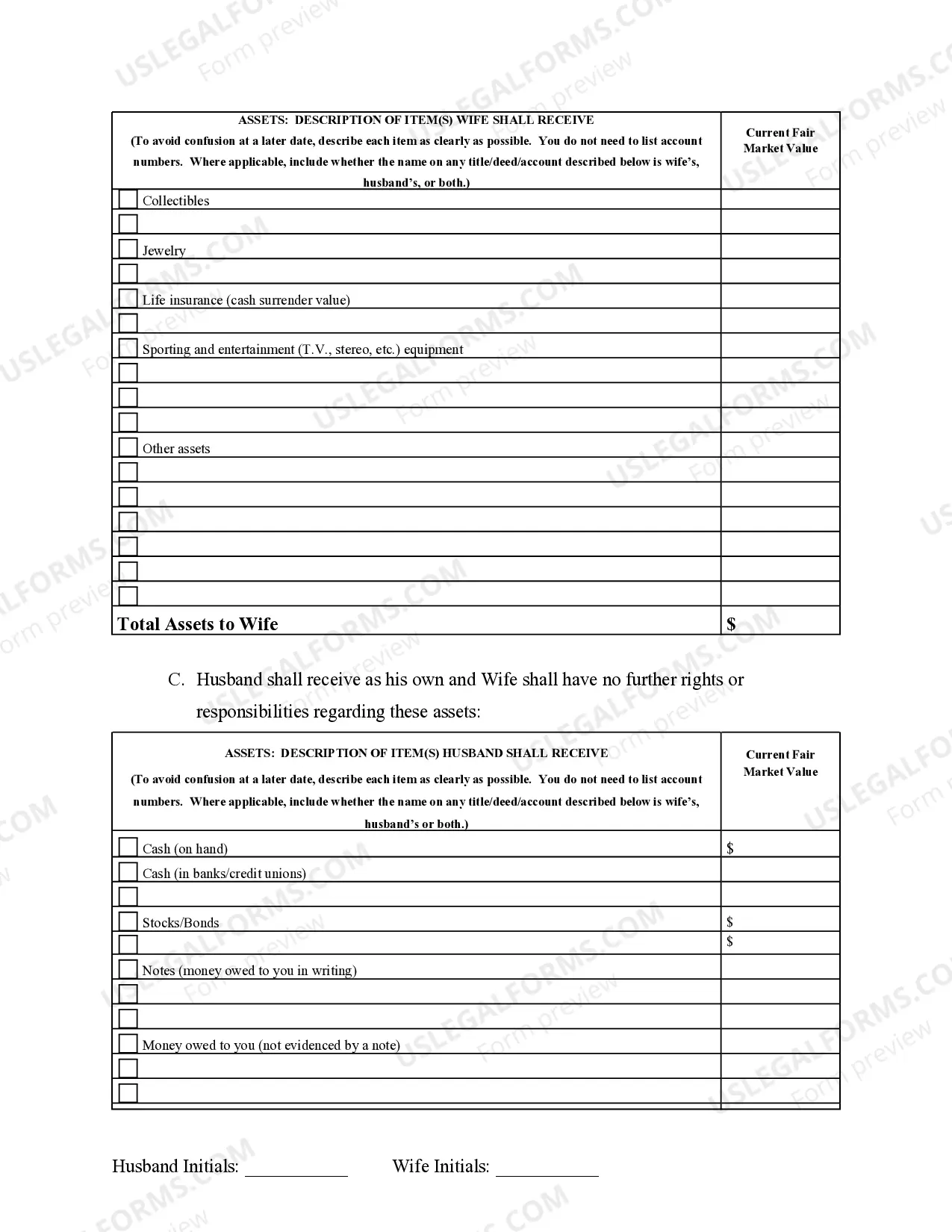
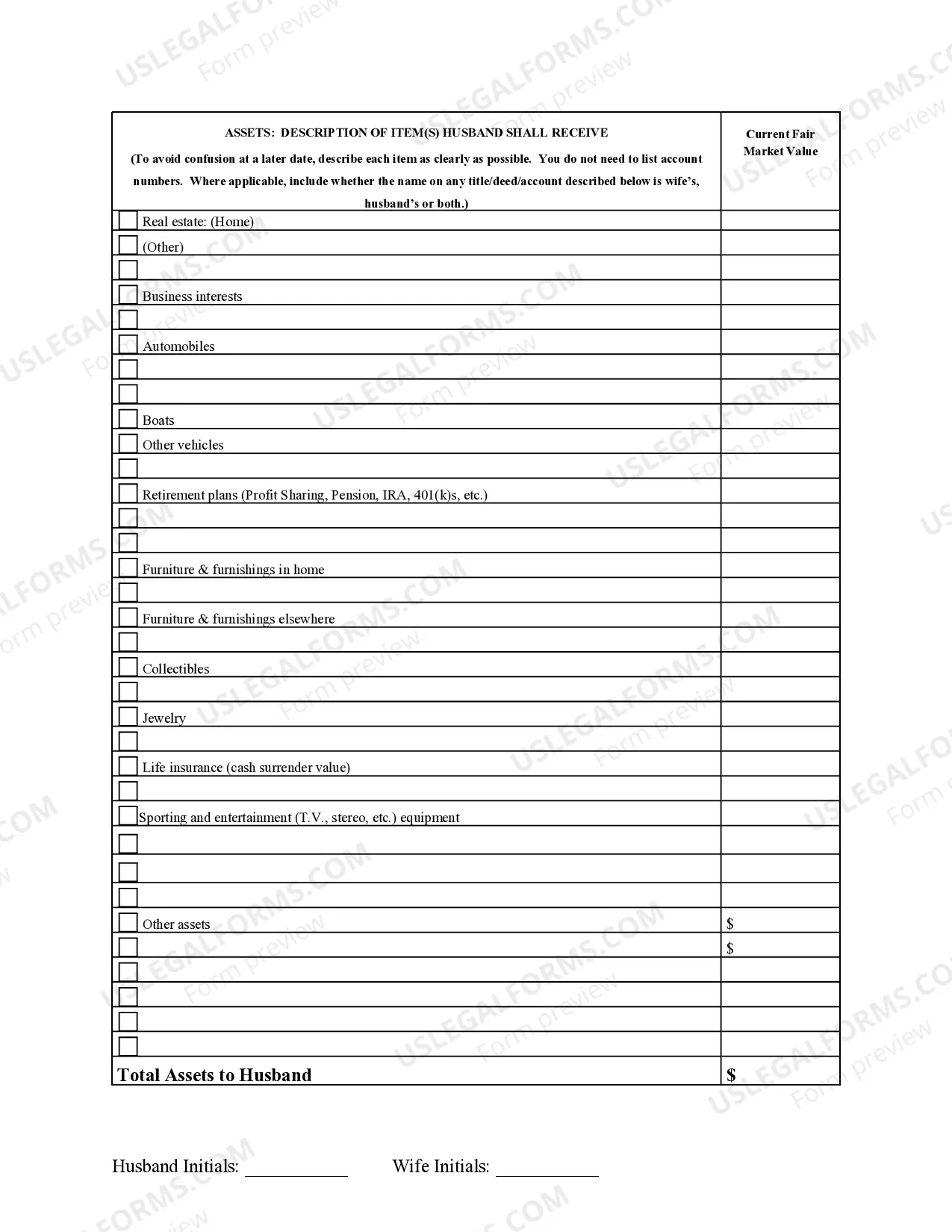
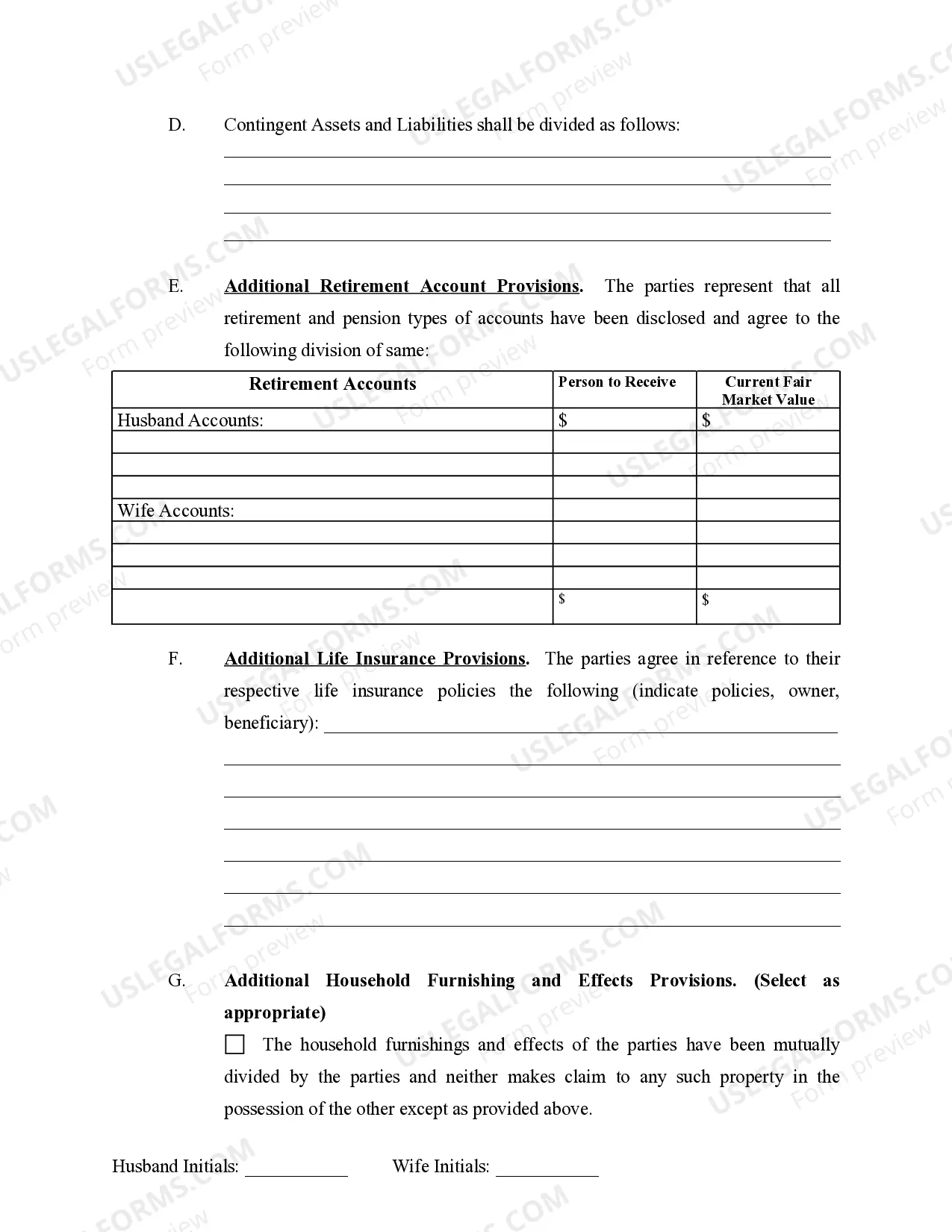
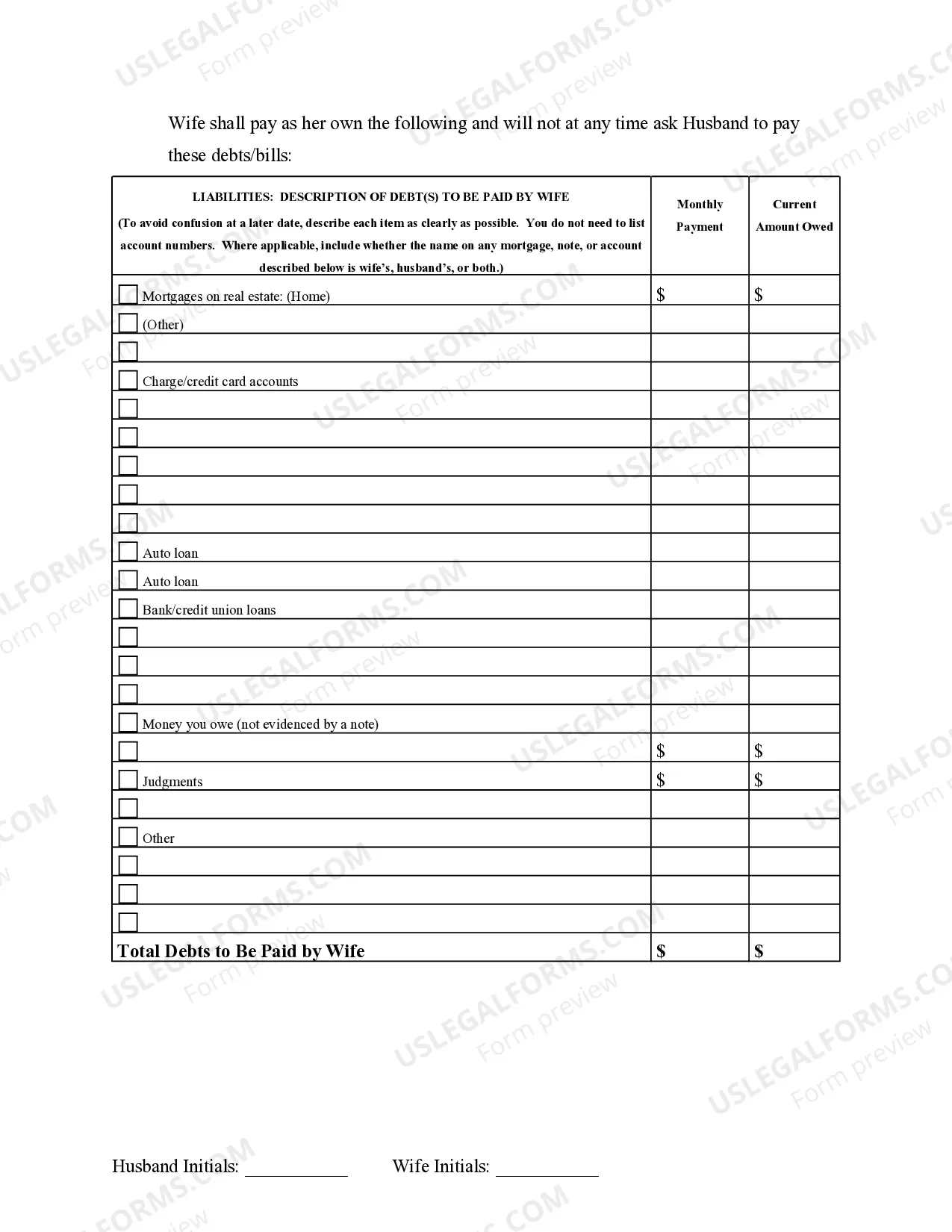
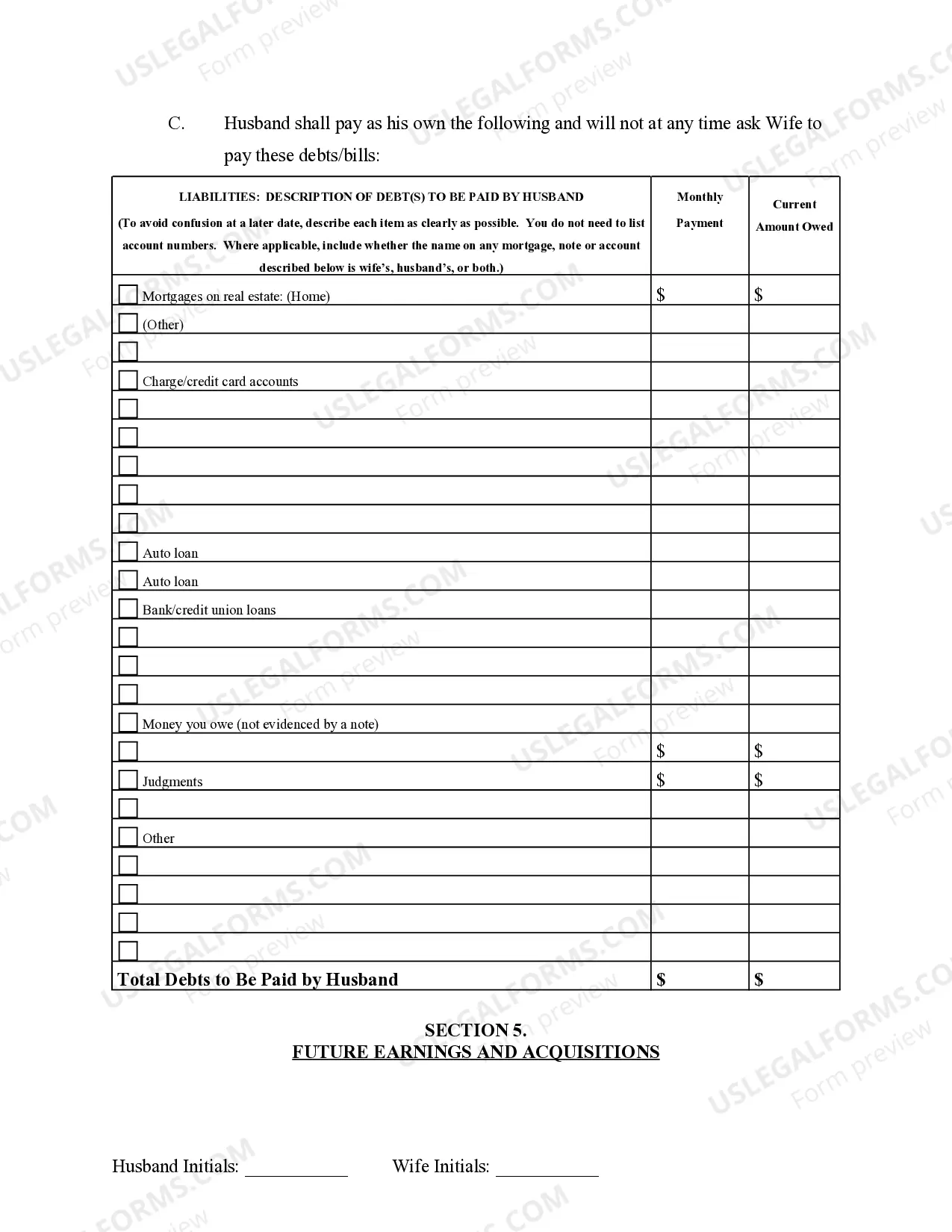
- Disclosure of financial status, including assets and debts.
- Specific division of assets and liabilities between parties.
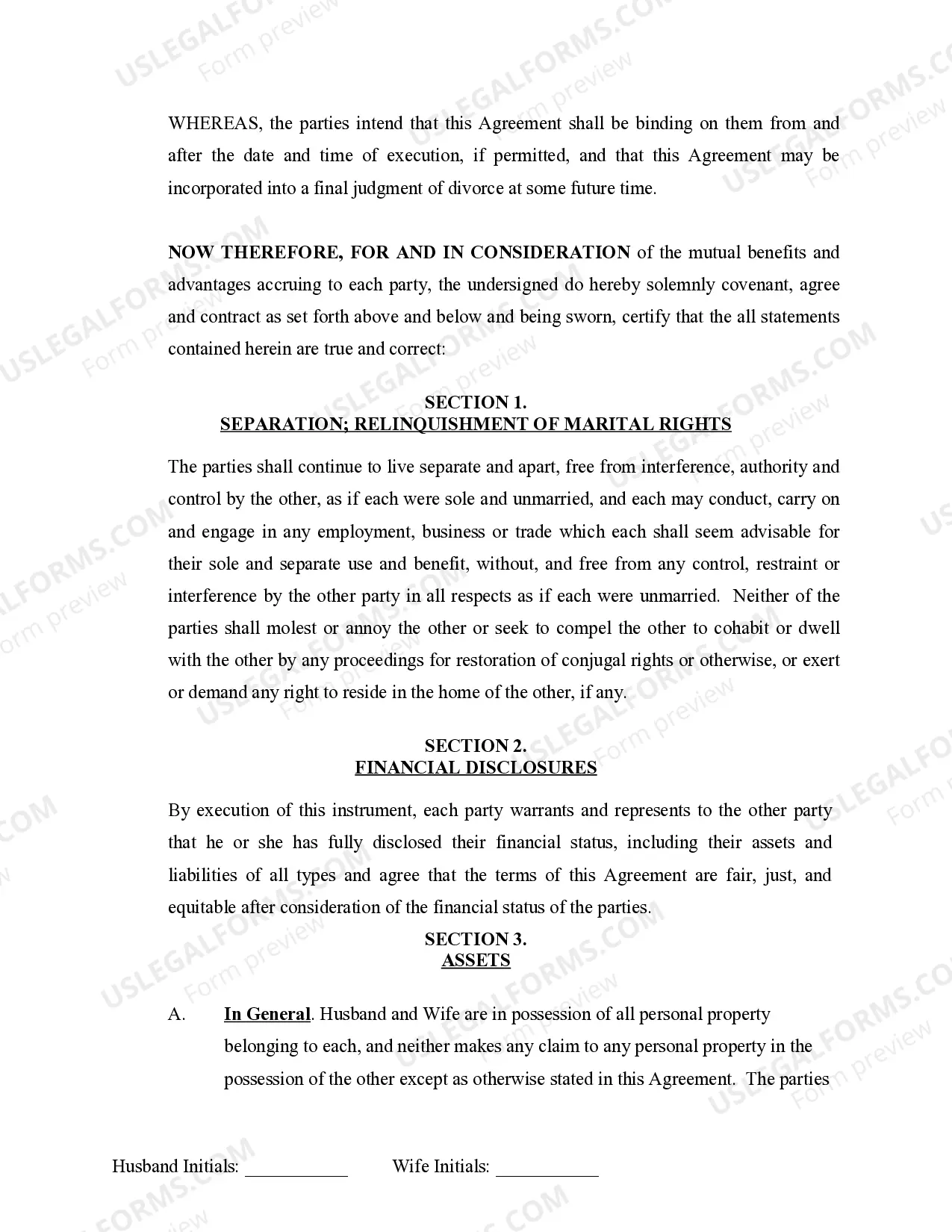
- Provisions for future income and property acquisitions.
- Terms regarding spousal support (alimony), if applicable.
- Clauses covering additional documents and cooperation required for property transfers.

When this form is needed
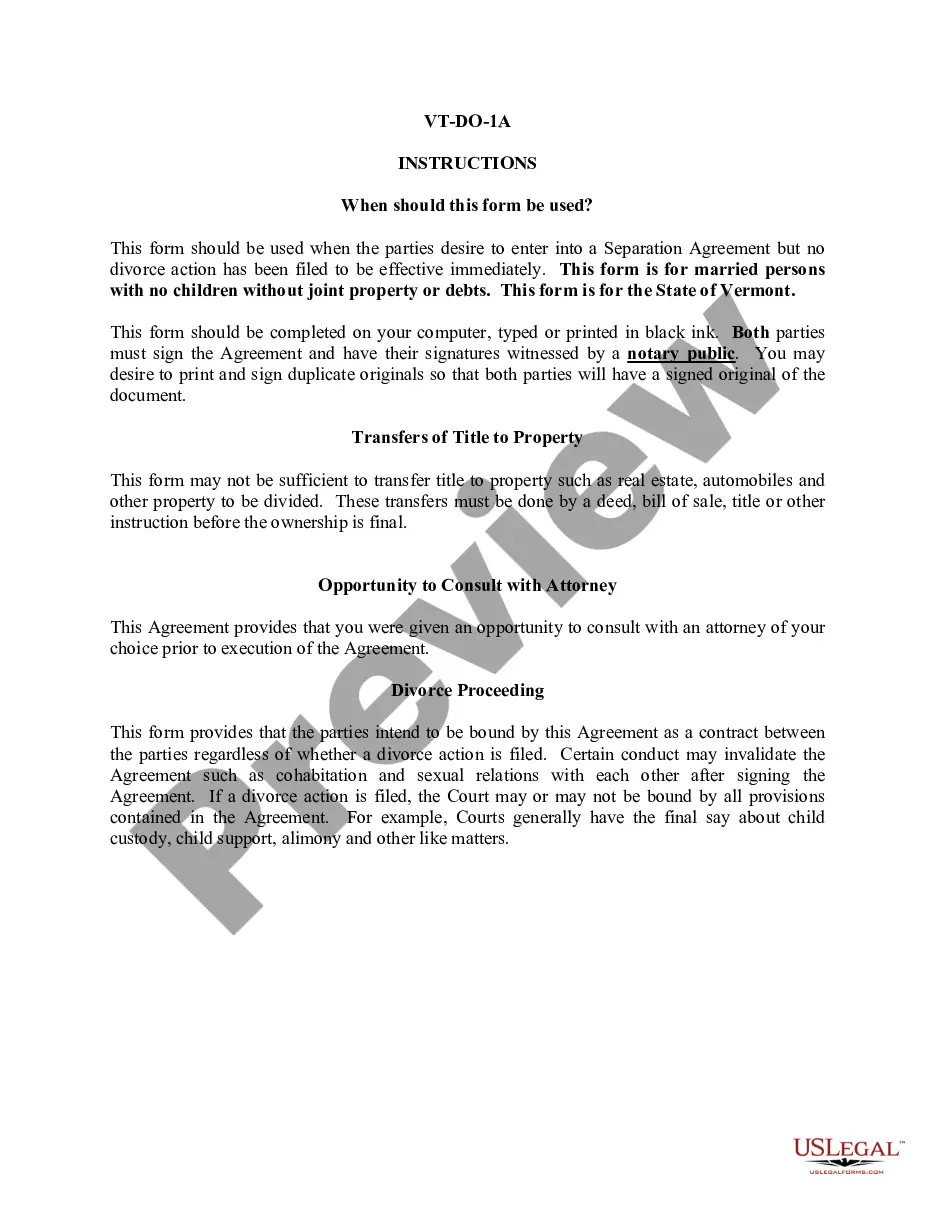
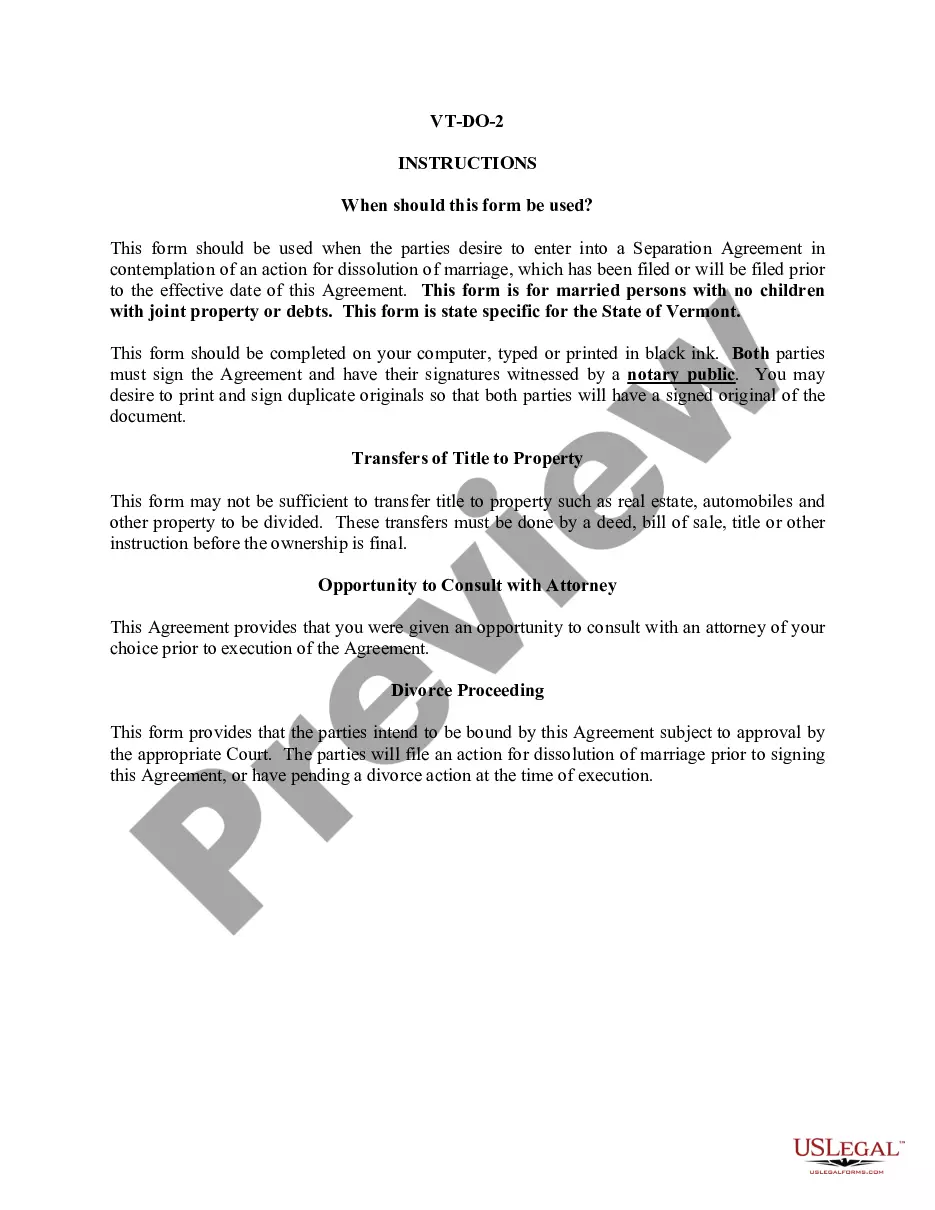
This form should be utilized when spouses decide to legally separate and wish to define their property rights and responsibilities, particularly when they have joint property or debts but no minor children. It is applicable in situations where the couple intends to proceed with separation without immediate plans for divorce, effectively setting clear terms for their financial arrangement post-separation.
Who needs this form
- Married individuals without dependent or minor children.
- Couples who have joint property or debts.
- Spouses seeking to establish clear terms of separation before or during divorce proceedings.
- Those who wish to maintain their independent financial responsibilities post-separation.
Instructions for completing this form
- Identify the full names of both parties and the date of marriage.
- Detail the date of separation and the property to be divided.
- Complete the sections on asset and debt division, clearly describing each item.
- Ensure both parties sign the document and have their signatures notarized.
- Consider creating duplicate originals for each party to retain a signed copy of the agreement.
Is notarization required?
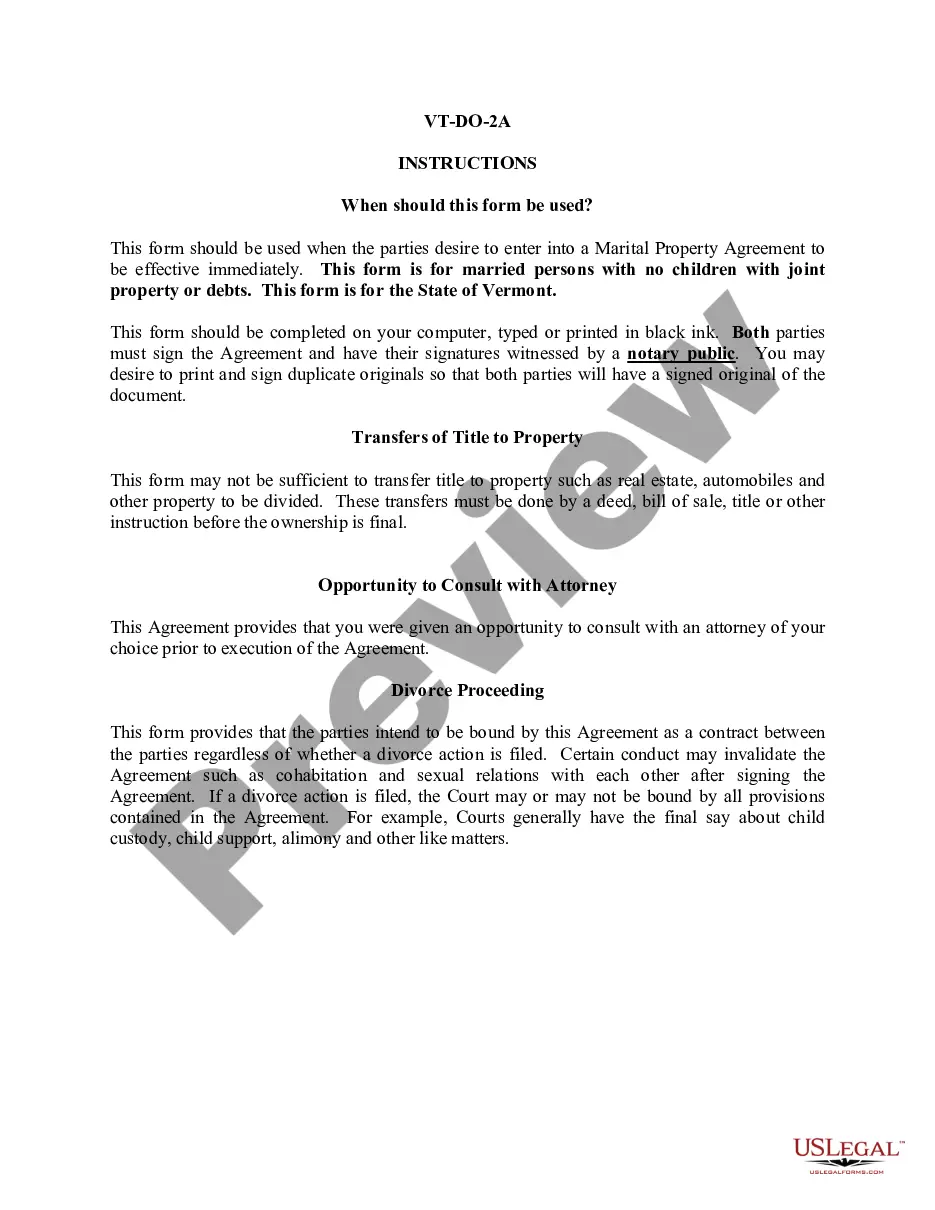
Yes, this form must be notarized to be legally valid. Both parties are required to sign the agreement in the presence of a notary public, ensuring that each signature is authentic and duly witnessed. US Legal Forms offers integrated online notarization, making it easy to get your document signed securely through a video call.
Get your form ready online
Our built-in tools help you complete, sign, share, and store your documents in one place.
Make edits, fill in missing information, and update formatting in US Legal Forms—just like you would in MS Word.
Download a copy, print it, send it by email, or mail it via USPS—whatever works best for your next step.
Sign and collect signatures with our SignNow integration. Send to multiple recipients, set reminders, and more. Go Premium to unlock E-Sign.
If this form requires notarization, complete it online through a secure video call—no need to meet a notary in person or wait for an appointment.
We protect your documents and personal data by following strict security and privacy standards.

Make edits, fill in missing information, and update formatting in US Legal Forms—just like you would in MS Word.

Download a copy, print it, send it by email, or mail it via USPS—whatever works best for your next step.

Sign and collect signatures with our SignNow integration. Send to multiple recipients, set reminders, and more. Go Premium to unlock E-Sign.

If this form requires notarization, complete it online through a secure video call—no need to meet a notary in person or wait for an appointment.

We protect your documents and personal data by following strict security and privacy standards.
Common mistakes to avoid
- Failing to disclose all financial assets and liabilities completely.
- Not having the agreement notarized when required.
- Ignoring local requirements that may affect the validity of the agreement.
- Not keeping a signed copy for personal records.
Why use this form online
- Convenience of drafting the agreement from anywhere, at any time.
- Immediate access to legally vetted forms crafted by licensed attorneys.
- Editability to tailor the agreement to your individual needs before finalizing.
- Secure and reliable storage of your completed documents.
Legal use & context
- This agreement is enforceable under Vermont law, outlining rights and obligations during separation.
- It is designed for couples without minor children, focusing solely on asset and debt division.
- Court involvement may still be necessary for divorce proceedings, especially regarding spousal support and division of additional assets not included in the agreement.
Main things to remember
- The agreement allows for immediate separation without the need for divorce proceedings.
- It is essential for any couple with joint debts or property to clearly delineate their responsibilities.
- Consulting with a legal professional prior to signing is highly advised to understand all implications fully.
Looking for another form?
Form popularity
FAQ
In California, there is no 50/50 split of marital property. When a married couple gets divorced, their community property and debts will be divided equitably. This means they will be divided fairly and equally.
Yes, it is mandatory. Each party must obtain independent legal advice prior to signing a separation agreement. You also cannot use the same lawyer and should not use the same law firm. If you fail to obtain advice from a lawyer, the separation agreement will be unenforceable.
You can achieve a legal separation by filing a petition (request) with the court, which allows the judge to divide your marital property, establish child support and alimony, and create a parenting plan for your children.
Each divorce case is unique. Starting a divorce can cost money. Court fees may be up to $300. You can apply to waive the fees if you can't afford them.
Vermont marital property laws do not recognize community property, which gives the parties more options for how marital property is divided in a divorce.
Grounds for divorce: Vermont allows a no-fault divorce. That requires that you and your spouse live separate and apart for at least six consecutive months and that you are not likely to get back together.You can't have a final divorce hearing until you've been separated for six months.
Treat your co-parent as you would treat a business partner. Be courteous. Don't make any significant changes. Discuss the various options for pathways to an amicable divorce. Choose your Family Mediator and/or Lawyer. See a Counselor and/or Doctor. Wait to start a new relationship.
People choose legal separation instead of divorce because of religious beliefs, a desire to keep the family together legally for the sake of children, the need for one spouse to keep the health insurance benefits that would be lost with a divorce, or simple aversion to divorcing despite the desire to live separate
You can achieve a legal separation by filing a petition (request) with the court, which allows the judge to divide your marital property, establish child support and alimony, and create a parenting plan for your children.