Photography Release by Model and Authorization to Photograph
About this form
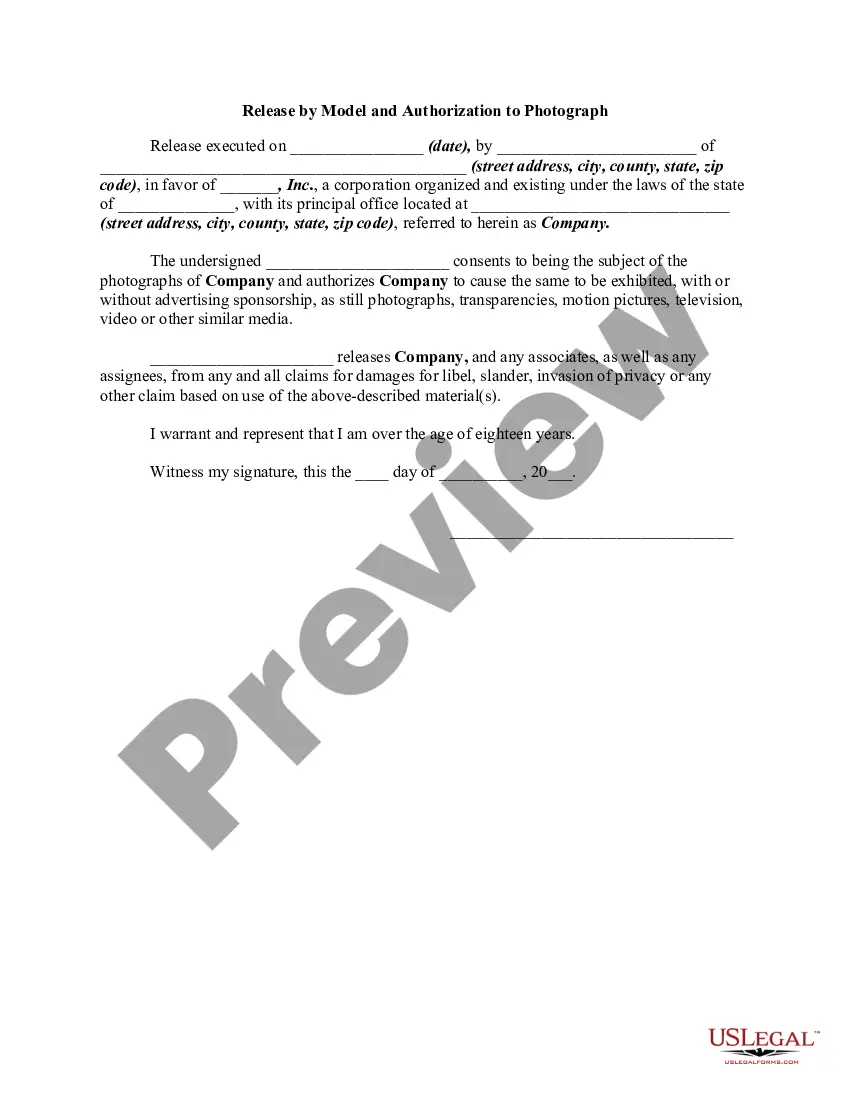
The Photography Release by Model and Authorization to Photograph is a legal document used to obtain consent from a model before a photographer uses their images. This form protects photographers from claims of invasion of privacy and ensures that the model has authorized the use of their likeness for various media formats. Unlike other generic model release forms, this document specifically outlines the relationship between the photographer and the model and includes protection for any potential claims regarding image use.
What’s included in this form
- Date of execution: This section captures when the release is signed.
- Model's details: Includes the model's name and contact information.
- Company details: Identifies the photography company that will use the images.
- Consent clause: States the model consents to being photographed and the subsequent use of those images.
- Release of claims: The model waives their right to sue for damages relating to the use of their image.
- Age verification: A declaration that the model is over the age of eighteen years.
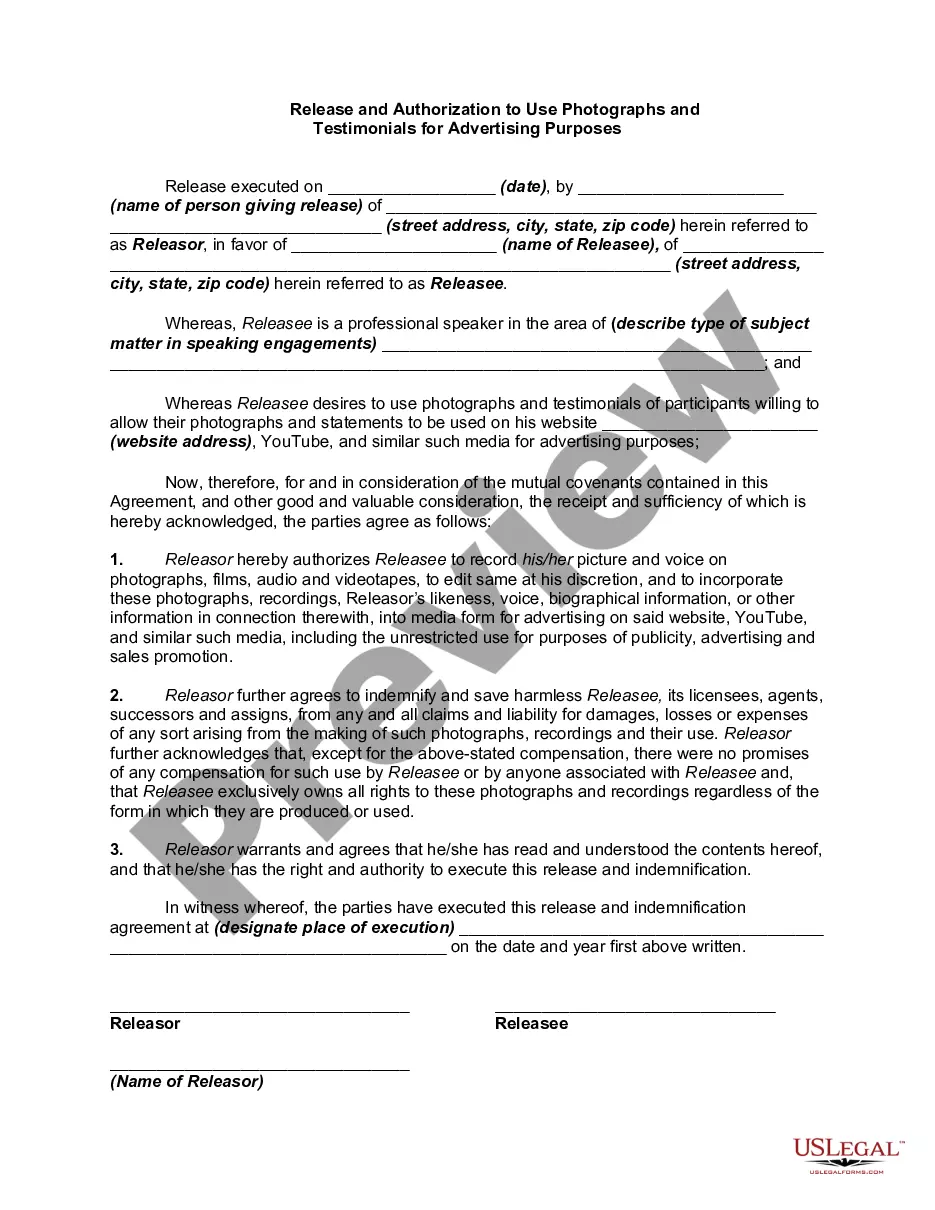
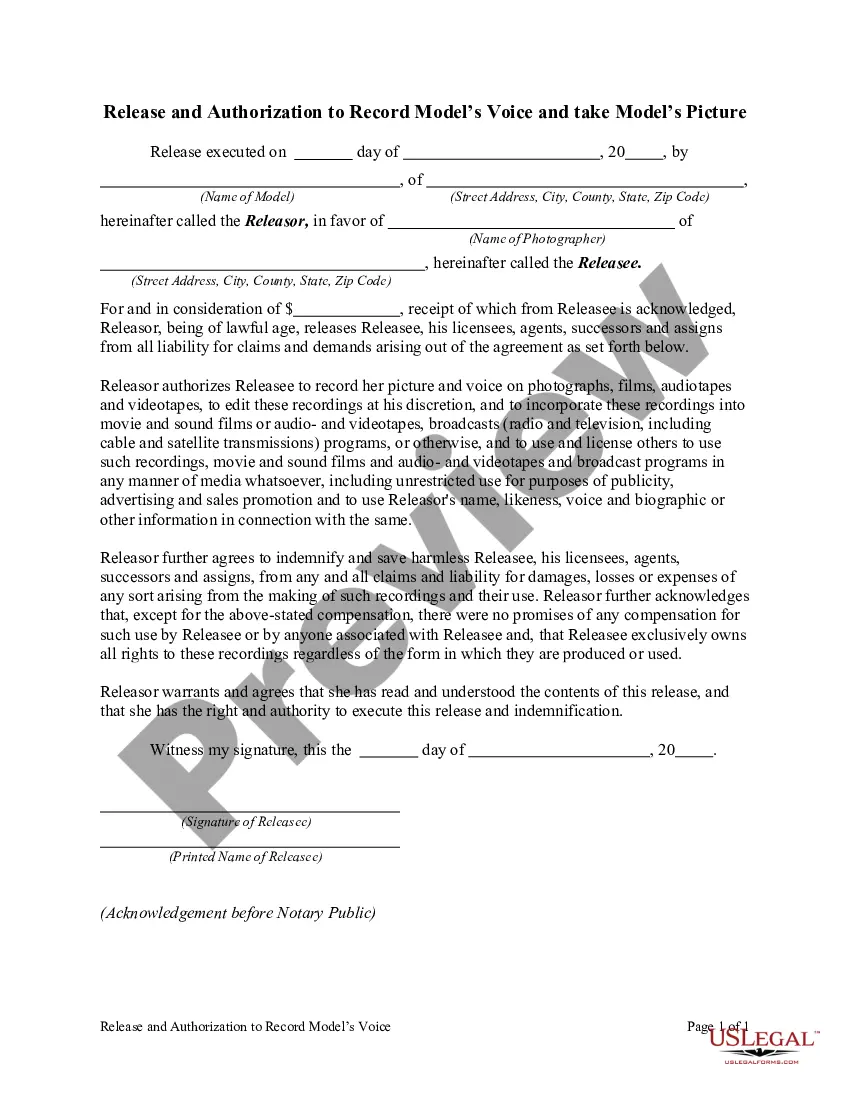
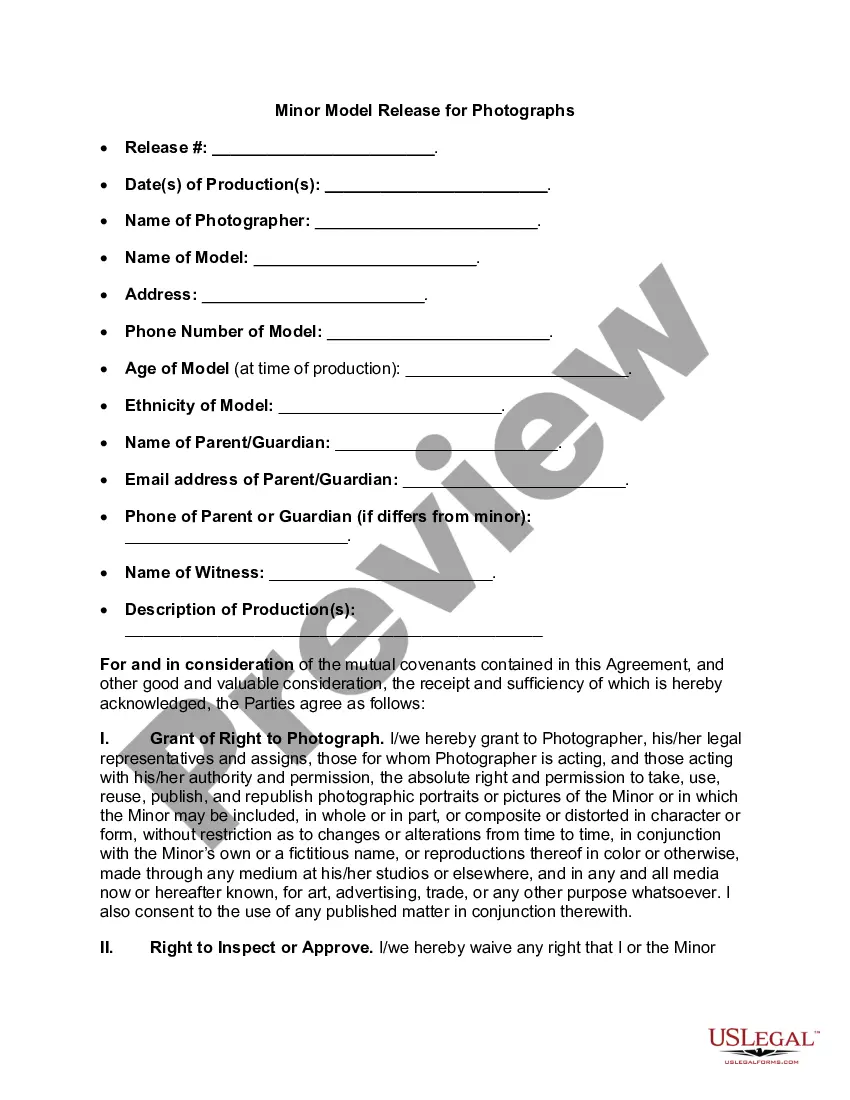
Situations where this form applies
This form should be used when a photographer intends to take and utilize photographs of a model for commercial purposes, promotional materials, or any other public medium. It is crucial for protecting both the model's rights and the photographer's interests, especially in scenarios where the images may later be used in advertising, social media, or other marketing strategies.
Who needs this form
- Photographers who work with models regularly
- Models who want to ensure their rights regarding their own image are protected
- Businesses that use photography for marketing purposes
- Any individual or entity involved in creative projects that include the portrayal of people
How to prepare this document
- Enter the date in the designated field.
- Fill in the model's full name and address.
- Specify the photography company's name and address.
- Ensure the model's consent is clearly stated in the consent clause.
- Have the model sign the document, confirming their understanding and agreement.
- Verify the model's age by including their statement of being over eighteen years old.
Is notarization required?
This form usually doesn’t need to be notarized. However, local laws or specific transactions may require it. Our online notarization service, powered by Notarize, lets you complete it remotely through a secure video session, available 24/7.
Get your form ready online
Our built-in tools help you complete, sign, share, and store your documents in one place.
Make edits, fill in missing information, and update formatting in US Legal Forms—just like you would in MS Word.
Download a copy, print it, send it by email, or mail it via USPS—whatever works best for your next step.
Sign and collect signatures with our SignNow integration. Send to multiple recipients, set reminders, and more. Go Premium to unlock E-Sign.
If this form requires notarization, complete it online through a secure video call—no need to meet a notary in person or wait for an appointment.
We protect your documents and personal data by following strict security and privacy standards.

Make edits, fill in missing information, and update formatting in US Legal Forms—just like you would in MS Word.

Download a copy, print it, send it by email, or mail it via USPS—whatever works best for your next step.

Sign and collect signatures with our SignNow integration. Send to multiple recipients, set reminders, and more. Go Premium to unlock E-Sign.

If this form requires notarization, complete it online through a secure video call—no need to meet a notary in person or wait for an appointment.

We protect your documents and personal data by following strict security and privacy standards.
Mistakes to watch out for
- Failing to include the date of execution, which invalidates the document.
- Not correctly identifying the photography company, leading to legal ambiguities.
- Leaving out the model's signature or failing to have it witnessed.
- Assuming the form covers all legal issues without understanding local laws regarding image rights.
Why complete this form online
- Instant access to a professionally drafted form designed by licensed attorneys.
- Downloadable format that allows for easy editing and personalization.
- Convenience of completing and storing legal documents without visiting a lawyer.
- Peace of mind knowing you are using a legally compliant template.
Legal use & context
- The release protects photographers from legal claims regarding image use.
- It ensures models understand how their images will be used.
- This form creates a written record of consent, which is crucial in any potential disputes.
Key takeaways
- The Photography Release by Model and Authorization to Photograph is vital for legal protection.
- It ensures that both the photographer and model have clear expectations regarding image use.
- Proper completion of the form helps avoid common legal pitfalls.
Looking for another form?


Form popularity
FAQ
There are two main points that most disclaimers should cover: copyright infringement and modification. Tell the client what they can and cannot do with your property. If they do not have the right to copy, use or alter your photographs, state that. If photographs may be used for a limited purpose, state that as well.
An image release form is required when the image will be used for commercial purposes. A simple way to determine if the usage is commercial is to ask yourself if the image is generating money; creating sales; or promoting a product, event, or idea. If so, you definitely need a picture release form.
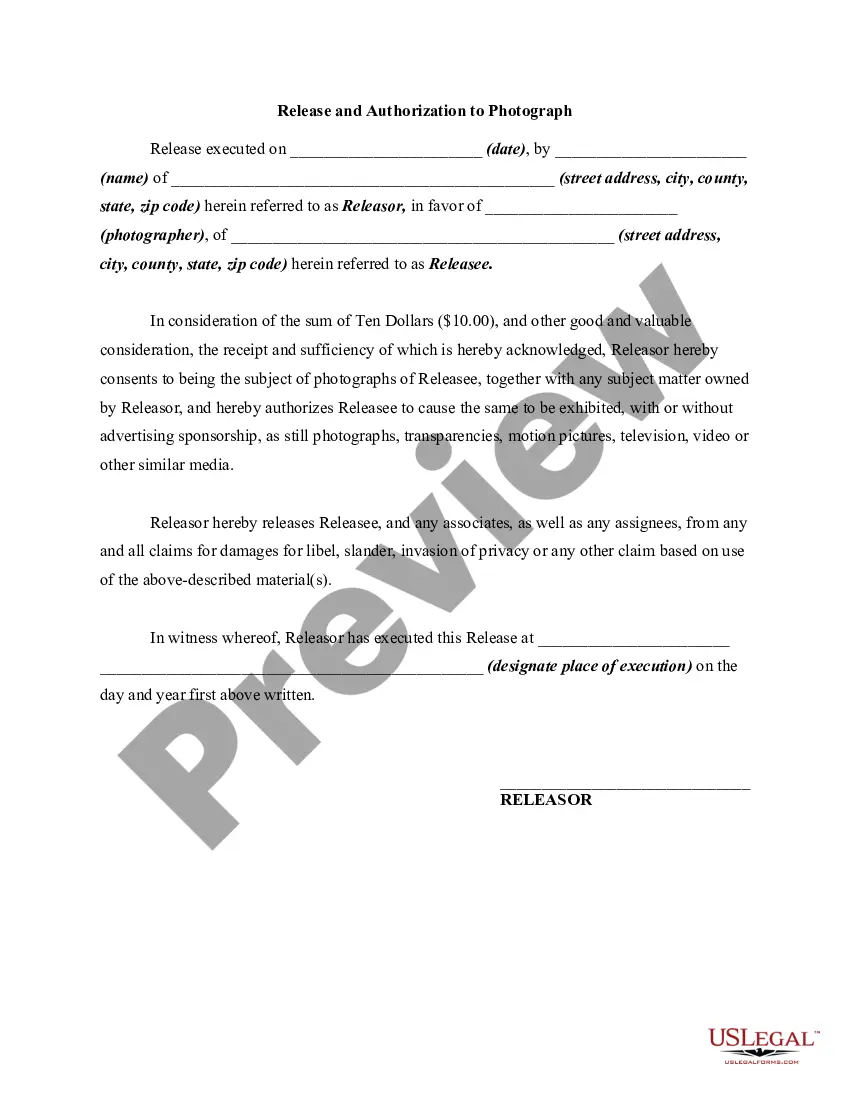
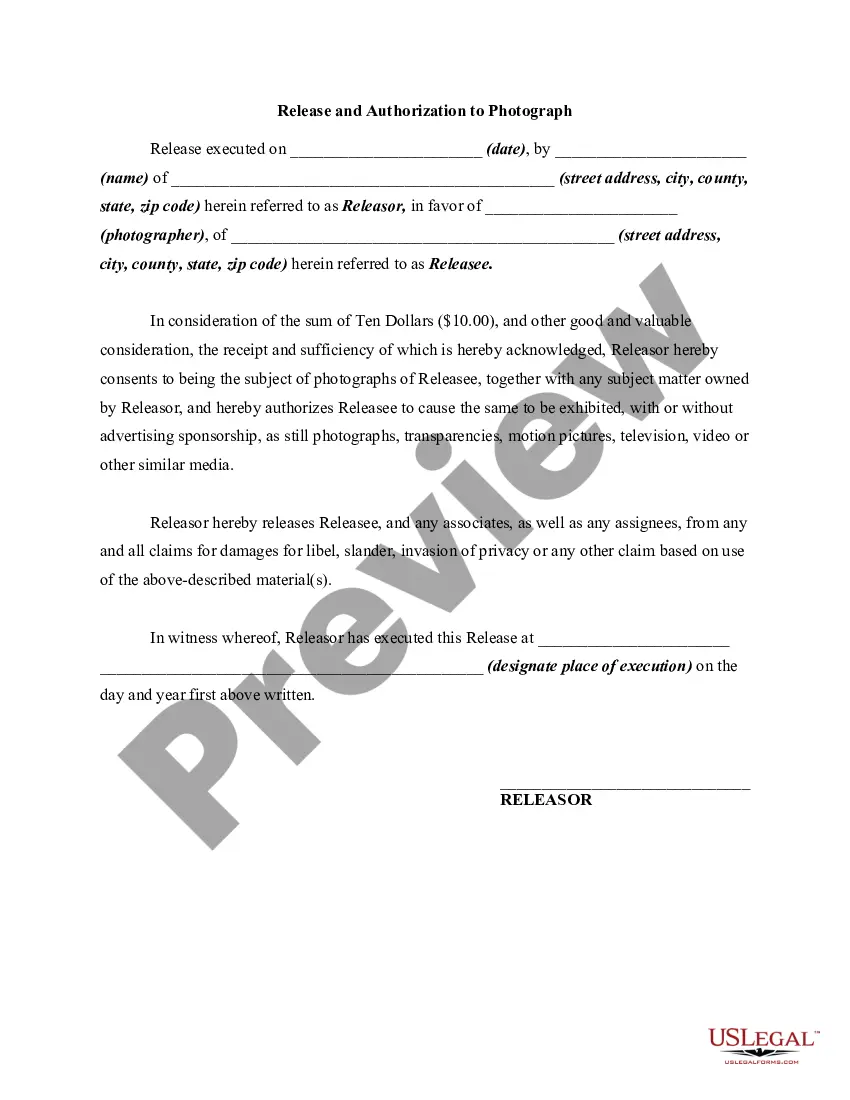
Identify the releasor. Describe the photo, image, likeness, or video. Address any payment the model receives for the release. Address royalties. Address whether the model has the ability to revoke their authorization. The parties sign and date the release.
Identify the releasor. Describe the photo, image, likeness, or video. Address any payment the model receives for the release. Address royalties. Address whether the model has the ability to revoke their authorization. The parties sign and date the release.
The photo consent form is filled out by an individual consenting the release of images captured of them, or images under their ownership, to someone else. Typically, the person(s) asking for consent wishes to use the individual's photos/images for media publication (social media, television, YouTube, etc.).
First, Check Creative Commons for Free Use. Not all photographs are copyrighted. Contact Photo's Owner. If the target photograph is under copyright, you must contact the owner first to inquire about usage. Give Payment/Consideration. Obtain Signature. Finally, Use the Photo.
Use business letterhead paper to create the document. State who owns the copyright. Describe and name the images(s) to be released. Explain the release usage.
Most forms include the following general information: Name of Photographer or Releasee. Name of Model or Releasor. Address and phone number.
Your name and business name. Your business address. A release of all claims against your company. Whether you want to release claims from other companies that buy, use, or obtain the licenses for your photos.