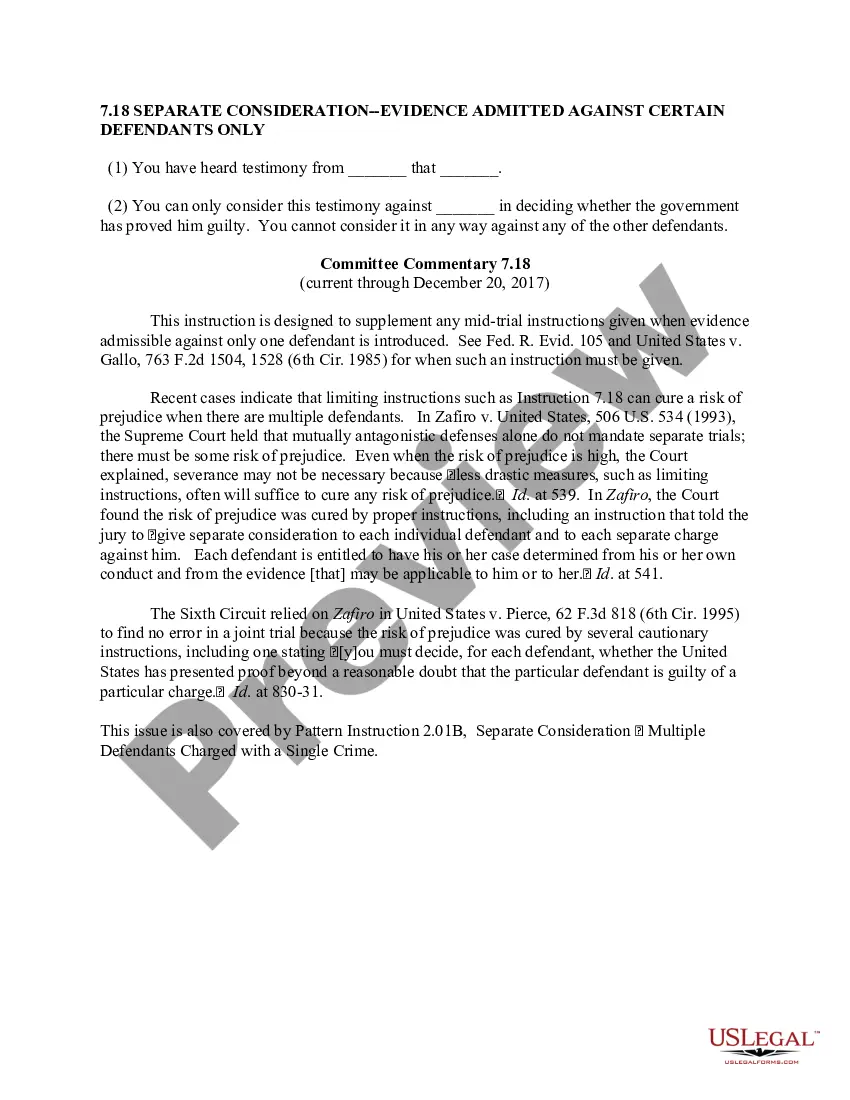
Vermont Marital Domestic Separation and Property Settlement Agreement for persons with no Children, no Joint Property, or Debts Effective Immediately
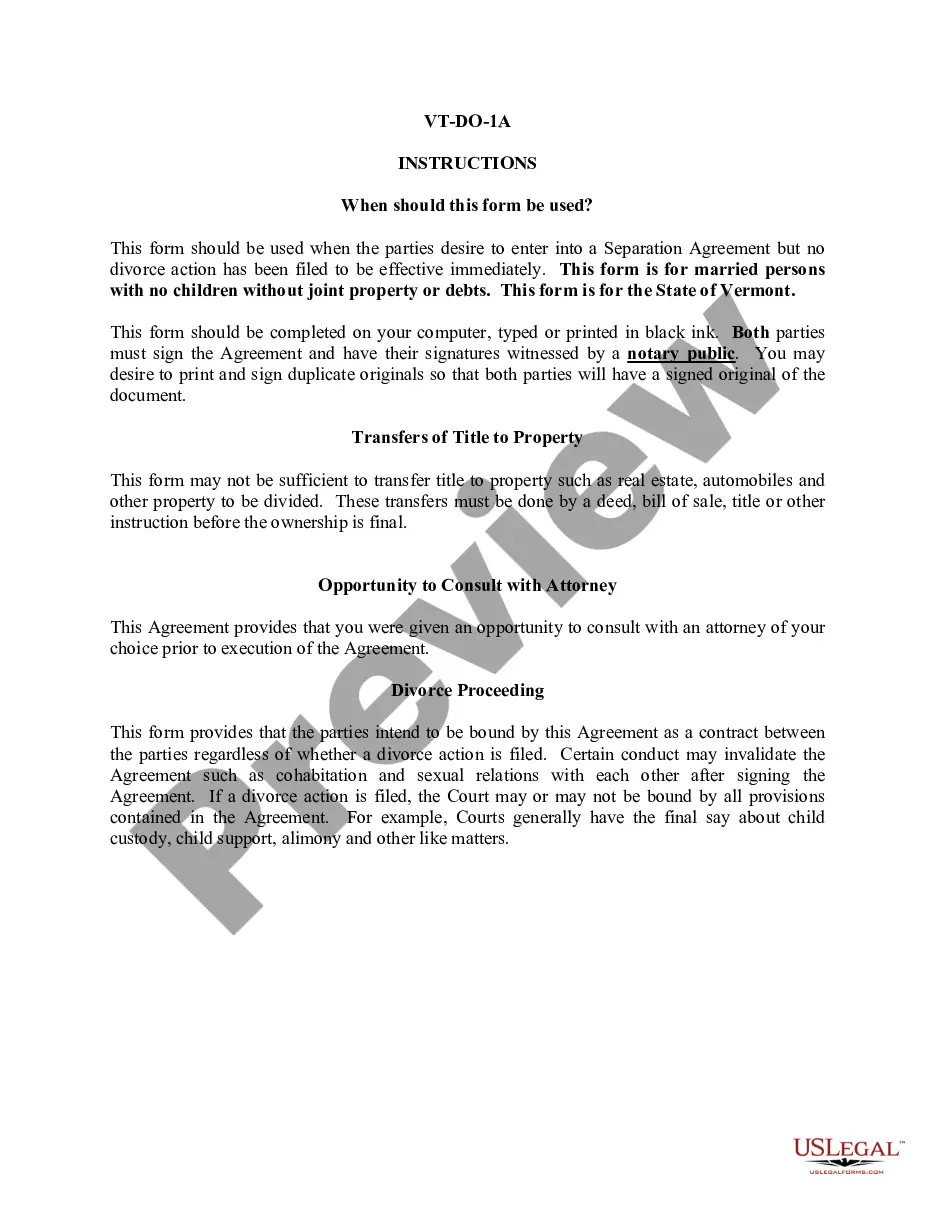
What is this form?
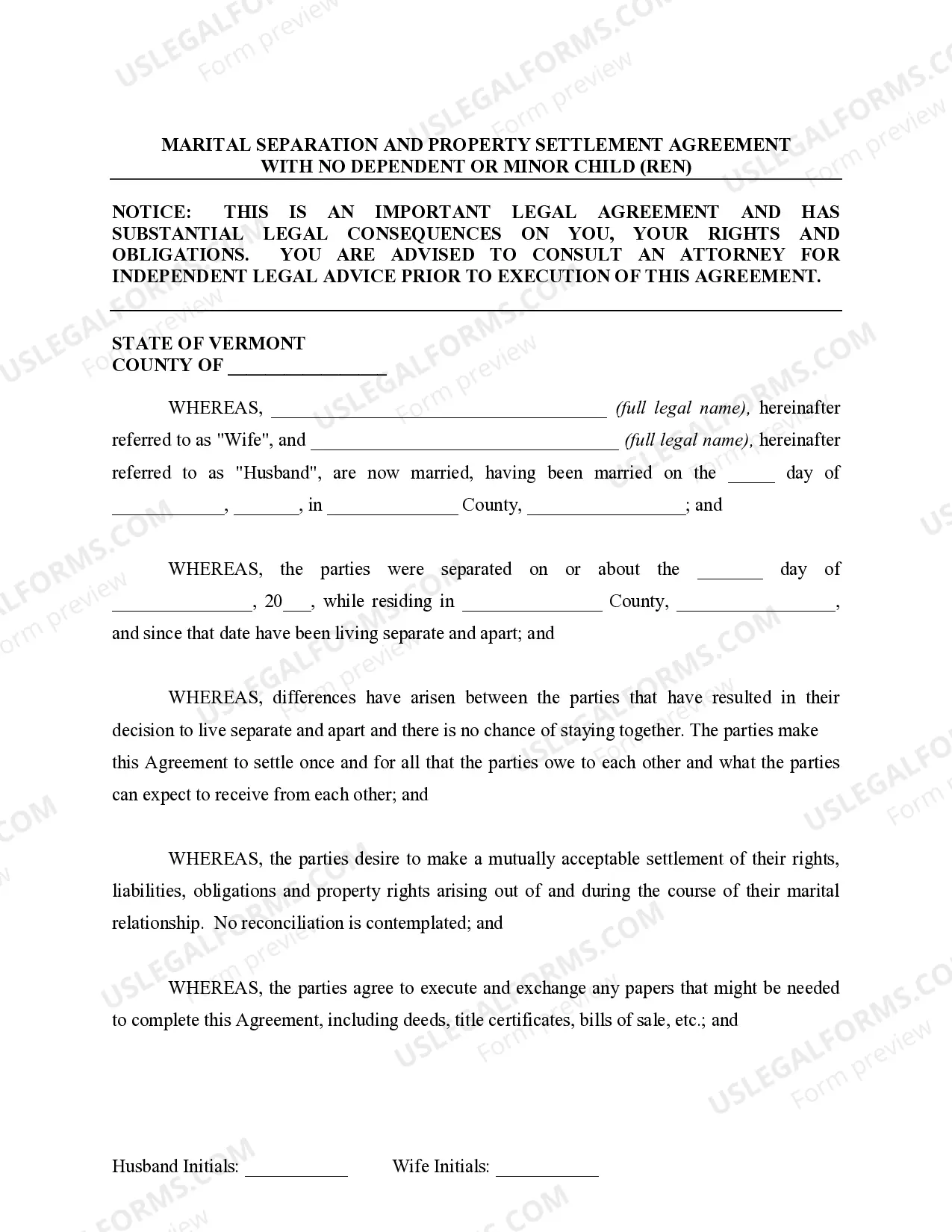
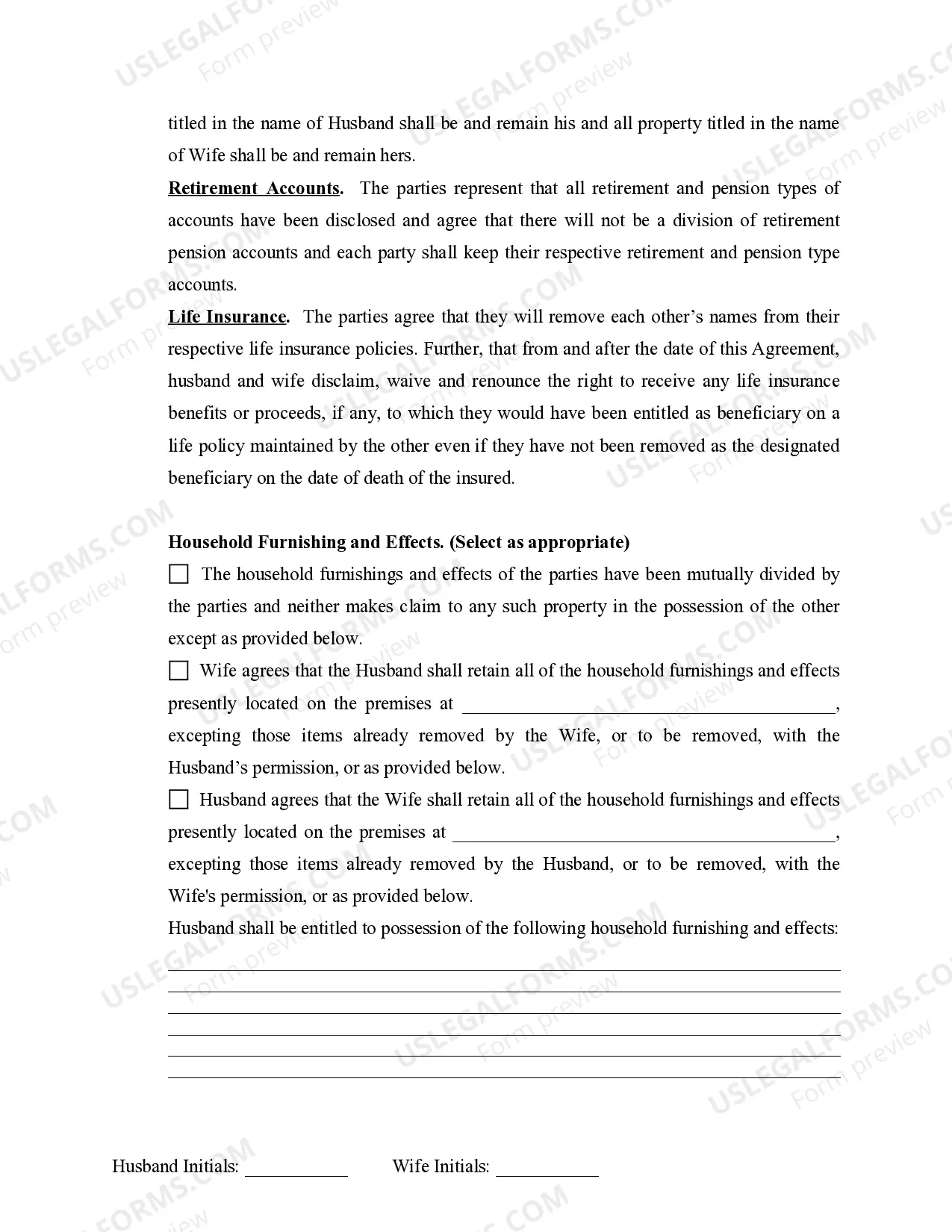
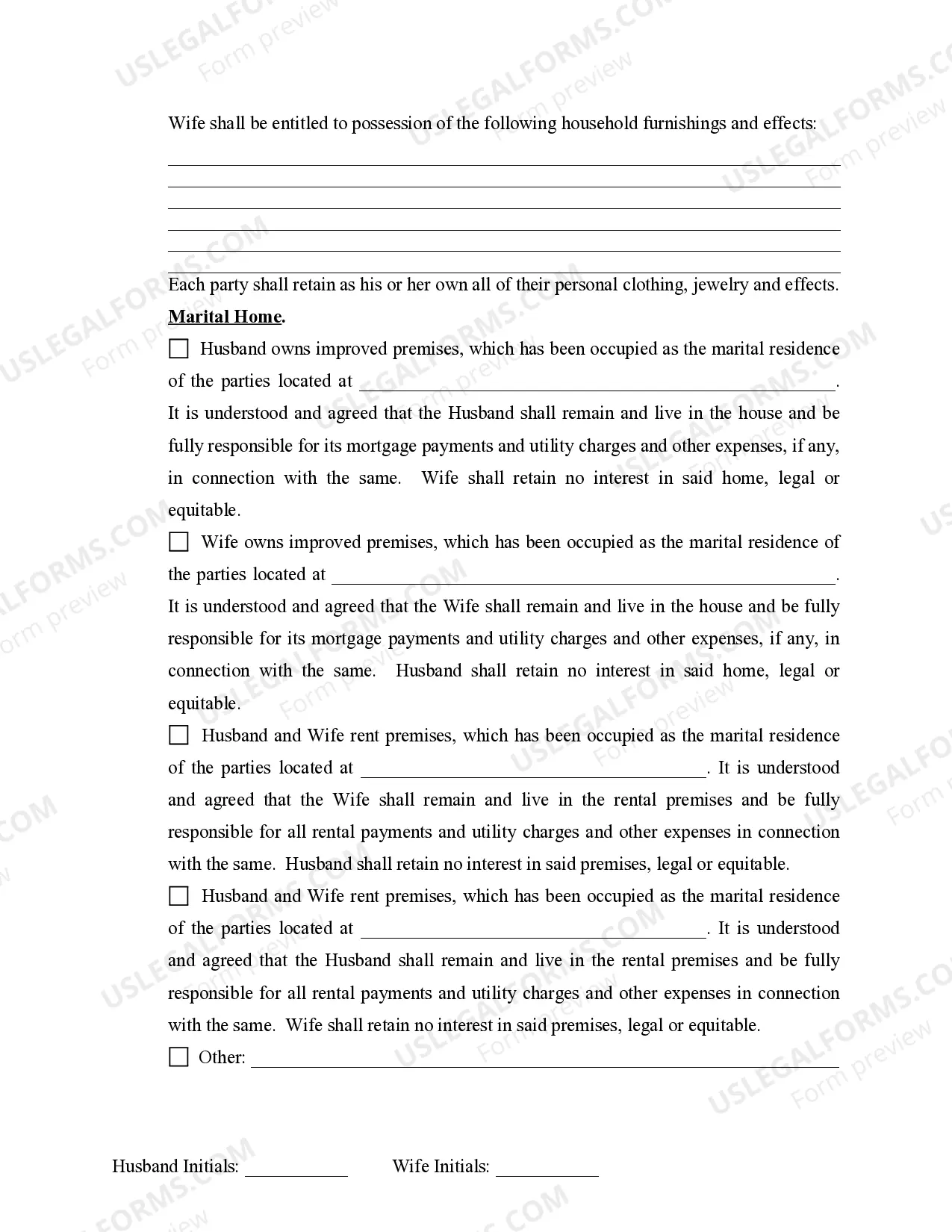
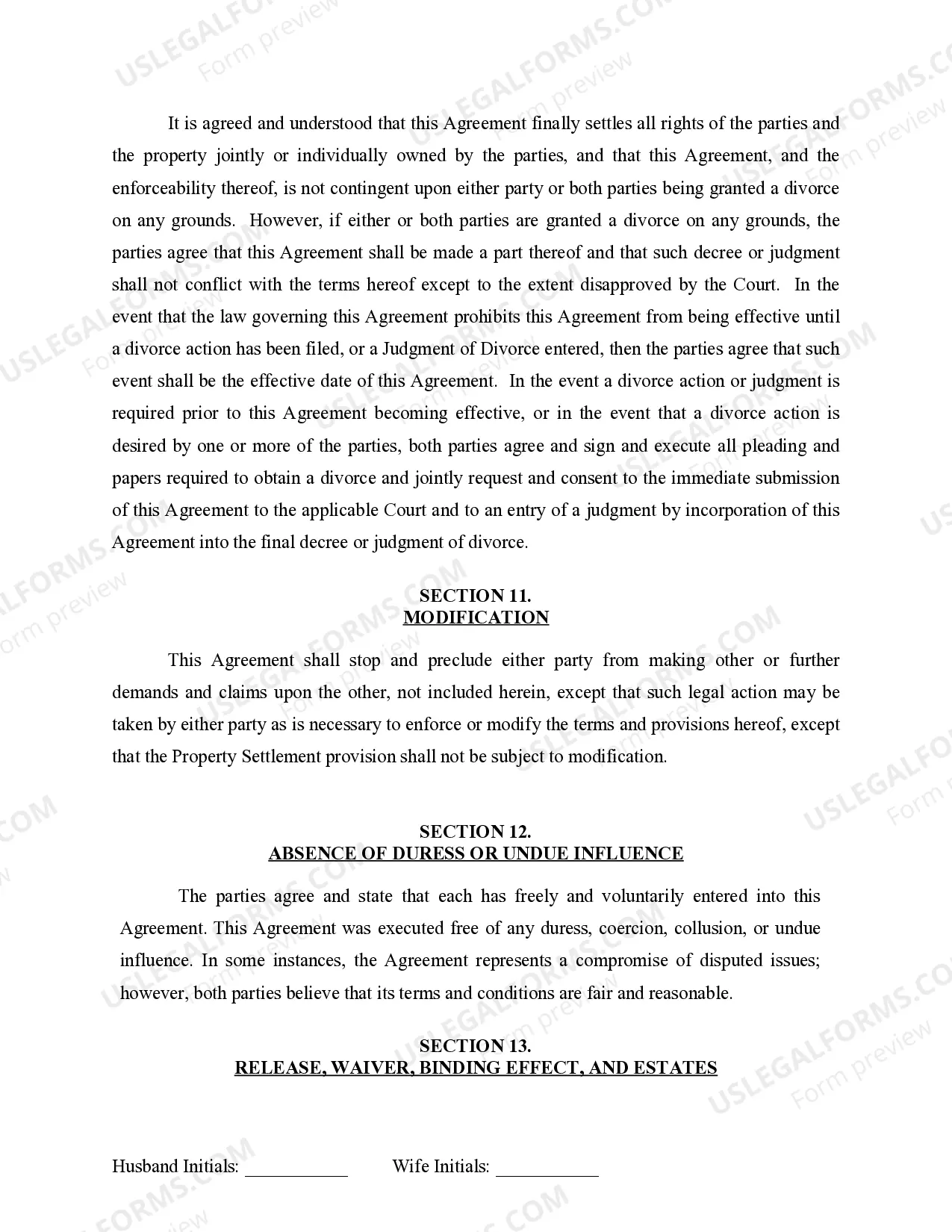
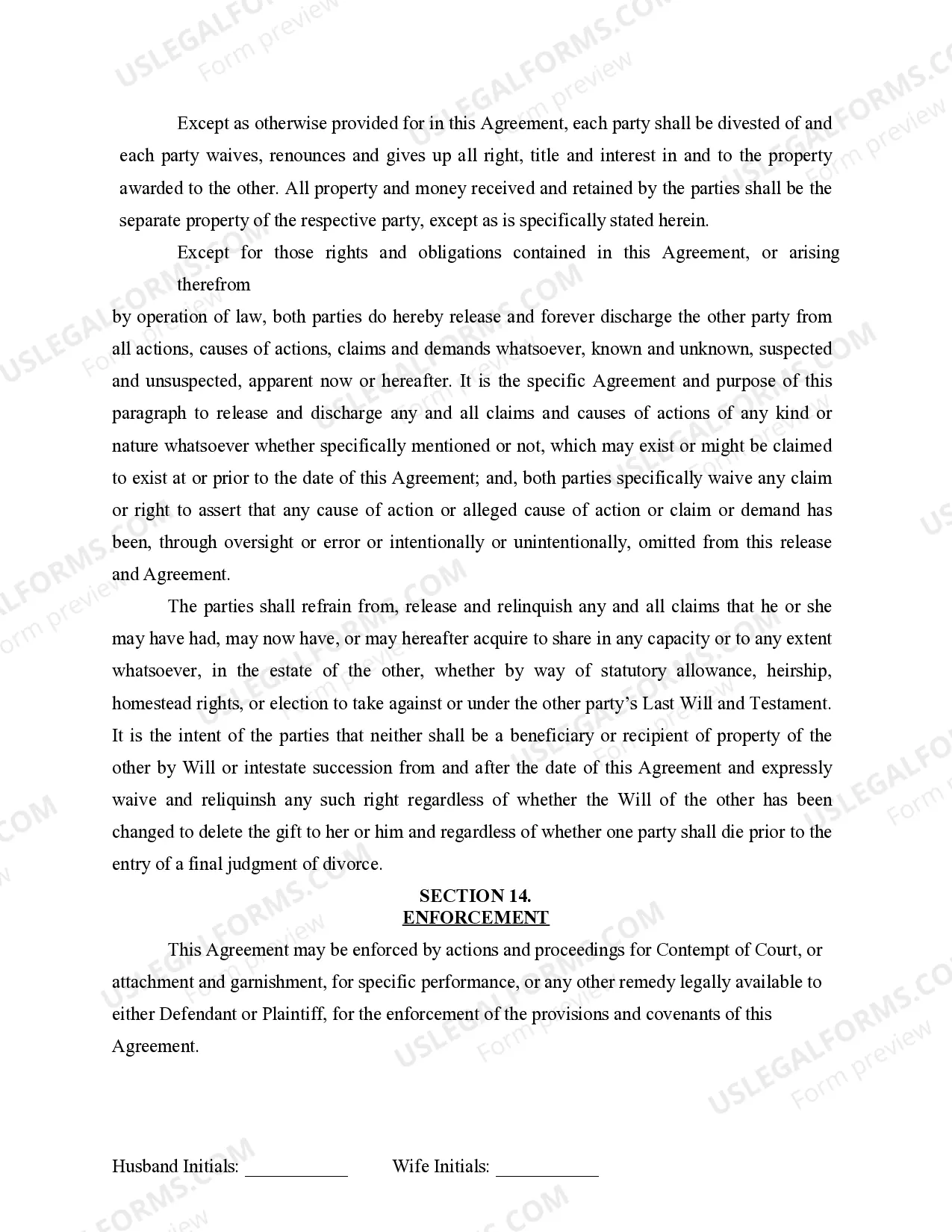
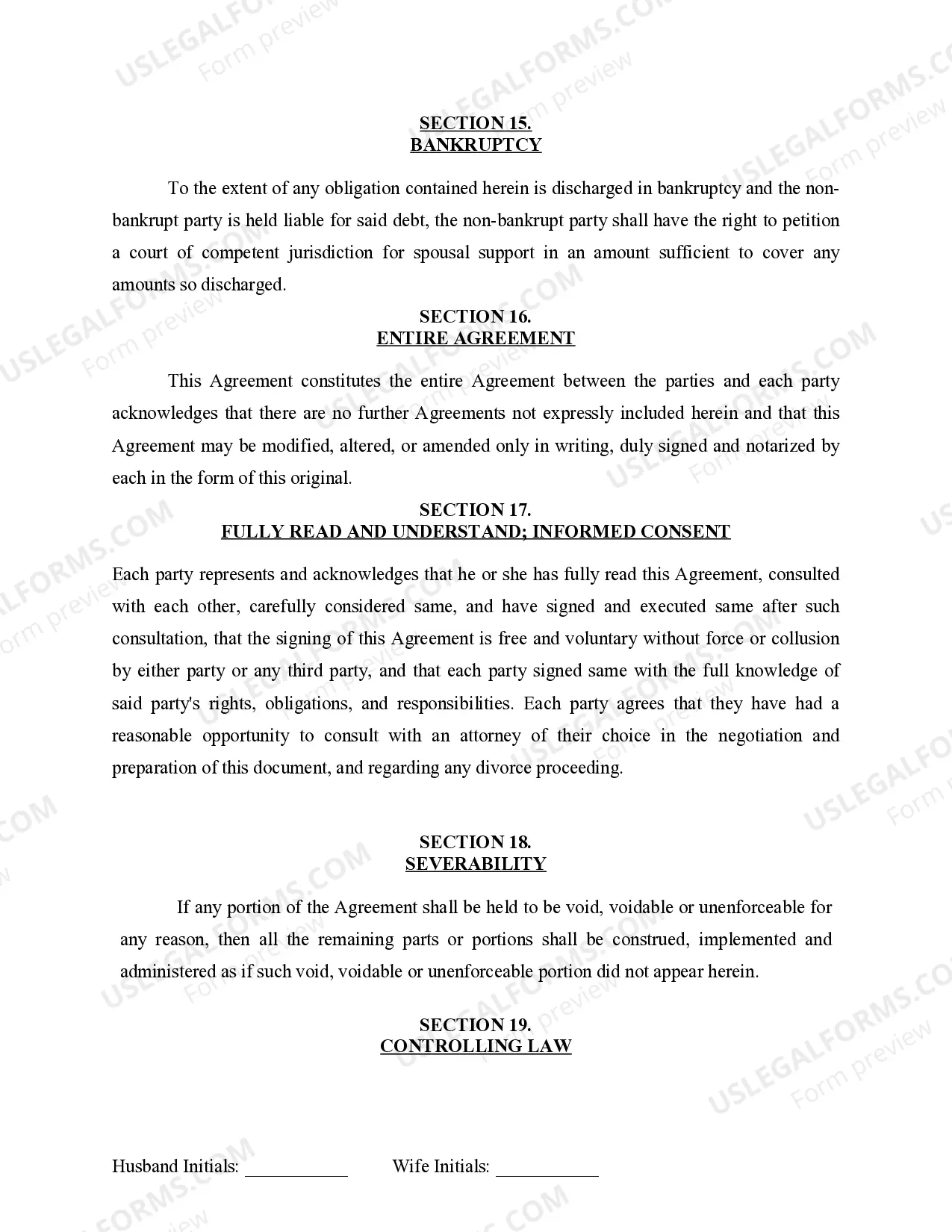
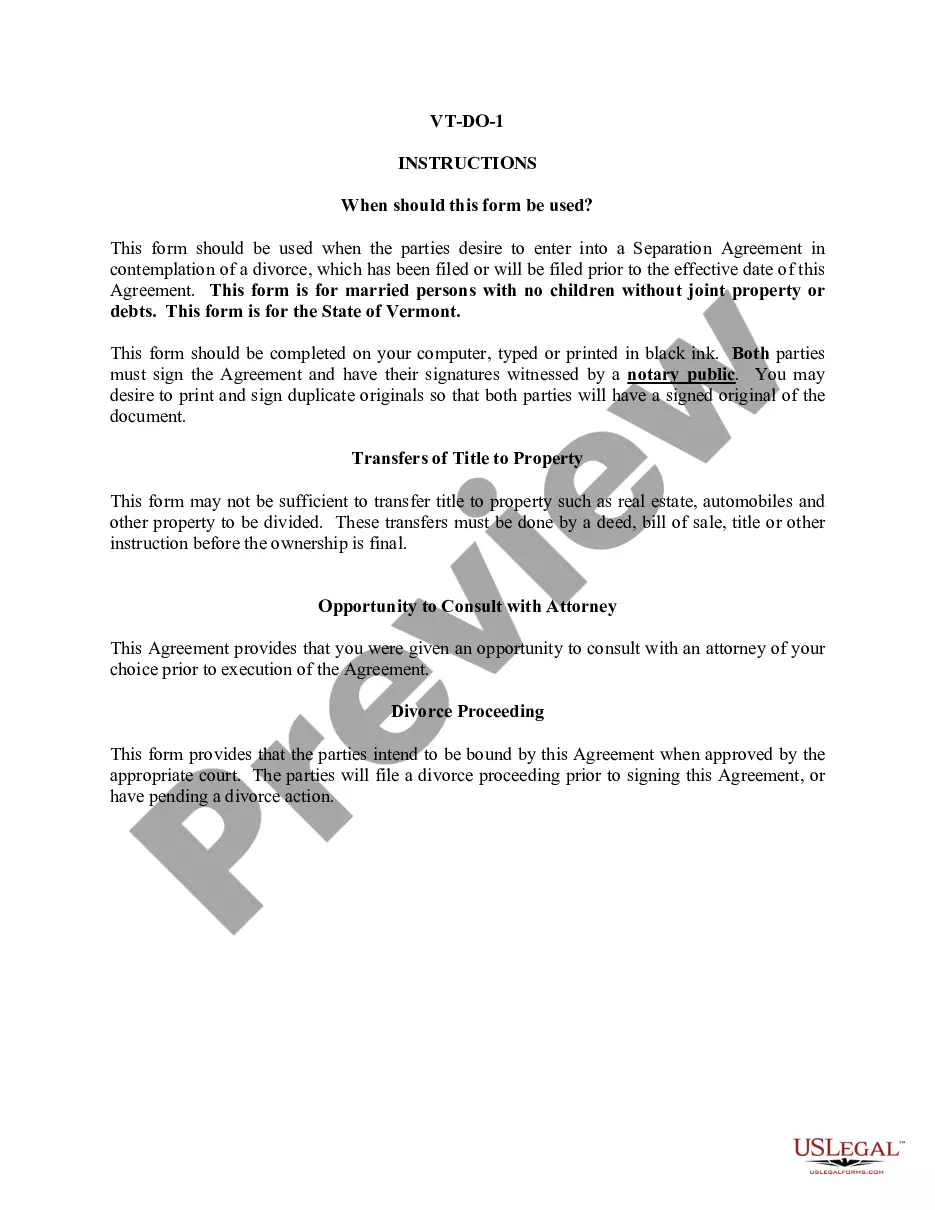
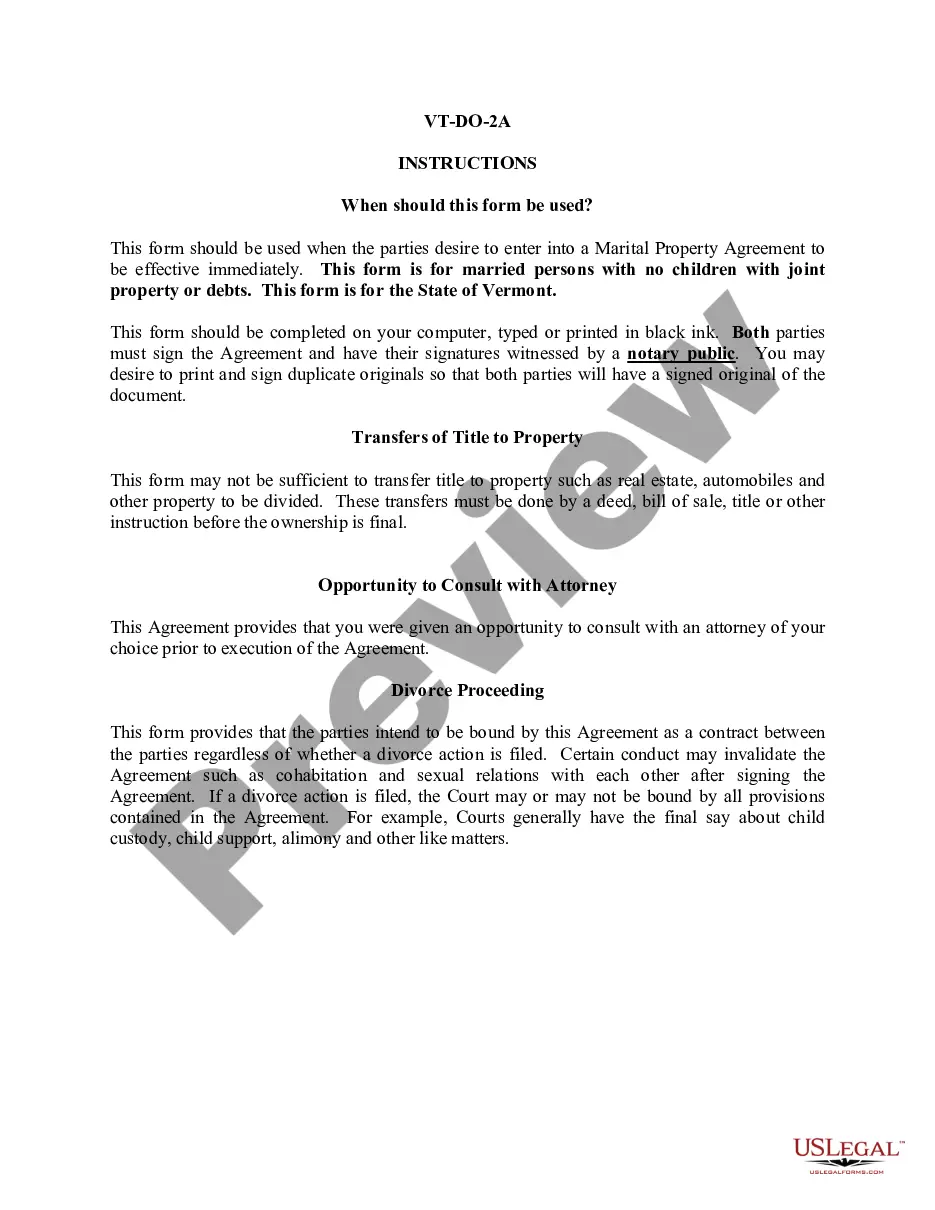
The Marital Domestic Separation and Property Settlement Agreement is a legal document used by married couples who are separating but do not have children or joint property and debts. This agreement acts as a binding contract, detailing how the parties will divide their assets and handle their financial responsibilities after separation. Unlike divorce documents, this agreement is effective immediately and does not require a divorce filing to be enacted.
What’s included in this form
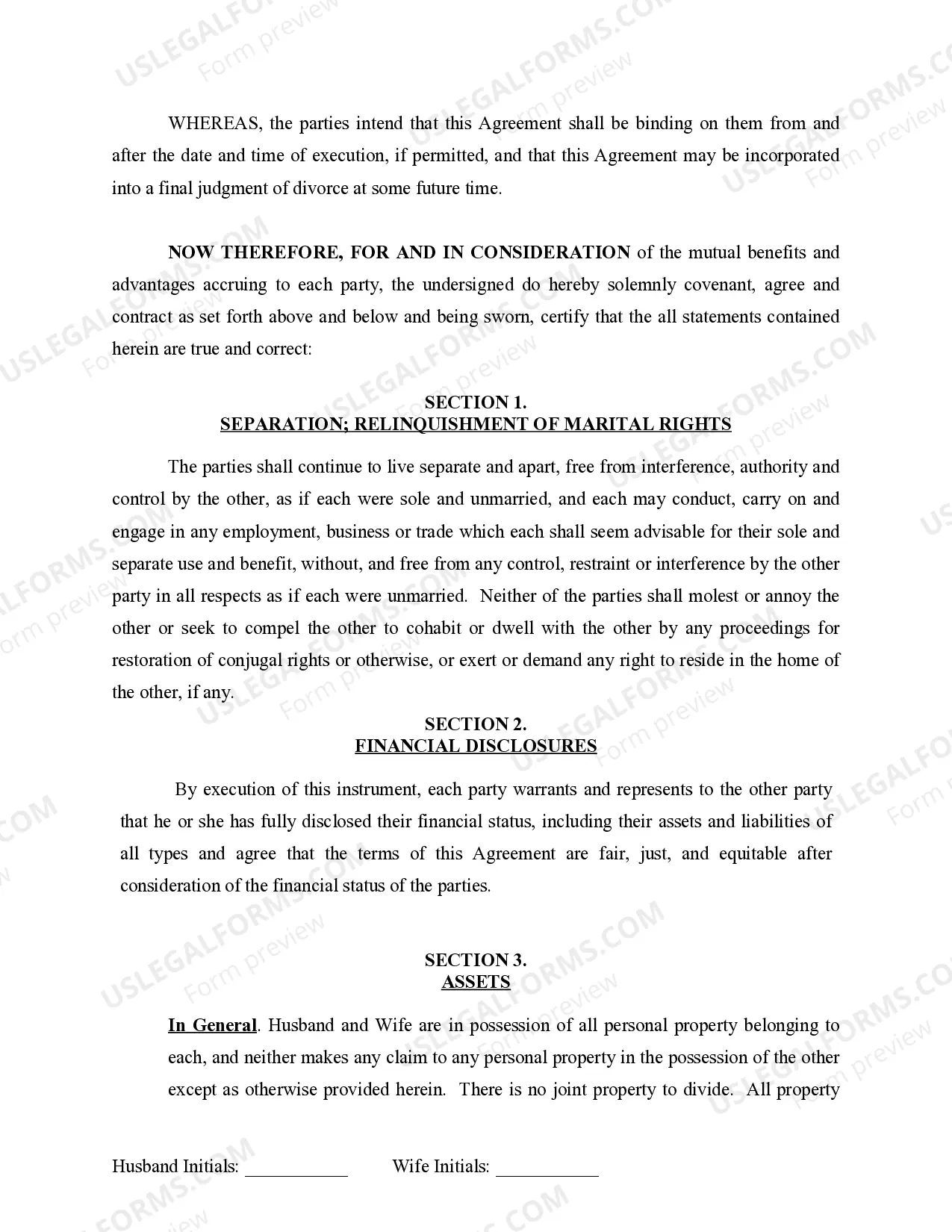
- Separation relinquishment of marital rights
- Financial disclosures between parties
- Division of assets and property rights
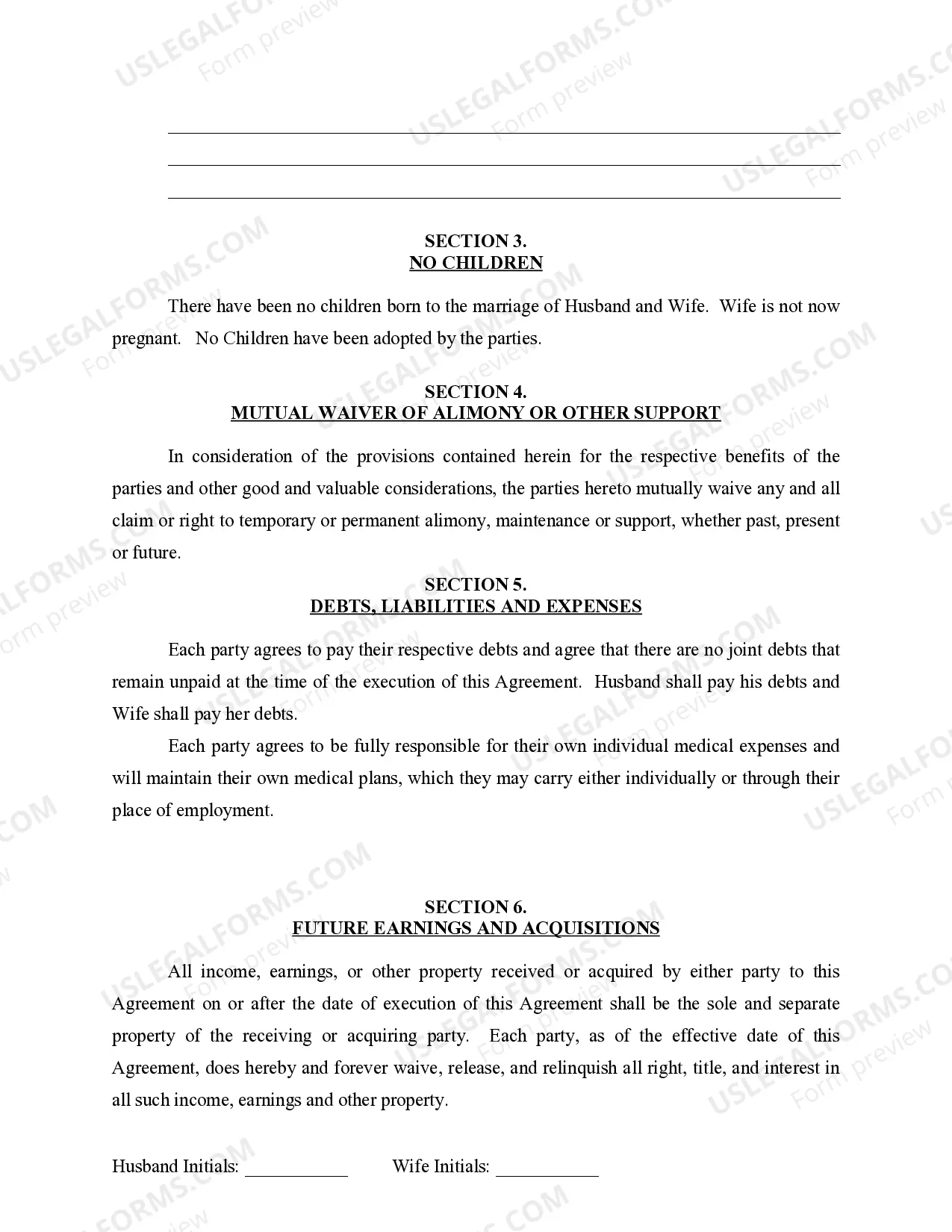
- Mutual waiver of alimony or support obligations
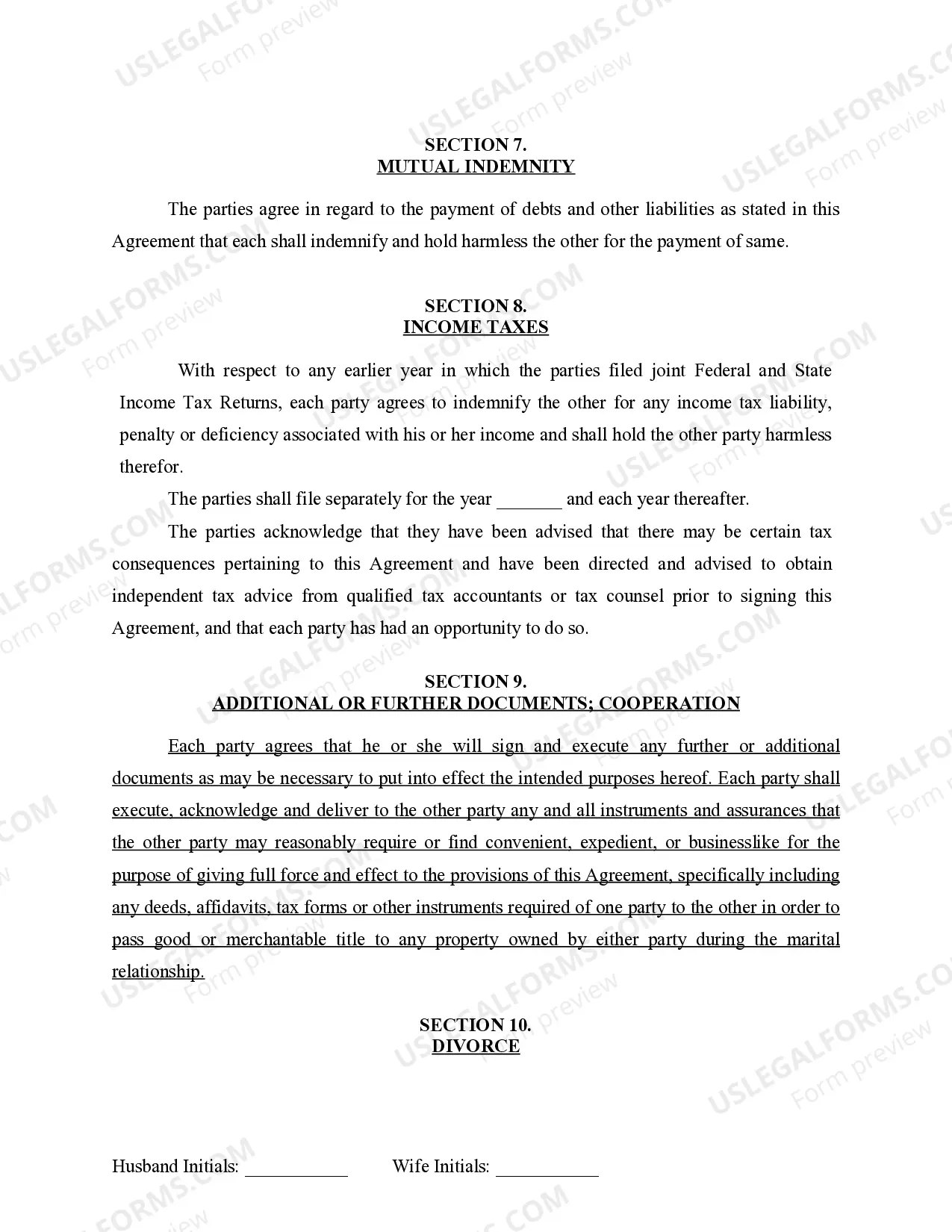
- Handling of debts and liabilities
- Guidelines for future earnings and property acquisitions

When to use this document
This form should be utilized by couples who have decided to separate without filing for divorce. It is intended for parties that have no children and do not share joint property or debts. It provides a clear framework for managing their financial and property rights during the separation period while establishing the groundwork for potential future divorce proceedings.
Who needs this form
- Married couples in the State of Vermont with no children
- Couples without joint property or financial obligations
- Individuals seeking immediate legal separation
Instructions for completing this form
- Identify the parties involved by filling in their full legal names.
- Enter the date of marriage and the date of separation to establish timelines.
- Detail the division of assets, specifying who retains what property or financial accounts.
- Ensure that both parties mutually agree to waive any claim for alimony or support.
- Both parties must sign the document in front of a notary public for it to be legally valid.
Does this document require notarization?
Yes, this form must be notarized to be legally valid. The signatures of both parties should be witnessed by a notary public to ensure the authenticity of the agreement.
Get your form ready online
Our built-in tools help you complete, sign, share, and store your documents in one place.
Make edits, fill in missing information, and update formatting in US Legal Forms—just like you would in MS Word.
Download a copy, print it, send it by email, or mail it via USPS—whatever works best for your next step.
Sign and collect signatures with our SignNow integration. Send to multiple recipients, set reminders, and more. Go Premium to unlock E-Sign.
If this form requires notarization, complete it online through a secure video call—no need to meet a notary in person or wait for an appointment.
We protect your documents and personal data by following strict security and privacy standards.

Make edits, fill in missing information, and update formatting in US Legal Forms—just like you would in MS Word.

Download a copy, print it, send it by email, or mail it via USPS—whatever works best for your next step.

Sign and collect signatures with our SignNow integration. Send to multiple recipients, set reminders, and more. Go Premium to unlock E-Sign.

If this form requires notarization, complete it online through a secure video call—no need to meet a notary in person or wait for an appointment.

We protect your documents and personal data by following strict security and privacy standards.
Common mistakes
- Failing to fully disclose financial information, which can affect the agreement.
- Not having the signatures notarized, making the document potentially unenforceable.
- Overlooking the need to retain copies for each party after signing.
Advantages of online completion
- Convenience of access to legal documents from home.
- Editable templates allowing parties to customize according to their needs.
- Reliable resources drafted by licensed attorneys, ensuring legal compliance.
Summary of main points
- This agreement is for couples without children or joint assets in Vermont.
- It facilitates immediate separation while protecting both parties' interests.
- Both parties should consult an attorney before signing to ensure understanding of their rights.
Looking for another form?
Form popularity
FAQ
Yes, it is mandatory. Each party must obtain independent legal advice prior to signing a separation agreement. You also cannot use the same lawyer and should not use the same law firm. If you fail to obtain advice from a lawyer, the separation agreement will be unenforceable.
Before you can file for divorce in the state, you or your spouse must have been living in Indiana for six months. You'll need to file your divorce case in the county in which you have lived for the past three months.
How long does a divorce take in Vermont? Once the divorce paperwork has been filed in court, it takes six months for a divorce to be final. The start to finish time of the divorce may vary depending on the caseload of the court and the availability of judges to sign the final Decree of Divorce.
Each divorce case is unique. Starting a divorce can cost money. Court fees may be up to $300. You can apply to waive the fees if you can't afford them.
Treat your co-parent as you would treat a business partner. Be courteous. Don't make any significant changes. Discuss the various options for pathways to an amicable divorce. Choose your Family Mediator and/or Lawyer. See a Counselor and/or Doctor. Wait to start a new relationship.
Grounds for divorce: Vermont allows a no-fault divorce. That requires that you and your spouse live separate and apart for at least six consecutive months and that you are not likely to get back together.You can't have a final divorce hearing until you've been separated for six months.
You can achieve a legal separation by filing a petition (request) with the court, which allows the judge to divide your marital property, establish child support and alimony, and create a parenting plan for your children.
People choose legal separation instead of divorce because of religious beliefs, a desire to keep the family together legally for the sake of children, the need for one spouse to keep the health insurance benefits that would be lost with a divorce, or simple aversion to divorcing despite the desire to live separate
You can achieve a legal separation by filing a petition (request) with the court, which allows the judge to divide your marital property, establish child support and alimony, and create a parenting plan for your children.