Revocable Funeral Trust - Prearranged Funeral Trust Account
About this form
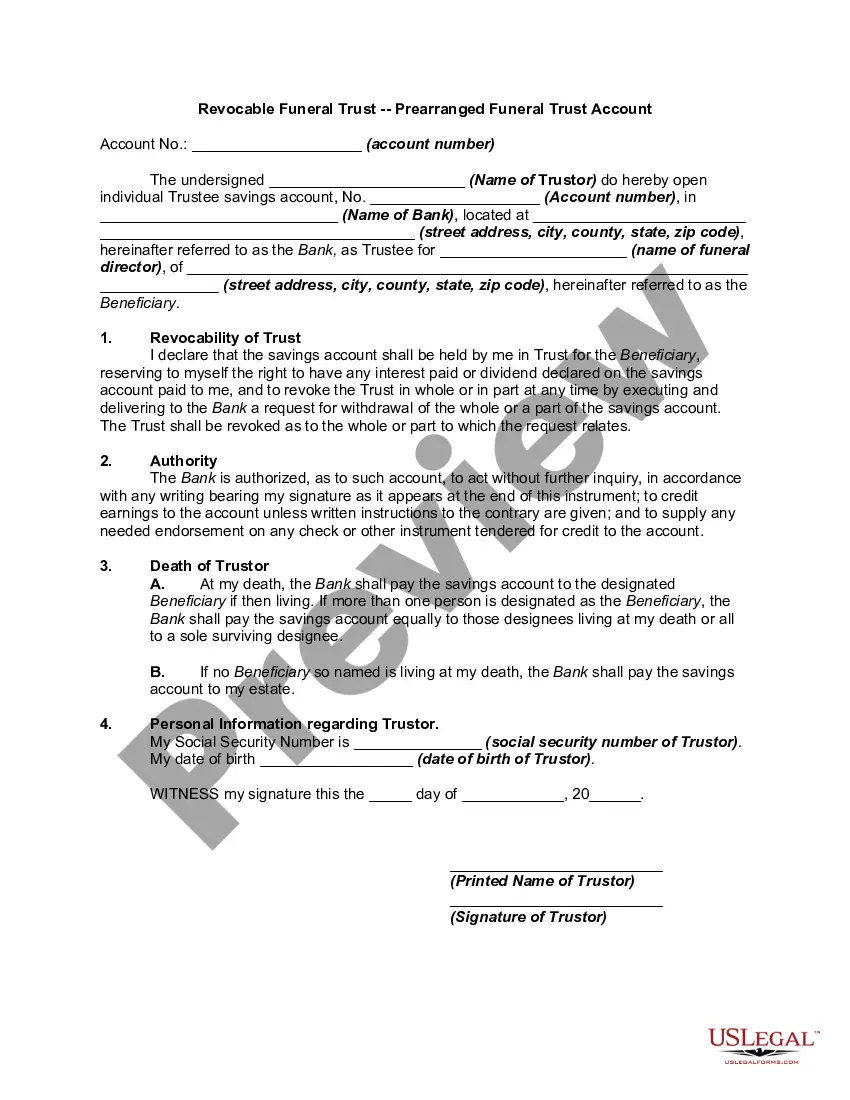
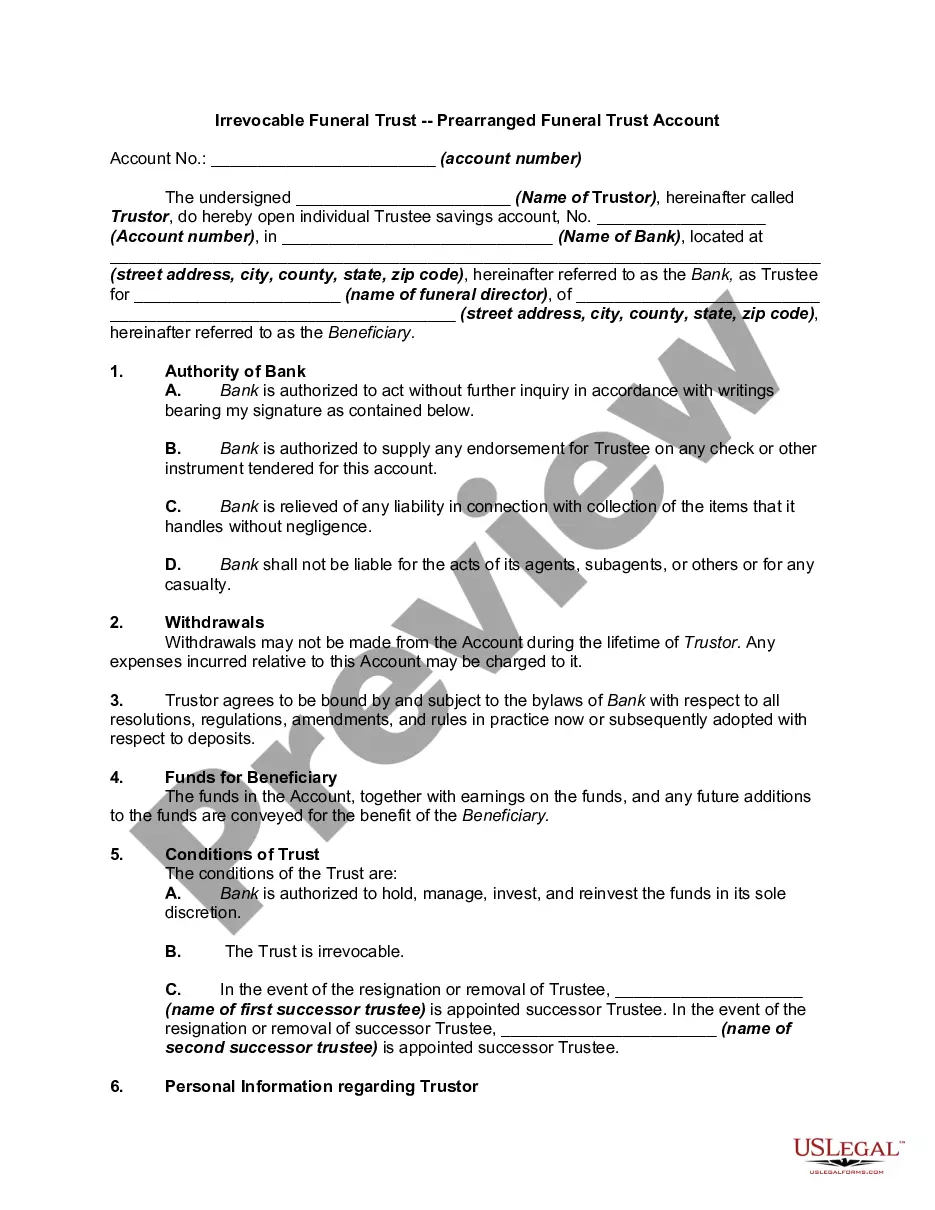
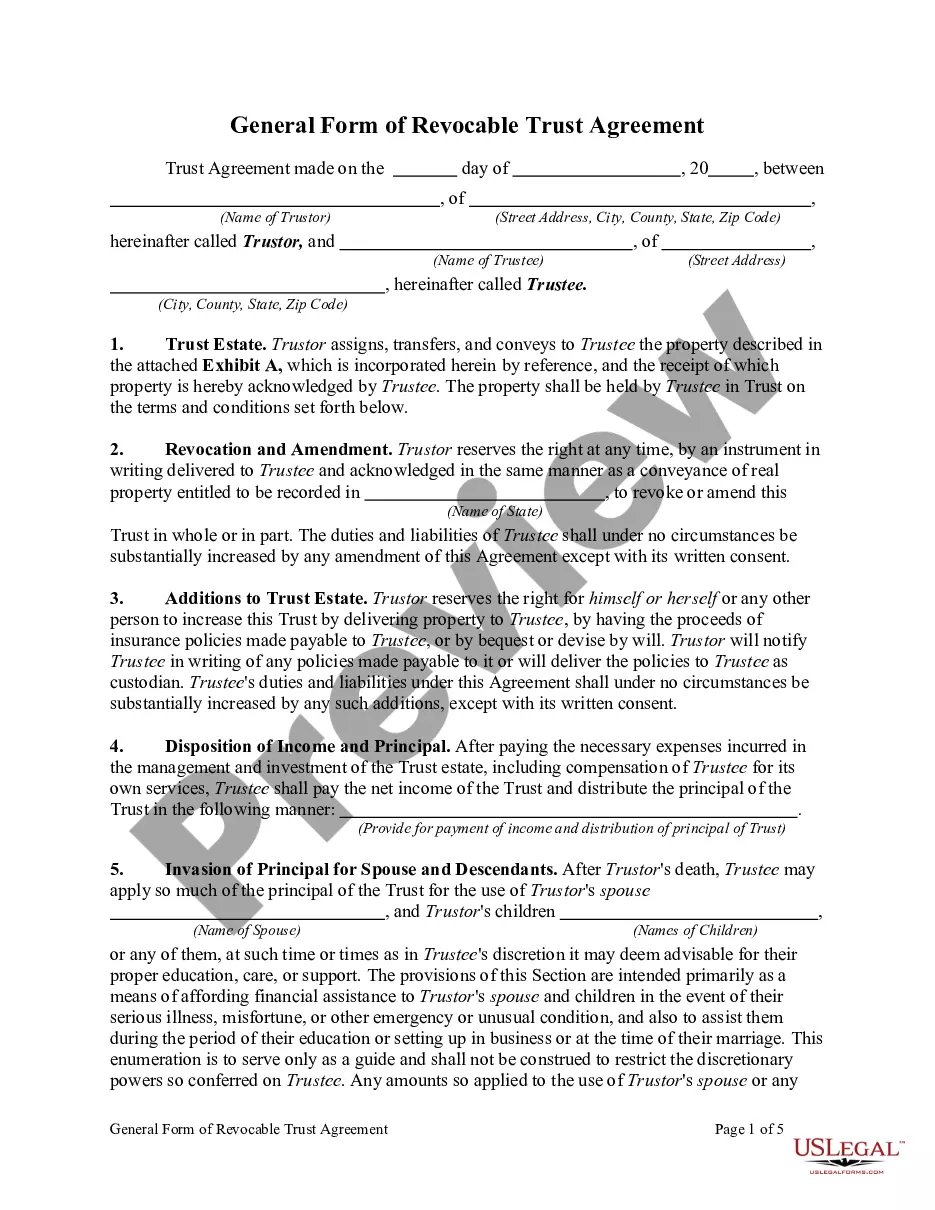
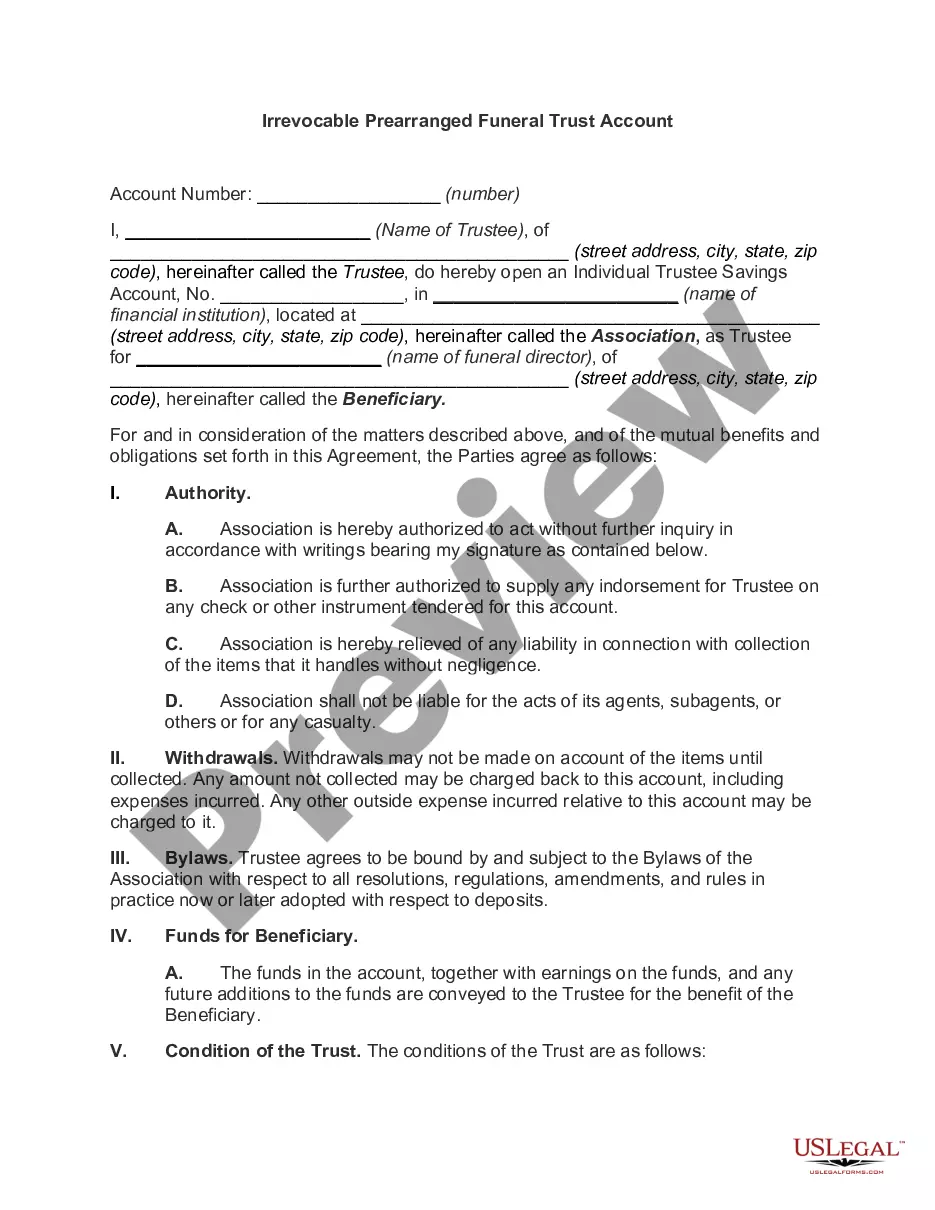
The Revocable Funeral Trust - Prearranged Funeral Trust Account is a legal document that allows individuals to set aside funds for their funeral arrangements while retaining control over the trust. This form establishes an agreement between the trustor and the funeral home, specifying the terms of the funeral services, the amount prepaid, and the designated beneficiary. It differs from other types of funeral arrangements by allowing the trustor to revoke or modify the trust if their circumstances change, providing flexibility in planning ahead for funeral expenses.
Main sections of this form
- Account information, including the account number and bank details.
- Designation of the trustor, who establishes the trust.
- Revocability clause, allowing changes to the trust at the trustor's discretion.
- Authorization granted to the bank to manage the trust funds.
- Instructions regarding disbursement of funds upon the trustor's death.
- Personal information about the trustor, including a Social Security number and date of birth.
When to use this form
This form is ideal for individuals who wish to prearrange their funeral services while ensuring that the funds are securely held until needed. It is useful for those who want the peace of mind that comes from having their wishes clearly outlined and prepaid. Additionally, it can help alleviate the financial burden on family members during a difficult time.
Intended users of this form
- Individuals planning their own funeral arrangements.
- Anyone looking to secure funds for future funeral expenses.
- People who want the flexibility to modify their funeral arrangements as needed.
- Families wishing to formalize prearrangements with a funeral home.
How to complete this form
- Enter the trustor's personal information, including name, Social Security number, and date of birth.
- Specify the bank name and address where the trust account will be held.
- Designate the funeral director who will benefit from the trust funds.
- Fill in the trust account number and any relevant details regarding the funeral arrangements.
- Review the revocability clause and understand your rights to modify the trust.
- Sign and date the form to finalize the agreement.
Notarization guidance
This form does not typically require notarization unless specified by local law. However, it is always advisable to consult local regulations to ensure compliance with any requirements that may apply to your specific situation.
Get your form ready online
Our built-in tools help you complete, sign, share, and store your documents in one place.
Make edits, fill in missing information, and update formatting in US Legal Forms—just like you would in MS Word.
Download a copy, print it, send it by email, or mail it via USPS—whatever works best for your next step.
Sign and collect signatures with our SignNow integration. Send to multiple recipients, set reminders, and more. Go Premium to unlock E-Sign.
If this form requires notarization, complete it online through a secure video call—no need to meet a notary in person or wait for an appointment.
We protect your documents and personal data by following strict security and privacy standards.

Make edits, fill in missing information, and update formatting in US Legal Forms—just like you would in MS Word.

Download a copy, print it, send it by email, or mail it via USPS—whatever works best for your next step.

Sign and collect signatures with our SignNow integration. Send to multiple recipients, set reminders, and more. Go Premium to unlock E-Sign.

If this form requires notarization, complete it online through a secure video call—no need to meet a notary in person or wait for an appointment.

We protect your documents and personal data by following strict security and privacy standards.
Typical mistakes to avoid
- Failing to include all necessary personal information of the trustor.
- Not specifying the funeral director or beneficiary correctly.
- Omitting details about the bank or trust account number.
- Not reviewing the revocability options before signing.
- Neglecting to date the form, which can affect its validity.
Advantages of online completion
- Convenience of completing the form from home without needing to visit a lawyer.
- Editable format allows for easy adjustments before finalization.
- Access to professionally drafted templates ensures legality and compliance.
- Immediate download provides quick access to essential documents.
Legal use & context
- The Revocable Funeral Trust is legally enforceable and provides a means to manage funeral expenses directly.
- It may be subject to specific state laws regarding trusts and estate funding, which must be understood by the Trustor.
- Properly executed, it can help avoid issues related to financial insecurity at the time of death.
Main things to remember
- The Revocable Funeral Trust allows individuals to plan and secure funds for their funeral in advance.
- Understanding local laws is essential for effective implementation of this form.
- The form enhances financial preparedness and can ease the emotional burden on families at a difficult time.
Looking for another form?
Form popularity
FAQ
Typically, a funeral home or cemetery will help you set up a trust when you are entering into a contract with them. You can open an individual trust account with a bank and deposit your money in a savings account or certificate of deposit. Bonds or life insurance may also be used to fund the trust.
The deceased may have taken out a pre-paid funeral plan, paying for their funeral in advance.Many funeral directors will require a deposit before the funeral to at least cover the costs of the disbursements which they have to pay to third parties.
Prepay at Funeral Home It's not that funeral directors are out to get you. It's just that your situation may change between when you pay and when you die.Prepaying at funeral home is a good idea if you are facing a Medicaid spend down before going into a nursing home, though.
Definition: Irrevocable Funeral Trusts A trust is a legal agreement in which an individual (called the Trustmaker or Grantor) sets aside a certain amount of money for a specific purpose or person.Irrevocable means the trust cannot be changed, reversed, or dissolved for any reason.
OPEN A SAVINGS ACCOUNT. You'll definitely need a separate account for your funeral fund. SET UP AUTOMATIC TRANSFERS. Choose an amount to go into your funeral fund every month, week, or pay period. SAVE FIRST, SPEND LATER. Make saving a priority. START SMALL. BE PATIENT.
If you have the money to pay for a funeral plan now, it may be a good option for you.A big boon of paying for your funeral now is that if prices do rise in future, your funeral plan is protected against inflation. For example, you buy a funeral plan costing £3,000 today, but don't die for another 10 years.
Original Medicare (Part A and Part B) doesn't cover burial or funeral costs in the event of a beneficiary's death.While Medicare coverage is limited, the Social Security Administration does pay survivor benefits, which you can then use to pay for funeral costs.
Paying the Bills Powers of a trustee or executor include paying bills for funeral expenses incurred by a decedent's estate. This means a trustee can write checks using the estate's bank accounts to satisfy funeral costs, including paying for a burial plot and any viewing time at a funeral home.