Irrevocable Prearranged Funeral Trust Account
Overview of this form
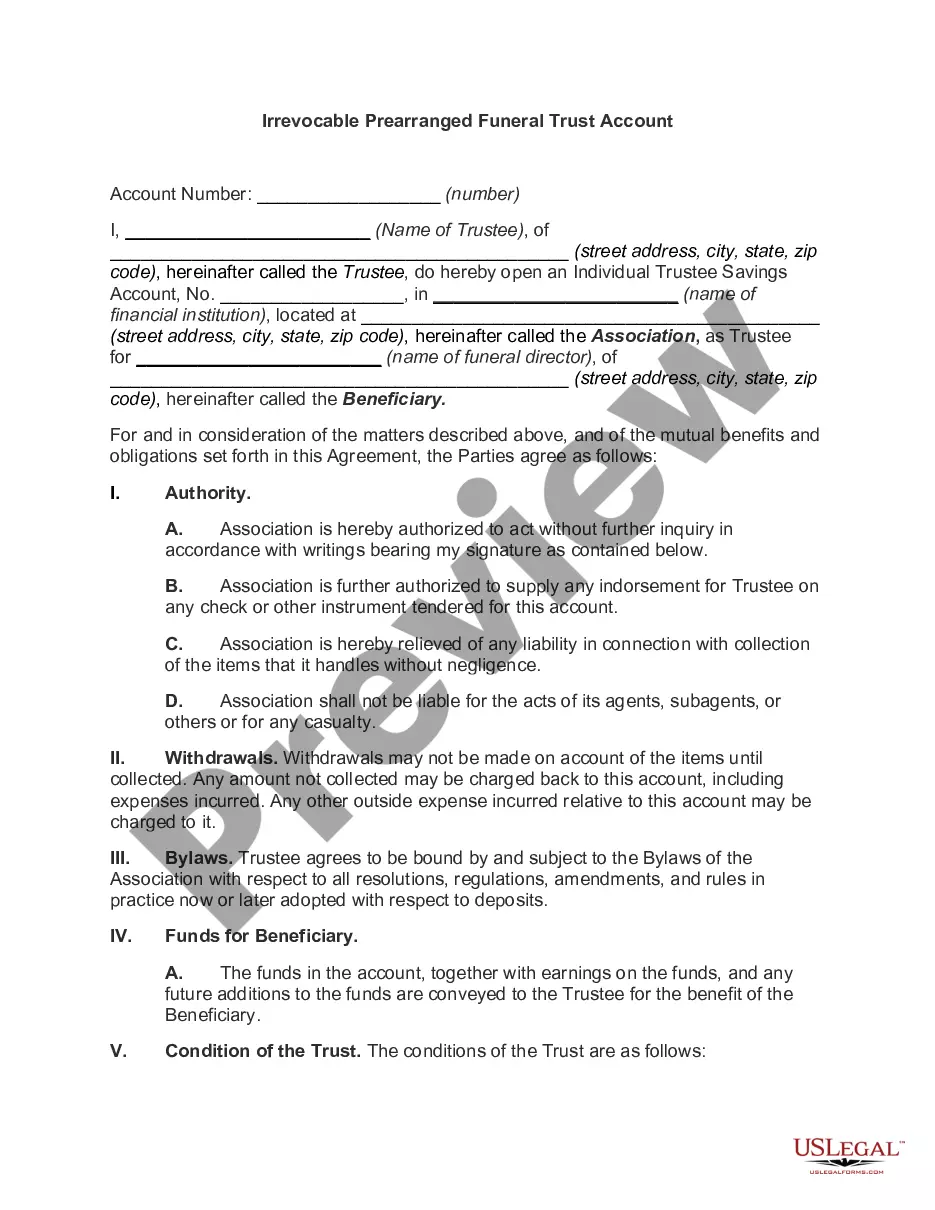
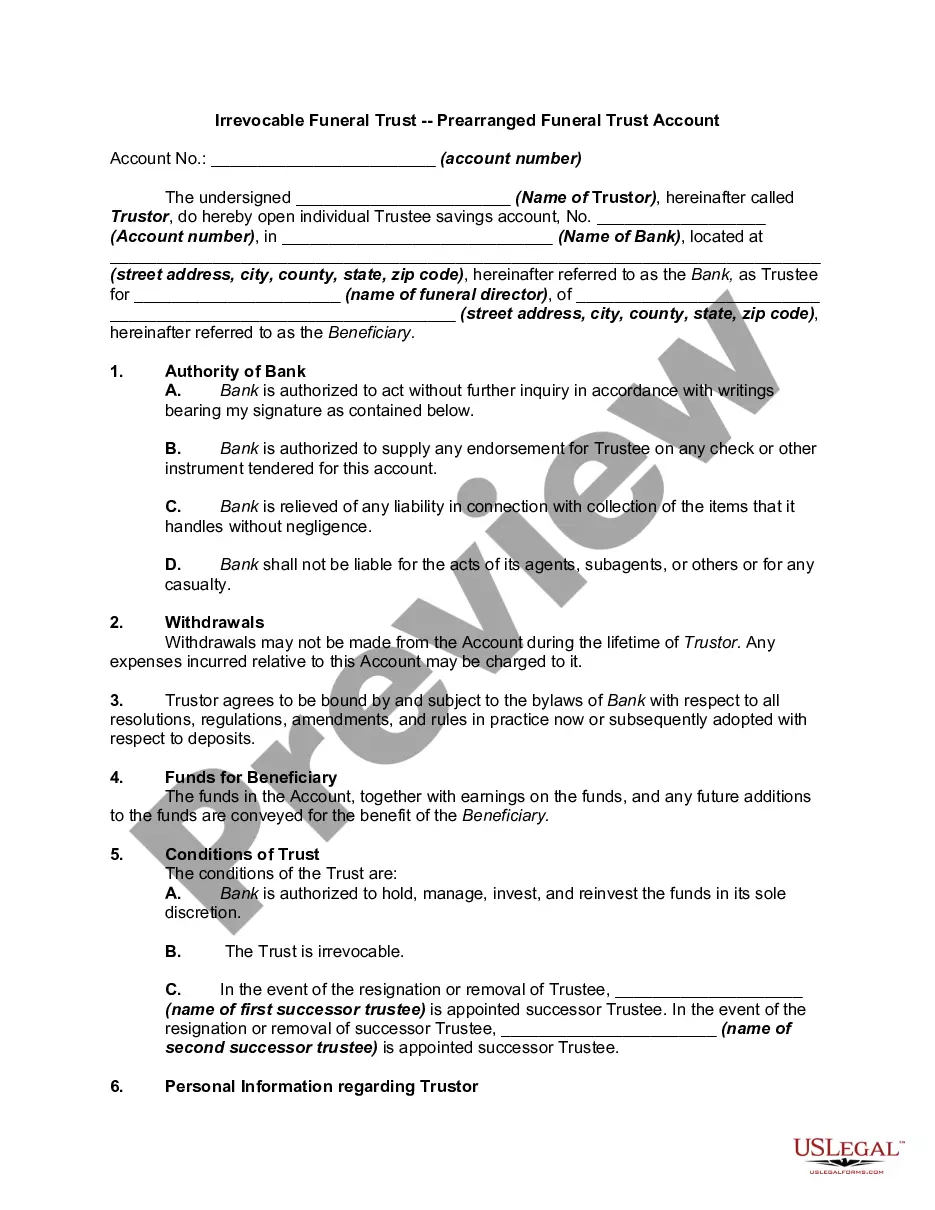
The Irrevocable Prearranged Funeral Trust Account is a legal agreement designed to help individuals prepay their funeral expenses. By establishing this trust, you can secure the costs of future funeral or burial services, ensuring that you are locked into the agreed-upon price. Unlike revocable trusts, once you set up this irrevocable trust, it cannot be modified or revoked, providing certainty for both you and your beneficiaries.
Key parts of this document
- Account number: Unique identifier for the individual trust account.
- Trustee information: Includes the name and address of the trustee managing the account.
- Beneficiary details: Specifies the funeral director and their contact information.
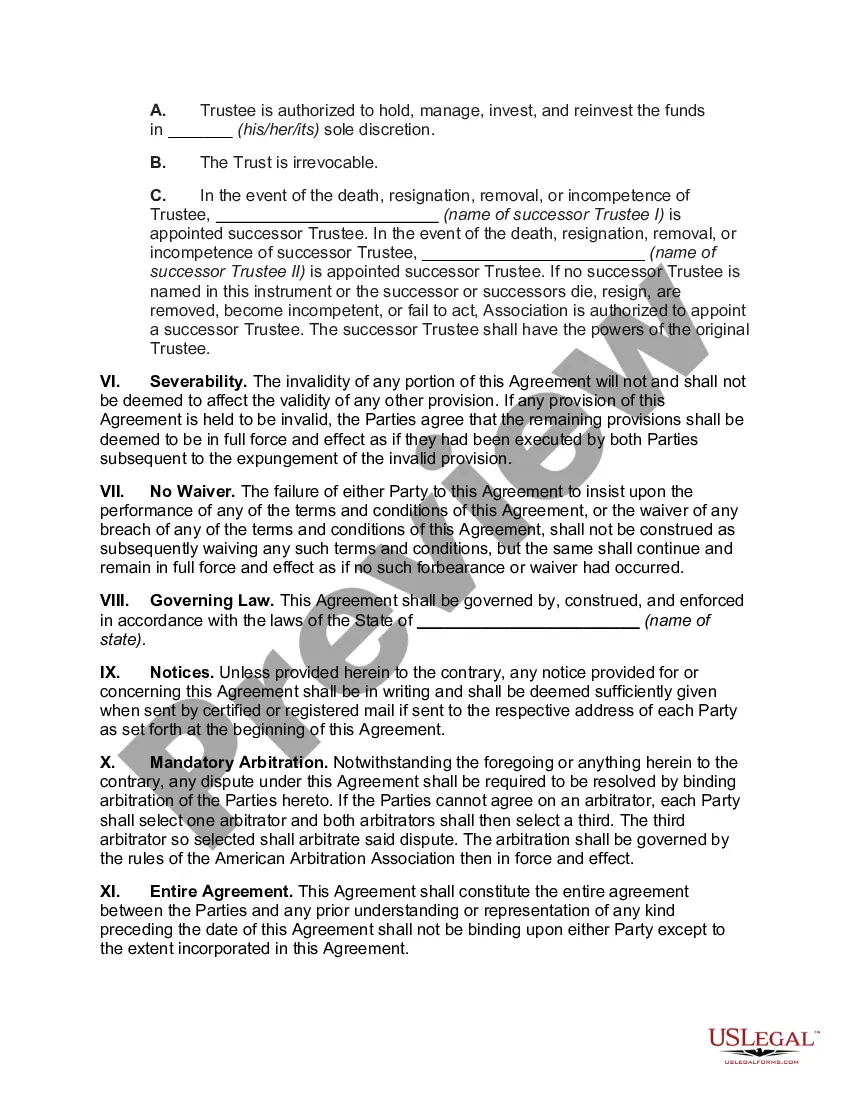
- Withdrawal clauses: Outlines the conditions under which withdrawals can be made.
- Bylaws: Indicates the applicability of the financial institution's rules and regulations.
- Conditions of the trust: Establishes the irrevocable nature of the trust and the powers of the trustee.
Common use cases
This form is appropriate when you wish to prearrange and fund your funeral services in advance. You may want to use this trust if:
- You aim to relieve loved ones from the financial burden of funeral expenses.
- You want to lock in current prices for funeral services to avoid future cost increases.
- You have specific wishes regarding your funeral and wish to ensure they are honored.
Intended users of this form
- Individuals planning their funeral arrangements in advance.
- Those who want to secure prices for future funeral services.
- People seeking to ease the financial impact of funeral costs on their families.
Instructions for completing this form
- Identify the parties involved: Enter the name of the trustee and the funeral director.
- Fill in the account number: Provide the unique identifier for the trust account.
- Specify the financial institution: Include the name and address where the trust account will be held.
- Outline the conditions of the trust: Specify the terms under which the trust will be managed.
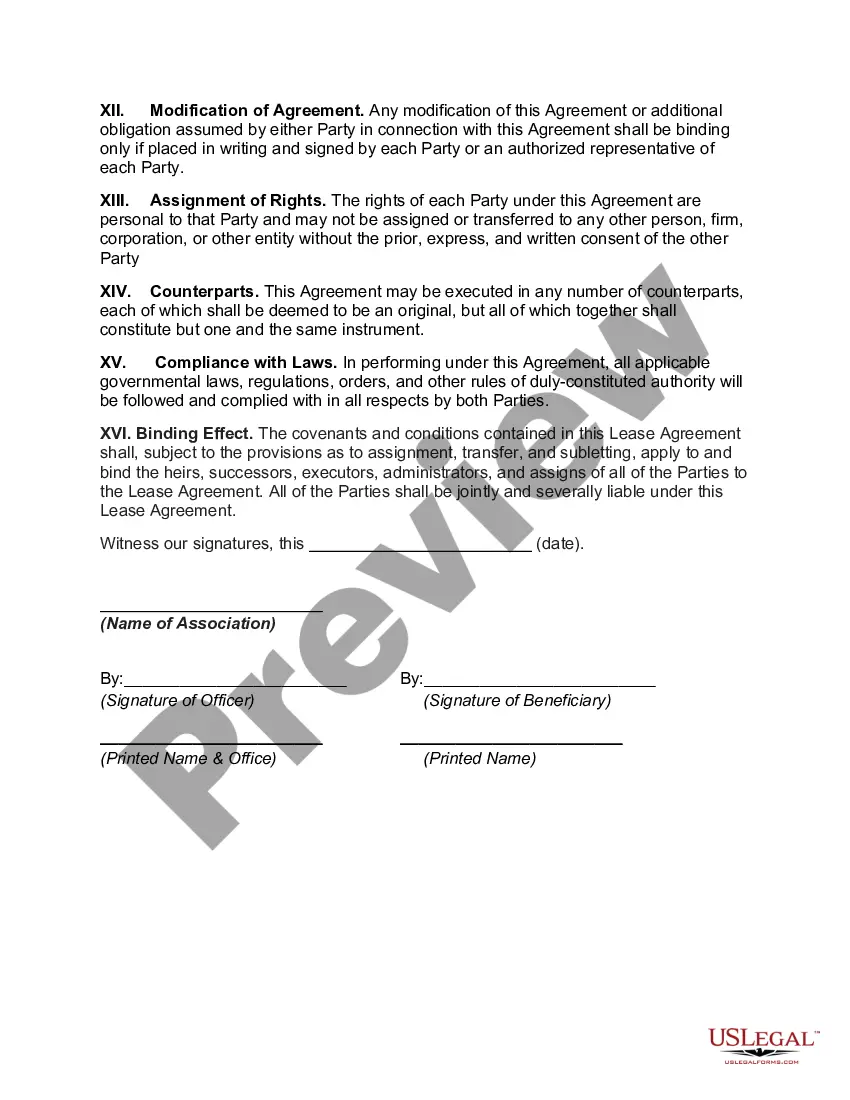
- Sign the document: Ensure all parties sign and date the trust agreement.
Is notarization required?
This form does not typically require notarization unless specified by local law. However, it's advisable to check your state's regulations to ensure compliance.
Get your form ready online
Our built-in tools help you complete, sign, share, and store your documents in one place.
Make edits, fill in missing information, and update formatting in US Legal Forms—just like you would in MS Word.
Download a copy, print it, send it by email, or mail it via USPS—whatever works best for your next step.
Sign and collect signatures with our SignNow integration. Send to multiple recipients, set reminders, and more. Go Premium to unlock E-Sign.
If this form requires notarization, complete it online through a secure video call—no need to meet a notary in person or wait for an appointment.
We protect your documents and personal data by following strict security and privacy standards.

Make edits, fill in missing information, and update formatting in US Legal Forms—just like you would in MS Word.

Download a copy, print it, send it by email, or mail it via USPS—whatever works best for your next step.

Sign and collect signatures with our SignNow integration. Send to multiple recipients, set reminders, and more. Go Premium to unlock E-Sign.

If this form requires notarization, complete it online through a secure video call—no need to meet a notary in person or wait for an appointment.

We protect your documents and personal data by following strict security and privacy standards.
Common mistakes
- Failing to fill in all required information, such as the account number or trustee details.
- Not understanding the irrevocable nature of the trust, leading to future financial complications.
- Neglecting to keep copies of the signed agreement for personal records.
Benefits of using this form online
- Convenience: Download and complete the form from the comfort of your home.
- Editability: Modify the form as needed before finalizing your information.
- Reliability: Access professionally drafted templates prepared by licensed attorneys.
Looking for another form?


Form popularity
FAQ
Payable-on-death (POD) account This is a type of bank account that allows you to put aside funds for your funeral and name someone who can get access to the money when you die. They present a death certificate to the bank and get the money ? on the spot. It doesn't go through probate.
The irrevocable amount of such a trust is referred to as an irrevocable burial trust and is an exempt asset. If the total value of an otherwise irrevocable pre-need agreement with a funeral provider exceeds $4,500, the amount over $4,500 is revocable and is a countable asset.
The big difference between revocable and irrevocable pre-need agreements is that a revocable contract can be canceled and refunded, while an irrevocable agreement cannot.
You own the life insurance policy and agree that when you die the payout can be used to pay the funeral director for the funeral services you requested. If things change, your family can request a cash payout instead of your chosen funeral services.
A funeral trust sets aside money to ensure your end-of-life arrangements are funded and planned in ance with your wishes, but it could help you save money as well. With a trust, funeral expenses are prepaid at the current rate rather than the rate at the time of death.
Upon death, the funeral director has to present a death certificate to the trust company in order to liquidate the account to pay for the funeral. If there is money left over after paying the funeral bill, the excess would be returned to the family.
The estate of the deceased is responsible for the cost of final arrangements. The executor of the estate has the job of handling the bills. If there is no money available in the estate, the person who signs the contract at the funeral home has to pay the bill.
A funeral trust may help individuals create a plan for their end-of-life arrangements. This may have several potential benefits. In some situations, a funeral trust might secure a lower burial or creamation cost because the price is effectively locked in at whatever point the funeral trust is created.