Consolidation Agreement Between Two Corporations
Overview of this form
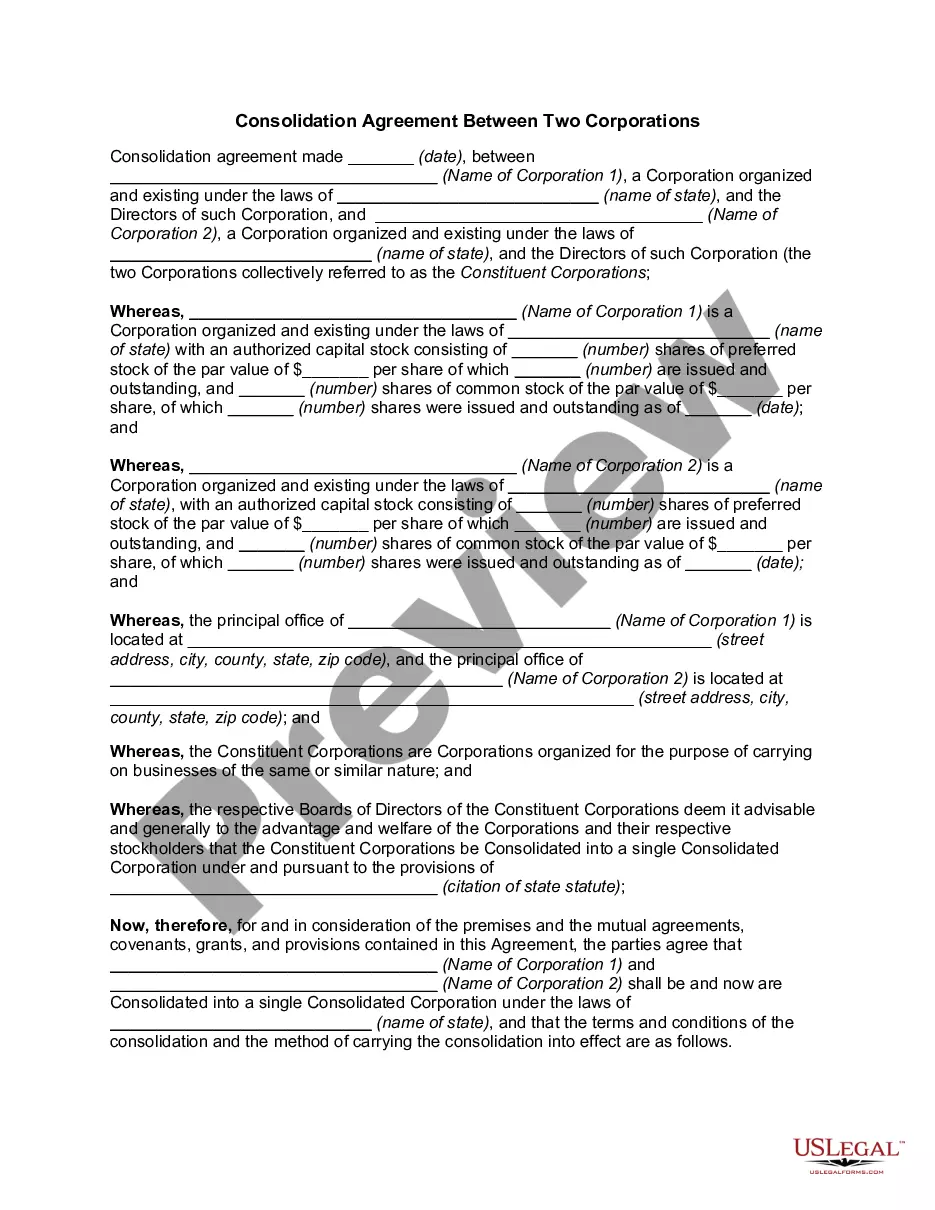
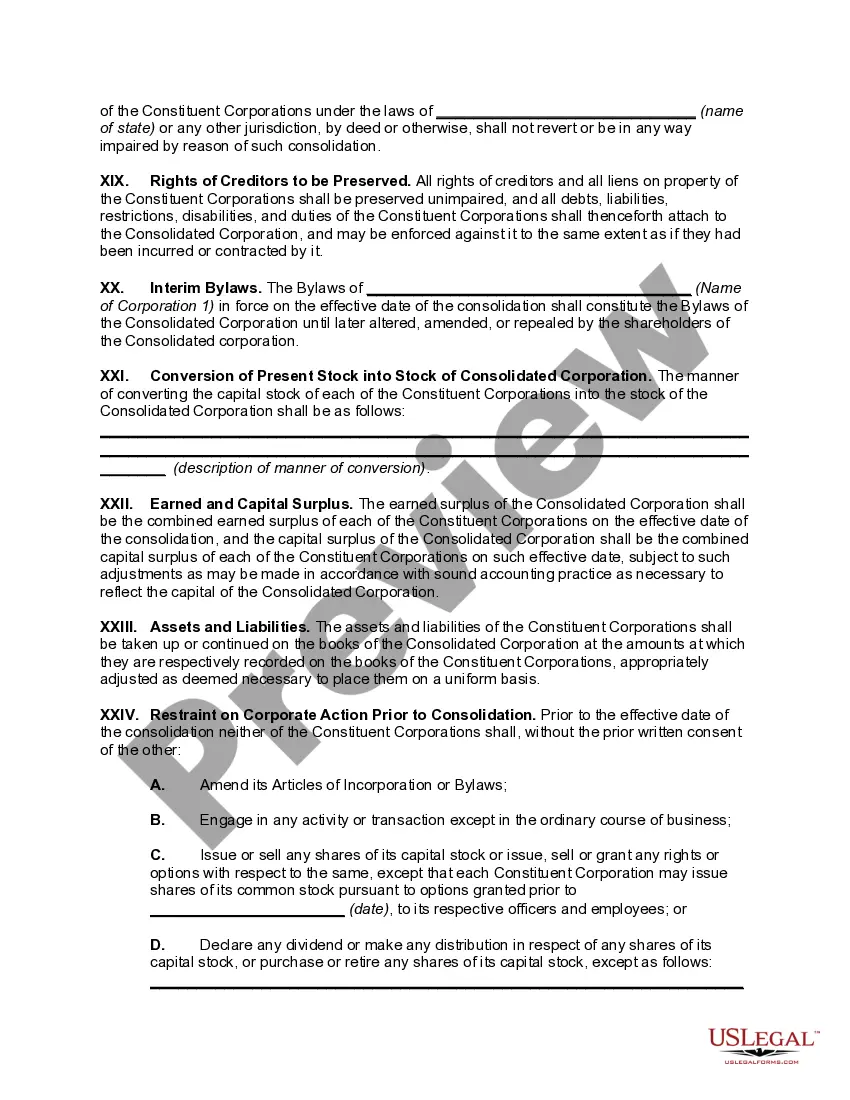
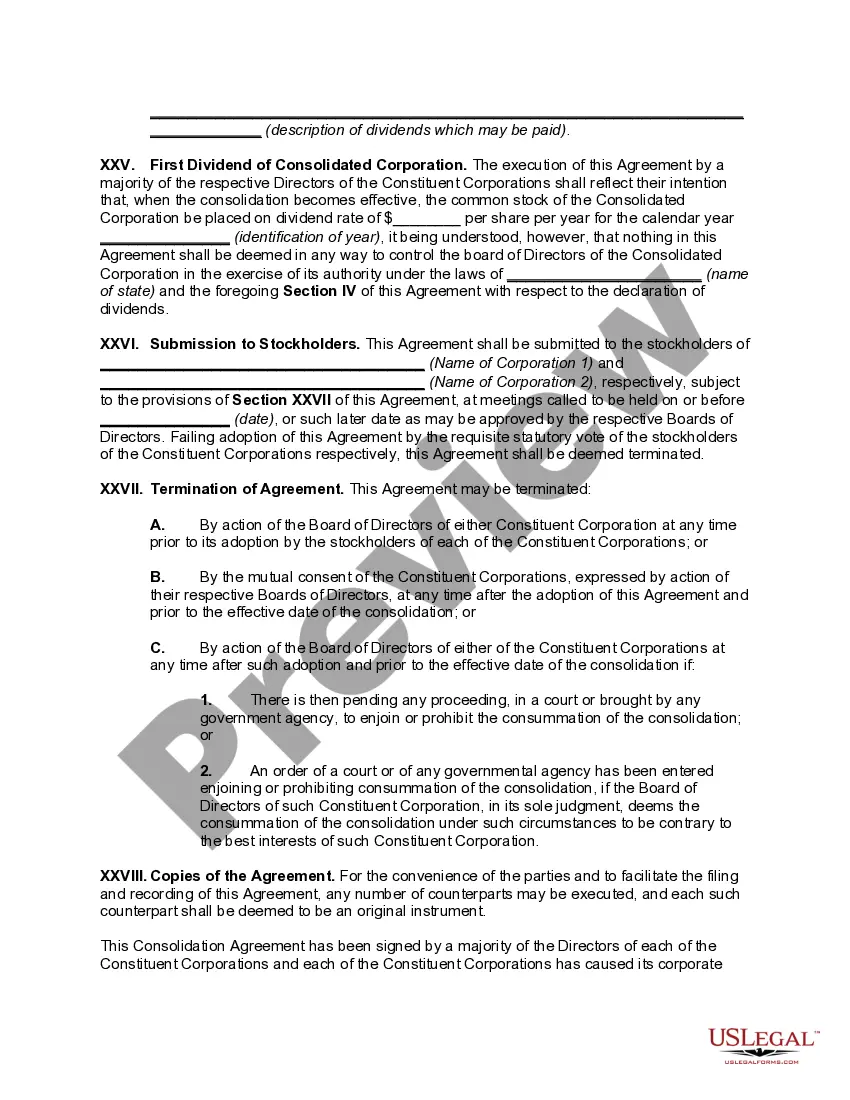
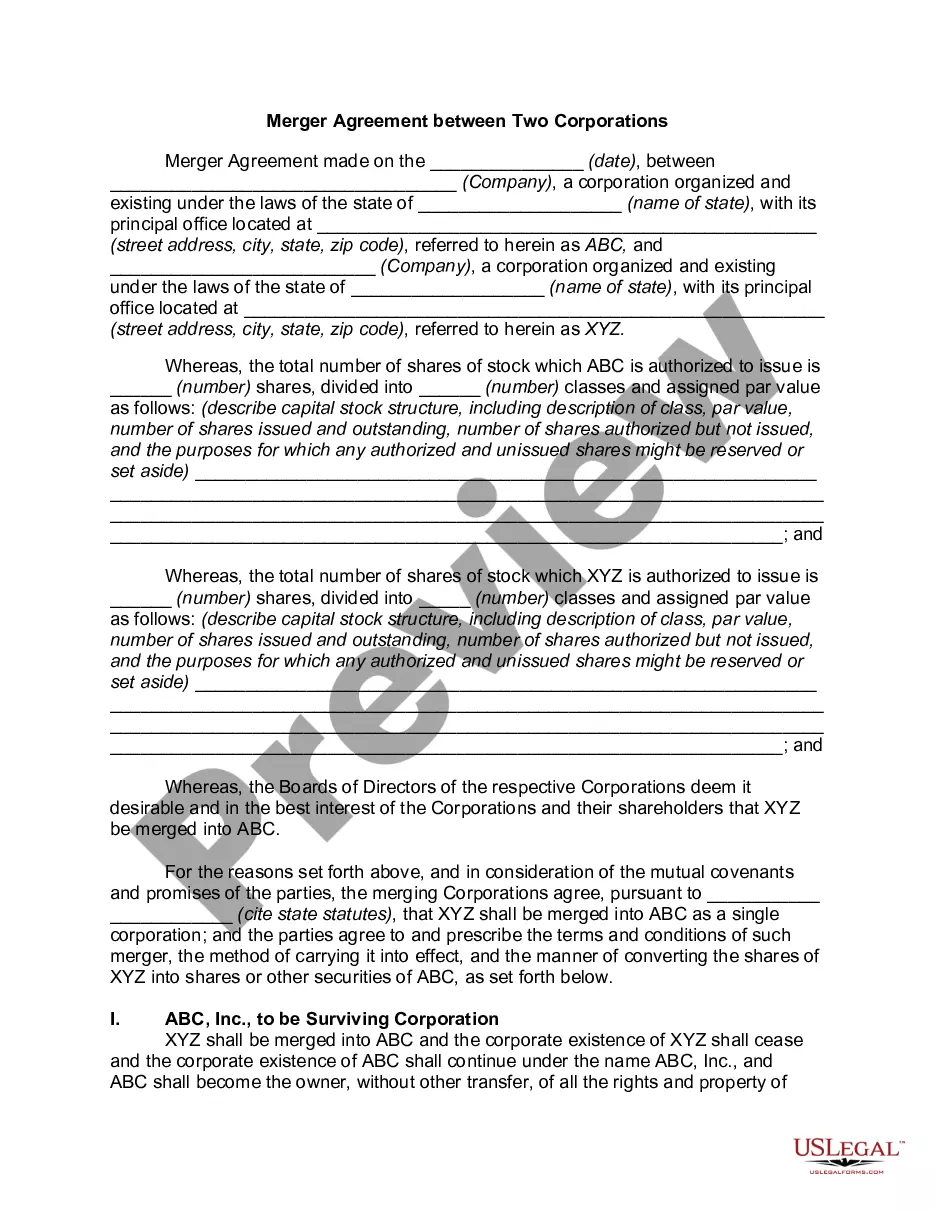
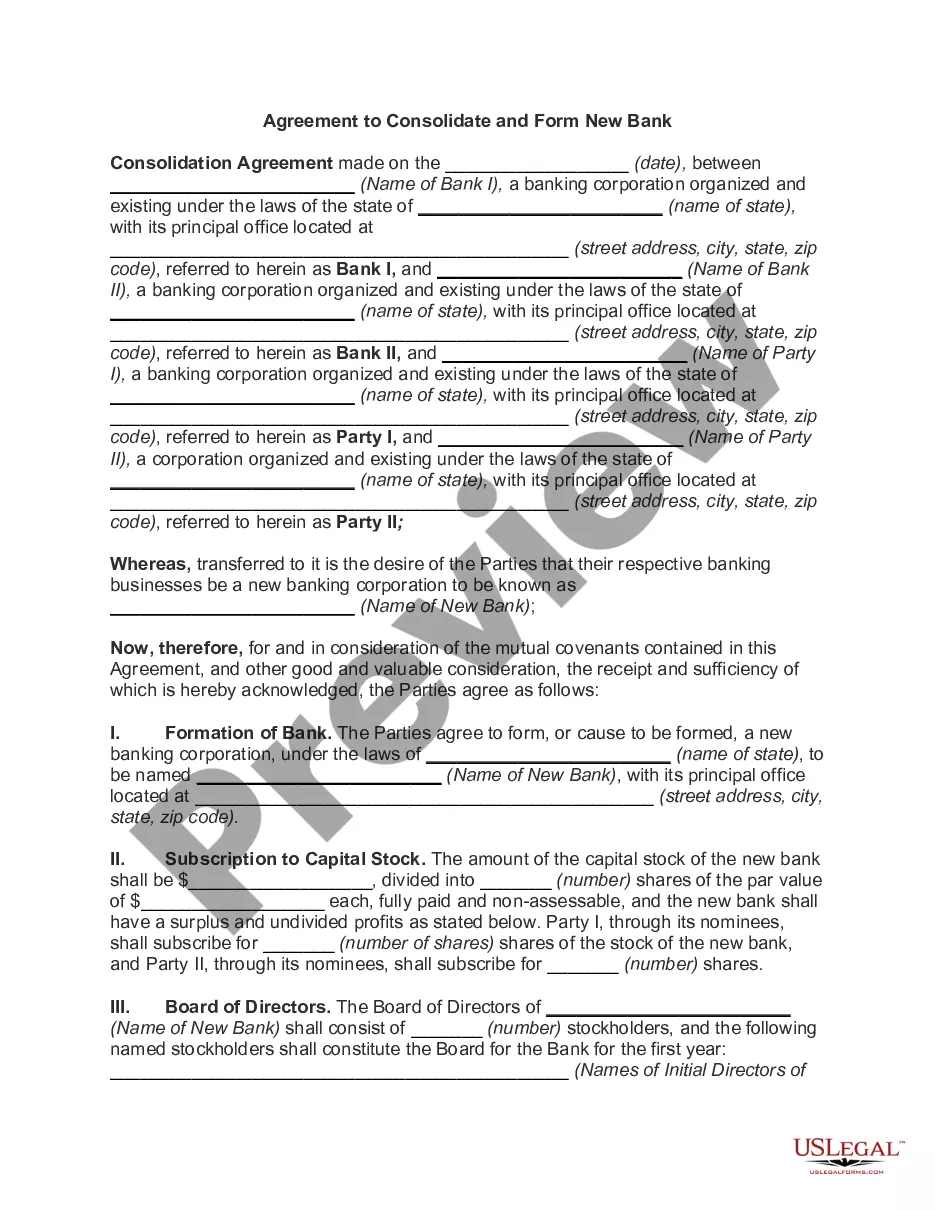
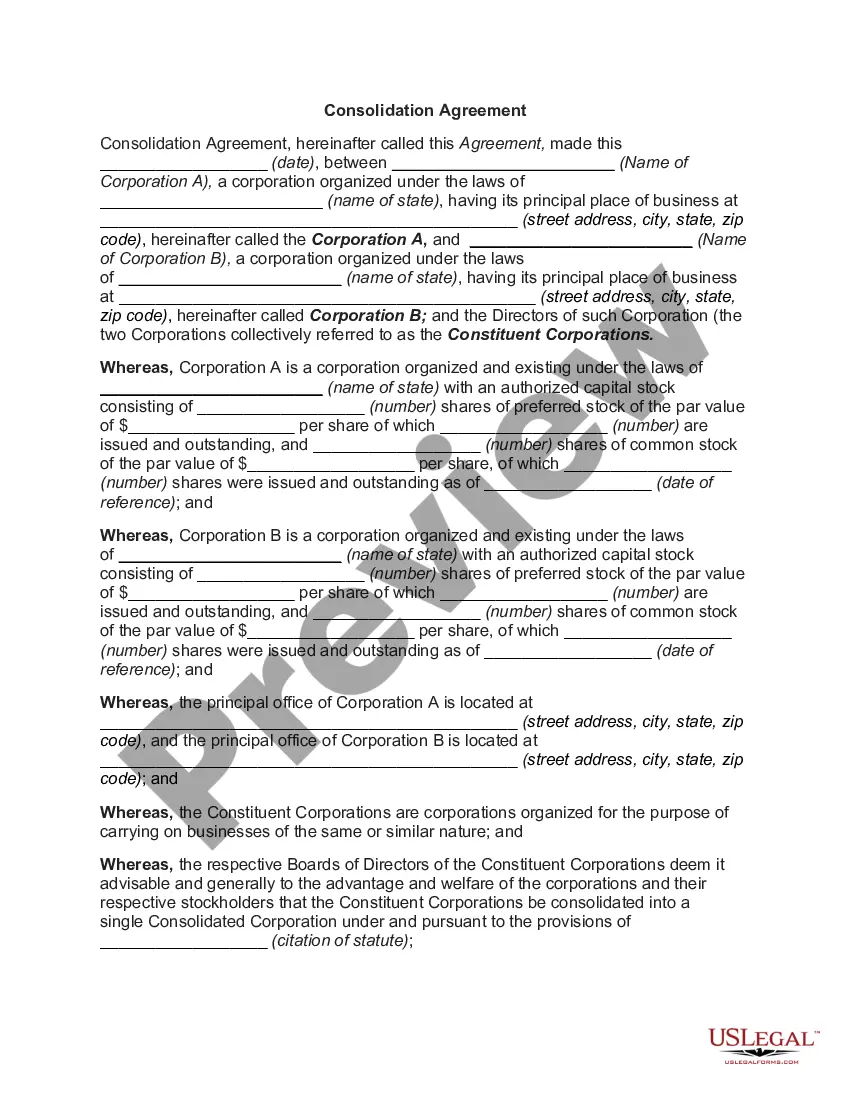
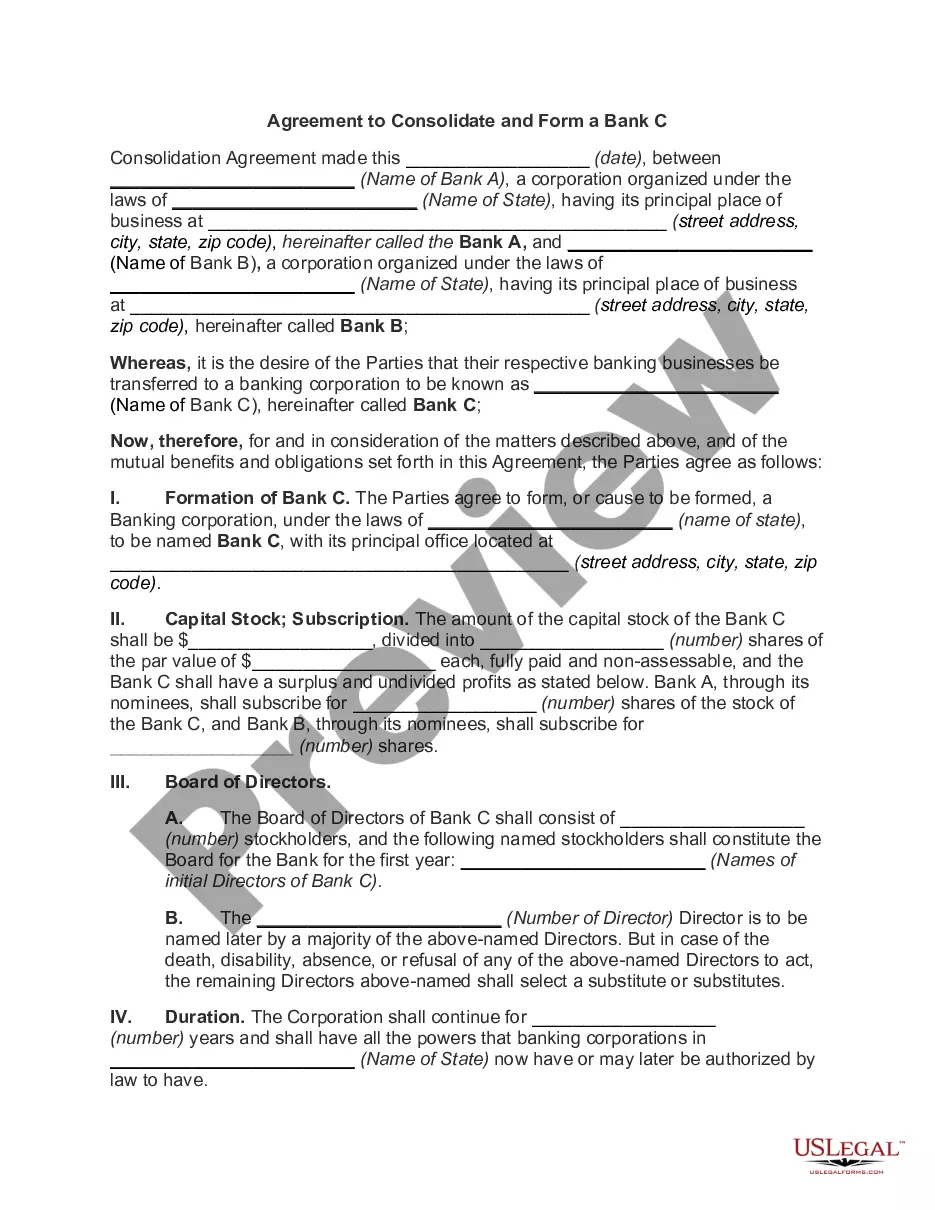
A consolidation agreement between two corporations is a legal document that facilitates the merging of two or more companies into a single corporate entity. It outlines the terms and conditions under which the individual corporations lose their separate identities, transferring all assets, liabilities, and rights to the newly formed corporation. This agreement is distinct from other business forms, such as mergers, as it creates an entirely new corporation rather than combining existing ones. This specific form is crucial for ensuring compliance with state laws and properly documenting the consolidation process.
Main sections of this form
- Identification of the constituent corporations and their respective details.
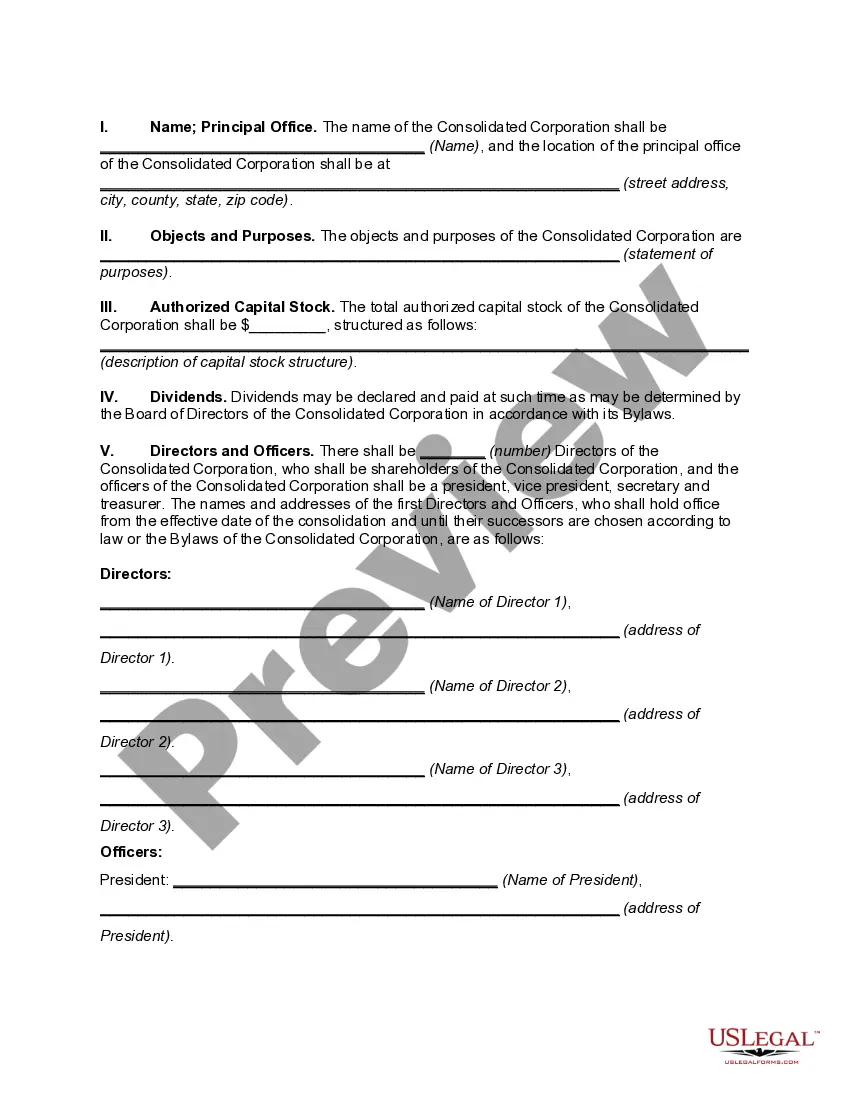
- Statement of the purpose and objectives of the consolidated corporation.
- Details regarding the authorized capital stock and its structure.
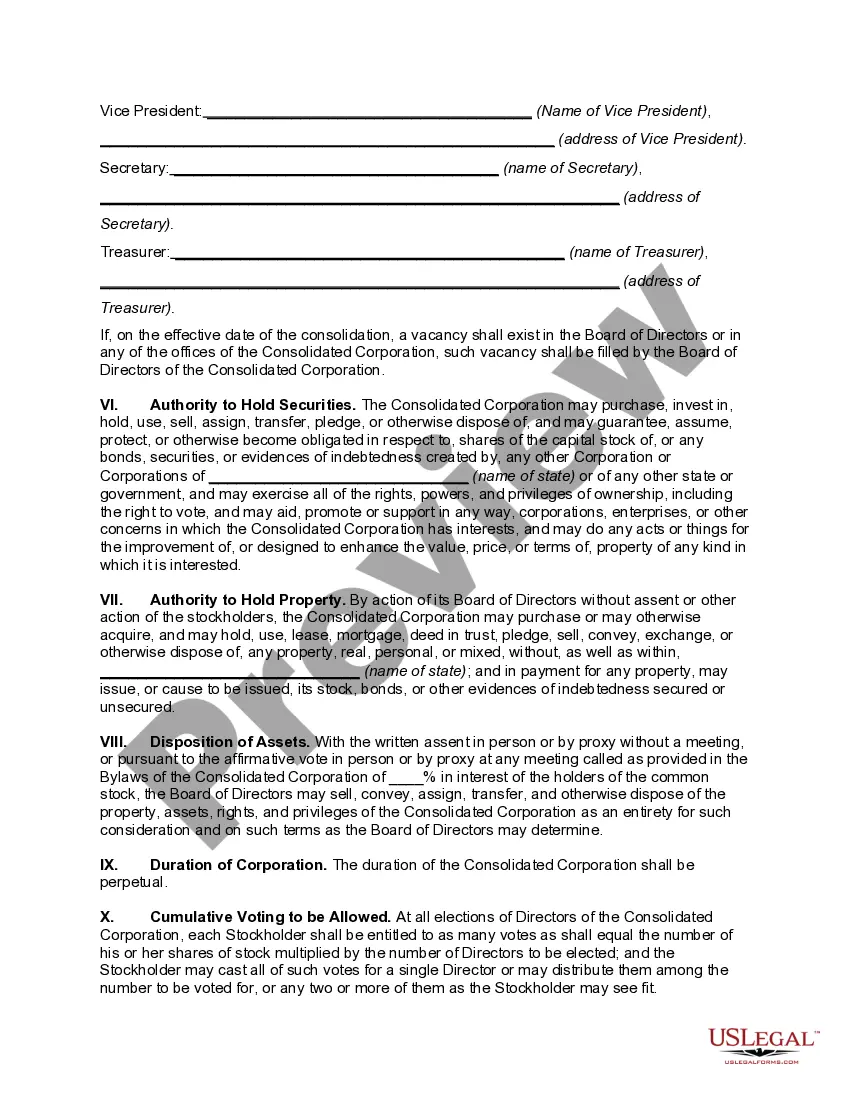
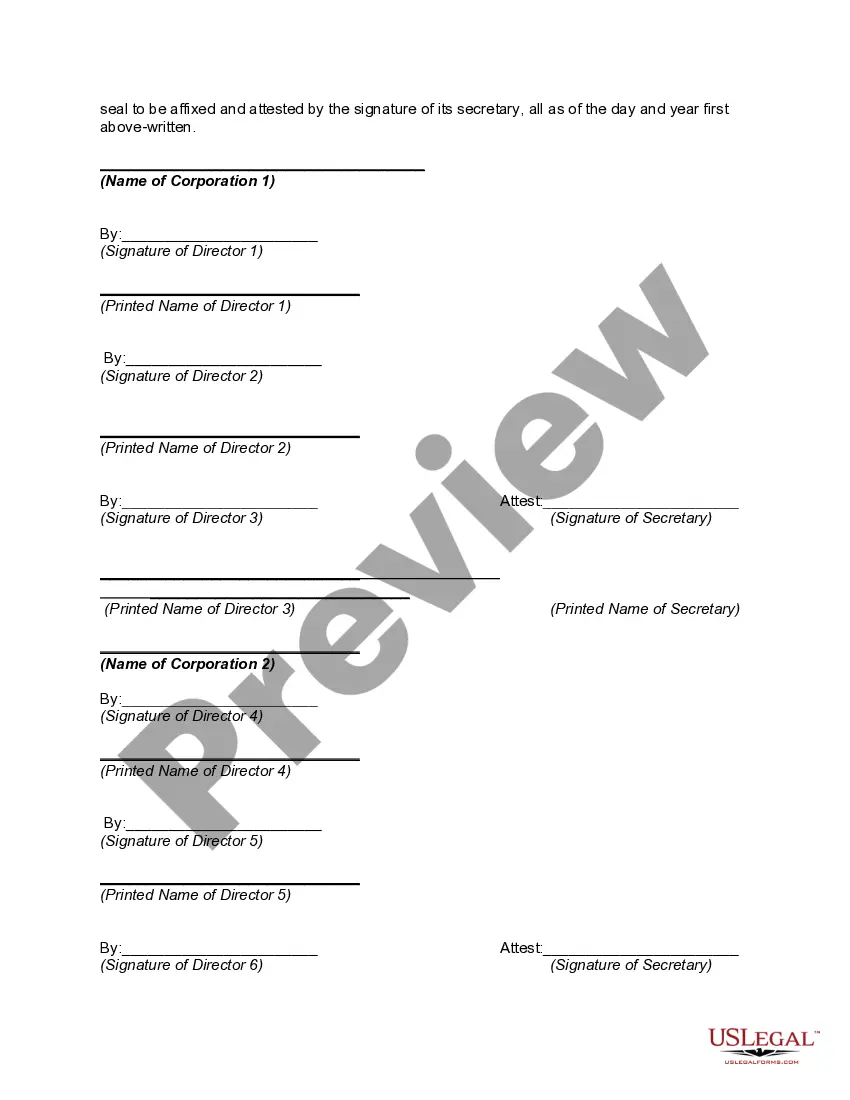
- Provisions for the board of directors and corporate officers.
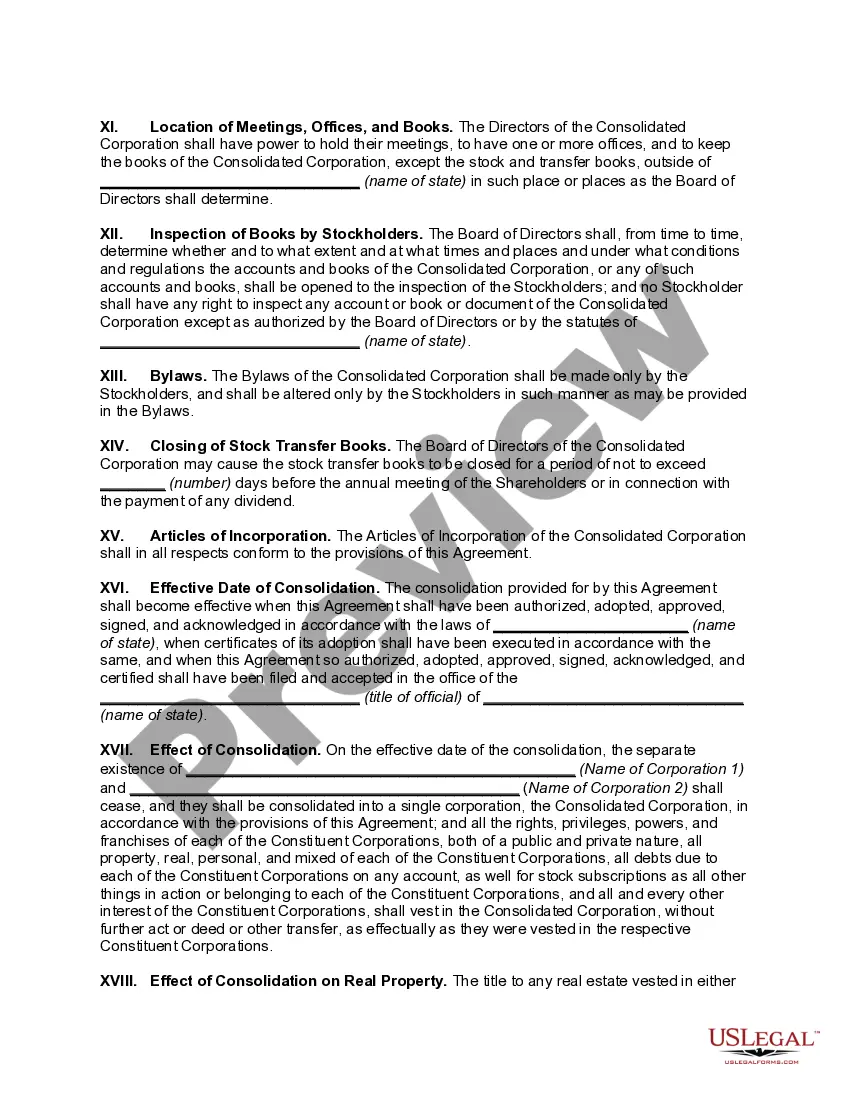
- Mechanisms for the conversion of existing stock into the stock of the consolidated corporation.
- Legal powers and obligations of the new corporation post-consolidation.

When to use this form
This form should be used when two corporations wish to consolidate into a single entity. Common scenarios include when businesses in similar industries seek to combine resources to enhance operational efficiency, expand market presence, or improve financial stability. It is also applicable during corporate restructuring efforts aimed at reducing costs or improving competitiveness.
Intended users of this form
- Business owners or directors of corporations planning to consolidate.
- Corporate lawyers assisting clients with mergers and acquisitions.
- Accountants or financial advisors managing corporate restructuring processes.
- Shareholders involved in the decision-making process regarding corporate unions.
How to prepare this document
- Identify and provide the names and addresses of both corporations involved in the consolidation.
- Detail the authorized capital stock and its structure for the new corporation.
- Outline the specific purposes and objectives of the consolidated entity.
- List the directors and officers of the new corporation, along with their addresses.
- Clearly state any special provisions related to the conversion of existing stock into new stock.
Does this form need to be notarized?
This form must be notarized to be legally valid. US Legal Forms provides secure online notarization powered by Notarize, allowing you to complete the process through a verified video call.
Get your form ready online
Our built-in tools help you complete, sign, share, and store your documents in one place.
Make edits, fill in missing information, and update formatting in US Legal Forms—just like you would in MS Word.
Download a copy, print it, send it by email, or mail it via USPS—whatever works best for your next step.
Sign and collect signatures with our SignNow integration. Send to multiple recipients, set reminders, and more. Go Premium to unlock E-Sign.
If this form requires notarization, complete it online through a secure video call—no need to meet a notary in person or wait for an appointment.
We protect your documents and personal data by following strict security and privacy standards.

Make edits, fill in missing information, and update formatting in US Legal Forms—just like you would in MS Word.

Download a copy, print it, send it by email, or mail it via USPS—whatever works best for your next step.

Sign and collect signatures with our SignNow integration. Send to multiple recipients, set reminders, and more. Go Premium to unlock E-Sign.

If this form requires notarization, complete it online through a secure video call—no need to meet a notary in person or wait for an appointment.

We protect your documents and personal data by following strict security and privacy standards.
Common mistakes to avoid
- Failing to ensure all required parties sign the agreement, which can invalidate the document.
- Not adhering to specific state laws regarding corporate consolidation procedures.
- Leaving key sections incomplete or ambiguously phrased, leading to confusion post-consolidation.
- Neglecting to properly document the intent and terms for converting existing shares, which can cause shareholder disputes.
Why complete this form online
- Convenience of immediate access to a customizable template that can be filled out at any time.
- Editability allows for precise adjustments relevant to the specific circumstances of the corporations involved.
- Reliable legal language drafted by licensed attorneys, ensuring compliance with current laws.
- Time-saving compared to traditional methods of obtaining legal documents.
Looking for another form?


Form popularity
FAQ
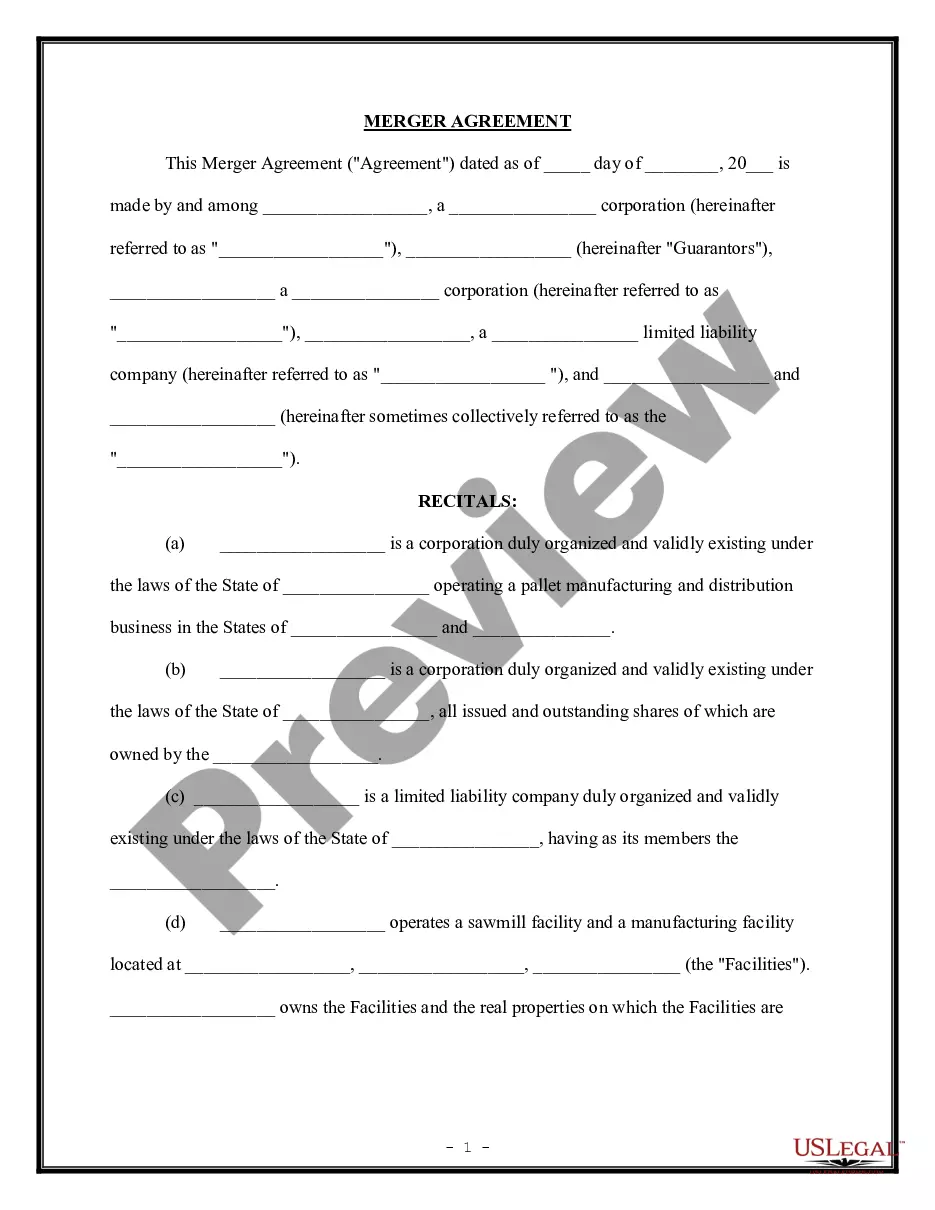
A merger is a combination of two or more business entities in which the assets and liabilities of all the entities are transferred to one, which continues in existence, while all the others cease to exist.
For example, if company ABC acquires XYZ, then the combined income statement cannot include sales from ABC to XYZ, nor can it include payment for services from XYZ to ABC. However, if ABC or XYZ sells to an external business entity, then those revenues are part of the consolidated income statement.
In other words, it's when two companies (or more) merge and become one. Many of the world's largest corporations were formed by business consolidation, while more recent examples include Facebook's acquisition of Instagram and Disney's acquisition of Fox.
To consolidate (consolidation) is to combine assets, liabilities, and other financial items of two or more entities into one. In the context of financial accounting, the term consolidate often refers to the consolidation of financial statements wherein all subsidiaries report under the umbrella of a parent company.
Consolidation in business can mean combining separate companies. For example, combining product lines or functional areas into one. It is a type of merger, but in this case, we create a new legal entity. For example, in 1996, two Swiss pharmaceutical companies ? Sandoz and Ciba-Geigy ? merged.
Consolidation happens when two or more companies merge to become one. Also known as amalgamation, business consolidation is most often associated with M&A activity. 1 This generally happens when several similar, smaller businesses combine to form a new, larger legal entity.
How to conduct a merger Consider company value. Before deciding whether to merge companies, the leadership teams and, if applicable, the boards of directors for both businesses carefully analyze the value of the two companies and their financial positions.Create a merger agreement.Restructure departments.