Comprehensive Selling Stockholder Questionnaire
What this document covers
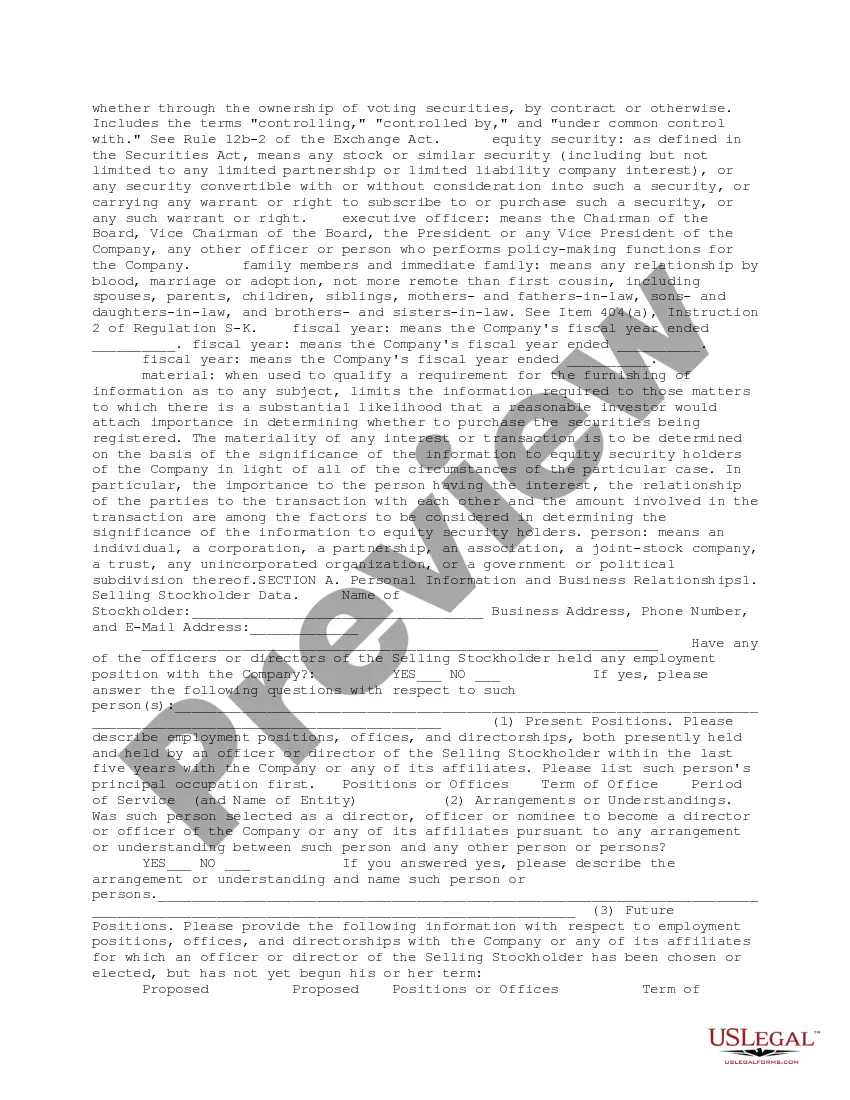
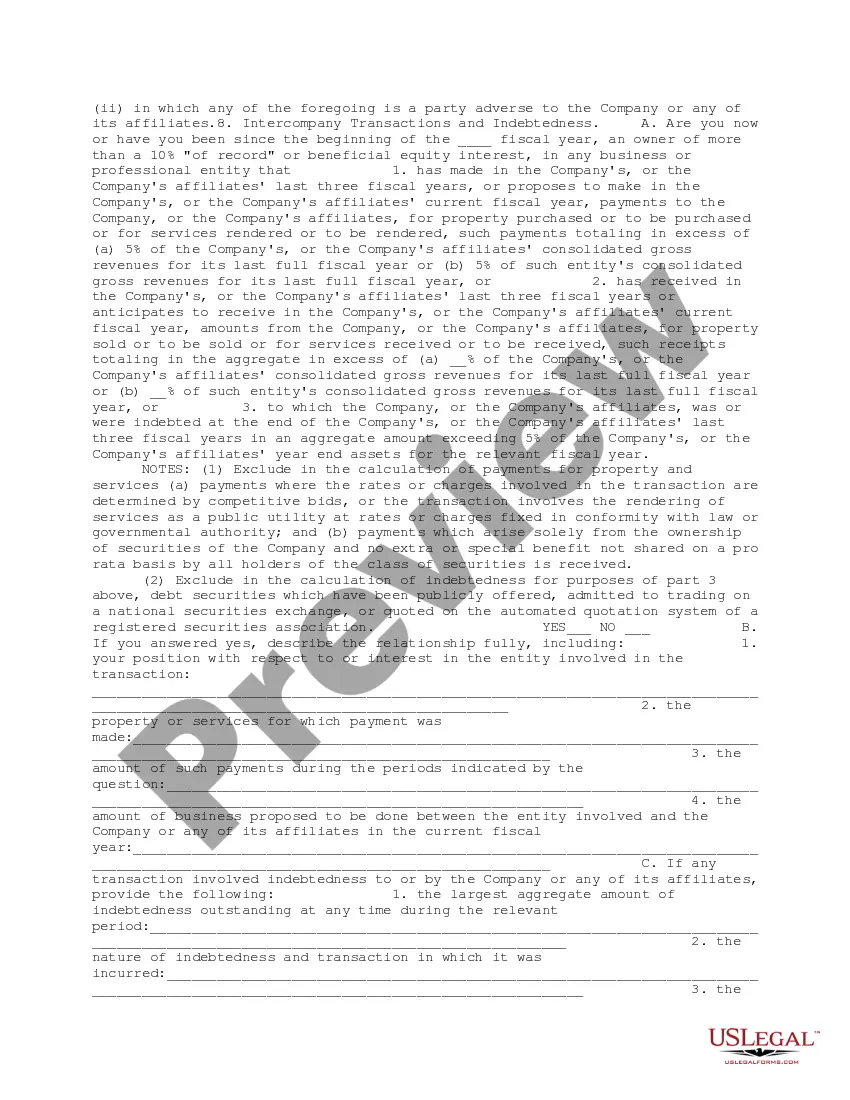
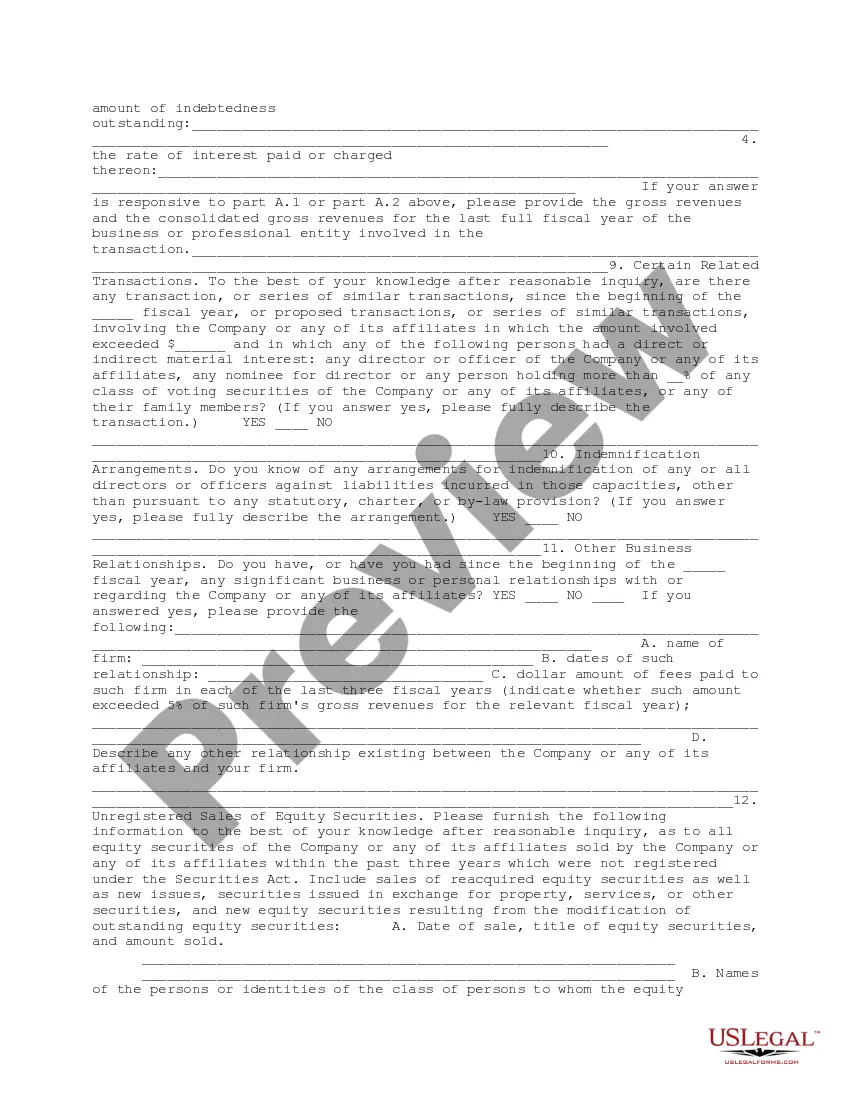
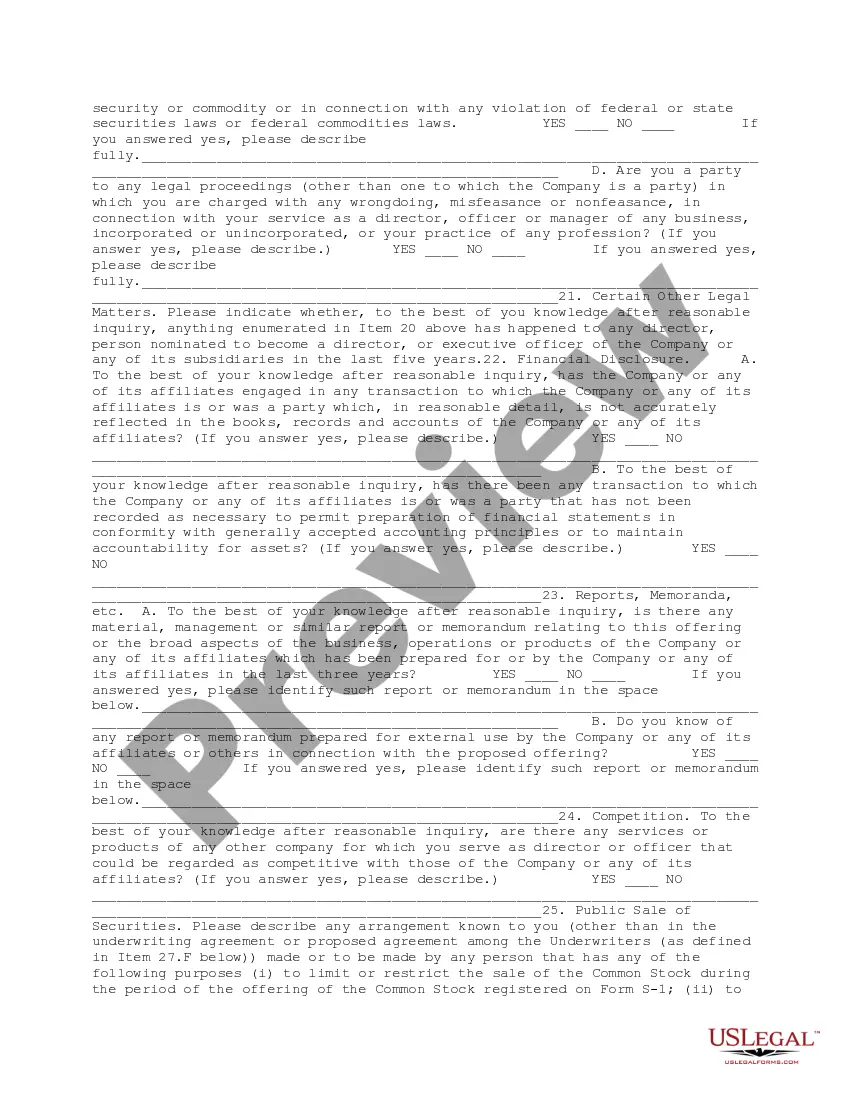
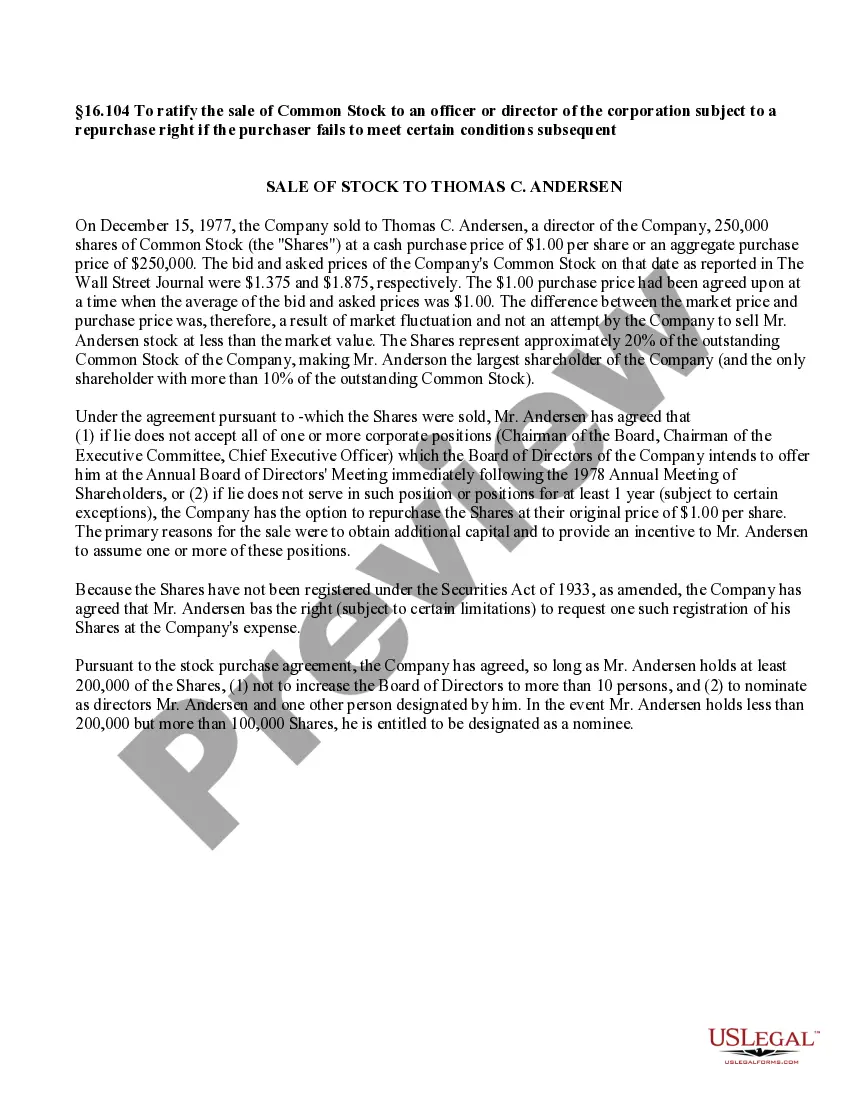
The Comprehensive Selling Stockholder Questionnaire is a crucial document used during the due diligence process in business transactions. It gathers essential information from individuals selling securities as part of a registration statement filed with the Securities and Exchange Commission (SEC). This questionnaire is key for ensuring that the registration statement contains accurate data and helps avoid personal liability for misrepresentations or omissions. Unlike other forms, this questionnaire specifically pertains to selling stockholders, making it unique in its application and necessity for compliance with securities regulations.
Key components of this form
- Personal and business information of the selling stockholder
- Details on past employment with the company and its affiliates
- Disclosure of any legal proceedings or investigations
- Information regarding business relationships and ownership of equity securities
- Verification statements ensuring accuracy of the provided information











Common use cases
This form should be used during the preparation of a registration statement when individuals are selling their shares in a company. It is essential for ensuring compliance with SEC requirements and helping to collect necessary disclosures from selling stockholders. Use this questionnaire whenever a company plans an underwritten offering of stock and needs to gather detailed information on those involved in the transaction.
Intended users of this form
- Individuals planning to sell their securities as part of a registration statement
- Corporations filing registration statements with the SEC
- Legal professionals assisting companies with compliance and due diligence
- Stockholders needing to certify their disclosures regarding ownership and relationships
Steps to complete this form
- Identify the selling stockholder and provide their name and business information.
- Complete all sections, providing details on employment history with the company and any related entities.
- Respond to all questions regarding legal proceedings, business relationships, and conflicts of interest accurately.
- Review definitions and clarify any uncertainties as per the instructions in the questionnaire.
- Sign and date the completed questionnaire, ensuring that all provided information is true and accurate.
Does this form need to be notarized?
In most cases, this form does not require notarization. However, some jurisdictions or signing circumstances might. US Legal Forms offers online notarization powered by Notarize, accessible 24/7 for a quick, remote process.
Get your form ready online
Our built-in tools help you complete, sign, share, and store your documents in one place.
Make edits, fill in missing information, and update formatting in US Legal Forms—just like you would in MS Word.
Download a copy, print it, send it by email, or mail it via USPS—whatever works best for your next step.
Sign and collect signatures with our SignNow integration. Send to multiple recipients, set reminders, and more. Go Premium to unlock E-Sign.
If this form requires notarization, complete it online through a secure video call—no need to meet a notary in person or wait for an appointment.
We protect your documents and personal data by following strict security and privacy standards.

Make edits, fill in missing information, and update formatting in US Legal Forms—just like you would in MS Word.

Download a copy, print it, send it by email, or mail it via USPS—whatever works best for your next step.

Sign and collect signatures with our SignNow integration. Send to multiple recipients, set reminders, and more. Go Premium to unlock E-Sign.

If this form requires notarization, complete it online through a secure video call—no need to meet a notary in person or wait for an appointment.

We protect your documents and personal data by following strict security and privacy standards.
Avoid these common issues
- Failing to complete all sections or skipping items that may seem irrelevant.
- Providing incomplete or vague answers instead of detailed information.
- Not updating information if circumstances change before submitting.
- Neglecting to sign the form, which is required for certification.
Why complete this form online
- Convenience of accessing and completing the form from any location.
- Editability allows for correct and accurate entries without hassle.
- Access to legal expertise during the completion process enhances reliability.
Looking for another form?

Form popularity
FAQ
Usually, a company will make an offering of stocks or bonds to the public in an attempt to raise capital to invest in expansion or growth.Sometimes companies will issue what is known as a shelf prospectus, detailing the terms of multiple types of securities that it expects to offer over the next several years.
Too many investors think a secondary stock offering from a growth stock is a bad thing. In some cases, they are.These stocks, which are usually bad investments, usually trend down (or at best sideways) before, and after, the offering because management is destroying value.
A stock offering is an essential part of the stock market. The world of finance is dynamic and vast. There's a lot that goes on to make the stock market run smoothly. Since the inception of financial securities and its market, we've been on the chase to find ways to profit.
For companies that aren't yet large enough to benefit from an initial public offering, a direct public offering can be an appealing alternative.In some instances, a company may find it easier to raise money through a direct public offering than through traditional debt financing like a bank loan.
According to conventional wisdom, a secondary offering is bad for existing shareholders. When a company makes a secondary offering, it's issuing more stock for sale, and that will bring down the price of the stock.
An offering is the issue or sale of a security by a company. It is often used in reference to an initial public offering (IPO) when a company's stock is made available for purchase by the public, but it can also be used in the context of a bond issue.
A public offering is the sale of equity shares or other financial instruments such as bonds to the public in order to raise capital. The capital raised may be intended to cover operational shortfalls, fund business expansion, or make strategic investments.
An offering occurs when a company makes a public sale of stocks, bonds, or another security. While the term offering is typically used in reference to initial public offerings (IPOs), companies can also make secondary offerings after their IPOs in order to raise additional capital.
A stock offering is an essential part of the stock market. The world of finance is dynamic and vast. There's a lot that goes on to make the stock market run smoothly. Since the inception of financial securities and its market, we've been on the chase to find ways to profit.