Virginia Trim Carpentry Contractor Package
What this form package covers
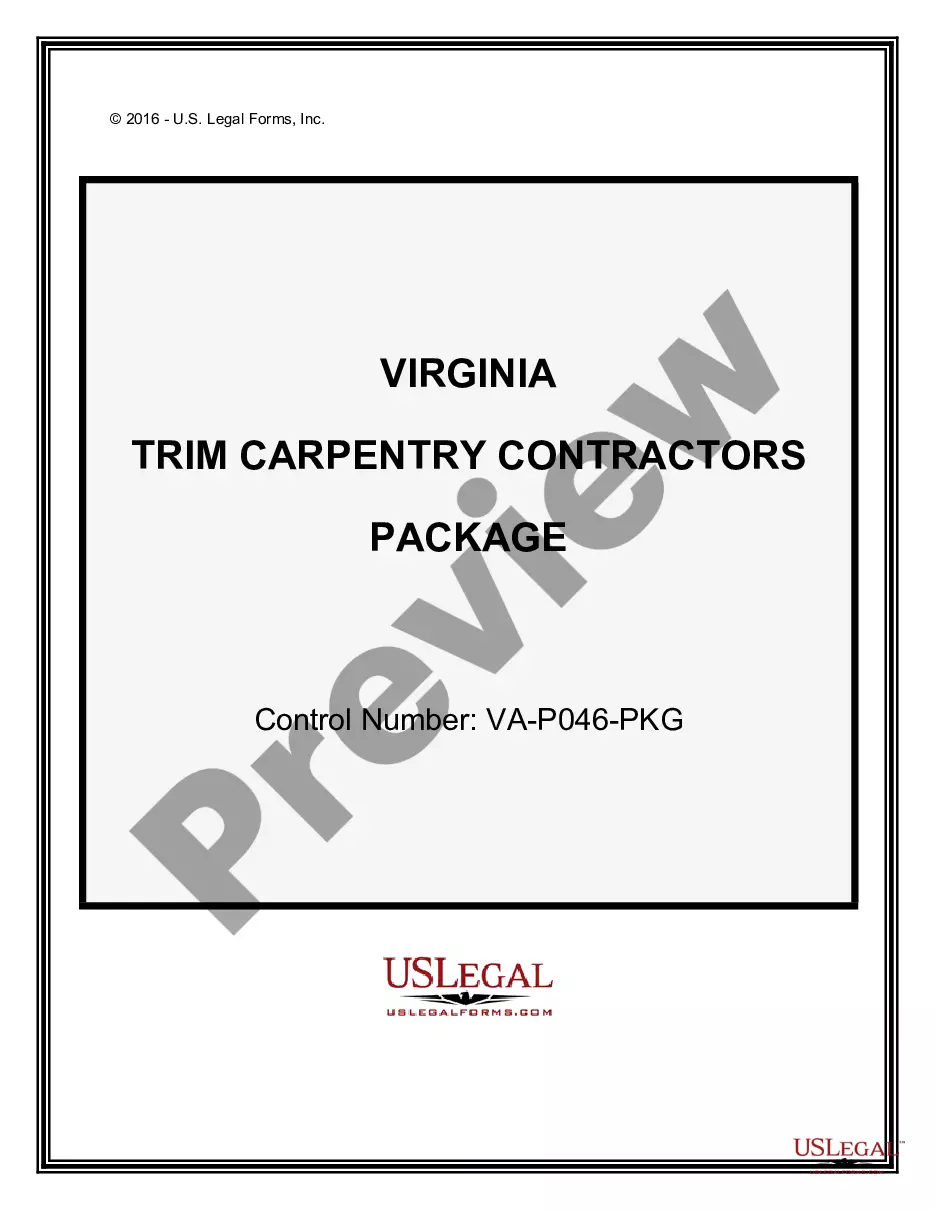
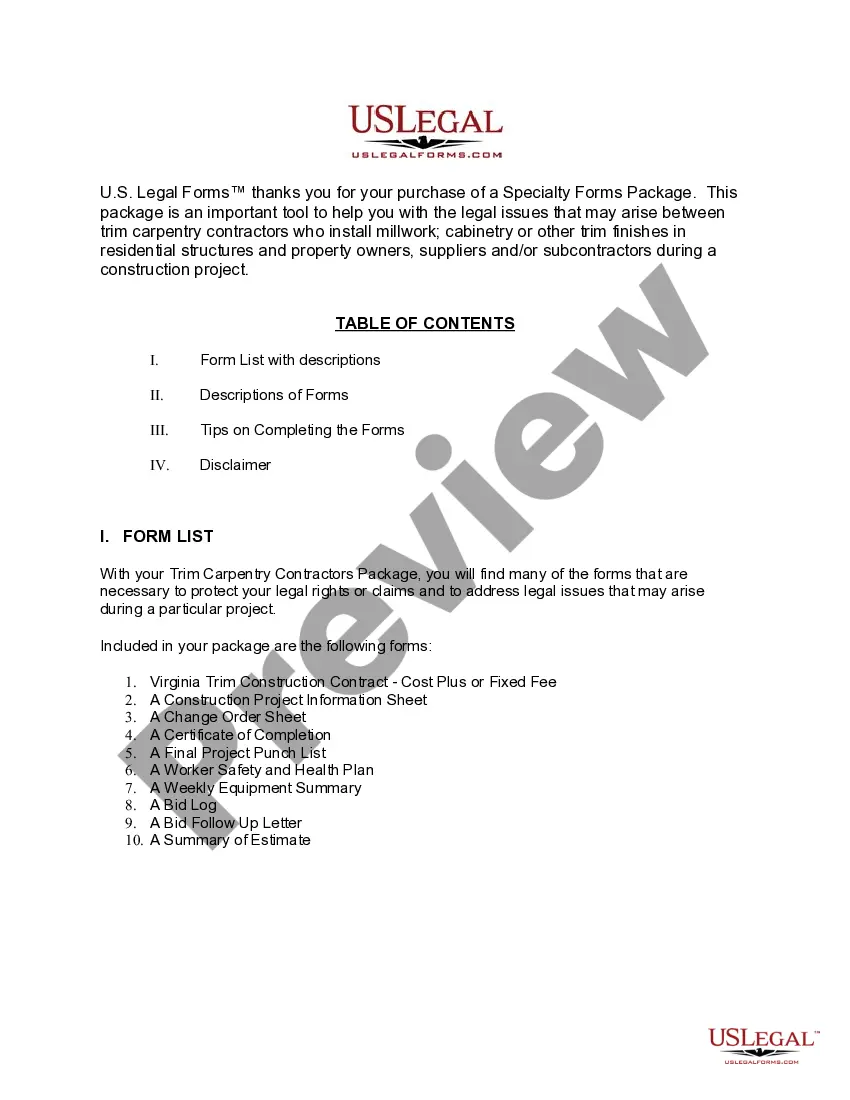
The Virginia Trim Carpentry Contractor Package is a comprehensive collection of legal documents designed specifically for contractors who install trim finishes, cabinetry, or millwork in residential structures. This package distinguishes itself by including a trim construction contract that complies with Virginia state law, ensuring that contractors can assert their legal rights and address significant legal matters related to their projects efficiently.
What’s included in this form package
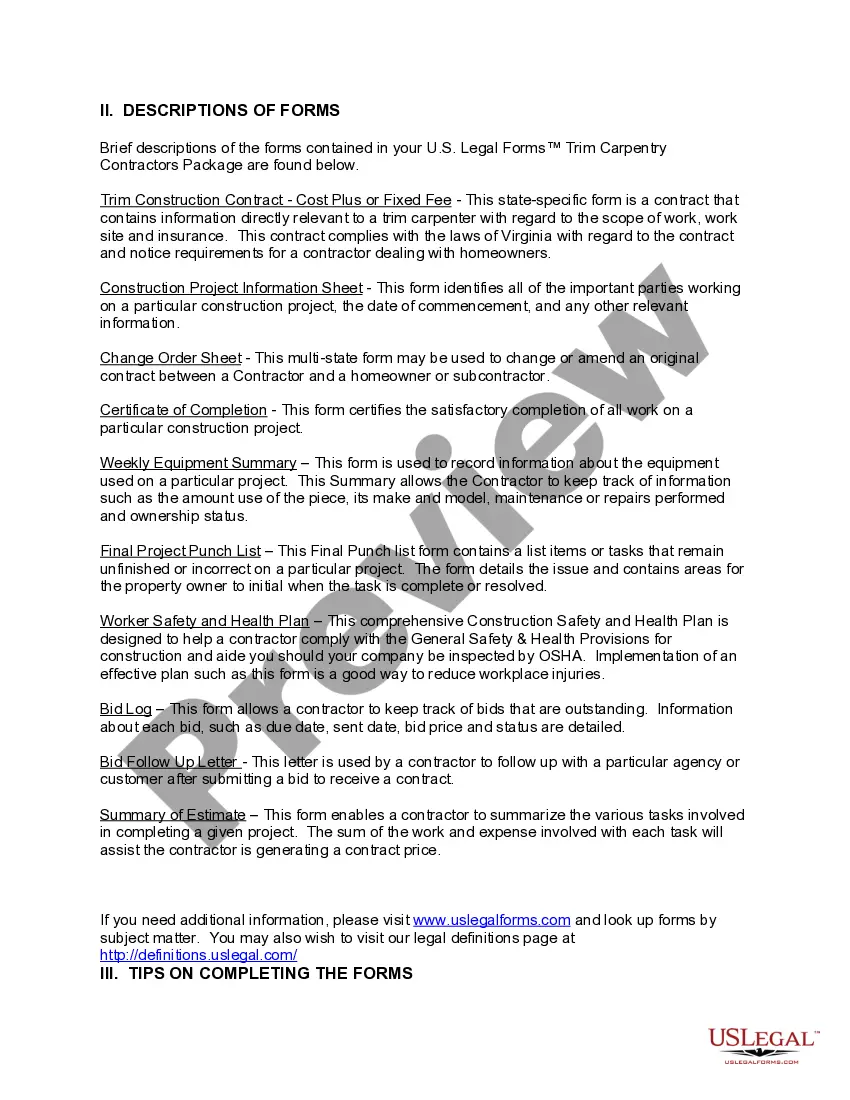
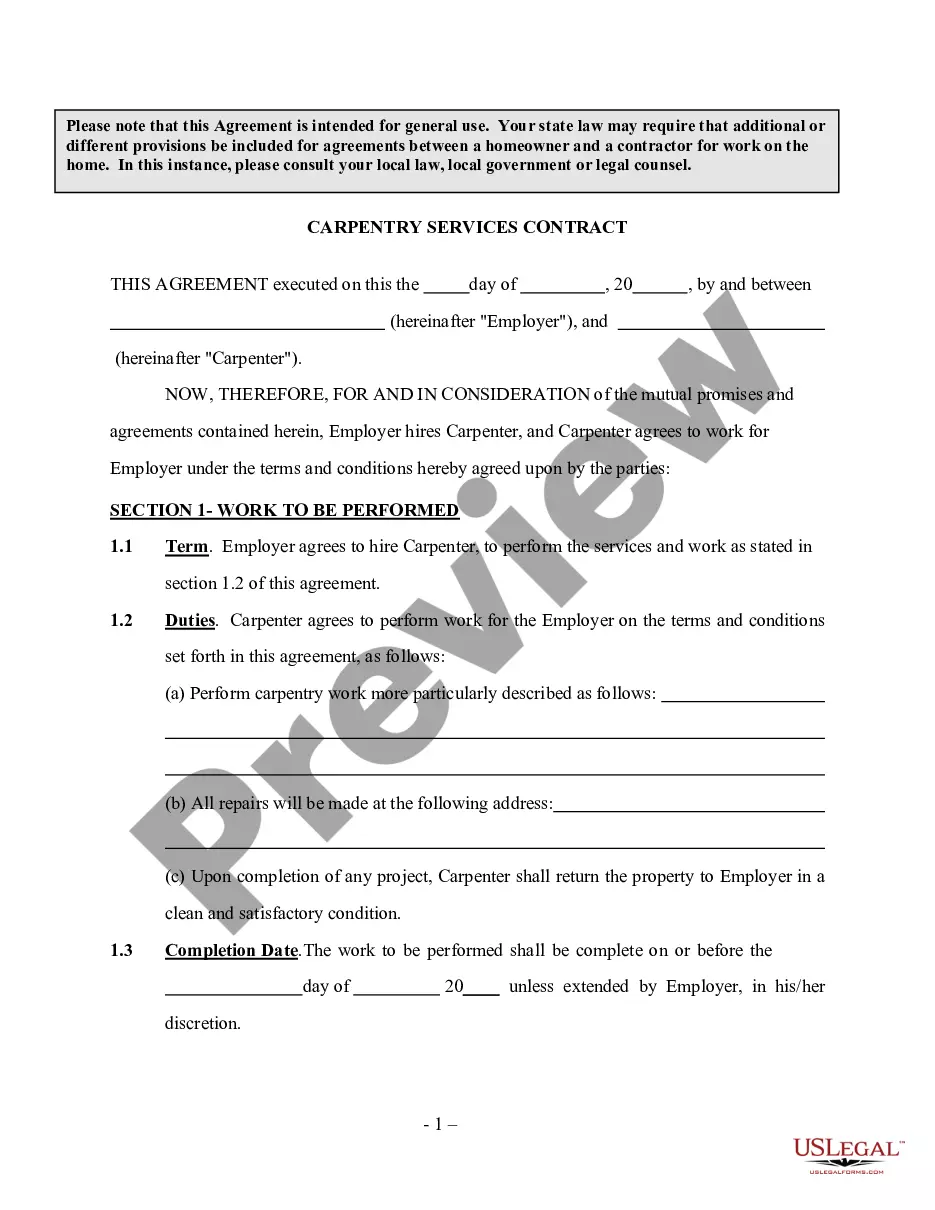
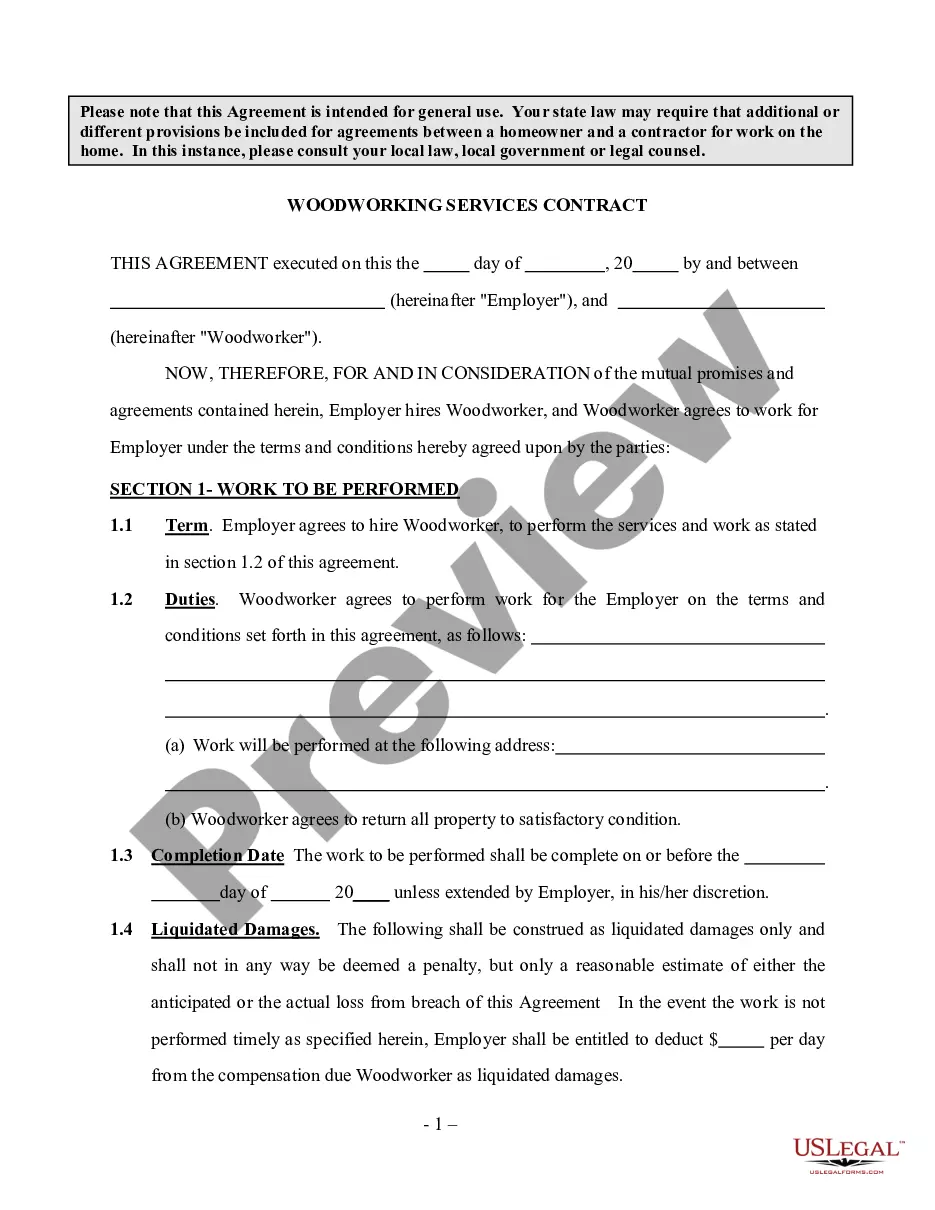
- Trim Carpenter Contract for Contractor
- Contractor's Weekly Equipment Summary
- Contractor's Bid Log
- Contractor's Bid Follow Up Letter
- Contractor's Summary of an Estimate
- Contractor's Final Punch List
- Construction Safety and Health Plan
- Change Order for Construction or Repairs by Contractor
- Certification of Completion by Contractor
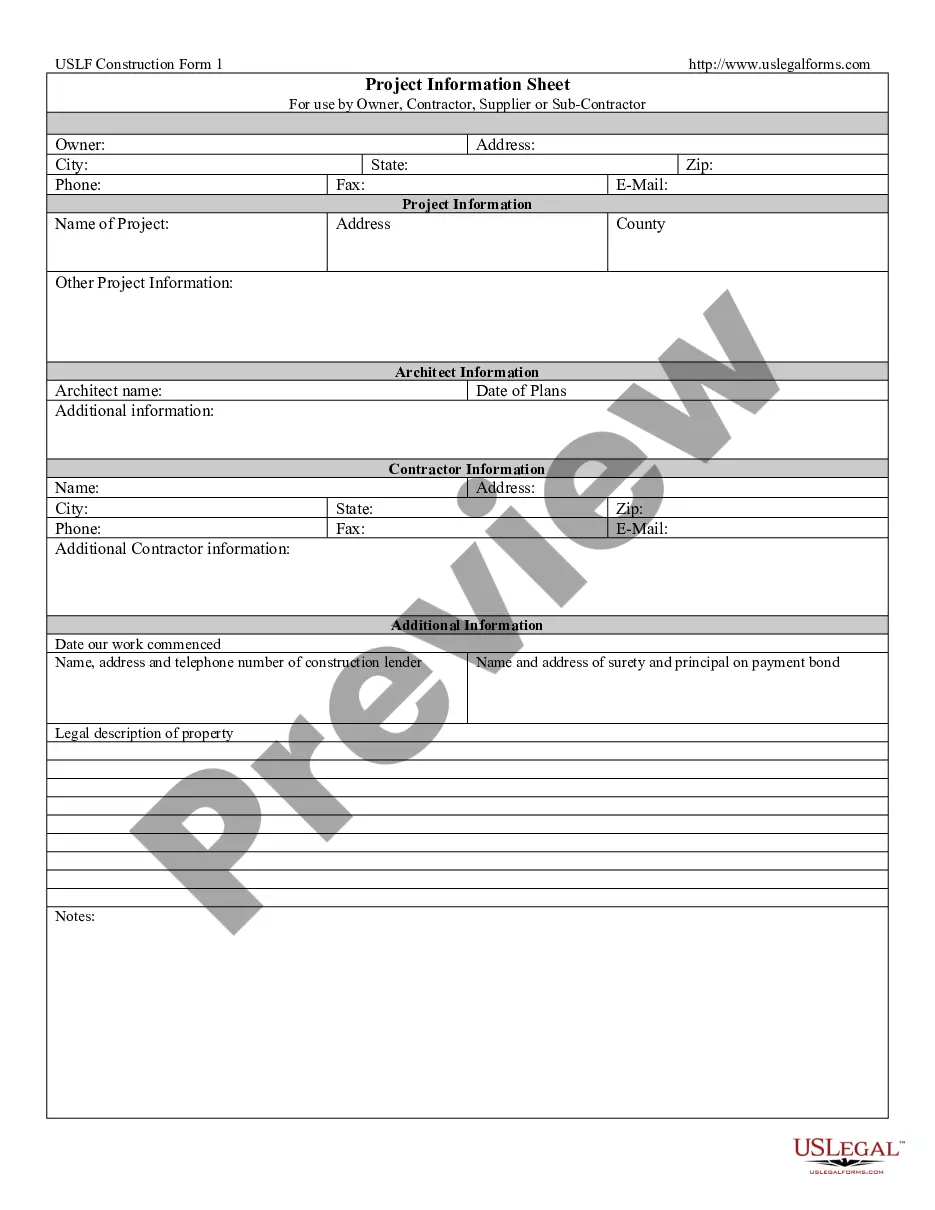
- Construction Project Information Sheet
Situations where these forms applies
This form package is useful in various scenarios, including:
- When entering into agreements with homeowners for trim carpentry projects.
- When modifications to the scope or terms of an existing contract are necessary.
- To document the completion of a project and ensure that all tasks are finalized.
- When tracking equipment use and maintaining worker safety standards on-site.
Intended users of this form package
- Trim carpentry contractors conducting business in Virginia.
- Subcontractors involved in drywall, cabinetry, or millwork installation.
- Property owners or managers negotiating contracts with contractors.
- Construction project managers overseeing trim installation projects.
Completing these forms step by step
- Review all forms included in the package to understand their purposes.
- Identify the parties involved in the contract and enter their information carefully.
- Fill in relevant project details, including dates and project descriptions.
- Have all parties review the completed forms and obtain signatures where necessary.
- Ensure that any change orders are documented and agreed upon by all relevant parties.
Notarization details for included forms
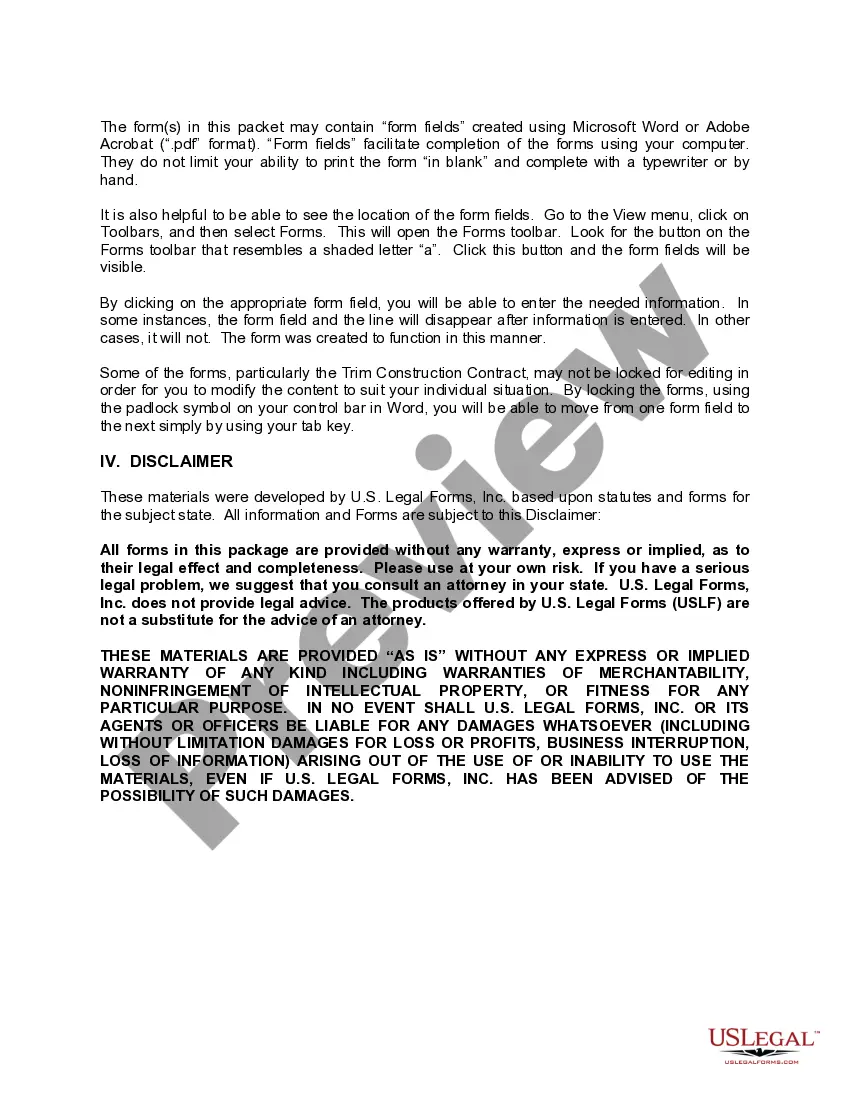
Forms in this package typically do not require notarization unless required by local law. However, it is always advisable to check the specific legal requirements for your project to ensure compliance.
Get your form ready online
Our built-in tools help you complete, sign, share, and store your documents in one place.
Make edits, fill in missing information, and update formatting in US Legal Forms—just like you would in MS Word.
Download a copy, print it, send it by email, or mail it via USPS—whatever works best for your next step.
Sign and collect signatures with our SignNow integration. Send to multiple recipients, set reminders, and more. Go Premium to unlock E-Sign.
If this form requires notarization, complete it online through a secure video call—no need to meet a notary in person or wait for an appointment.
We protect your documents and personal data by following strict security and privacy standards.

Make edits, fill in missing information, and update formatting in US Legal Forms—just like you would in MS Word.

Download a copy, print it, send it by email, or mail it via USPS—whatever works best for your next step.

Sign and collect signatures with our SignNow integration. Send to multiple recipients, set reminders, and more. Go Premium to unlock E-Sign.

If this form requires notarization, complete it online through a secure video call—no need to meet a notary in person or wait for an appointment.

We protect your documents and personal data by following strict security and privacy standards.
Common mistakes to avoid
- Failing to include all parties' signatures on the Trim Construction Contract.
- Neglecting to document changes using the Change Order Sheet, leading to disputes.
- Overlooking safety plan details that are critical for OSHA compliance.
- Not maintaining updated records on the Weekly Equipment Summary, resulting in inaccuracies.
Why use this package online
- Convenient access to all necessary forms in one downloadable package.
- The ability to edit forms electronically for customization according to your specific details.
- The reliability of having forms drafted by licensed attorneys to ensure compliance with Virginia laws.
- Cost savings of over fifty percent compared to purchasing forms separately.
Legal use & context
- These forms are designed to facilitate legal agreements and protect contractor rights.
- Ensure that all legal documents are completed accurately to avoid disputes.
- Keep records of all correspondence and project documents for legal compliance.
Looking for another form?

Form popularity
FAQ
Check Contract Basics. The basic job of a contractor agreement is to spell out the scope of the project's work. Set a Payment Schedule. Schedule Start and End Dates. Specify Change Orders. Research Your Arbitration Options. Turn Down the Contractor's Warranty.
Identifying/Contact Information. Title and Description of the Project. Projected Timeline and Completion Date. Cost Estimate and Payment Schedule. Stop Work Clause and Stop Payment Clause. Act of God Clause. Change Order Agreement. Warranty.
Scope of Work, Selection Sheet and Drawings. License Number and Insurance. Description of Change Orders. Warranty information. Subcontractor Agreements. Payment schedule. Completion Schedule / Timeline. Clauses Required by Law.
Identify the parties involved in the contract. Determine the terms and conditions you want to include in your contract. Write a draft using all the details you have gathered. Ask opinion from people in the same line of business. Review and make changes to your work.