Virginia Deed of Open Space Easement to County
About this form
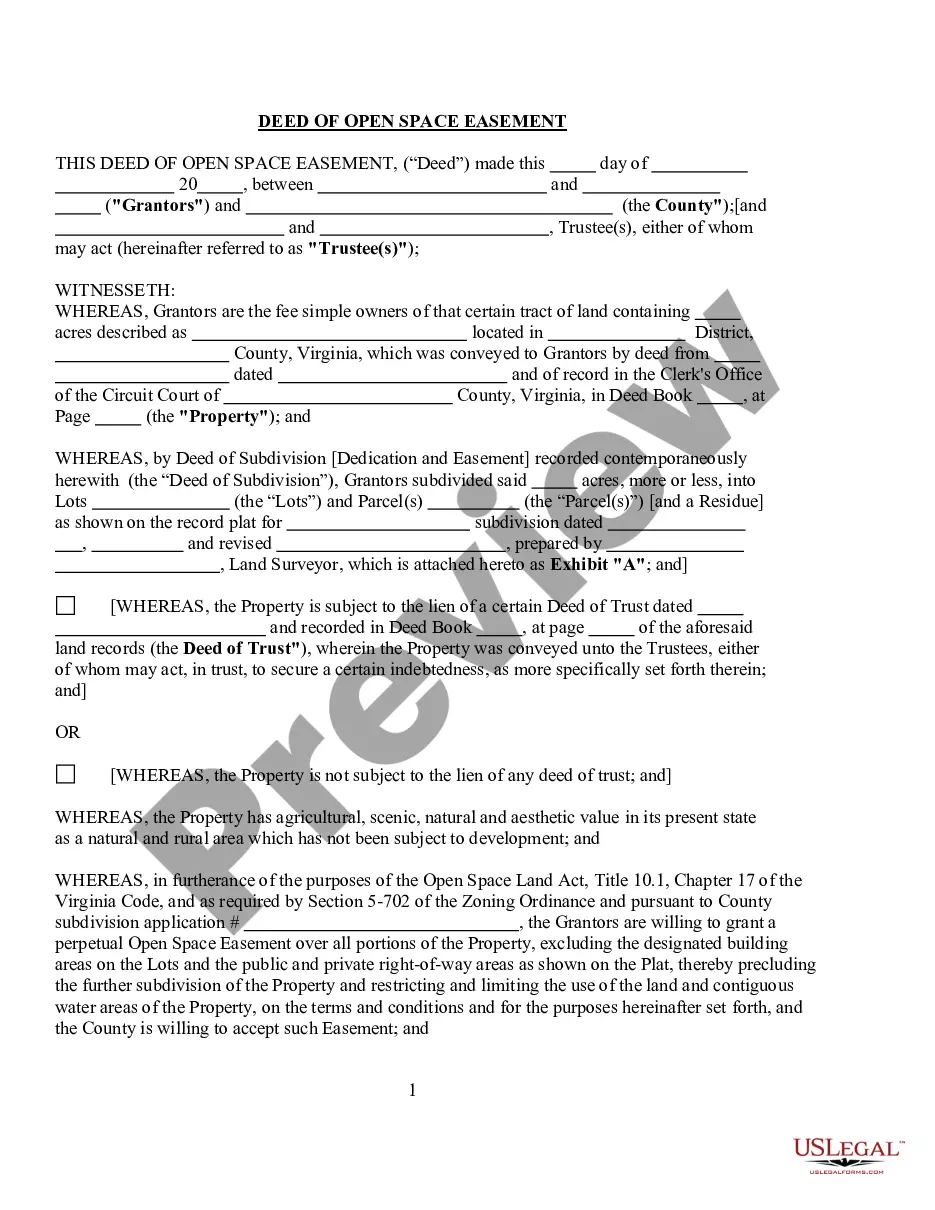
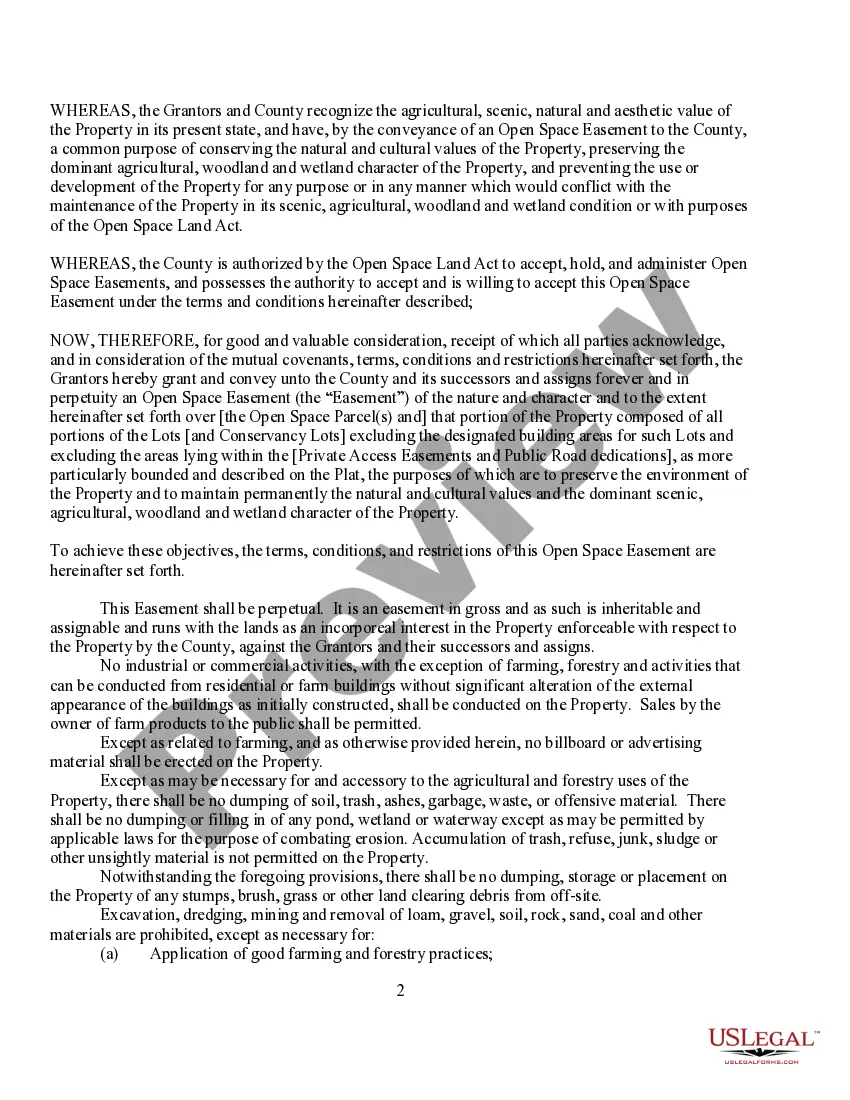
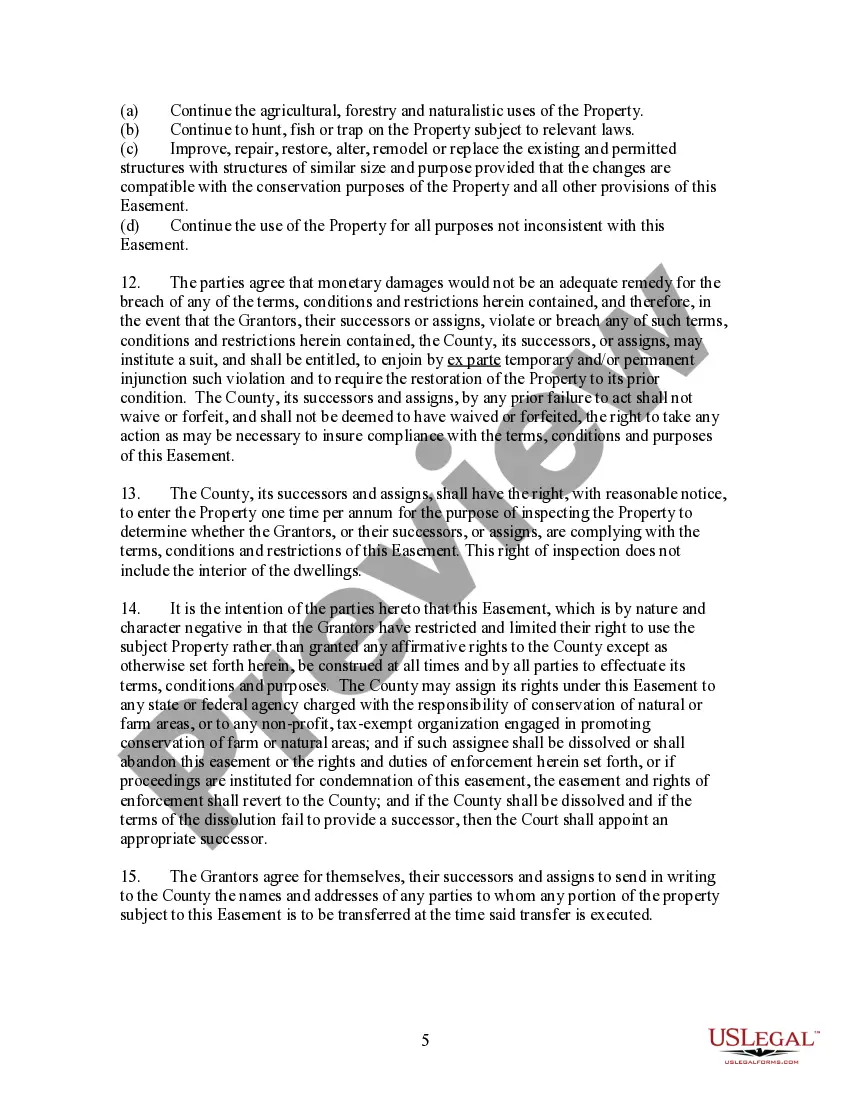
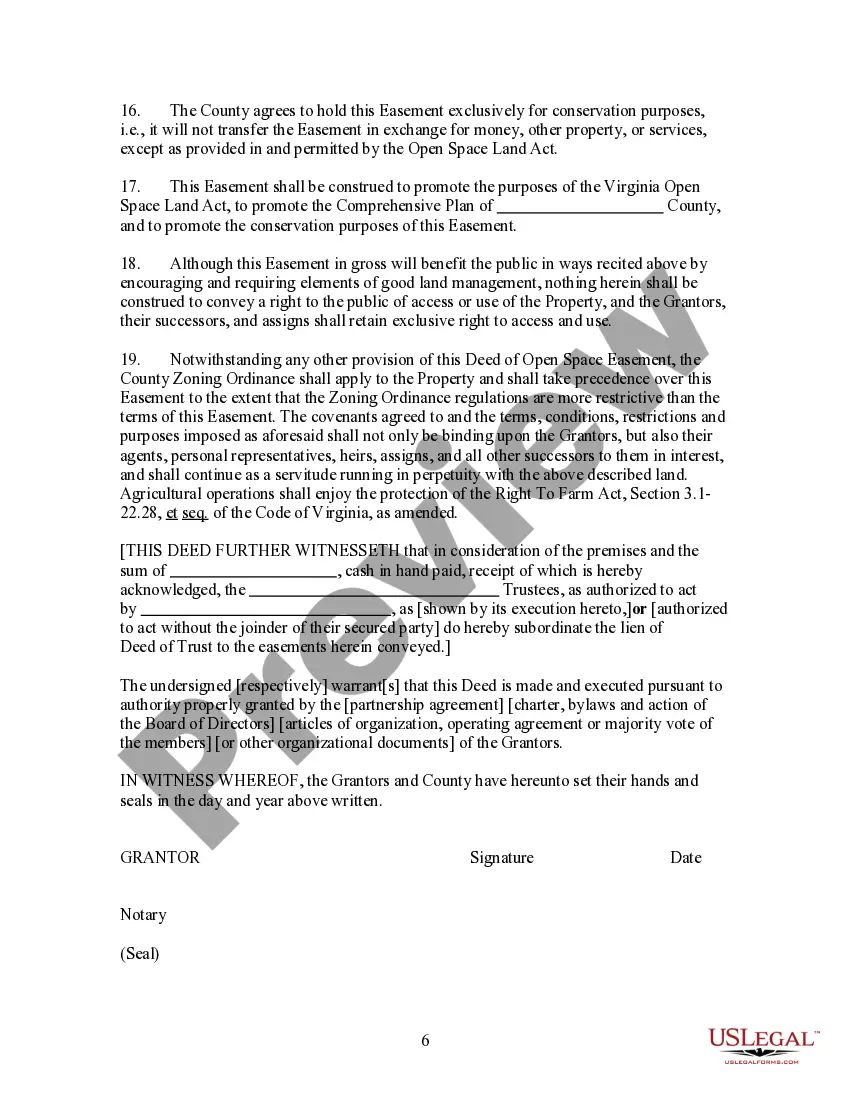
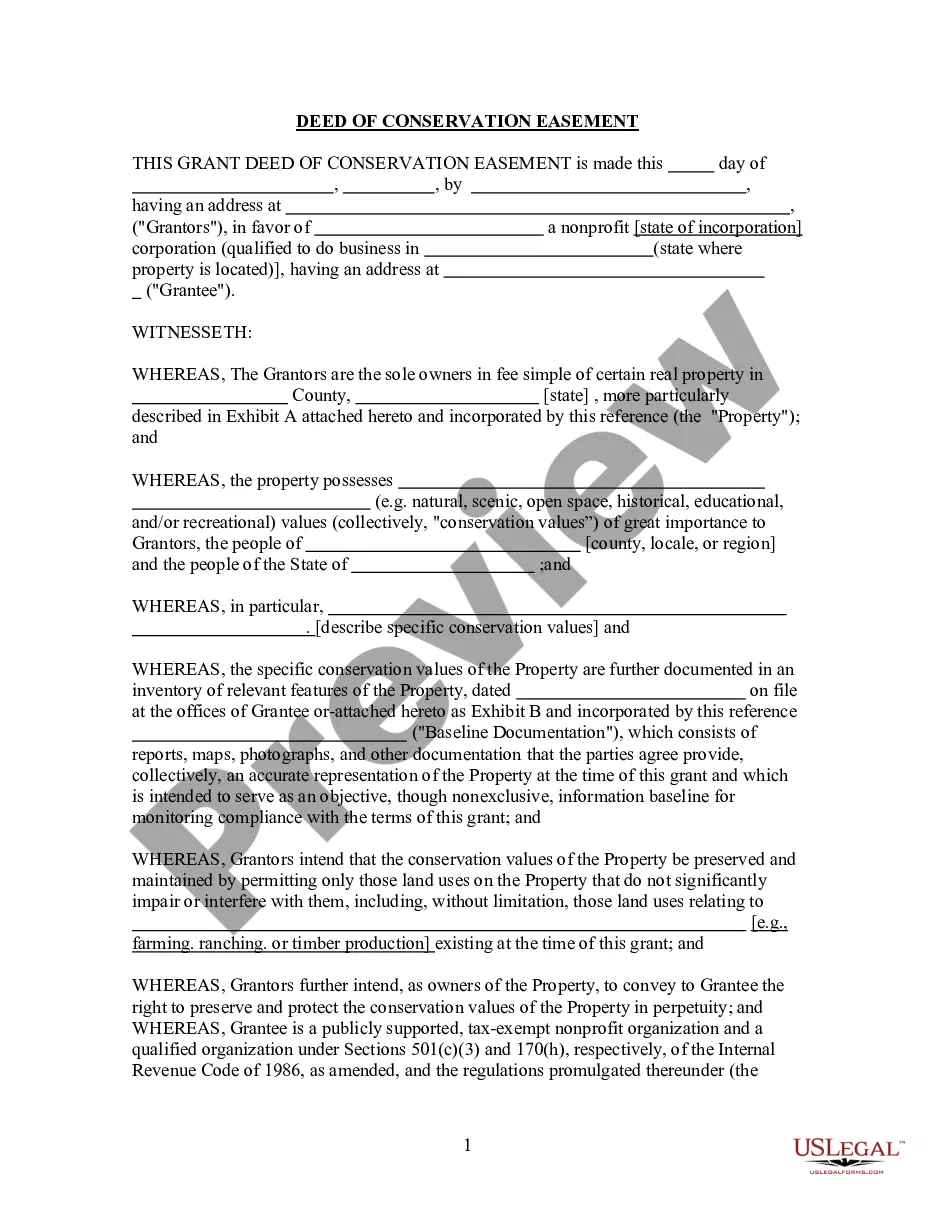
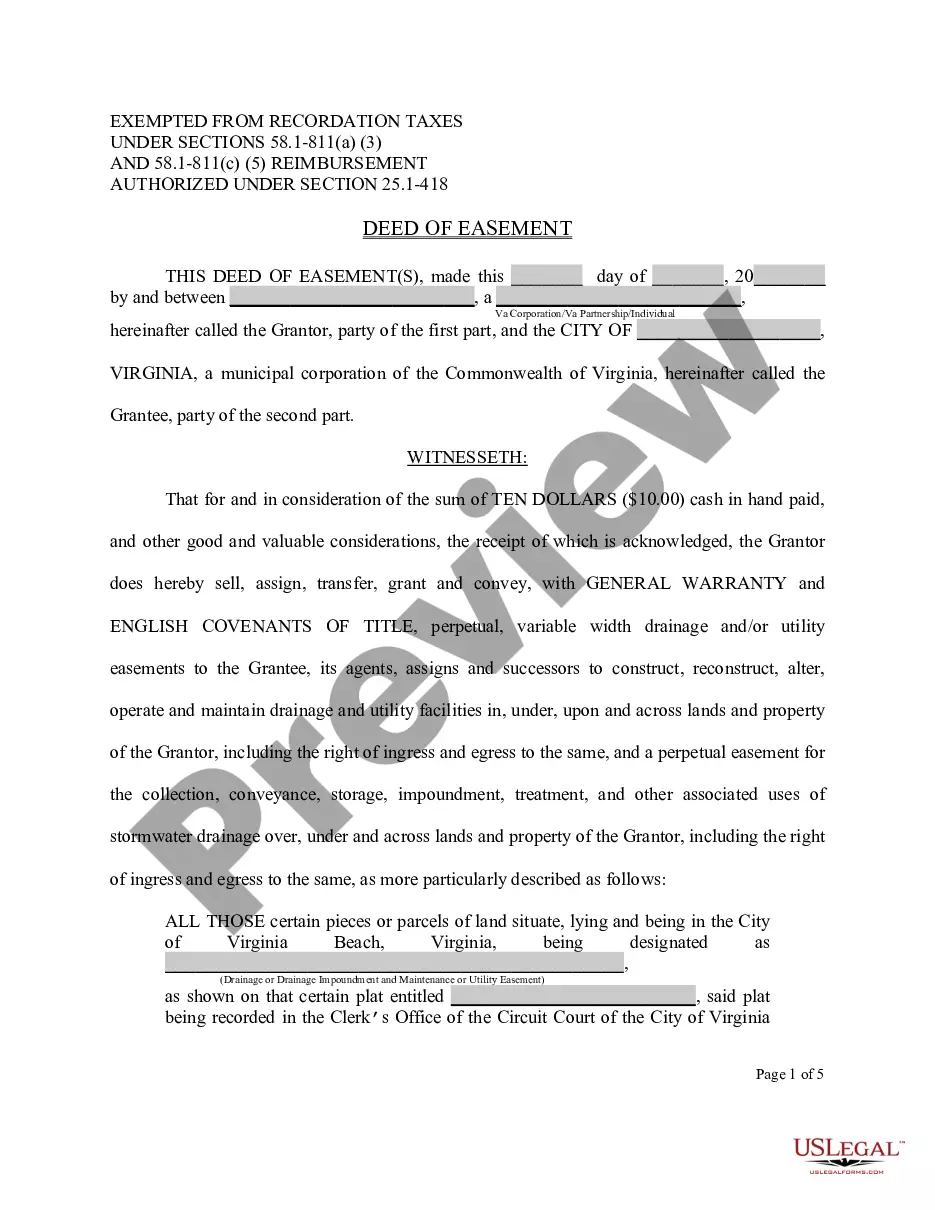
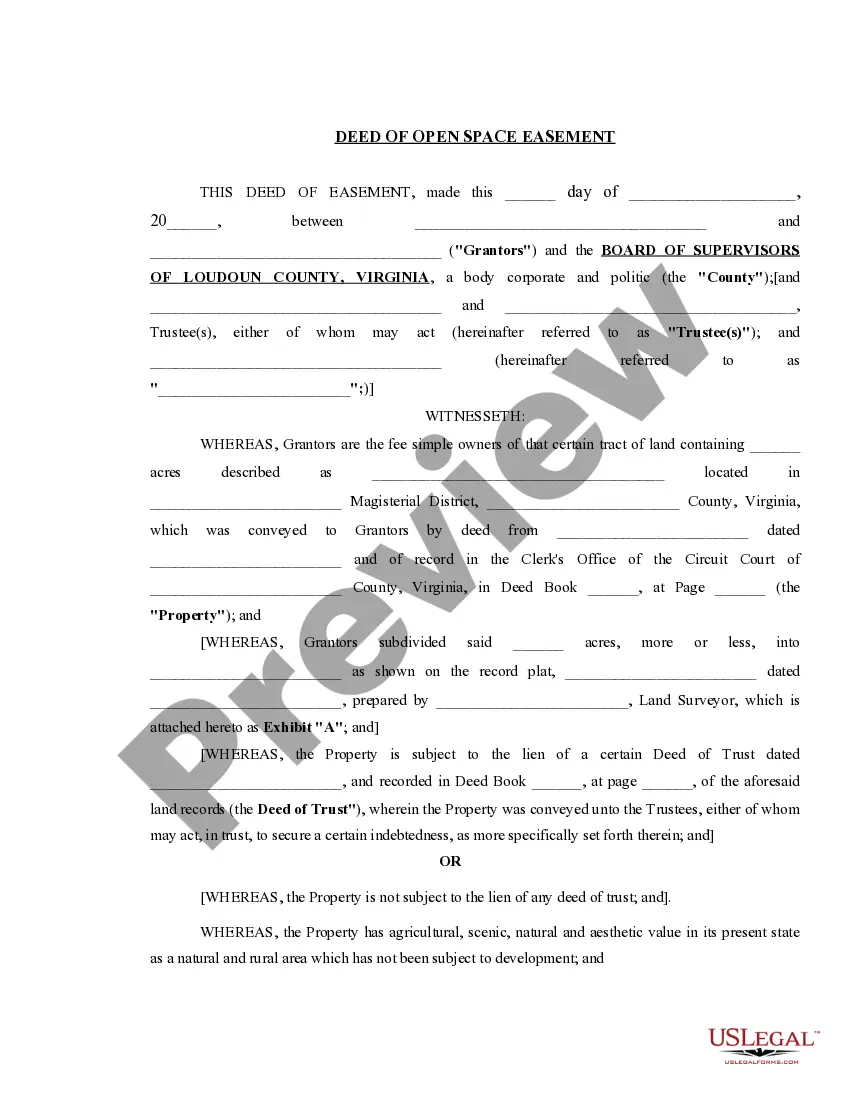
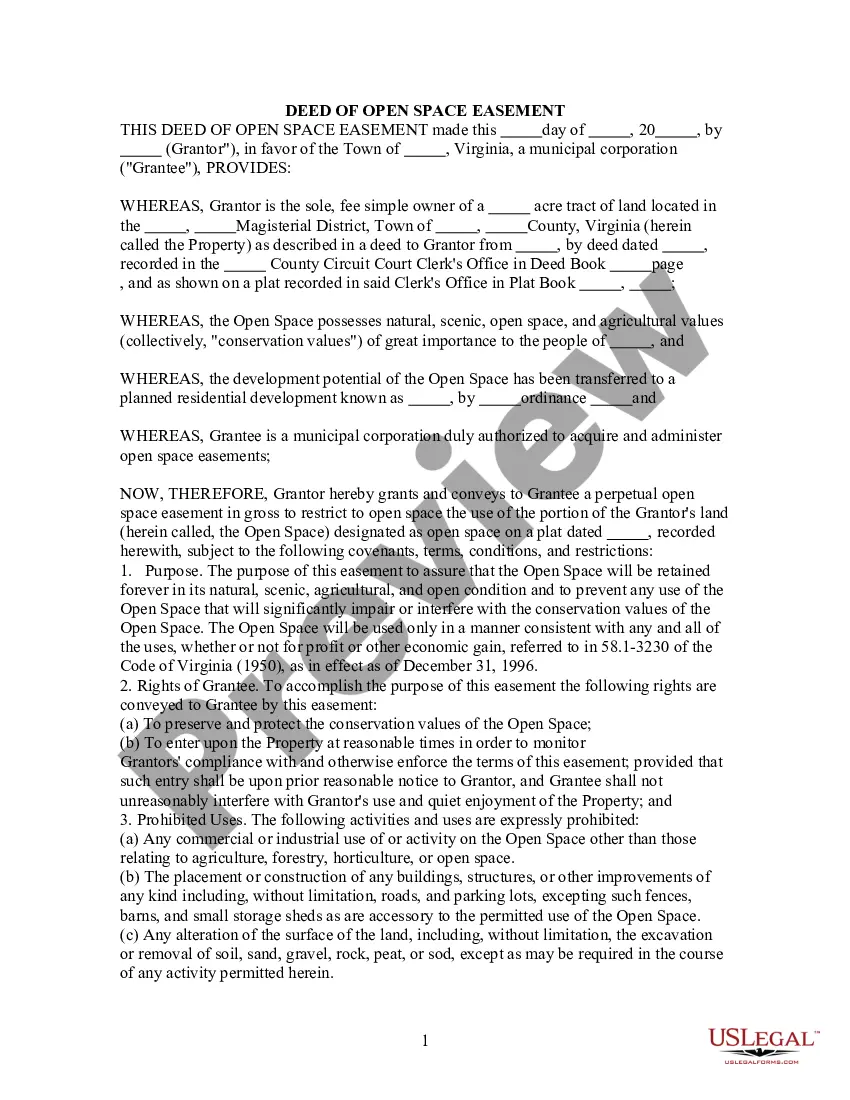
The Deed of Open Space Easement to County is a legal document that grants a specific party the rights to restrict the use of a property in order to preserve its agricultural, scenic, natural, and aesthetic values. This form is distinct from general easements as it aims to promote conservation aligned with the Virginia Open Spaces Land Act, focusing on maintaining land in its natural state and preventing development that conflicts with its intended use.
Key components of this form
- Identification of Grantors and the County involved in the easement.
- Description of the property subject to the easement, outlining boundaries and details.
- General purpose of the easement, which is to conserve the propertyâs natural and cultural values.
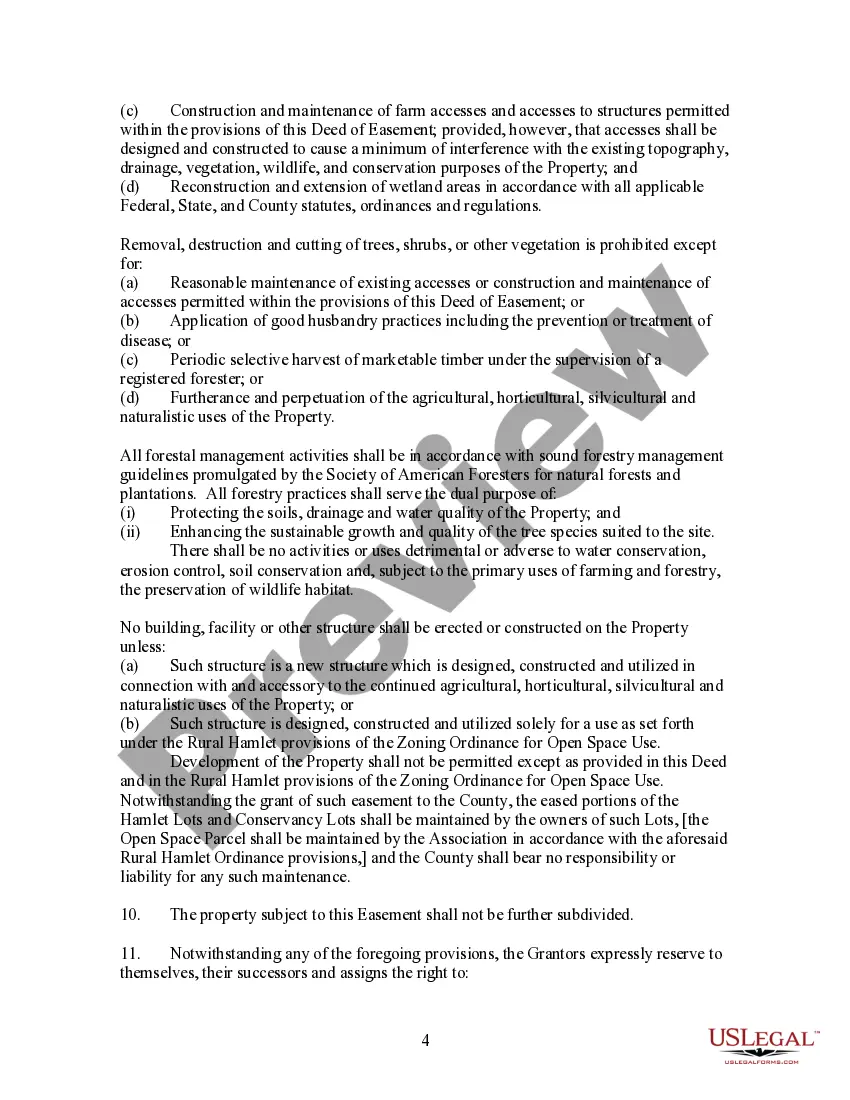
- Restrictions on the use of the property, including prohibitions on industrial activities and terms for agricultural use.
- Provisions for maintenance responsibilities and enforcement rights by the County.
- Terms regarding possible violation consequences and rights to inspection by the County.


When to use this document
This form should be used when an individual or entity wishes to grant an easement to a county or local government for the purpose of preserving open space under the guidelines of the Virginia Open Spaces Land Act. It is relevant in situations where landowners want to ensure that their property remains undeveloped and retains its natural qualities for agricultural or scenic purposes.
Who should use this form
Consider this form if you are:
- A landowner who wishes to conserve the environmental characteristics of your property.
- A county official responsible for managing open spaces and conservation efforts.
- A real estate professional advising clients on property rights and easements.
- An environmental group looking to work with landowners on conservation projects.
Steps to complete this form
Follow these steps to complete the Deed of Open Space Easement:
- Identify the Grantors, including all parties involved in conveying the easement.
- Provide a detailed description of the property, including its boundaries and any relevant details.
- State the purpose of the easement clearly, emphasizing conservation goals.
- Outline the specific restrictions on property usage to prevent incompatible activities.
- Include signatures of all necessary parties to formalize the easement agreement.
Notarization requirements for this form
This form does not typically require notarization unless specified by local law.
Get your form ready online
Our built-in tools help you complete, sign, share, and store your documents in one place.
Make edits, fill in missing information, and update formatting in US Legal Forms—just like you would in MS Word.
Download a copy, print it, send it by email, or mail it via USPS—whatever works best for your next step.
Sign and collect signatures with our SignNow integration. Send to multiple recipients, set reminders, and more. Go Premium to unlock E-Sign.
If this form requires notarization, complete it online through a secure video call—no need to meet a notary in person or wait for an appointment.
We protect your documents and personal data by following strict security and privacy standards.

Make edits, fill in missing information, and update formatting in US Legal Forms—just like you would in MS Word.

Download a copy, print it, send it by email, or mail it via USPS—whatever works best for your next step.

Sign and collect signatures with our SignNow integration. Send to multiple recipients, set reminders, and more. Go Premium to unlock E-Sign.

If this form requires notarization, complete it online through a secure video call—no need to meet a notary in person or wait for an appointment.

We protect your documents and personal data by following strict security and privacy standards.
Typical mistakes to avoid
- Neglecting to accurately describe property boundaries can lead to disputes.
- Failing to specify all restrictions on the property may allow for unintended uses.
- Not having all parties sign the form, which could invalidate the agreement.
- Overlooking state-specific requirements that could affect the easement's legality.
Benefits of completing this form online
- Convenience of completing the form online and downloading it instantly.
- Editability helps customize the document to suit specific needs.
- Reliability from forms drafted by licensed attorneys with expertise in property law.
- The easement granted can be enforced by the County against any future owners of the property.
- Violation of the easement terms may lead to legal action, preventing unauthorized uses.
- This easement is intended for perpetual conservation and is inheritable.
What to keep in mind
- The Deed of Open Space Easement is vital for land preservation efforts and preventing inappropriate development.
- Understanding and accurately completing the form ensures legal validity and compliance with conservation goals.
- Involving legal counsel when drafting or executing such easements can avoid common pitfalls.
Looking for another form?
Form popularity
FAQ
While an unrecorded easement may still be enforceable, the easement may be nullified by a "bona fide purchaser" of the property if the property is sold for value and the subsequent purchaser has no notice (constructive or otherwise) of the unrecorded easement.
You must apply to register an easement in form AP1 where both the benefiting land and the servient land are registered. When the benefitting land is unregistered you can apply to register the easement using either form AP1 or form AN1 to meet the registration requirements (rule 90 of the Land Registration Rules 2003).
Not all easements are recorded. If they have been recorded, they can be lost after many years or changes of land ownership. If you purchase property with an eye towards development, the discovery of a lot or unrecorded easement deed, which is still a legal document, can cause problems.
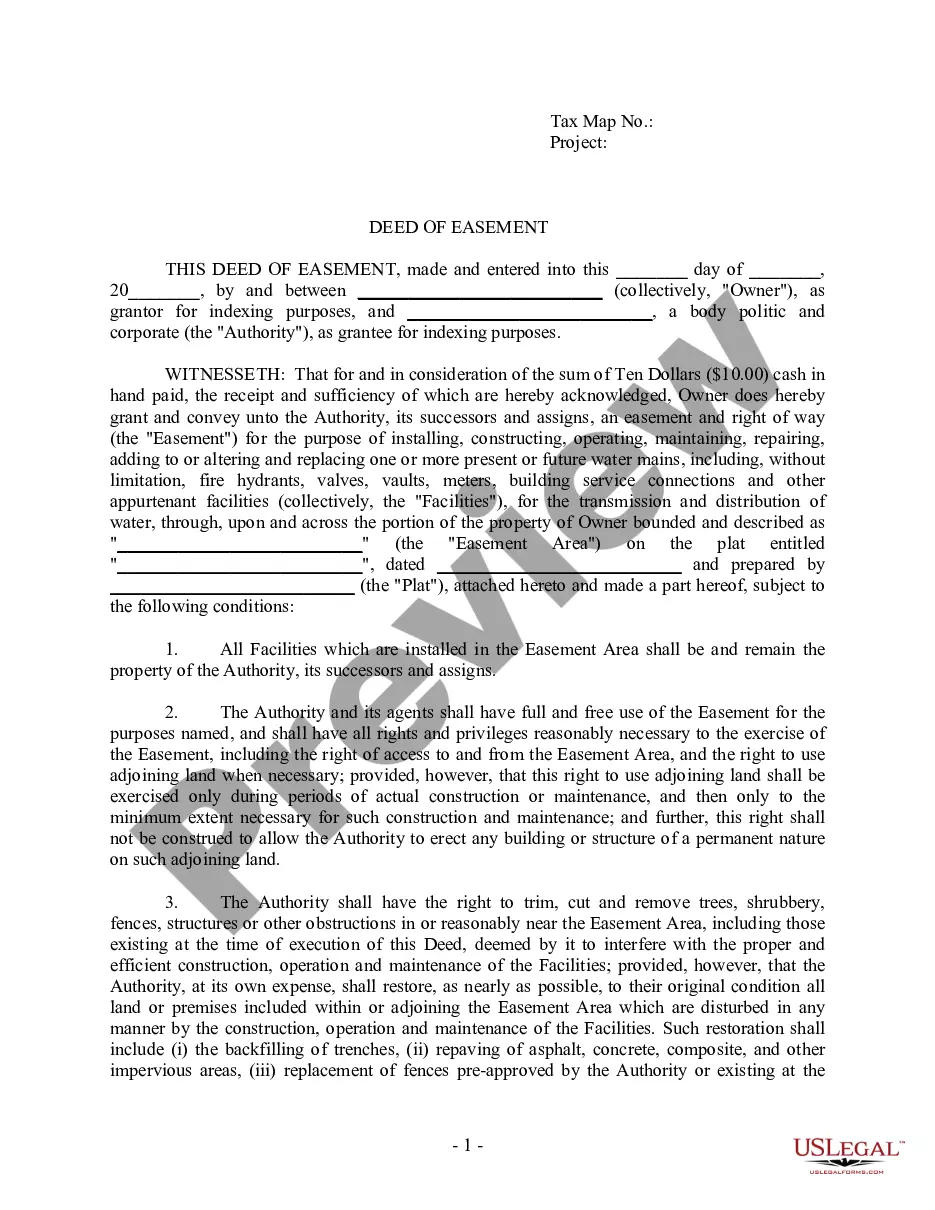
An easement deed allows a party that is not the owner to use a portion of the land. It is a written agreement between two parties that spells out what part of the property is available for access and how it may be used. Since you are granting an easement to your land, you can set any terms and conditions you like.
Easements can be created in a variety of ways. They can be created by an express grant, by implication, by necessity, and by adverse possession.
There must be a dominant and a servient tenement; The easement must accommodate the dominant tenement, that is, be connected with its enjoyment and for its benefit; The dominant and servient owners must be different persons; The right claimed must be capable of forming the subject-matter of a grant.
Easements are usually but not always registered on the Title to the property. Registration takes place with Land and Property Information in NSW and the Office of Regulatory Services in the ACT. The purpose of registering an easement over land is to show on the public record that an easement exists.
An easement may be created by means of an appropriate dealing registered in NSW LRS or by the inclusion in a Section 88B instrument lodged with a new deposited plan.
3 attorney answers Just record the easement. The register of deeds must record it if it is in recordable form.