Illegal Gratuity to a Public Official
What this document covers
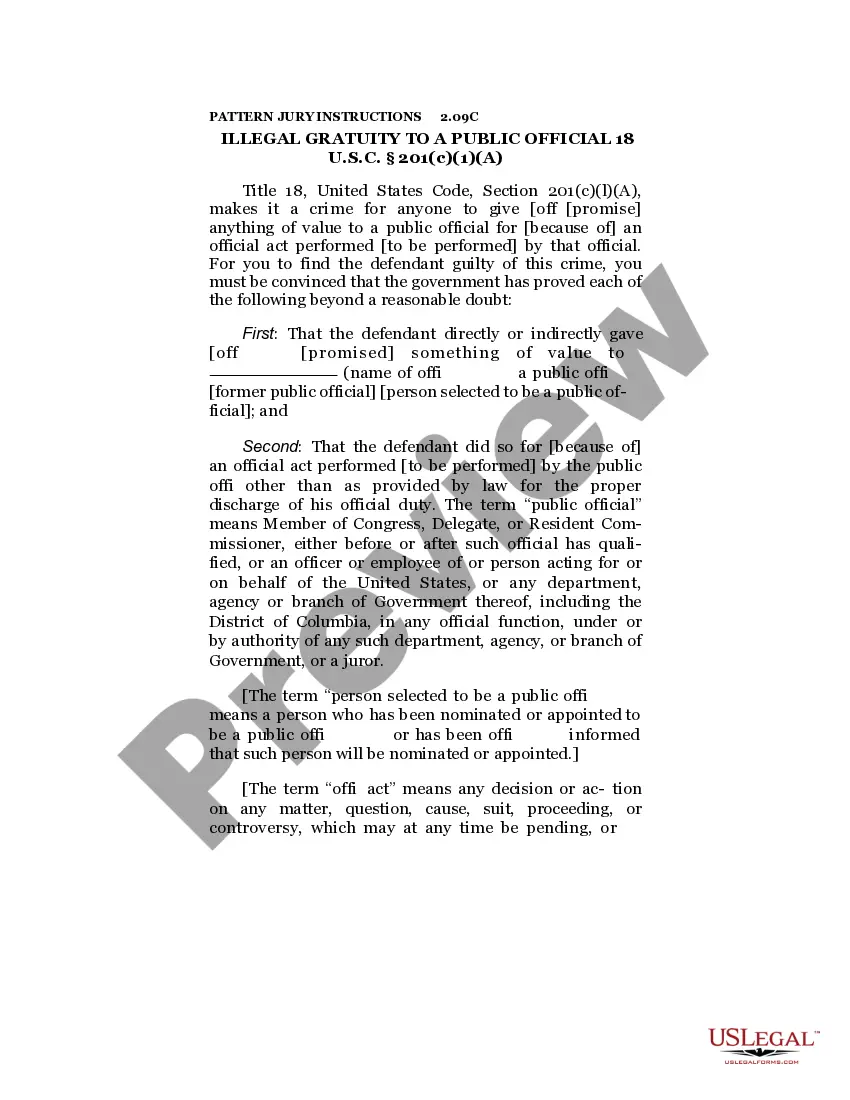
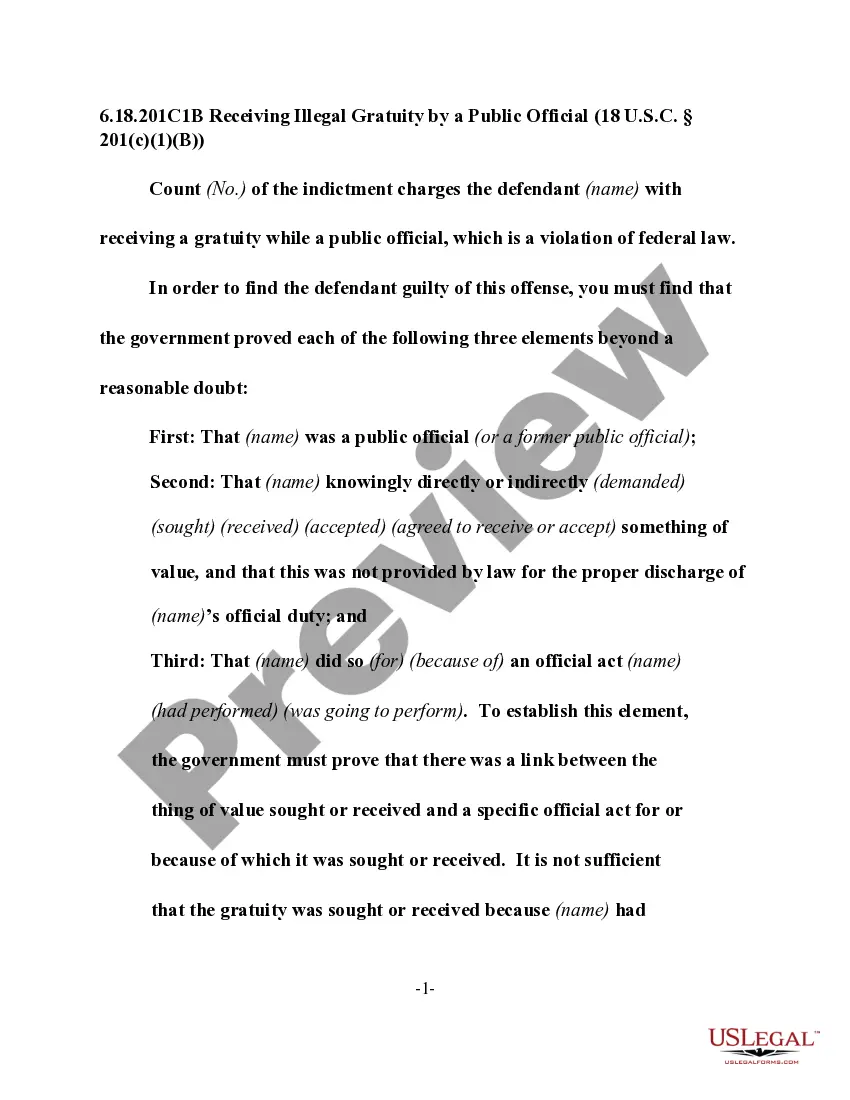
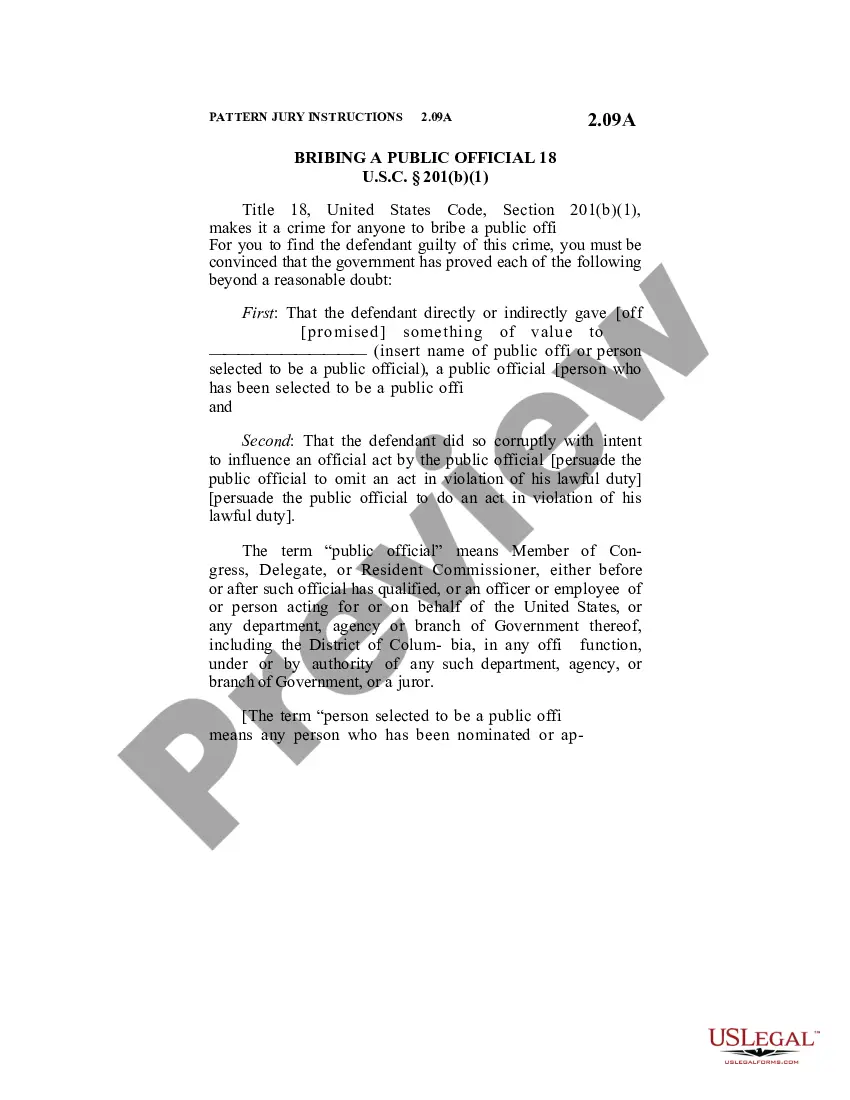
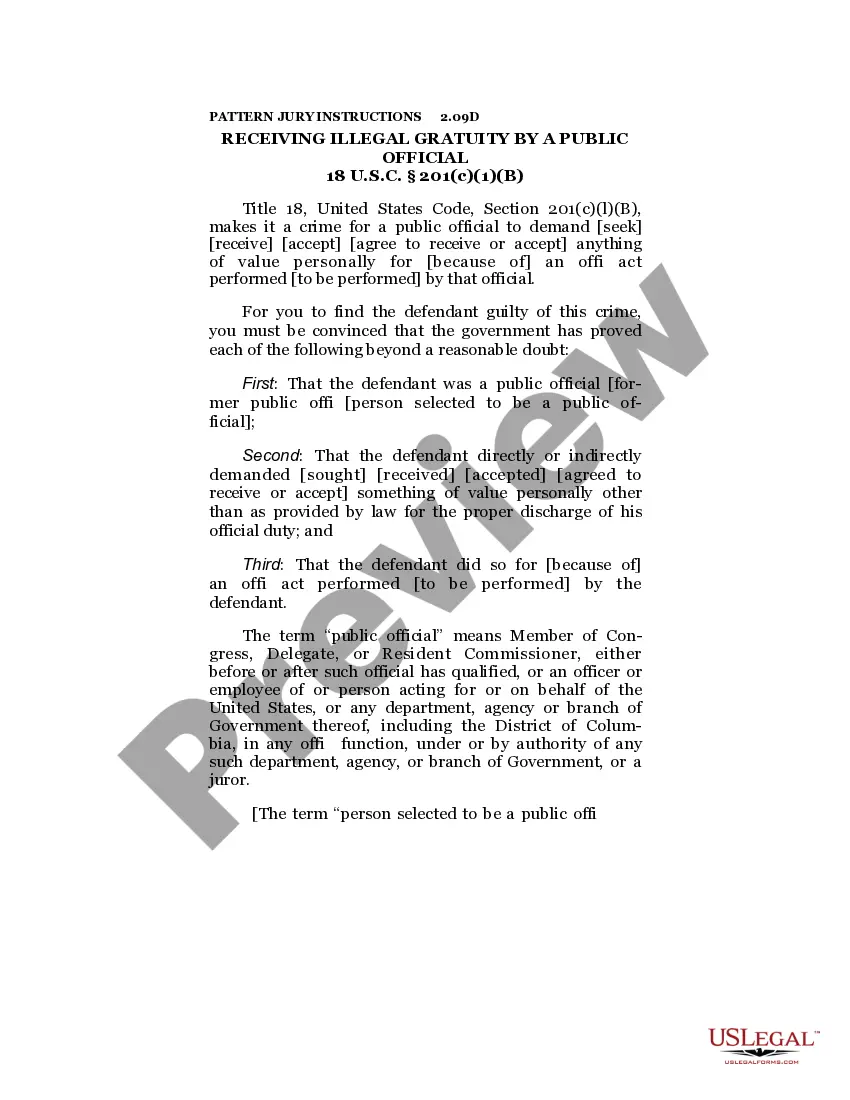
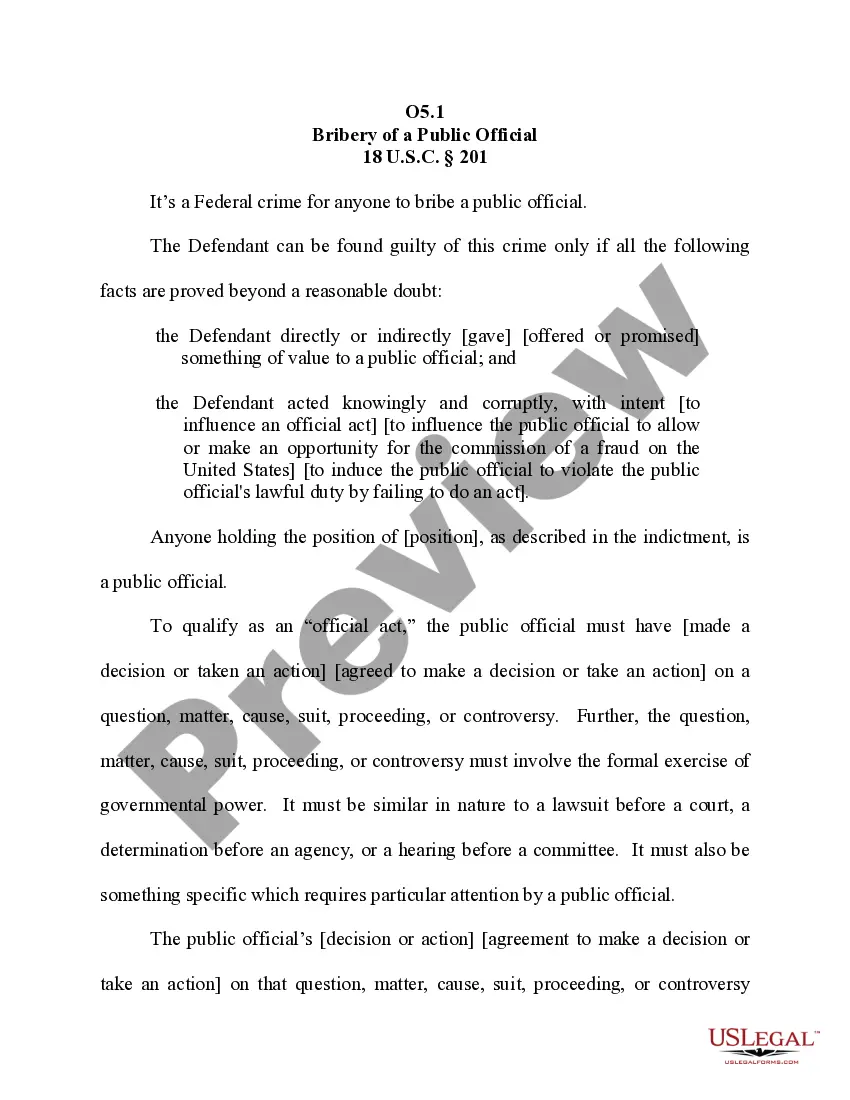
The Illegal Gratuity to a Public Official form is a legal document that outlines the prohibitions against giving anything of value to a public official in exchange for official actions or decisions. This form is essential for understanding the legal implications of providing gifts or benefits to individuals in public office, specifically under Title 18, United States Code, Section 201(c)(1)(A). Unlike other forms related to bribery, this form specifically addresses the nuances of gratuities rather than outright bribes, focusing on lawful versus unlawful interactions with public officials.
What’s included in this form
- A definition of what constitutes a public official and an official act.
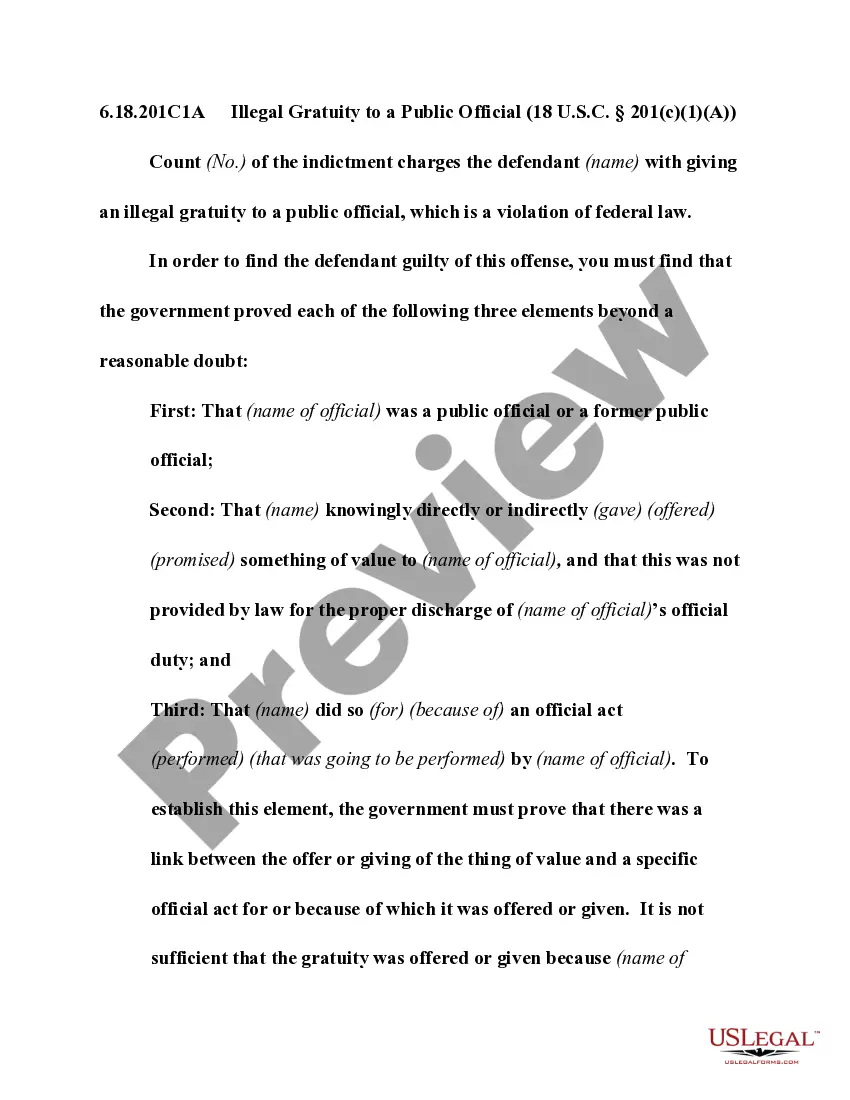
- Criteria for establishing guilt under the statute, including the necessity of an exchange for an official act.
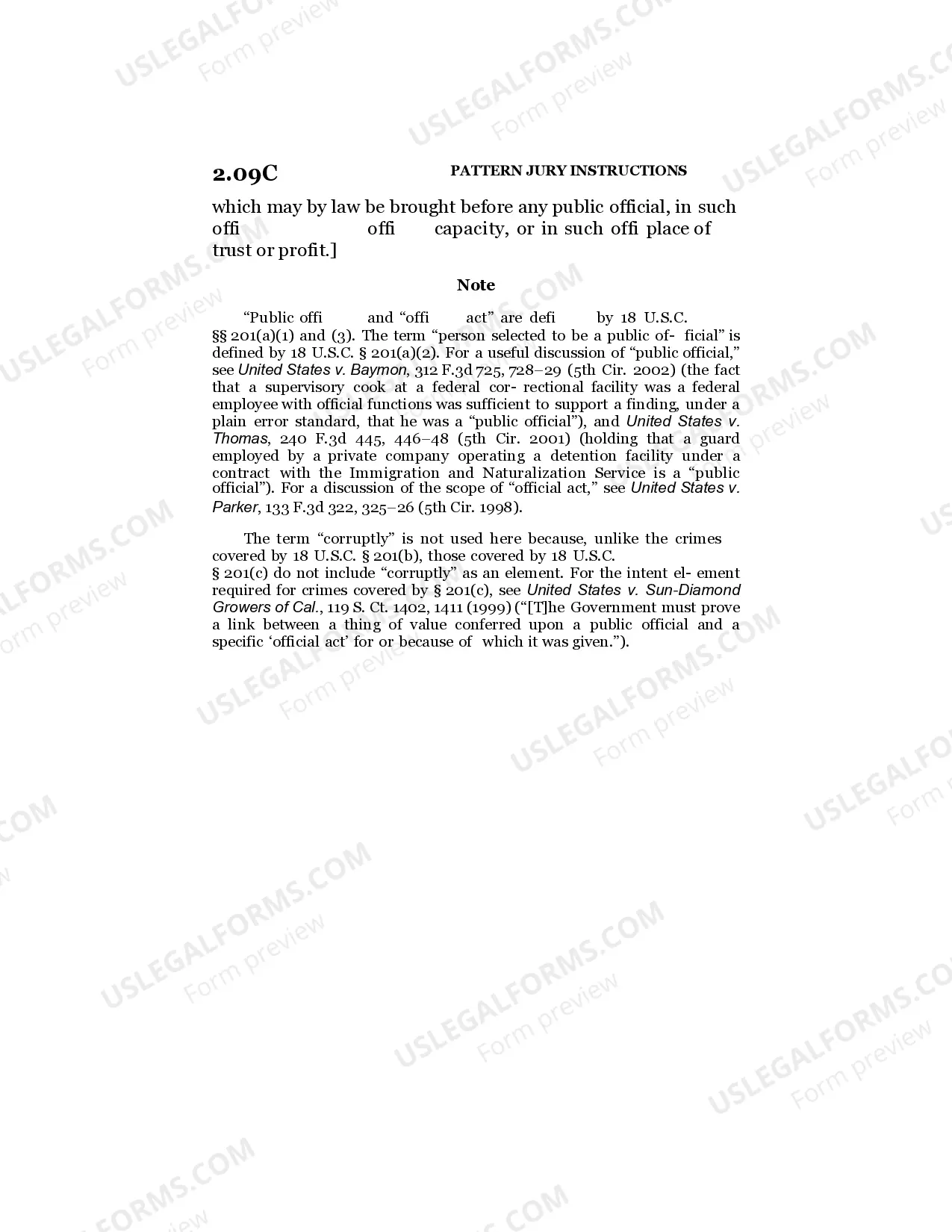
- Explanation of terms such as "thing of value" and "corruptly," which is relevant to defining illegal gratuities.
- References to landmark legal cases that clarify the context of being a public official.
Common use cases
This form is used when an individual needs to document or report a suspected illegal gratuity given to a public official. Situations can include instances where a gift or favor is provided in anticipation of a specific action or decision by the public official, which could be perceived as corrupt or unlawful. It may also be utilized in legal situations where one must defend against allegations of providing illegal gratuities.
Who should use this form
- Individuals who are contemplating providing gifts to public officials and want to ensure compliance with the law.
- Public officials who need to understand their legal limits regarding accepting gifts or benefits.
- Legal professionals representing clients involved in cases regarding illegal gratuities.
- Entities or organizations that interact with public officials and need to confirm adherence to ethical standards.
Steps to complete this form
- Clearly identify the parties involved, specifying names and titles of both the donor and public official.
- Describe the item or benefit being given, including its estimated value.
- State the purpose or reason for providing the gift or benefit.
- Include any communication that describes the conditions under which the gift is given.
- Sign and date the form, ensuring that all parties acknowledge the contents.
Does this document require notarization?
This form does not typically require notarization to be legally valid. However, some jurisdictions or document types may still require it. US Legal Forms provides secure online notarization powered by Notarize, available 24/7 for added convenience.
Get your form ready online
Our built-in tools help you complete, sign, share, and store your documents in one place.
Make edits, fill in missing information, and update formatting in US Legal Forms—just like you would in MS Word.
Download a copy, print it, send it by email, or mail it via USPS—whatever works best for your next step.
Sign and collect signatures with our SignNow integration. Send to multiple recipients, set reminders, and more. Go Premium to unlock E-Sign.
If this form requires notarization, complete it online through a secure video call—no need to meet a notary in person or wait for an appointment.
We protect your documents and personal data by following strict security and privacy standards.

Make edits, fill in missing information, and update formatting in US Legal Forms—just like you would in MS Word.

Download a copy, print it, send it by email, or mail it via USPS—whatever works best for your next step.

Sign and collect signatures with our SignNow integration. Send to multiple recipients, set reminders, and more. Go Premium to unlock E-Sign.

If this form requires notarization, complete it online through a secure video call—no need to meet a notary in person or wait for an appointment.

We protect your documents and personal data by following strict security and privacy standards.
Common mistakes
- Failing to properly define the value of the gift given to a public official.
- Not clearly identifying the official acts related to the gift.
- Omitting relevant communication or documentation that supports the reasoning for the gift.
- Assuming all gifts can be given without documentation; not all situations are lawful.
Benefits of completing this form online
- Convenience in accessing and completing the form from anywhere, at any time.
- Editable templates that allow for easy customization to fit specific situations.
- Reliable formatting to ensure compliance with legal standards.
- Instant download options for immediate use.
Looking for another form?
Form popularity
FAQ
The ?distinguishing feature? between bribery and illegal gratuities is found in the intent element. A payment as a thank you for a past act is a gratuity, not a bribe. If there was no prior agreement, and no quid pro quo, it is a gratuity.
An illegal gratuity is defined under 18 U.S.C. § 201 as the giving of a gift in response to an action or decision by a public official. Bribery is the agreement to give something of value in exchange for an official taking an action, making a decision, or other performance in their official duties.
Bribery Penalties The penalties for bribery of a public official includes a fine of up to three times the value of the bribe, and imprisonment for up to 15 years in a federal penitentiary. A conviction can also disqualify the individual from holding any office of honor, trust or profit under the United States.
Generally, to establish an illegal gratuity violation, the government must prove that the gratuity was given for the purpose of influencing an official act.
Illegal gratuities are similar to bribery, except that there is no intent to influence a particular business decision, but rather to reward someone for making a favorable decision.
Bribery is defined generally as corrupt solicitation, acceptance, or transfer of value in exchange for official action.
(A) to influence any official act; or. (B) to influence such public official or person who has been selected to be a public official to commit or aid in committing, or collude in, or allow, any fraud, or make opportunity for the commission of any fraud, on the United States; or. (C)
The main difference between bribery and illegal gratuity is the intent involved. Bribery requires proof of a quid pro quo-an exchange of money for an official act. Illegal gratuity, on the other hand, merely requires a gift of money because of an official act.