Maine Cash Farm Lease
Understanding this form
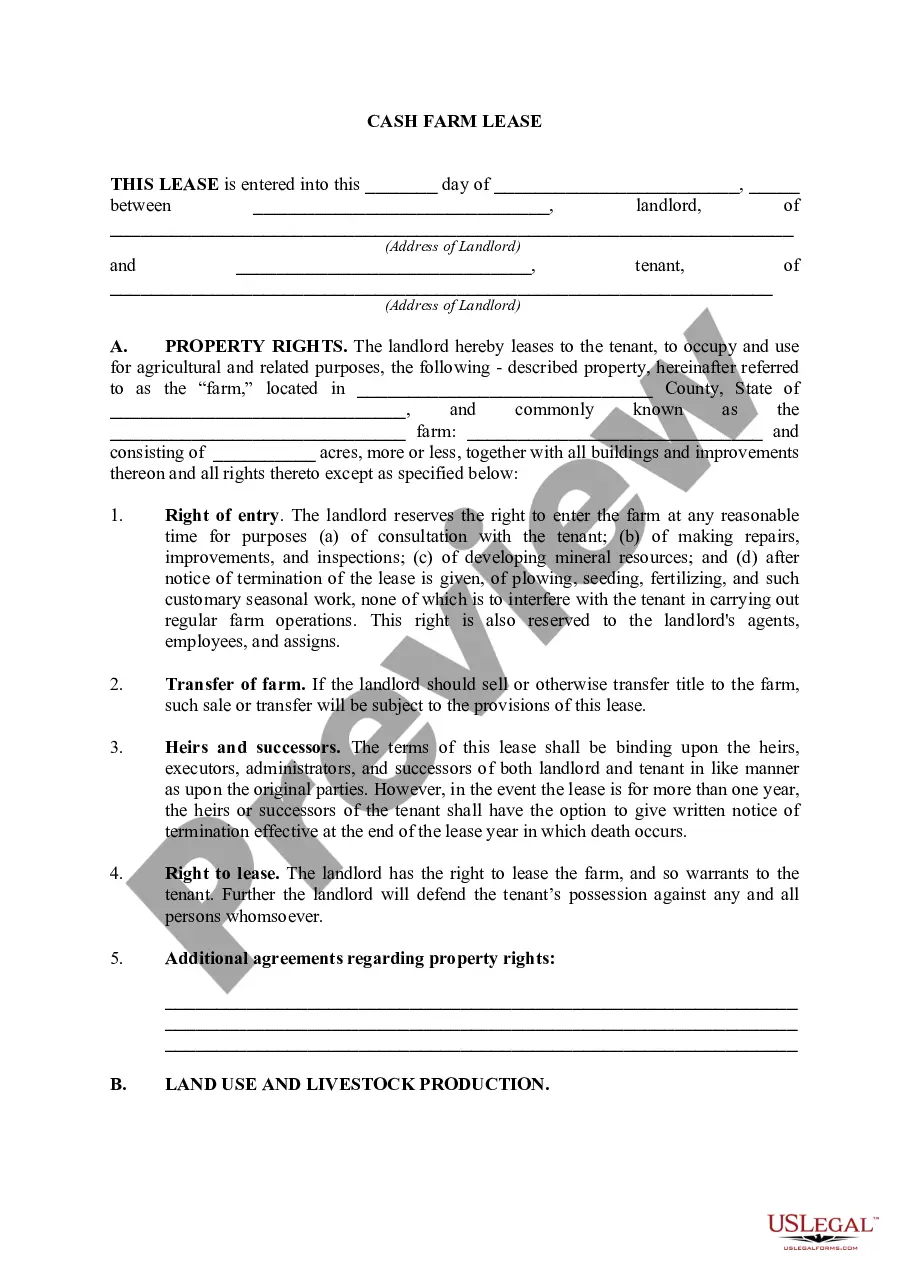
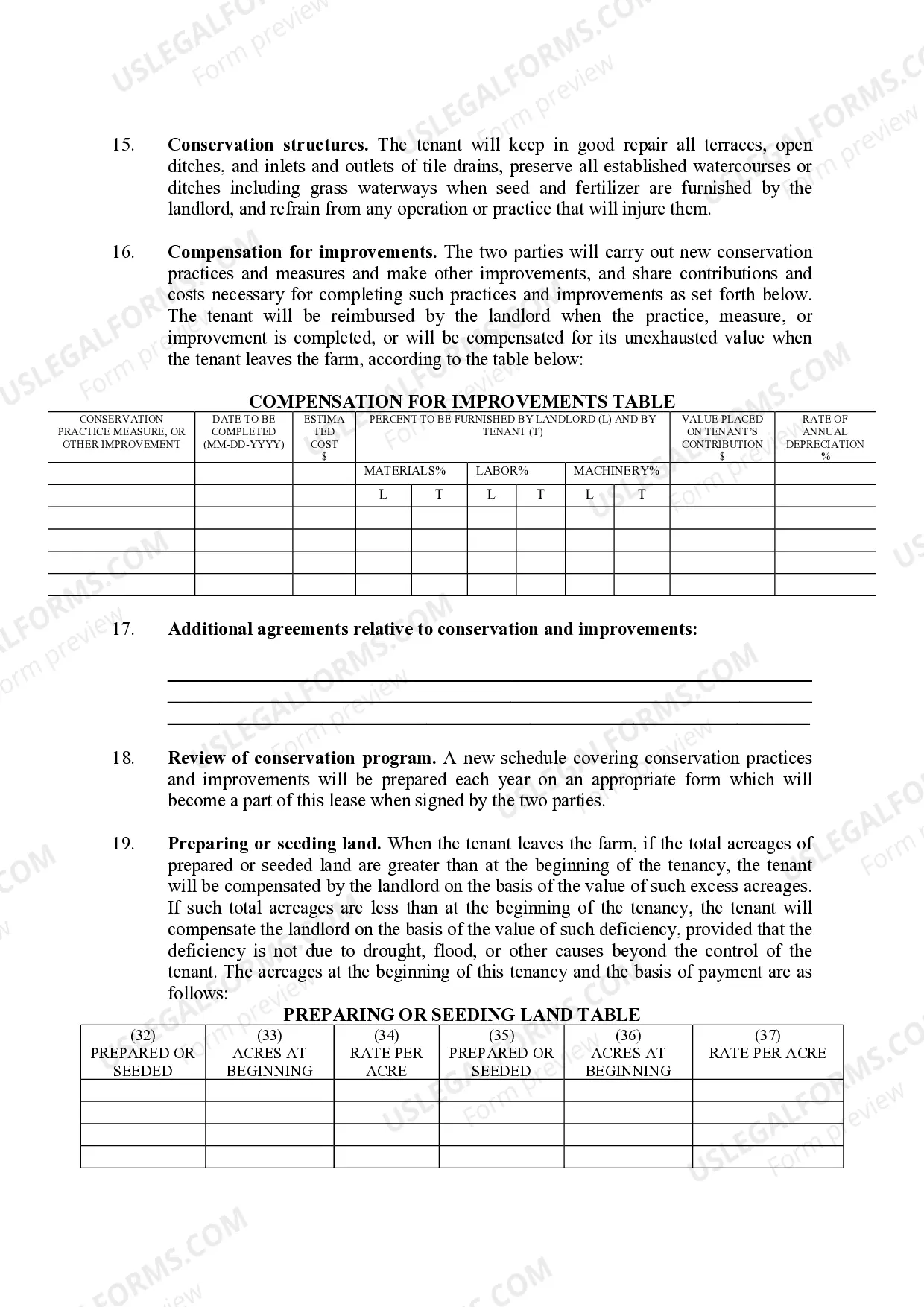
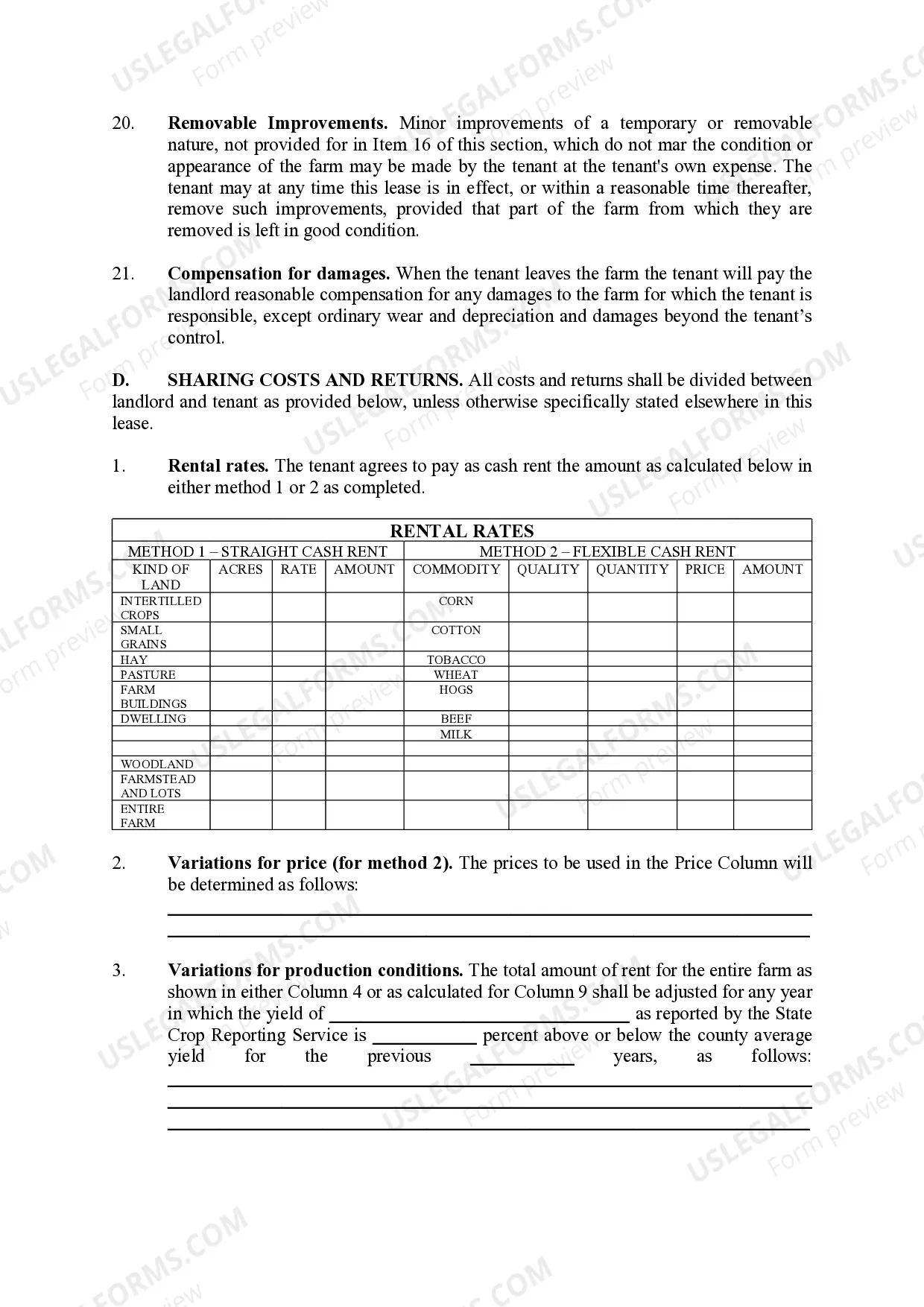
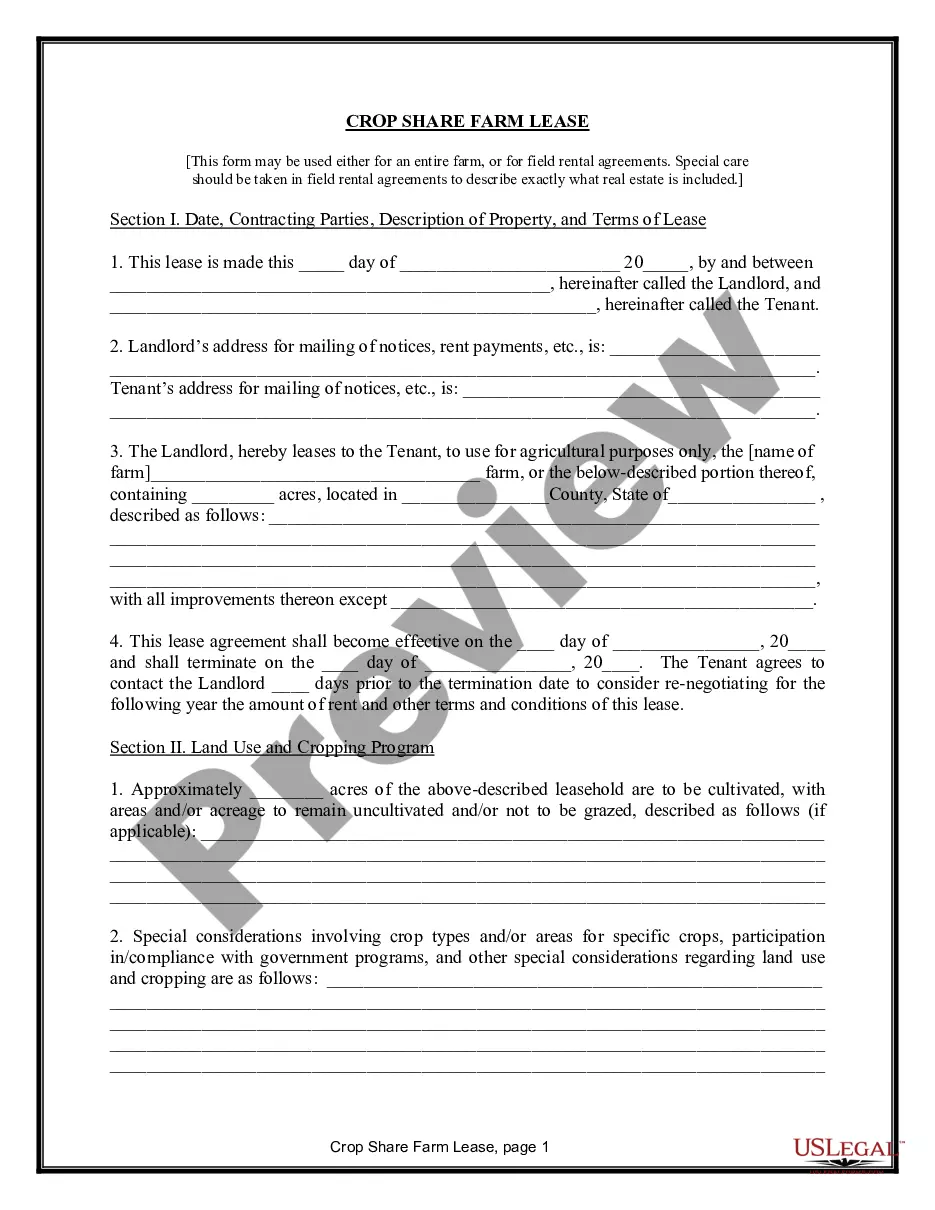
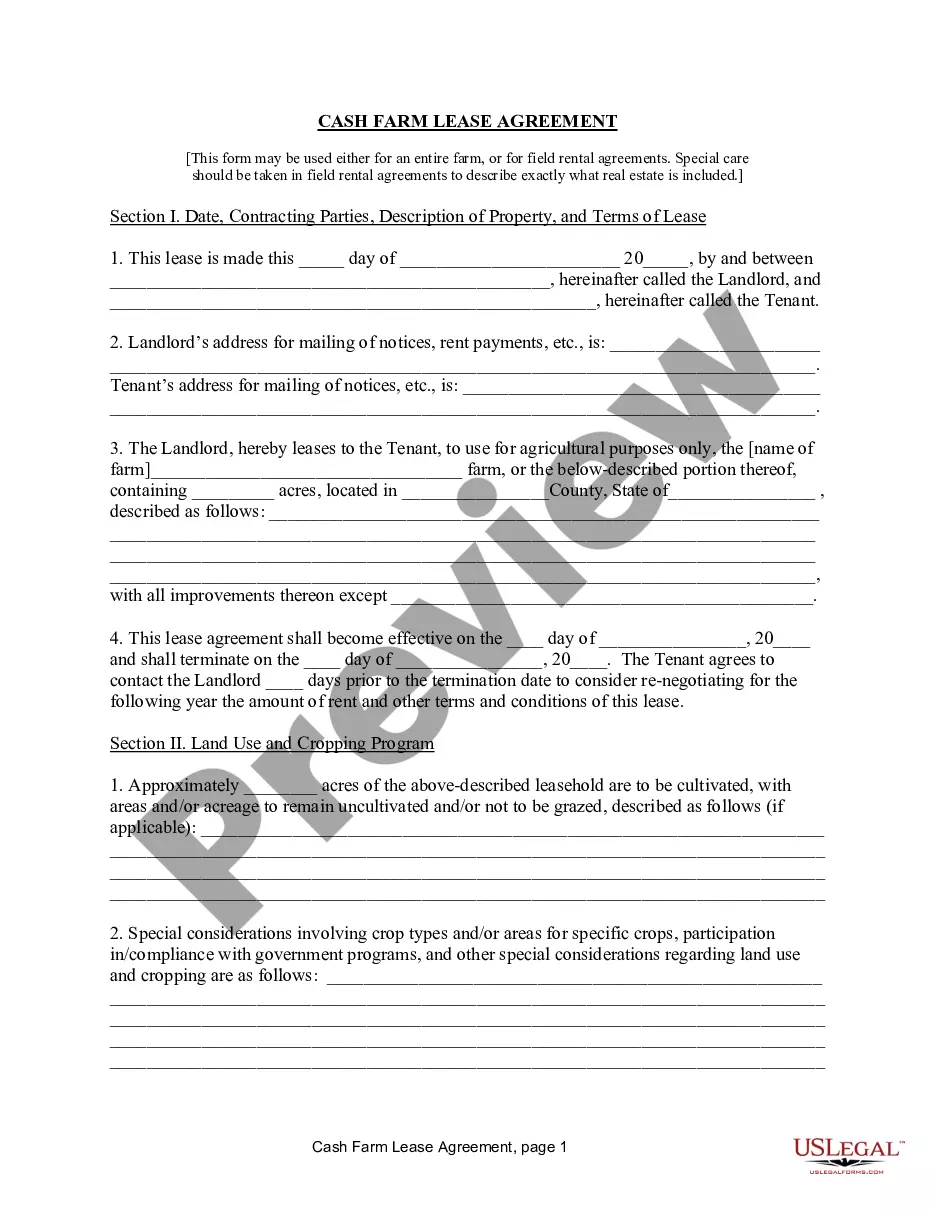
The Cash Farm Lease is a legal agreement between a landlord and a tenant, typically used in agricultural settings. In this type of lease, the tenant pays a set cash rent, which may be adjusted based on crop yields. This lease contrasts with sharecropping or other variable lease agreements where rent is tied to crop performance. The primary purpose of the Cash Farm Lease is to outline the responsibilities and rights of both parties regarding the use and maintenance of the farm property.
Key components of this form
- Identifies the landlord and tenant along with their addresses.
- Describes the property being leased, including size and condition.
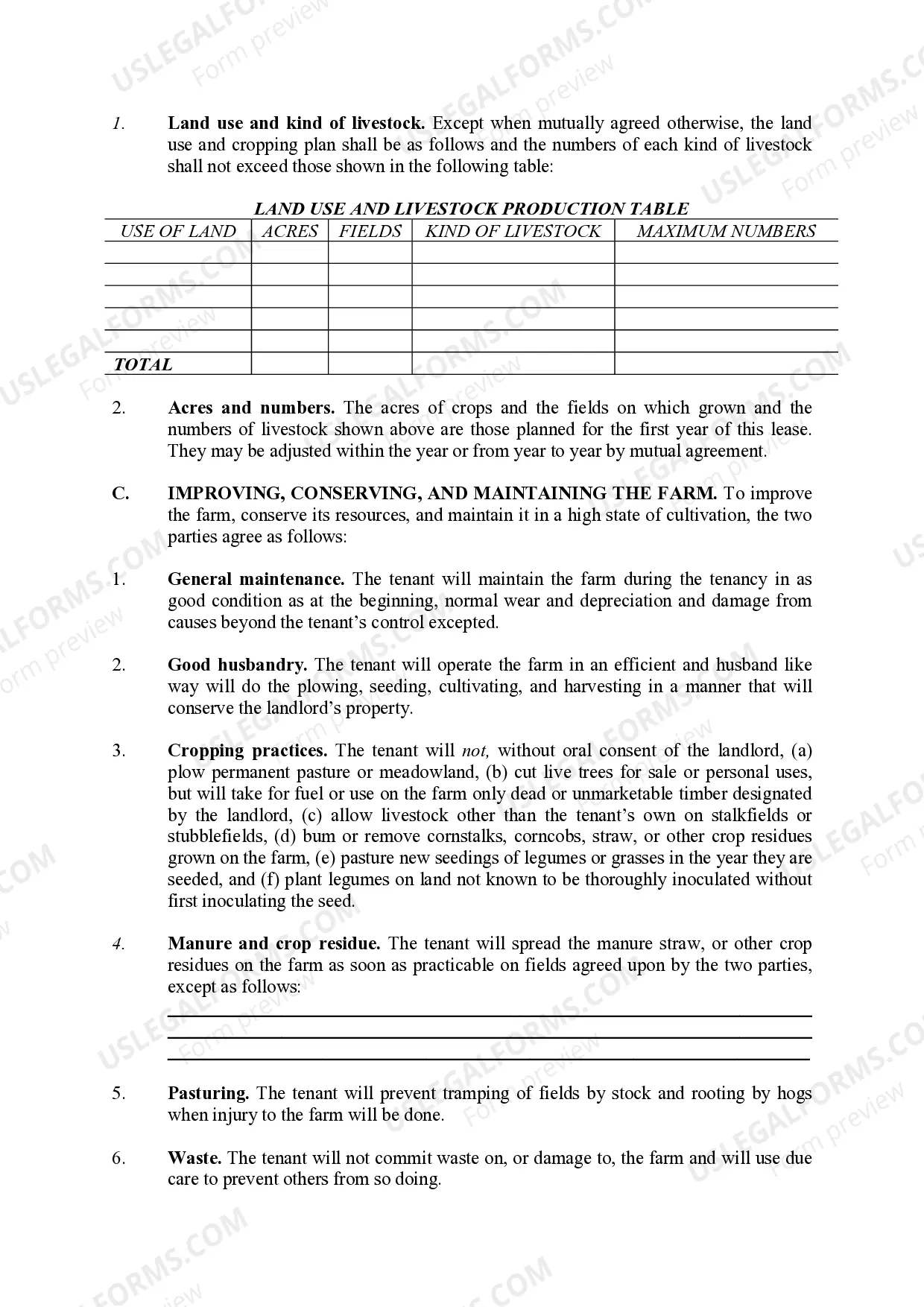
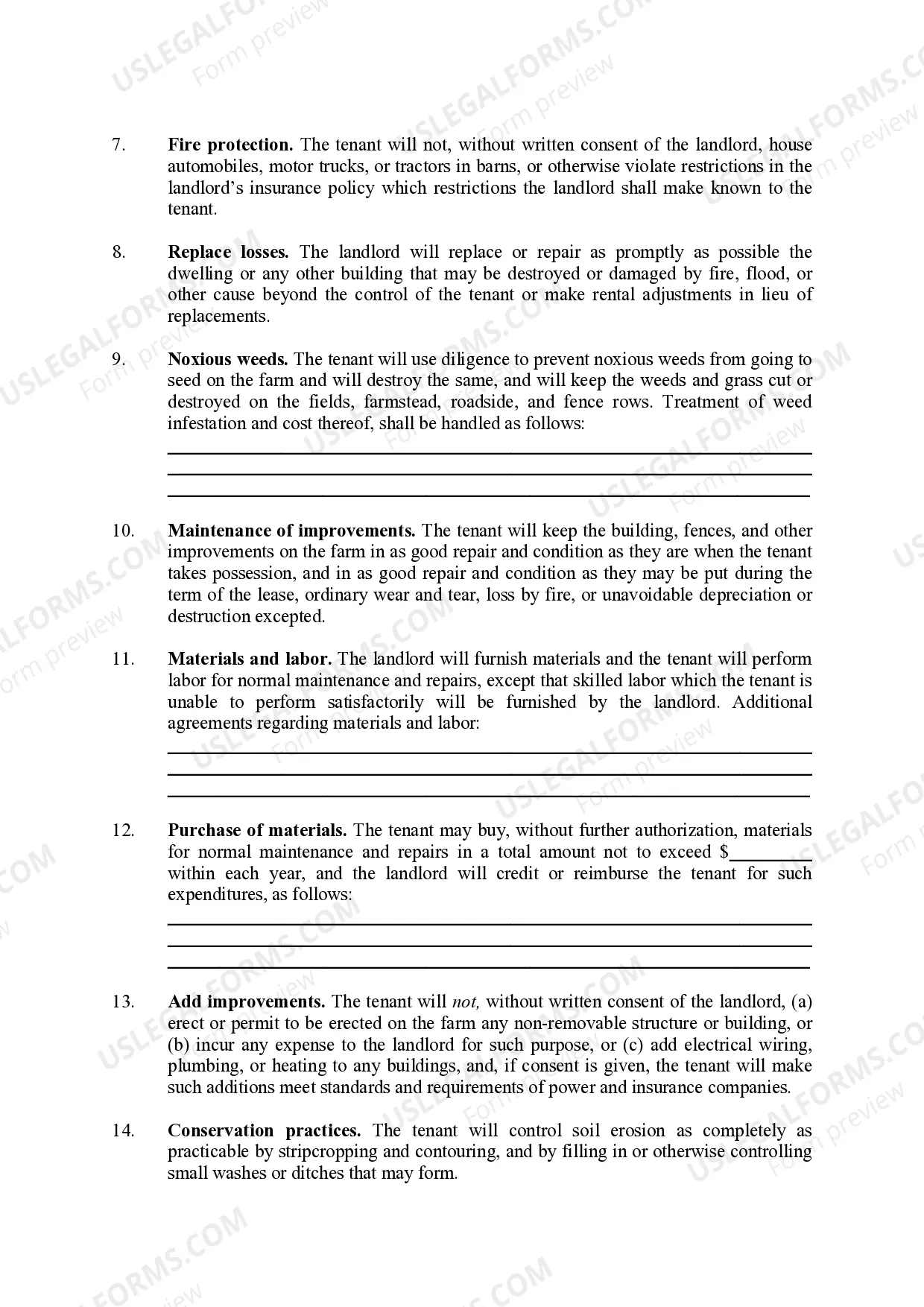
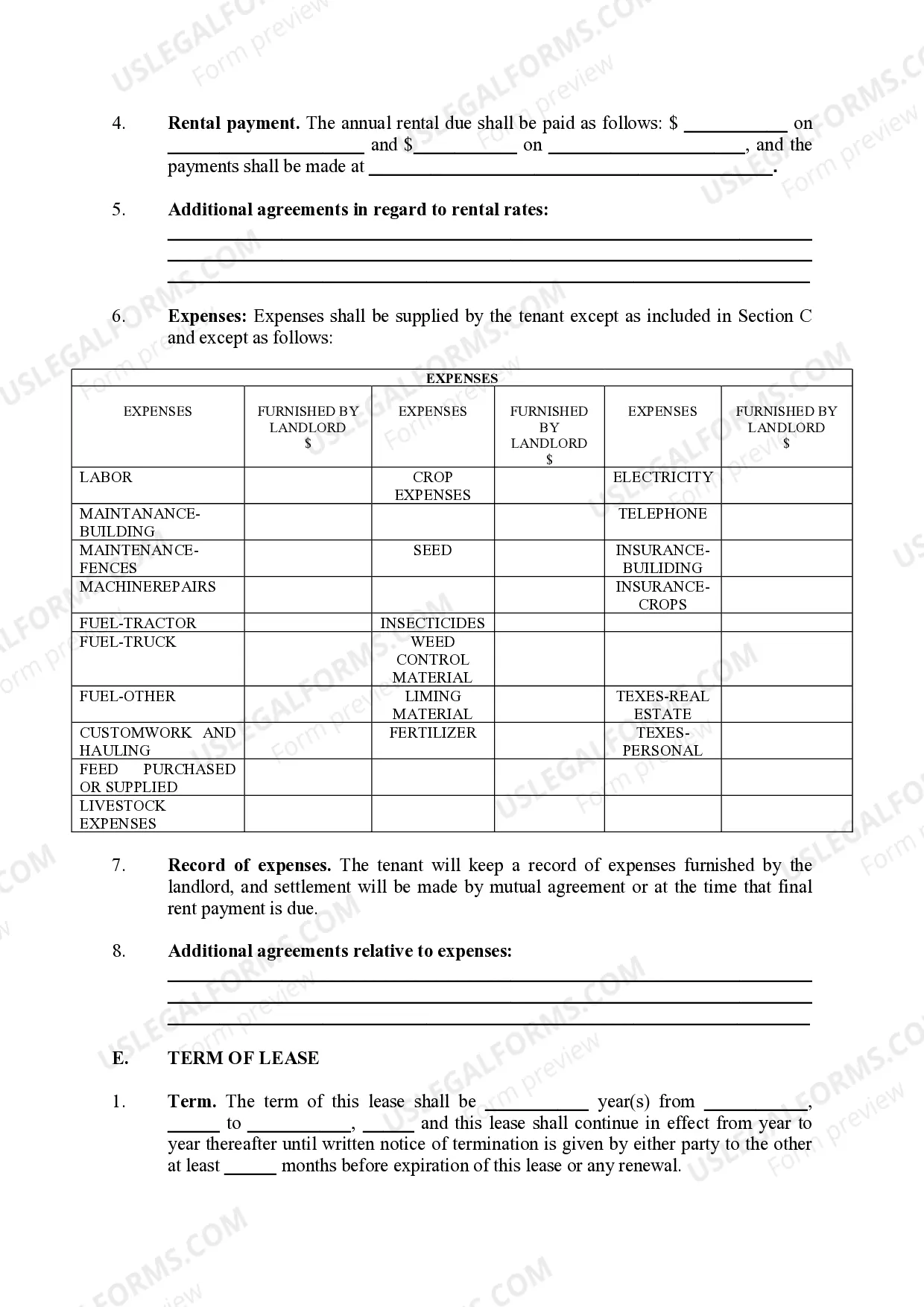
- Outlines responsibilities for land use, maintenance, and livestock production.
- Details the rental payment structure, including fixed cash rent and any adjustments for yield fluctuations.
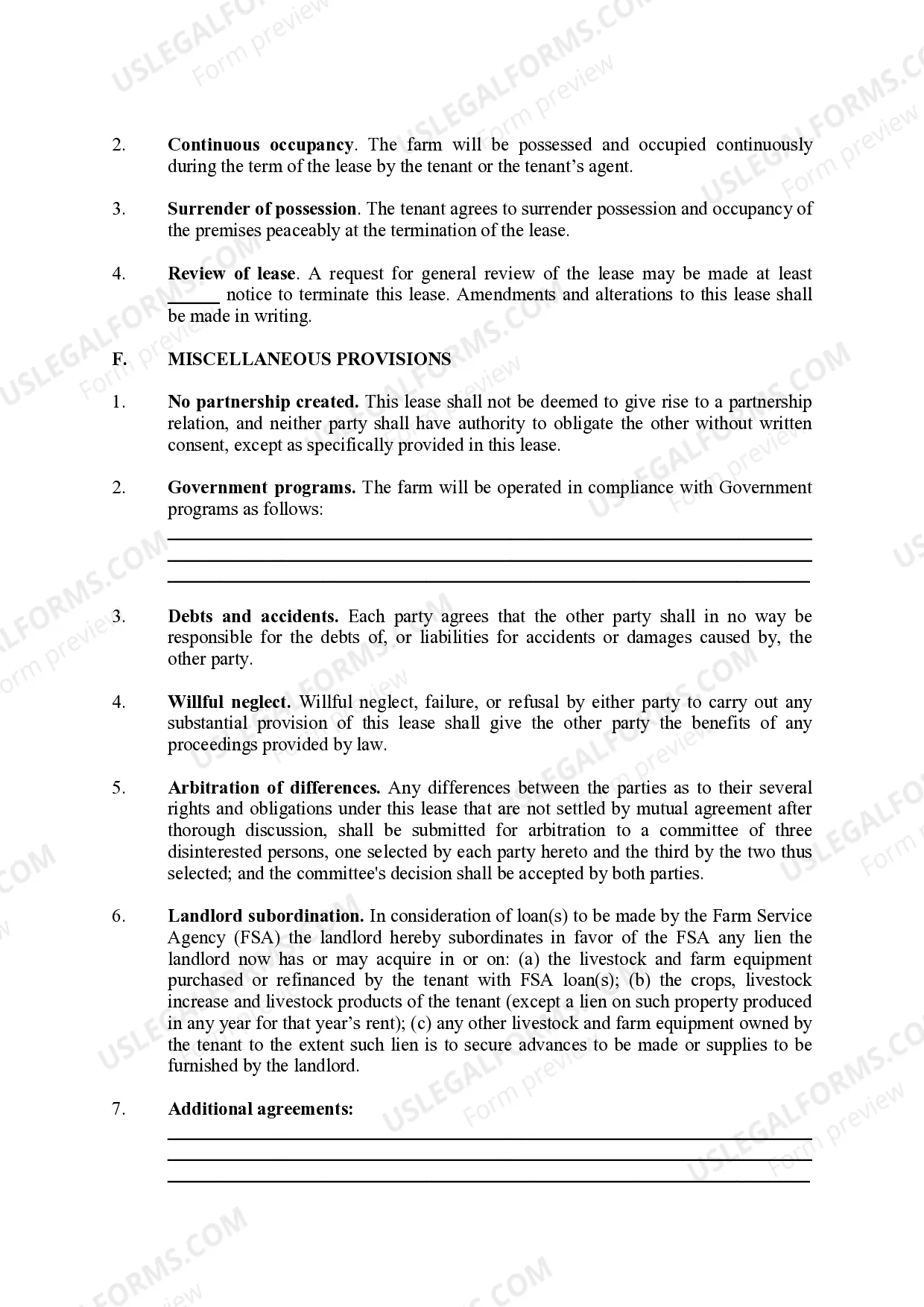
- Specifies the term of the lease and conditions for renewal or termination.
- Addresses liability, government program compliance, and dispute resolution processes.
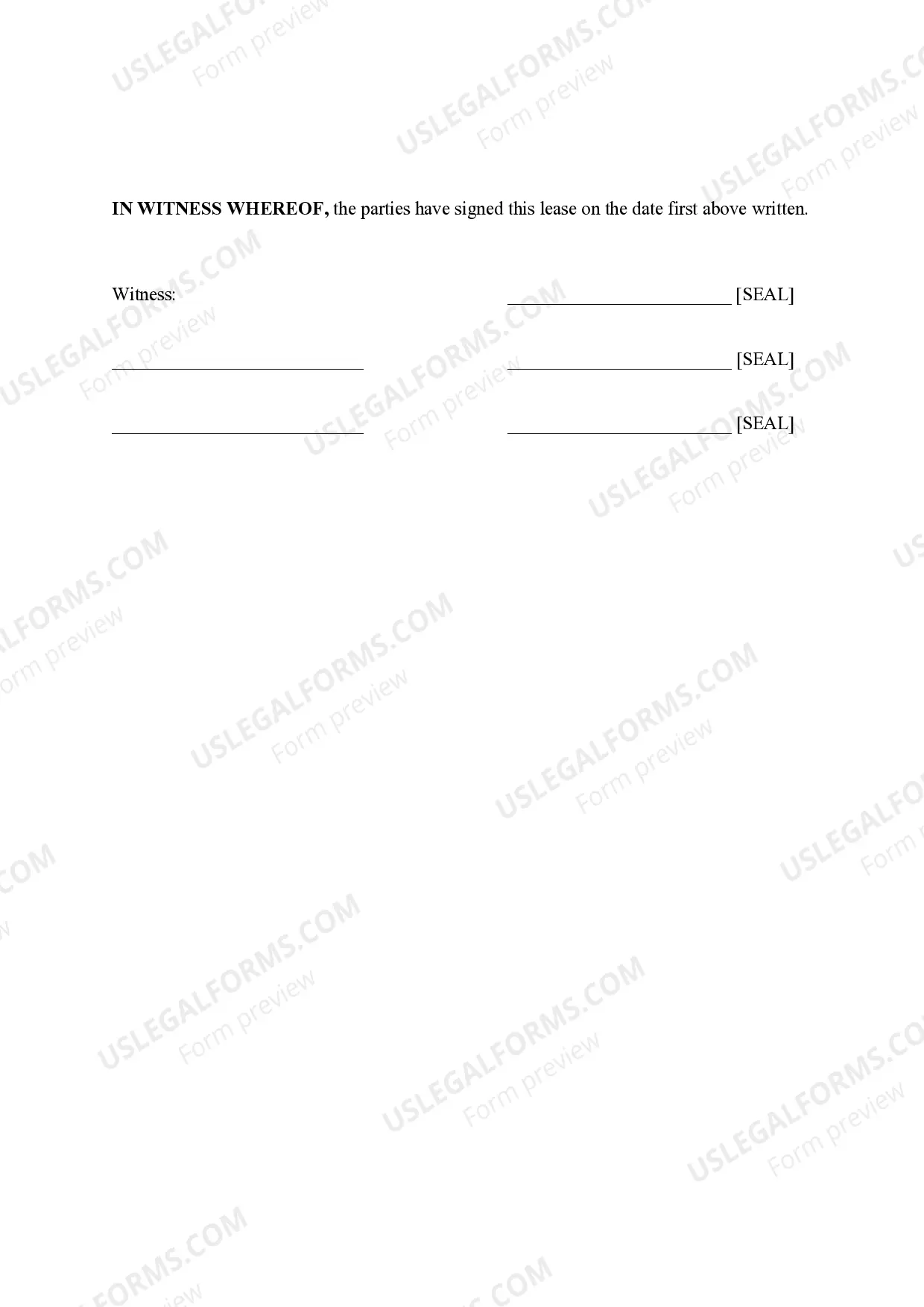
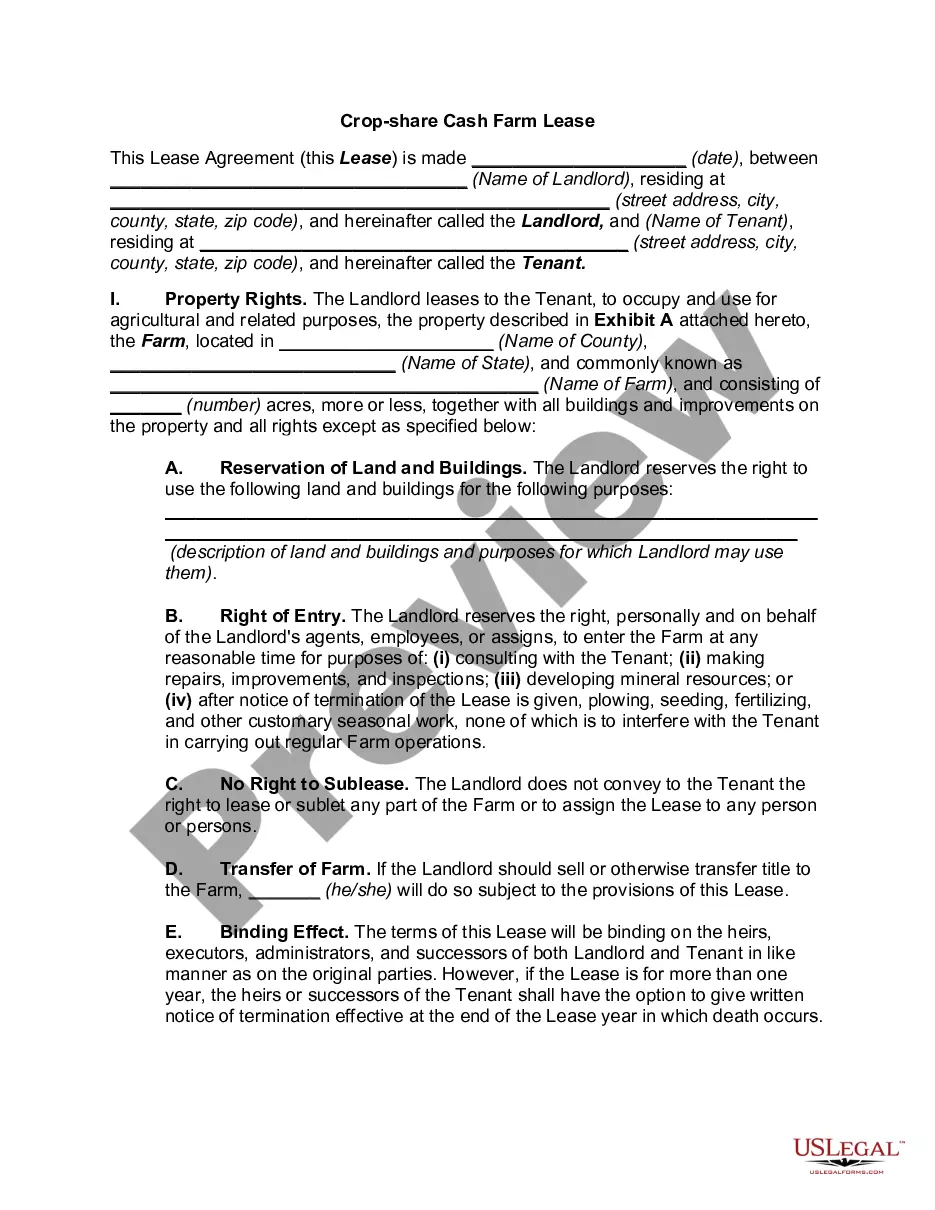
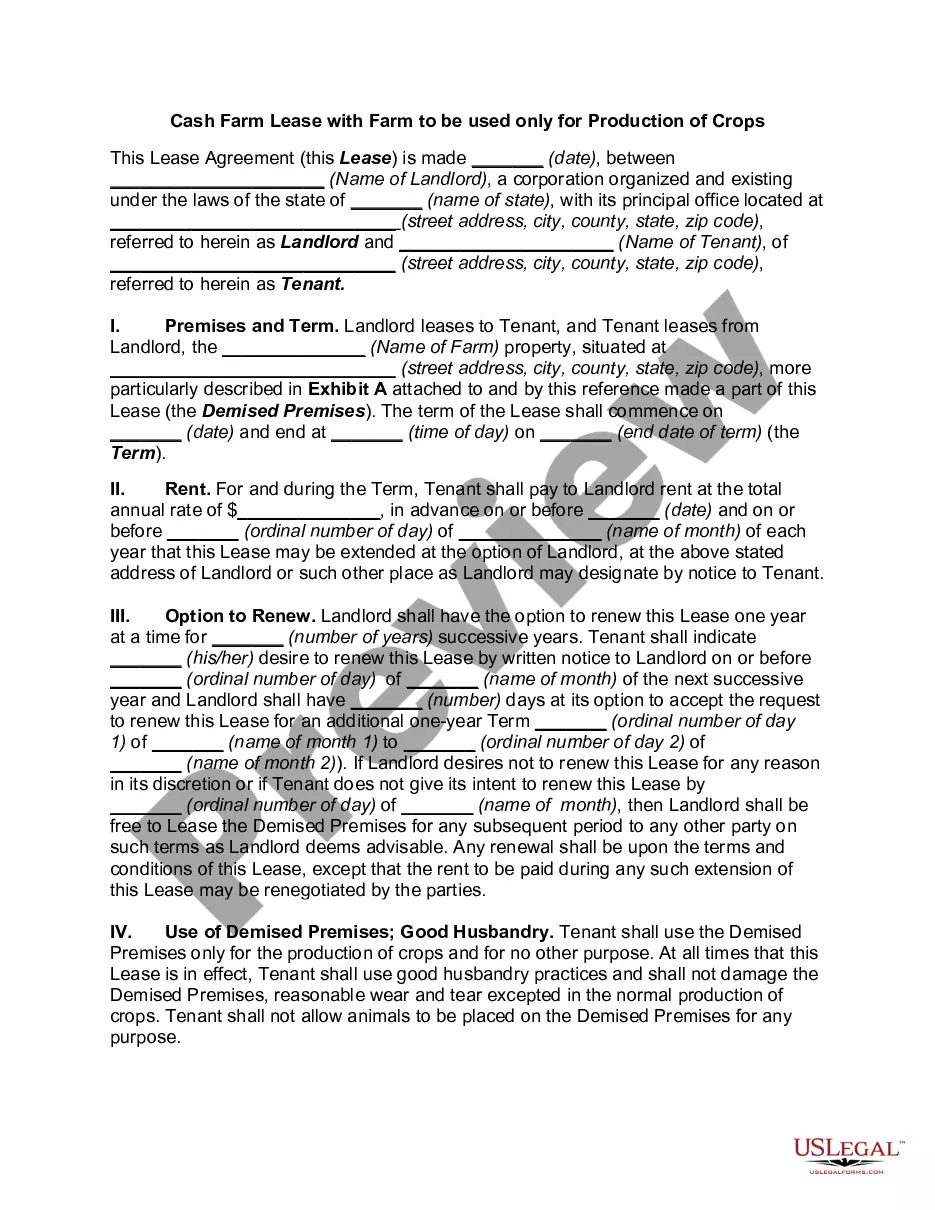
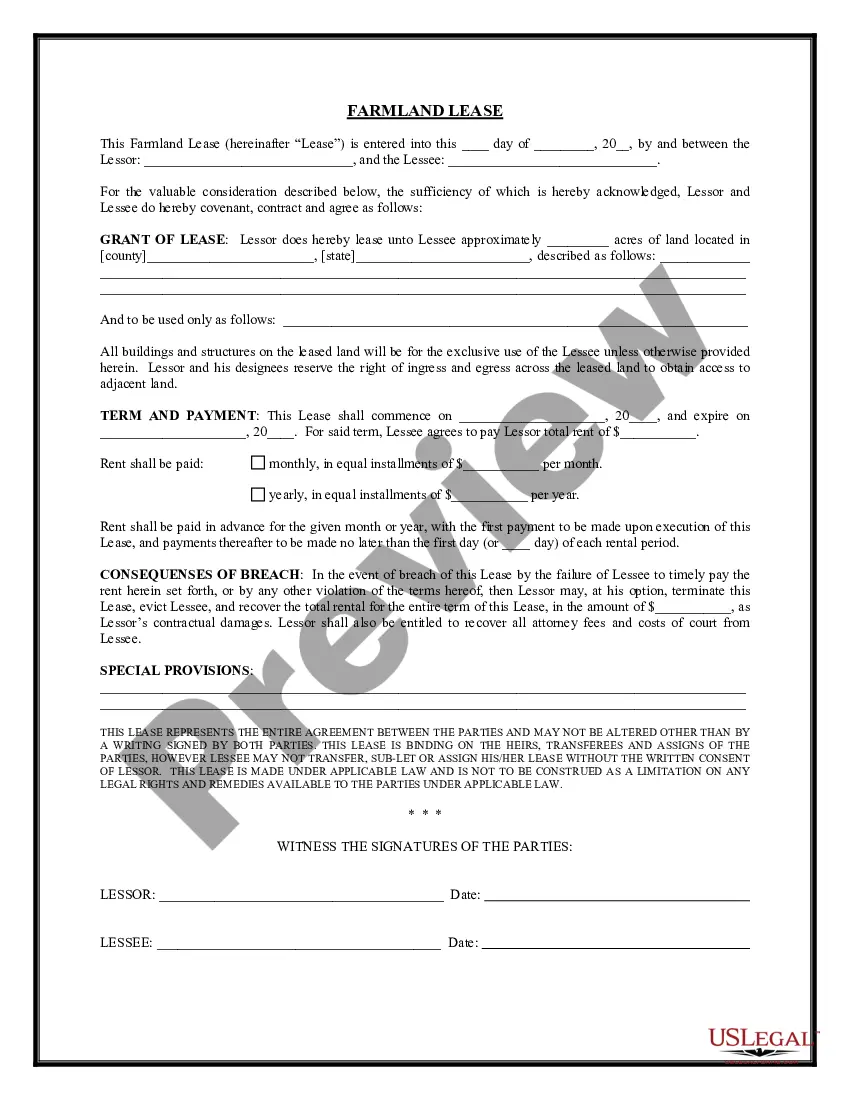
Situations where this form applies
This form is typically needed when a landowner wants to rent out agricultural land for cash rent. It is useful in scenarios where the land is to be used for crops or livestock, and it provides a clear outline of obligations for both the landlord and tenant. Using this lease helps establish terms for managing the farm and can prevent misunderstandings during the rental period.
Who can use this document
- Landlords who own agricultural land and want to lease it out for cash rent.
- Farmers or individuals looking to lease land for farming purposes.
- Individuals with limited legal knowledge seeking a straightforward leasing structure.
- Parties involved in partnerships or agreements tied to agricultural production.
Instructions for completing this form
- Identify the landlord and tenant by entering their names and addresses at the beginning of the lease.
- Specify the property details, including its common name and total acres.
- Determine the cash rental amount and payment schedule, filling in the necessary details in the rental rates section.
- Outline any specific land use, livestock production, and cropping practices in the relevant sections.
- Review the lease for clarity and both parties should sign and date the document to finalize the agreement.
Notarization guidance
This form does not typically require notarization unless specified by local law. However, it is advisable to consult with a legal professional if you have questions about specific requirements in your jurisdiction.
Get your form ready online
Our built-in tools help you complete, sign, share, and store your documents in one place.
Make edits, fill in missing information, and update formatting in US Legal Forms—just like you would in MS Word.
Download a copy, print it, send it by email, or mail it via USPS—whatever works best for your next step.
Sign and collect signatures with our SignNow integration. Send to multiple recipients, set reminders, and more. Go Premium to unlock E-Sign.
If this form requires notarization, complete it online through a secure video call—no need to meet a notary in person or wait for an appointment.
We protect your documents and personal data by following strict security and privacy standards.

Make edits, fill in missing information, and update formatting in US Legal Forms—just like you would in MS Word.

Download a copy, print it, send it by email, or mail it via USPS—whatever works best for your next step.

Sign and collect signatures with our SignNow integration. Send to multiple recipients, set reminders, and more. Go Premium to unlock E-Sign.

If this form requires notarization, complete it online through a secure video call—no need to meet a notary in person or wait for an appointment.

We protect your documents and personal data by following strict security and privacy standards.
Mistakes to watch out for
- Failing to clearly define the rights and responsibilities of both landlord and tenant.
- Not adjusting rental payments based on varying crop yields as outlined in the lease.
- Overlooking the importance of specifying the maintenance and conservation responsibilities.
- Neglecting to include clear timelines for payment and maintenance tasks.
Why use this form online
- Convenient access to legal documents at any time without needing in-person meetings.
- Edit and customize the form as needed to meet the specific circumstances of the lease.
- Reliable templates drafted by licensed attorneys, ensuring legal accuracy.
Legal use & context
- This lease agreement outlines clear expectations and legal obligations for both parties, helping to avoid disputes.
- It can be enforceable in court if properly executed, making it a vital tool in agricultural business arrangements.
- The lease must comply with any applicable agricultural laws or land use regulations in the relevant jurisdiction.
Quick recap
- The Cash Farm Lease is essential for formalizing rental agreements between landlords and tenants in agriculture.
- Clear terms reduce the likelihood of disputes regarding responsibilities and payment.
- Always review local laws for any specific requirements when using this lease form.
Looking for another form?


Form popularity
FAQ
The farm and open space tax law in Maine provides tax benefits to landowners who engage in agricultural activities. This law aims to preserve farmland by offering reduced property taxes for land used as working farms or open spaces. By entering into a Maine Cash Farm Lease, you can ensure your land is utilized productively, while benefiting from these tax advantages. Understanding this law is crucial for effectively managing your agricultural property and maximizing its potential.
The smallest size for a farm is often considered to be five acres, which is practical for maintaining agricultural production. However, you may find smaller plots that serve specific agricultural purposes, such as gardening or niche farming. If you are signing a Maine Cash Farm Lease, understanding these parameters can help you maximize the potential of your leased land.
While the minimum is generally set at five acres for ascertaining farm status in Maine, some stipulations may apply depending on land use. This minimum facilitates various forms of agricultural production, thereby fostering economic growth in rural areas. When entering into a Maine Cash Farm Lease, ensure that your acreage meets or exceeds this minimum to qualify for farm-related benefits.
Maine's right to farm law is designed to protect farmers from nuisance lawsuits that may arise from their farming practices. This law supports agricultural activities by ensuring that neighbors cannot claim disturbances from typical farming operations. A Maine Cash Farm Lease aligns well with these protections, giving leaseholders peace of mind as they cultivate the land.
The average size of a farm in Maine varies, but it is generally around 200 acres. This average reflects a range of operations, from small family farms to larger commercial enterprises. If you are exploring a Maine Cash Farm Lease, knowing this average can help you better assess your options for leasing or purchasing farmland.
In Maine, you typically need a minimum of five acres to be recognized as a farm. This threshold allows landowners to engage in agricultural activities, such as cultivating crops or raising livestock. Understanding the distinction is crucial, especially if you are considering a Maine Cash Farm Lease. This lease can help you optimize your agricultural investment in accordance with local regulations.
To register as a farm in Maine, start by reviewing the state's agricultural regulations. You will need to fill out a Farm Registration form, which typically requires information about your farming operation. After submitting your application to the Maine Department of Agriculture, you may also want to consider establishing a Maine Cash Farm Lease to formalize your land rental agreements. This lease can provide clarity and security for both landowners and farmers.
In general, there is no strict rule determining the exact number of acres needed for a property to be classified as a farm, which can vary by state. However, a common benchmark is around 10 acres to consider a property a farm, especially when involving agricultural production. Using a Maine Cash Farm Lease can help clarify land use and production expectations, ensuring you meet guidelines and leverage opportunities effectively. Understanding this can enhance your farming potential and profitability.
Leasing farmland can be a profitable venture for both landowners and tenants. With a Maine Cash Farm Lease, landowners can earn a steady income while allowing farmers to utilize their land for agricultural purposes. This arrangement benefits the tenant, enabling them to farm without the high costs of purchasing land. Overall, with the right lease agreement in place, leasing farmland can yield beneficial returns.