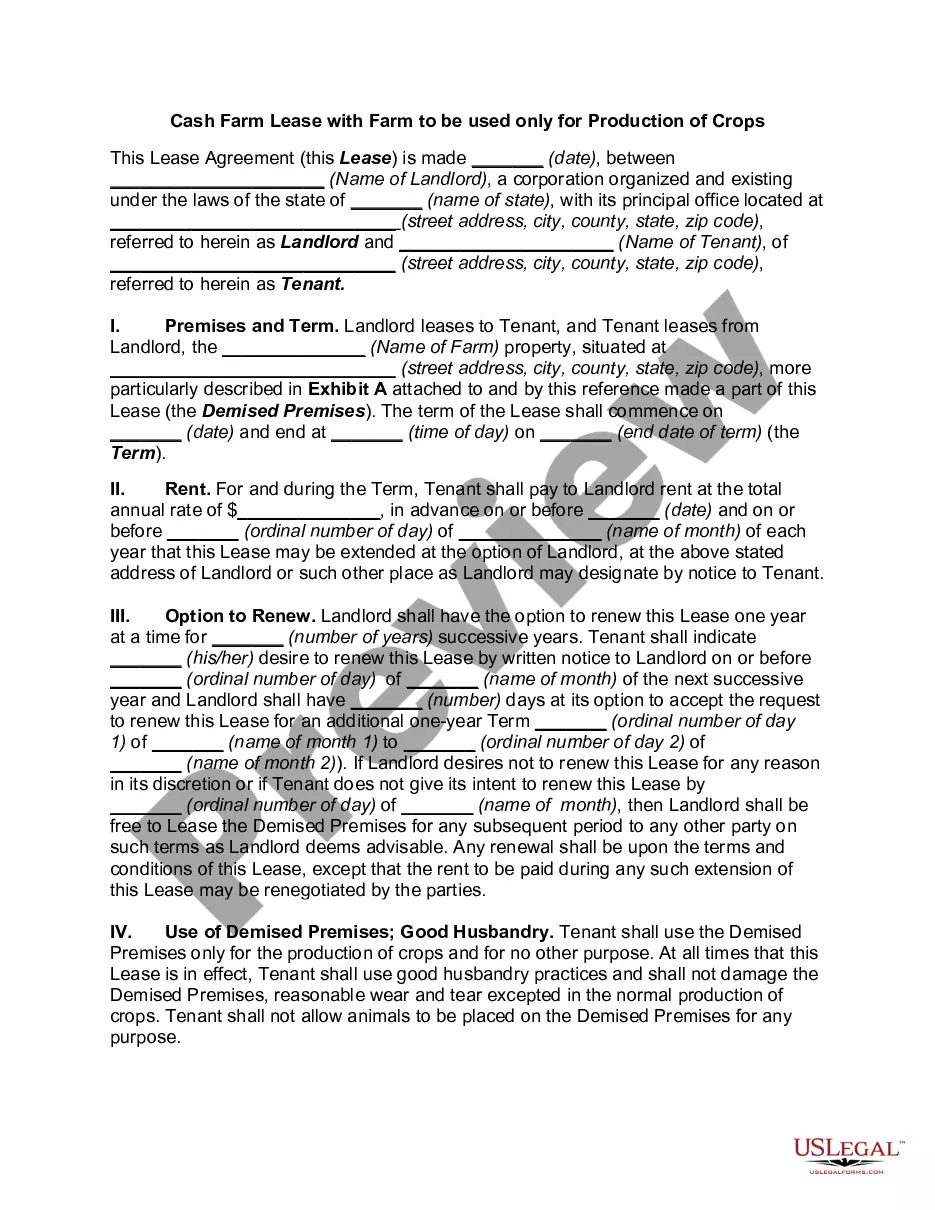
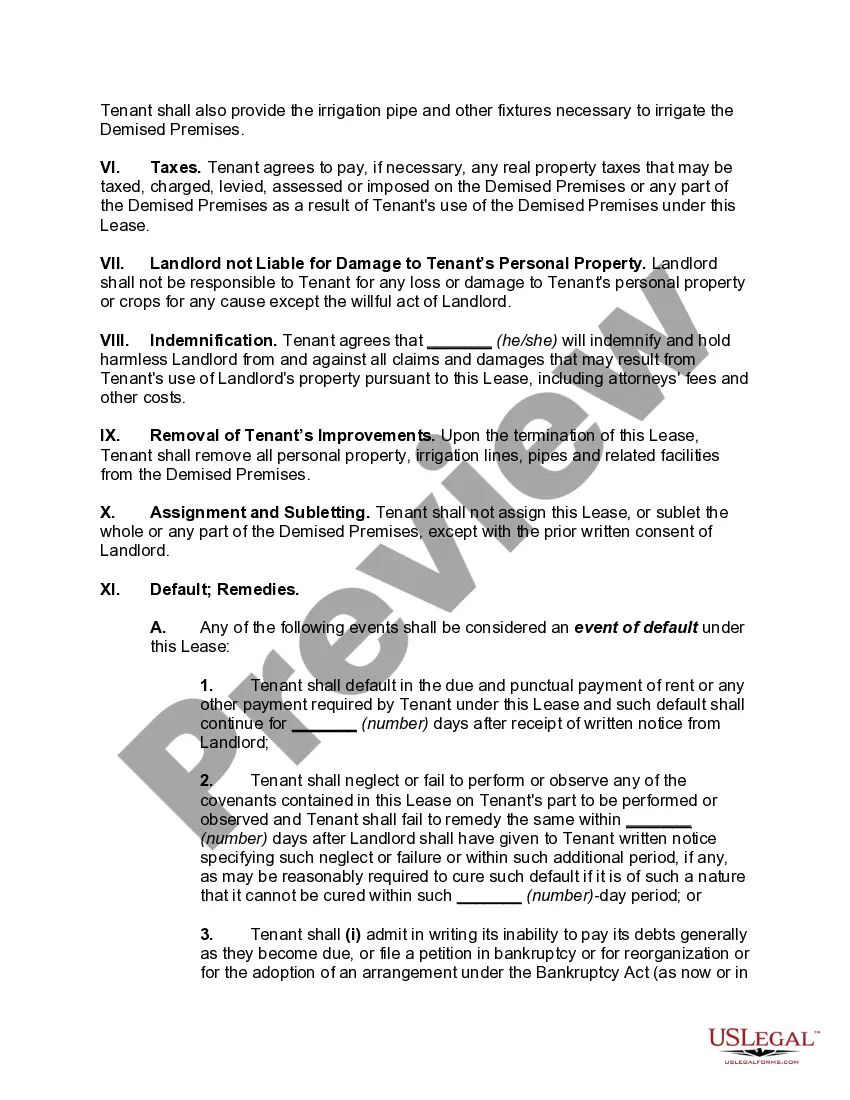
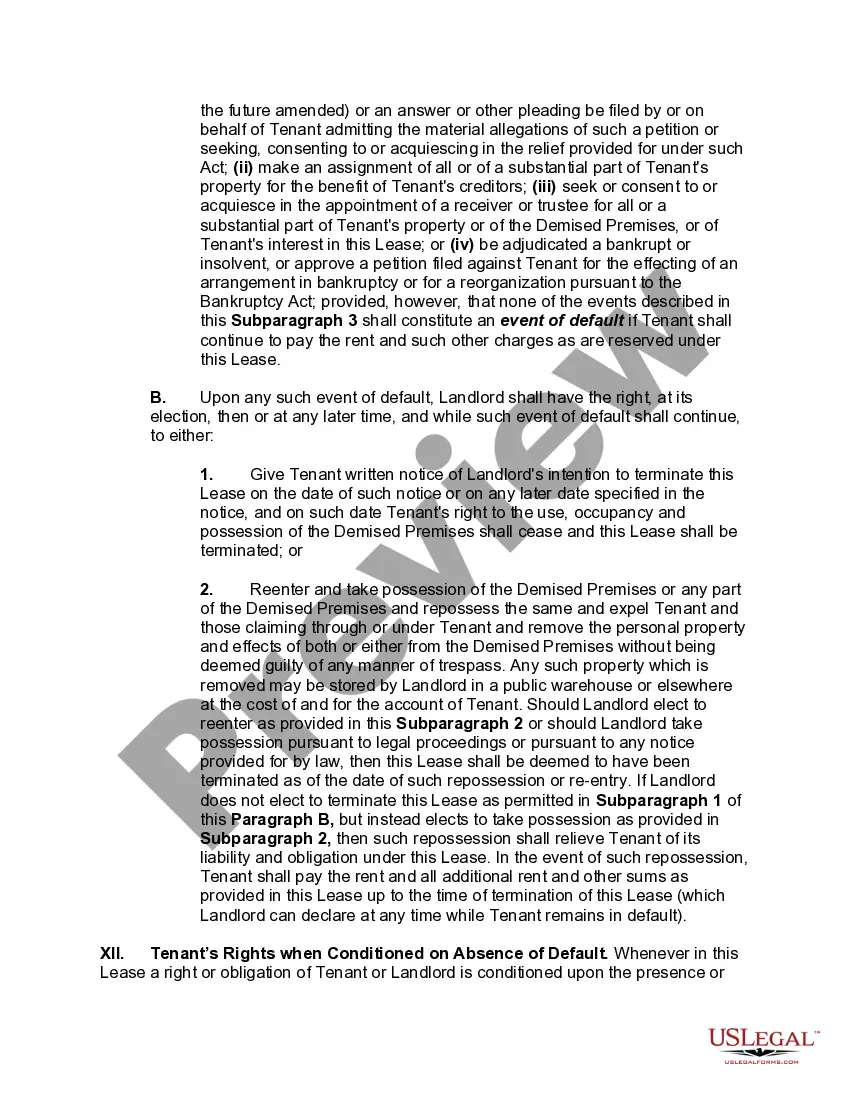
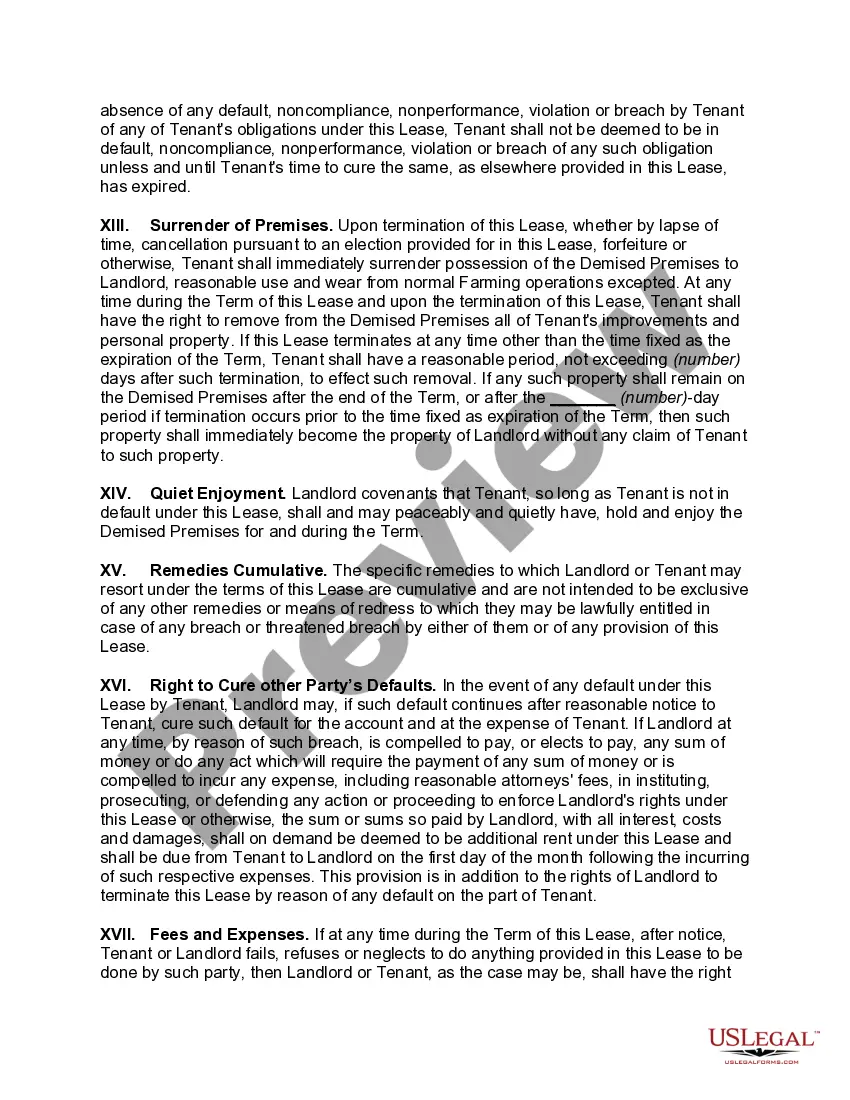
A Cash Farm Lease with Farm to be used only for Production of Crops is a type of agricultural lease whereby a tenant pays a cash rent to a landlord for the use of land to produce crops. This type of lease is beneficial to both the landlord and tenant, as it eliminates the need for the tenant to purchase land, and in return the tenant is expected to produce and market a crop for a certain period of time. There are several types of Cash Farm Lease with Farm to be used only for Production of Crops. These include a Cash Farm Lease with a Fixed Term, a Cash Farm Lease with a Variable Term, and a Cash Farm Lease with an Option to Renew. In a Cash Farm Lease with a Fixed Term, the tenant is usually required to pay a set amount of cash rent for a fixed period of time, often up to three years. In a Cash Farm Lease with a Variable Term, the tenant pays a cash rent at the beginning of each season, and the rent can vary from season to season. Finally, in a Cash Farm Lease with an Option to Renew, the tenant is required to pay a cash rent for an initial term, and has the option to renew the lease for an additional term at the end of the initial term.
Cash Farm Lease with Farm to be used only for Production of Crops
Description
How to fill out Cash Farm Lease With Farm To Be Used Only For Production Of Crops?
If you’re searching for a way to appropriately complete the Cash Farm Lease with Farm to be used only for Production of Crops without hiring a legal professional, then you’re just in the right place. US Legal Forms has proven itself as the most extensive and reliable library of official templates for every personal and business scenario. Every piece of paperwork you find on our online service is created in accordance with nationwide and state regulations, so you can be certain that your documents are in order.
Follow these simple guidelines on how to get the ready-to-use Cash Farm Lease with Farm to be used only for Production of Crops:
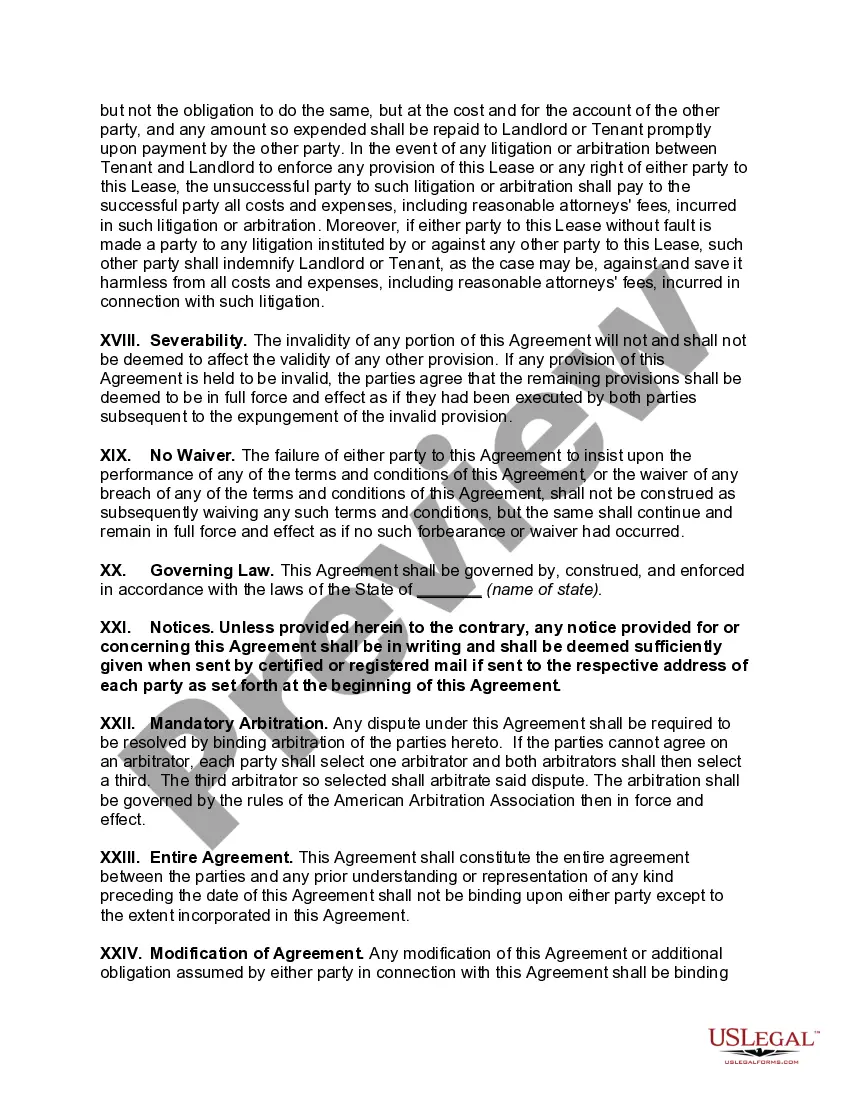
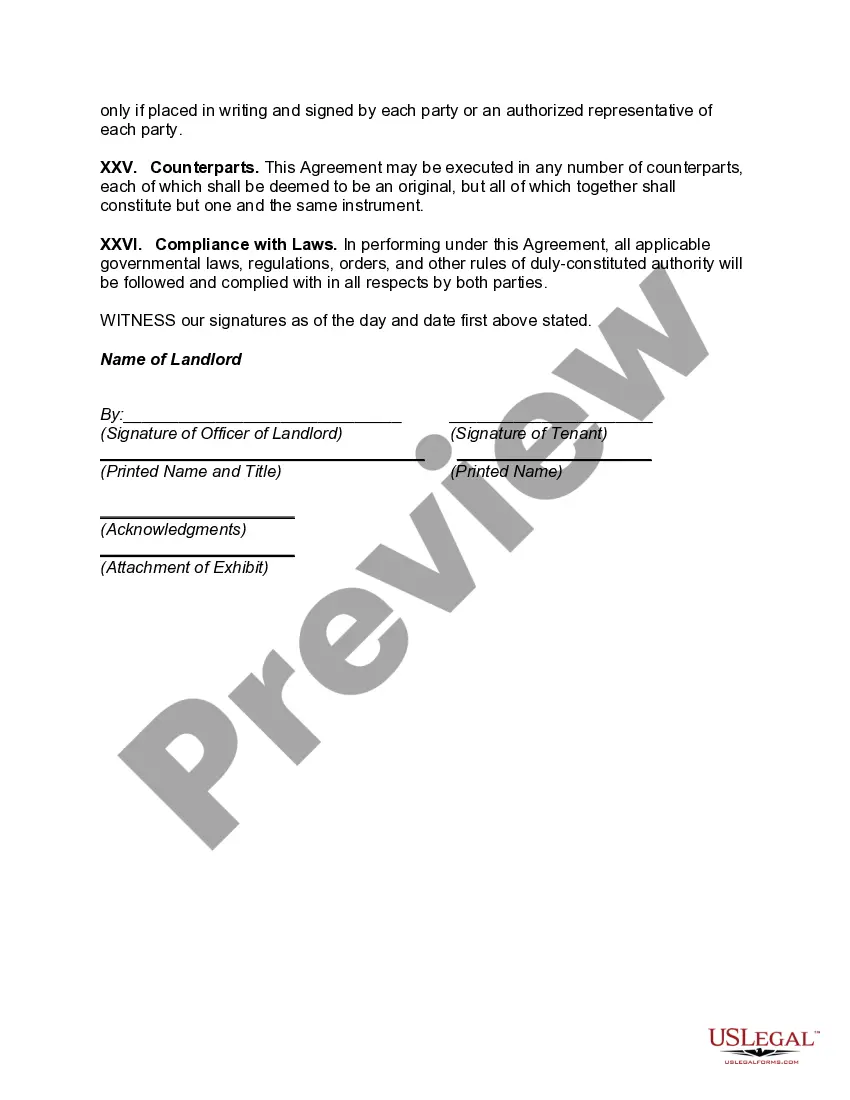
- Ensure the document you see on the page complies with your legal situation and state regulations by examining its text description or looking through the Preview mode.
- Enter the document title in the Search tab on the top of the page and choose your state from the dropdown to locate another template if there are any inconsistencies.
- Repeat with the content check and click Buy now when you are confident with the paperwork compliance with all the requirements.
- Log in to your account and click Download. Create an account with the service and choose the subscription plan if you still don’t have one.
- Use your credit card or the PayPal option to pay for your US Legal Forms subscription. The blank will be available to download right after.
- Decide in what format you want to get your Cash Farm Lease with Farm to be used only for Production of Crops and download it by clicking the appropriate button.
- Upload your template to an online editor to fill out and sign it rapidly or print it out to prepare your paper copy manually.
Another great thing about US Legal Forms is that you never lose the paperwork you purchased - you can find any of your downloaded blanks in the My Forms tab of your profile any time you need it.