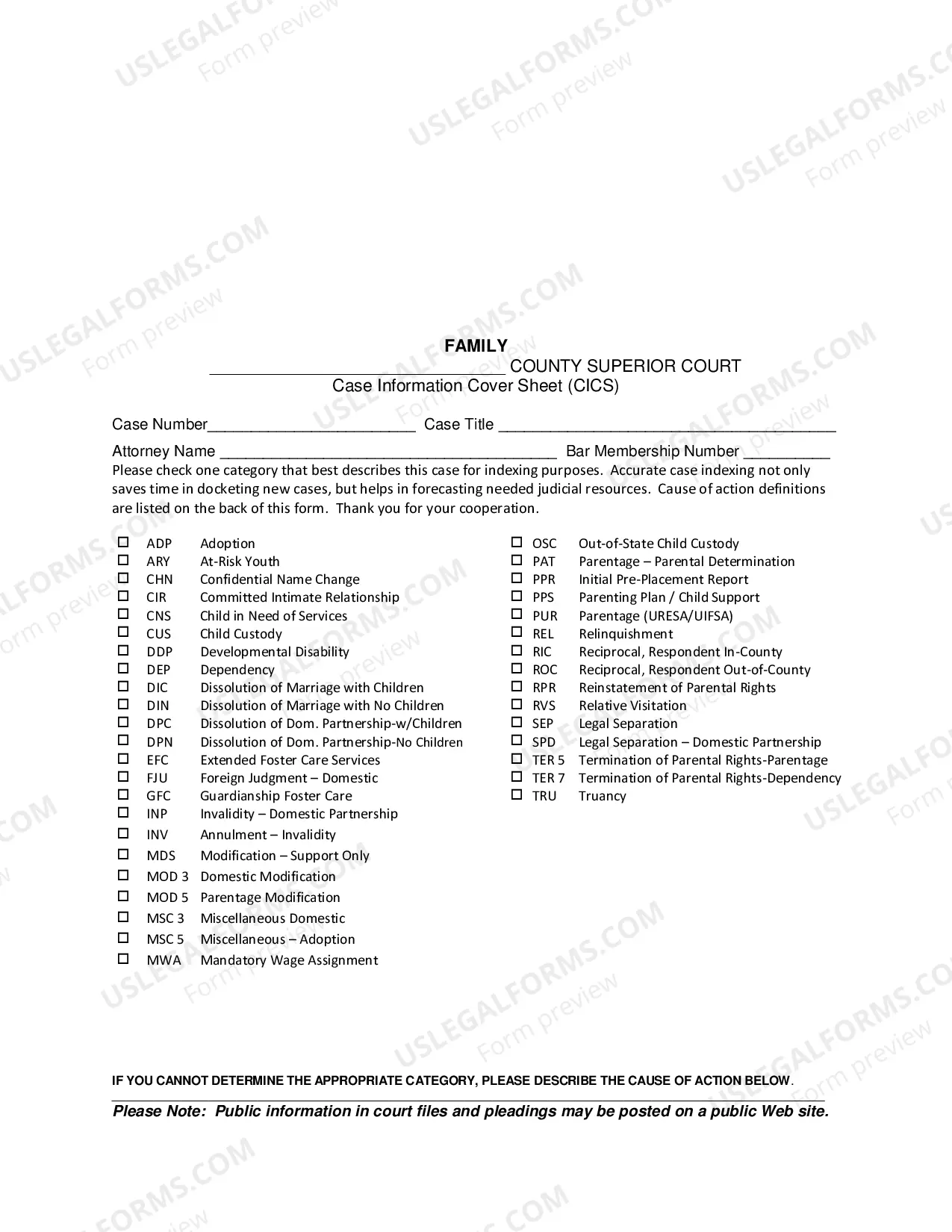
Maine Boundary Line Agreement
About this form
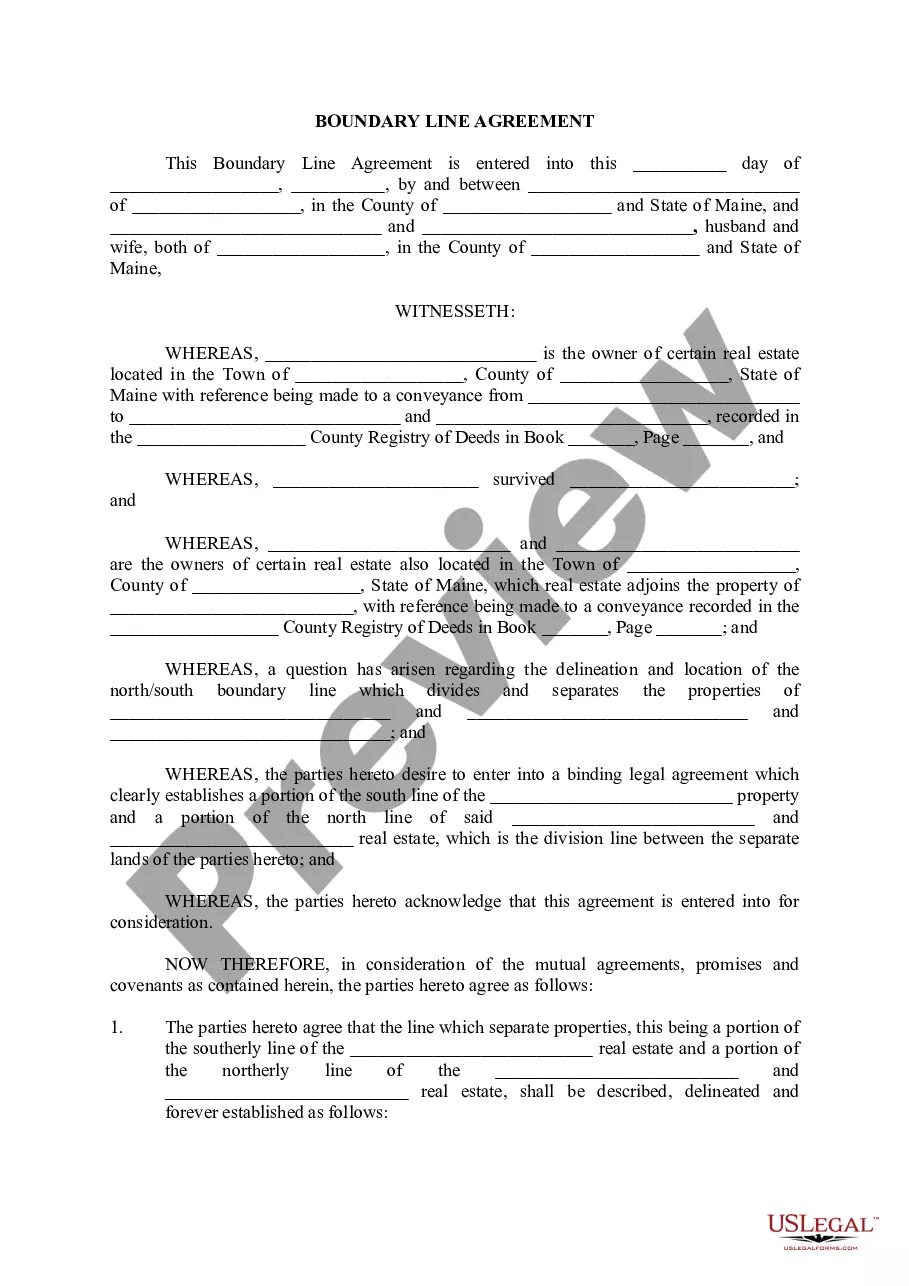
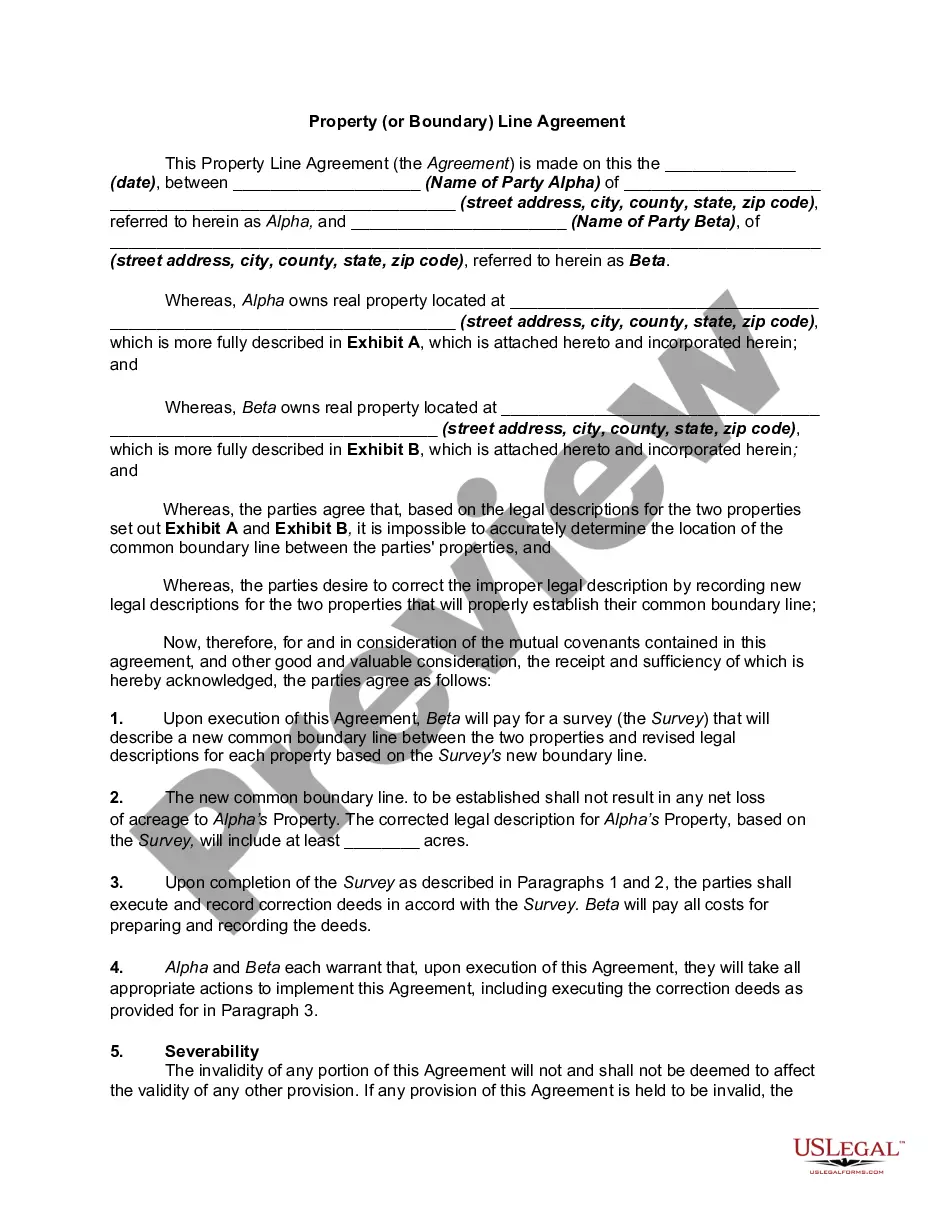
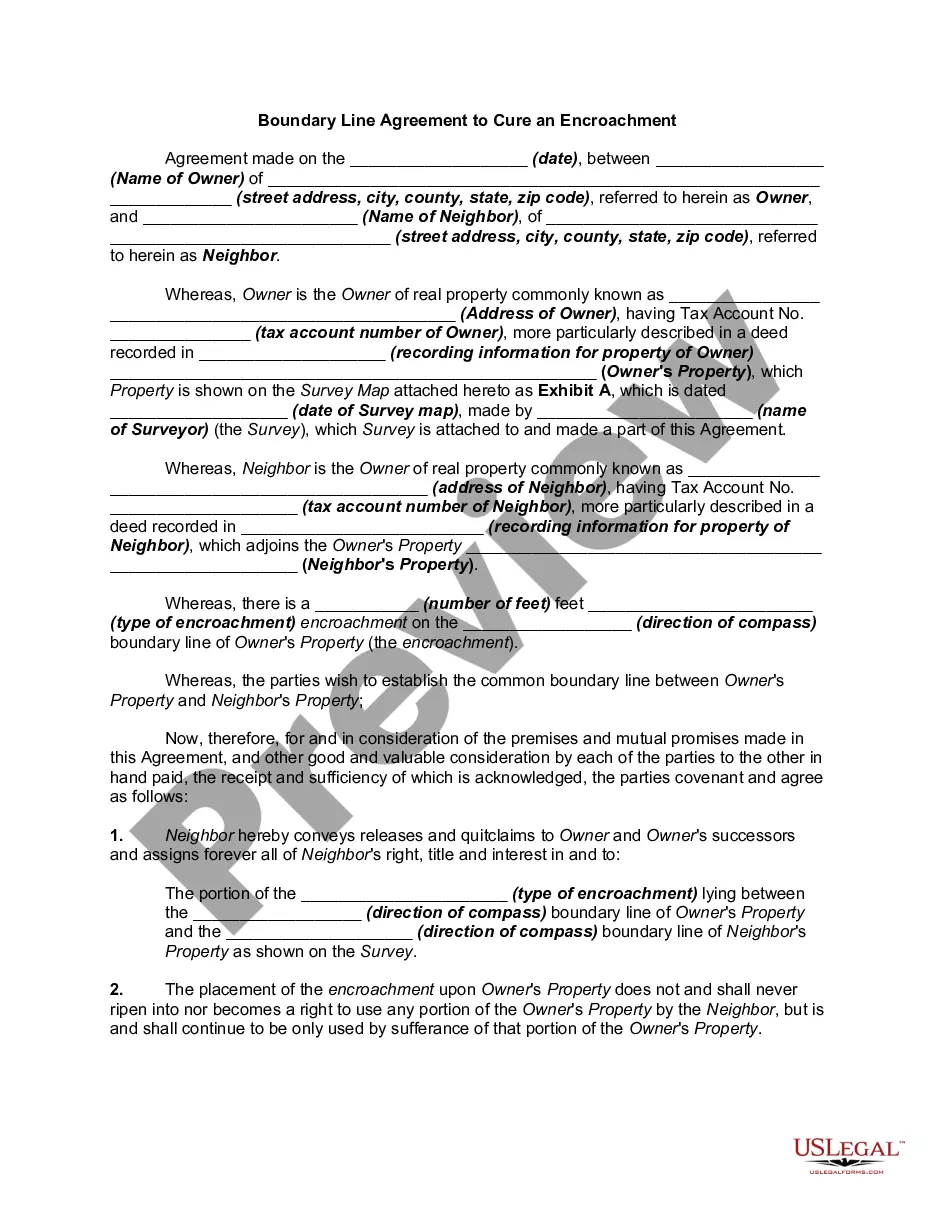
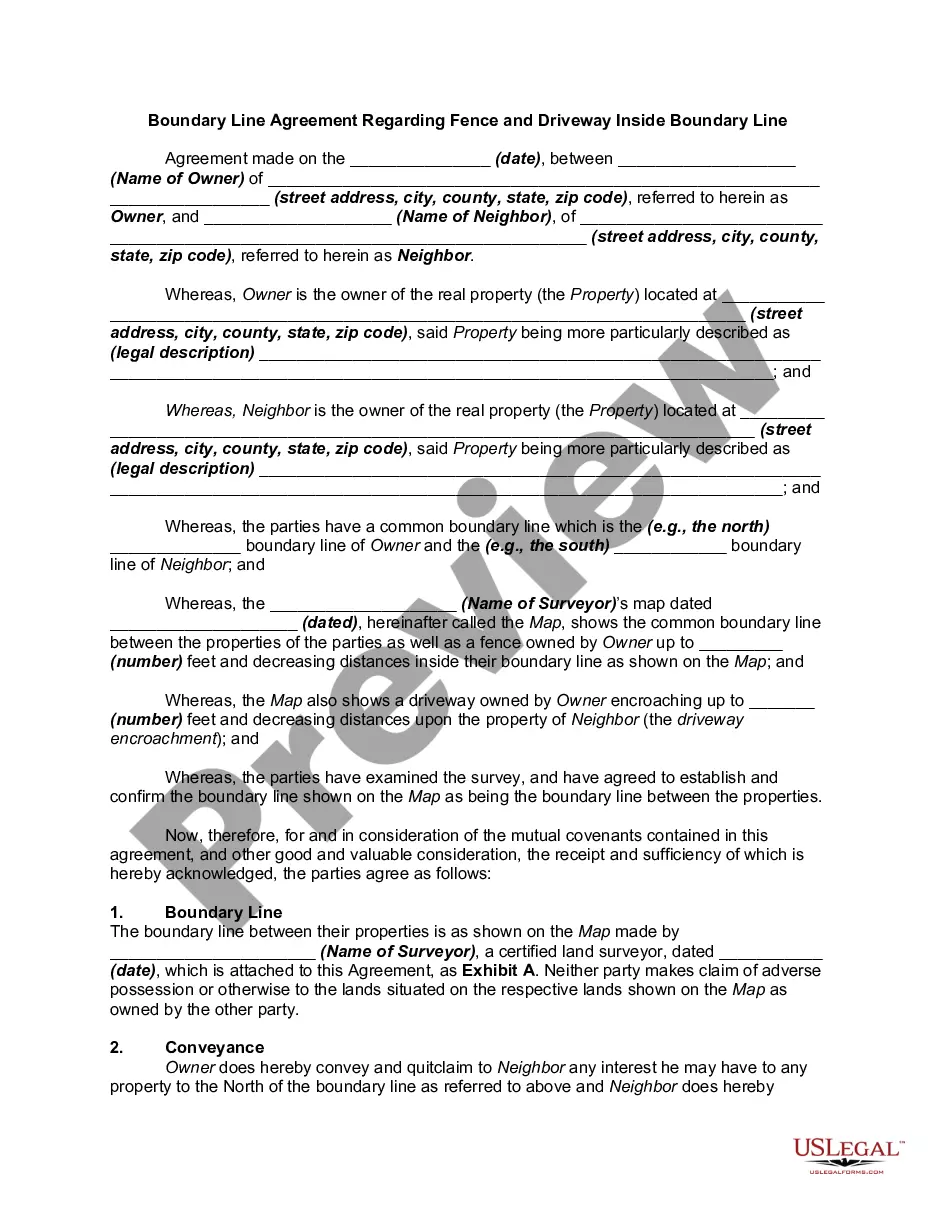
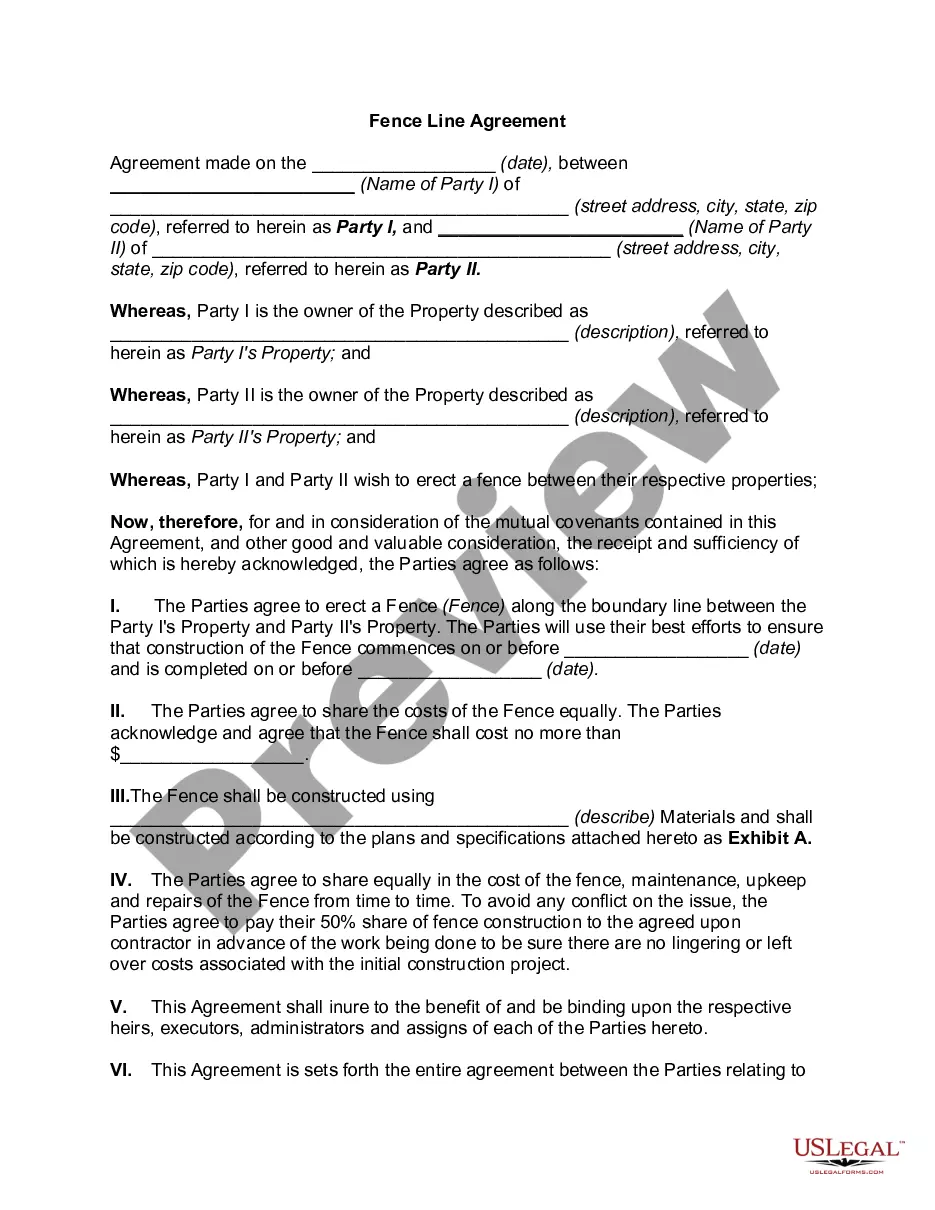
A Boundary Line Agreement is a legal document used by adjoining landowners to agree on the true location of a boundary line when there is uncertainty or a dispute. This form helps to establish a clear division line between properties, providing a legally binding solution to any boundary-related disagreements. It differs from general property deeds as it specifically addresses boundary delineation rather than the transfer of ownership.
What’s included in this form
- Identification of the parties involved in the agreement.
- Description of the properties adjacent to one another.
- Specifications of the boundary line being established.
- Consideration clause affirming mutual benefits for the parties.
- Binding terms that ensure the agreement is effective for future heirs and assigns.
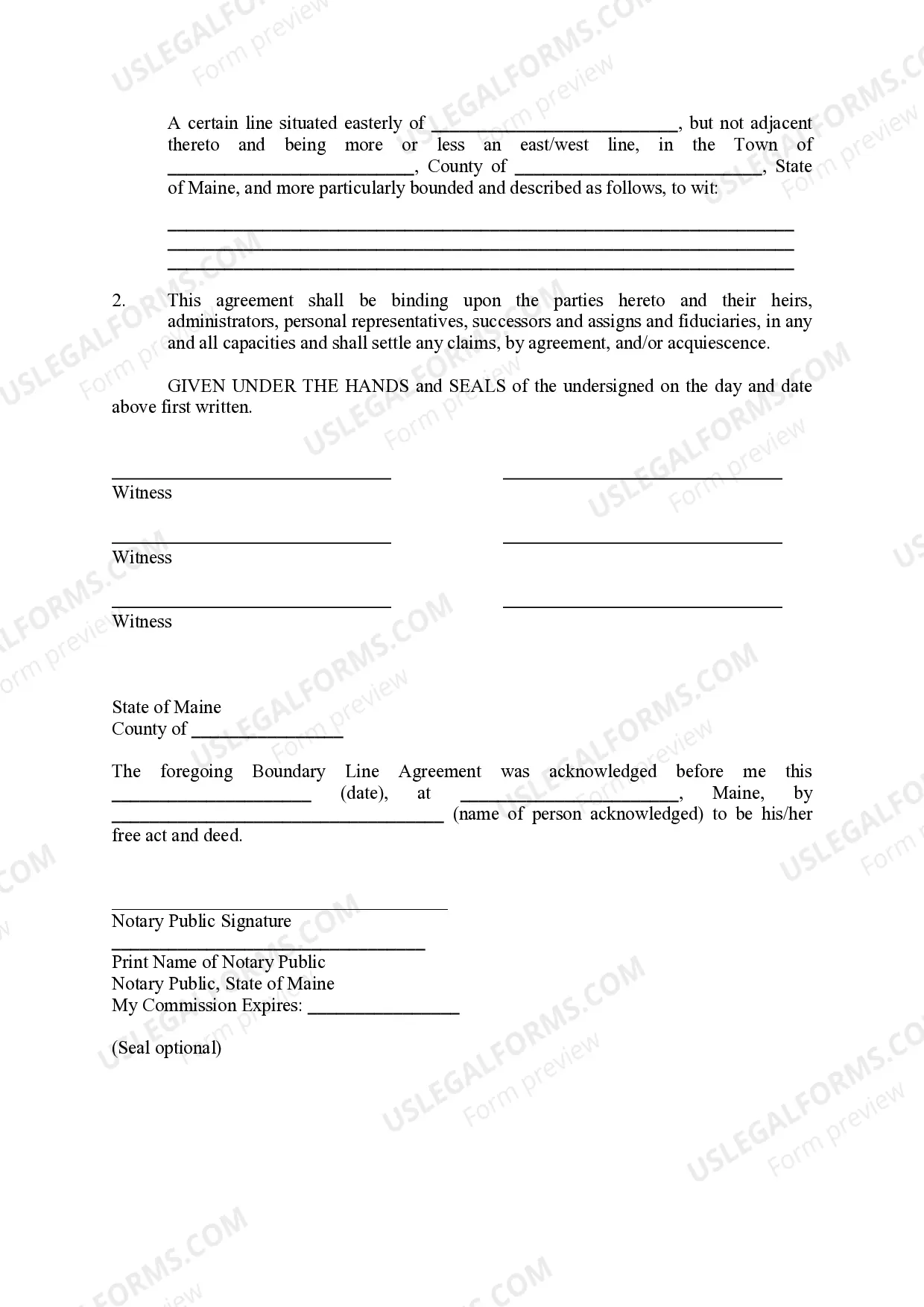
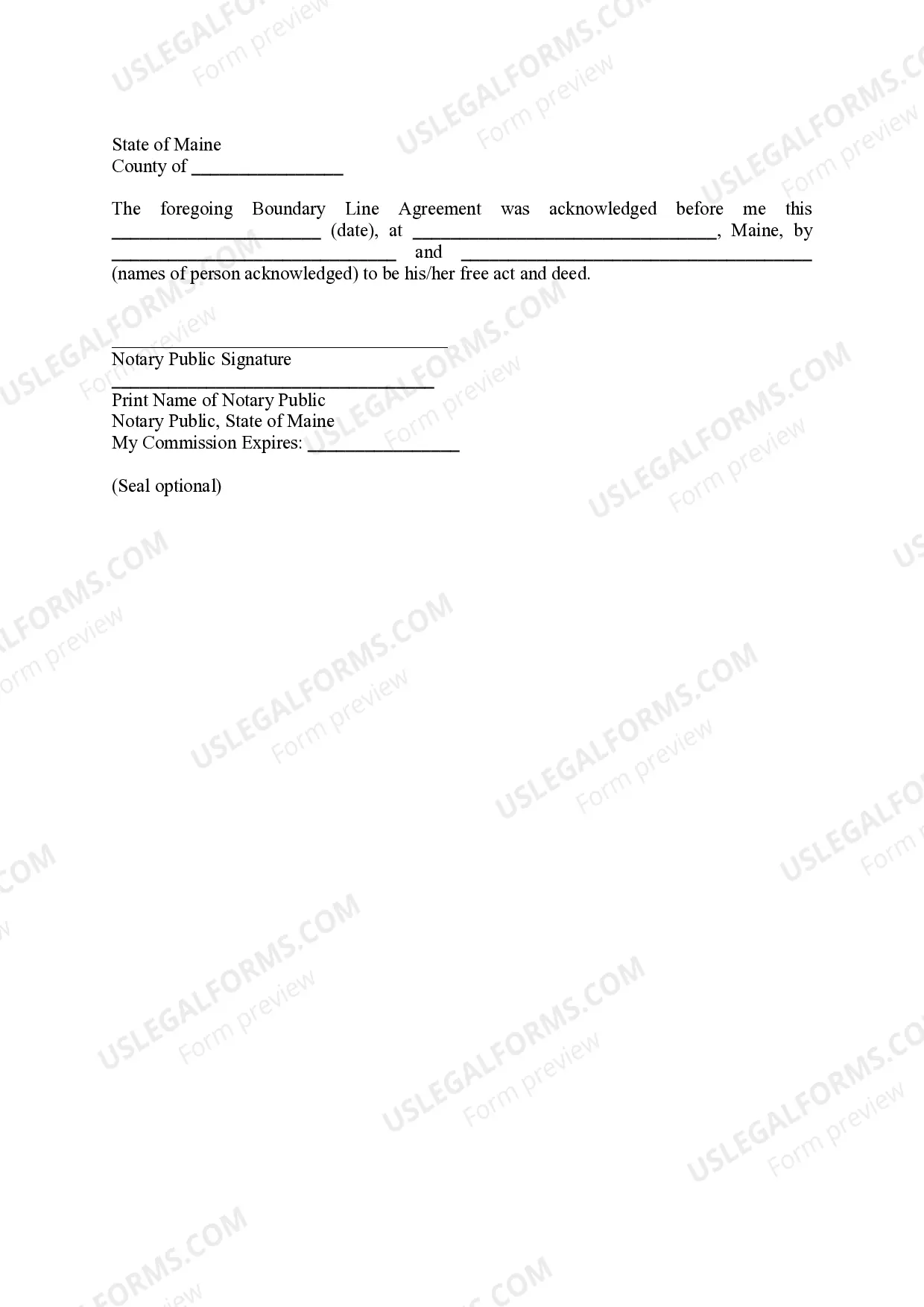
- Notary acknowledgment for legal validation.

When this form is needed
This form is useful in various situations, such as when there is a dispute over where the property line lies, when new surveys suggest different boundary lines than previously accepted, or when neighbors want to clarify property lines to avoid future conflicts. It is an effective solution for maintaining good relationships between landowners while ensuring legal clarity regarding property boundaries.
Who can use this document
- Adjoining landowners seeking to resolve boundary disputes.
- Individuals purchasing or selling property with ambiguous boundaries.
- Real estate professionals assisting clients with property delineation.
- Anyone involved in a boundary line disagreement who wants a formal resolution.
Steps to complete this form
- Identify the parties involved and enter their names and addresses.
- Describe the properties in question, including any relevant conveyances.
- Clearly outline the boundary line that is being established.
- Ensure all parties sign the document in the presence of a notary.
- Store the signed agreement in a safe place for future reference.
Does this form need to be notarized?
Yes, this form must be notarized to be legally valid. US Legal Forms provides integrated online notarization, available 24/7. This ensures a secure video call process that meets legal standards without the need for travel.
Get your form ready online
Our built-in tools help you complete, sign, share, and store your documents in one place.
Make edits, fill in missing information, and update formatting in US Legal Forms—just like you would in MS Word.
Download a copy, print it, send it by email, or mail it via USPS—whatever works best for your next step.
Sign and collect signatures with our SignNow integration. Send to multiple recipients, set reminders, and more. Go Premium to unlock E-Sign.
If this form requires notarization, complete it online through a secure video call—no need to meet a notary in person or wait for an appointment.
We protect your documents and personal data by following strict security and privacy standards.

Make edits, fill in missing information, and update formatting in US Legal Forms—just like you would in MS Word.

Download a copy, print it, send it by email, or mail it via USPS—whatever works best for your next step.

Sign and collect signatures with our SignNow integration. Send to multiple recipients, set reminders, and more. Go Premium to unlock E-Sign.

If this form requires notarization, complete it online through a secure video call—no need to meet a notary in person or wait for an appointment.

We protect your documents and personal data by following strict security and privacy standards.
Mistakes to watch out for
- Failing to accurately describe the boundary line.
- Omitting necessary signatures from all parties involved.
- Not having the document notarized, which may affect its legal standing.
- Using vague language that could lead to further disputes in the future.
Benefits of completing this form online
- Convenience of accessing and completing the form at your own pace.
- Editable templates that allow for quick customization to your specific situation.
- Access to forms drafted by licensed attorneys for legal validity.
- Secure storage options for your completed documents, ensuring they are easily retrievable.
Legal use & context
- Helps prevent future disputes by ensuring all parties have a clear understanding of property boundaries.
- Legally binding once completed and notarized, making it enforceable in court.
- Establishes a record that can be referred to in the event of future property sales or disputes.
Looking for another form?


Form popularity
FAQ
If you decide to hire a licensed land surveyor, he or she will come out to your land and place markers that mark the boundary lines of your property. You can find a listing of licensed land surveyors in your area by simply consulting your local phone book or the internet.
1. Side and Rear Yards. Yard structures under six feet in height may be located up to a side or rear property line subject to building code and fire code limitations. Yard structures six feet in height or over shall be located at least three feet from any property line and shall not exceed 12 feet in height.
General Boundary Rule This rule provides that the Title Plan shall be deemed to indicate the general boundaries only, and that the exact line of the boundaries shall be left undetermined.
Taking the details from the legal description and plat map, a surveyor carefully measures the legal boundaries of your property. The surveyor will bury survey pins if they're not already there and often mark the spots with stakes or flags for easy use.
15 feet from side and rear property lines.
A boundary agreement between two neighbouring landowners as to the position of the boundary between their two properties may take effect even where it might be arguablycontrary to evidence pointing to the boundary being in a different place.The agreement, once made, will be binding on successors in title.
The doctrine provides that when two adjacent owners who are uncertain of the true position of the common boundary between the parcels agree to the true position of the common boundary, mark it on the ground or build it up, and occupy each side for a period equal to the statute of limitations, then such line becomes the
If you state something wanting to control another's behavior, it's a rule. If you state something about how you will conduct yourself, it's a boundary. Rules and really, anything wanting to try to control another tend to fail.
Property boundaries are often identified above ground with the use of stakes to mark the corner points. Years ago, wooden stakes were often used to mark property lines. More recently, long metal posts that are visible about 1 to 2 feet above ground have been used.