Homework Agreement for Younger Children
Understanding this form
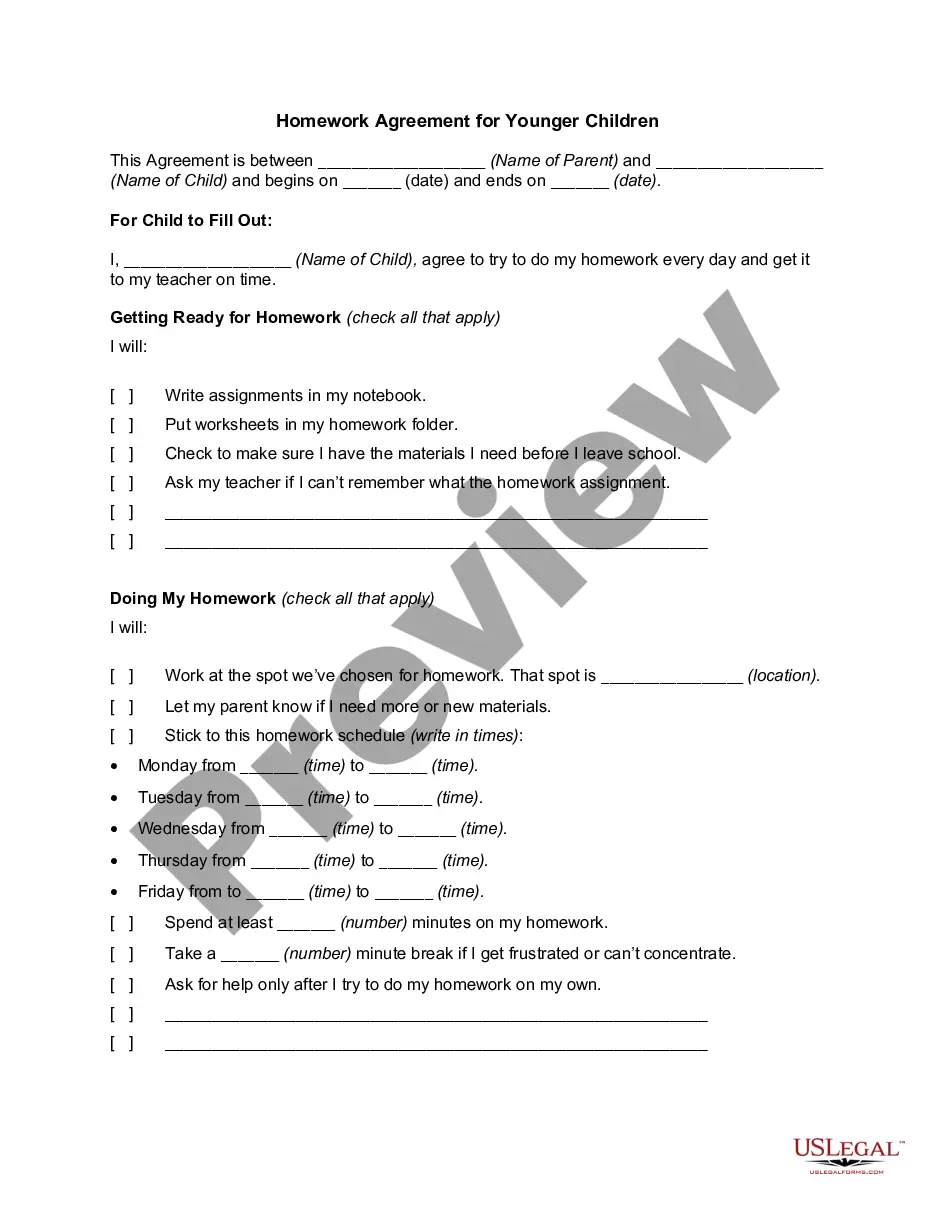
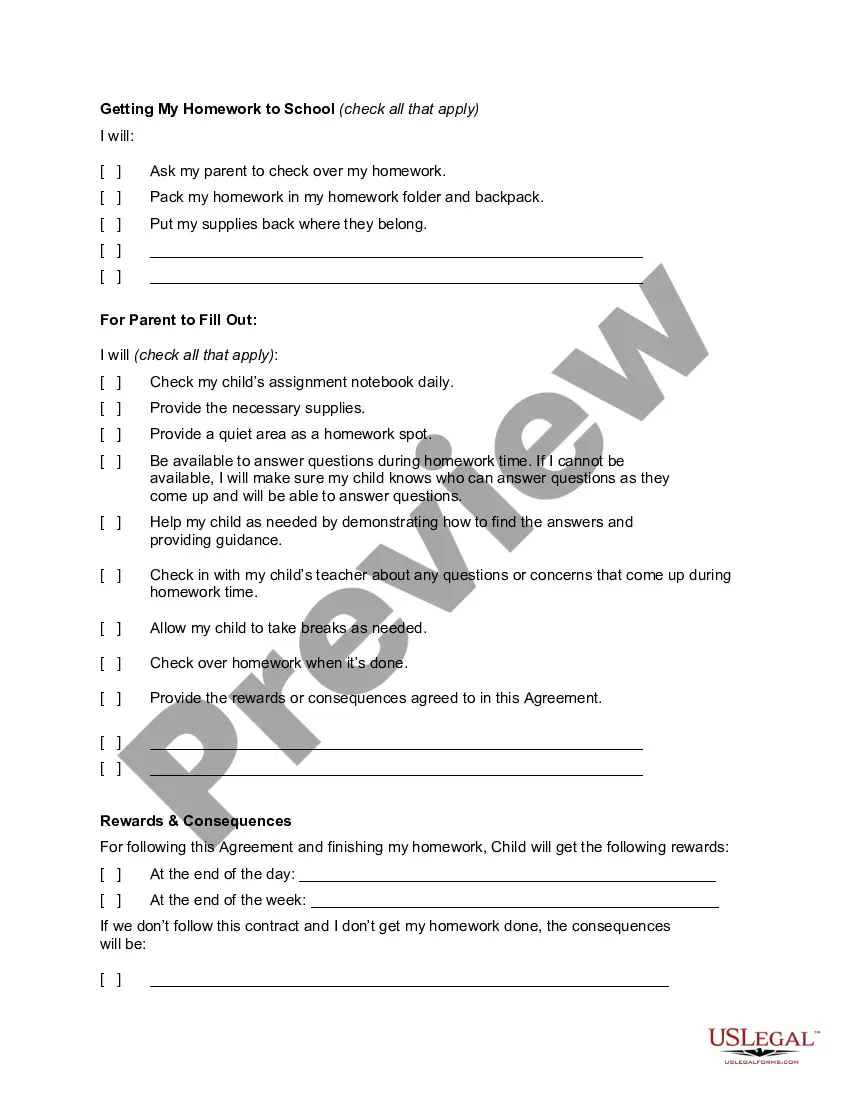
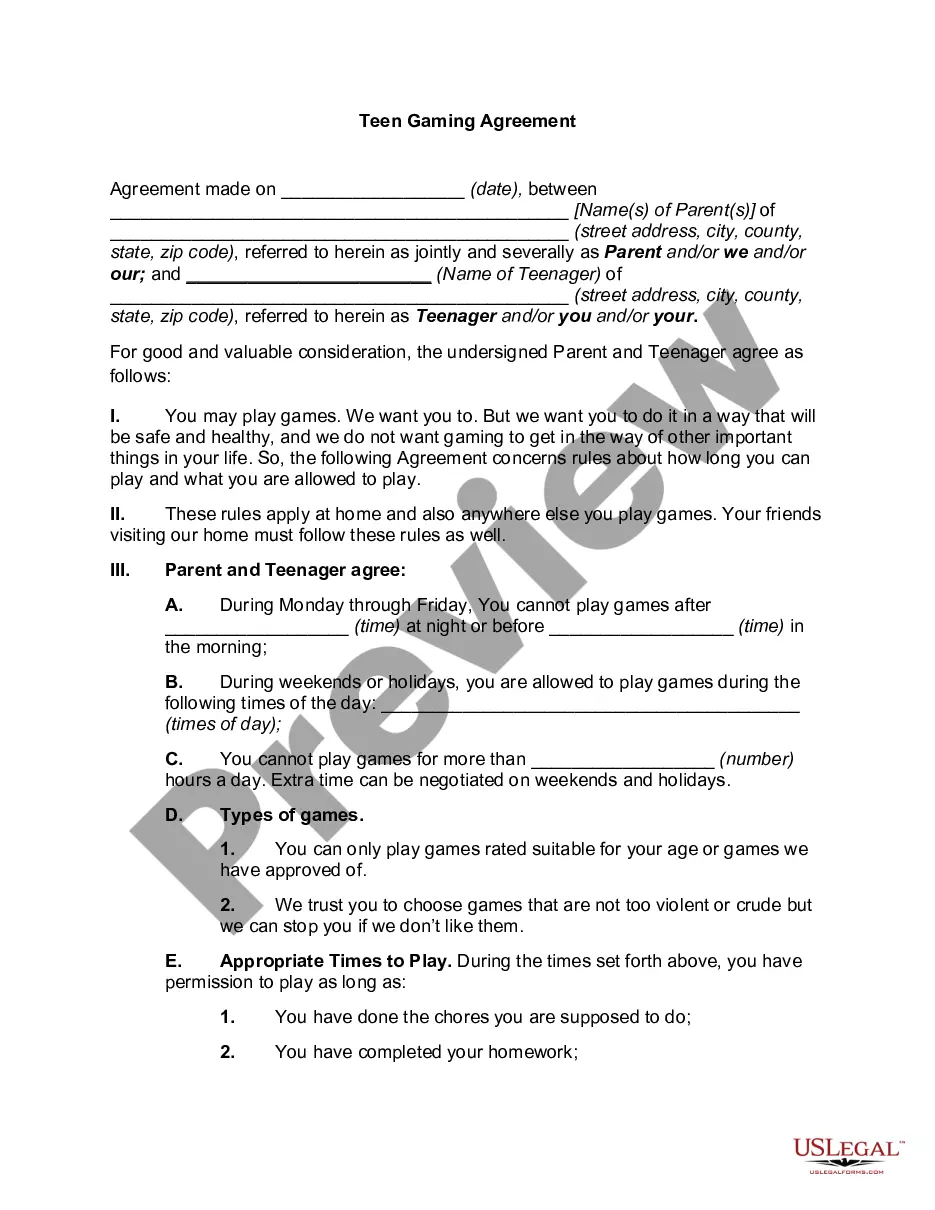
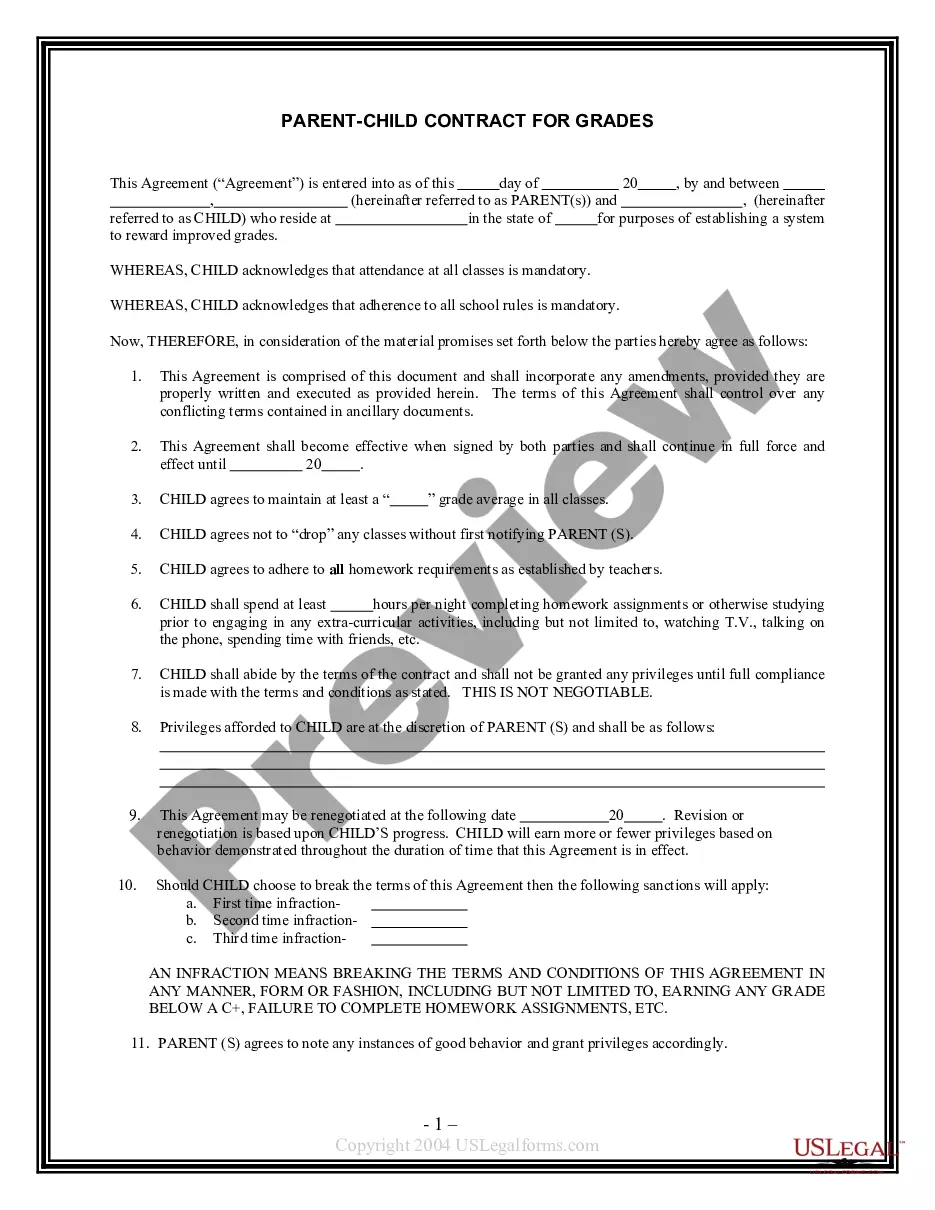
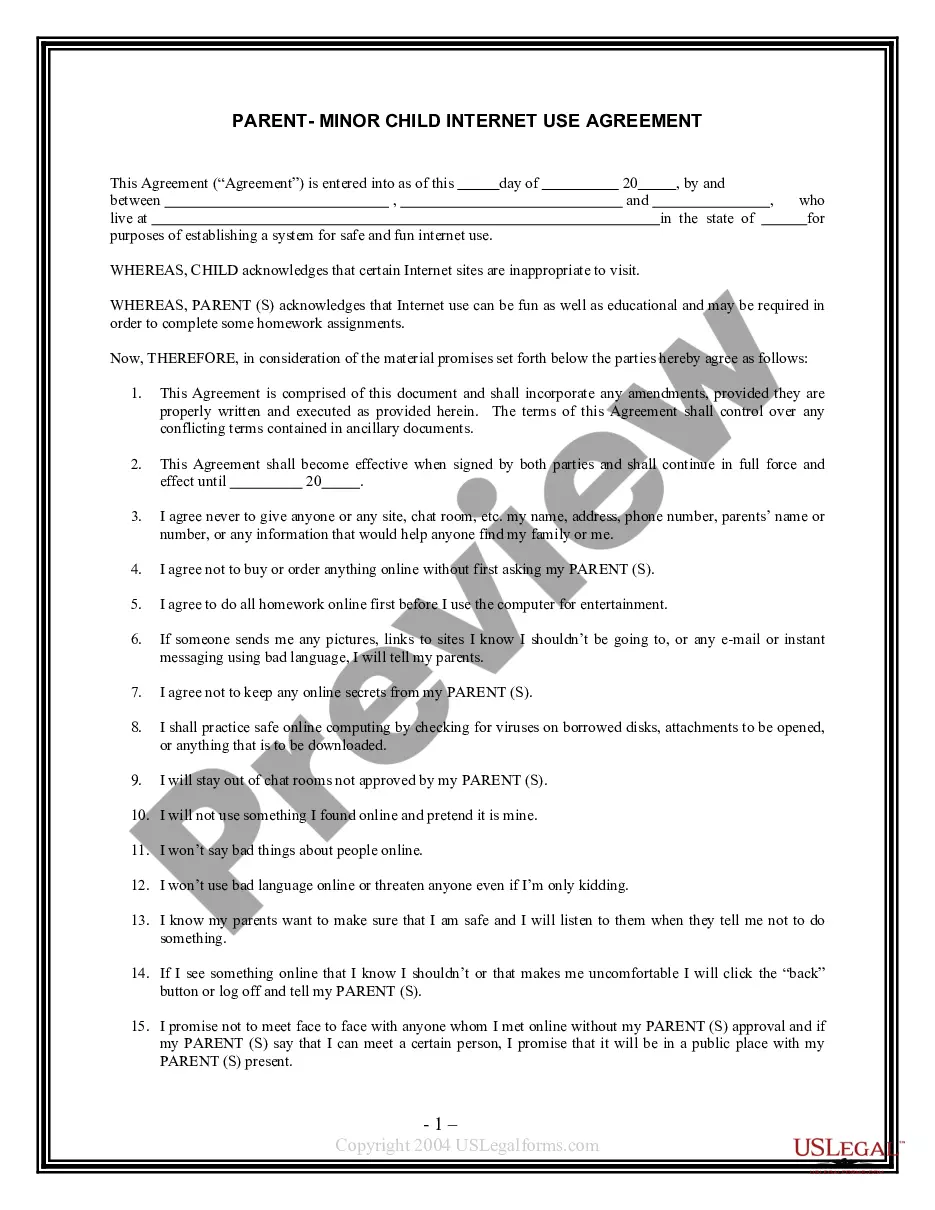
The Homework Agreement for Younger Children is a contract designed to help parents and children set clear expectations for homework completion. This form outlines the responsibilities of both the child and the parent, aiming to create a supportive environment that promotes timely and effective homework practices. Unlike general homework guidelines, this contract includes personalized strategies, consequences, and rewards tailored to each child's needs.
Form components explained
- Parties involved: Includes space for the names of the parent and child.
- Getting ready for homework: Sections where the child lists out their preparation steps.
- Homework routine: Establishes a schedule, including specific times dedicated to homework.
- Parental support: Outlines what the parent will do to assist their child.
- Rewards and consequences: Specifies incentives for completing homework and consequences for not adhering to the agreement.

When this form is needed
This form is useful for parents who want to foster a structured approach to homework with their younger children. It is ideal when children struggle to complete homework on time or face challenges in understanding assignments. The contract can also help establish a routine and reduce homework-related conflicts.
Who can use this document
- Parents of younger children who are starting school or are in elementary grades.
- Parents who want to establish clear expectations for homework completion.
- Guardians seeking to support children manage their homework responsibilities effectively.
How to complete this form
- Identify the parties: Fill in the names of the parent and child at the beginning of the form.
- Set the dates: Specify the start and end dates for the agreement.
- Complete the childâs section: Have the child fill out their commitments regarding homework preparation, completion, and submission.
- Fill in the parent's responsibilities: The parent should indicate how they will support their child, including checking assignments and providing materials.
- Define rewards and consequences: Clearly outline the rewards for following the agreement and any consequences for not completing homework.
- Sign the agreement: Both the parent and child should sign the document to indicate their commitment.
Notarization requirements for this form
This form does not typically require notarization unless specified by local law. Make sure to check any specific guidelines set by your child's school or district.
Get your form ready online
Our built-in tools help you complete, sign, share, and store your documents in one place.
Make edits, fill in missing information, and update formatting in US Legal Forms—just like you would in MS Word.
Download a copy, print it, send it by email, or mail it via USPS—whatever works best for your next step.
Sign and collect signatures with our SignNow integration. Send to multiple recipients, set reminders, and more. Go Premium to unlock E-Sign.
If this form requires notarization, complete it online through a secure video call—no need to meet a notary in person or wait for an appointment.
We protect your documents and personal data by following strict security and privacy standards.

Make edits, fill in missing information, and update formatting in US Legal Forms—just like you would in MS Word.

Download a copy, print it, send it by email, or mail it via USPS—whatever works best for your next step.

Sign and collect signatures with our SignNow integration. Send to multiple recipients, set reminders, and more. Go Premium to unlock E-Sign.

If this form requires notarization, complete it online through a secure video call—no need to meet a notary in person or wait for an appointment.

We protect your documents and personal data by following strict security and privacy standards.
Common mistakes to avoid
- Not reviewing the agreement regularly to ensure it remains relevant.
- Failing to follow up on agreed rewards and consequences.
- Not involving the child in the decision-making process regarding their commitments.
Why complete this form online
- Immediate access: Download the form instantly from anywhere.
- Editability: Modify the contract to fit your child's specific needs and circumstances.
- Convenience: Easily store and share the agreement digitally with your child and other caregivers.
- Expert-verified: The form is created by licensed attorneys to meet legal standards.
Looking for another form?
Form popularity
FAQ
Stop referring to doing homework as your child's job Don't tell your child, you cannot play until you finish your homework Don't use no homework as rewards. Do not nag, bribe or force. Let your child face the natural consequences. Do homework with your child.
Behaviour contracts are written agreements that outline expected behaviours/tasks during a defined amount of time and the reward the student earns if she fulfills her end of the bargain. These contracts motivate kids to try their best and help teach self-responsibility and self-monitoring.
Step 1, Customize the Contract. First, make a plan for change. Step 2, Set Up A Meeting. Next, hold a meeting with the involved parties. Step 3, Communicate the Consequences. Step 4, Schedule a Follow-Up Meeting. Step 5, Be Consistent in the Classroom. Step 6, Be Patient and Trust the Plan.
Know the teachers and what they're looking for. Set up a homework-friendly area. Schedule a regular study time. Help them make a plan. Keep distractions to a minimum. Make sure kids do their own work. Be a motivator and monitor. Set a good example.
Step 1, Customize the Contract. First, make a plan for change. Step 2, Set Up A Meeting. Next, hold a meeting with the involved parties. Step 3, Communicate the Consequences. Step 4, Schedule a Follow-Up Meeting. Step 5, Be Consistent in the Classroom. Step 6, Be Patient and Trust the Plan.
A behavior contract is an agreement between your child and your child's teacher. It often includes you, too. The contract outlines expectations for your child's behavior. It lays out any specific behaviors your child struggles with or is working on, along with goals for those behaviors.
A behavior contract is an agreement between your child and your child's teacher. It often includes you, too. The contract outlines expectations for your child's behavior. It lays out any specific behaviors your child struggles with or is working on, along with goals for those behaviors.
If your child refuses to do his or her work, then calmly give the consequence that you established for not doing homework. Also, trying to convince your child that grades are important is a losing battle. You can't make your child take school as seriously as you do. The truth is, they don't typically think that way.
Behavioural contracting is an intervention technique in which a client signs an agreement to make certain behaviour changes within a specified time, usually with explicitly defined rewards for adherence or success.Everyone was encouraged to sign a contract to engage in aerobic exercise three times per week; 96 did so.