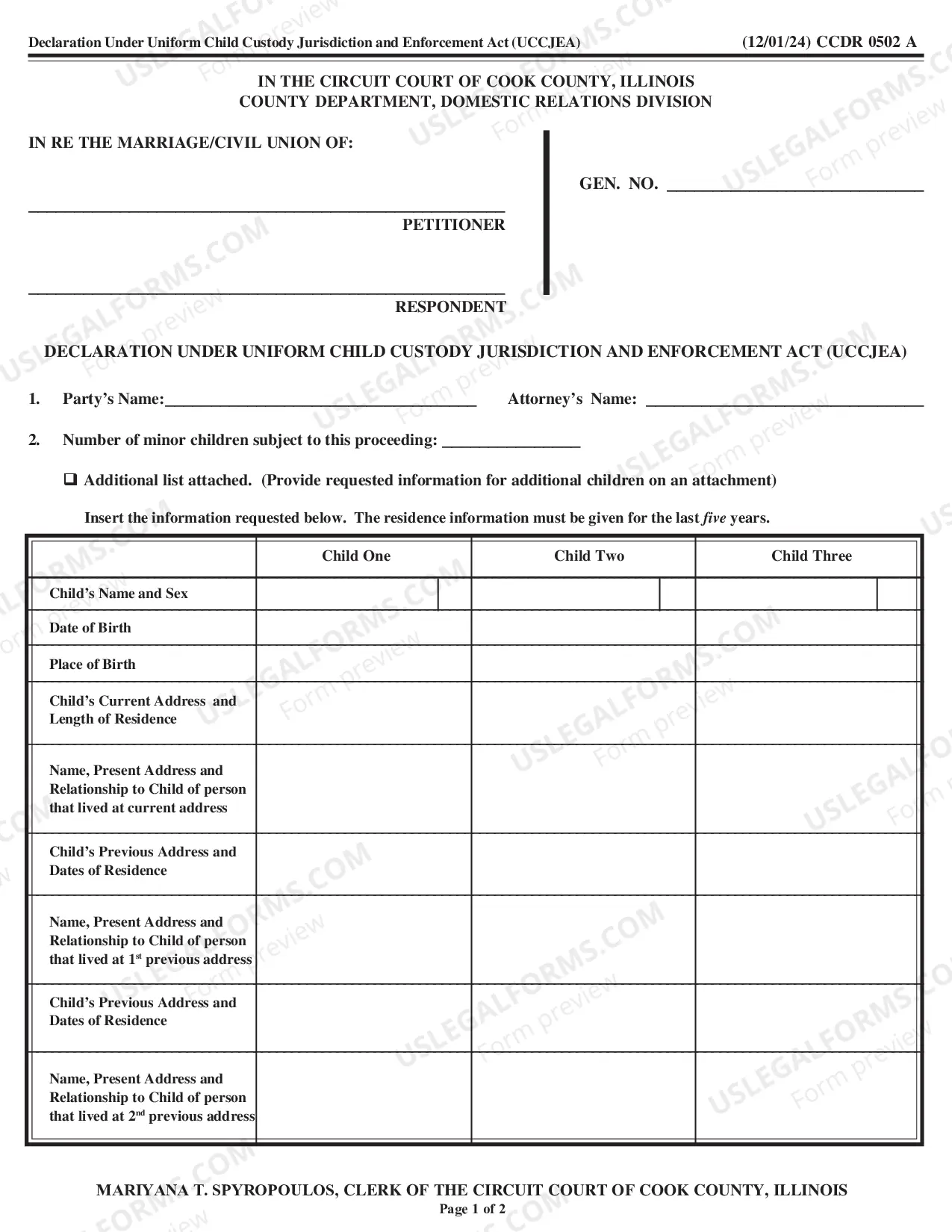
Teen Gaming Agreement
About this form
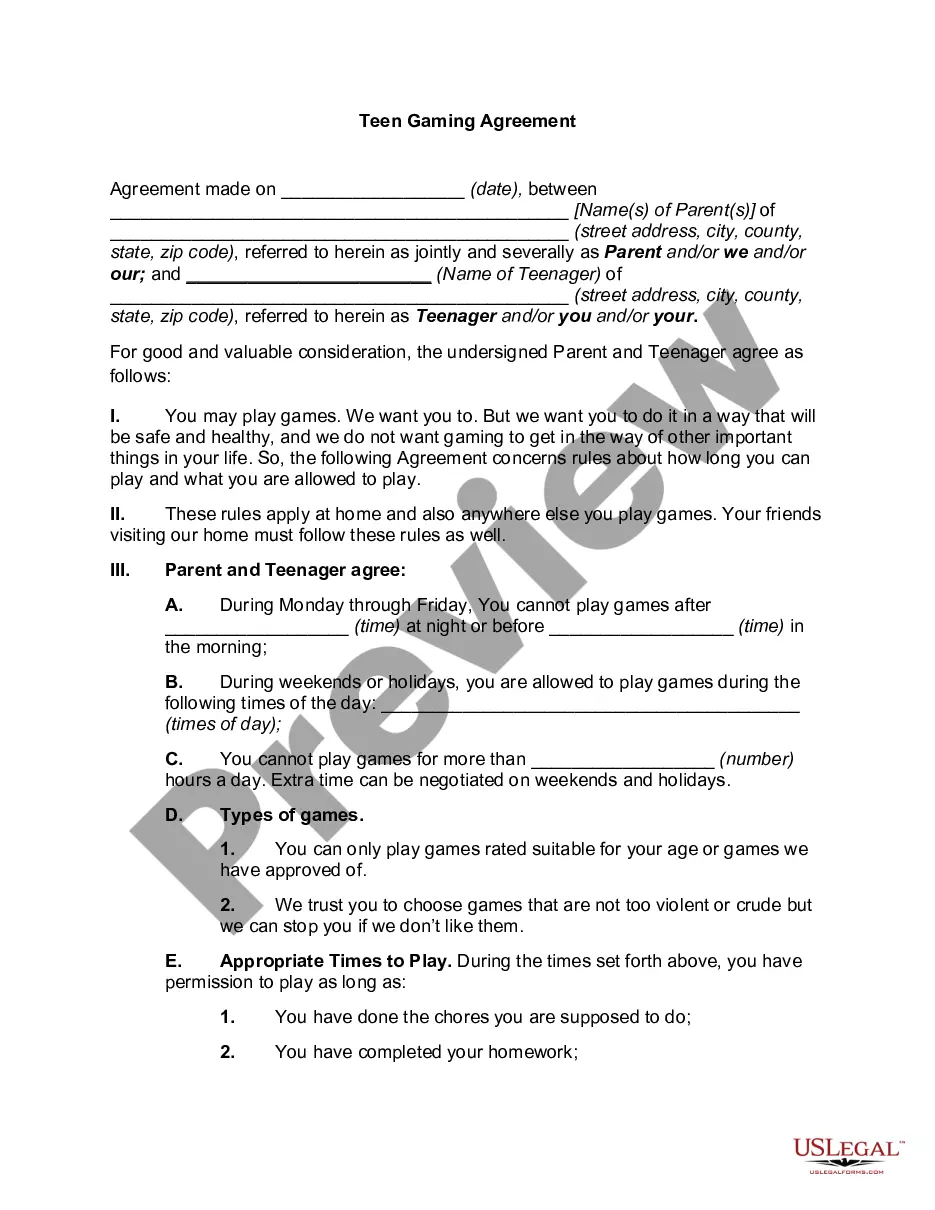
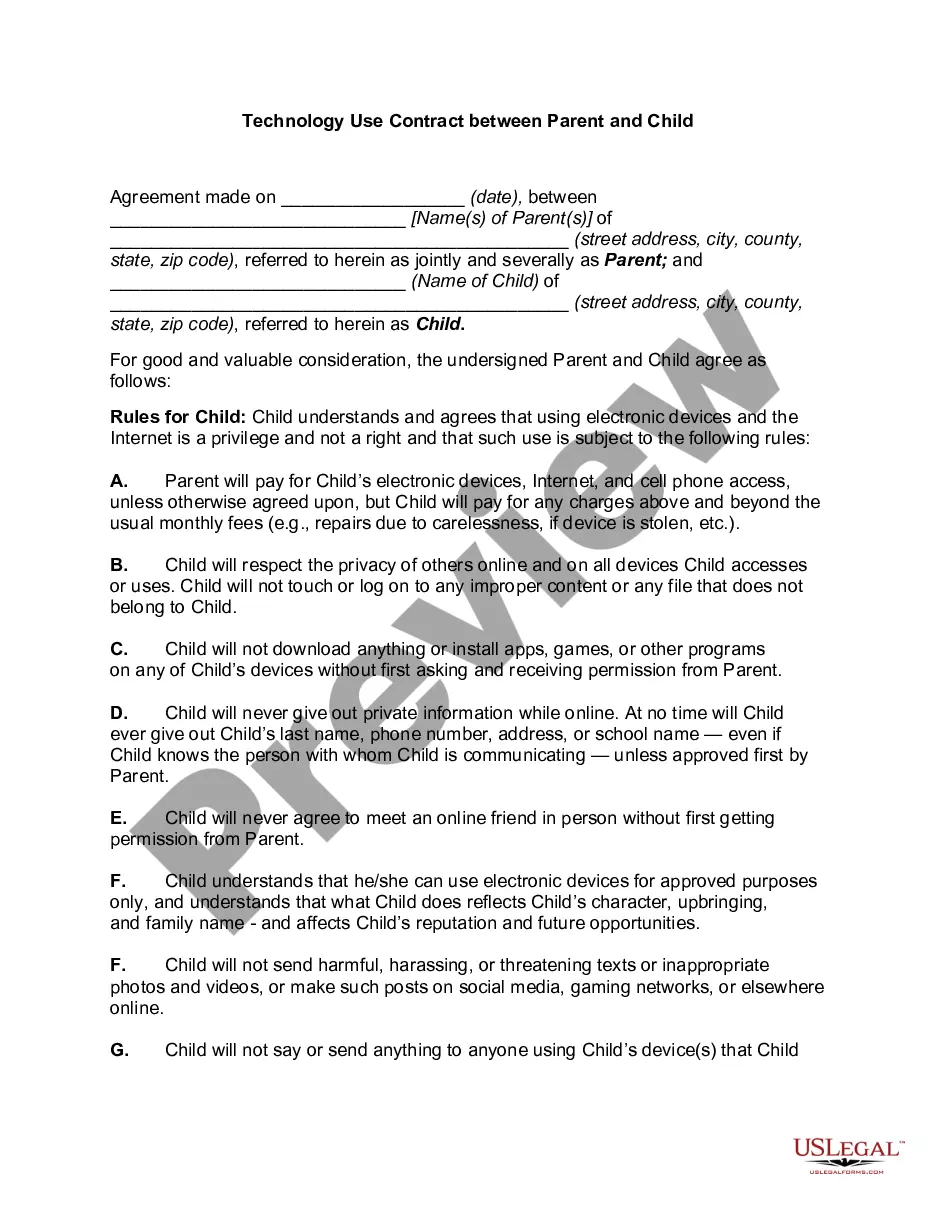
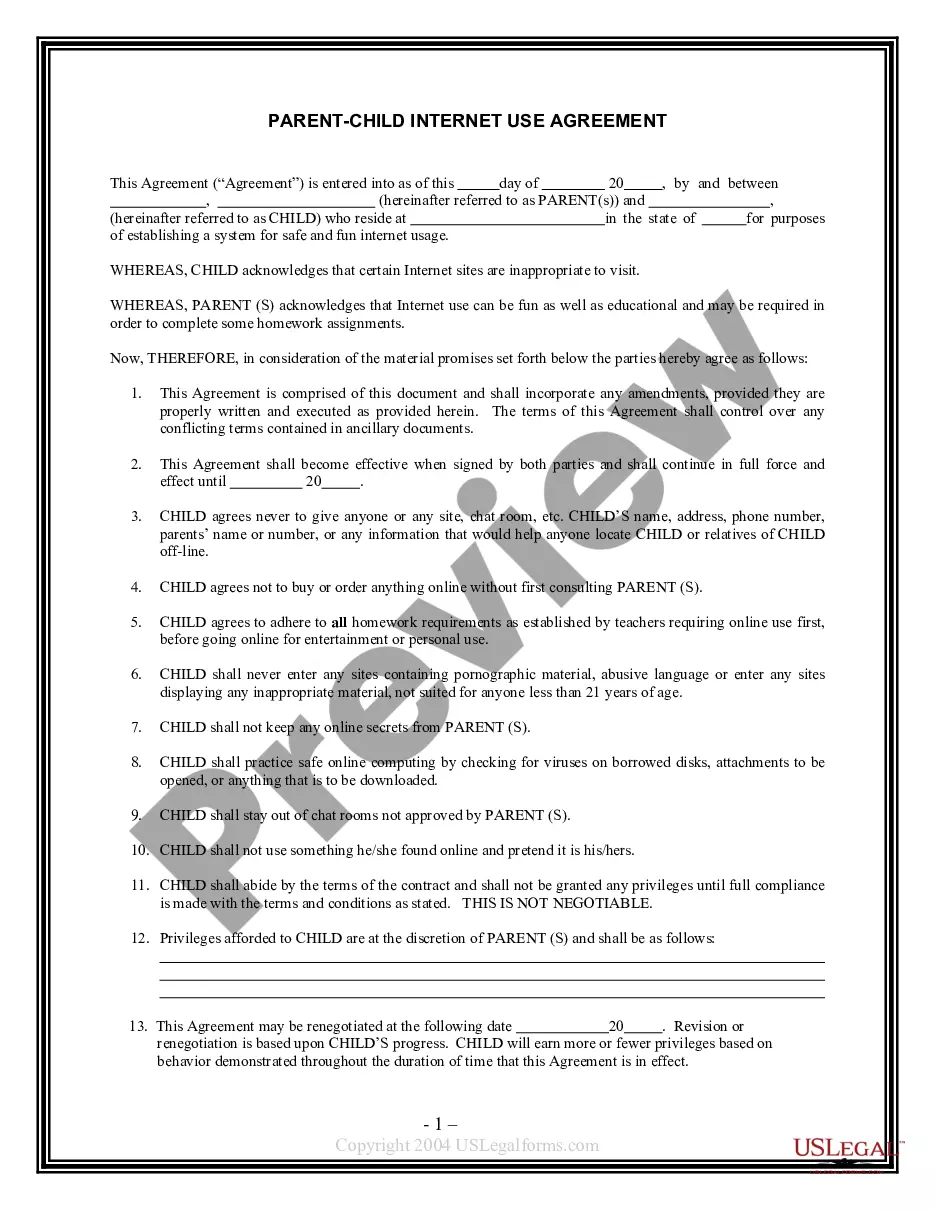
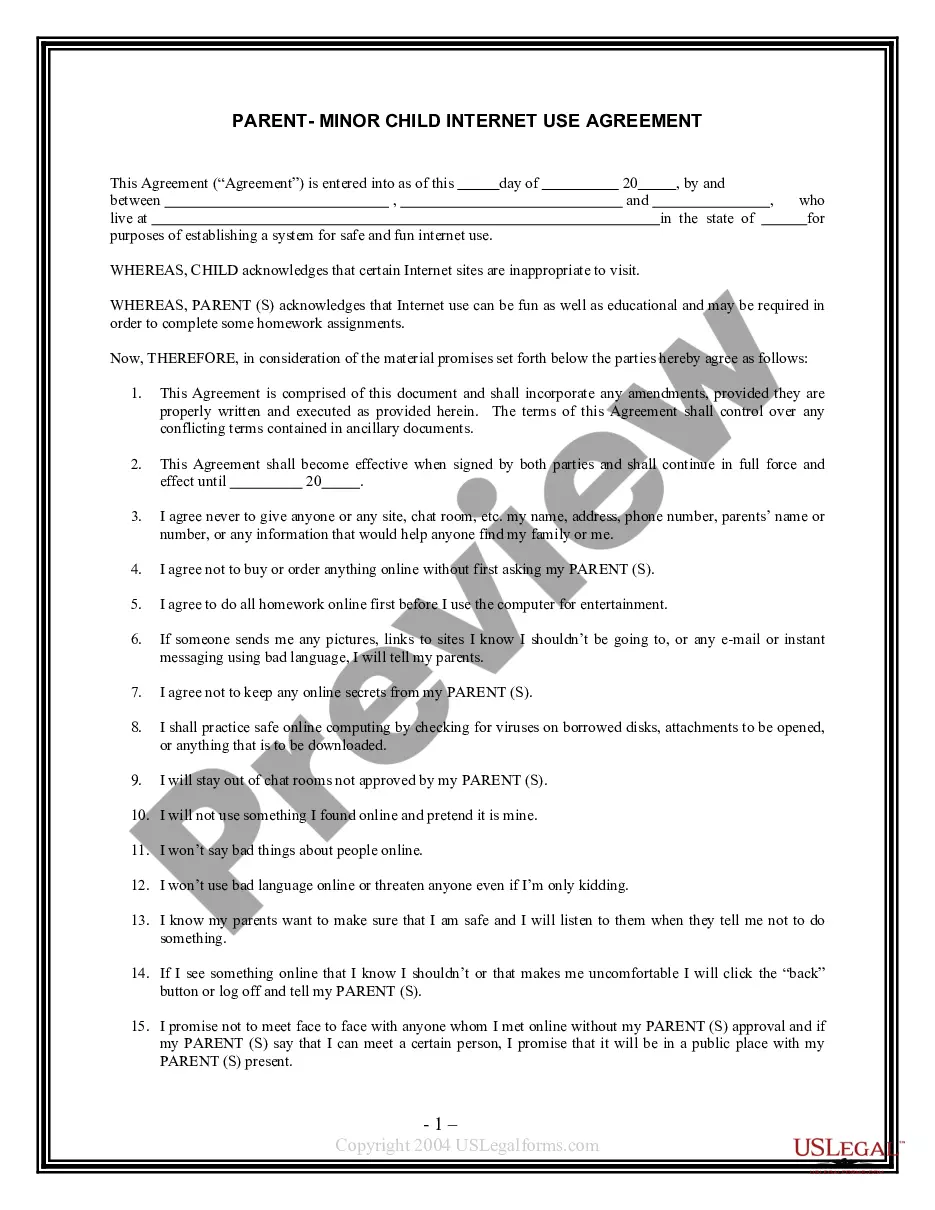
The Teen Gaming Agreement is a legal document designed for parents and their teenagers to establish clear rules surrounding video game usage. This agreement aims to promote healthy gaming habits, ensuring that gaming does not interfere with important life activities and responsibilities. It sets specific guidelines for gaming times, game types, and behavioral expectations, differing from similar forms by focusing specifically on the dynamics between parents and teenage gamers.
Form components explained
- Identification of parties: Names and addresses of parents and teenager.
- Rules for gaming times during weekdays and weekends.
- Limitations on the total number of gaming hours per day.
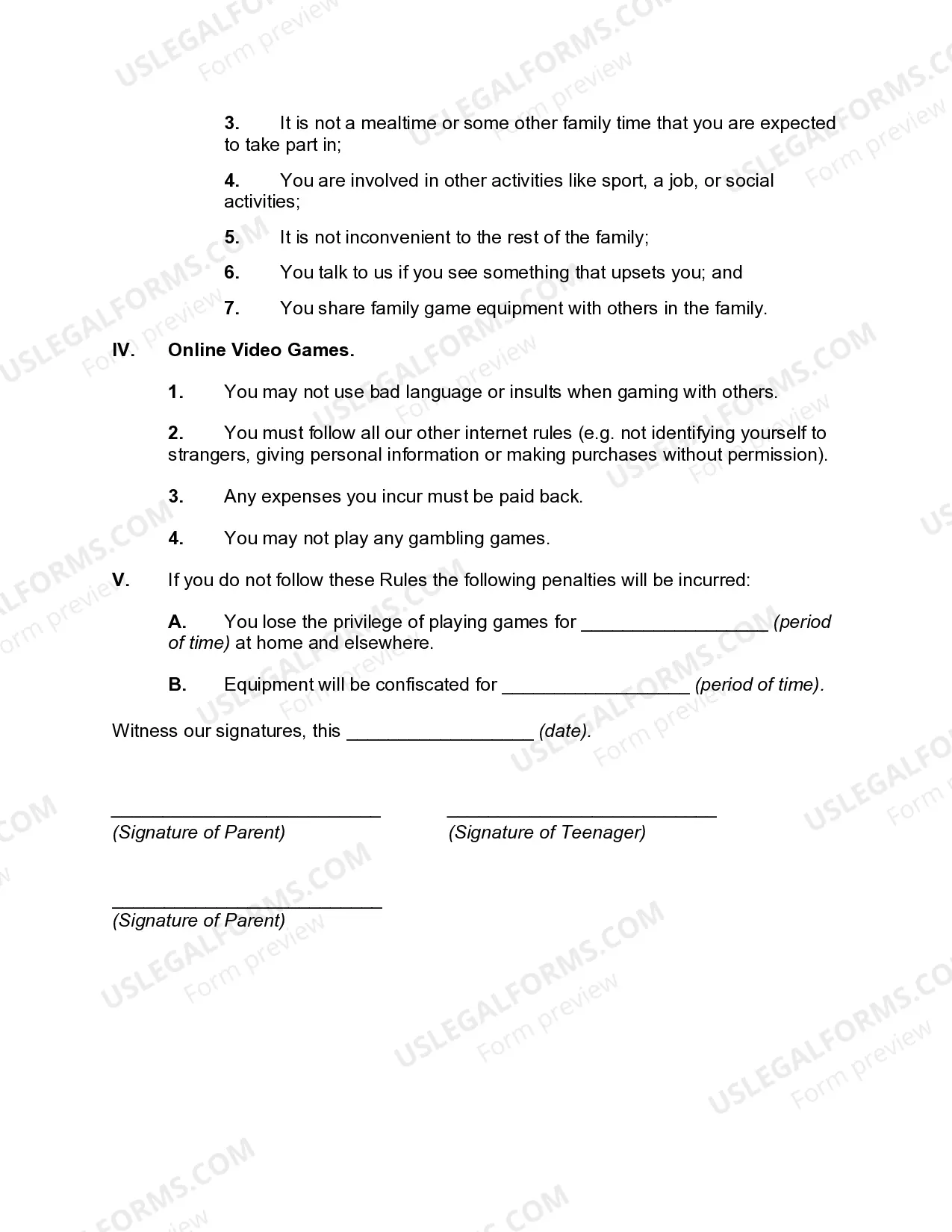
- Guidelines on acceptable types of games and behaviors while gaming.
- Consequences for violating the agreed-upon rules.
When to use this document
This form is useful when parents wish to set expectations and boundaries with their teenagers regarding video game usage. It can be used at the start of a new gaming season, after a change in behavior, or simply to reinforce healthy habits surrounding screen time. By using this agreement, both parents and teenagers can communicate openly about gaming and its impact on daily life.
Who should use this form
- Parents looking to manage their teenager's gaming habits effectively.
- Teenagers who want to establish a clear understanding of gaming boundaries with their parents.
- Families experiencing conflicts related to gaming and screen time.
Completing this form step by step
- Identify and enter the names and addresses of both parents and the teenager.
- Specify the agreement date at the top of the form.
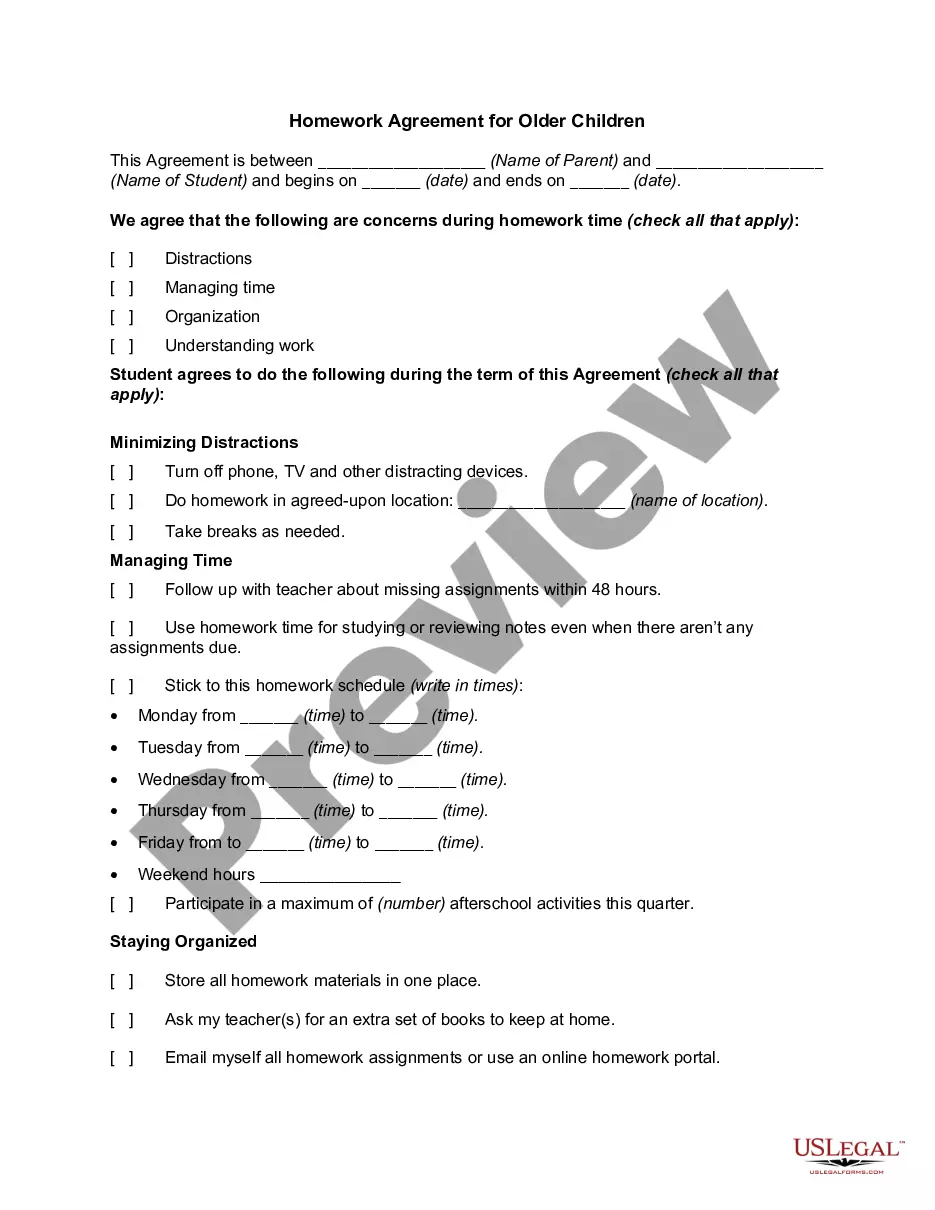
- Fill in the specific times for game play during weekdays and weekends.
- Set the total number of allowable gaming hours per day.
- Outline any additional rules or penalties applicable for non-compliance.
- Ensure all parties sign the agreement to acknowledge their understanding and commitment.
Notarization guidance
Notarization is generally not required for this form. However, certain states or situations might demand it. You can complete notarization online through US Legal Forms, powered by Notarize, using a verified video call available anytime.
Get your form ready online
Our built-in tools help you complete, sign, share, and store your documents in one place.
Make edits, fill in missing information, and update formatting in US Legal Forms—just like you would in MS Word.
Download a copy, print it, send it by email, or mail it via USPS—whatever works best for your next step.
Sign and collect signatures with our SignNow integration. Send to multiple recipients, set reminders, and more. Go Premium to unlock E-Sign.
If this form requires notarization, complete it online through a secure video call—no need to meet a notary in person or wait for an appointment.
We protect your documents and personal data by following strict security and privacy standards.

Make edits, fill in missing information, and update formatting in US Legal Forms—just like you would in MS Word.

Download a copy, print it, send it by email, or mail it via USPS—whatever works best for your next step.

Sign and collect signatures with our SignNow integration. Send to multiple recipients, set reminders, and more. Go Premium to unlock E-Sign.

If this form requires notarization, complete it online through a secure video call—no need to meet a notary in person or wait for an appointment.

We protect your documents and personal data by following strict security and privacy standards.
Common mistakes to avoid
- Not discussing the agreement with the teenager before completing it.
- Failing to set reasonable gaming times that can be realistically followed.
- Omitting the consequences of breaking the agreement.
- Neglecting to review or update the agreement over time as gaming habits change.
Why use this form online
- Convenience of instant access to the Teen Gaming Agreement from anywhere.
- Editability to customize the agreement according to specific family needs.
- Reliability of using professionally drafted, legally sound templates.
- Quick download option to start the conversation and implementation as soon as possible.
Quick recap
- The Teen Gaming Agreement helps set clear expectations for gaming among families.
- Establishing rules can prevent conflicts and encourage healthy gaming habits.
- The form is flexible enough to adapt to different family dynamics and gaming preferences.
Looking for another form?
Form popularity
FAQ
The Centers for Disease Control and Prevention (CDC) reports that children ages eight to 10 spend an average of six hours per day in front of a screen, kids ages 11 to 14 spend an average of nine hours per day in front of a screen, and youth ages 15 to 18 spend an average of seven-and-a-half hours per day in front of a
Play a video game with your child. For one week, keep a log of the time spent playing video games. Show them what that amount of time represents in other activities. Arrange active indoor or outdoor activities for your children and their friends. Start a long-term project of your child's choosing.
Put clear limits on your child's gaming. The American Academy of Pediatrics suggests time allotted should be under 30 to 60 minutes per day on school days and 2 hours or less on non- school days.
Encourage sport and physical activity. talk to your child about what they enjoy about gaming and why they want to game regularly. when you call your child off their game, ensure they have an activity to shift to, such as a family outing or dinner.
On an average according to the parent survey, adolescent boys are spending around three hours a day playing video games. Around 9 in 10 parents surveyed said that the children were spending too much time gaming so much so that their daily and family interactions are affected.
The American Academy of Pediatrics recommends no more than two hours per day of screen-based entertainment. Parents should create a media plan that dictates what hours a child can enjoy video games without affecting behavior and homework, Radesky says.
The American Academy of Pediatrics' Screen Time Guidelines For years, the American Academy of Pediatrics has recommended no more than two hours of screen time for children and teenagers, and absolutely no screen time for children under 2.
Play a video game with your child. For one week, keep a log of the time spent playing video games. Show them what that amount of time represents in other activities. Arrange active indoor or outdoor activities for your children and their friends. Start a long-term project of your child's choosing.
Put clear limits on your child's gaming. The American Academy of Pediatrics suggests time allotted should be under 30 to 60 minutes per day on school days and 2 hours or less on non- school days.