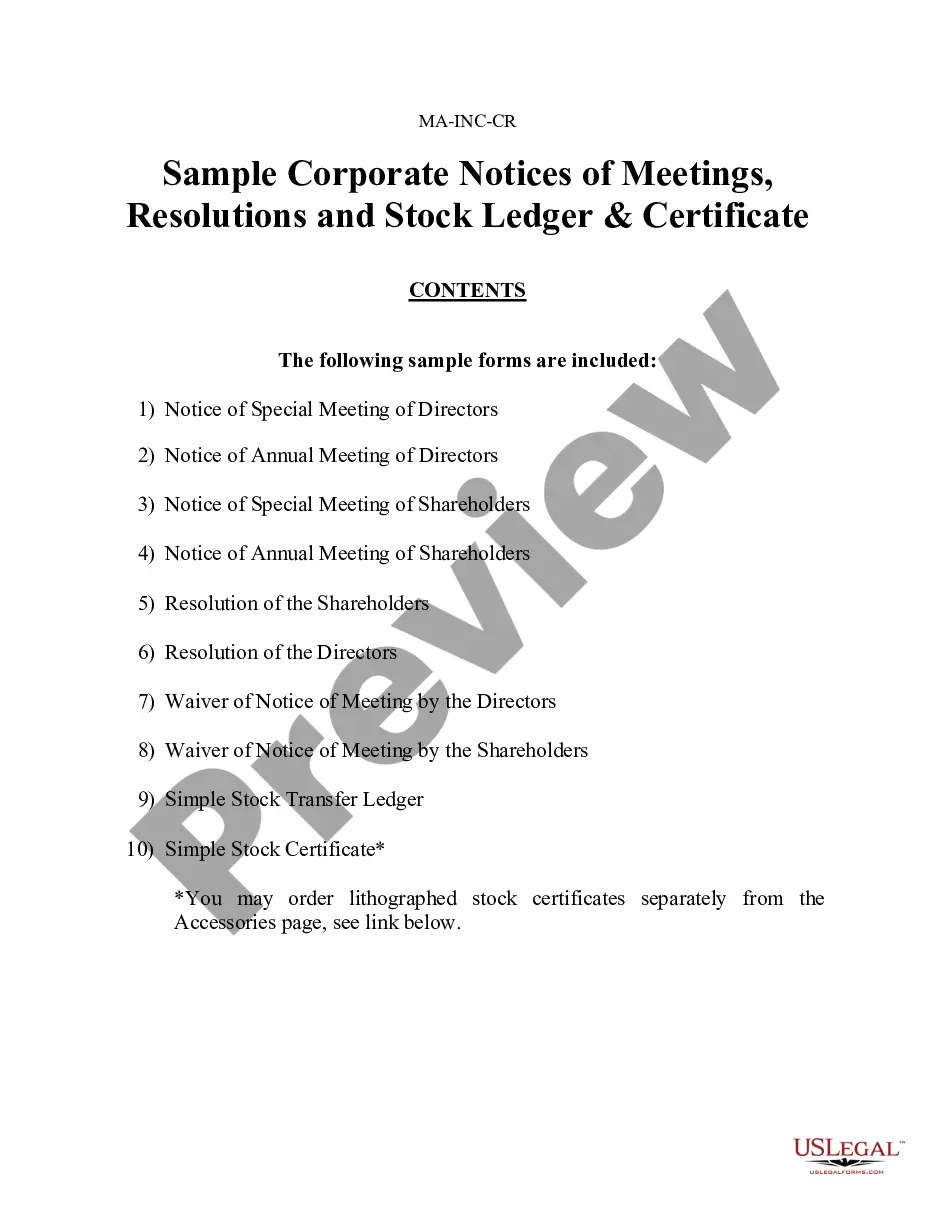
Arizona Affidavit of Mailing
About this form
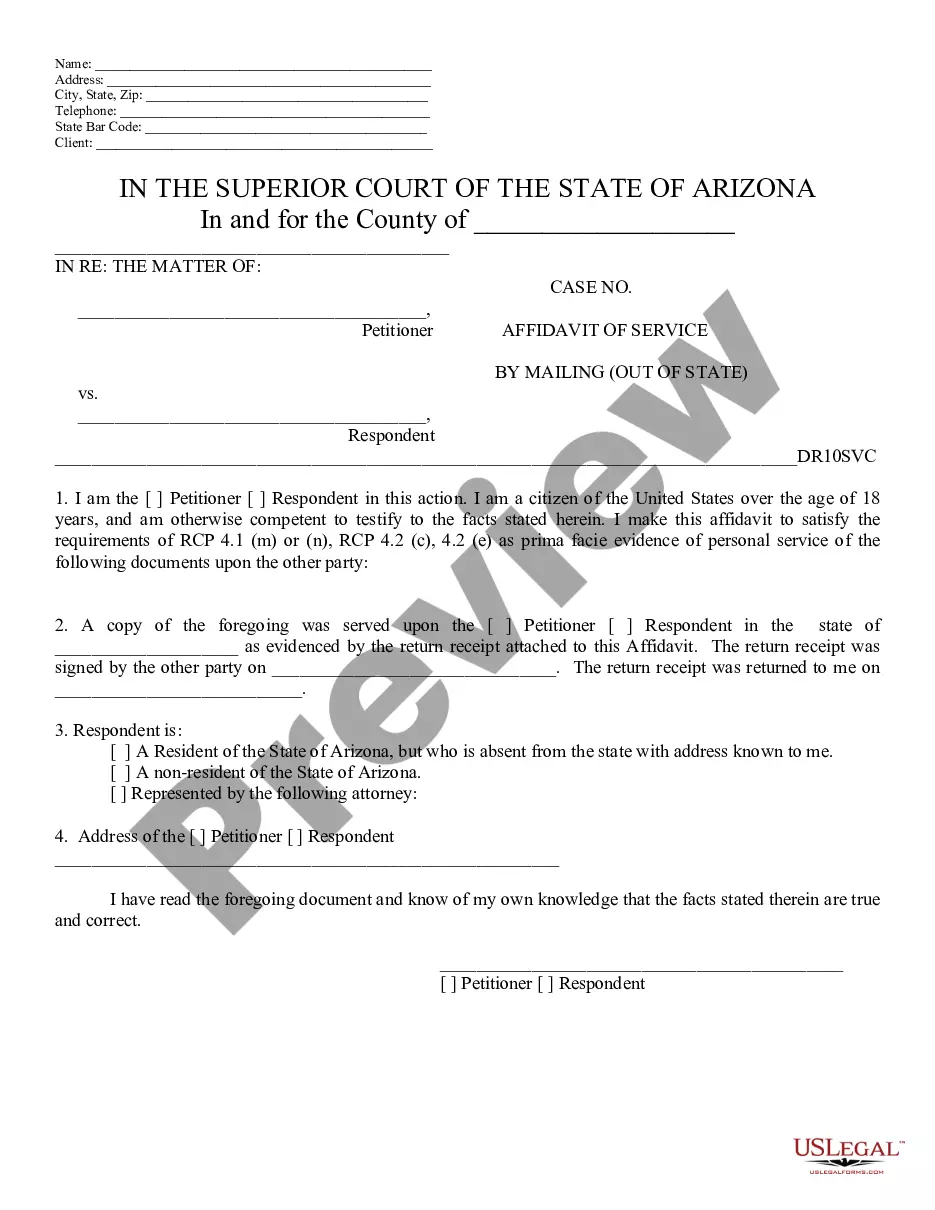
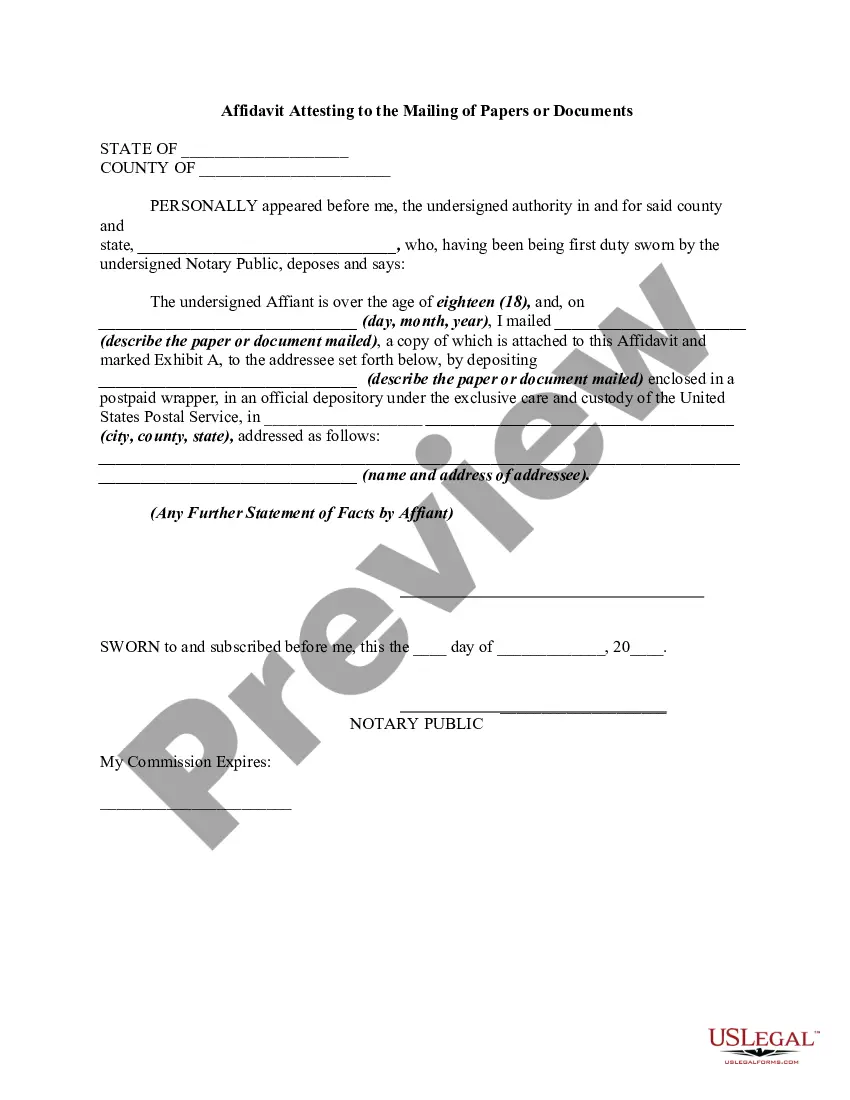
An Affidavit of Mailing is a sworn statement used to confirm that specific documents have been sent to another party via mail. This document serves as evidence that the party has received the communication, often required in legal proceedings. Unlike general affidavits, an Affidavit of Mailing specifically addresses the act of mailing and the details surrounding it, making it a crucial document in matters of service by mail.
Form components explained
- Address of the affiant and recipient
- Details about the court case, including case number and parties involved
- Statement affirming the affiant's competence and identification
- Details of the documents mailed and their corresponding return receipt
- Signature and notarization section

When to use this form
This form is typically used when a party needs to prove that legal documents have been sent and received by another party in a case, especially when that party is located out of state. It might be necessary in cases such as divorce proceedings, custody disputes, or other civil litigation where formal service is required.
Who this form is for
- Individuals acting as petitioners in legal actions
- Respondents who need to document service of process by mail
- Attorneys who are filing documents requiring proof of mailing
How to prepare this document
- Enter your address and contact information at the top of the form.
- Fill in the name of the court and case details, including the case number.
- Indicate whether you are the petitioner or respondent.
- Attach a copy of the return receipt that shows the documents were mailed.
- Sign the form in front of a notary public to validate it.
Does this form need to be notarized?
To make this form legally binding, it must be notarized. Our online notarization service, powered by Notarize, lets you verify and sign documents remotely through an encrypted video session.
Get your form ready online
Our built-in tools help you complete, sign, share, and store your documents in one place.
Make edits, fill in missing information, and update formatting in US Legal Forms—just like you would in MS Word.
Download a copy, print it, send it by email, or mail it via USPS—whatever works best for your next step.
Sign and collect signatures with our SignNow integration. Send to multiple recipients, set reminders, and more. Go Premium to unlock E-Sign.
If this form requires notarization, complete it online through a secure video call—no need to meet a notary in person or wait for an appointment.
We protect your documents and personal data by following strict security and privacy standards.

Make edits, fill in missing information, and update formatting in US Legal Forms—just like you would in MS Word.

Download a copy, print it, send it by email, or mail it via USPS—whatever works best for your next step.

Sign and collect signatures with our SignNow integration. Send to multiple recipients, set reminders, and more. Go Premium to unlock E-Sign.

If this form requires notarization, complete it online through a secure video call—no need to meet a notary in person or wait for an appointment.

We protect your documents and personal data by following strict security and privacy standards.
Common mistakes
- Failing to provide complete recipient address details.
- Not attaching the required return receipt.
- Omitting the notarization of the affidavit.
Summary of main points
- An Affidavit of Mailing confirms that specific documents were sent to another party.
- This form is essential for maintaining legal compliance in proceedings requiring proof of service by mail.
- Complete and notarize the form accurately to avoid common pitfalls.
Looking for another form?
Form popularity
FAQ
An Arizona Affidavit of Mailing is a sworn statement confirming that specific documents were sent by mail. It serves as evidence in civil proceedings when proof of mailing is required, especially for out-of-state recipients. Use it to record the case number, parties, the mailed documents, their return receipts, and the affiant’s signature and notarization.
By completing the Arizona Affidavit of Mailing, a sworn statement that the documents were mailed and, when available, attaching the return receipts. The form requires the affiant’s and recipient’s addresses, the case number and parties, details of what was mailed, and a statement of competence before signing and having it notarized. This affidavit then serves as evidence of mailing.
Yes, you can prepare your own affidavit of mailing using the template, but it must be sworn and notarized, and include the required details such as who mailed what, to whom, when, the case info, and return receipts. If unsure, consult a licensed attorney.
The affidavit should describe each document mailed, the date mailed, and the recipient. It should reference the case number and parties, include details about the return receipts, and include the affiant’s address, competency statement, and identification. Finally, it should conclude with the affiant’s signature and notarization.
The affidavit is sworn by the affiant—the person who mailed the documents or an authorized agent. The form requires the affiant to affirm competence and identification, and the document must be signed in the presence of a notary who will notarize it.
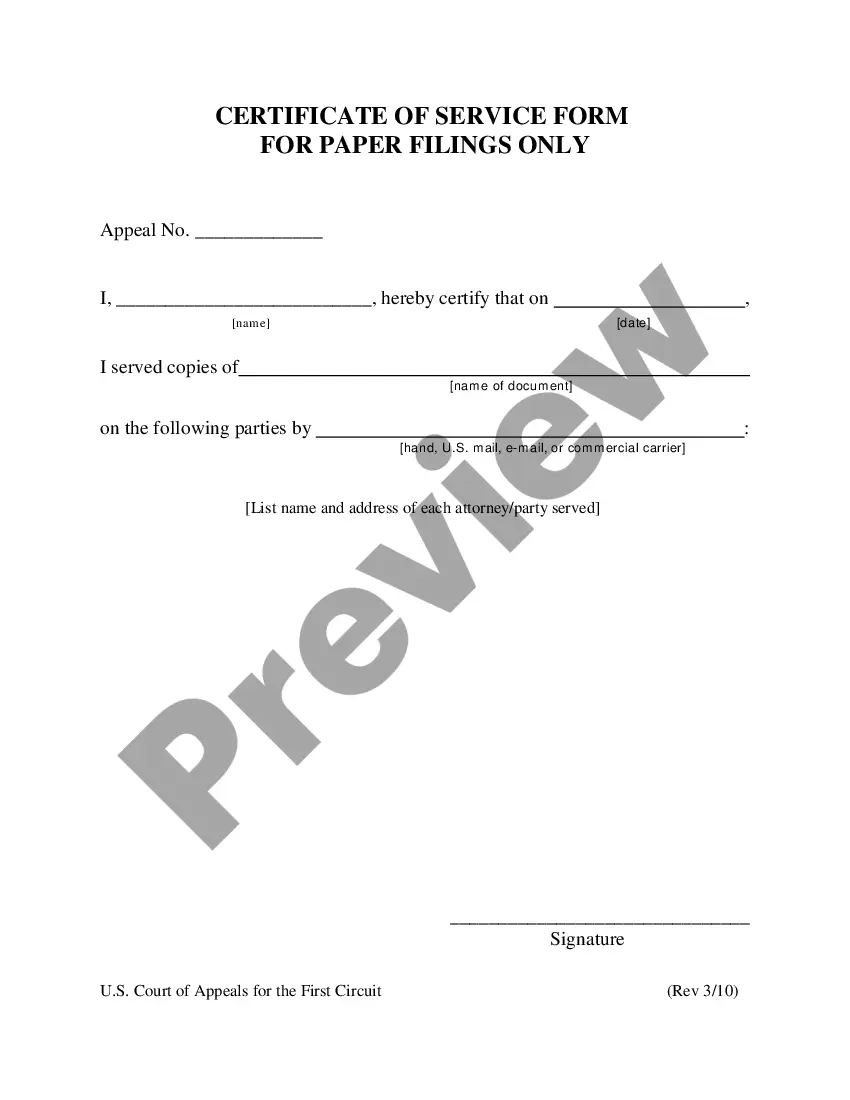
The main difference is that this form confirms mailing and records a return receipt, not necessarily service. An Affidavit of Service by Mail (or similar) certifies that service was effected on the recipient. This form focuses on mailing steps, while service proofs address actual delivery.