Louisiana Letter to Opposing Counsel regarding Delay in Responding to Interrogatories
Understanding this form
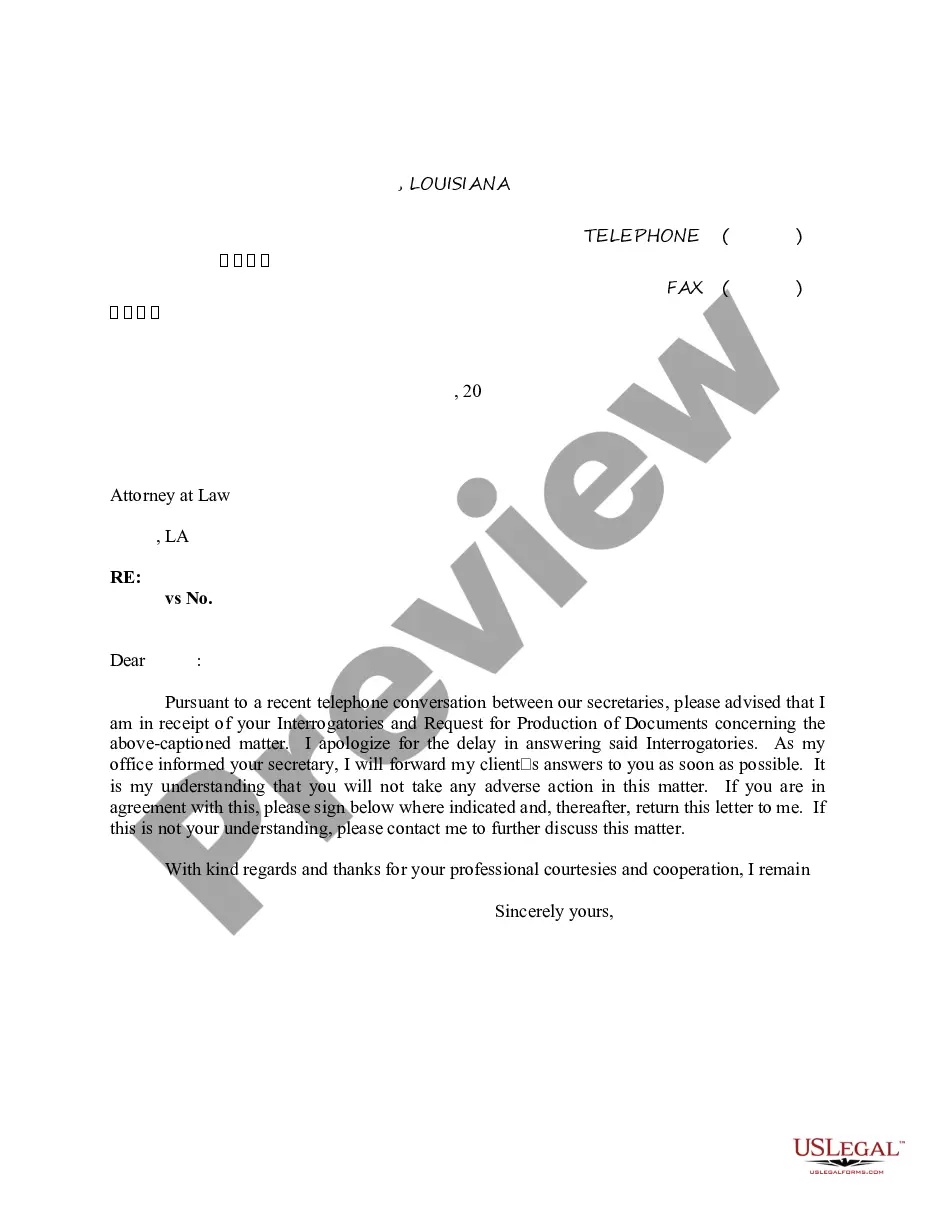
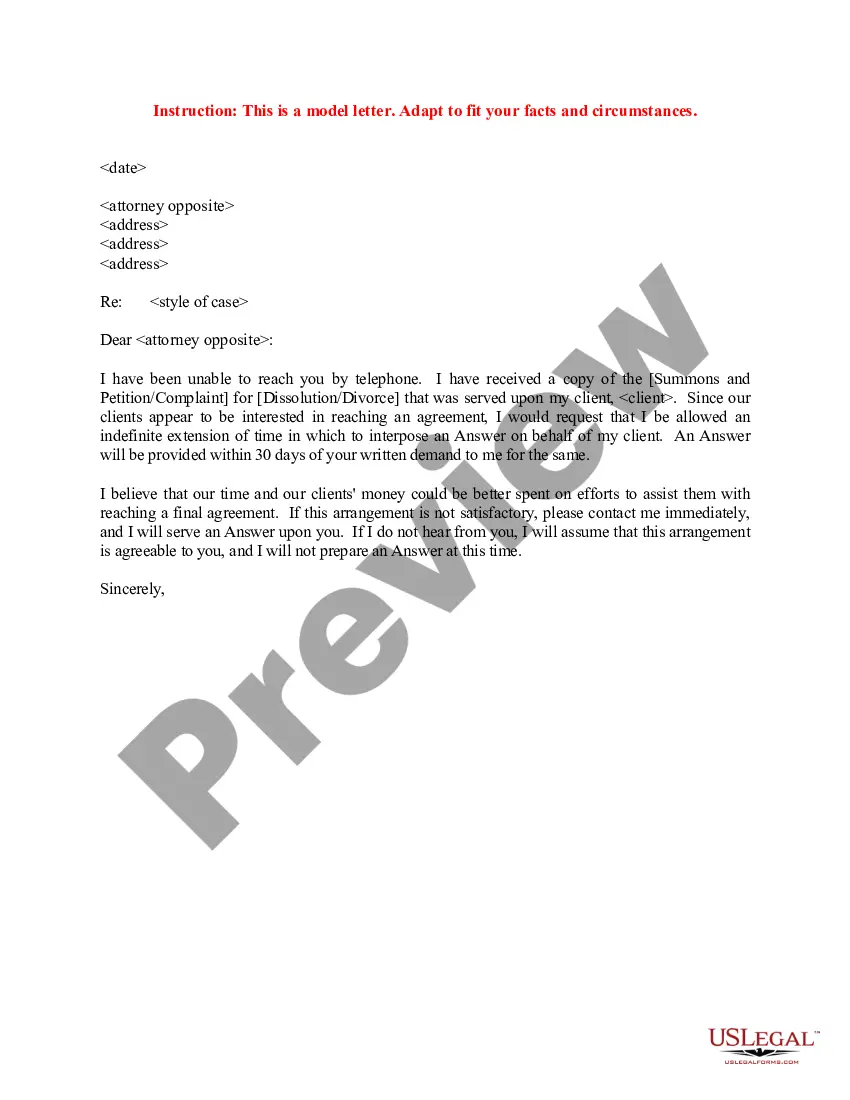
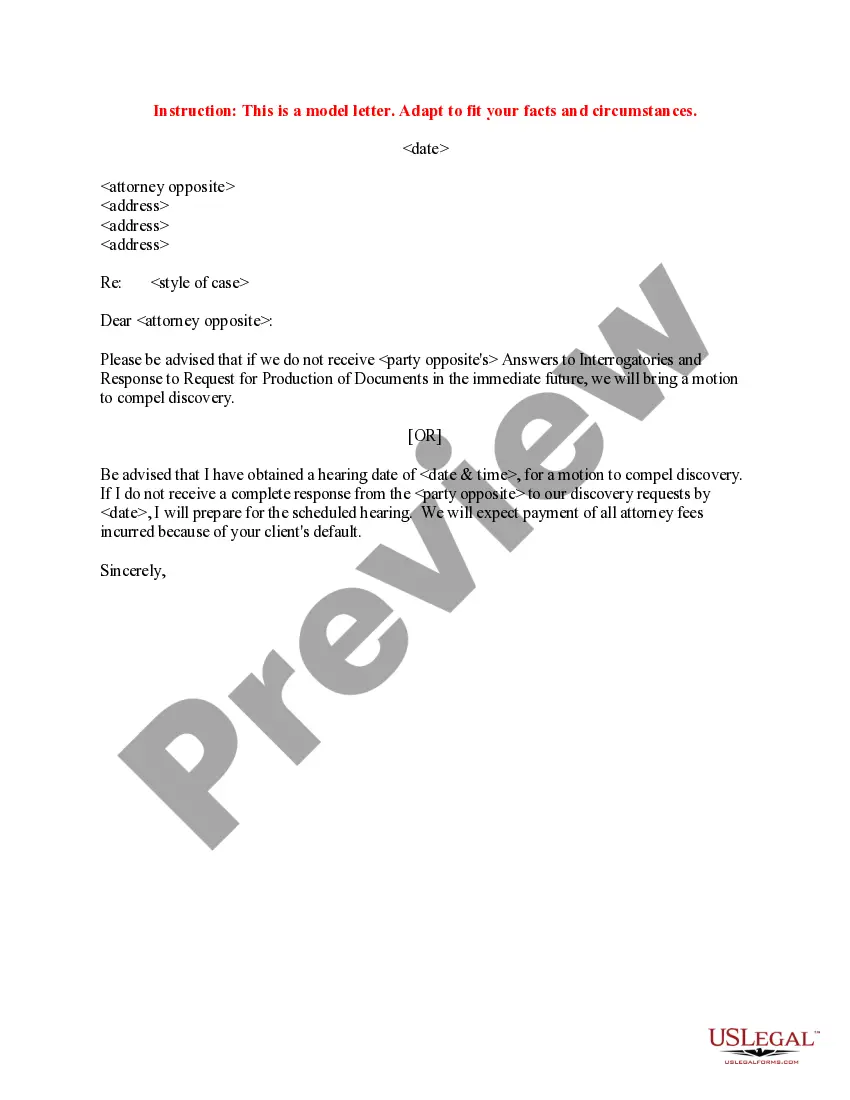
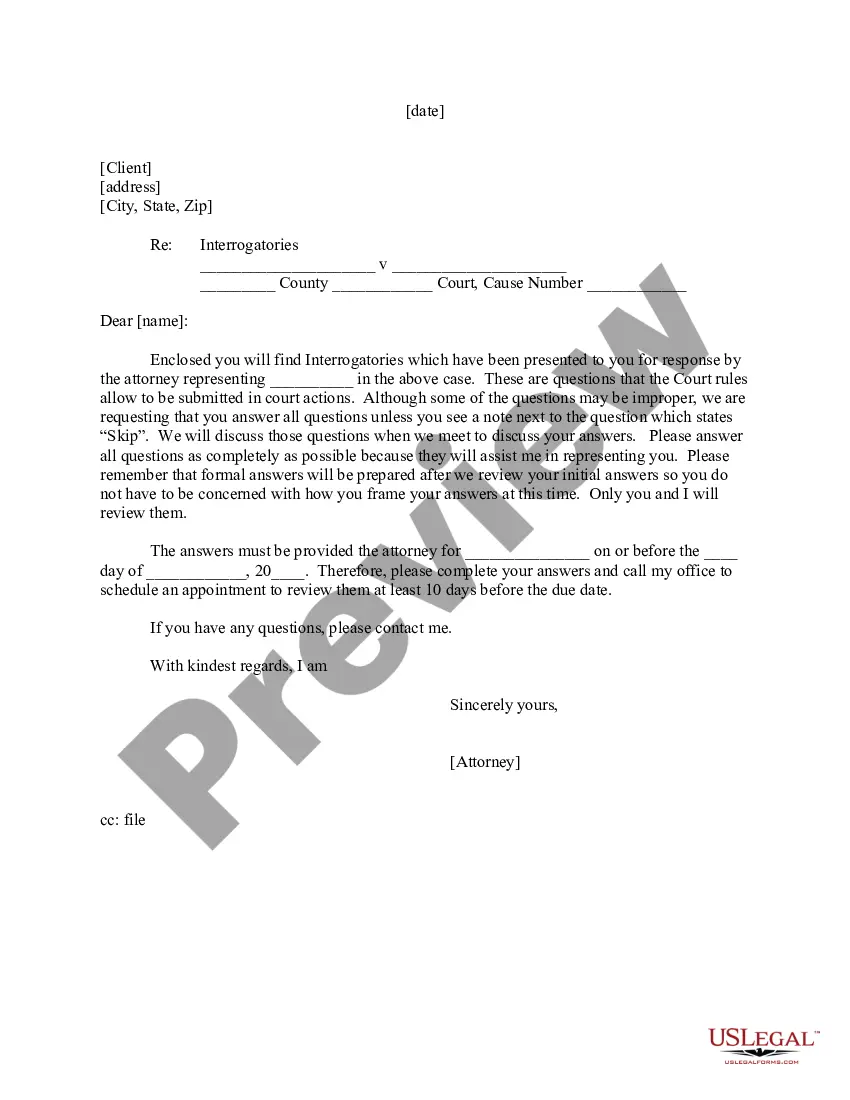
This form is a Letter to Opposing Counsel regarding Delay in Responding to Interrogatories. It serves as a formal notification from an attorney to the opposing counsel about acknowledging receipt of interrogatories and requests for documents. The purpose is to communicate any delays in providing the required responses while also ensuring that the opposing party agrees not to take adverse action due to this delay. It differs from other discovery-related correspondence by specifically addressing the issue of timeliness in response to interrogatories.
Key parts of this document
- Identification of the sender and recipient attorneys.
- Confirmation of receipt of interrogatories and request for production of documents.
- An apology for the delay in providing answers.
- Assurance that the responses will be submitted shortly.
- Request for signing and returning the letter to confirm mutual understanding.
Situations where this form applies
This letter is used in legal proceedings when an attorney has received interrogatories from opposing counsel but requires additional time to formulate responses. It is appropriate when there is a delay in replying, and the attorney wants to maintain communication and ensure that the opposing party is aware of the situation, thus preventing further legal complications or adverse actions.
Who needs this form
- Attorneys representing clients in legal disputes.
- Lawyers involved in litigation where interrogatories have been issued.
- Legal professionals managing discovery processes in civil cases.
Steps to complete this form
- Identify the parties involved, including the sender and recipient attorneys.
- Note the date of receipt of the interrogatories and document requests.
- Draft an apology for the delay and specify the expected timeline for responses.
- Request that opposing counsel sign and return the letter to acknowledge their agreement.
- Review the letter for accuracy and clarity before sending.
Does this document require notarization?
This form does not typically require notarization unless specified by local law. It is essential to check the specific requirements of your jurisdiction to ensure compliance.
Get your form ready online
Our built-in tools help you complete, sign, share, and store your documents in one place.
Make edits, fill in missing information, and update formatting in US Legal Forms—just like you would in MS Word.
Download a copy, print it, send it by email, or mail it via USPS—whatever works best for your next step.
Sign and collect signatures with our SignNow integration. Send to multiple recipients, set reminders, and more. Go Premium to unlock E-Sign.
If this form requires notarization, complete it online through a secure video call—no need to meet a notary in person or wait for an appointment.
We protect your documents and personal data by following strict security and privacy standards.

Make edits, fill in missing information, and update formatting in US Legal Forms—just like you would in MS Word.

Download a copy, print it, send it by email, or mail it via USPS—whatever works best for your next step.

Sign and collect signatures with our SignNow integration. Send to multiple recipients, set reminders, and more. Go Premium to unlock E-Sign.

If this form requires notarization, complete it online through a secure video call—no need to meet a notary in person or wait for an appointment.

We protect your documents and personal data by following strict security and privacy standards.
Avoid these common issues
- Failing to include the date when the interrogatories were received.
- Not providing a specific timeline for when responses will be completed.
- Using vague language that may lead to misunderstandings.
- Neglecting to request a signed acknowledgment from the opposing counsel.
Advantages of online completion
- Convenience of downloading and customizing the letter quickly.
- Editable format allows for tailored responses to specific situations.
- Reliability of templates drafted by licensed attorneys for legal accuracy.
- This letter serves to formally document the communication between attorneys and may aid in avoiding disputes surrounding discovery delays.
- It is essential for attorneys to maintain clear and documented exchanges throughout legal proceedings.
Summary of main points
- The letter formally addresses delays in responding to interrogatories.
- It helps maintain a professional relationship between opposing counsel.
- Proper completion and timely sending can prevent adverse actions from being taken.
Looking for another form?
Form popularity
FAQ
Consequences of Refusing to Provide Evidence Requested in a Motion to Compel. If the court issues an order that compels your spouse to produce the discovery you are seeking but your spouse still refuses to provide evidence, the judge may impose further sanctions such as: A verdict in your favor.
The plaintiff must respond by the deadline. There are different ways to make sure you get each kind of discovery if the plaintiff does not give it to you by the deadline. If the plaintiff does not respond to the court order, then you can file a Motion to Dismiss and you may win your case.
Under Rule 33, answers to interrogatories must be verified and must be signed by the person answering the interrogatory, not only by the party's attorney.
Make it a lead-off general objection. Object to anything that is not relevant to the subject matter (no longer the standard) or not likely to lead to admissible evidence (no longer the standard). Don't say if anything is being withheld on the basis of the objection. Use boilerplate wording from form files.
If you have received discovery requests (which would probably come in the mail), you have thirty days to mail your written responses back to the other side. Missing that thirty-day deadline can be serious. It could even result in you losing the case. TIP!
So, can you refuse to answer interrogatories? The answer is, no, you may not.That answer must either permit inspection of the requested information or object to the production of the information for a specific reason.
A person served with interrogatories has thirty days after service to respond in writing. You must answer each interrogatory separately and fully in writing under oath, unless you object to it. You must explain why you object. You must sign your answers and objections.
Motion for Sanctions If the court issues an order compelling discovery, and the party fails to comply with that order, then the court may sanction the party in numerous ways such as refusing to let in the party's evidence at trial, dismissing their lawsuit or striking their defense to a lawsuit, and imposing
You can object to an interrogatory if the information sought is known by the requesting party or available to both parties equally. For example, you should raise this objection if the answers are publicly available or in a third-party's custody or control.