Mississippi Jury Instruction - Punitive Damages
What is this form?
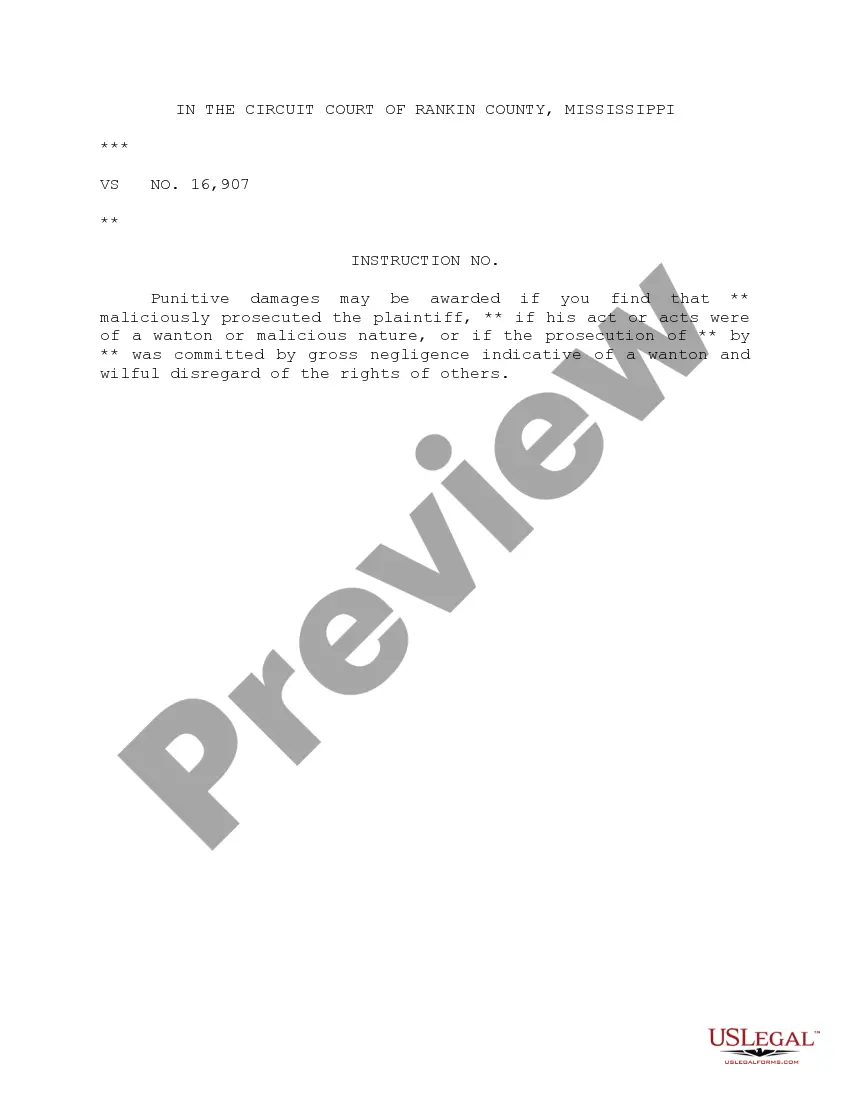
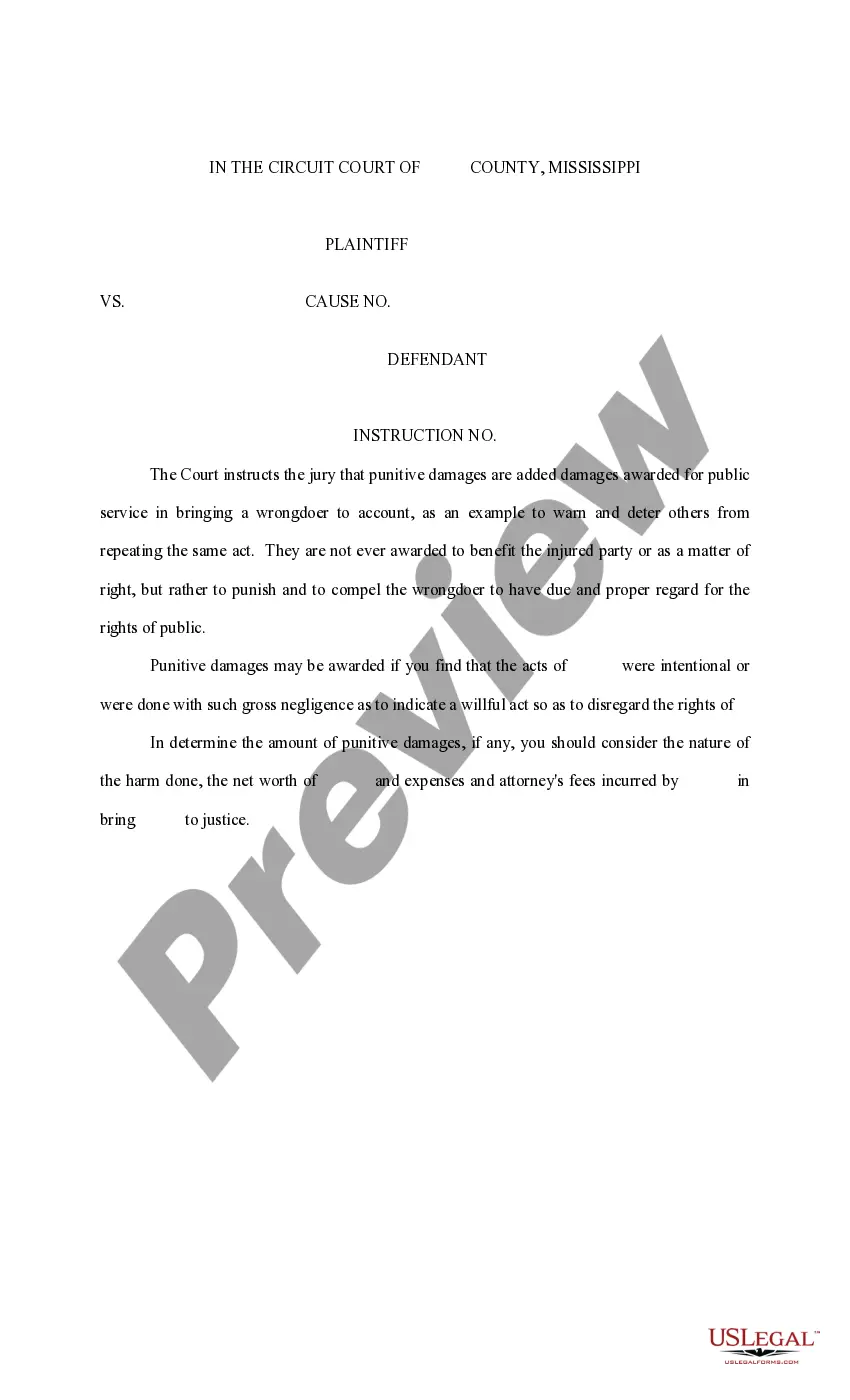
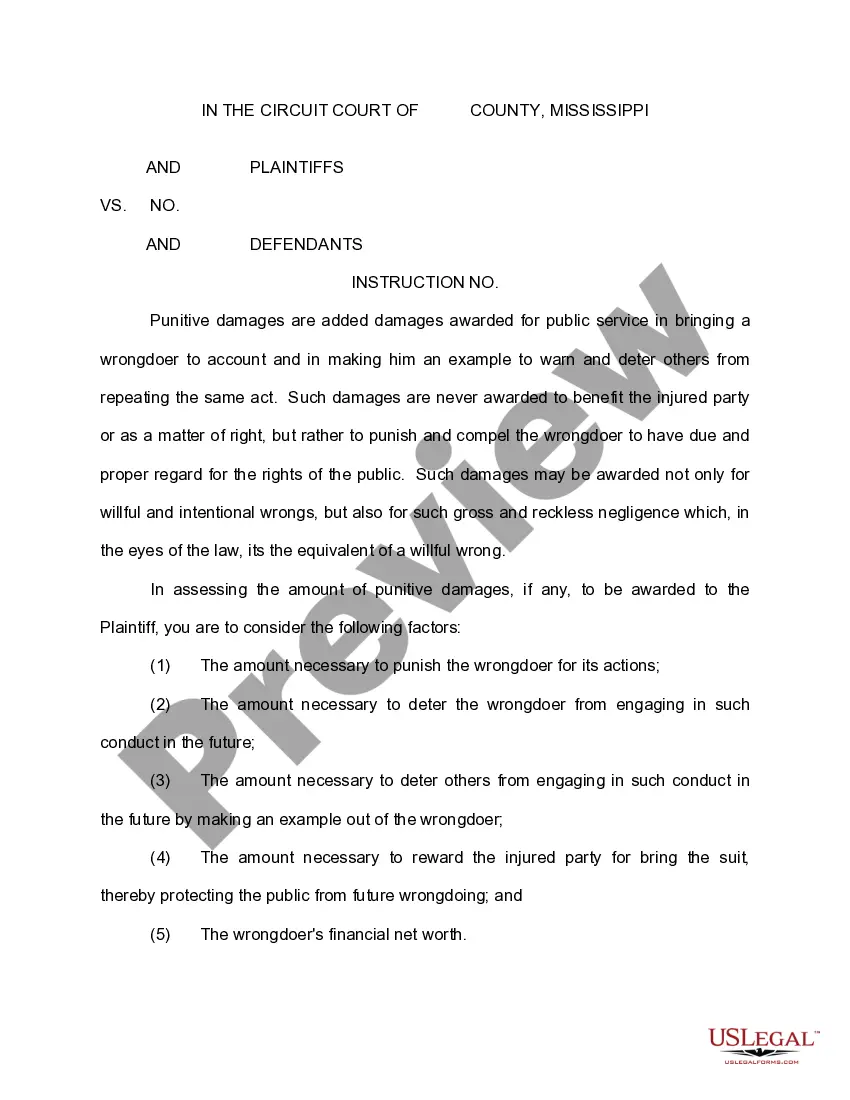
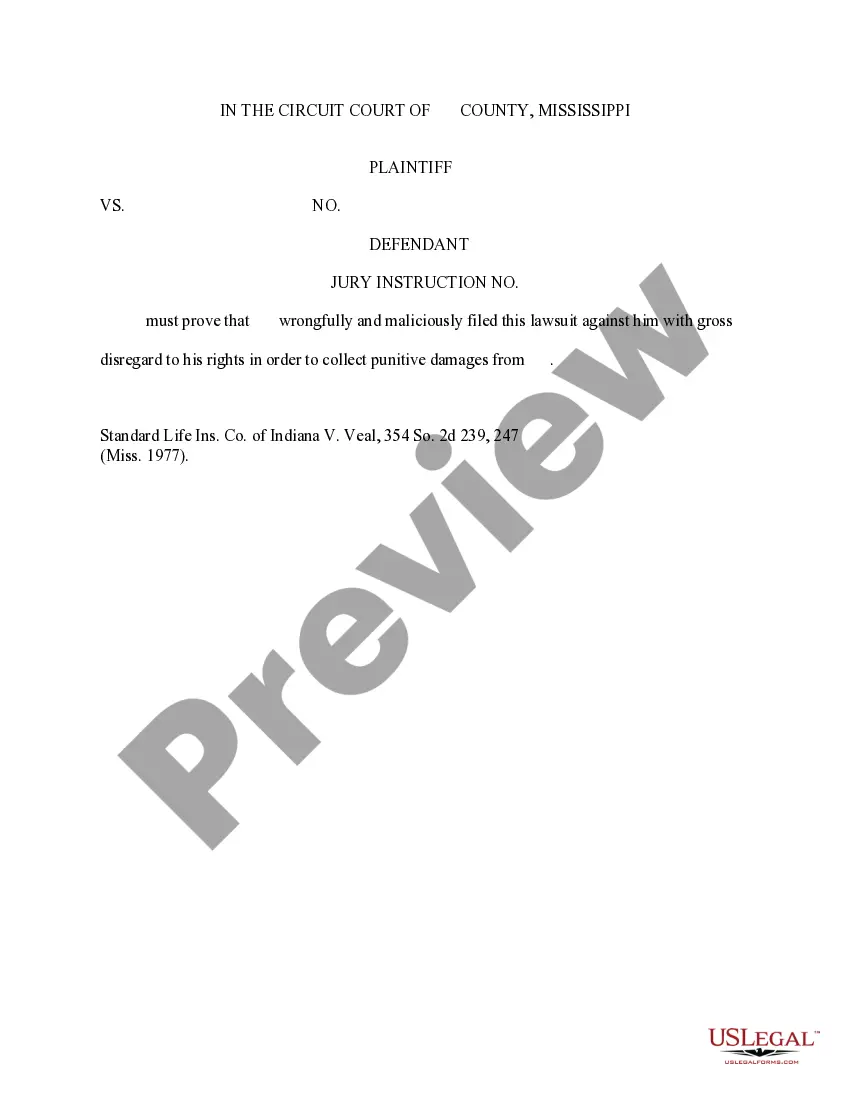
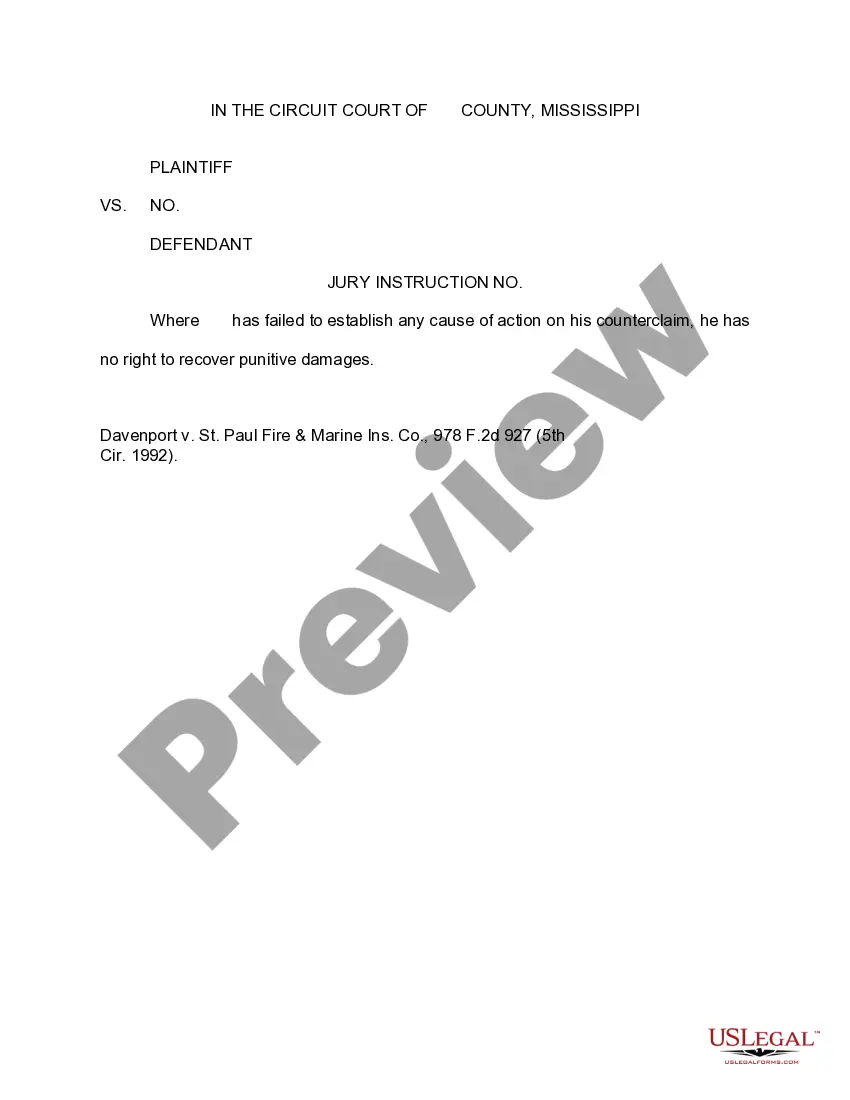
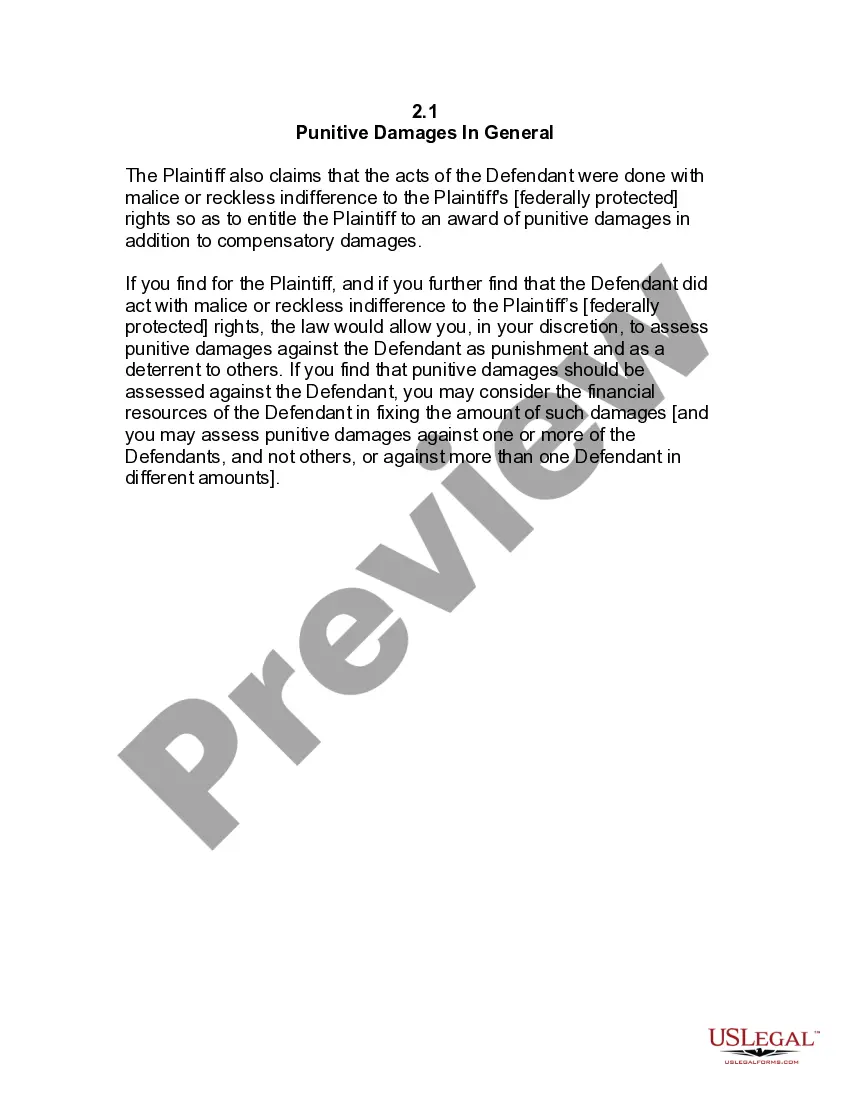
The Jury Instruction for Punitive Damages is a legal template specifically tailored for cases in Mississippi. This form provides sample jury instructions that outline the conditions under which punitive damages may be awarded. Unlike other legal forms, this template is meant to guide jurors in understanding the legal grounds for determining punitive damages in litigation involving serious misconduct, making it vital for legal practitioners in the state.
Main sections of this form
- Instructions for jurors regarding punitive damages.
- Criteria describing situations that warrant punitive damages, such as malicious or grossly negligent actions.
- Definitions related to wanton and wilful disregard for the rights of others.
- Contextual information on how punitive damages differ from compensatory damages.
Situations where this form applies
This form should be used in legal cases where punitive damages are being considered. It is applicable in situations where a plaintiff has suffered harm due to the defendant's malicious conduct or gross negligence, prompting the need for additional damages beyond mere compensation. Lawyers in Mississippi will use this form to properly instruct juries on their ability to award punitive damages based on the evidence presented in court.
Who should use this form
This form is intended for:
- Legal professionals representing clients in Mississippi who are pursuing claims for punitive damages.
- Judges overseeing cases that involve punitive damage considerations.
- Jury members needing clarity on the conditions under which they may award punitive damages.
How to complete this form
- Review the case details and the specific actions that may warrant punitive damages.
- Identify the plaintiff and defendant involved in the case.
- Specify any instances of malicious conduct or gross negligence as outlined in the form.
- Determine if the criteria for punitive damages are met based on the evidence presented.
- Instruct the jury on applying these criteria during their deliberation.
Notarization guidance
In most cases, this form does not require notarization. However, some jurisdictions or signing circumstances might. US Legal Forms offers online notarization powered by Notarize, accessible 24/7 for a quick, remote process.
Get your form ready online
Our built-in tools help you complete, sign, share, and store your documents in one place.
Make edits, fill in missing information, and update formatting in US Legal Forms—just like you would in MS Word.
Download a copy, print it, send it by email, or mail it via USPS—whatever works best for your next step.
Sign and collect signatures with our SignNow integration. Send to multiple recipients, set reminders, and more. Go Premium to unlock E-Sign.
If this form requires notarization, complete it online through a secure video call—no need to meet a notary in person or wait for an appointment.
We protect your documents and personal data by following strict security and privacy standards.

Make edits, fill in missing information, and update formatting in US Legal Forms—just like you would in MS Word.

Download a copy, print it, send it by email, or mail it via USPS—whatever works best for your next step.

Sign and collect signatures with our SignNow integration. Send to multiple recipients, set reminders, and more. Go Premium to unlock E-Sign.

If this form requires notarization, complete it online through a secure video call—no need to meet a notary in person or wait for an appointment.

We protect your documents and personal data by following strict security and privacy standards.
Avoid these common issues
- Failing to clearly define the criteria for punitive damages for jurors.
- Ignoring the specific legal precedents that apply to punitive damages in Mississippi.
- Providing insufficient context for the jury regarding the potential implications of awarding punitive damages.
Why complete this form online
- Convenience of instant access and download.
- Editable templates that allow customization according to specific case details.
- Reliable forms that are regularly updated to reflect the latest legal standards and statutes.
Looking for another form?

Form popularity
FAQ
To determine the amount of punitive damages to award, the Book of Approved Jury Instructions (BAJI) states that the jury should consider: (1) The reprehensibility of the conduct of the defendant.The other twodefendant's financial condition and the relationship to actual damagesare objective measurements.
Punitive damages, also known as exemplary damages, may be awarded by the trier of fact (a jury or a judge, if a jury trial was waived) in addition to actual damages, which compensate a plaintiff for the losses suffered due to the harm caused by the defendant.
According to this theory, the jurors use the amount of compensation that the plaintiff is seeking as a starting point during deliberations. For example, if a plaintiff is seeking $500,000 in damages, the jury may begin deliberations by discussing whether they should award the full $500,000.
If juries award greater compensatory damages than do judges for any given case type, then that higher award will boost punitive damages as well. This analysis indicates that juries generate higher compensatory damages as well as higher punitive damages controlling for compensatory damages.
In many courts, a plaintiff must request punitive damages in the complaint. If there is no prayer for punitive damages in the pleadings before trial, an appellate court may reverse a punitive damages award. It is possible to challenge a punitive damages award on the basis that it is excessive under common law.
Judges may reduce punitive damage awards when it looks like juries have not followed instructions.
We found that 98 percent of the large punitive damages awards were made by juries and only two percent by judges. The jury awards in these large cases were highly unpredictable and were weakly correlated with compensatory damages.
There is no fixed standard for determining the amount of punitive damages in a California personal injury case.