California Grant Deed from Individual to Individual

What this document covers
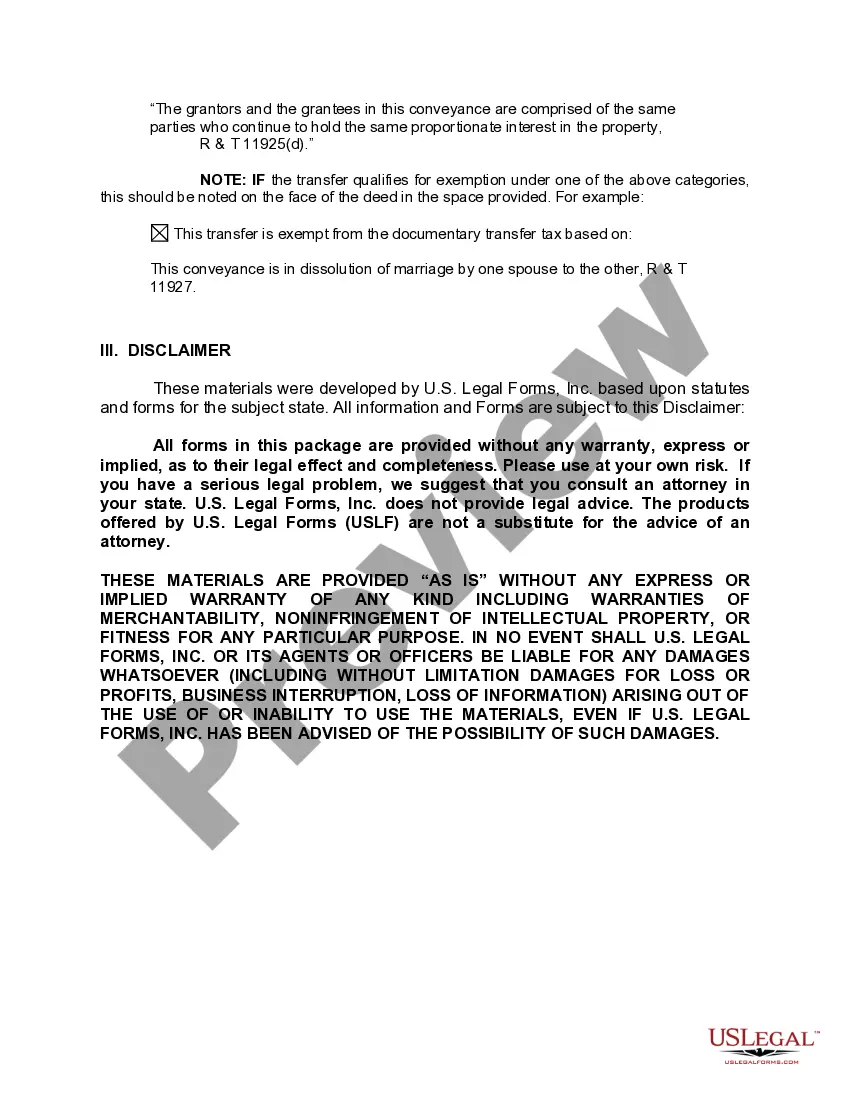
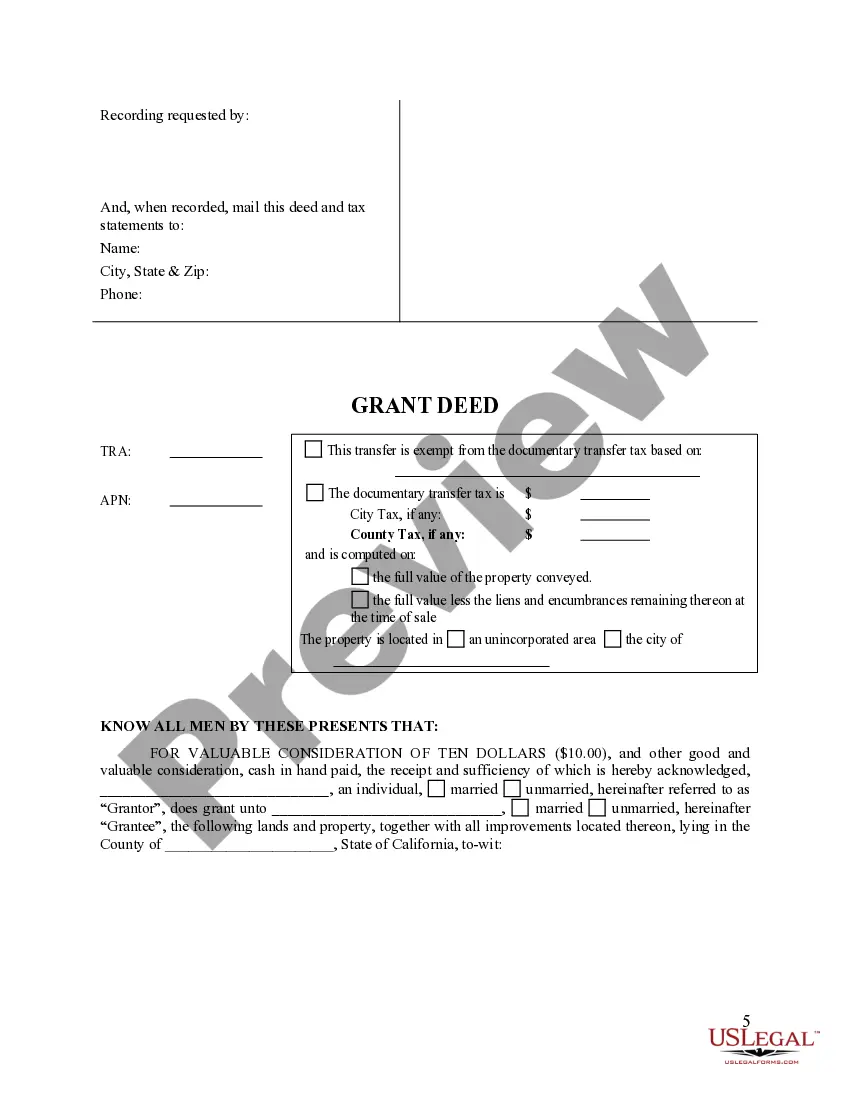
The Grant Deed from Individual to Individual is a legal document used to transfer ownership of property from one individual (the Grantor) to another (the Grantee). This form provides a warranty on the title of the property, ensuring that the Grantor holds clear and free title to the property being conveyed, except for any reserved rights such as oil, gas, or minerals. Unlike other forms of property transfer, the grant deed specifically guarantees the Grantor's title, offering a higher level of protection for the Grantee.
What’s included in this form
- Parties involved: Identifies the Grantor and Grantee.
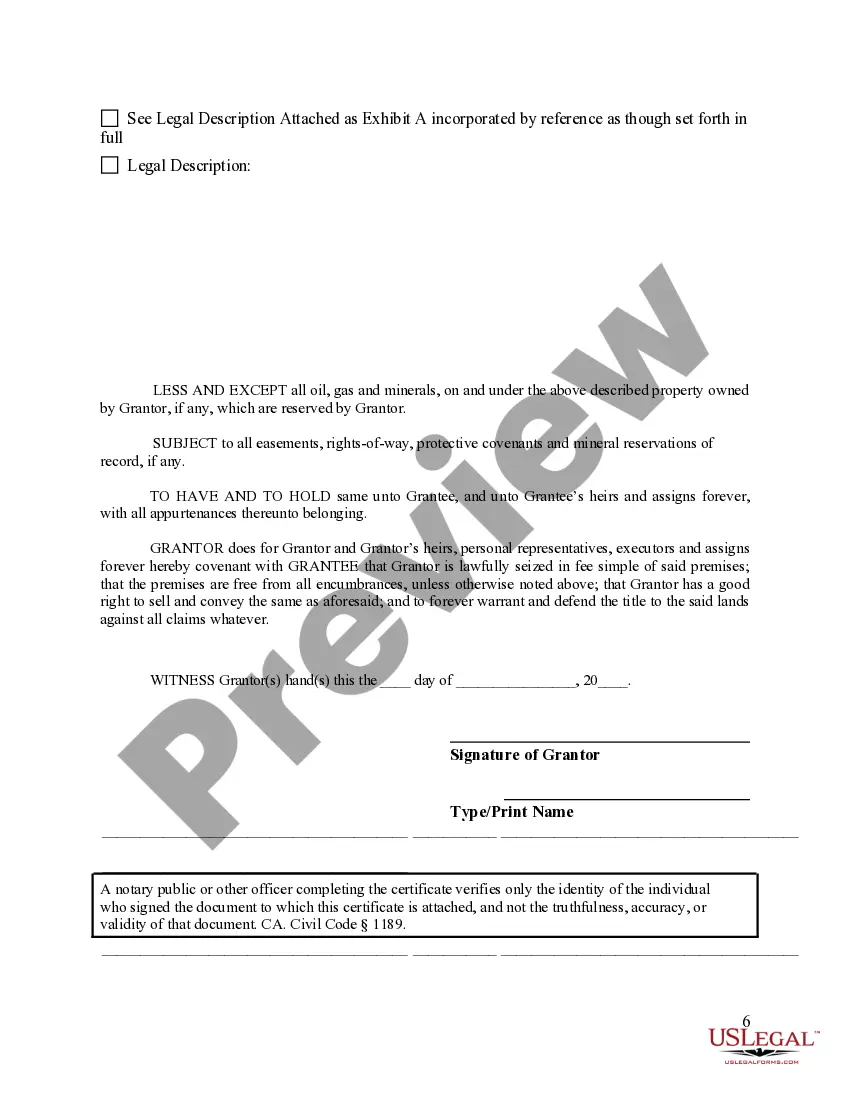
- Legal description of the property: Specifies the property being transferred.
- Reservation clause: States any exceptions, such as mineral rights reserved by the Grantor.
- Warranties: Provides assurances that the Grantor holds clear title to the property.
- Signature lines: Designates where the Grantor must sign and date the document.





When to use this form
This form is applicable in situations where an individual wishes to legally transfer property ownership to another individual. Common scenarios include family transfers, sales of property between friends, or conveyances in the event of estate planning. It is also used when confirming title without the need for a full sale or in relation to divorce settlements.
Intended users of this form
This form is intended for:
- Individuals transferring property ownership to another individual.
- People involved in informal property transactions without a real estate agent.
- Individuals engaged in legal settlement agreements such as divorce or inheritance.
Completing this form step by step
- Identify the Grantor and Grantee: Enter the full names of both parties involved in the transaction.
- Specify the property: Provide a complete legal description of the property being conveyed.
- Include reservation details: Clearly denote any rights the Grantor wishes to retain (e.g., mineral rights).
- Sign the document: The Grantor should sign and date the deed before any witnesses, if required.
- File the deed: Submit the completed deed to the appropriate county office for recording.
Does this document require notarization?
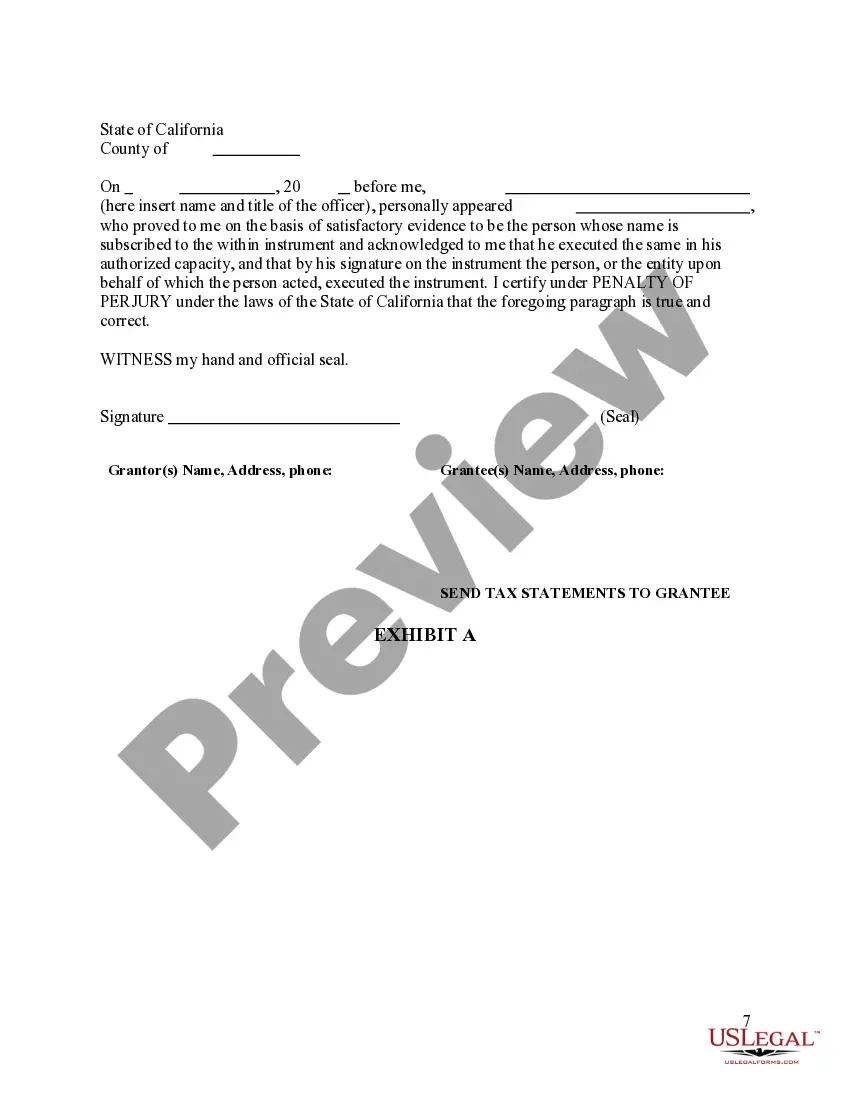
This form needs to be notarized to ensure legal validity. US Legal Forms provides secure online notarization powered by Notarize, allowing you to complete the process through a verified video call, available anytime.
Get your form ready online
Our built-in tools help you complete, sign, share, and store your documents in one place.
Make edits, fill in missing information, and update formatting in US Legal Forms—just like you would in MS Word.
Download a copy, print it, send it by email, or mail it via USPS—whatever works best for your next step.
Sign and collect signatures with our SignNow integration. Send to multiple recipients, set reminders, and more. Go Premium to unlock E-Sign.
If this form requires notarization, complete it online through a secure video call—no need to meet a notary in person or wait for an appointment.
We protect your documents and personal data by following strict security and privacy standards.

Make edits, fill in missing information, and update formatting in US Legal Forms—just like you would in MS Word.

Download a copy, print it, send it by email, or mail it via USPS—whatever works best for your next step.

Sign and collect signatures with our SignNow integration. Send to multiple recipients, set reminders, and more. Go Premium to unlock E-Sign.

If this form requires notarization, complete it online through a secure video call—no need to meet a notary in person or wait for an appointment.

We protect your documents and personal data by following strict security and privacy standards.
Mistakes to watch out for
- Not including a complete legal description of the property.
- Failing to sign the document properly or not including the date.
- Omitting reservation clauses that may impact the Grantee's ownership.
- Not notarizing the document if required by state law.
Why complete this form online
- Convenience: Access and complete the form from anywhere, at any time.
- Editability: Easily modify the document to suit your specific needs.
- Reliability: Use templates created by licensed attorneys, ensuring they meet legal standards.
Looking for another form?




Form popularity
FAQ
The most efficient way to transfer property title between family members is through a grant deed that names the new owner. Ensure that the deed is properly executed and notarized. Then, file the new grant deed with the county recorder's office to ensure the change is official. Using a reliable platform like uslegalforms can help you navigate this process seamlessly, ensuring your California Grant Deed from Individual to Individual is accurately processed.
In California, a grant deed cannot be revoked once it has been executed and recorded; you cannot just change your mind. Instead, you would need to execute a new deed to transfer ownership back to yourself or another party. This new deed will supersede the previous one. Properly managing your California Grant Deed from Individual to Individual is essential to secure your ownership rights.
Yes, you can remove a co-owner from a property deed by creating a new grant deed that transfers the co-owner's interest. Both you and the co-owner will need to sign this document, followed by notarization. After completing these steps, be sure to record the updated deed with the county. This action modifies the California Grant Deed from Individual to Individual to reflect the new ownership structure.
Removing someone from a deed in California requires you to draft a new grant deed that transfers their interest to yourself or another party. Both parties must sign the new deed, and it should then be notarized. Afterward, file this deed with the county recorder’s office to update the public record. This process is crucial for maintaining an accurate California Grant Deed from Individual to Individual.
To amend a grant deed in California, you first need to prepare a new deed that includes the changes you wish to make. Next, you will need to sign the new deed and have it notarized. Finally, file the amended grant deed with your county recorder’s office. This process ensures that your California Grant Deed from Individual to Individual reflects the most current information.
To fill out a grant deed form in California effectively, begin by locating the correct form for your transaction. Collect essential details such as the full legal description of the property, the names of all parties involved, and any additional stipulations. After completing the form, make sure to review for any mistakes, as a well-filled California Grant Deed from Individual to Individual can help avoid potential issues down the road.
In California, anyone can prepare a grant deed from Individual to Individual, but it’s recommended that individuals seek help from legal professionals to ensure compliance with state laws. Attorneys or professional document preparers possess the expertise to create documents that adhere to legal standards. Utilizing resources like US Legal Forms can simplify this process, providing you with the tools you need.
To have a California Grant Deed from Individual to Individual prepared, consider seeking assistance from a qualified attorney or a specialized document preparation service. You can also utilize online platforms like US Legal Forms, where you can find templates and step-by-step guidance tailored to your needs. This approach ensures that the deed is legally sound and properly formatted.
Filling out a California Grant Deed from Individual to Individual involves collecting necessary information such as the full names of both the grantor and grantee, property description, and any applicable legal terms. Start by downloading the standard form, ensuring it meets your specific county's requirements. Carefully input the details, double-checking for accuracy, as incorrect information can delay the process.
When adding someone to a deed in California, there can be tax implications, particularly regarding property taxes and potential gift taxes. Depending on the value of the property and the relationship between the parties, it may be deemed a taxable event. Consulting a tax professional or using resources from USLegalForms can help clarify these potential issues.