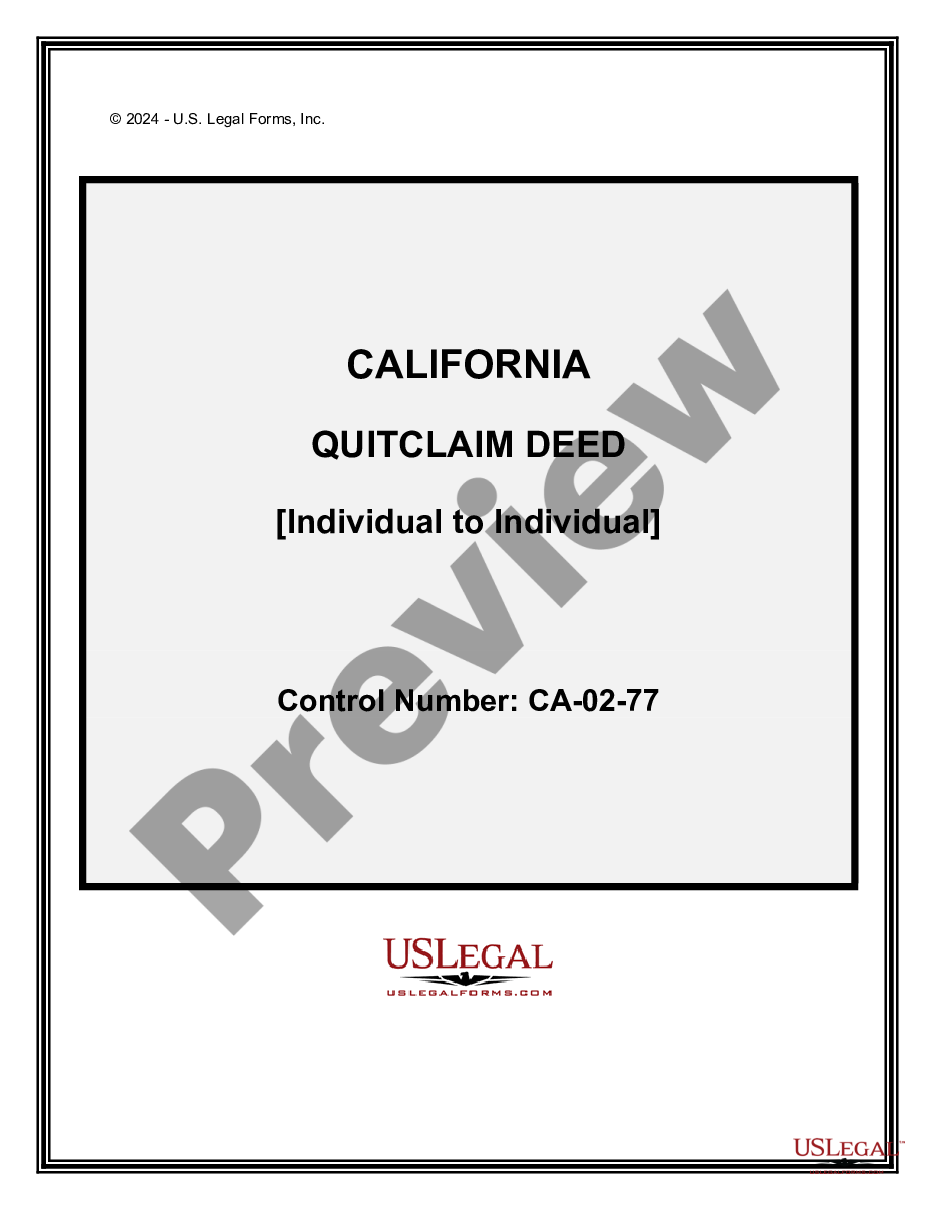
California Quitclaim Deed from Individual to Individual

Overview of this form
The Quitclaim Deed from Individual to Individual is a legal document that allows one individual (the Grantor) to transfer their interest in a property to another individual (the Grantee). Unlike other types of deeds, a quitclaim deed does not guarantee that the Grantor holds clear title to the property; it merely conveys whatever interest the Grantor has, if any. This form is particularly useful in situations where the parties know each other and trust that the property interest is valid but desire a quick and uncomplicated transfer without warranties.
Form components explained
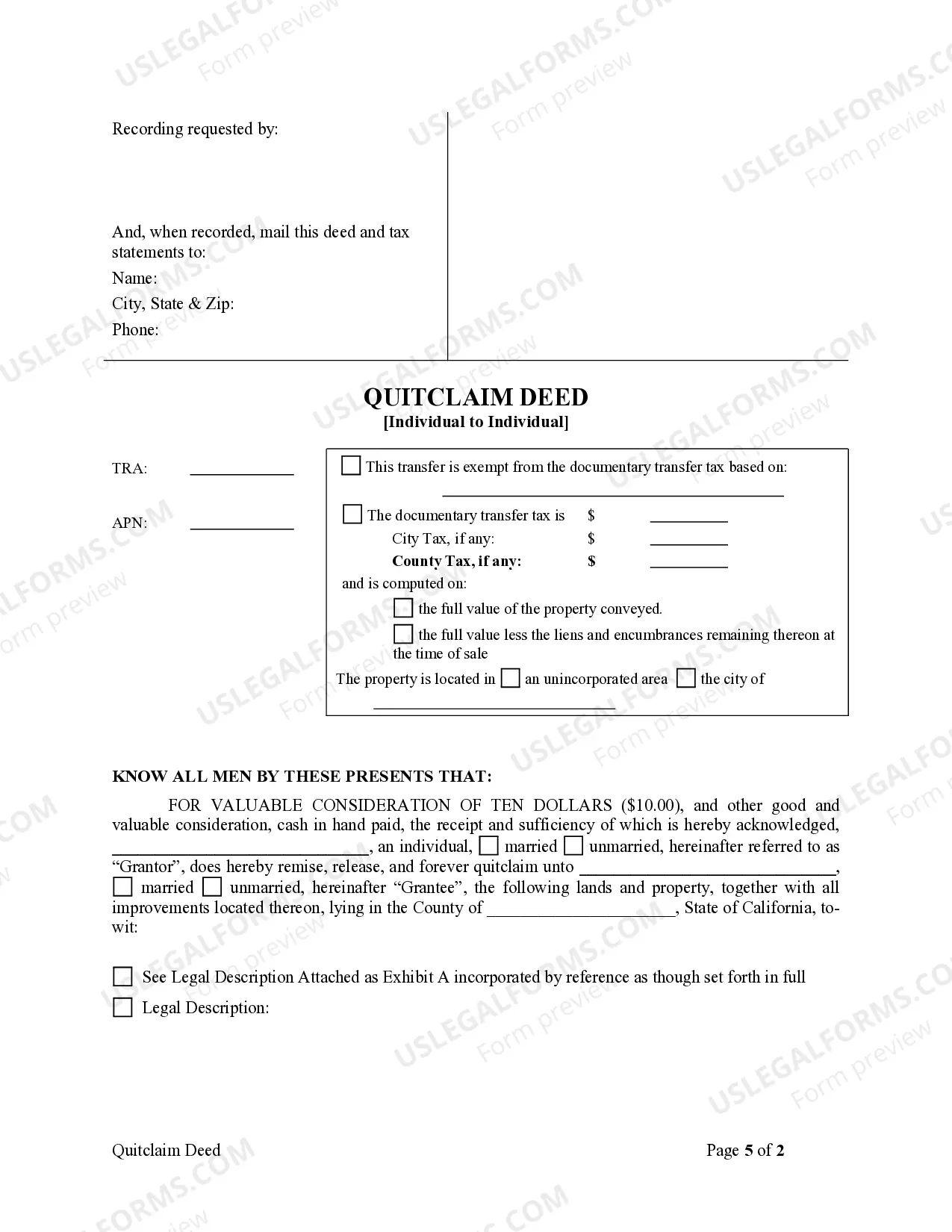
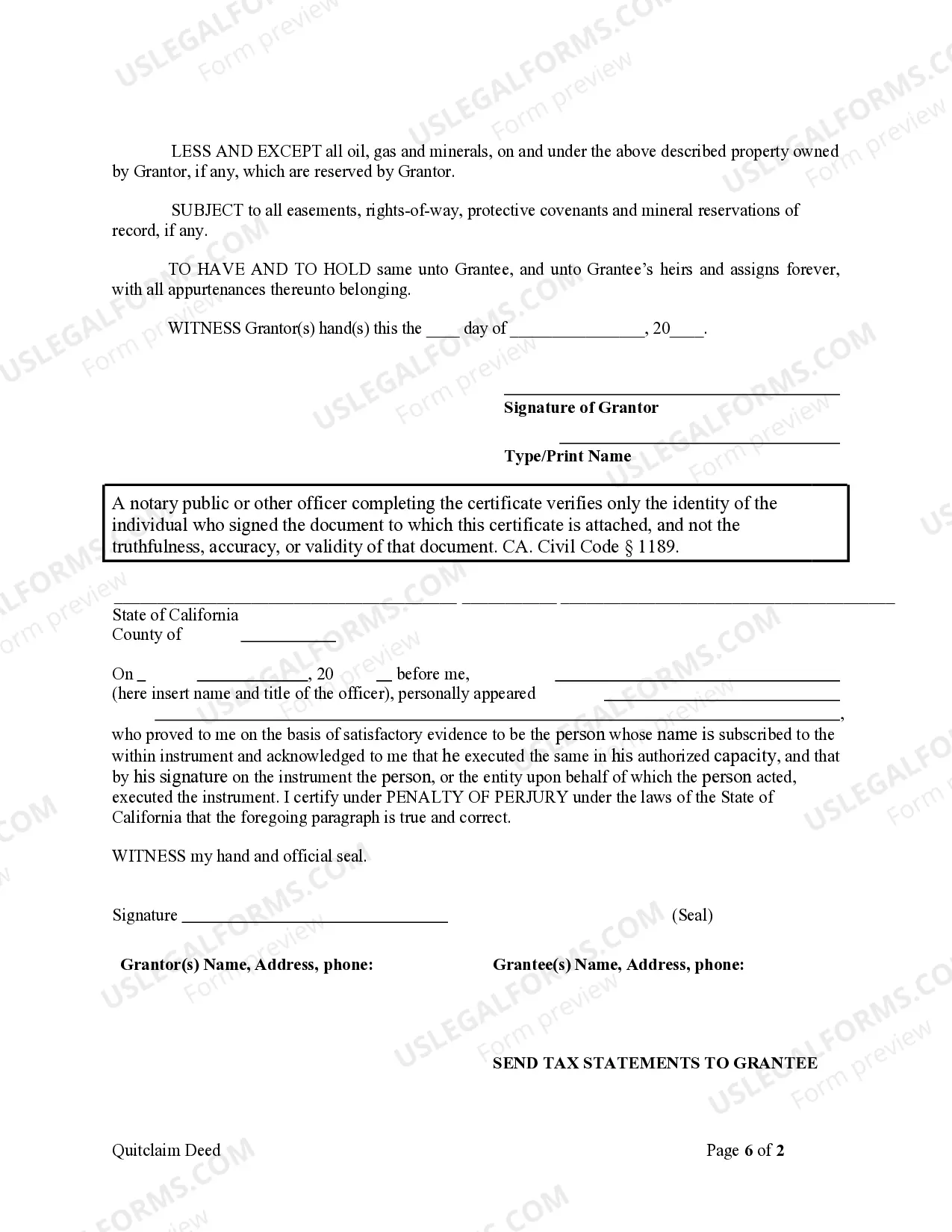
- Parties involved: Names and details of the Grantor and Grantee.
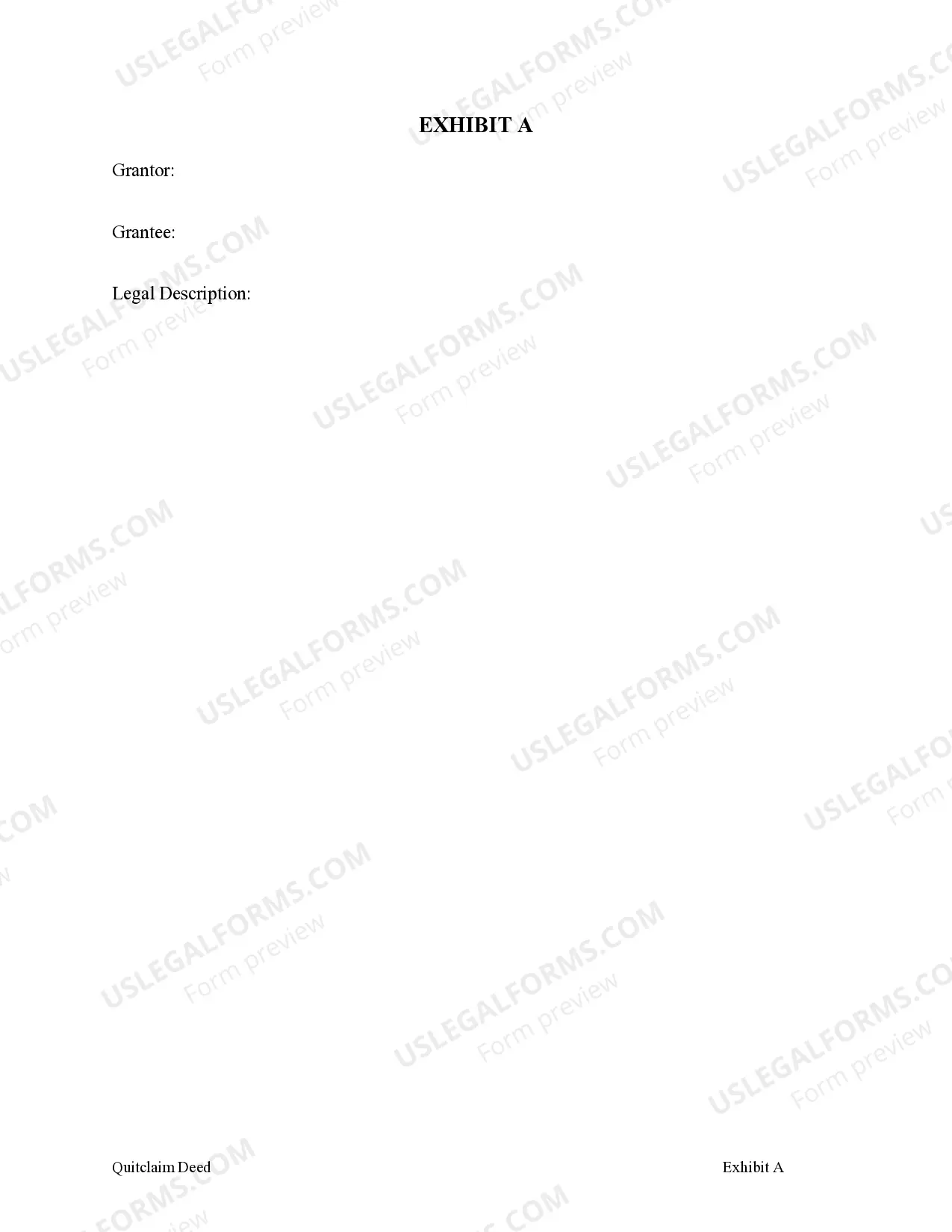
- Property description: Legal description of the property being transferred.
- Reservation clause: States any reservations pertaining to oil, gas, or minerals retained by the Grantor.
- Execution details: Date and signature fields for the Grantor to complete the transfer.
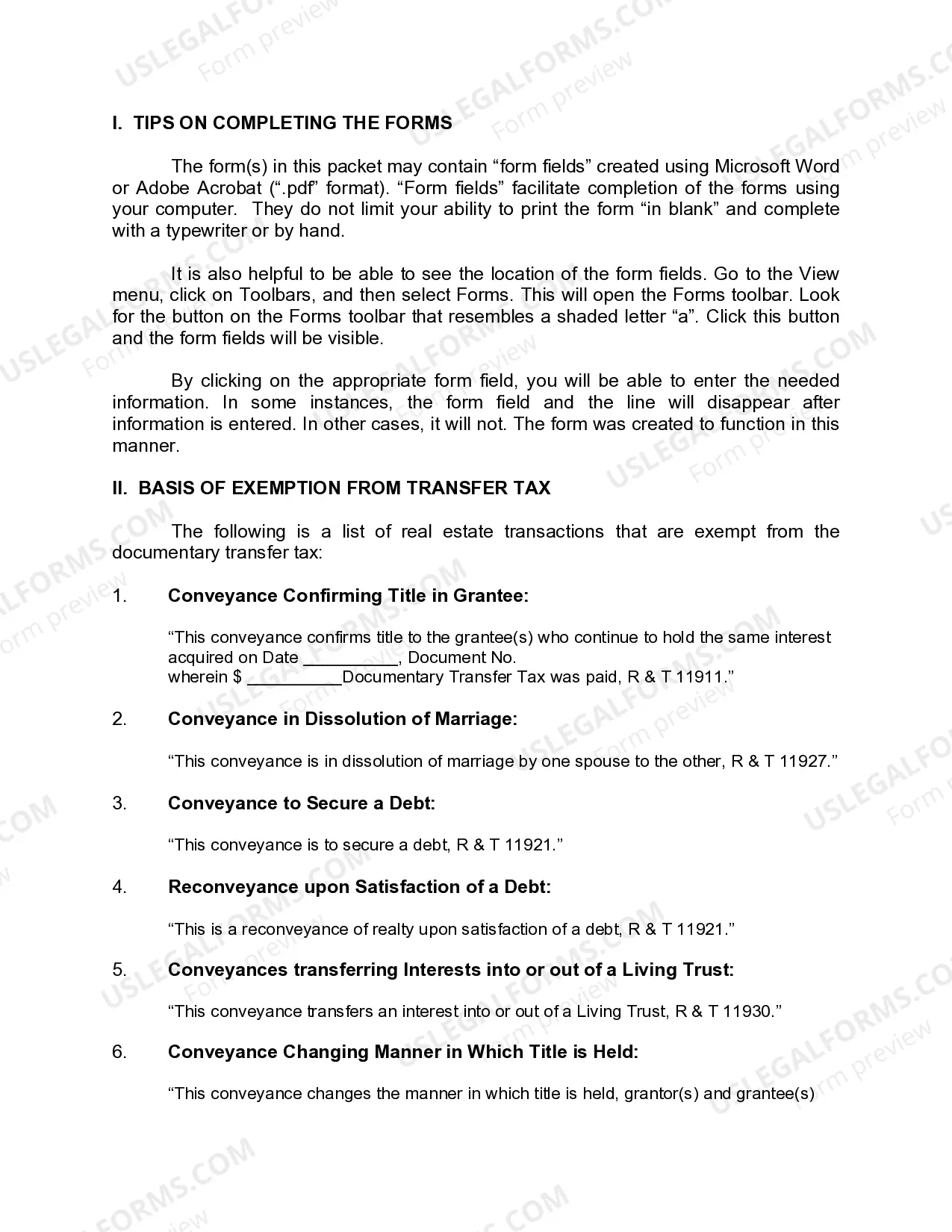
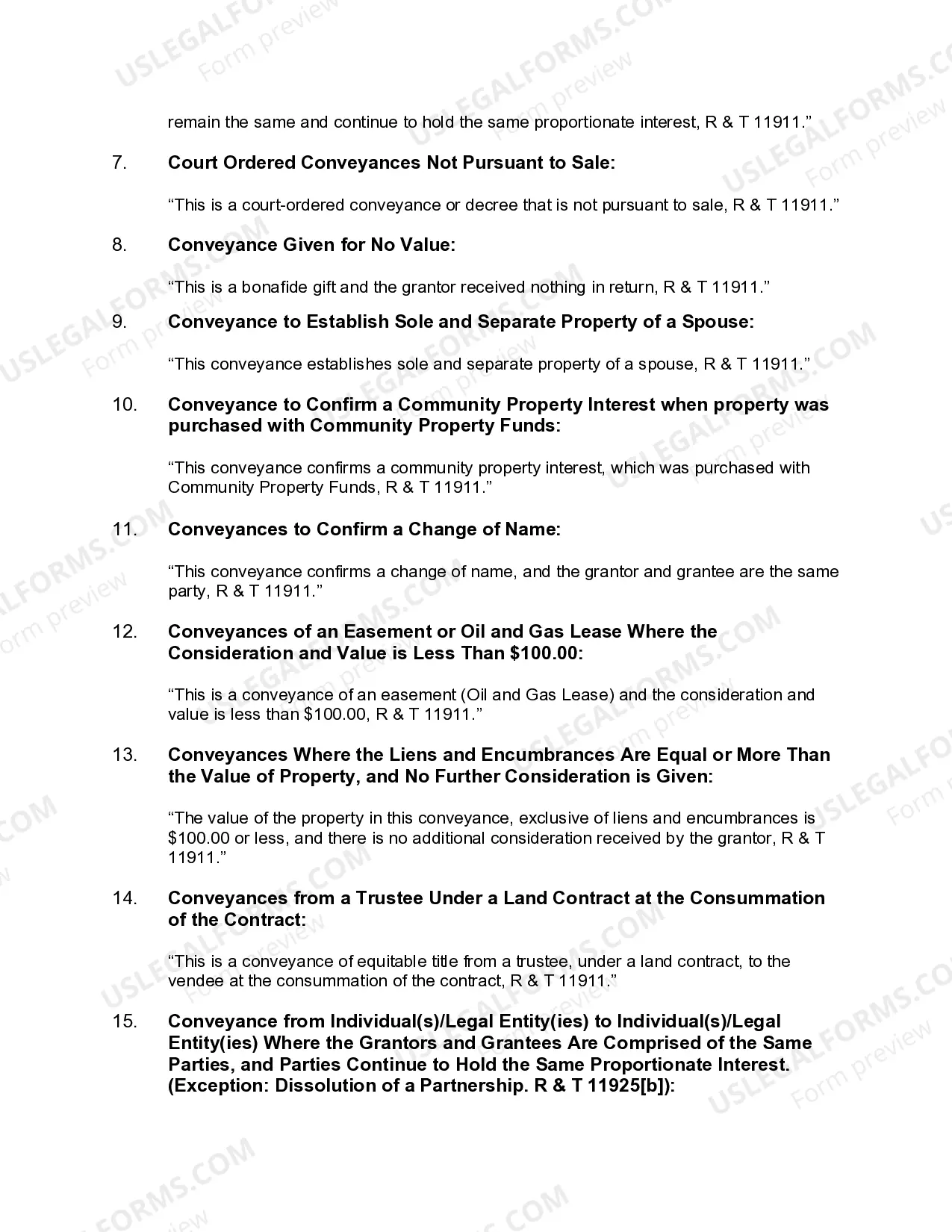
- Exemption notice: Section to indicate any exemptions from transfer tax, if applicable.






When to use this form
This quitclaim deed should be used when an individual wants to transfer ownership of property to another individual. Common scenarios include transferring property between family members, resolving disputes, or facilitating property transfers in divorce settlements. It is important to note that this form is used when the Grantor may not wish to provide warranties regarding the title of the property.
Who needs this form
- Individuals transferring real estate to another individual.
- Family members wishing to transfer property among themselves.
- Divorcing couples needing to transfer property as part of a settlement.
- Parties who are familiar with each other's interests in the property.
Instructions for completing this form
- Identify the parties: Fill in the names and addresses of the Grantor and Grantee.
- Describe the property: Provide the legal description of the property being transferred.
- Include the reservation clause: Specify any mineral rights or interests being retained by the Grantor.
- Enter the date: Write the date of the transaction in the designated field.
- Signature of Grantor: The Grantor must sign the document to make it effective.
- Optional tax exemption: Note any exemptions from transfer tax, if applicable.
Does this form need to be notarized?
This document requires notarization to meet legal standards. US Legal Forms provides secure online notarization powered by Notarize, allowing you to complete the process through a verified video call, available 24/7.
Get your form ready online
Our built-in tools help you complete, sign, share, and store your documents in one place.
Make edits, fill in missing information, and update formatting in US Legal Forms—just like you would in MS Word.
Download a copy, print it, send it by email, or mail it via USPS—whatever works best for your next step.
Sign and collect signatures with our SignNow integration. Send to multiple recipients, set reminders, and more. Go Premium to unlock E-Sign.
If this form requires notarization, complete it online through a secure video call—no need to meet a notary in person or wait for an appointment.
We protect your documents and personal data by following strict security and privacy standards.

Make edits, fill in missing information, and update formatting in US Legal Forms—just like you would in MS Word.

Download a copy, print it, send it by email, or mail it via USPS—whatever works best for your next step.

Sign and collect signatures with our SignNow integration. Send to multiple recipients, set reminders, and more. Go Premium to unlock E-Sign.

If this form requires notarization, complete it online through a secure video call—no need to meet a notary in person or wait for an appointment.

We protect your documents and personal data by following strict security and privacy standards.
Mistakes to watch out for
- Failing to include a full legal description of the property.
- Not signing the deed or missing the signature of the Grantor.
- Incorrectly filing the form with the local recording office.
- Forgetting to check for any reservations regarding mineral rights.
Why use this form online
- Convenience: Downloadable anytime and from anywhere.
- Editability: Easily customize the form to meet your specific requirements.
- Reliability: Form produced by licensed attorneys ensures legal compliance.
Looking for another form?

Form popularity
FAQ
To submit a quit claim deed in California, first complete the deed form accurately, ensuring all vital details are included. Next, visit your local county recorder's office to file the deed, submitting the necessary payment for recording. It's important to keep a copy for your records. Utilizing resources like US Legal Forms can assist you in preparing and submitting your quitclaim deed efficiently.
If you do not record a quitclaim deed in California, the transfer of property ownership is not publically recognized. This lack of recording can create complications if disputes arise or if the new owner attempts to sell the property. To protect your interests, it is crucial to formally record the California quitclaim deed from individual to individual. Using US Legal Forms can ensure that you file the deed correctly and mitigate any potential issues.
In the Philippines, a quitclaim typically does require notarization to be legally binding. However, the California Quitclaim Deed from Individual to Individual requires notarization for its legality and effectiveness. Completing this step adds a layer of security and authenticity to the document. Always check local requirements, as they can vary depending on specific jurisdictions.
Unlike the California Quitclaim Deed from Individual to Individual, a quit claim deed in the UK does not operate in the same way. In the UK, it is referred to as a transfer of equity, which is the procedure to change names on property ownership. This process involves different regulations and documentation than those found in California. While it serves a similar purpose, it's important to understand the specifics of the local laws.
To add someone to a deed, you can use a California Quitclaim Deed from Individual to Individual. This document allows you to transfer interest in the property to another person. After preparing the quitclaim deed, you must sign it in front of a notary public, and then file it with the county recorder's office. This process ensures that the new owner's interest in the property is legally recognized.
To execute a quitclaim deed in California, start by obtaining a California Quitclaim Deed from Individual to Individual form. Fill it out with the necessary details, then have it signed by the grantor in the presence of a notary. Finally, submit the document to the county recorder's office to ensure that the deed is recorded officially. With platforms like US Legal Forms, you can easily access templates and guidance for completing this process accurately.
Yes, you can remove a co-owner using a California Quitclaim Deed from Individual to Individual. The co-owner who wishes to give up their interest in the property must sign the deed. This document must then be notarized and filed with the county to formalize the change in ownership, ensuring that the remaining owners have clear title to the property.
Yes, a California Quitclaim Deed from Individual to Individual does transfer ownership, but it transfers whatever interest the grantor holds at the time of signing. Therefore, if the grantor owns the property, the grantee will receive that ownership. However, if the grantor has no interest in the property, the grantee does not acquire any rights. Thus, it's essential to verify the ownership status before proceeding.
To remove someone from a deed in California, you can execute a California Quitclaim Deed from Individual to Individual transferring your interest back to yourself or to another party. This deed must be signed before a notary public and submitted to the county recorder's office. This method provides a legal way to clarify ownership and ensures that records accurately reflect the current owners.
When you add someone to a deed in California using a California Quitclaim Deed from Individual to Individual, there may be tax implications to consider, including potential reassessment of the property's value. This reassessment could lead to higher property taxes. It's advisable to consult with a tax professional to fully understand the fiscal responsibilities before making any changes to property ownership.