Virginia Living Trust for Individual Who is Single, Divorced or Widow or Widower with No Children

What this document covers
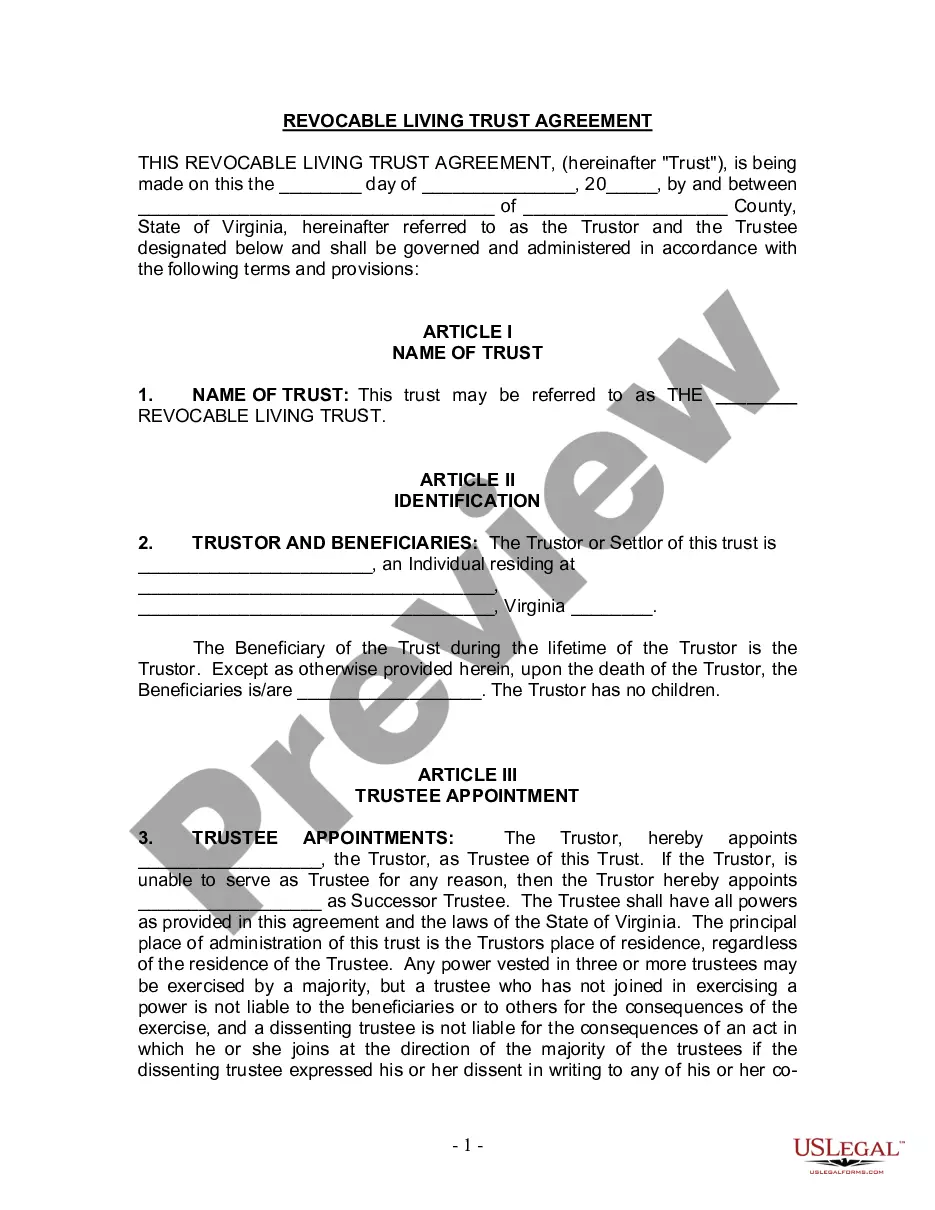
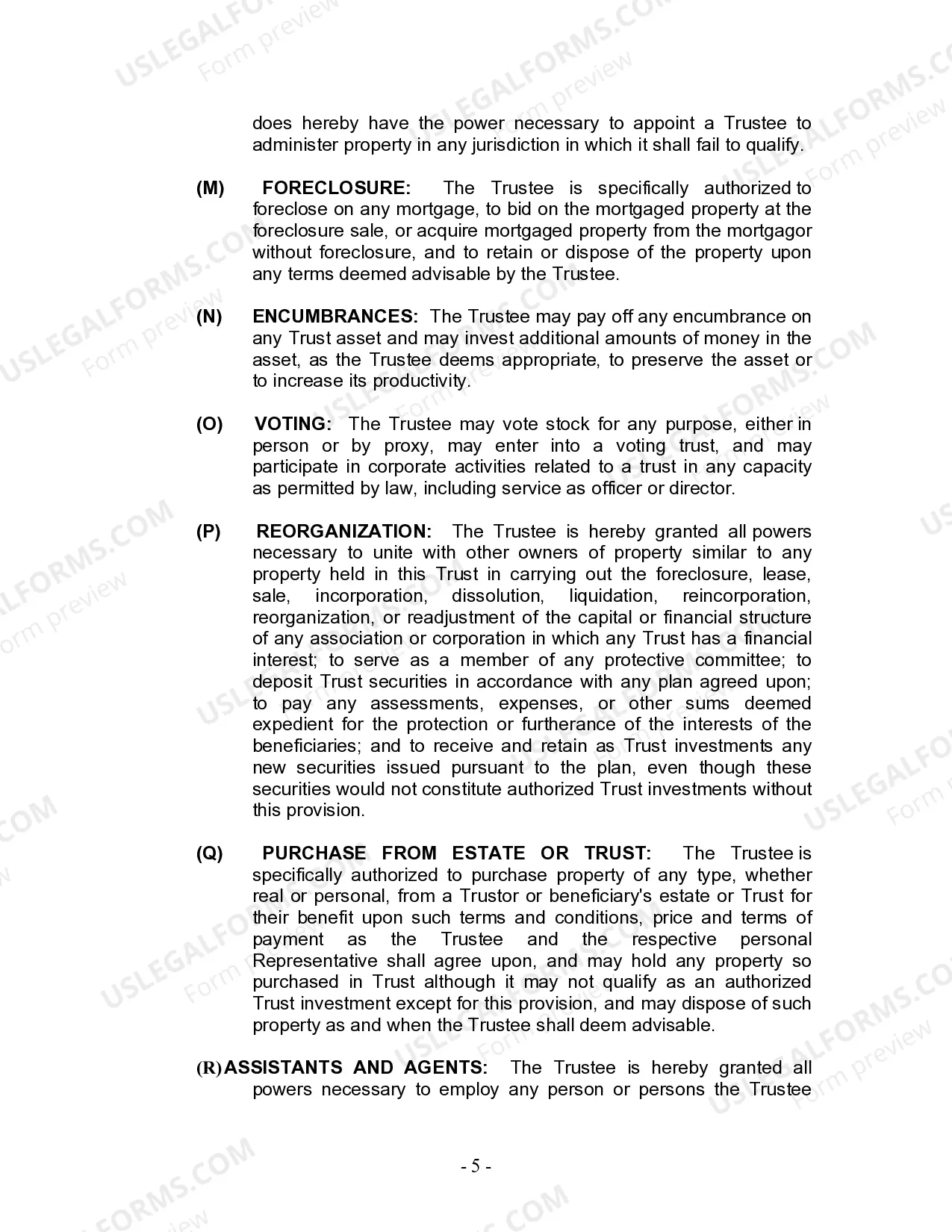
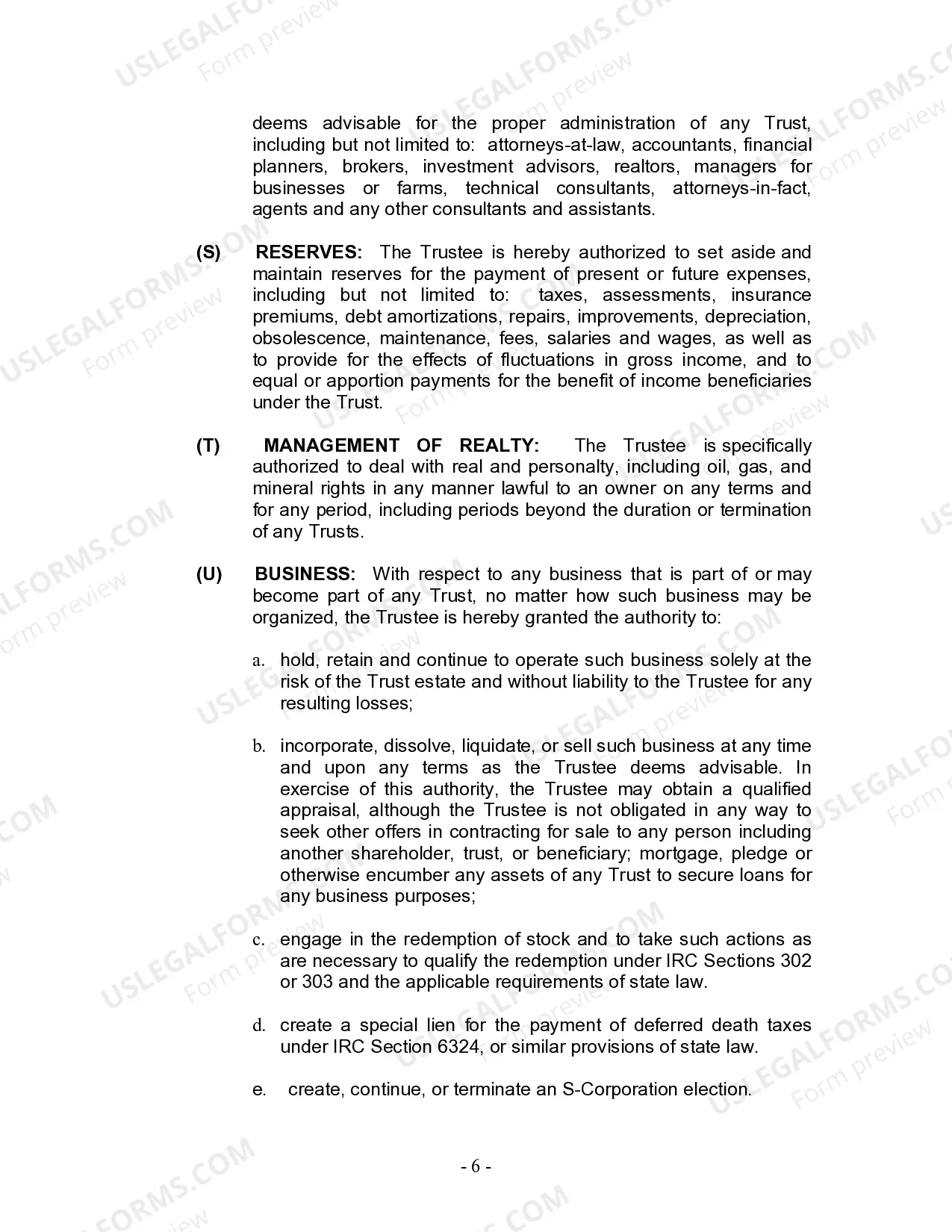
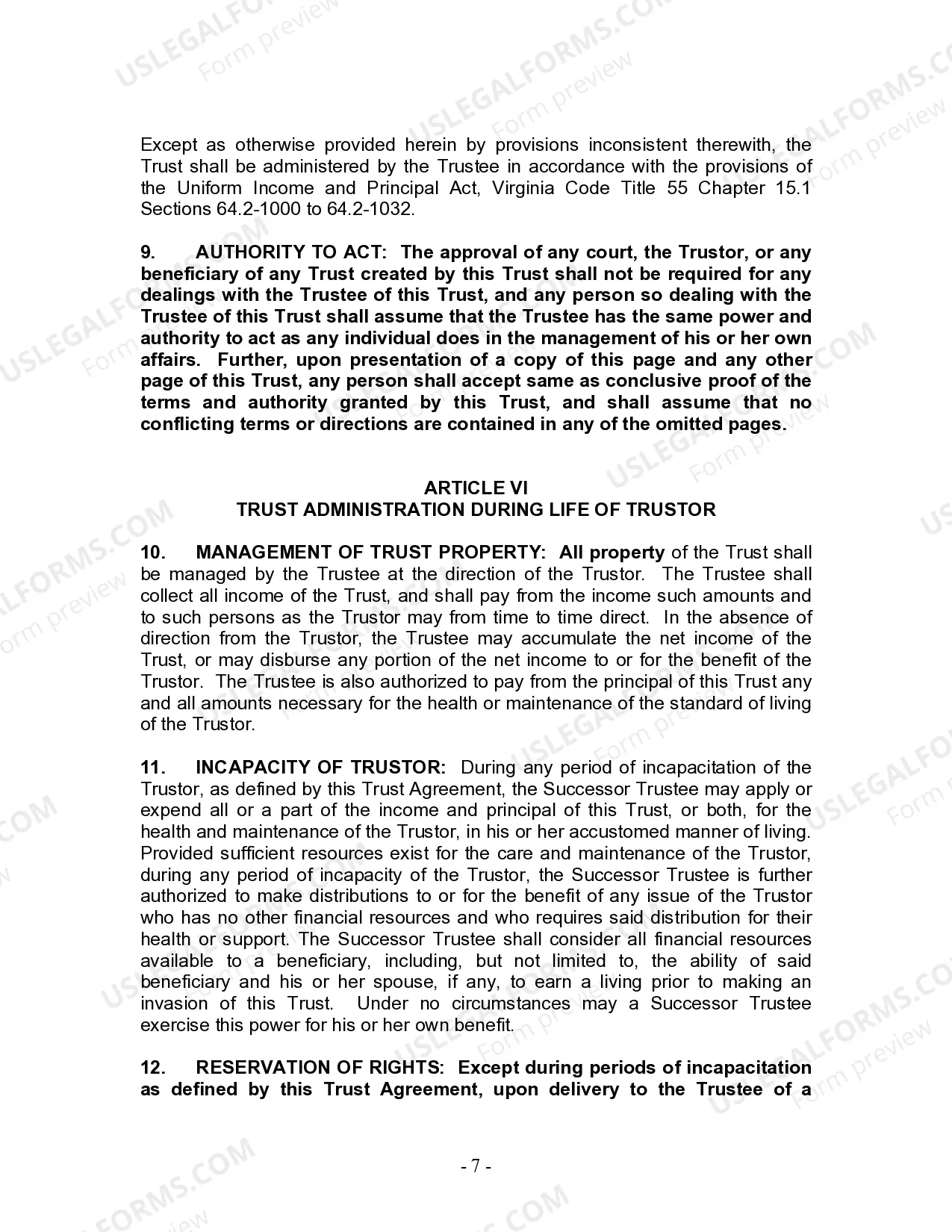
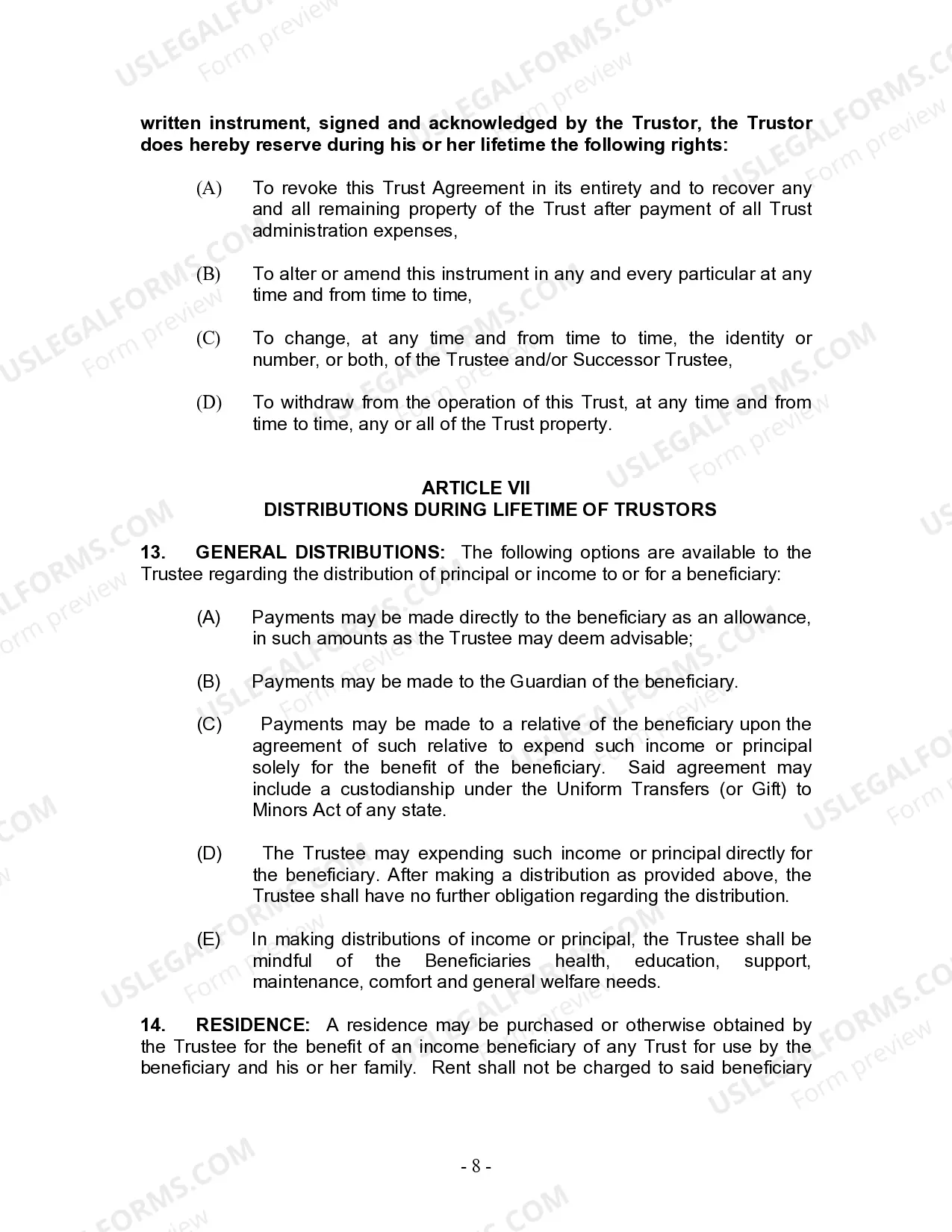
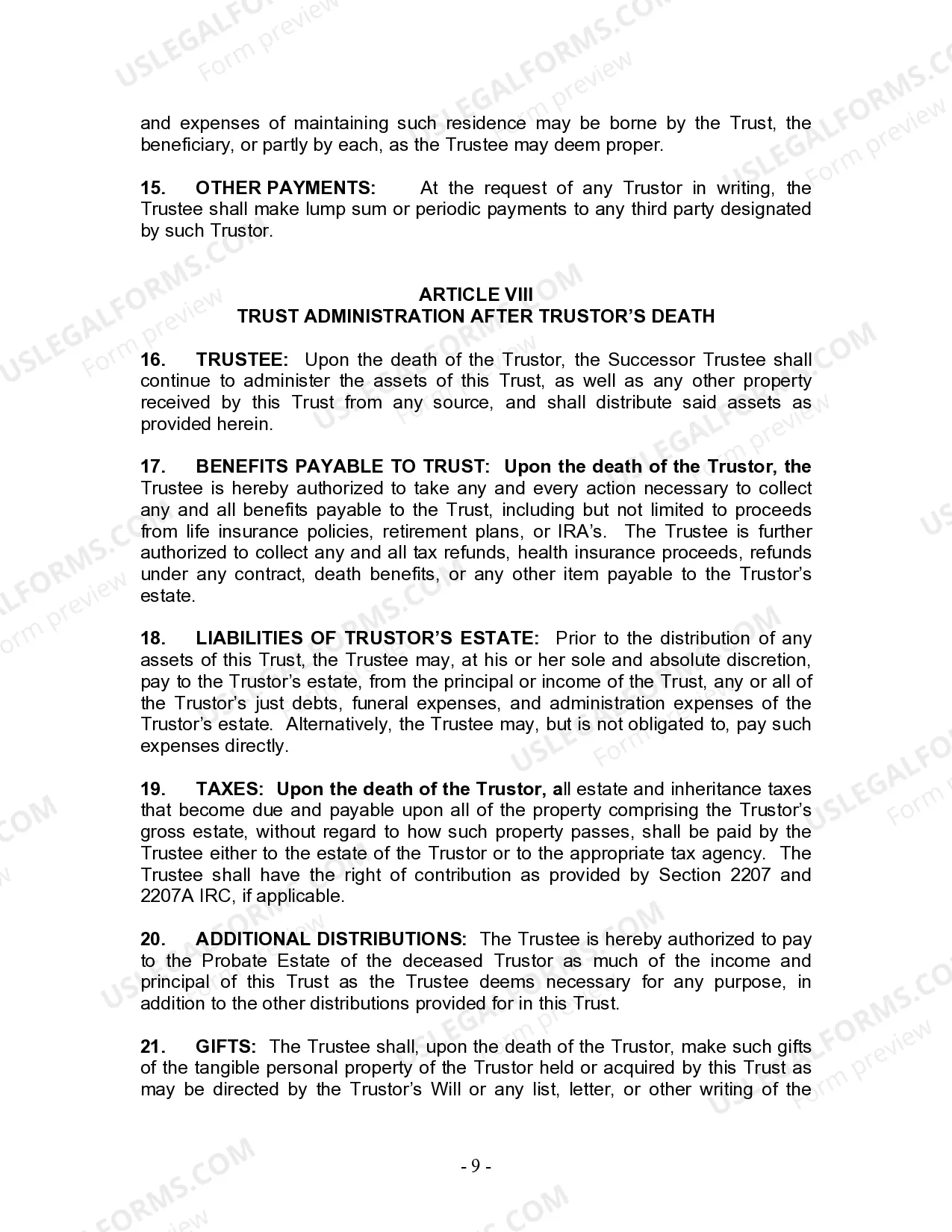
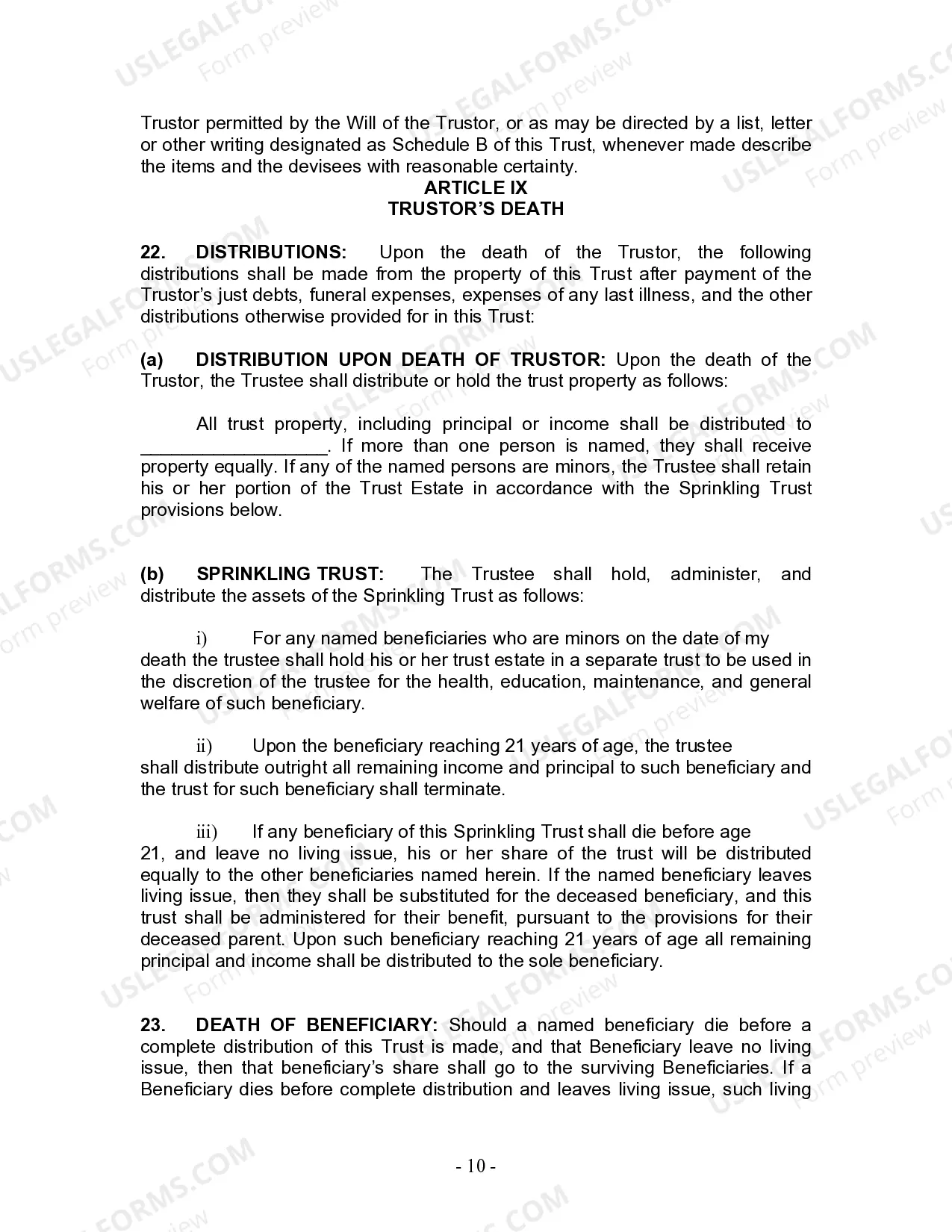
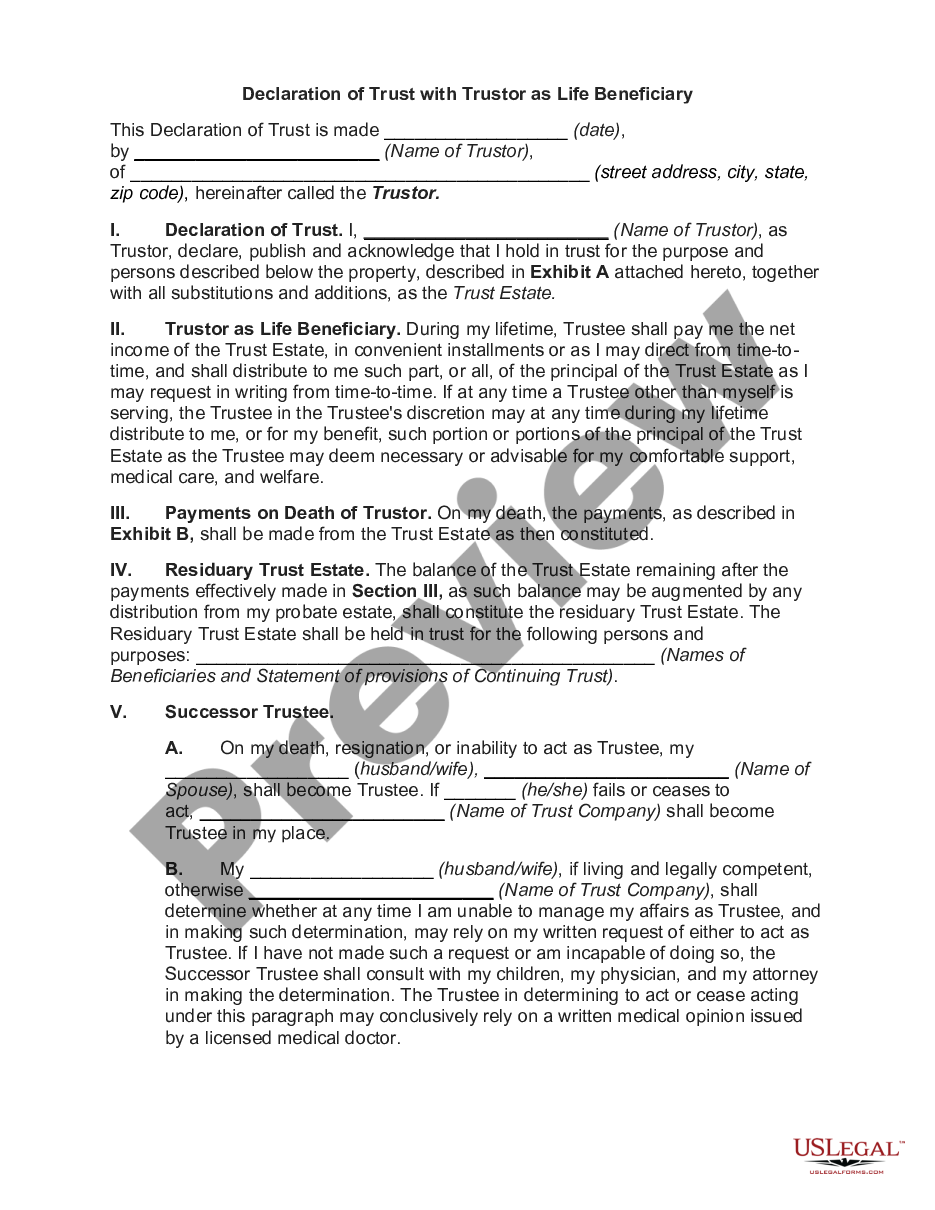
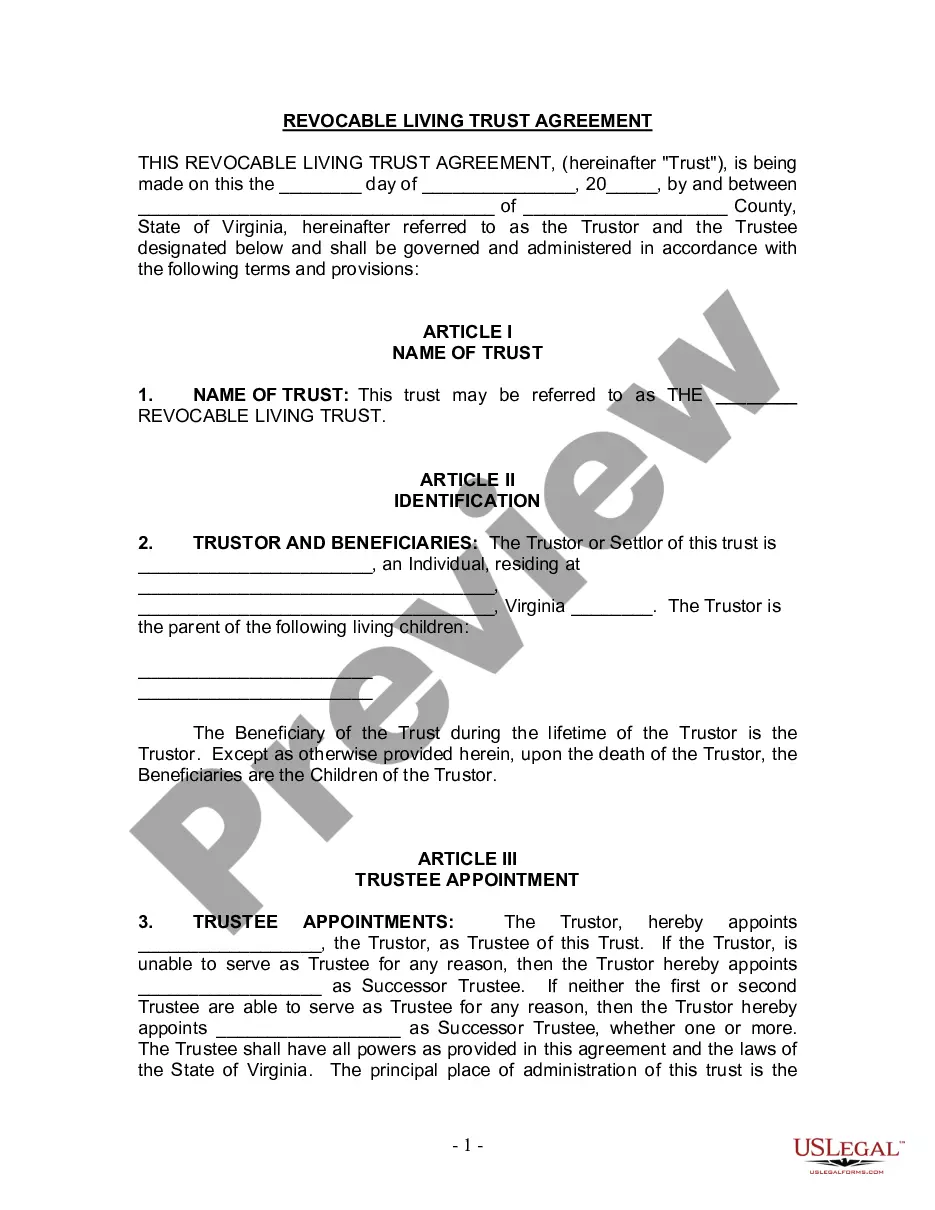
This Living Trust for Individuals Who are Single, Divorced, or Widowed with No Children is a legal document created to manage your assets during your lifetime and distribute them after your death. Unlike a will, a living trust allows for quicker distribution of your estate, avoiding the lengthy probate process. This form is specifically tailored for individuals without children, empowering you to maintain control over your assets while providing for any beneficiaries you choose.
What’s included in this form
- Identification of the Trustor, Trustee, and beneficiaries.
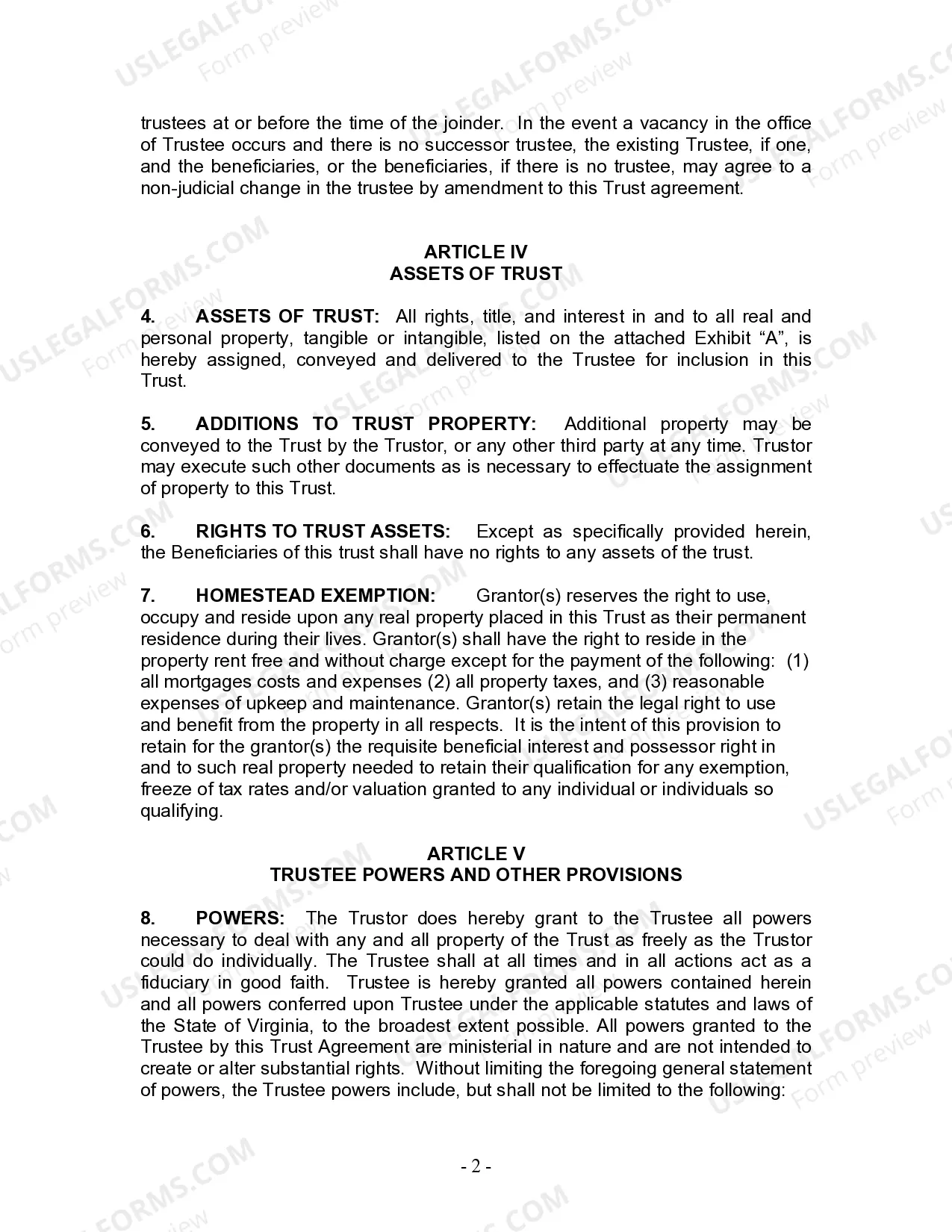
- Specific instructions on asset management and distribution.
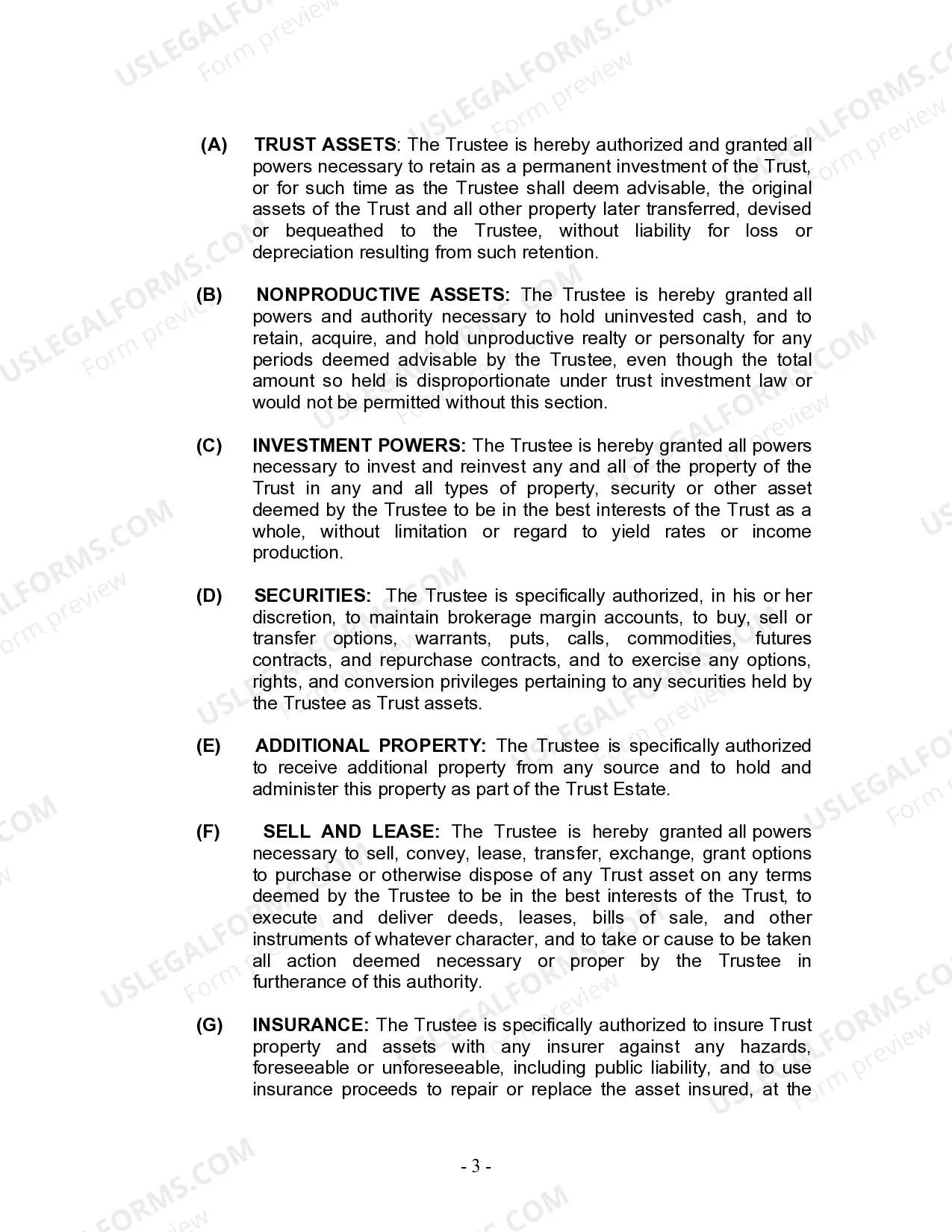
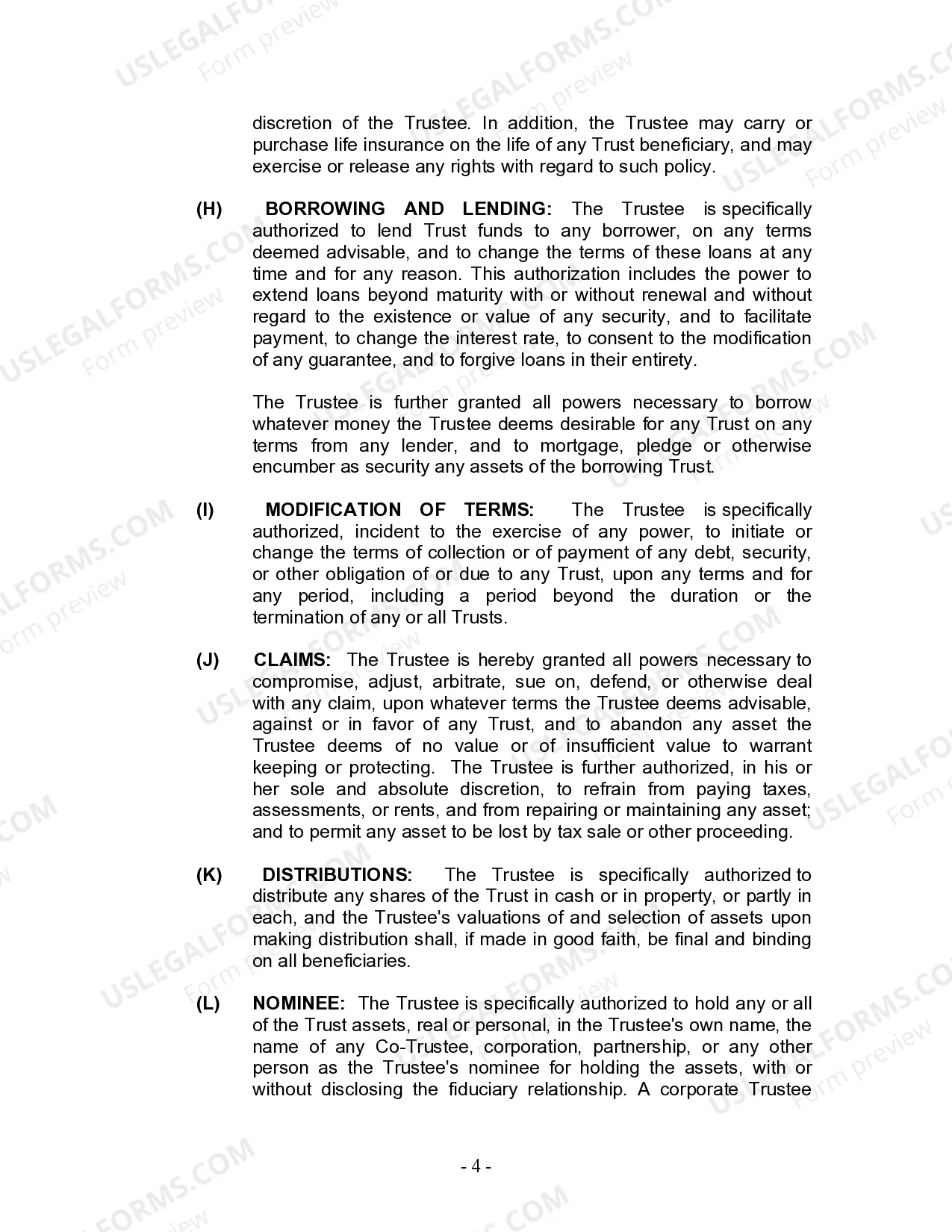
- Trustee powers and responsibilities outlined comprehensively.
- Provisions for incapacity of the Trustor.
- Details on homestead exemption rights.
- Directions for amending or revoking the trust.


When this form is needed
This form is essential when you want to establish a trust to manage your assets while you are alive and to dictate how those assets should be handled after your death. It is particularly useful for individuals who are single, divorced, or widowed without dependent children, allowing them to allocate assets to relatives, friends, or charities according to their wishes.
Intended users of this form
- Individuals who are single or divorced.
- Individuals who are widowed and have no children.
- Those seeking to avoid probate costs and streamline the distribution of their estate.
- Individuals looking to maintain control over their assets during their lifetime.
Completing this form step by step
- Identify yourself as the Trustor and choose a Trustee, who can also be yourself.
- List your assets and specify which ones will be included in the trust.
- Clearly define your beneficiaries and how your assets will be distributed upon your death.
- Sign and date the document in the presence of a notary public for validation.
- Store the completed document in a safe place and inform your Trustee where to find it.
Notarization requirements for this form
Notarization is required for this form to take effect. Our online notarization service, powered by Notarize, lets you verify and sign documents remotely through an encrypted video session, available 24/7.
Get your form ready online
Our built-in tools help you complete, sign, share, and store your documents in one place.
Make edits, fill in missing information, and update formatting in US Legal Forms—just like you would in MS Word.
Download a copy, print it, send it by email, or mail it via USPS—whatever works best for your next step.
Sign and collect signatures with our SignNow integration. Send to multiple recipients, set reminders, and more. Go Premium to unlock E-Sign.
If this form requires notarization, complete it online through a secure video call—no need to meet a notary in person or wait for an appointment.
We protect your documents and personal data by following strict security and privacy standards.

Make edits, fill in missing information, and update formatting in US Legal Forms—just like you would in MS Word.

Download a copy, print it, send it by email, or mail it via USPS—whatever works best for your next step.

Sign and collect signatures with our SignNow integration. Send to multiple recipients, set reminders, and more. Go Premium to unlock E-Sign.

If this form requires notarization, complete it online through a secure video call—no need to meet a notary in person or wait for an appointment.

We protect your documents and personal data by following strict security and privacy standards.
Avoid these common issues
- Failing to clearly identify all assets to be included in the trust.
- Not specifying how the assets should be distributed among beneficiaries.
- Overlooking the need for a successor Trustee.
- Not signing the document in front of a notary public.
- Assuming the trust negates the need for a will entirely.
Benefits of completing this form online
- Convenience of completing the form from home without visiting a lawyer.
- Editability allows for easy customization to fit your specific needs.
- Access to professionally drafted documents ensures legal compliance.
- Immediate download enables rapid establishment of your trust.
Looking for another form?
Form popularity
FAQ
As of 2019, attorney fees can range from $1,000 to $2,500 to set up a trust, depending upon the complexity of the document and where you live. You can also hire an online service provider to set up your trust. As of 2019, you can expect to pay about $300 for an online trust.
Funding a Trust Is Expensive... This is the major drawback to using a revocable living trust for many people, but it's not worth the time, money, and effort to create one if the trust isn't fully funded.
Here's a good rule of thumb: If you have a net worth of at least $100,000 and have a substantial amount of assets in real estate, or have very specific instructions on how and when you want your estate to be distributed among your heirs after you die, then a trust could be for you.
A living trust in Virginia is an estate planning option that allows you to place your assets in trust while continuing to use and control them. The trust passes the assets to your beneficiaries after your death. A revocable living trust (inter vivos trust) offers unique control and flexibility.
Many people find that they can successfully set up their own living trust without the help of a lawyer. Making a living trust takes a more work than writing a will because a living trust requires that you take the additional step of transferring property into the trust.
The process of funding your living trust by transferring your assets to the trustee is an important part of what helps your loved ones avoid probate court in the event of your death or incapacity. Qualified retirement accounts such as 401(k)s, 403(b)s, IRAs, and annuities, should not be put in a living trust.
How To Establish A Trust. You will need to retain an estate attorney to draft and execute your trust document. For a simple revocable or irrevocable trust, it may cost anywhere from $2,000 $5,000.
Bank accounts. Brokerage or investment accounts. Retirement accounts and pension plans. A life insurance policy.
Charges vary from lawyer to lawyer based on their fees, as well as the complexity of your overall estate. In the end, expect to pay $1,000 or more. If you decide to go the DIY route, your costs will likely fall to around $200 to $500, depending on which online program you prefer.