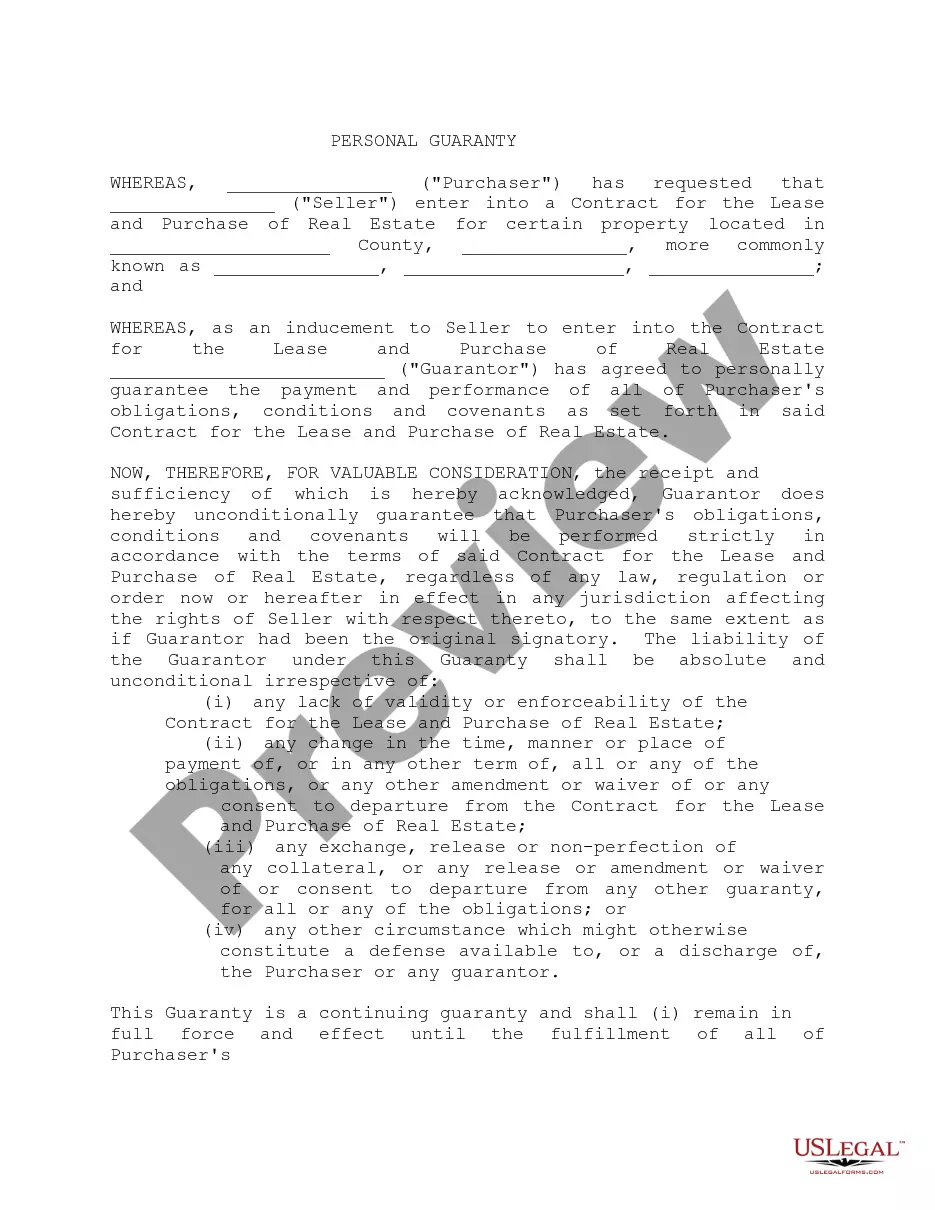
Virginia Living Trust for Individual Who is Single, Divorced or Widow or Widower with Children

About this form
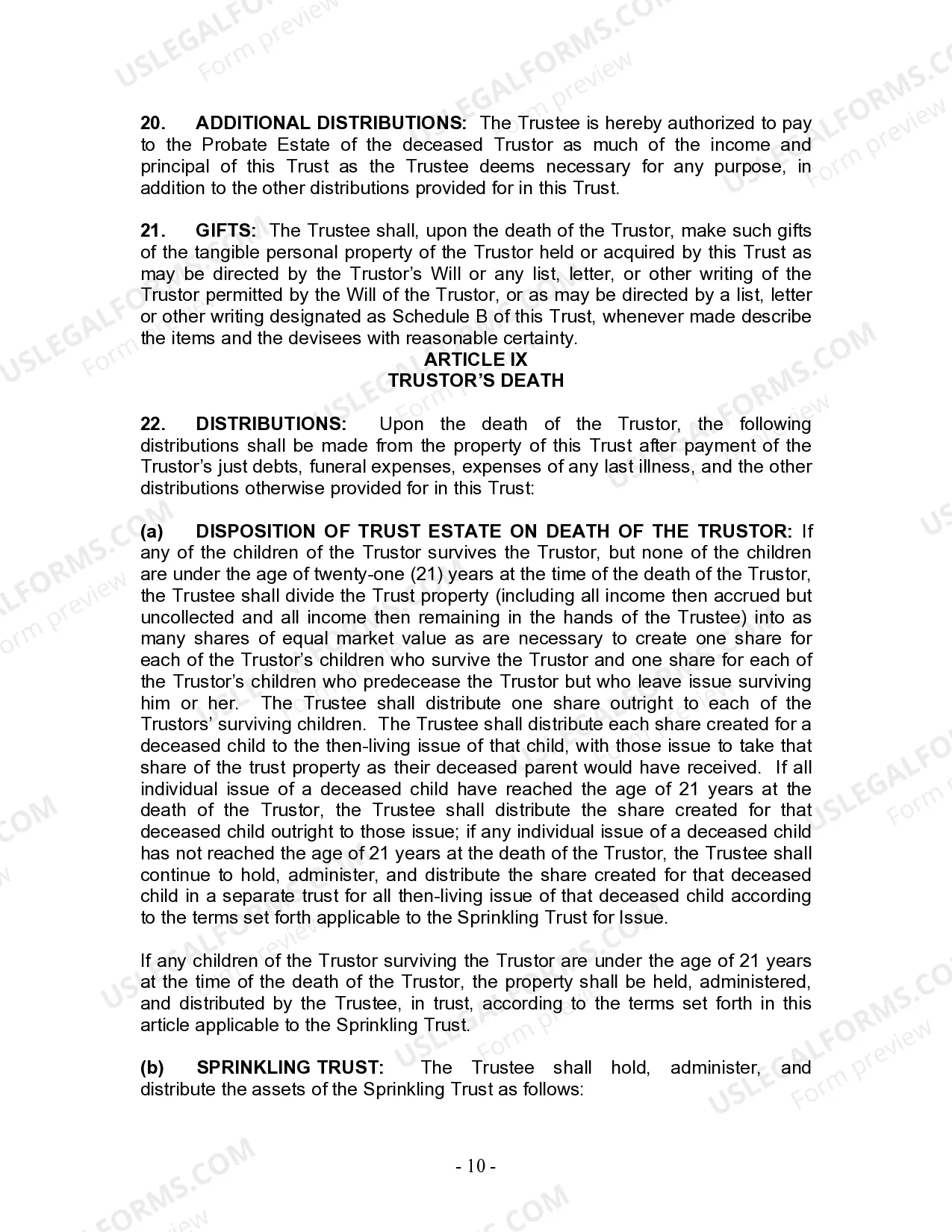
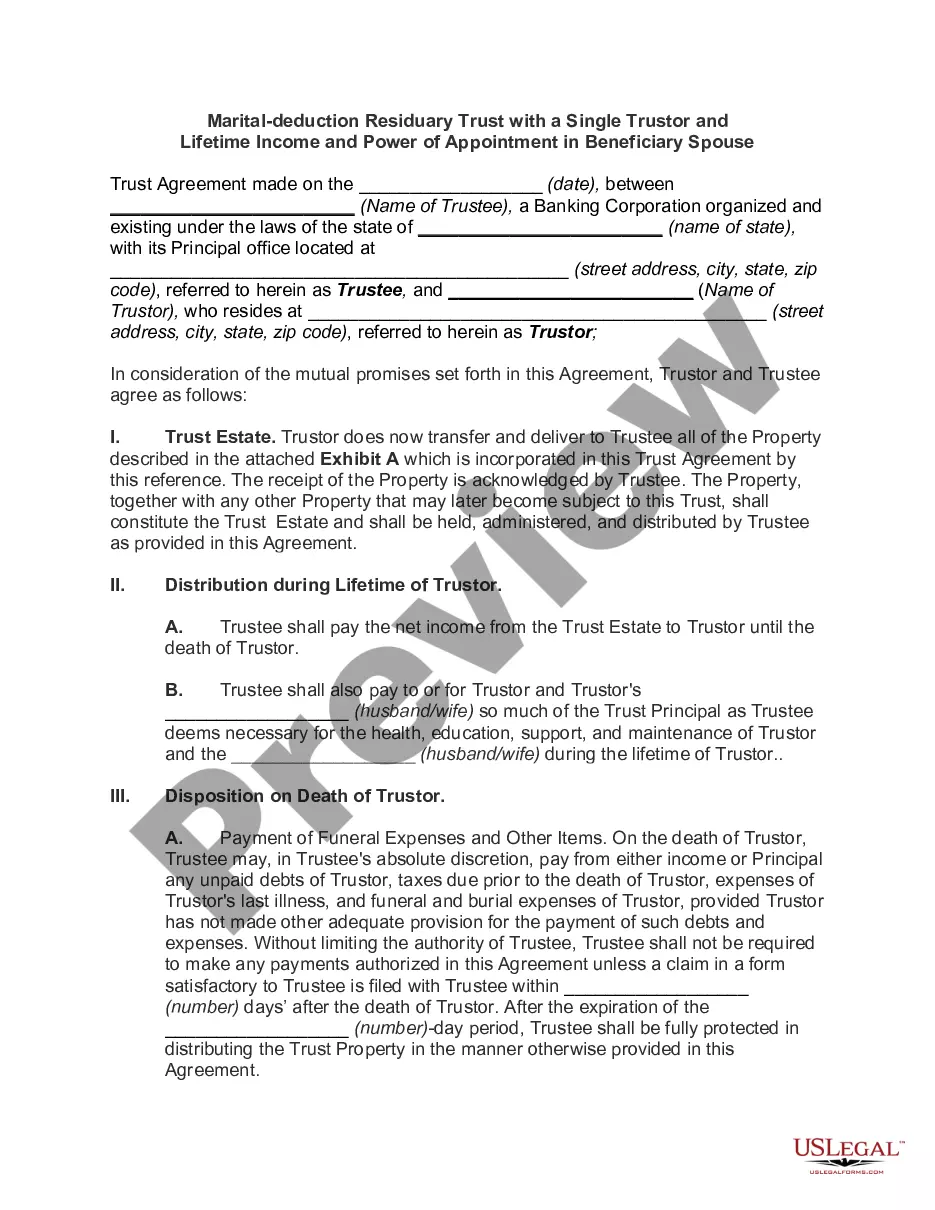
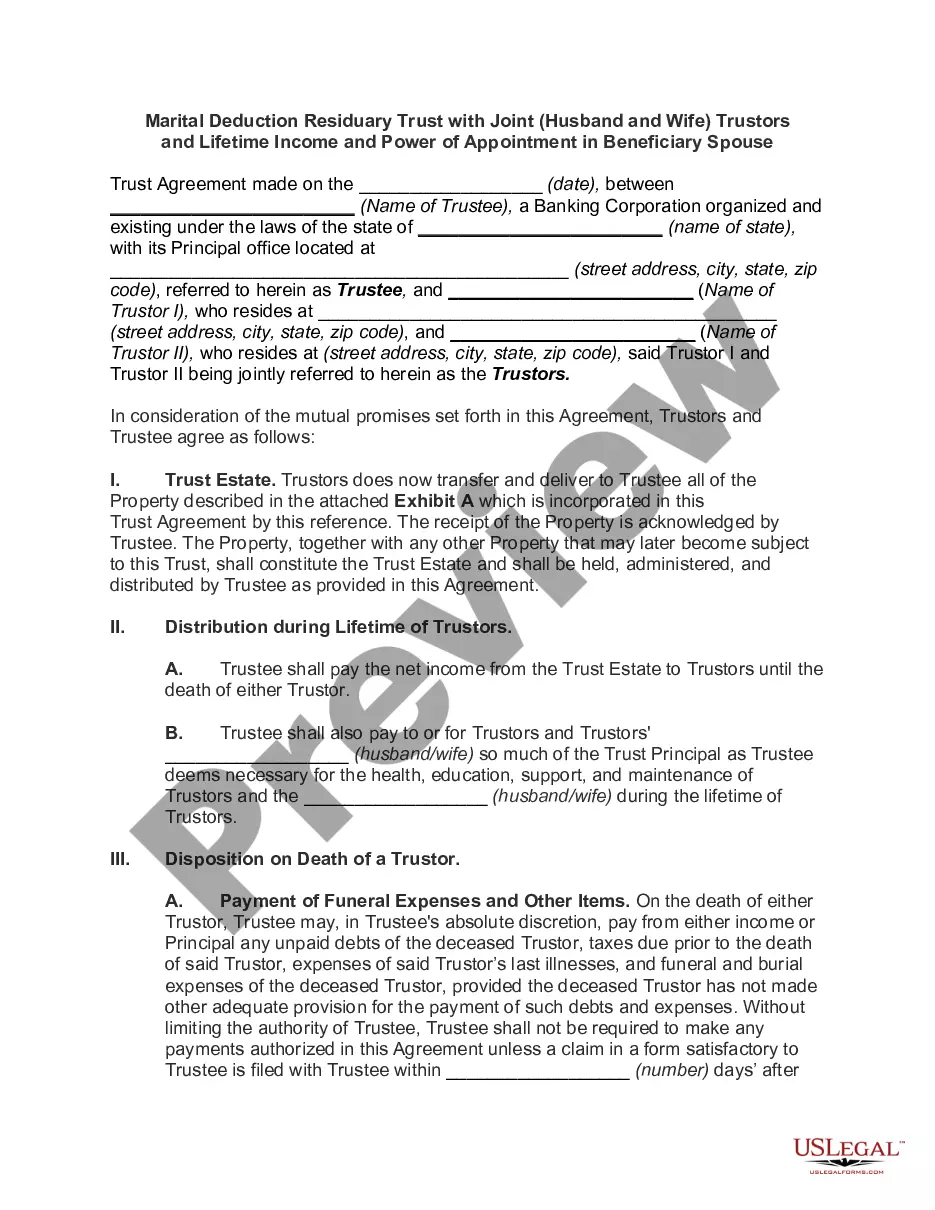
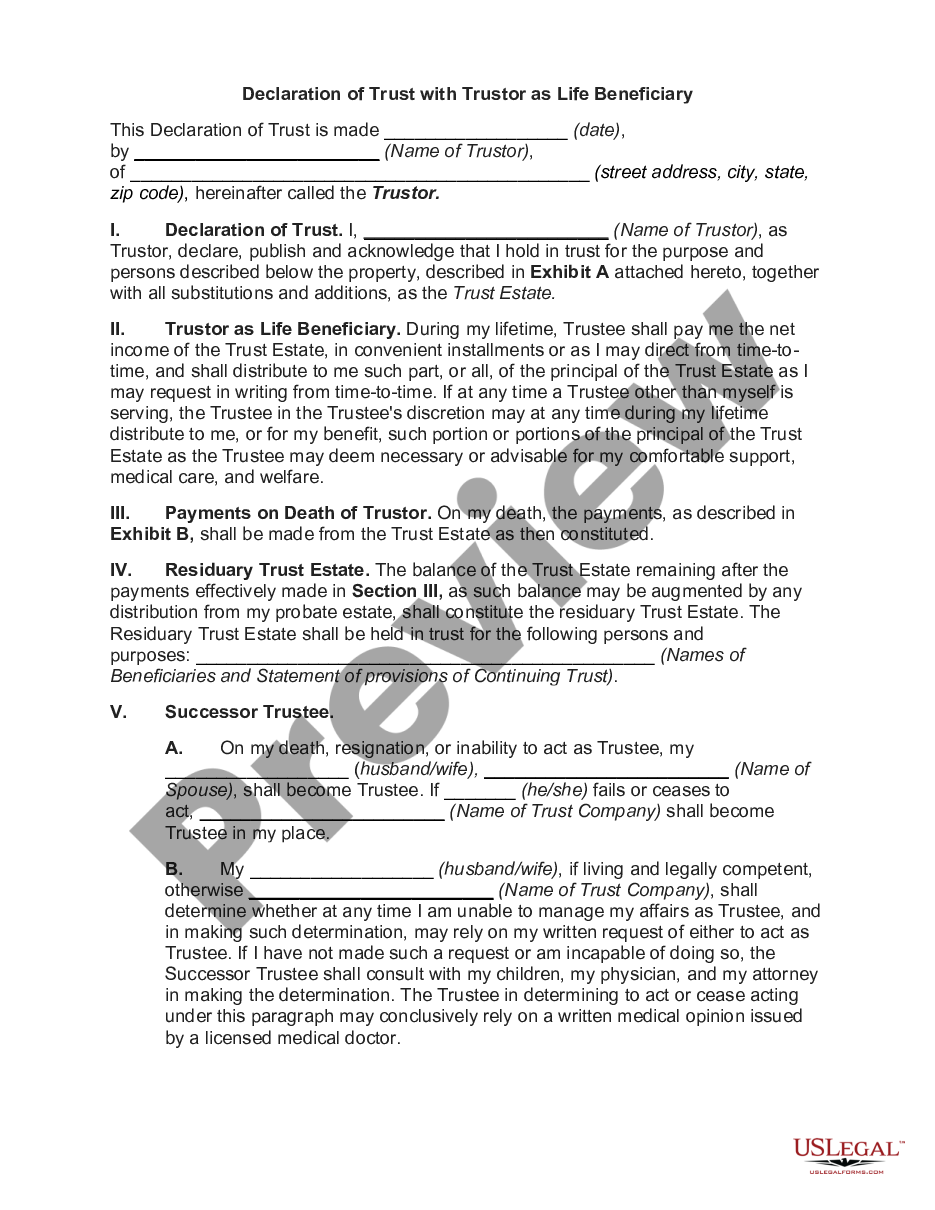
This form is a Living Trust designed for individuals who are single, divorced, or widowed and have children. A Living Trust allows you to place your assets under the management of a trustee during your lifetime, benefiting your chosen heirs while avoiding probate upon your death. This form specifically helps ensure that your property passes directly to your children, thus simplifying the estate planning process and providing clearer asset distribution compared to a will.
Key components of this form
- Name of Trust: The specific title you choose for your trust.
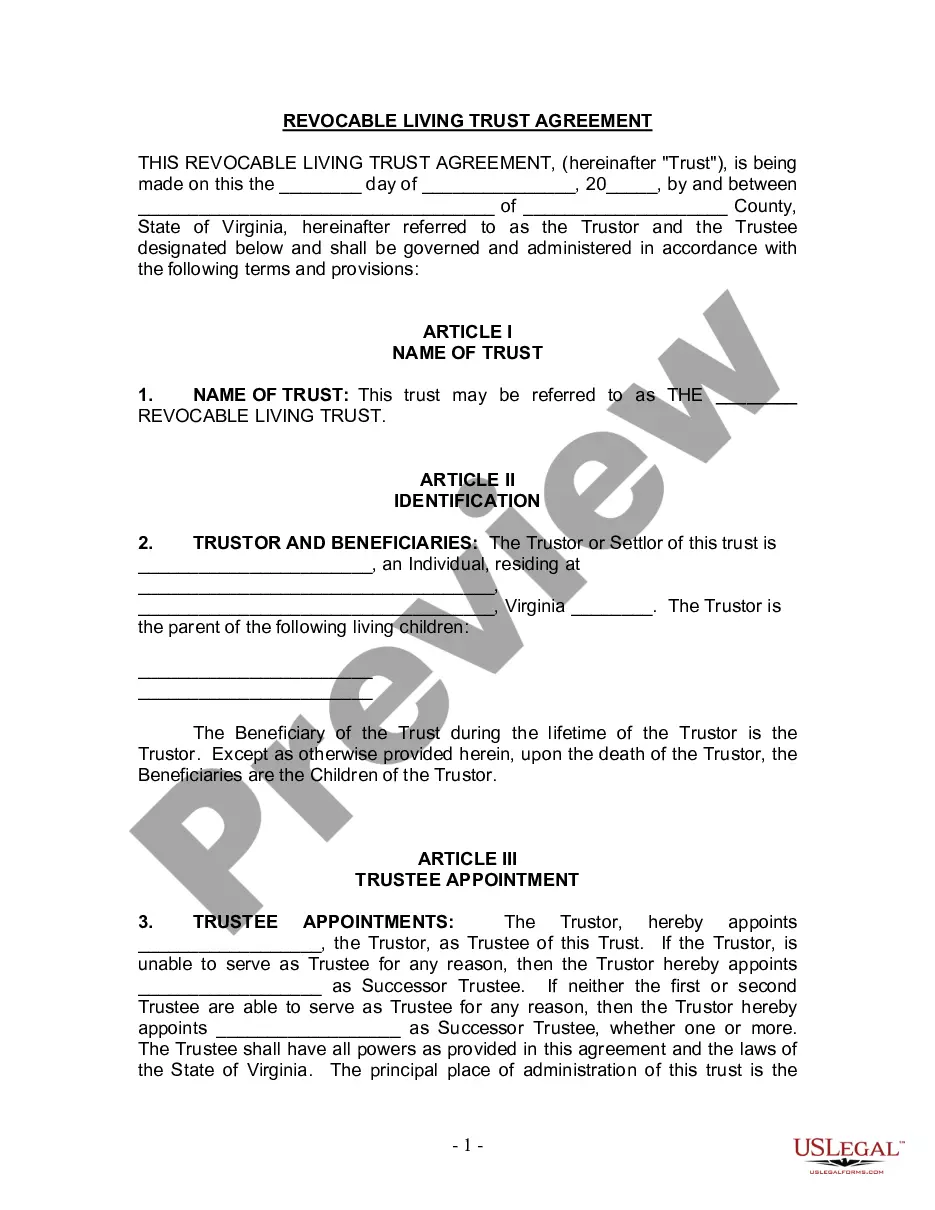
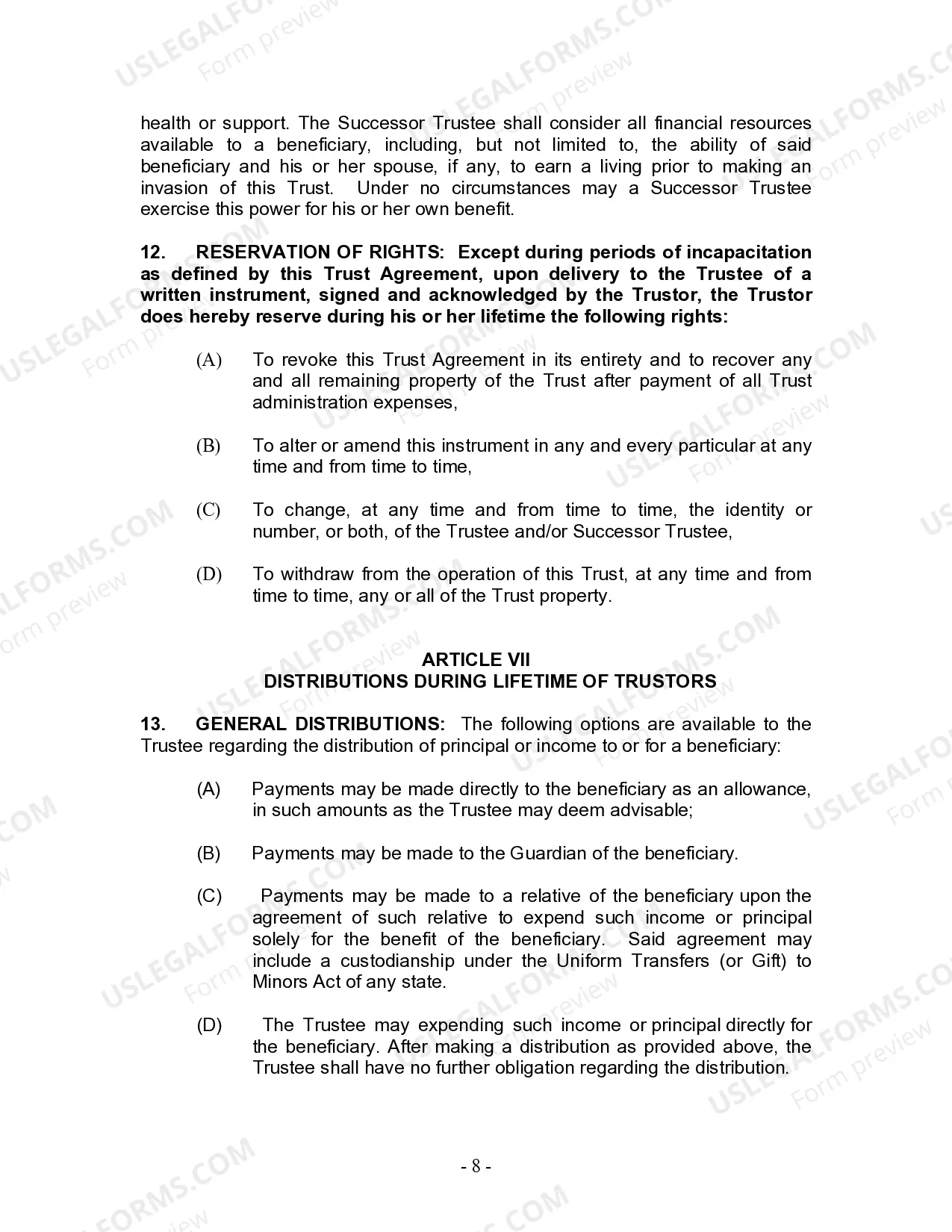
- Trustor and Beneficiaries: The person creating the trust and the designated beneficiaries, usually the children of the Trustor.
- Trustee Appointment: Details on who will manage the trust assets, including options for successor trustees.
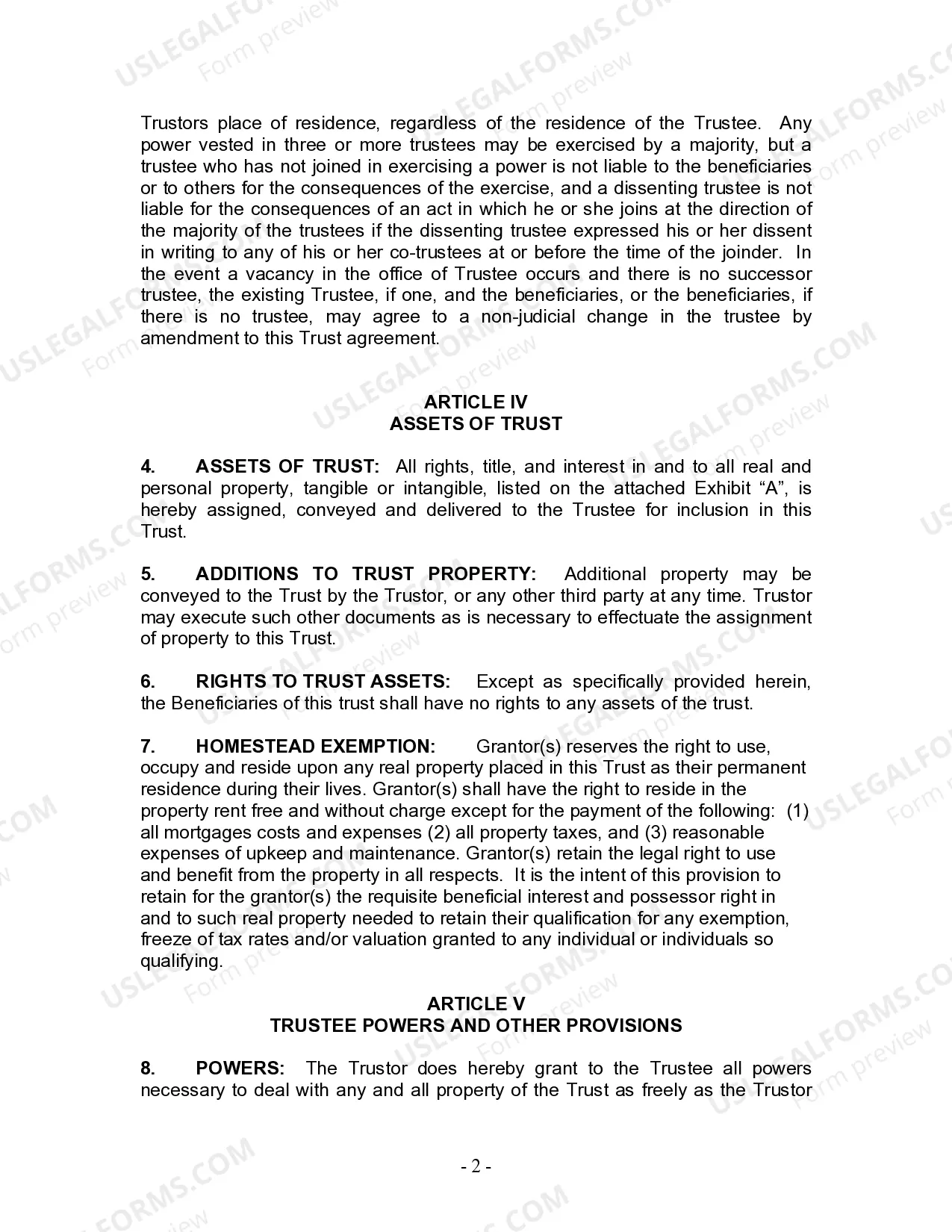
- Assets of Trust: Specifies what property and assets are included in the trust.
- Trustee Powers: Outlines the various powers granted to the trustee to manage the trust effectively.






When this form is needed
This form is ideal for individuals who want to secure their children's inheritance without subjecting their assets to probate. It is useful for anyone who has children and wishes to ensure that their assets are managed and distributed according to their wishes while they are alive and after their death. If you are single, divorced, or widowed and wish to keep your estate plan straightforward and beneficial for your children, this Living Trust is a suitable option.
Who should use this form
This form is appropriate for:
- Individuals who are single and have children.
- Divorced persons with dependents looking to secure their financial future.
- Widows and widowers seeking to manage their estate effectively.
- Anyone wishing to avoid the probate process in estate planning.
Completing this form step by step
- Identify the parties involved: the Trustor (you), the appointed Trustee, and the beneficiaries (your children).
- Name the trust by filling in the designated field with the chosen title.
- List all assets you wish to include in the trust documentation.
- Specify the powers granted to the Trustee for managing the trust.
- Sign and date the document in the presence of a notary, if required.
Notarization requirements for this form
Yes, this form must be notarized to be legally valid. US Legal Forms offers integrated online notarization available 24/7 through secure video calls, ensuring convenience and legal equivalence without the need to travel.
Get your form ready online
Our built-in tools help you complete, sign, share, and store your documents in one place.
Make edits, fill in missing information, and update formatting in US Legal Forms—just like you would in MS Word.
Download a copy, print it, send it by email, or mail it via USPS—whatever works best for your next step.
Sign and collect signatures with our SignNow integration. Send to multiple recipients, set reminders, and more. Go Premium to unlock E-Sign.
If this form requires notarization, complete it online through a secure video call—no need to meet a notary in person or wait for an appointment.
We protect your documents and personal data by following strict security and privacy standards.

Make edits, fill in missing information, and update formatting in US Legal Forms—just like you would in MS Word.

Download a copy, print it, send it by email, or mail it via USPS—whatever works best for your next step.

Sign and collect signatures with our SignNow integration. Send to multiple recipients, set reminders, and more. Go Premium to unlock E-Sign.

If this form requires notarization, complete it online through a secure video call—no need to meet a notary in person or wait for an appointment.

We protect your documents and personal data by following strict security and privacy standards.
Common mistakes
- Failing to update the trust when personal circumstances change, such as marriage, divorce, or the birth of additional children.
- Not clearly naming all assets or inaccurately describing them.
- Leaving out successor trustees or not naming someone to take over if the initial trustee cannot serve.
- Not clarifying how assets should be distributed upon the Trustor's death.
Why use this form online
- Instant access to a legally vetted form tailored to your specific needs.
- The option to edit and customize the trust according to your individual preferences.
- A straightforward process that saves time compared to traditional legal consultations.
- Comprehensive guidance throughout the completion process.
- A living trust is a legally recognized arrangement that allows for asset management without going through probate.
- It can be revoked or modified by the trustor at any time while they are alive and competent.
- Validity is contingent upon the proper execution according to state laws, including any required witness signatures.
What to keep in mind
- A living trust allows individuals to manage their assets while alive and distribute them upon death without probate.
- This trust is tailored for single, divorced, or widowed parents with children.
- It's important to include all assets and designations accurately to avoid potential conflicts or misunderstandings.
Looking for another form?

Form popularity
FAQ
A living trust is designed to allow for the easy transfer of the trust creator or settlor's assets while bypassing the often complex and expensive legal process of probate. Living trust agreements designate a trustee who holds legal possession of assets and property that flow into the trust.
Wills and Trusts FAQs Deciding between a will or a trust is a personal choice, and some experts recommend having both. A will is typically less expensive and easier to set up than a trust, an expensive and often complex legal document.
Paperwork. Setting up a living trust isn't difficult or expensive, but it requires some paperwork. Record Keeping. After a revocable living trust is created, little day-to-day record keeping is required. Transfer Taxes. Difficulty Refinancing Trust Property. No Cutoff of Creditors' Claims.
Paperwork. Setting up a living trust isn't difficult or expensive, but it requires some paperwork. Record Keeping. After a revocable living trust is created, little day-to-day record keeping is required. Transfer Taxes. Difficulty Refinancing Trust Property. No Cutoff of Creditors' Claims.
In Virginia, you can make a living trust to avoid probate for virtually any asset you ownreal estate, bank accounts, vehicles, and so on. You need to create a trust document (it's similar to a will), naming someone to take over as trustee after your death (called a successor trustee).
Among the chief advantages of trusts, they let you: Put conditions on how and when your assets are distributed after you die; Reduce estate and gift taxes; Distribute assets to heirs efficiently without the cost, delay and publicity of probate court.
A trust is a fiduciary arrangement that allows a third party, or trustee, to hold assets on behalf of a beneficiary or beneficiaries. Trusts can be arranged in many ways and can specify exactly how and when the assets pass to the beneficiaries.Other benefits of trusts include: Control of your wealth.
A living trust, specifically a revocable living trust, is a legal document that places your assetsinvestments, bank accounts, real estate, vehicles and valuable personal propertyin trust for your benefit during your lifetime, and spells out where you'd like these things to go upon your death.
An asset protection trust is designed to protect your money from creditors. You transfer ownership of cash or property to a trustee, who manages the cash and property for you.Also, it's important to transfer the property to the trust before you run into creditor trouble, or the transfer may be disallowed in court.