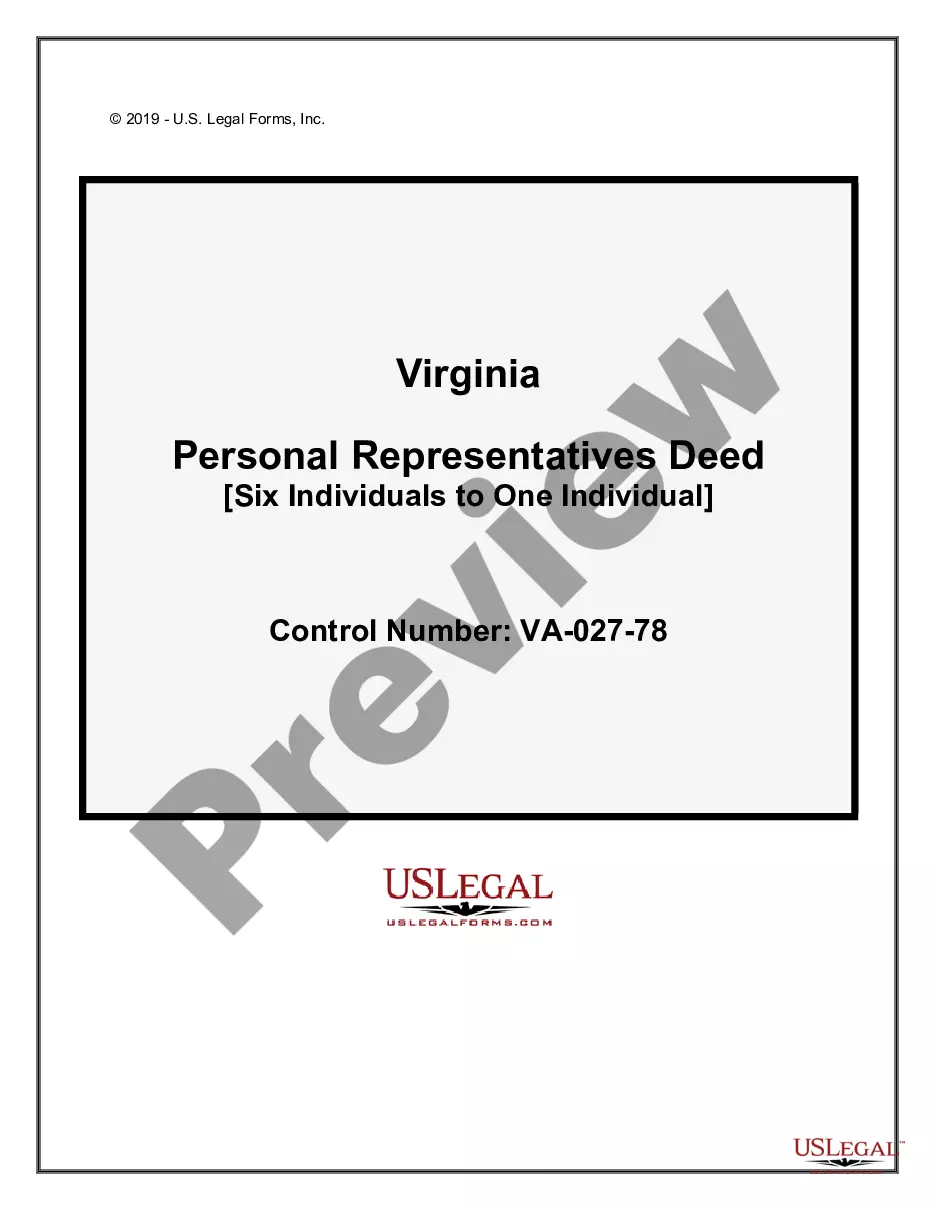
Virginia Personal Representatives Deed - Six Individuals to One Individual
About this form
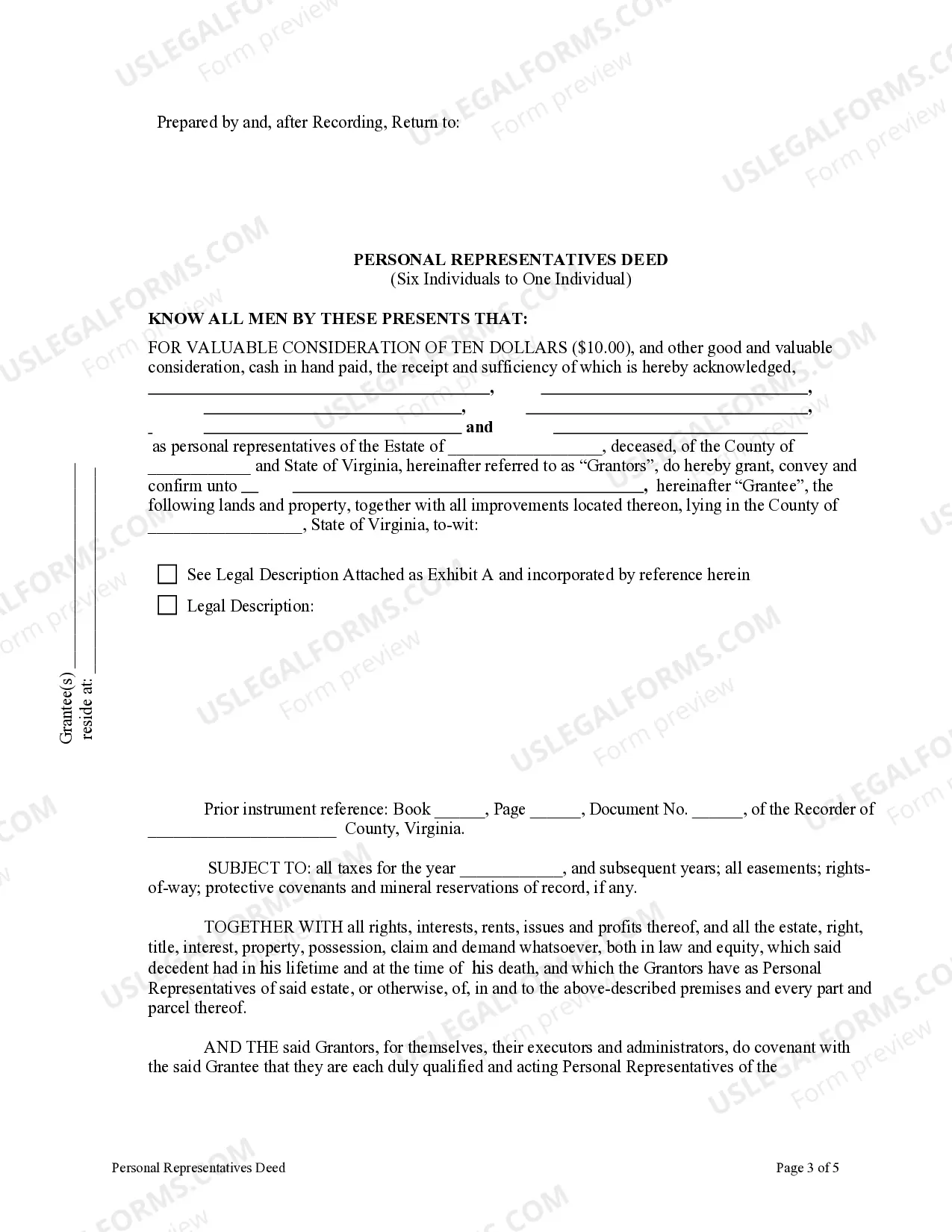
The Personal Representatives Deed (Six Individuals to One Individual) is a legal document that allows multiple individuals, appointed as personal representatives of a deceased person's estate, to convey property to a single individual. This deed ensures that the transfer is legally authorized by the court and confirms that the personal representatives have not created any encumbrances on the real estate while managing the estate. It is essential for effectively transferring ownership in compliance with state laws, distinguishing it from other forms of property transfer documents.
What’s included in this form
- Identification of Grantors: The document lists the six individuals acting as personal representatives of the estate.
- Identification of Grantee: The single individual receiving the property is clearly defined.
- Property Description: A precise description of the property being conveyed is included.
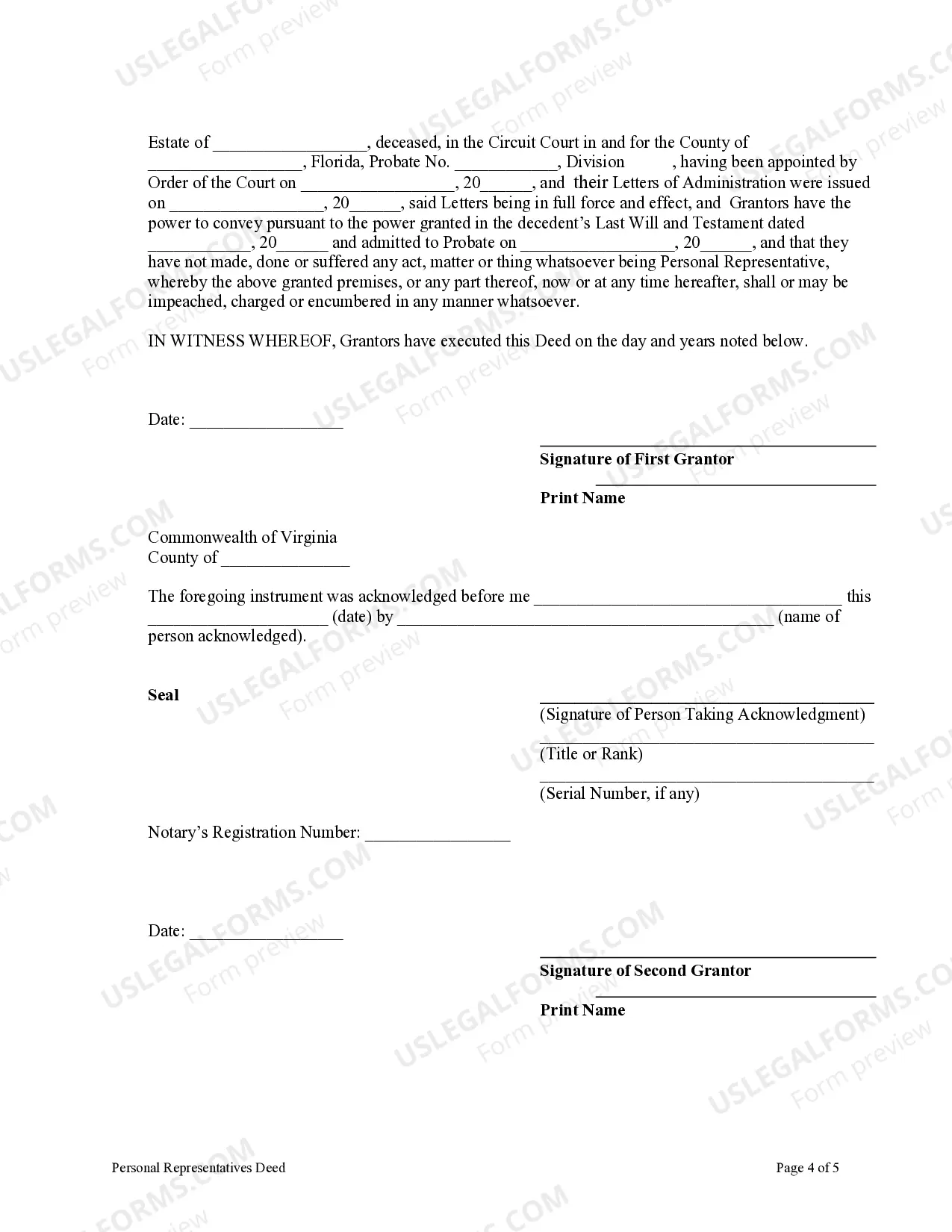
- Covenants: Guarantees that the transfer is court-authorized and free of encumbrances are specified.
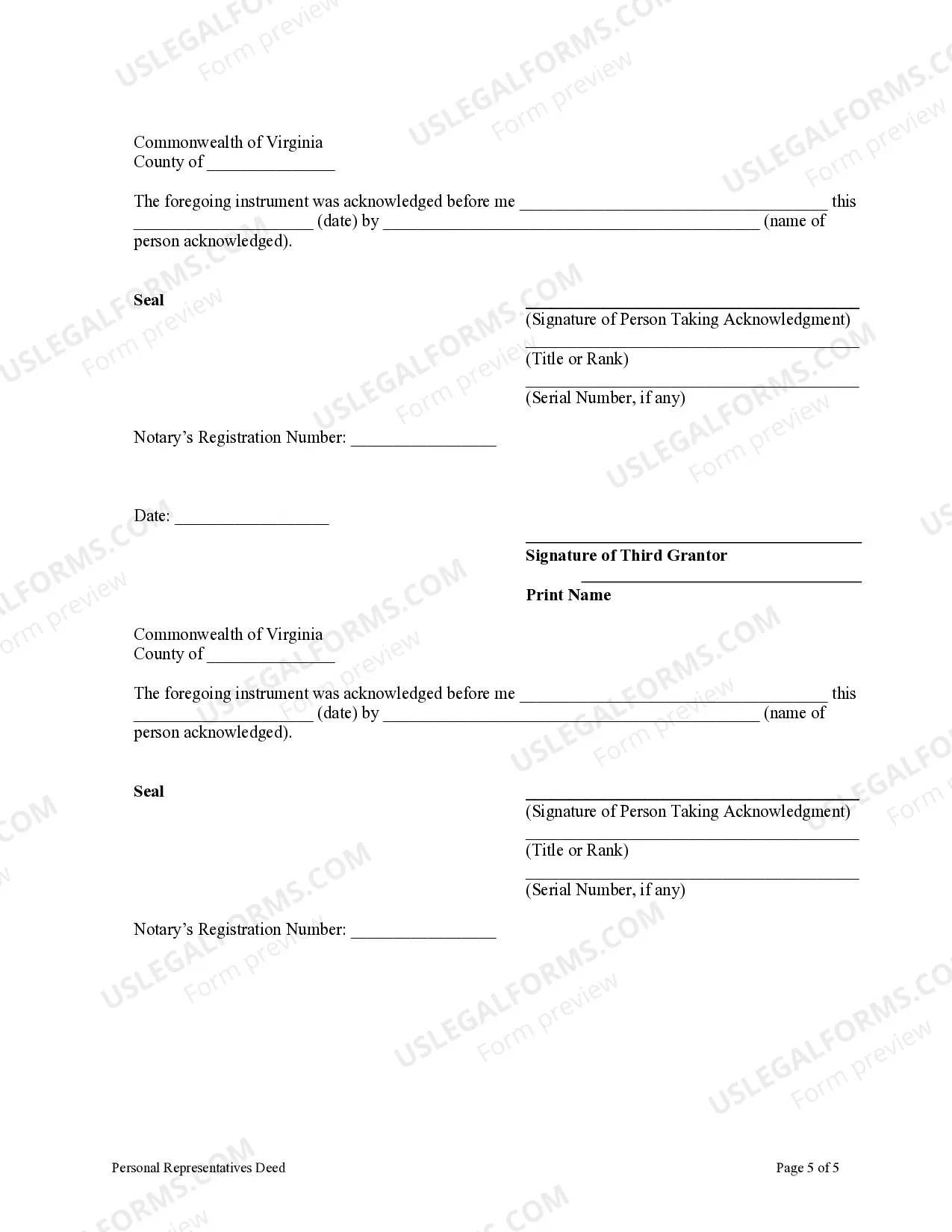
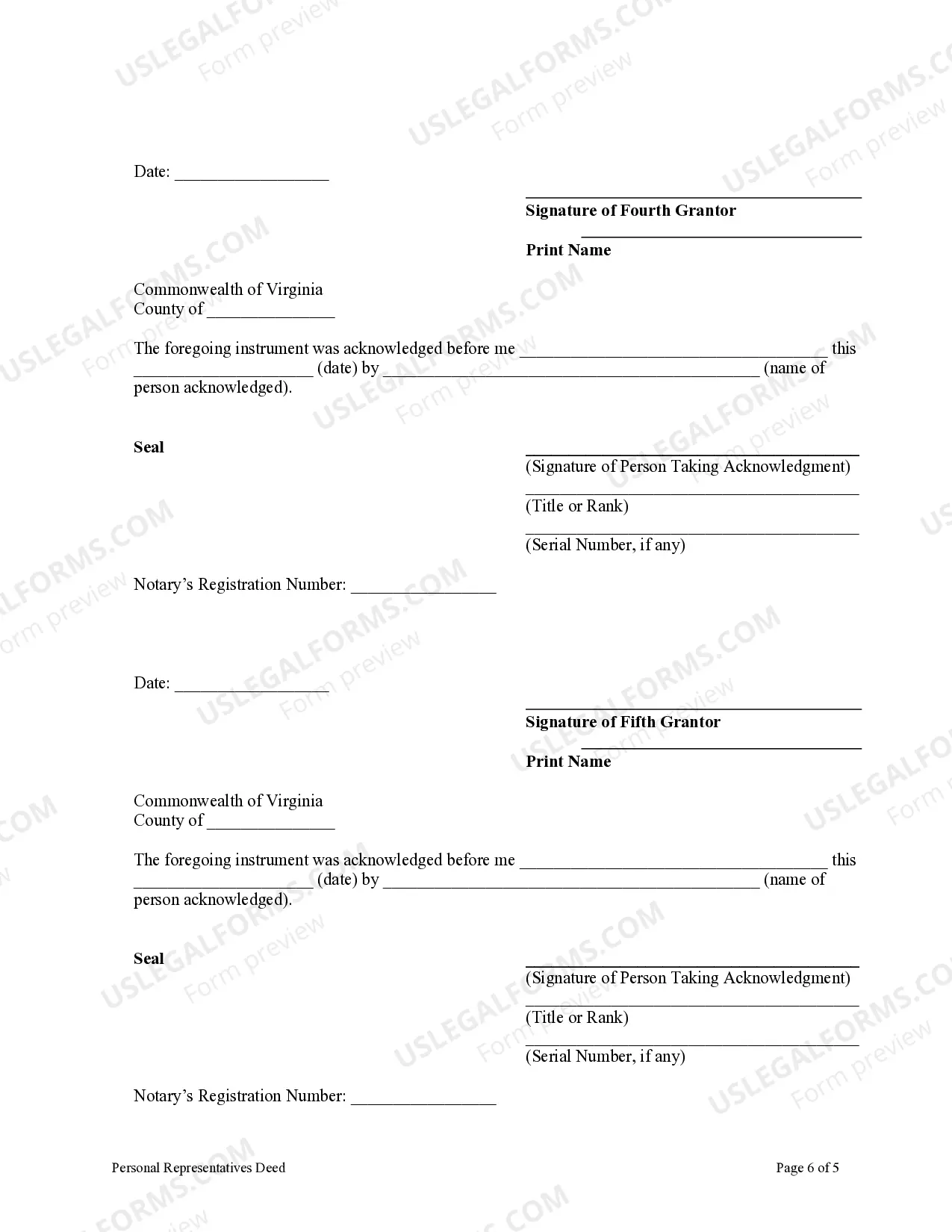
- Signatures: The deed requires signatures from all grantors and acknowledgment by a notary public.
- Date of Execution: The date when the deed is signed is also noted.



When this form is needed
You should use this Personal Representatives Deed when the estate of a deceased individual needs to transfer real property to a designated individual. This situation typically arises in probate proceedings, where personal representatives are tasked with distributing the deceased's assets according to the will or state law. If multiple individuals are serving as personal representatives and need to convey property to a single beneficiary, this deed serves as the appropriate legal instrument.
Who can use this document
This form is intended for:
- Personal representativesâthose appointed by the court to manage and distribute the estate.
- Beneficiariesâindividuals identified in the will or state law to receive property.
- Attorneys involved in estate planning and probate matters.
How to prepare this document
To complete the Personal Representatives Deed, follow these steps:
- Identify all grantors: List the six individuals acting as personal representatives.
- Specify the grantee: Clearly indicate the name of the individual receiving the property.
- Describe the property: Provide a detailed description of the property being conveyed.
- Enter execution date: Write down the date when the deed is being executed.
- Sign the deed: Ensure all grantors sign the document, and have it notarized.
- Acknowledge before a notary: Ensure a notary public acknowledges the signatures for legal validity.
Notarization guidance
Yes, this form must be notarized to be legally valid. It requires acknowledgment by a notary public to ensure that the signatures are accurate and that each grantor is acting voluntarily. US Legal Forms offers integrated online notarization services that are available 24/7 through a secure video call, ensuring that you can complete the process without the need to travel.
Get your form ready online
Our built-in tools help you complete, sign, share, and store your documents in one place.
Make edits, fill in missing information, and update formatting in US Legal Forms—just like you would in MS Word.
Download a copy, print it, send it by email, or mail it via USPS—whatever works best for your next step.
Sign and collect signatures with our SignNow integration. Send to multiple recipients, set reminders, and more. Go Premium to unlock E-Sign.
If this form requires notarization, complete it online through a secure video call—no need to meet a notary in person or wait for an appointment.
We protect your documents and personal data by following strict security and privacy standards.

Make edits, fill in missing information, and update formatting in US Legal Forms—just like you would in MS Word.

Download a copy, print it, send it by email, or mail it via USPS—whatever works best for your next step.

Sign and collect signatures with our SignNow integration. Send to multiple recipients, set reminders, and more. Go Premium to unlock E-Sign.

If this form requires notarization, complete it online through a secure video call—no need to meet a notary in person or wait for an appointment.

We protect your documents and personal data by following strict security and privacy standards.
Common mistakes
- Failing to accurately describe the property, leading to potential legal disputes.
- Not having all grantors sign the deed, which can invalidate the transfer.
- Neglecting to have the deed notarized where required, risking its legal acceptance.
- Inaccurate identification of grantors or the grantee, leading to confusion in ownership.
- Completing the form without checking state-specific requirements, which could result in noncompliance.
Benefits of completing this form online
- Convenience of filling out the form digitally, reducing the chance of errors.
- The ability to easily edit and save the form as needed before finalizing.
- Access to legal accuracy through forms drafted by licensed attorneys.
- Immediate downloadable access, allowing for quick use and implementation.
Key takeaways
- The Personal Representatives Deed enables the transfer of property from multiple personal representatives to one individual.
- It is crucial for managing real estate as part of an estate's probate process.
- Accurate completion and notarization of the form are essential for its legal validity.
- Utilizing downloadable forms can provide convenience and ensure compliance with legal standards.
Looking for another form?
Form popularity
FAQ
Beneficiaries are entitled to receive a financial accounting of the trust, including bank statements, regularly. When statements are not received as requested, a beneficiary must submit a written demand to the trustee.The court will review the trust account for any discrepancies or irregular activity.
Q: How Long Does an Executor Have to Distribute Assets From a Will? A: Dear Waiting: In most states, a will must be executed within three years of a person's death.
The process of removing a personal representative begins with filing a petition or removal. An heir or interested party must file the petition with the probate court and serve a copy of the petition on the personal representative. The probate court schedules a hearing date and time to hear the matter.
Before distributing assets to beneficiaries, the executor must pay valid debts and expenses, subject to any exclusions provided under state probate laws.The executor must maintain receipts and related documents and provide a detailed accounting to estate beneficiaries.
A beneficiary, or heir, is someone to which the deceased person has left assets, and a personal representative, sometimes called an executor or administrator, is the person in charge of handling the distribution of assets.
Can I appoint a beneficiary as my executor? Yes, your executor may also be a beneficiary to your estate. In fact, if you are leaving everything to your spouse or adult children who are capable of managing their finances, it is a natural choice to appoint your spouse or one or more of your children as your executor(s).
The Virginia small estate affidavit may be used when a decedent has $50,000 or less in probatable assets. It provides a quicker way to settle an estate by a successor when the estate is small. This form may not be used until at least 60 days have passed since the date of death of the decedent.
All taxes and liabilities paid from the estate, including medical expenses, attorney fees, burial or cremation expenses, estate sale costs, appraisal expenses, and more. The executor should keep all receipts for any services or transactions needed to liquidate the assets of the deceased.
Beneficiaries often must sign off on the inheritance they receive to acknowledge receipt of the distribution. For example, if you inherit a portion of real estate from the decedent, you must sign a deed accepting that real estate.