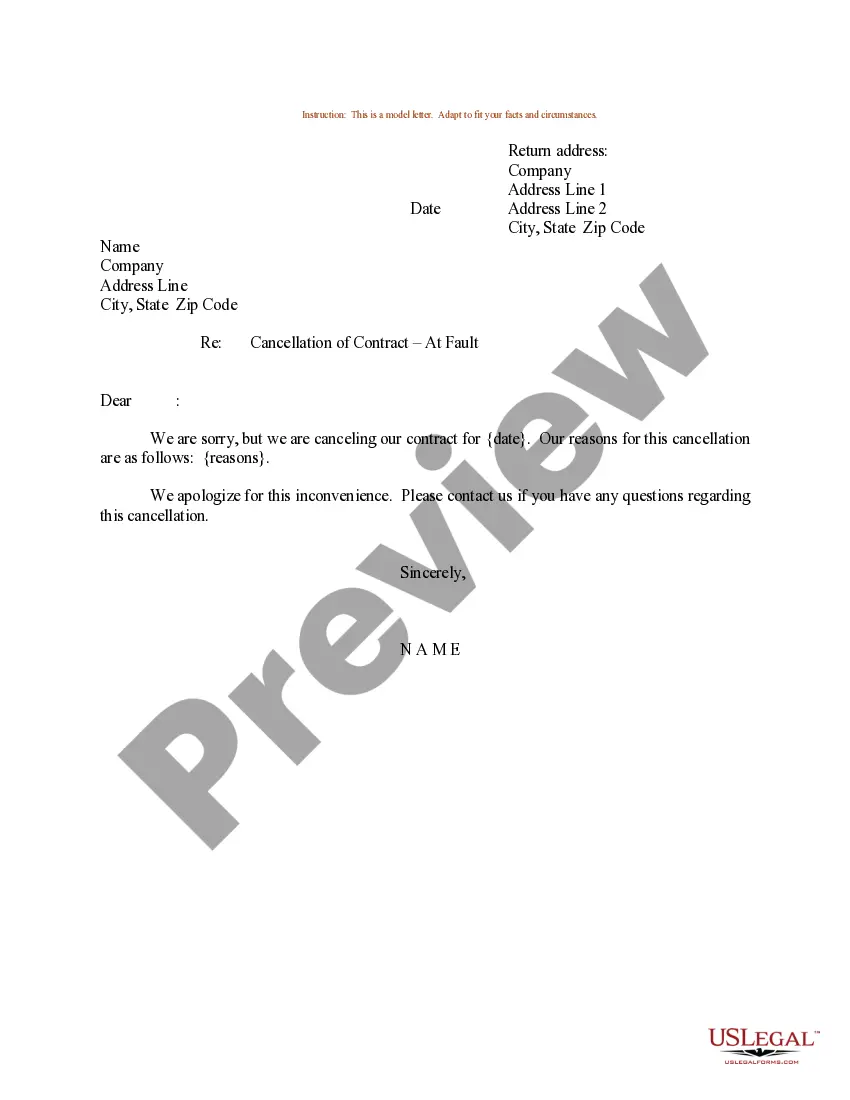
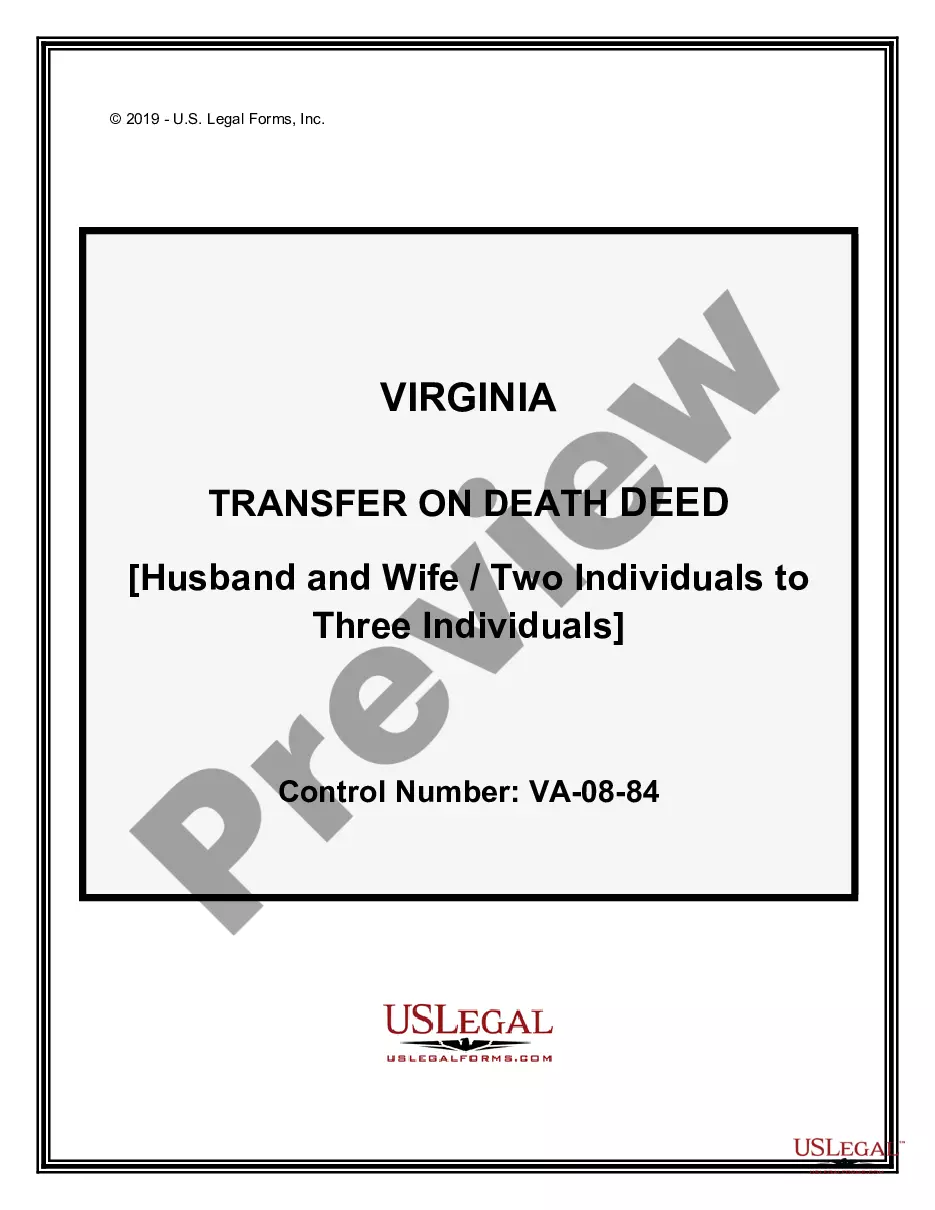
Virginia Revocable Transfer on Death Deed from Husband and Wife, or Two Individuals, to Three Individuals
Understanding this form
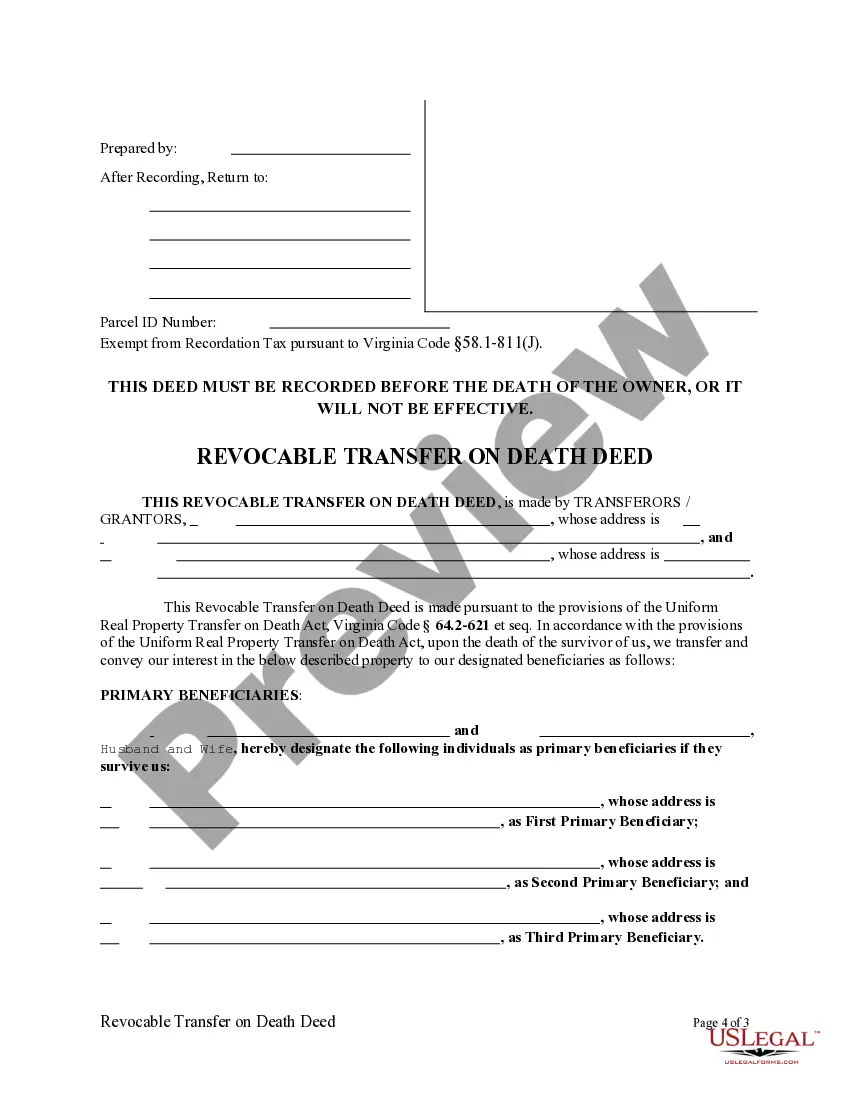
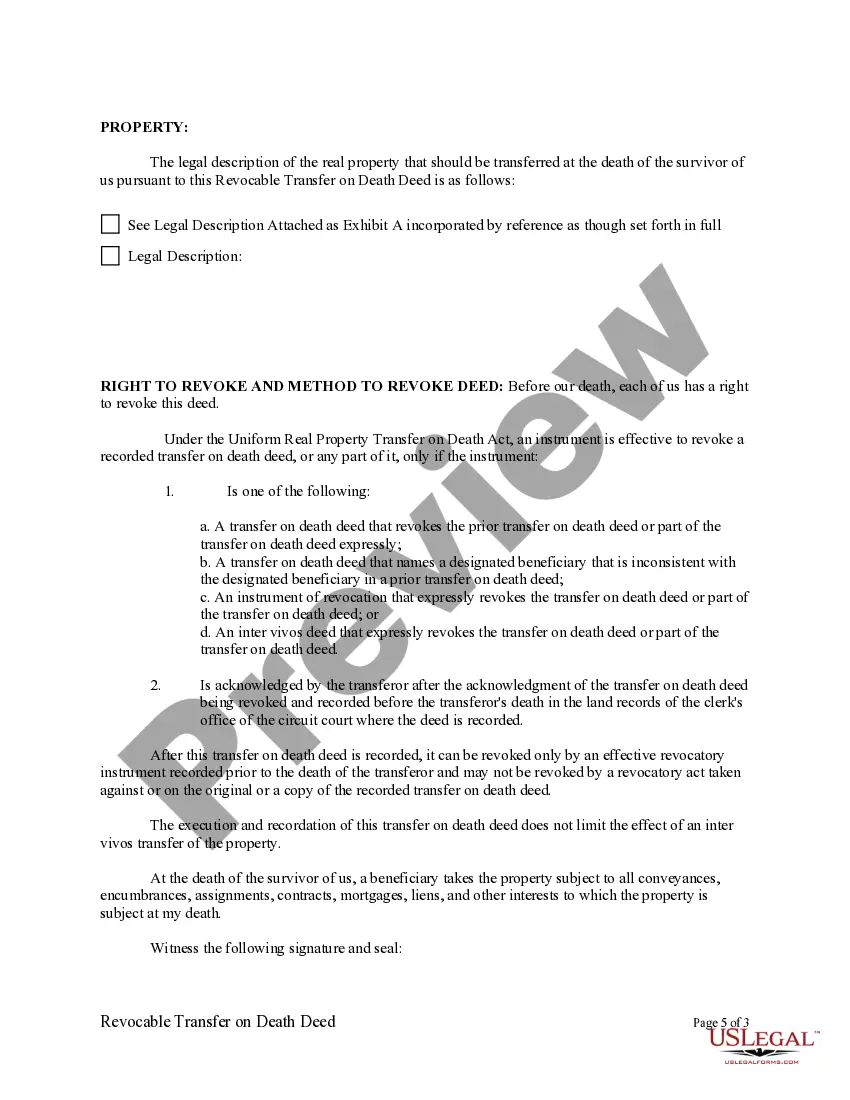
This Revocable Transfer on Death Deed allows two individuals, such as a husband and wife, to transfer property to three designated beneficiaries upon their deaths. Unlike other estate planning documents, this deed allows the transferors to retain control over the property during their lifetimes, making it revocable at any time before death. This deed complies with state statutory laws and ensures a smooth transfer of assets, avoiding the probate process for the beneficiaries.
Form components explained
- Grantor information: Details of the individuals transferring the property.
- Grantee information: Names and complete addresses of the three beneficiaries.
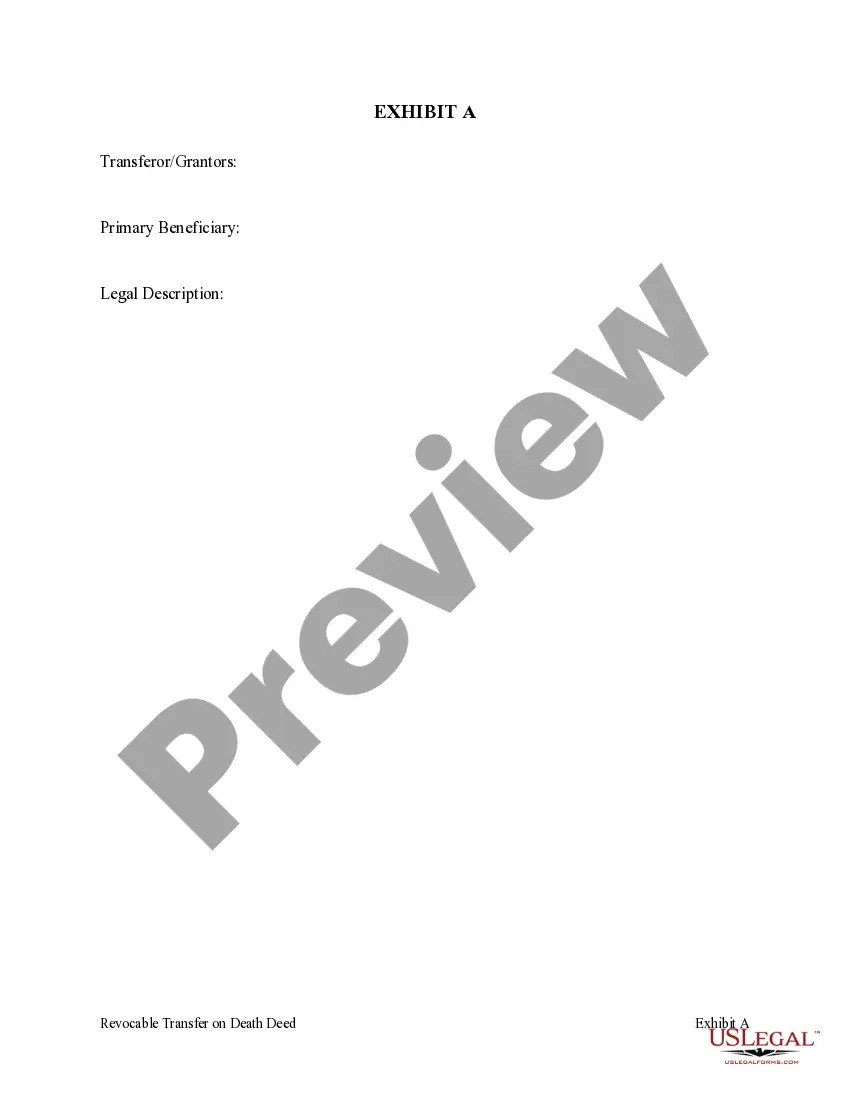
- Property description: Specific identification of the property being transferred.
- Tax map reference: Required for property record keeping.
- Consideration amount: If applicable, the value exchanged for the property transfer.


When to use this form
This form is ideal when two individuals want to ensure that their property is automatically transferred to three chosen beneficiaries after their deaths. It is useful for couples looking to provide for multiple heirs without the need for probate, ensuring that their wishes are carried out efficiently and effectively.
Who should use this form
This form is intended for:
- Married couples wanting to designate beneficiaries for their property.
- Two individuals who share ownership of a property and wish to transfer it to others upon their passing.
- Those seeking to avoid probate for their heirs.
How to complete this form
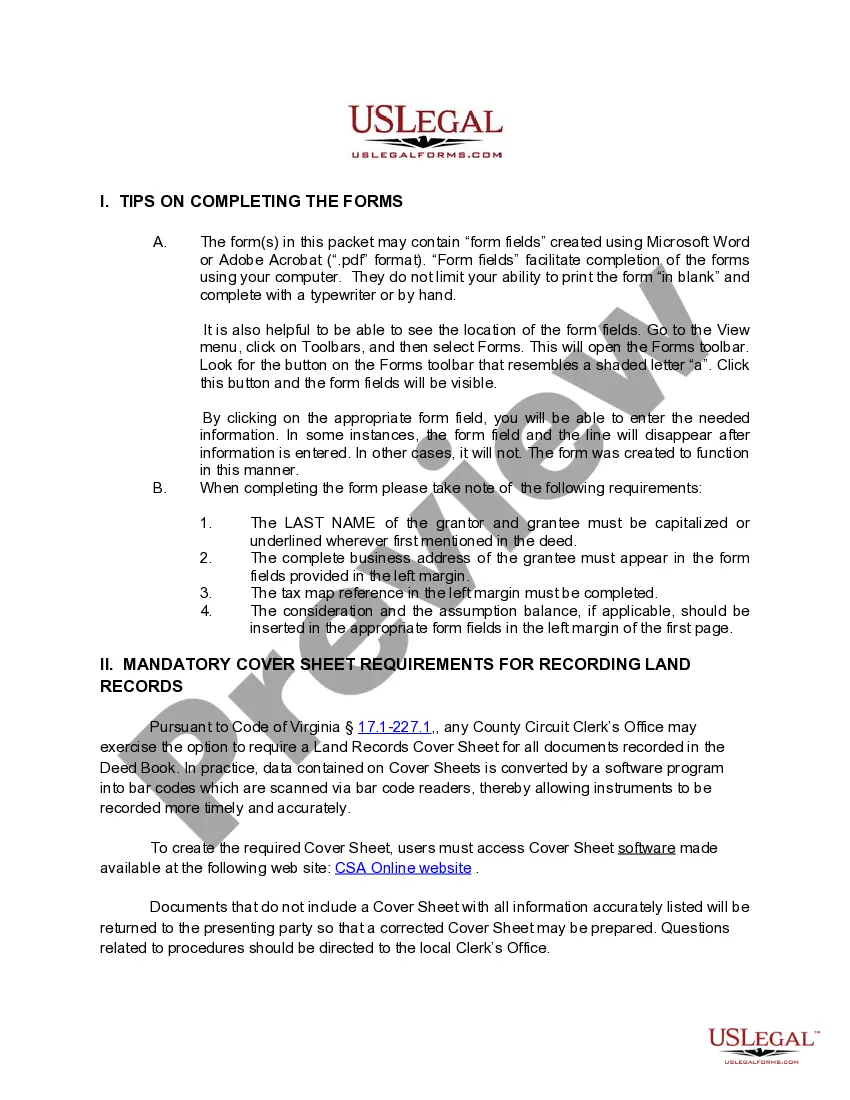
- Identify the grantors by entering their legal names in capital letters or underlined.
- Specify the three beneficiaries in the designated fields, including their complete business addresses.
- Provide a detailed description of the property being transferred.
- Complete the tax map reference as required.
- Enter any consideration amount in the appropriate field on the first page of the deed.
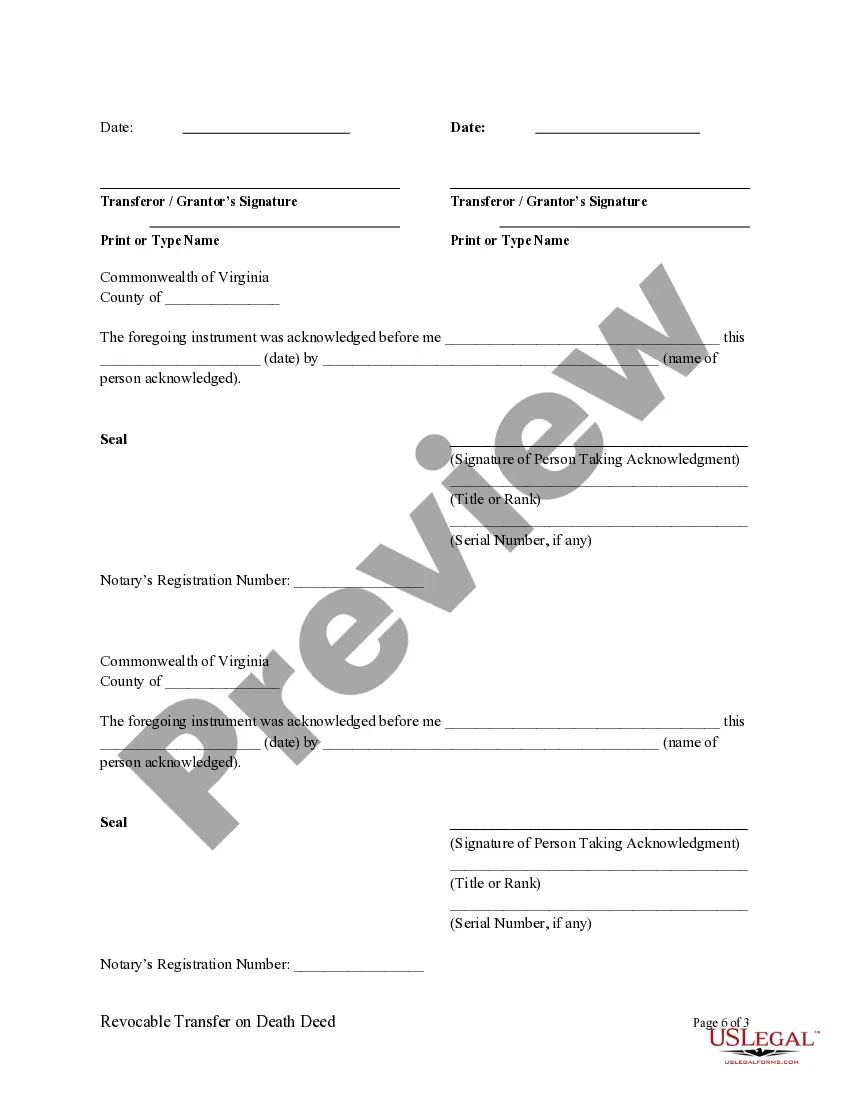
Notarization requirements for this form
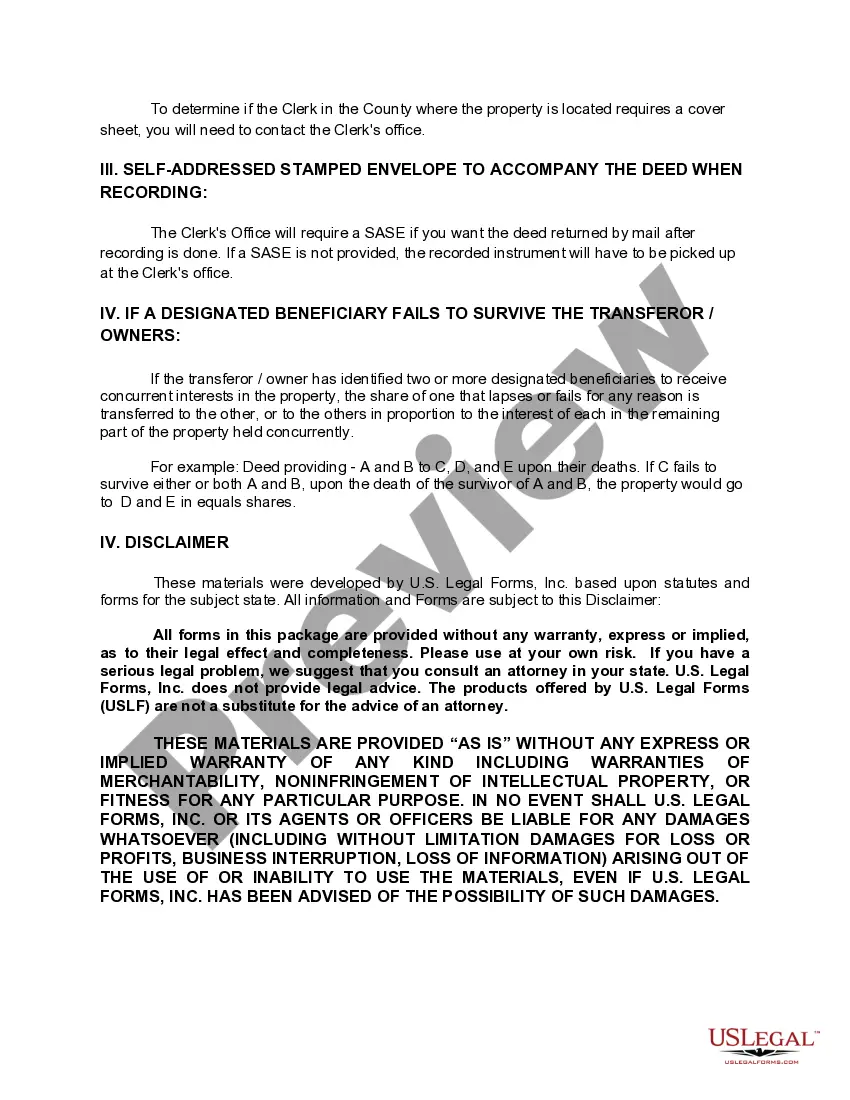
This form does not typically require notarization unless specified by local law. It is advisable to check with local authorities or the Clerk's office for any specific requirements that may apply to your situation.
Get your form ready online
Our built-in tools help you complete, sign, share, and store your documents in one place.
Make edits, fill in missing information, and update formatting in US Legal Forms—just like you would in MS Word.
Download a copy, print it, send it by email, or mail it via USPS—whatever works best for your next step.
Sign and collect signatures with our SignNow integration. Send to multiple recipients, set reminders, and more. Go Premium to unlock E-Sign.
If this form requires notarization, complete it online through a secure video call—no need to meet a notary in person or wait for an appointment.
We protect your documents and personal data by following strict security and privacy standards.

Make edits, fill in missing information, and update formatting in US Legal Forms—just like you would in MS Word.

Download a copy, print it, send it by email, or mail it via USPS—whatever works best for your next step.

Sign and collect signatures with our SignNow integration. Send to multiple recipients, set reminders, and more. Go Premium to unlock E-Sign.

If this form requires notarization, complete it online through a secure video call—no need to meet a notary in person or wait for an appointment.

We protect your documents and personal data by following strict security and privacy standards.
Common mistakes
- Failing to capitalize or underline the names of grantors and grantees as required.
- Neglecting to include the complete addresses of the beneficiaries.
- Omitting the tax map reference, which may delay recording.
- Not including a cover sheet if required by the local Clerk's office.
Why use this form online
- Convenience of filling out the form from home at any time.
- Editable fields to ensure all information is accurately captured.
- Access to templates drafted by licensed attorneys, ensuring legal compliance.
Looking for another form?


Form popularity
FAQ
The California TOD deed form allows property to be automatically transferred to a new owner when the current owner dies, without the need to go through probate. It also gives the current owner retained control over the property, including the right to change his or her mind about the transfer.
If you'd like to avoid having your property going through the probate process, it's a good idea to look into a transfer on death deed. A transfer on death deed allows you to select a beneficiary who will receive your property, but only when you've passed away.
States that allow TOD deeds are Alaska, Arizona, Arkansas, California, Colorado, District of Columbia, Hawaii, Illinois, Indiana, Kansas, Maine, Minnesota, Mississippi, Missouri, Montana, Nebraska, Nevada, New Mexico, North Dakota, Ohio, Oklahoma, Oregon, South Dakota, Texas, Utah, Virginia, Washington, West Virginia,
Your deed won't be effective unless you recorded (filed) it in the local public records before your death. To get that done, take the signed deed to the land records office for the county in which the real estate is located. This office is commonly called the county recorder, land registry, or registrar of deeds.