Texas Right of Way Easement for Construction Improvements to Electrical Distribution Lines
Understanding this form
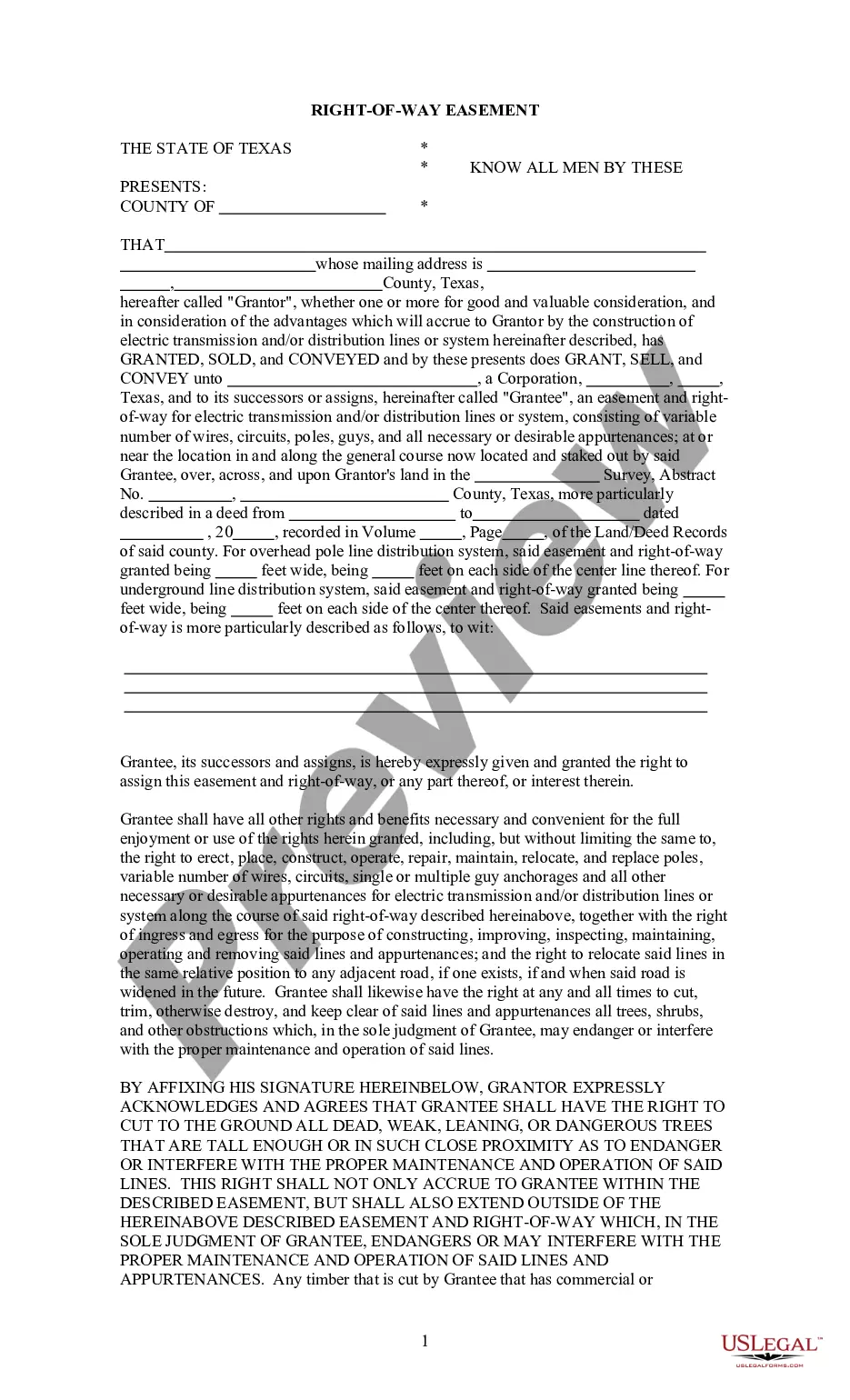
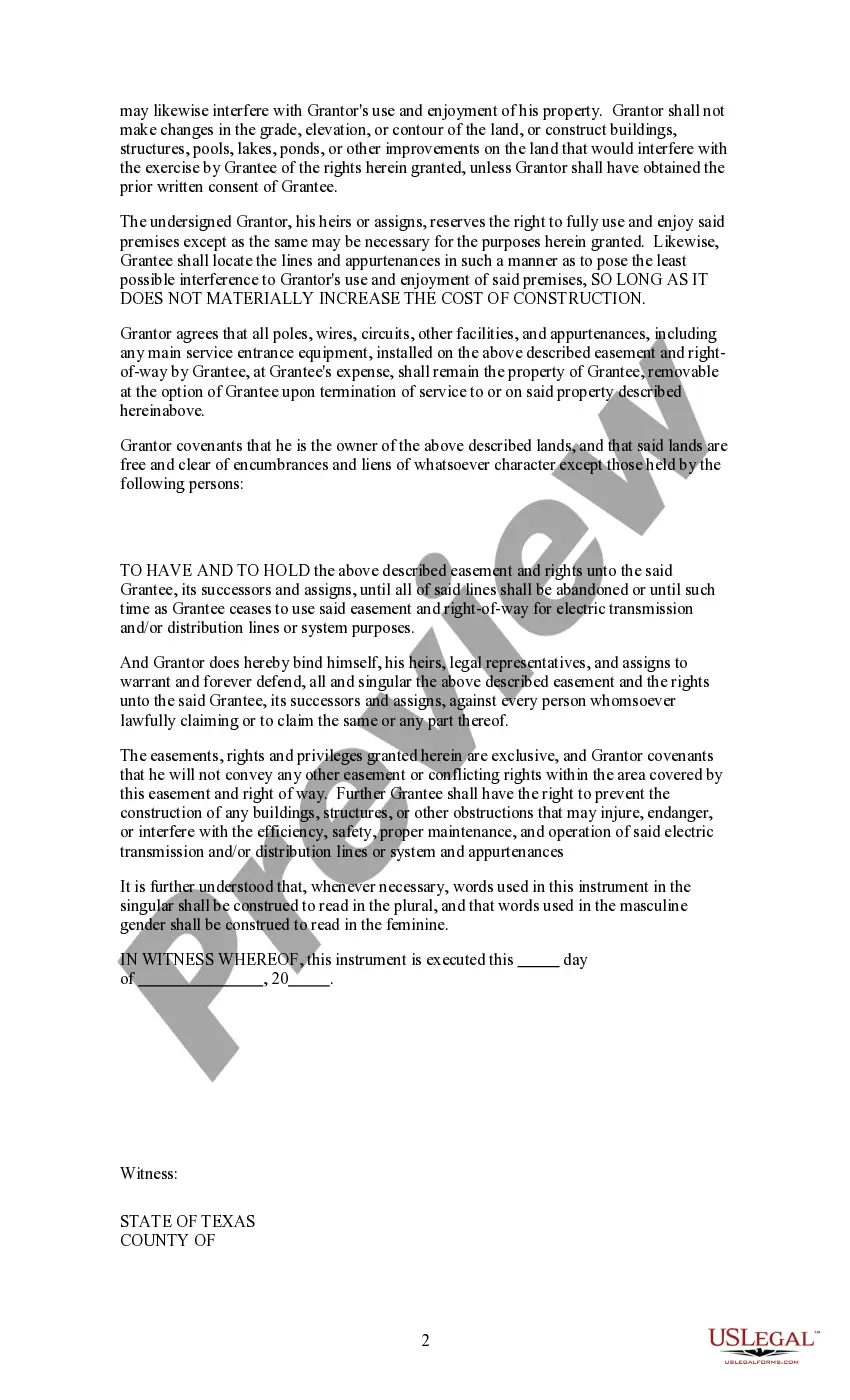
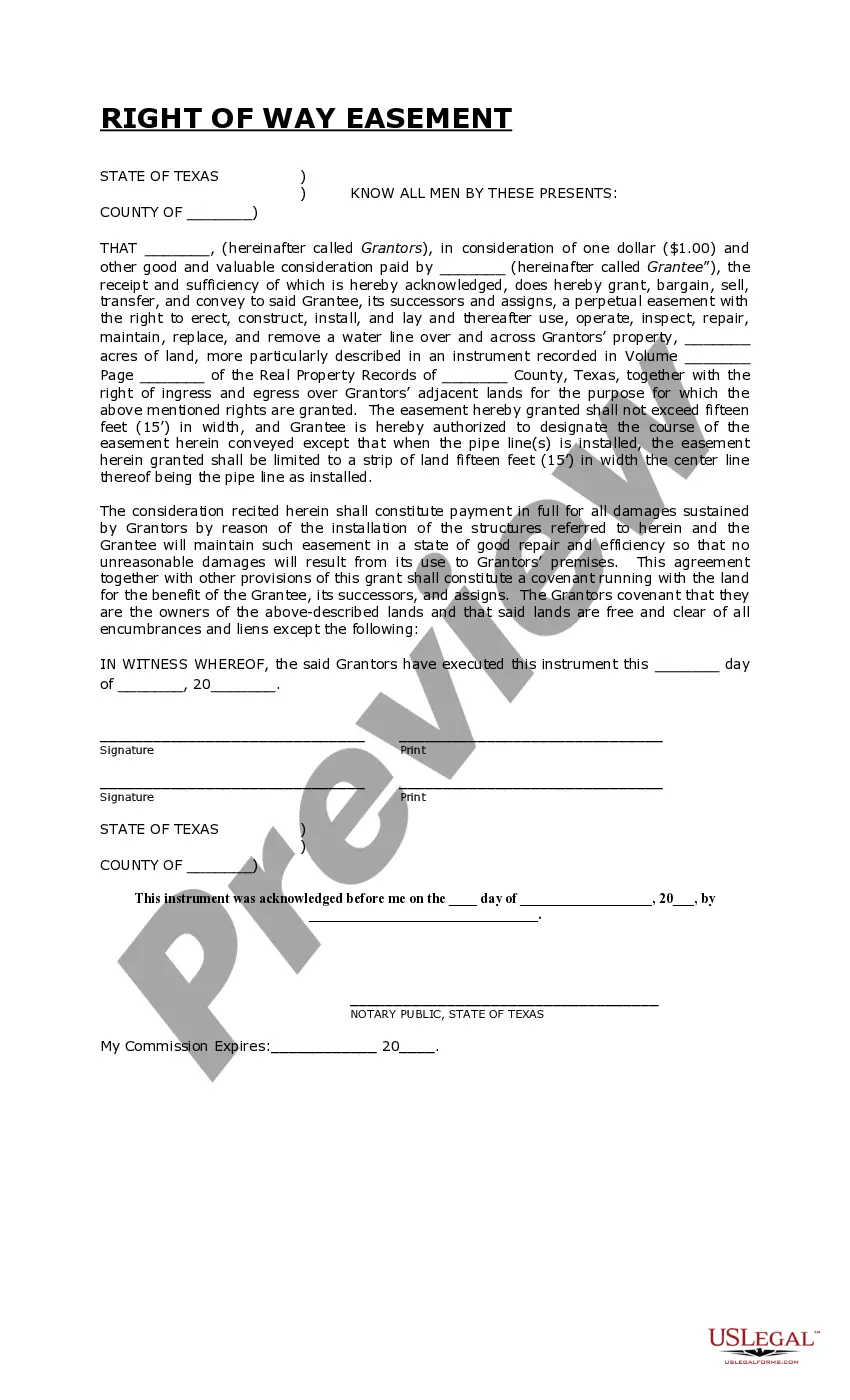
This form, known as the Right of Way Easement for Construction Improvements to Electrical Distribution Lines, grants a utility company the authority to construct, maintain, and operate electrical lines on a specified property. Unlike other easements, this form specifically addresses the needs of electrical utilities, allowing them to manage vegetation and obstructions to ensure safe and efficient service delivery.
Key components of this form
- Grant of rights to erect and maintain electrical distribution lines.
- Provisions for cutting and trimming trees that may interfere with the lines.
- Rights to relocate lines when necessary.
- Restrictions on the property owner to ensure no conflicting structures are built.
- Covenants from the Grantor affirming ownership and lack of encumbrances on the property.

When this form is needed
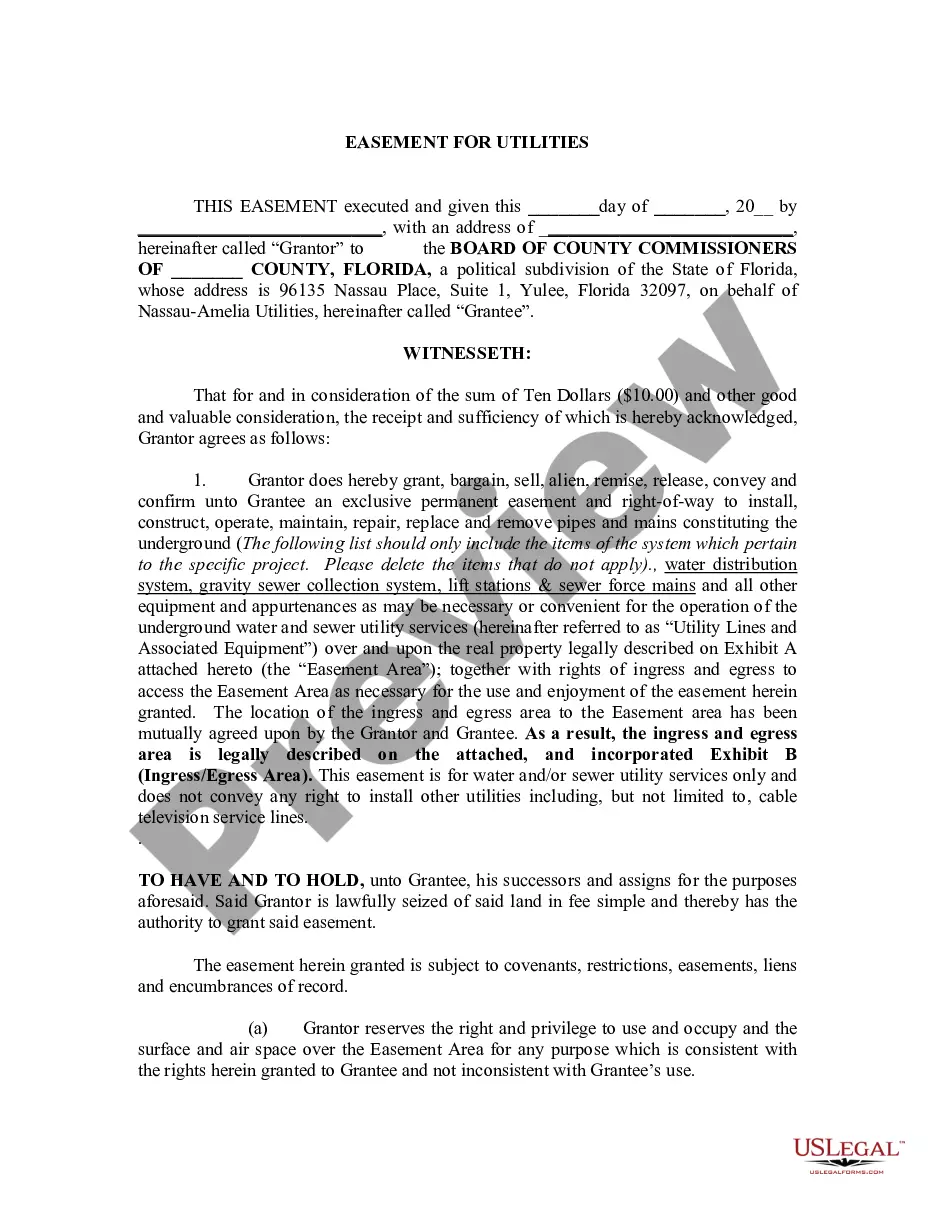
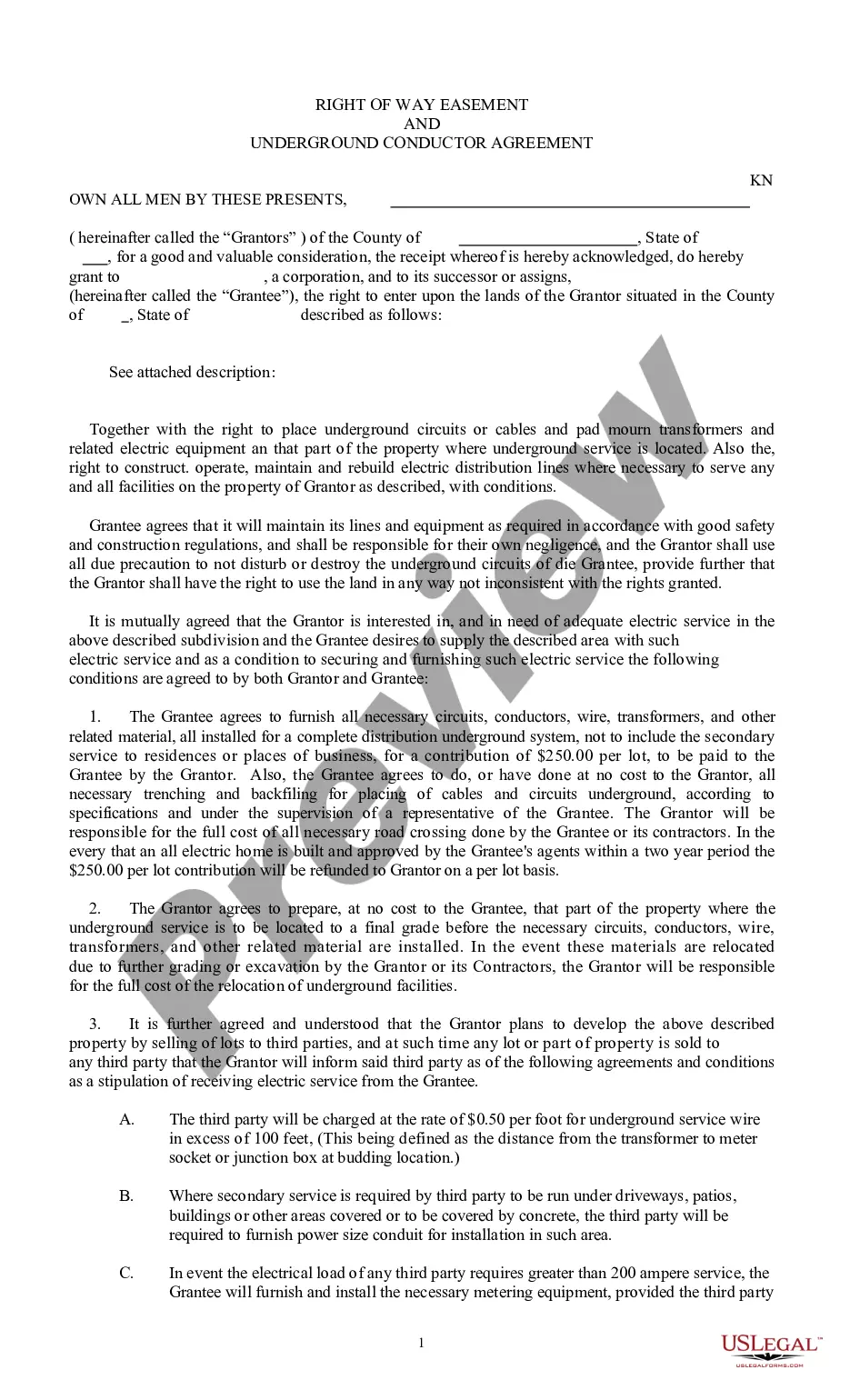
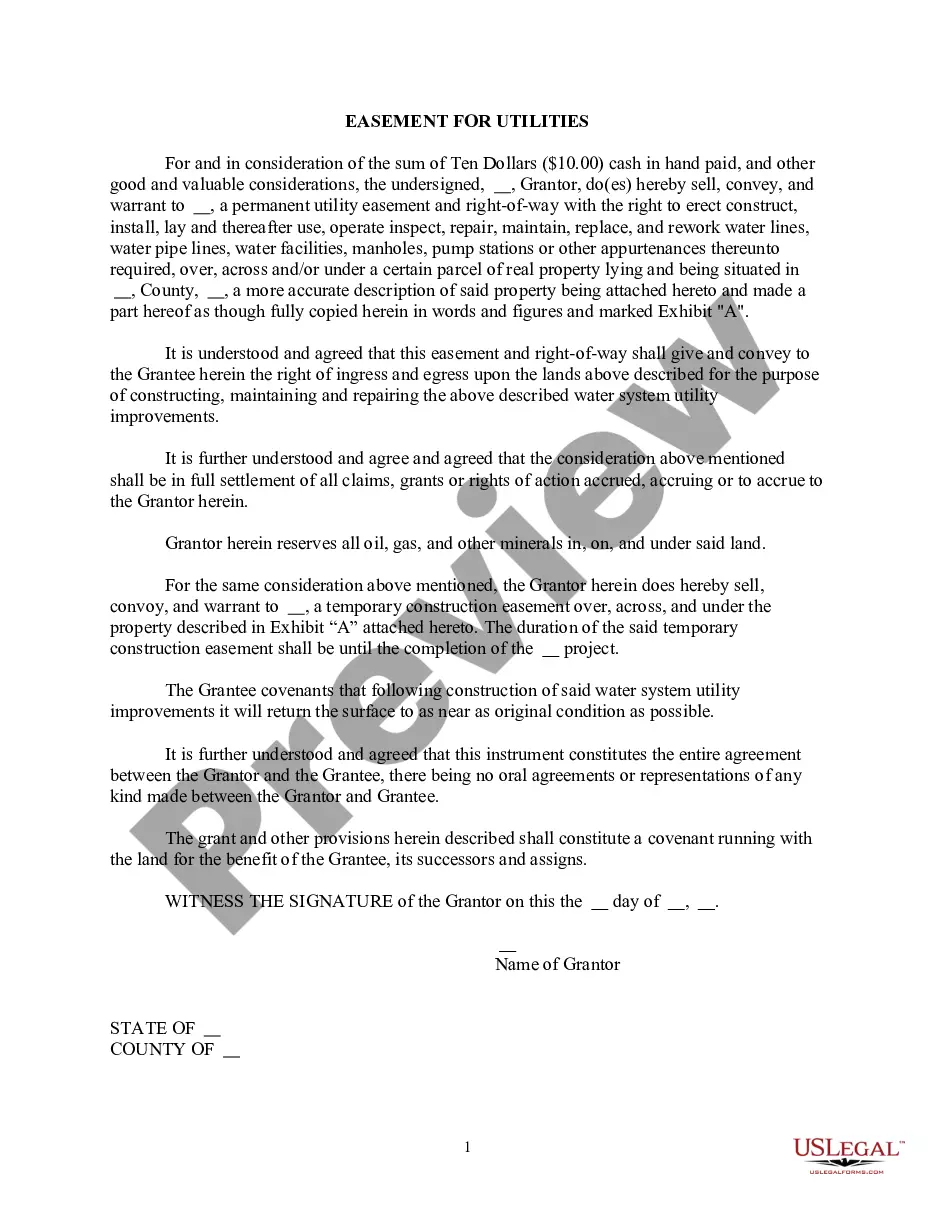
This easement form is typically needed when a utility company requires permission to install or maintain electrical distribution lines that cross private property. It is essential in situations where existing lines need to be replaced or when new lines must be constructed to extend service to new areas.
Who this form is for
- Landowners granting easements for utility access.
- Utility companies seeking legal rights for installation and maintenance of electrical lines.
- Real estate developers looking to arrange utility access for new developments.
Instructions for completing this form
- Identify the parties involved, including the Grantor and Grantee.
- Describe the property where the easement is granted.
- Specify any limitations on the easement, such as height restrictions for constructions.
- Enter the signature of the Grantor to acknowledge and accept the terms.
- Include the date of signing and any relevant witness signatures if required.
Notarization guidance
Notarization is required for this form to take effect. Our online notarization service, powered by Notarize, lets you verify and sign documents remotely through an encrypted video session, available 24/7.
Get your form ready online
Our built-in tools help you complete, sign, share, and store your documents in one place.
Make edits, fill in missing information, and update formatting in US Legal Forms—just like you would in MS Word.
Download a copy, print it, send it by email, or mail it via USPS—whatever works best for your next step.
Sign and collect signatures with our SignNow integration. Send to multiple recipients, set reminders, and more. Go Premium to unlock E-Sign.
If this form requires notarization, complete it online through a secure video call—no need to meet a notary in person or wait for an appointment.
We protect your documents and personal data by following strict security and privacy standards.

Make edits, fill in missing information, and update formatting in US Legal Forms—just like you would in MS Word.

Download a copy, print it, send it by email, or mail it via USPS—whatever works best for your next step.

Sign and collect signatures with our SignNow integration. Send to multiple recipients, set reminders, and more. Go Premium to unlock E-Sign.

If this form requires notarization, complete it online through a secure video call—no need to meet a notary in person or wait for an appointment.

We protect your documents and personal data by following strict security and privacy standards.
Common mistakes to avoid
- Failing to provide a detailed description of the property in question.
- Not specifying the exact rights being granted to the Grantee.
- Neglecting to include all necessary signatures and dates.
- Overlooking local regulations that may affect the easement terms.
Benefits of using this form online
- Convenience of downloading and completing the form at your own pace.
- Editability allows users to tailor the terms to specific situations.
- Access to templates that ensure compliance with Texas legal standards.
Looking for another form?


Form popularity
FAQ
An easement held by an electricity provider allows it to erect and maintain electric power equipment on your land. The easement gives the electric power company the right to use a property for this specific purpose only.
If an authority has an easement registered over your land, they have the right to access the easement to maintain or repair the easement land or their equipment on the land.
Utility easements are one of the most common types of easements for private property, which generally allow public utility companies access to the property for the purpose of installing, repairing and maintaining utility lines.
A transmission line usually is centered in the right-of-way. The width of a right-of-way depends on the voltage of the line and the height of the structures, but can be 75 to 150 feet or more depending on the type of facilities planned for or located on the right-of-way.
When the said equipment, devices and other property is/are installed as designated by Cooperative, the Easement herein granted shall be a thirty (30) foot wide easement located fifteen (15) feet on both sides of the center conductor of the electric distribution line as built by Cooperative with an additional fifteen (
Types of Easements An easement may be classified as either an easement appurtenant or an easement in gross. Easement Appurtenant. An easement appurtenant is an easement that benefits one parcel of land, known as the dominant tenement, to the detriment of another parcel of land, known as the servient tenement.
An easement in gross is personal to the party that receives the benefit of easement. An example of an easement in gross is an easement to a utility company to run a power line across a burdened piece of property. The utility company is the benefited party and there isn't necessarily a benefited parcel of land.
What is a right-of-way? It is a legal agreement that allows us access to the property directly beneath and to either side of an electric power line. Also called an easement, the right-of-way allows us to enter the property at any time, to perform maintenance or repairs to our equipment.
An easement is a right which the owner or occupier of certain land possesses, as such, for the beneficial enjoyment of that land, to do and continue to do something, or to prevent and continue to prevent something being done, in or upon, or in respect of certain other land not his own. Kinds/ Types of Easement -