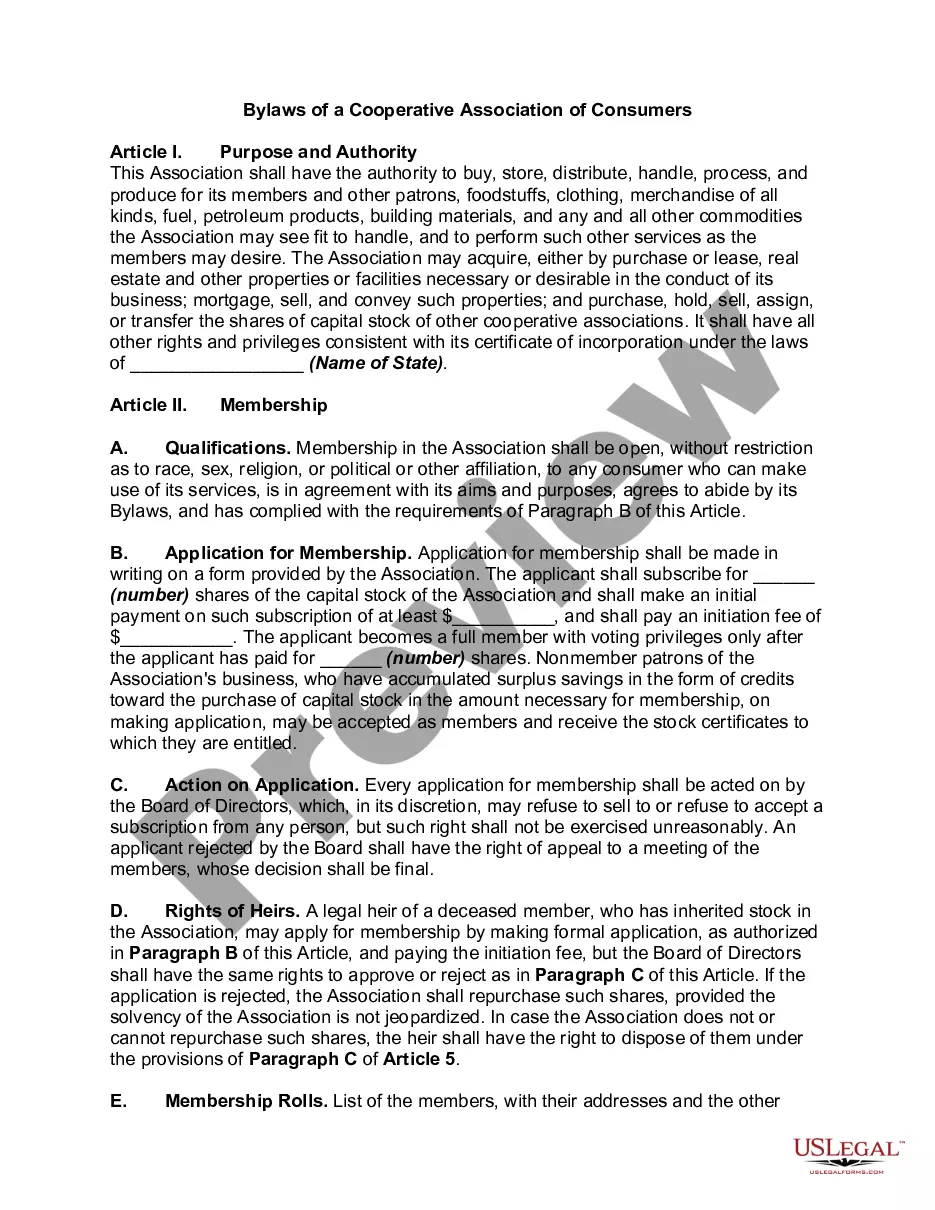
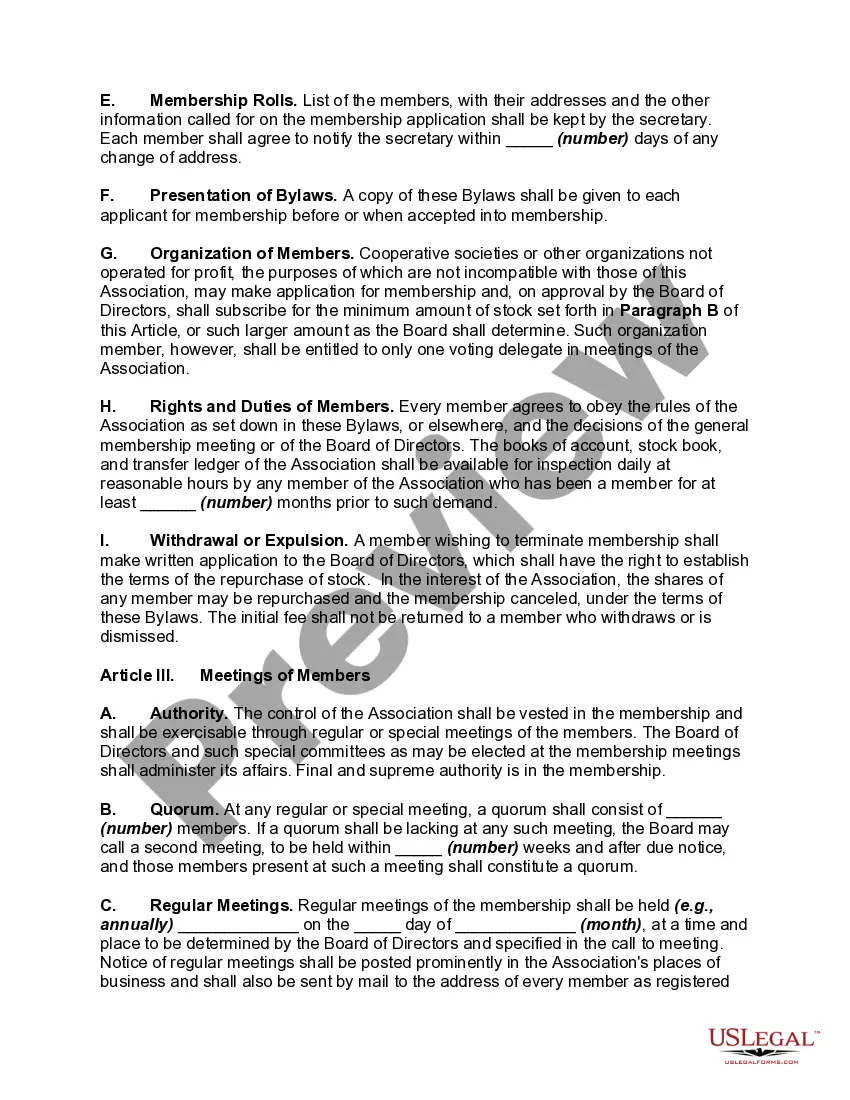
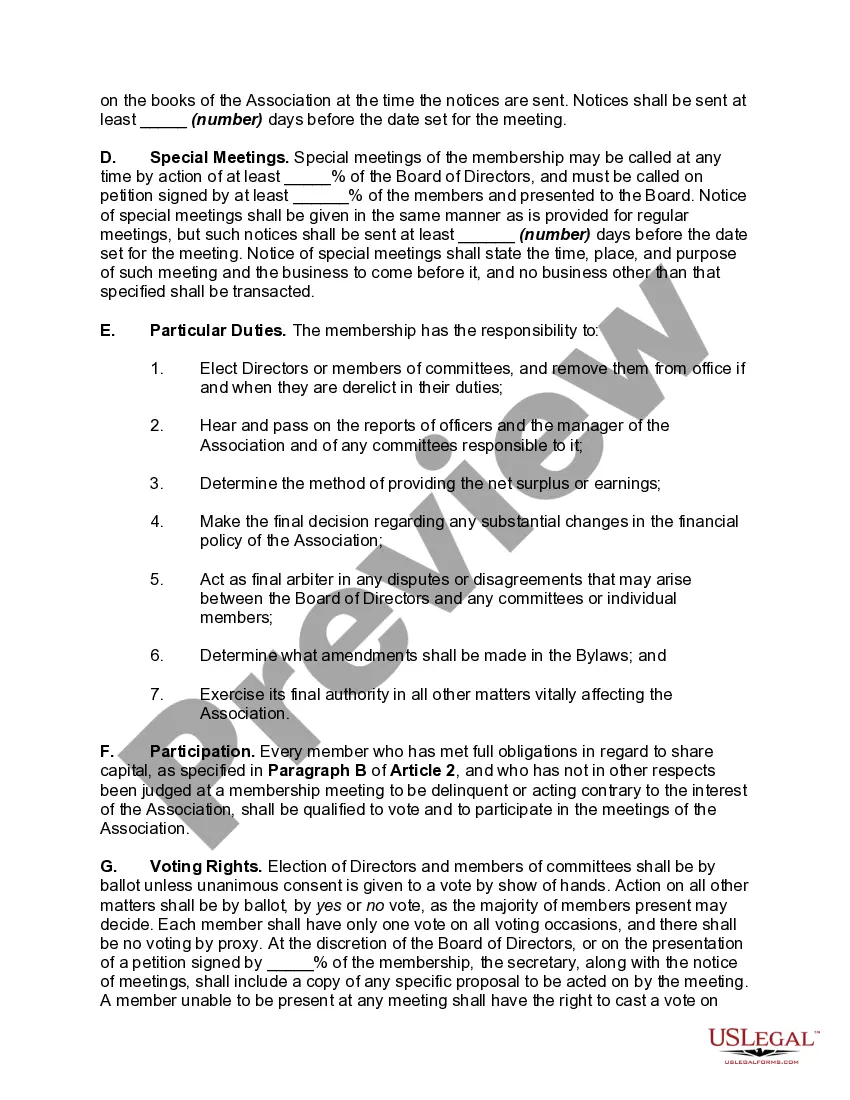
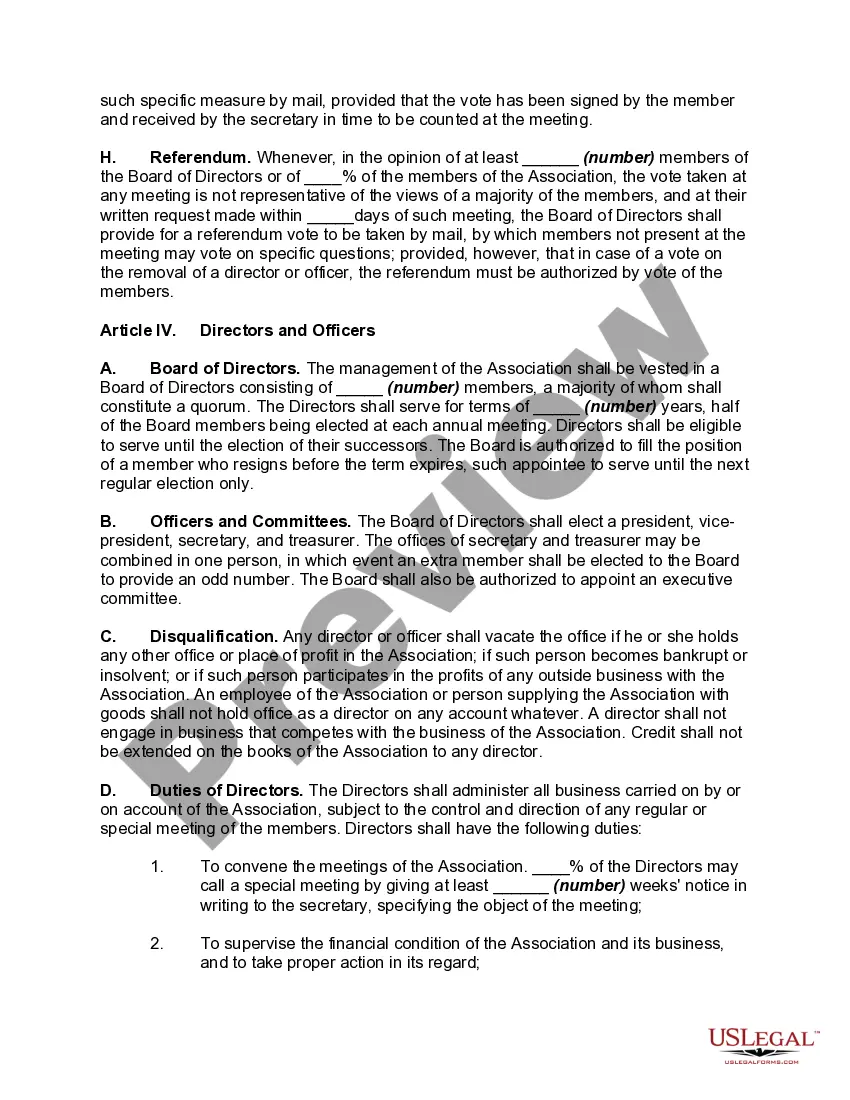
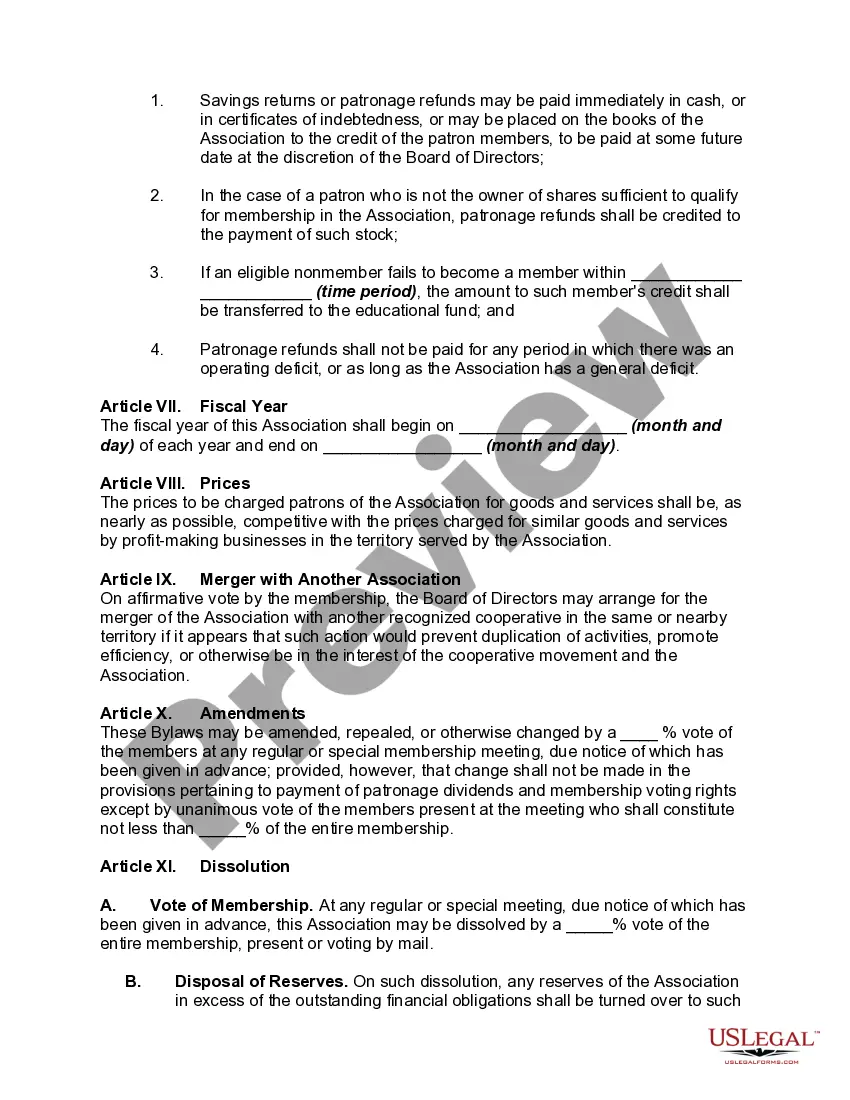
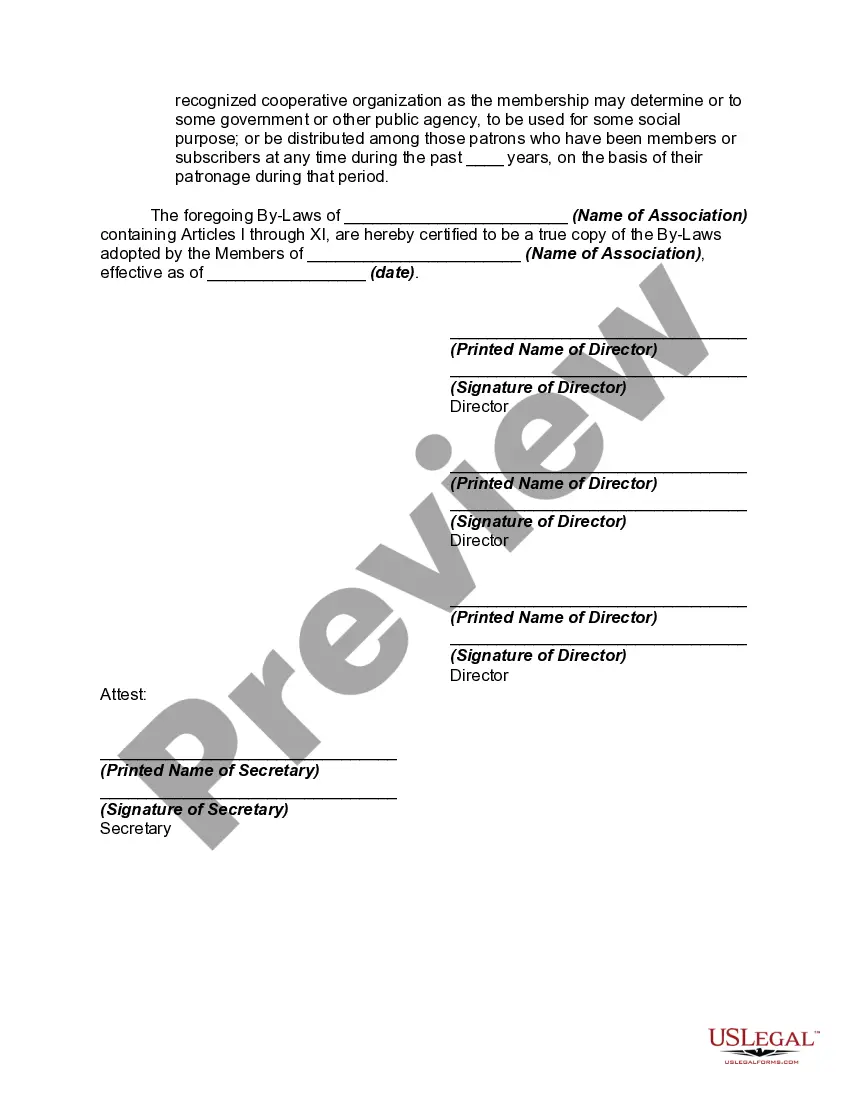
The Bylaws of a Cooperative Association of Consumers is a legal document that outlines the internal rules and regulations governing a consumer cooperative. This form is crucial for defining the rights and responsibilities of members, the structure of the organization, and the procedures for meetings and decision-making. Unlike standard corporate bylaws, these are specifically tailored for cooperatives that prioritize member benefits over profit, ensuring cooperative principles are upheld.
This form should be used when establishing a consumer cooperative that requires a formal set of bylaws. It is essential for ensuring that the cooperative operates legally and effectively, providing a foundational framework for governance, member relations, and business operations. Use this form when forming a new cooperative, making amendments to existing bylaws, or clarifying the rights and duties of members and directors.
In most cases, this form does not require notarization. However, some jurisdictions or signing circumstances might. US Legal Forms offers online notarization powered by Notarize, accessible 24/7 for a quick, remote process.
Bylaws. In the early years of the industry, developer lawyers used by laws or by-laws. Now it is a single word without spaces or hyphens: bylaws. The word is not capitalized if used generically.
The bylaws of a corporation specify the numerous methods that affect the company's operations. A corporation's bylaws can contain provisions relating to the ways it conducts its affairs, the duties of its directors and the responsibilities of its officers and employees.
Article I. Name and purpose of the organization. Article II. Membership. Article III. Officers and decision-making. Article IV. General, special, and annual meetings. Article V. Board of Directors.
Bylaws generally define things like the group's official name, purpose, requirements for membership, officers' titles and responsibilities, how offices are to be assigned, how meetings should be conducted, and how often meetings will be held.
Cooperative Law, as defined by the ICA Cooperative Law Committee (CLC), includes all legal rules that shape a cooperative enterprise and regulate its operations, such as law on cooperatives, international law, national constitutions, administrative Acts, court decisions and jurisprudence, cooperative bylaws and
In general, cooperatives can develop their bylaws as they wish, if the legislation applying to them allows it. Often bylaws are written according to guidelines provided to cooperatives. Optional sections in the bylaws are often included to meet the requirements of the cooperative's individual purpose.
When founding your cooperative, the bylaws are an important part of the process. The bylaws can be amended at the annual general meeting and define the organization and its running.
Unique Duties and Responsibilities. General Duties and Responsibilities. Duty of Attention/Diligence. Duty of Loyalty. Duty of Care. Business Judgment Rule. Indemnification. Insurance.
Bye-laws include the objects of the society and completely define and restrict the society's activities, but the rights and liabilities of members are determined by the Act and not by the bye-laws as such. The bye-laws are the basic structure of the society and are binding on the members.