Massachusetts Commercial Contract for Contractor
Overview of this form
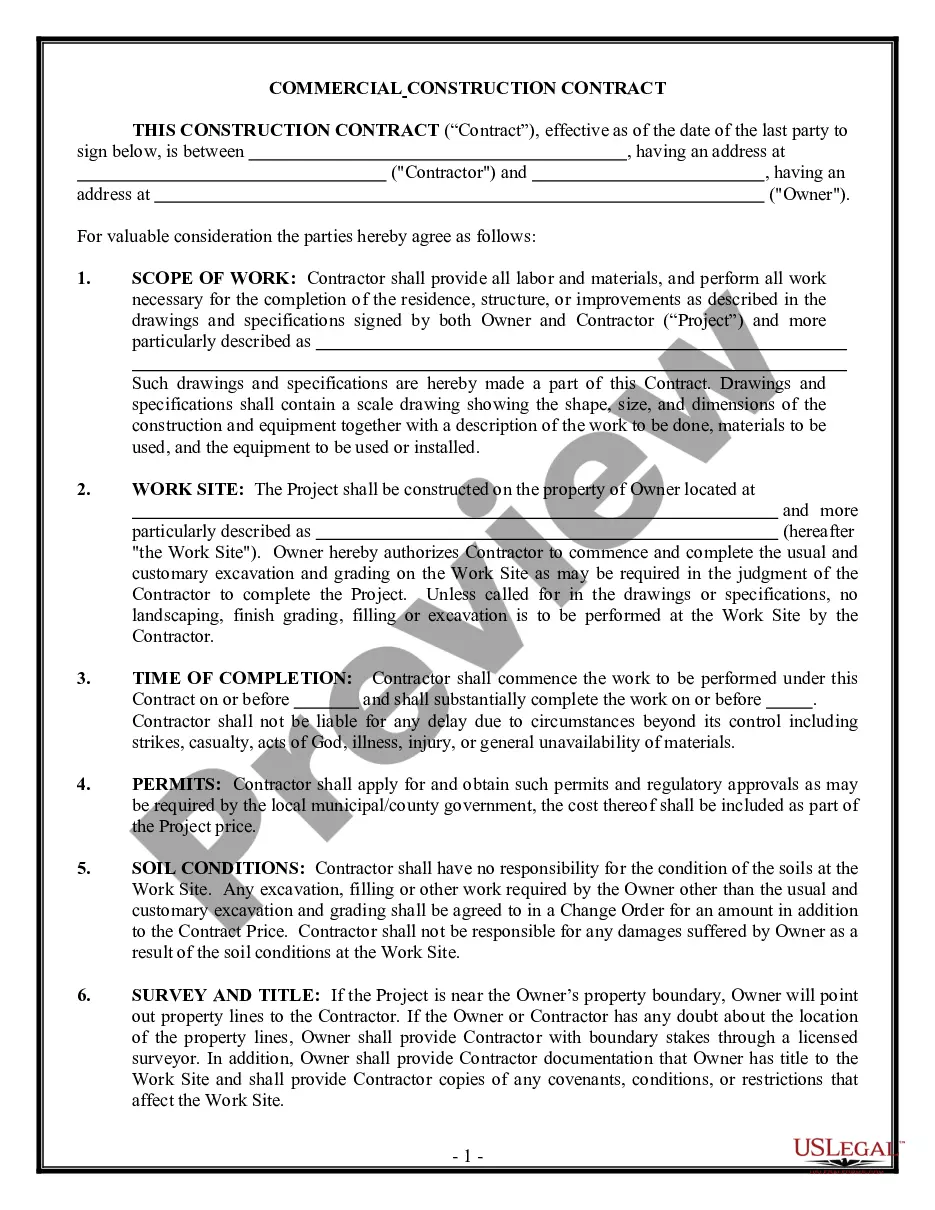
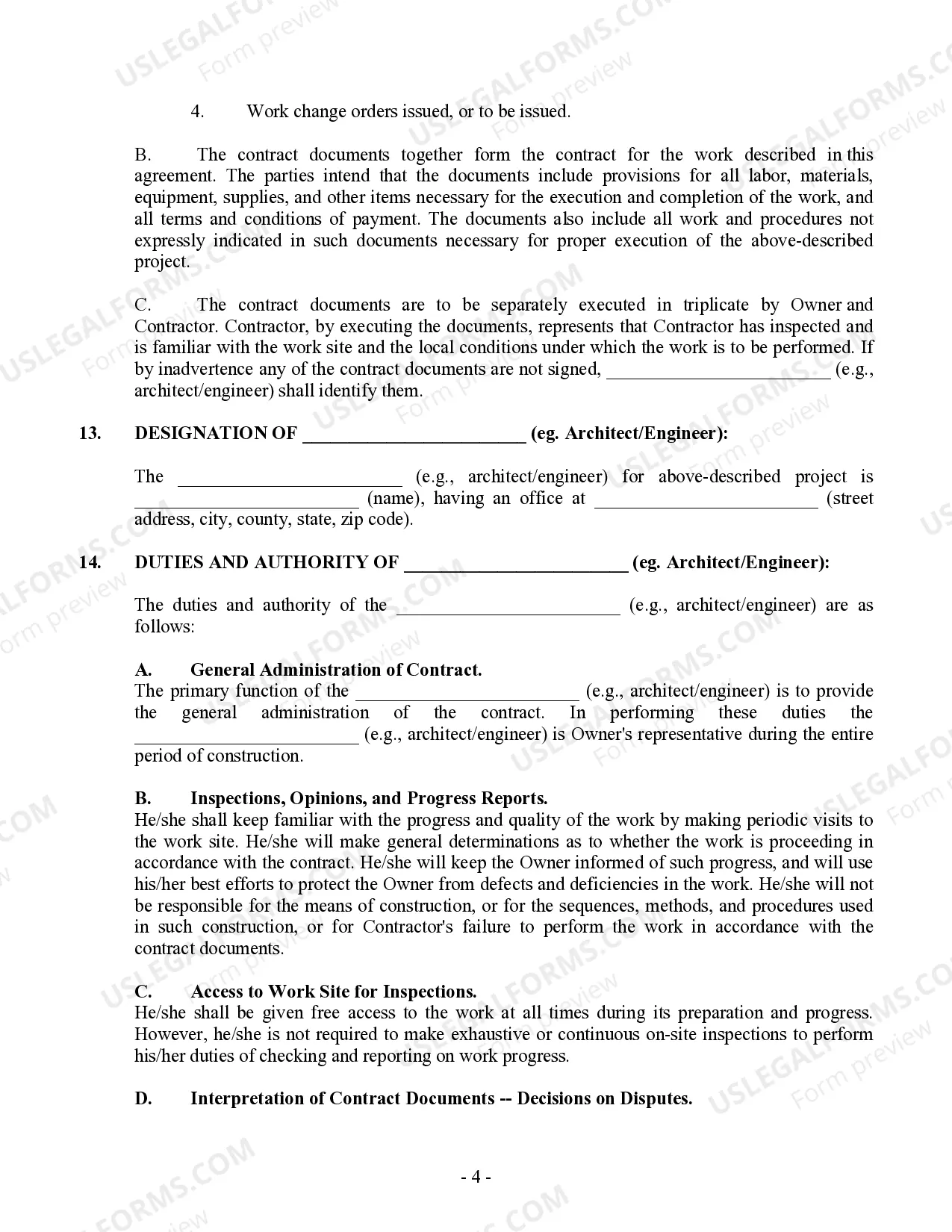
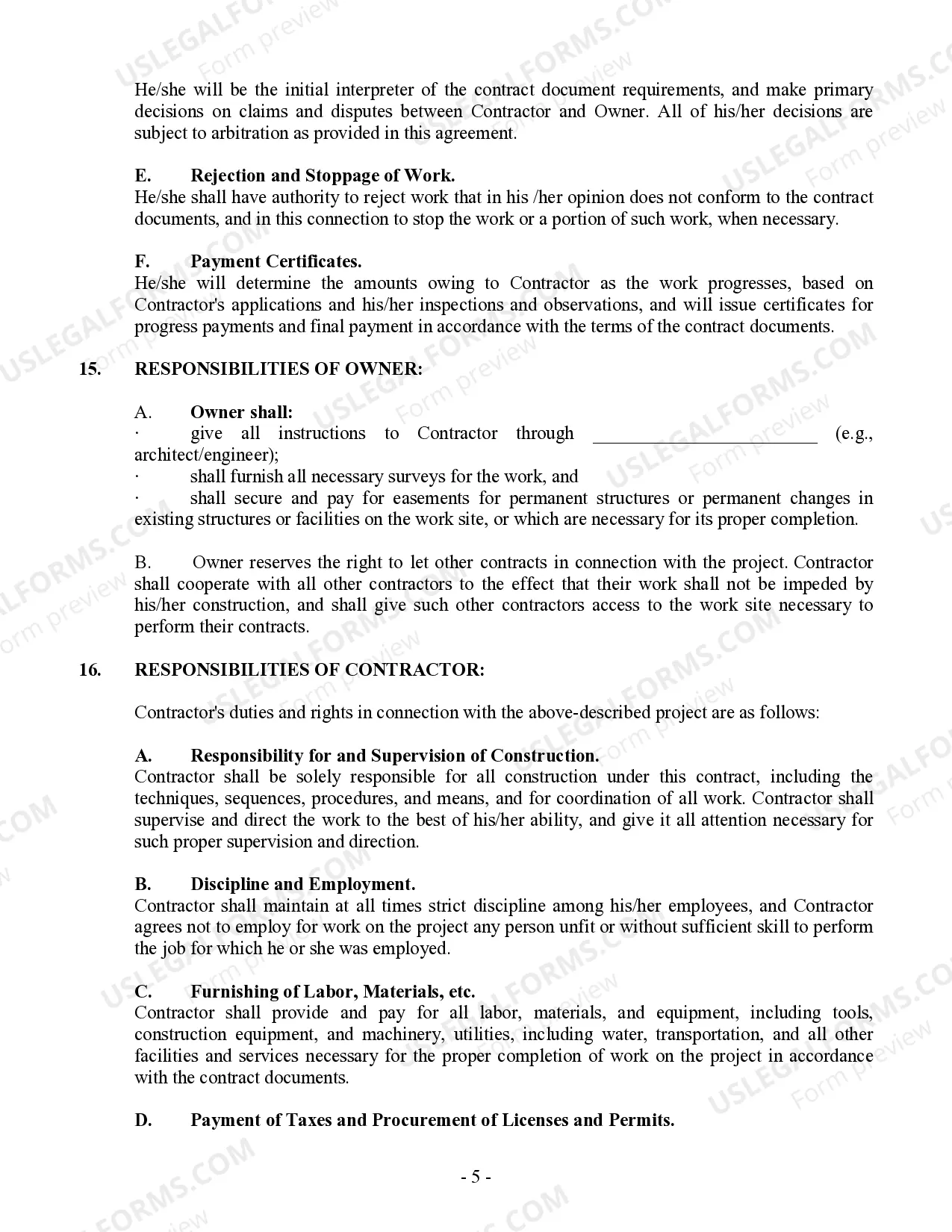
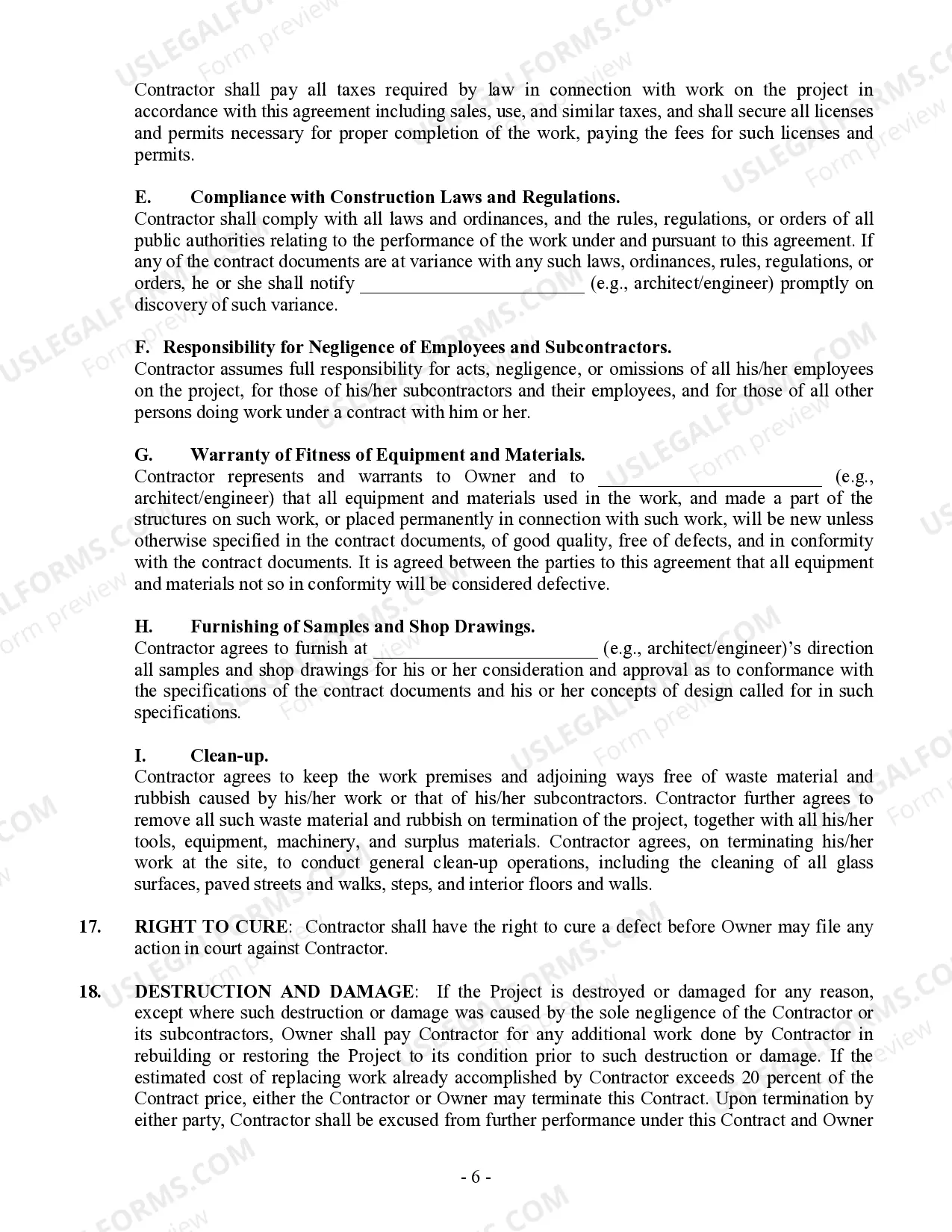
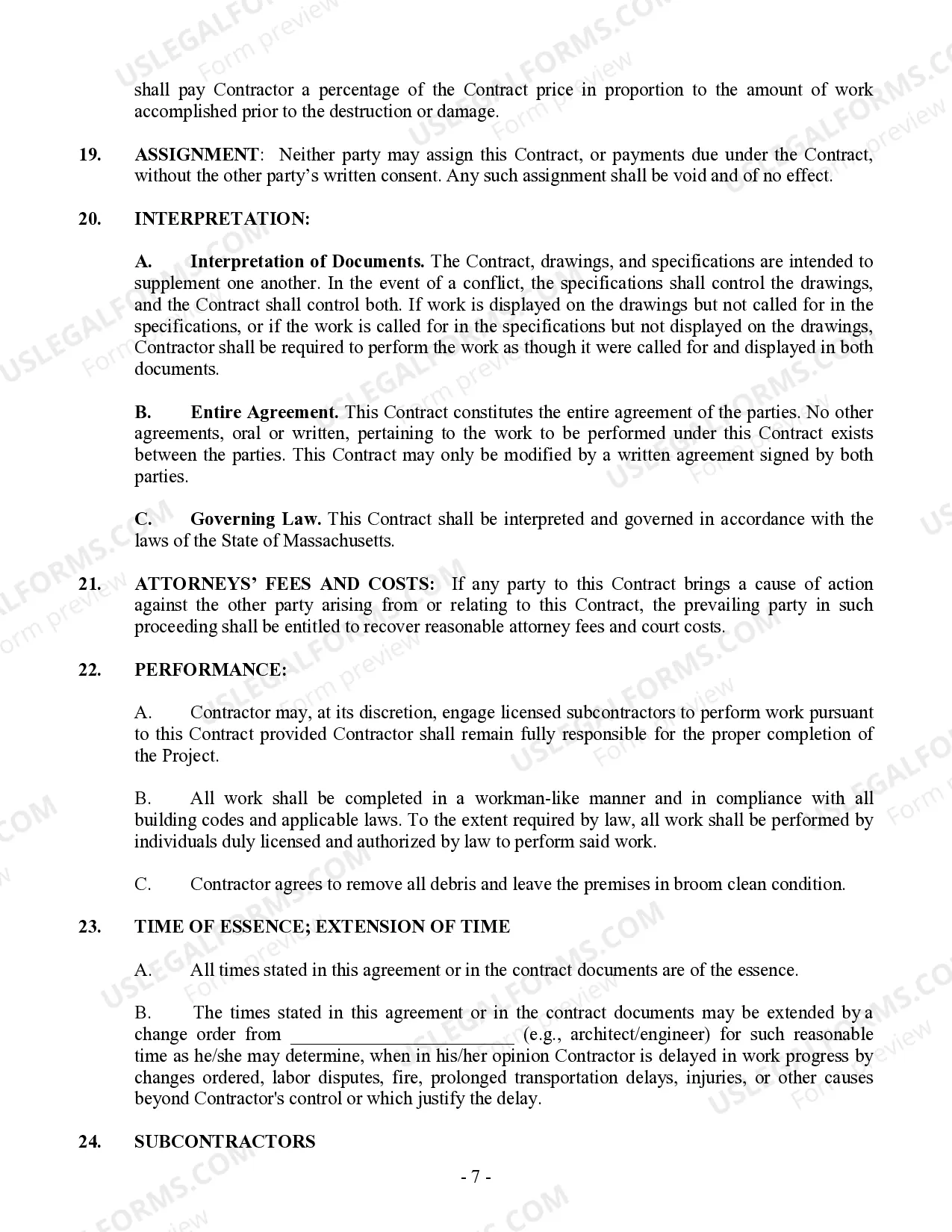
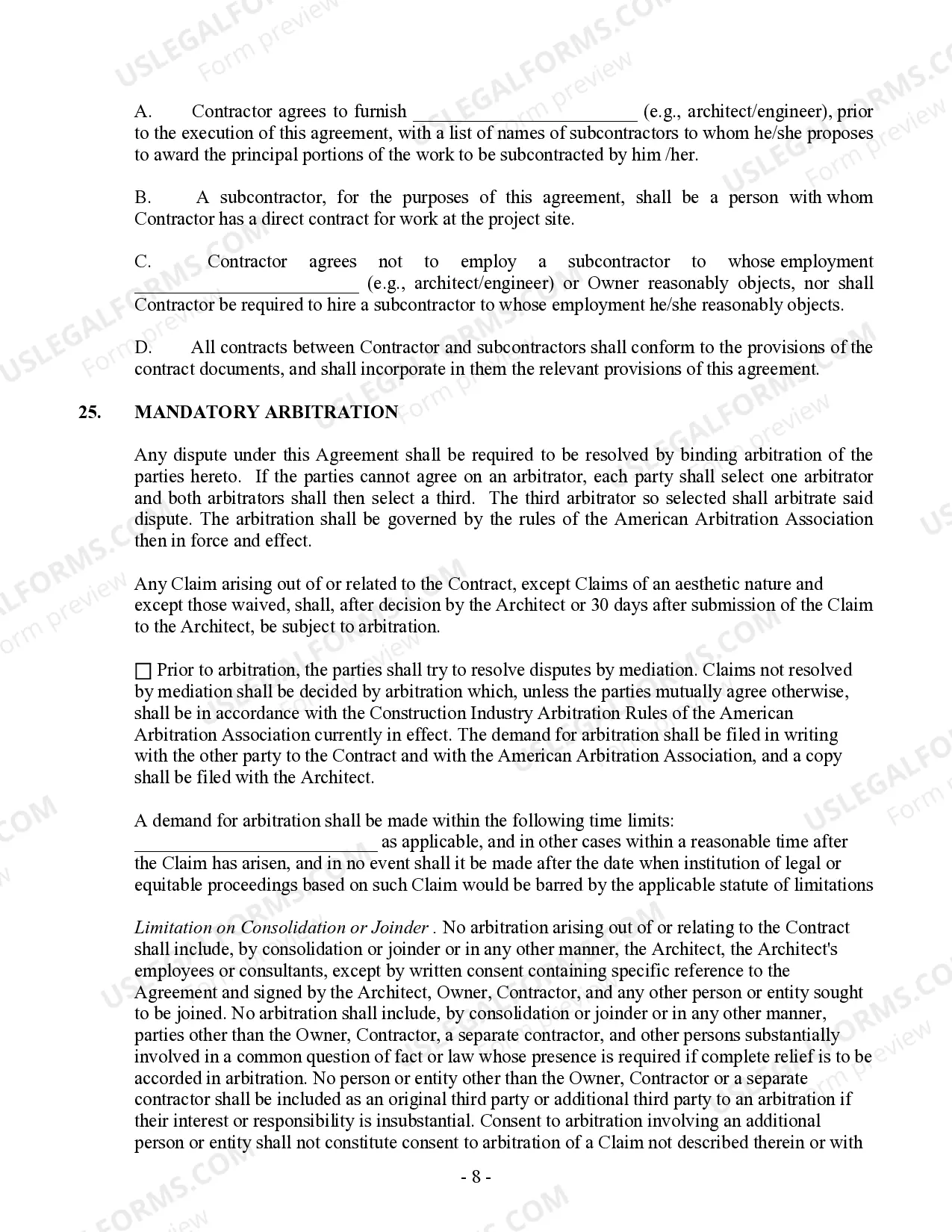
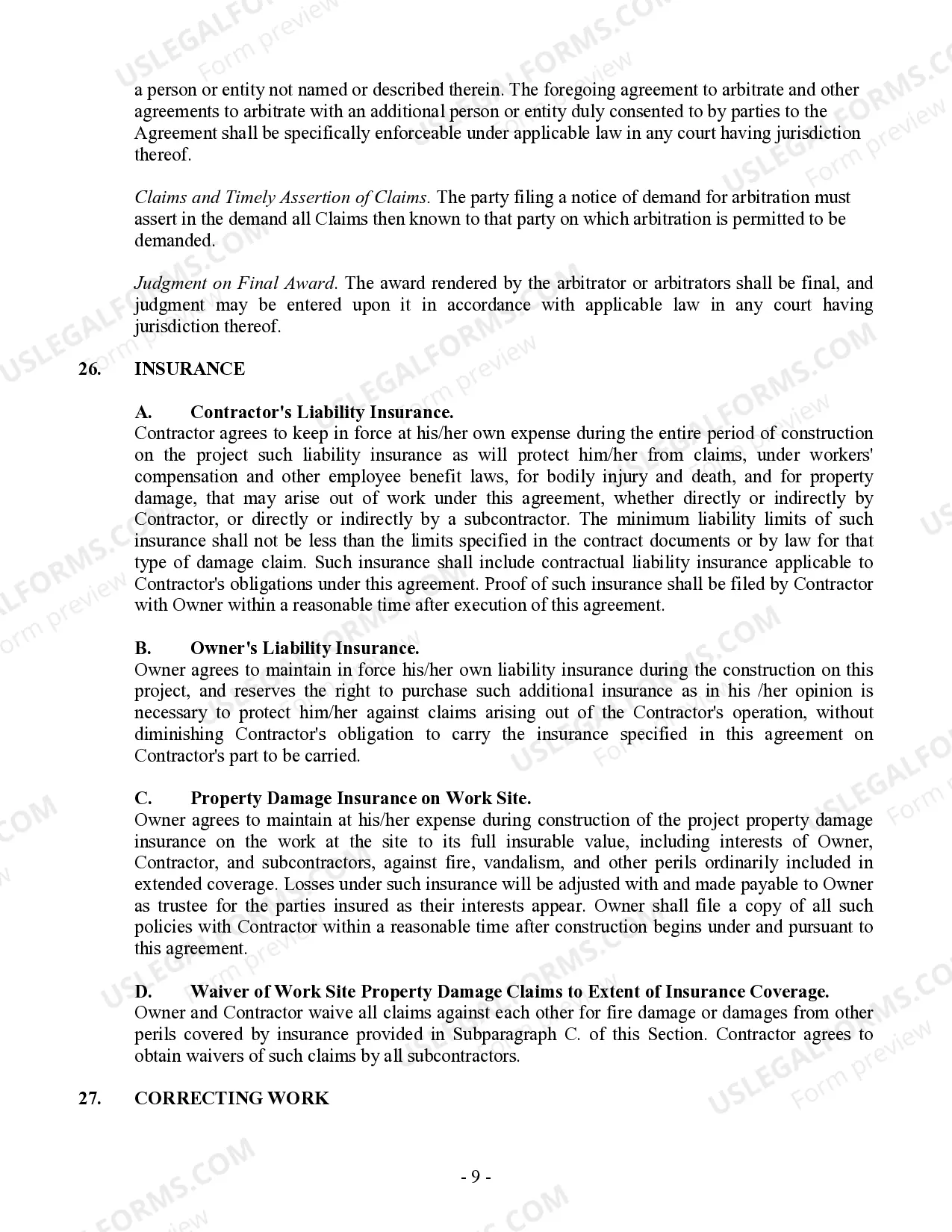
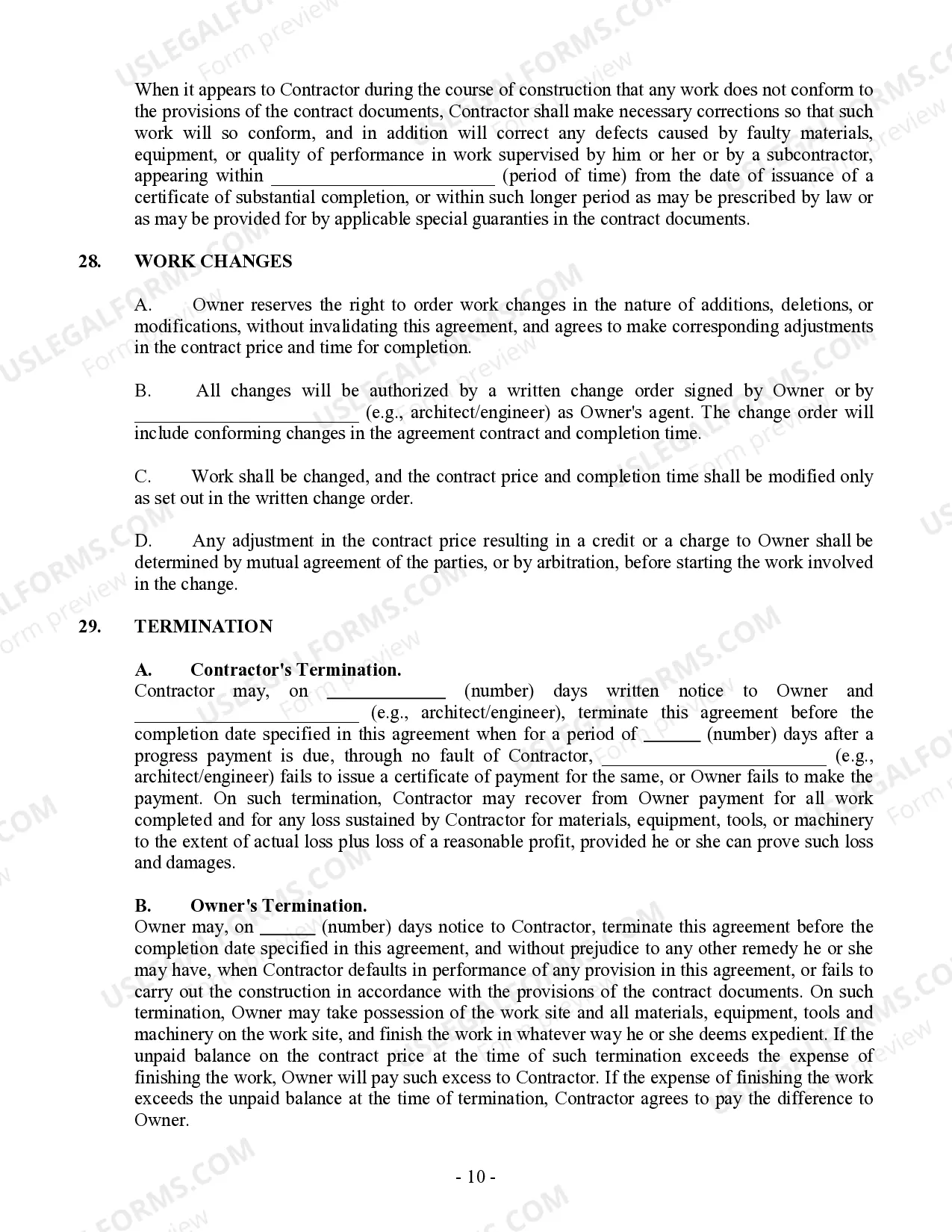
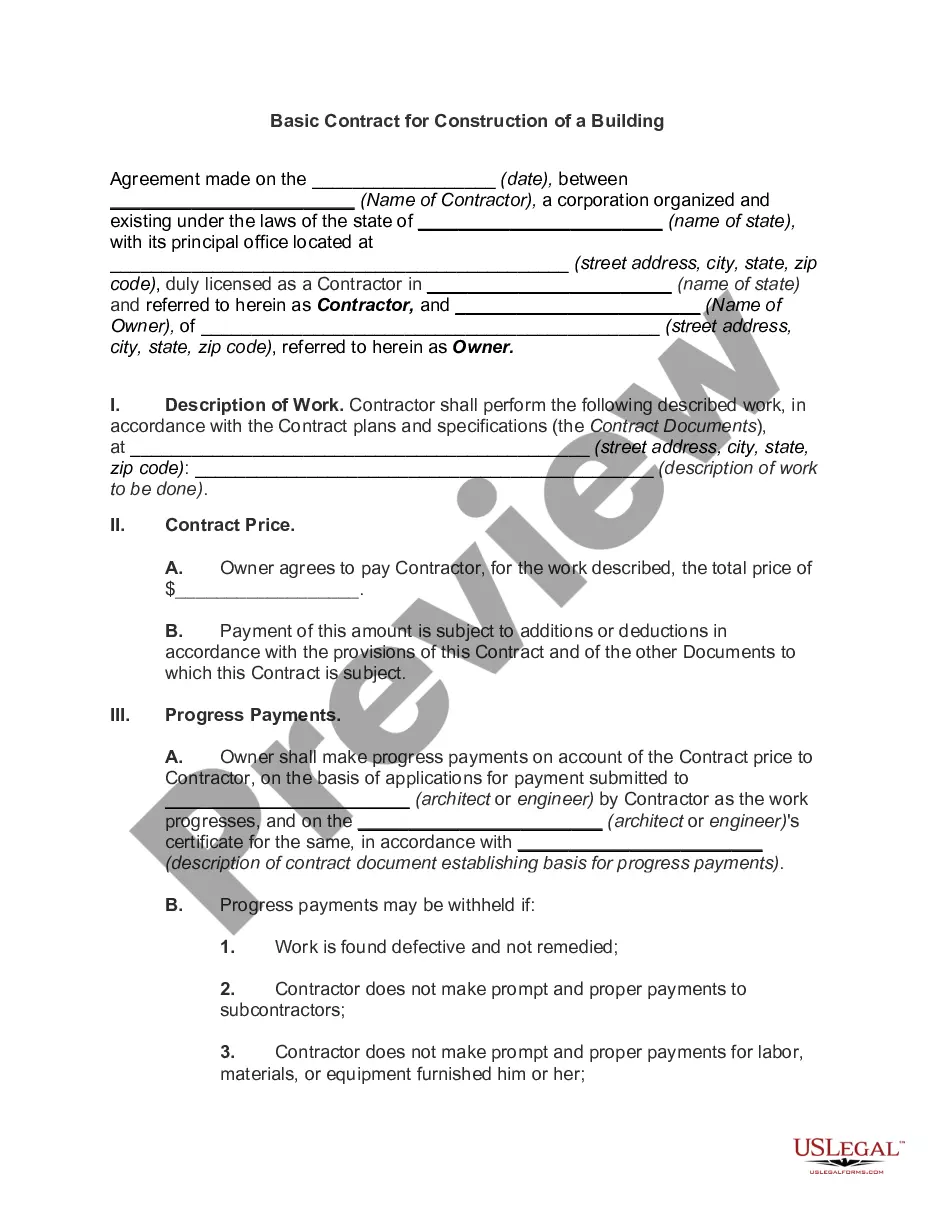
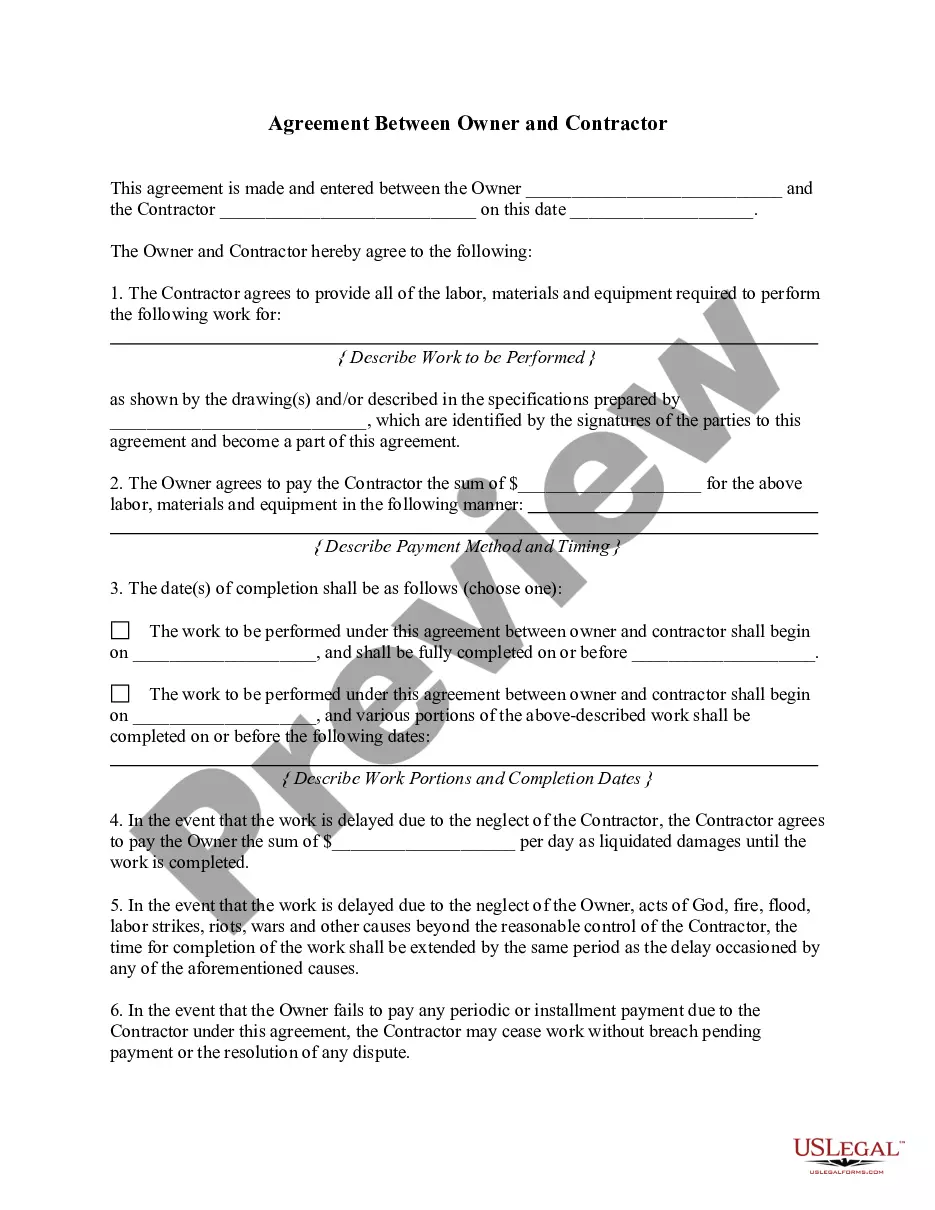
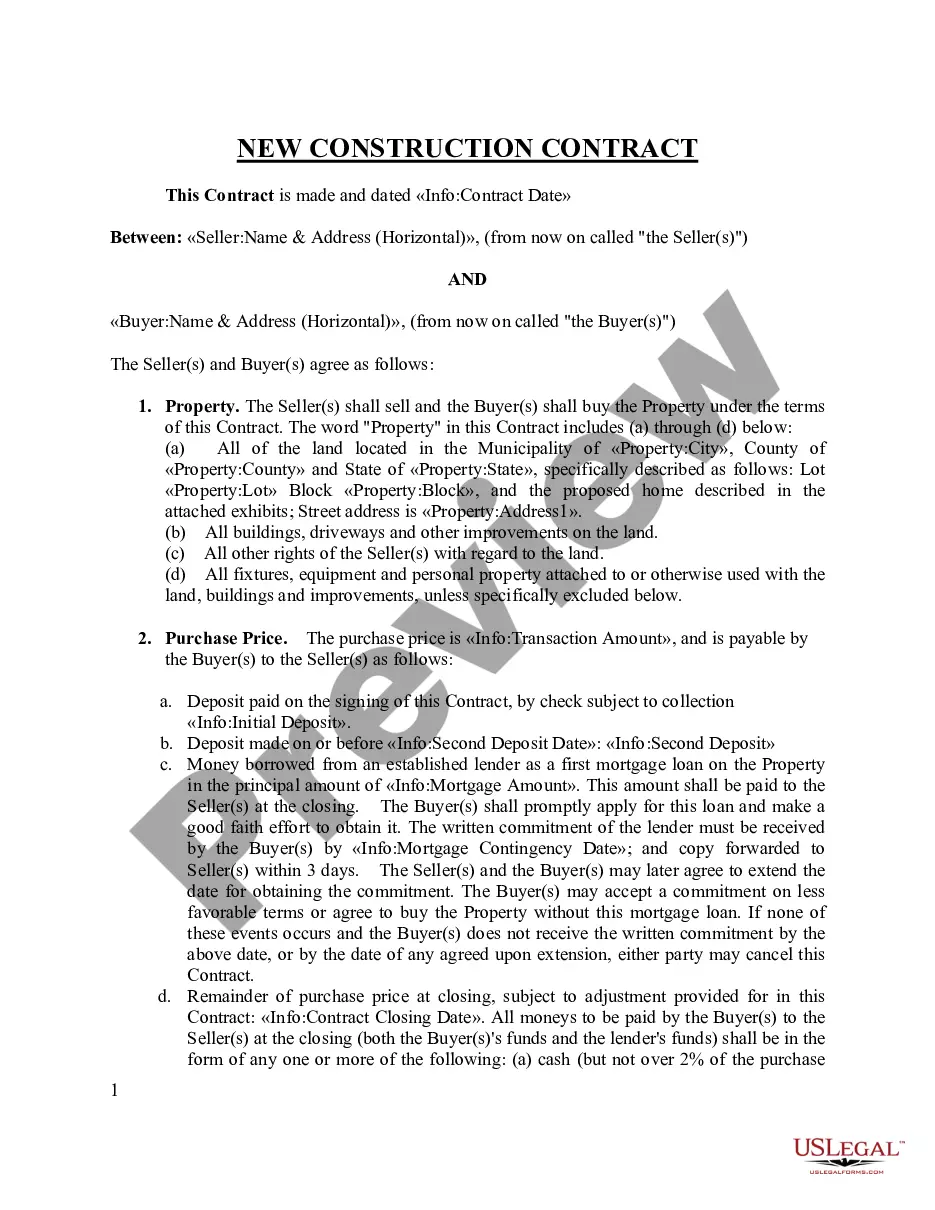
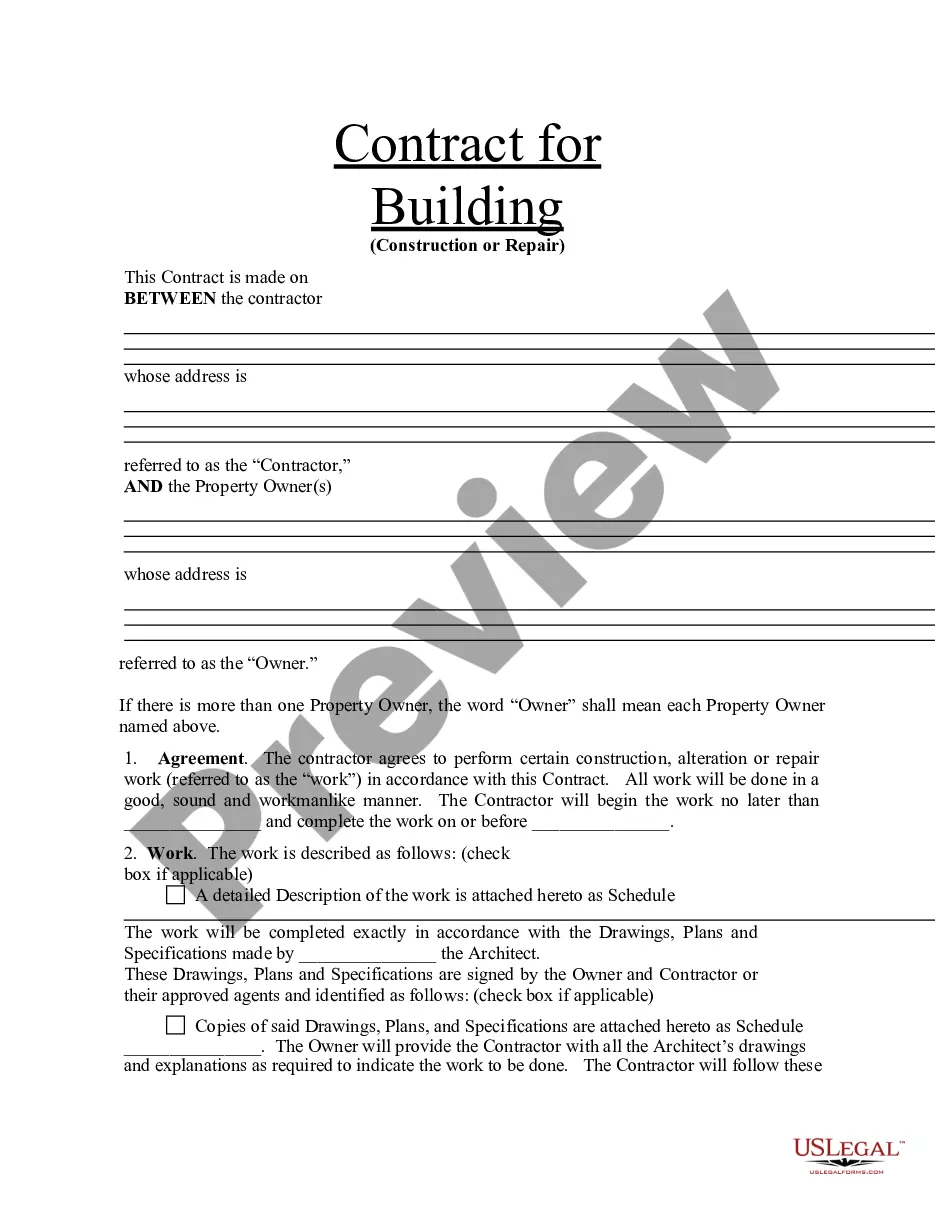
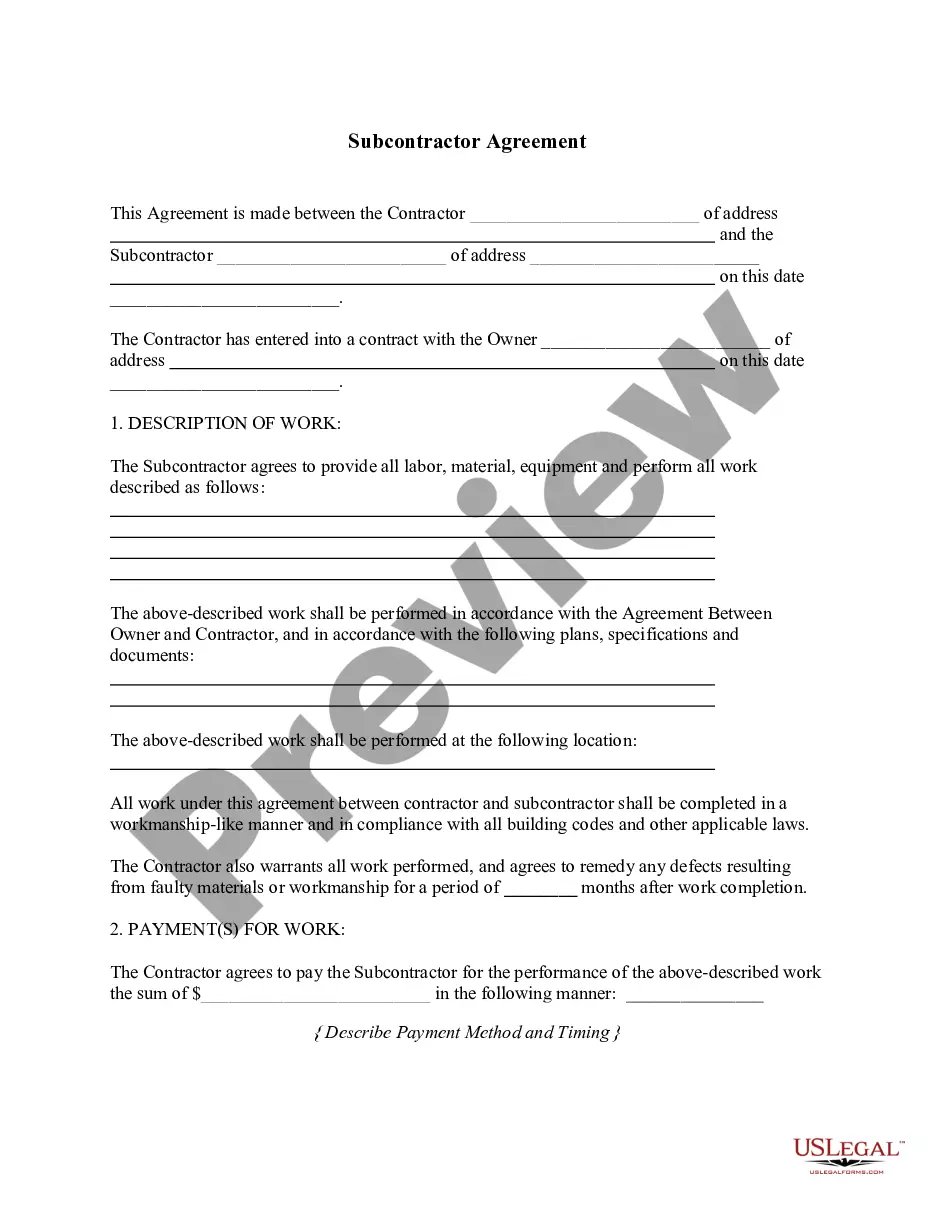
The Commercial Contract for Contractor is a legal document used between commercial contractors and property owners. This contract outlines the terms of the construction project, including payment arrangements, responsibilities of the parties involved, and important legal requirements. It is specifically drafted to comply with the laws of the State of Massachusetts, ensuring that both contractors and property owners adhere to state regulations and standards. This form stands out by addressing specific aspects such as change orders, warranties, and insurance, making it essential for clear project management.
Key parts of this document
- Work site details, including property location and responsibilities
- Permit requirements and who bears the cost
- Soil conditions and the contractor's liability limitations
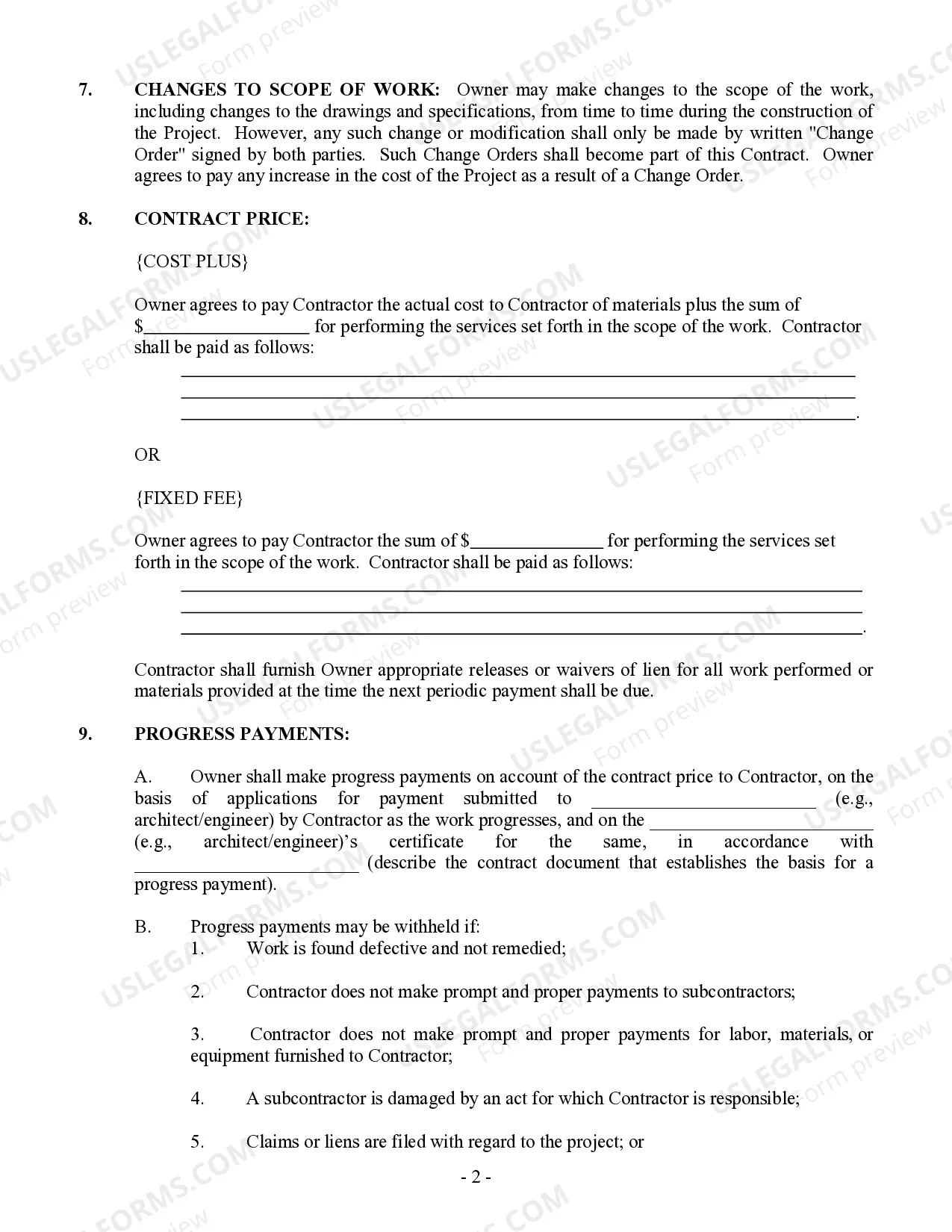
- Payment structures and options for progress payments
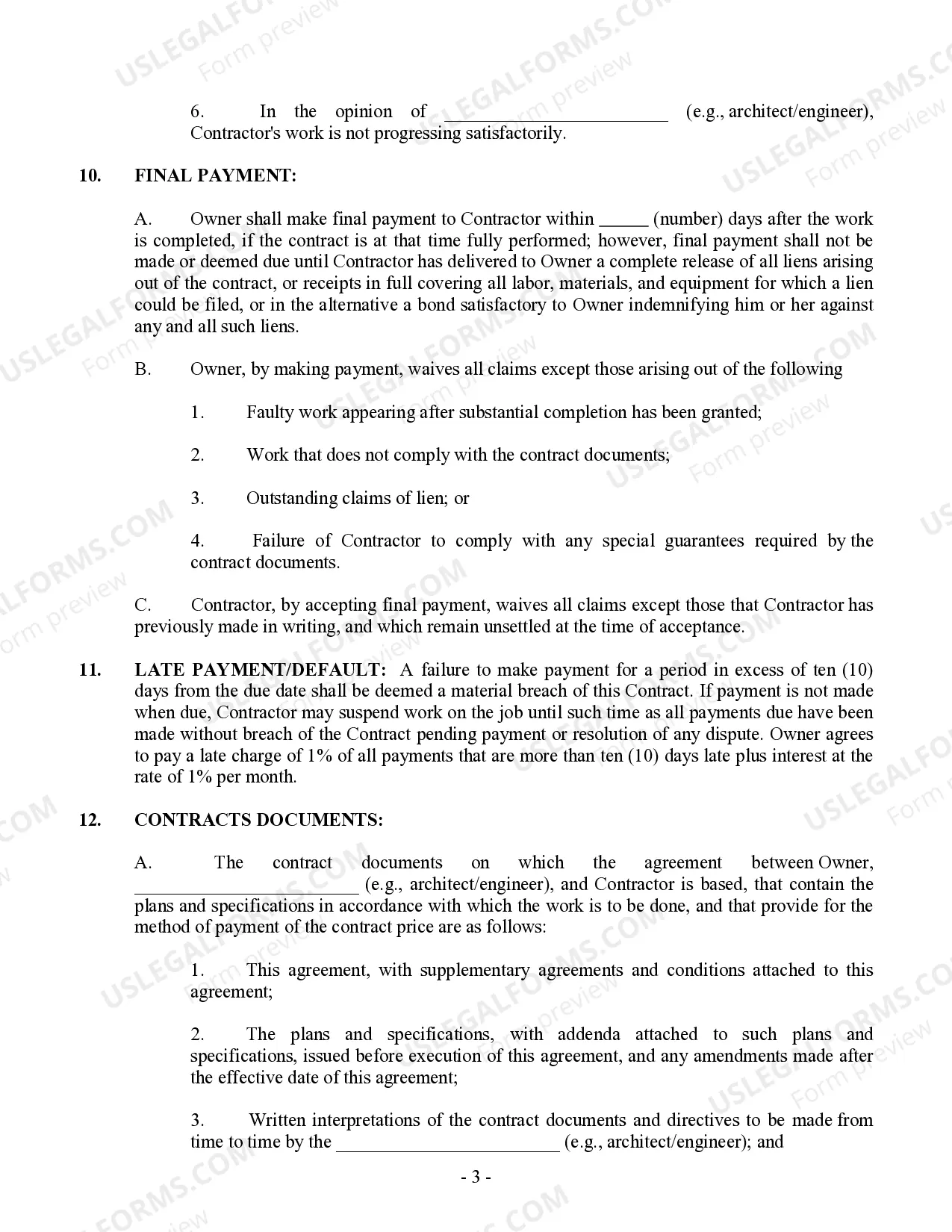
- Rights and duties of both the contractor and the owner
- Dispute resolution through arbitration and governing laws
- Insurance requirements for both the contractor and owner

Common use cases
This form should be used in commercial construction projects where a contractor is hired by a property owner. It is particularly beneficial in situations involving substantial renovations, new constructions, or projects requiring specific regulatory compliance. Utilizing this contract helps clarify the responsibilities, payment structures, and legal implications to prevent disputes during the project.
Who this form is for
- Commercial contractors seeking to formalize agreements with property owners
- Property owners hiring contractors for construction, renovation, or repair projects
- Project managers overseeing the construction process on behalf of property owners
- Legal professionals advising clients on construction contracts in Massachusetts
How to prepare this document
- Identify the parties: Enter the names and contact details of the contractor and property owner.
- Specify the work site: Provide the exact location of the project.
- Outline the payment terms: Select whether the payment will be a fixed fee or cost-plus arrangement.
- Detail project management roles: Assign responsibilities, including any designated architect or engineer.
- Include signatures: Ensure both parties sign the contract to make it legally binding.
Notarization requirements for this form
In most cases, this form does not require notarization. However, some jurisdictions or signing circumstances might. US Legal Forms offers online notarization powered by Notarize, accessible 24/7 for a quick, remote process.
Get your form ready online
Our built-in tools help you complete, sign, share, and store your documents in one place.
Make edits, fill in missing information, and update formatting in US Legal Forms—just like you would in MS Word.
Download a copy, print it, send it by email, or mail it via USPS—whatever works best for your next step.
Sign and collect signatures with our SignNow integration. Send to multiple recipients, set reminders, and more. Go Premium to unlock E-Sign.
If this form requires notarization, complete it online through a secure video call—no need to meet a notary in person or wait for an appointment.
We protect your documents and personal data by following strict security and privacy standards.

Make edits, fill in missing information, and update formatting in US Legal Forms—just like you would in MS Word.

Download a copy, print it, send it by email, or mail it via USPS—whatever works best for your next step.

Sign and collect signatures with our SignNow integration. Send to multiple recipients, set reminders, and more. Go Premium to unlock E-Sign.

If this form requires notarization, complete it online through a secure video call—no need to meet a notary in person or wait for an appointment.

We protect your documents and personal data by following strict security and privacy standards.
Typical mistakes to avoid
- Failing to specify the exact work site location.
- Not addressing payment schedules clearly, leading to disputes.
- Overlooking necessary permits that could delay the project.
- Neglecting to include change order procedures for scope modifications.
- Not having both parties sign the contract, which can invalidate it.
Advantages of online completion
- Convenience of downloading and completing the form at your own pace.
- Editable fields allow for customization to fit specific project needs.
- Access to attorney-drafted templates ensures legal validity and compliance.
- Immediate availability avoids delays typically associated with traditional legal drafting.
Legal use & context:
- The contract is a legally binding agreement that sets forth the expectations for both parties.
- It protects both contractors and property owners by clearly outlining responsibilities and requirements.
- Non-compliance with the contract terms can result in legal disputes that may need to be resolved in court or through arbitration.
Quick recap
- The Commercial Contract for Contractor establishes a formal agreement between contractors and property owners in Massachusetts.
- The document clarifies payment structures, responsibilities, and procedures for changes and disputes.
- Employing this form can help minimize misunderstandings and promote smoother project execution.
Looking for another form?



Form popularity
FAQ
You shouldn't pay more than 10 percent of the estimated contract price upfront, according to the Contractors State License Board.
Terms. This is the first section of any agreement or contract and states the names and locations of the parties involved. Responsibilities & Deliverables. Payment-Related Details. Confidentiality Clause. Contract Termination. Choice of Law.
Find out who can be classified as an independent contractor. In Massachusetts, most people who work or provide services are considered employees under the law.Employers who misclassify employees as independent contractors may face criminal enforcement or civil penalties.
If the contractor requests a large sum of money before work has begun, Mozen says you should ask specifically what types of work or materials those payments are covering.Contractors sometimes have other motives, other than purchasing materials, when they ask for large amounts of money in advance, Fowler says.
Payment Schedule In Your ContractBefore any work begins, a contractor will ask a homeowner to secure the job with a down payment. It shouldn't be more than 10-20 percent of the total cost of the job. Homeowners should never pay a contractor more than 10-20% before they've even stepped foot in their home.
For most types of projects you hire an independent contractor (IC) to do, the law does not require you to put anything in writing. You can meet with the IC, agree on the terms of your arrangement, and have an oral contract or agreement that is legally binding. Just because you can doesn't mean you should, however.
Massachusetts law prohibits a contractor requiring an initial deposit of over 33% of the total contract price unless special materials are ordered. Any contractor demanding over a 33% deposit should raise a huge red flag .
A: It's not uncommon for contractors to ask for a down payment up front to secure your spot on their schedule or purchase some of the job materials in advance. Asking for more than half of the project cost up front, though, is a big red flag.I recommend tying payments to progress made during the job.
For most types of projects you hire an independent contractor (IC) to do, the law does not require you to put anything in writing. You can meet with the IC, agree on the terms of your arrangement, and have an oral contract or agreement that is legally binding. Just because you can doesn't mean you should, however.