Utah Release of Mortgage - Individual
What is this form?
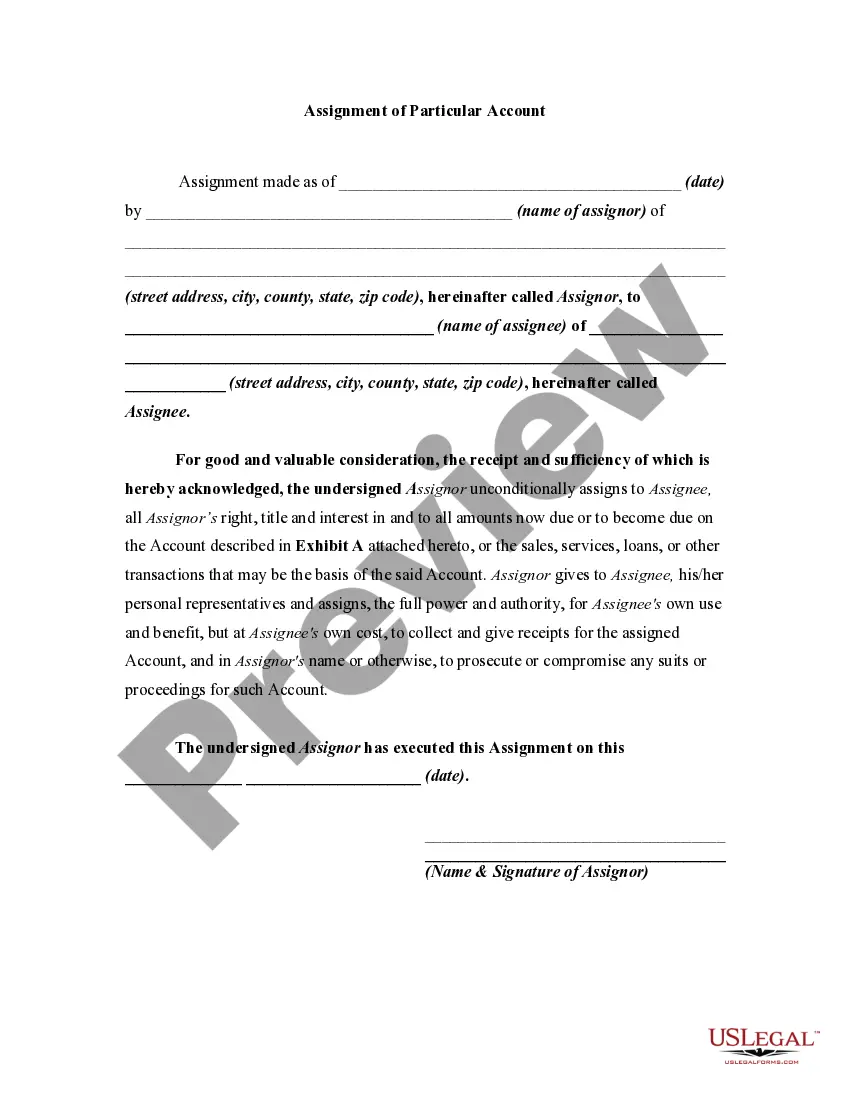
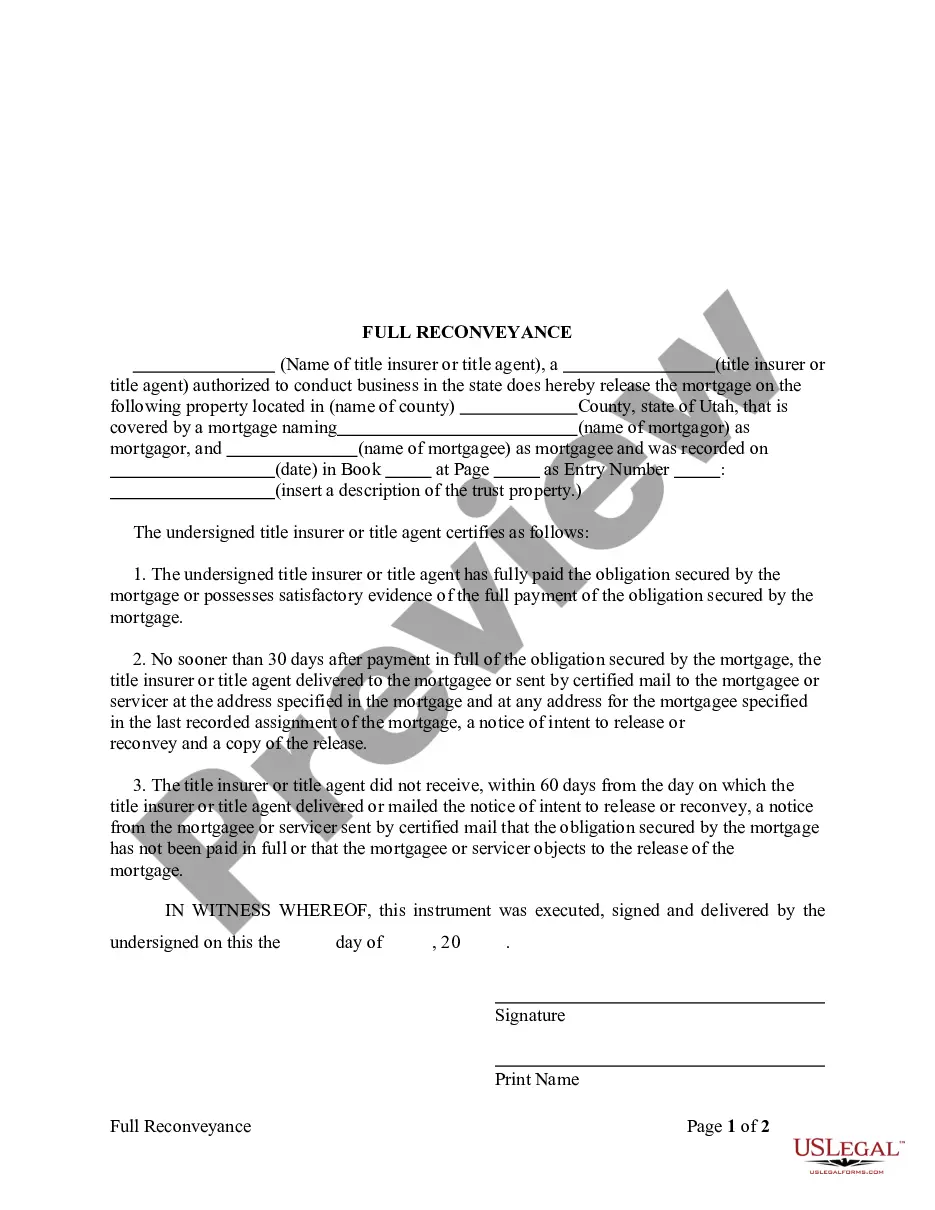
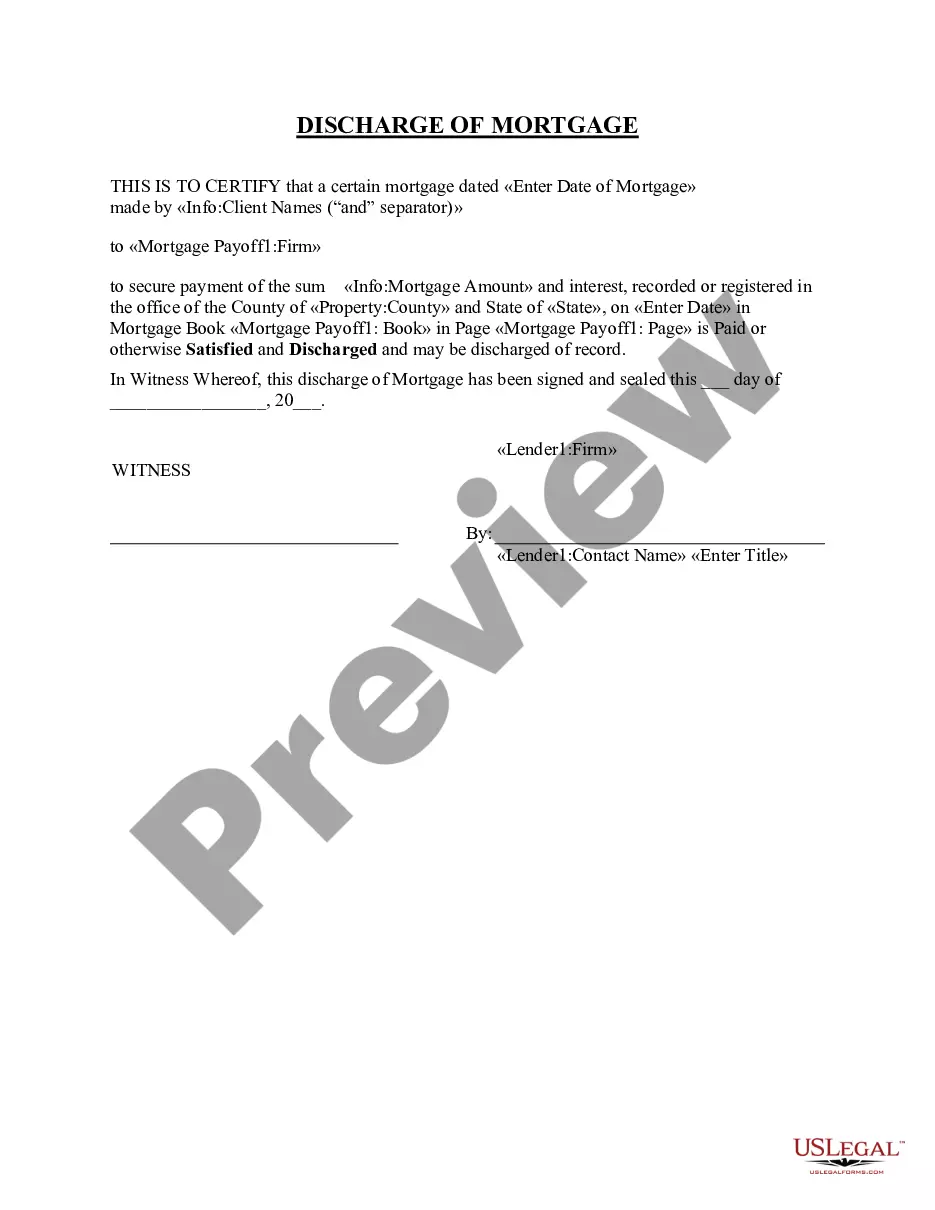
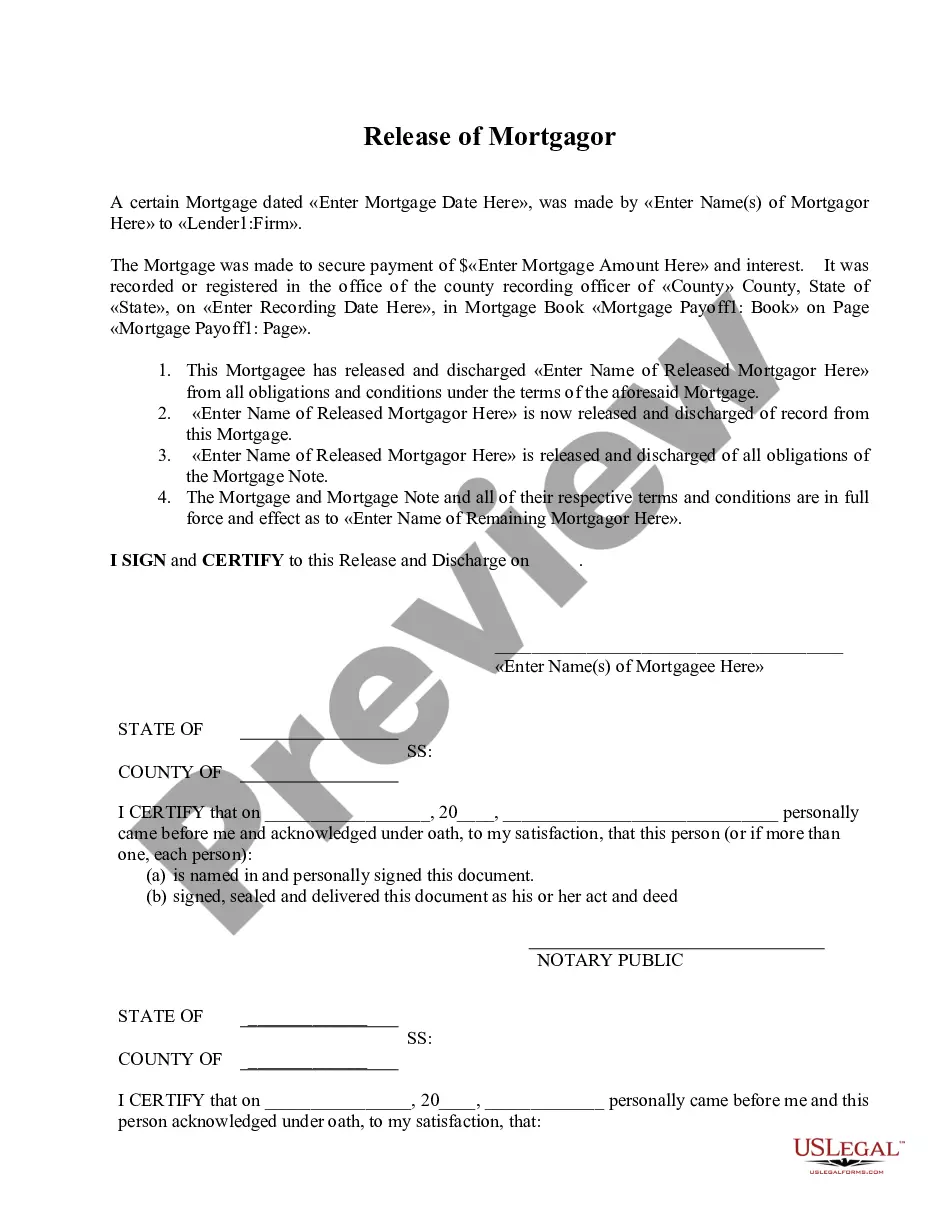
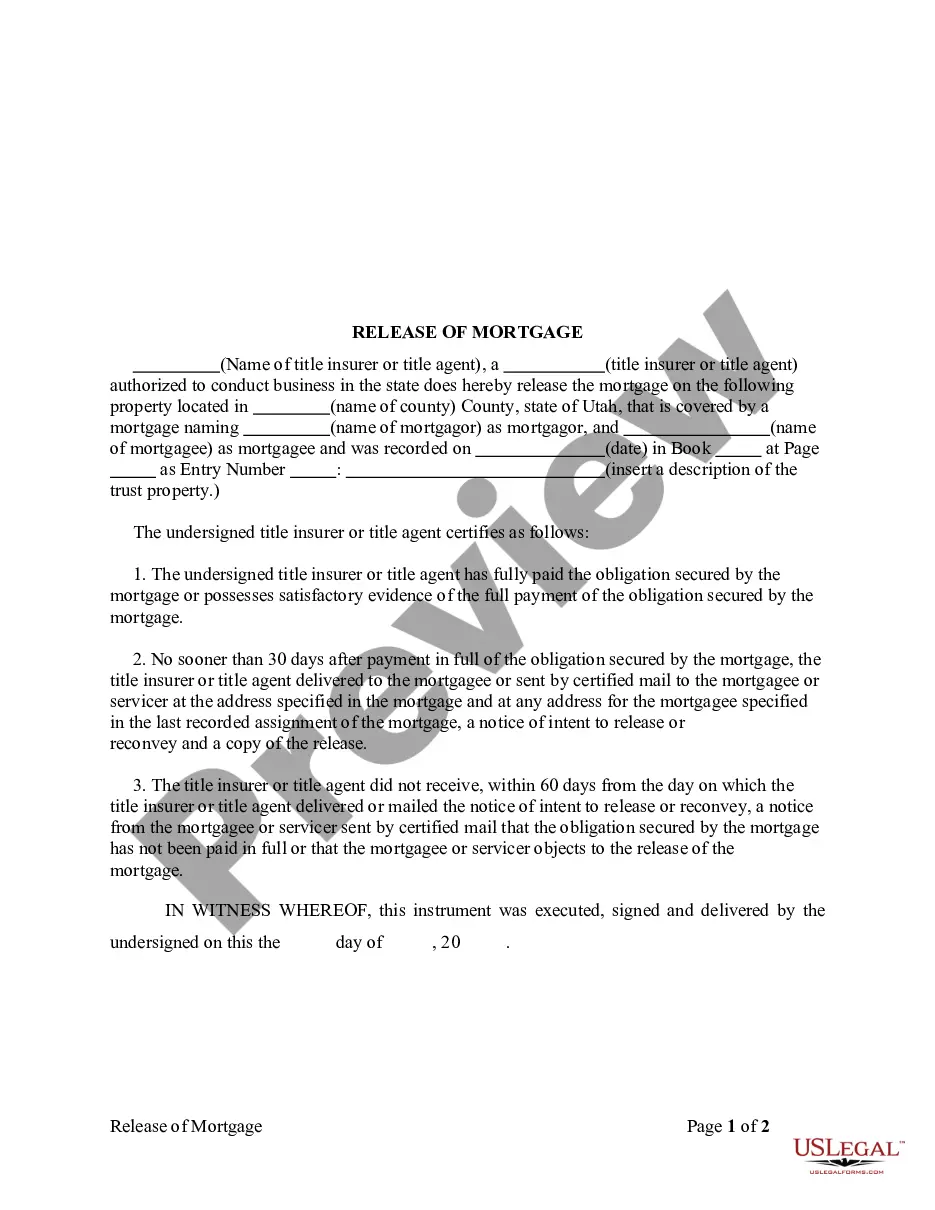
The Release of Mortgage - Individual form is a legal document used to officially release a mortgage once the underlying debt has been paid in full. This form is essential for individuals who have fulfilled their mortgage obligations and wish to clear the mortgage from the property title. It differs from similar documents, such as mortgage satisfaction forms, by specifically addressing individual borrowers rather than companies or corporations.
Key components of this form
- Identification of the mortgagee and mortgagor involved in the transaction.
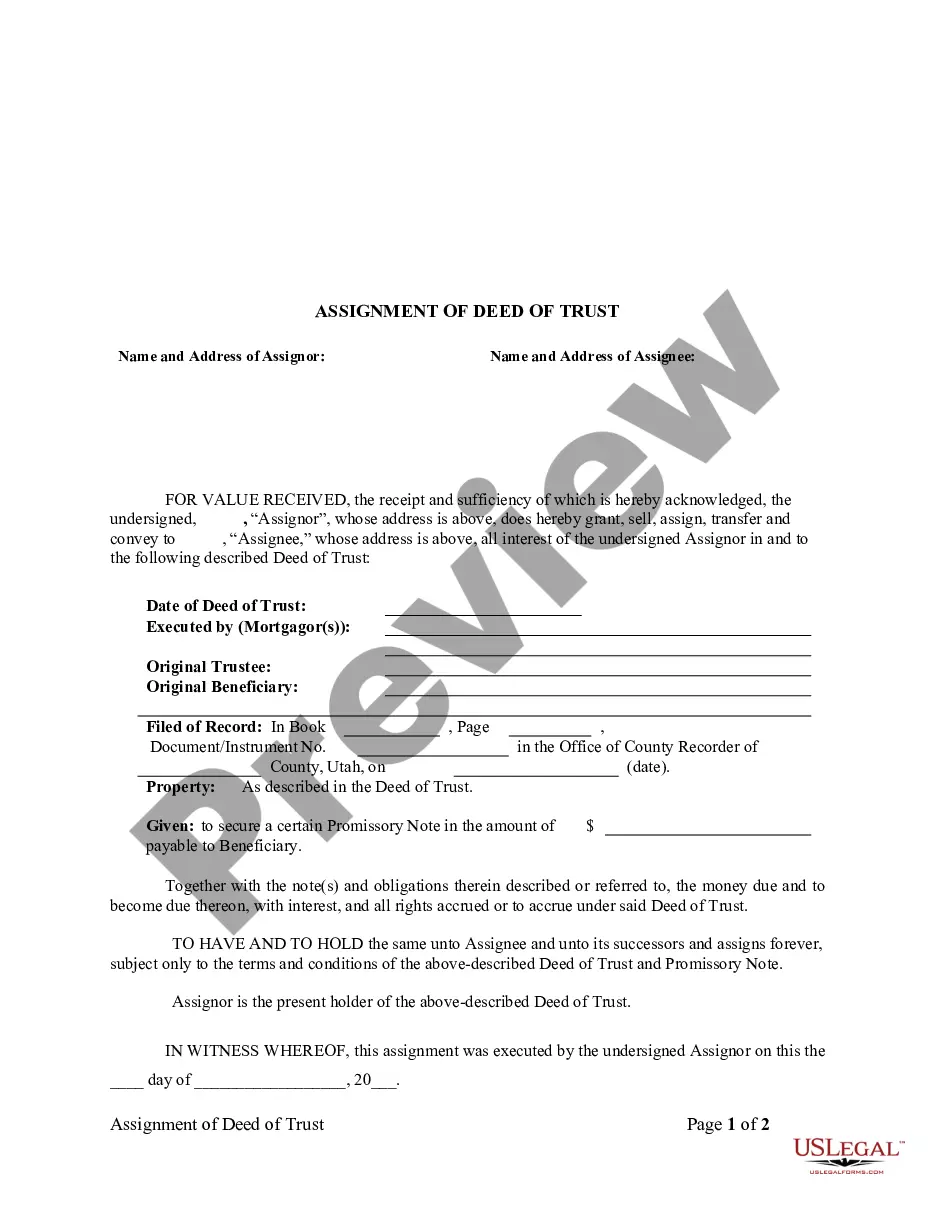
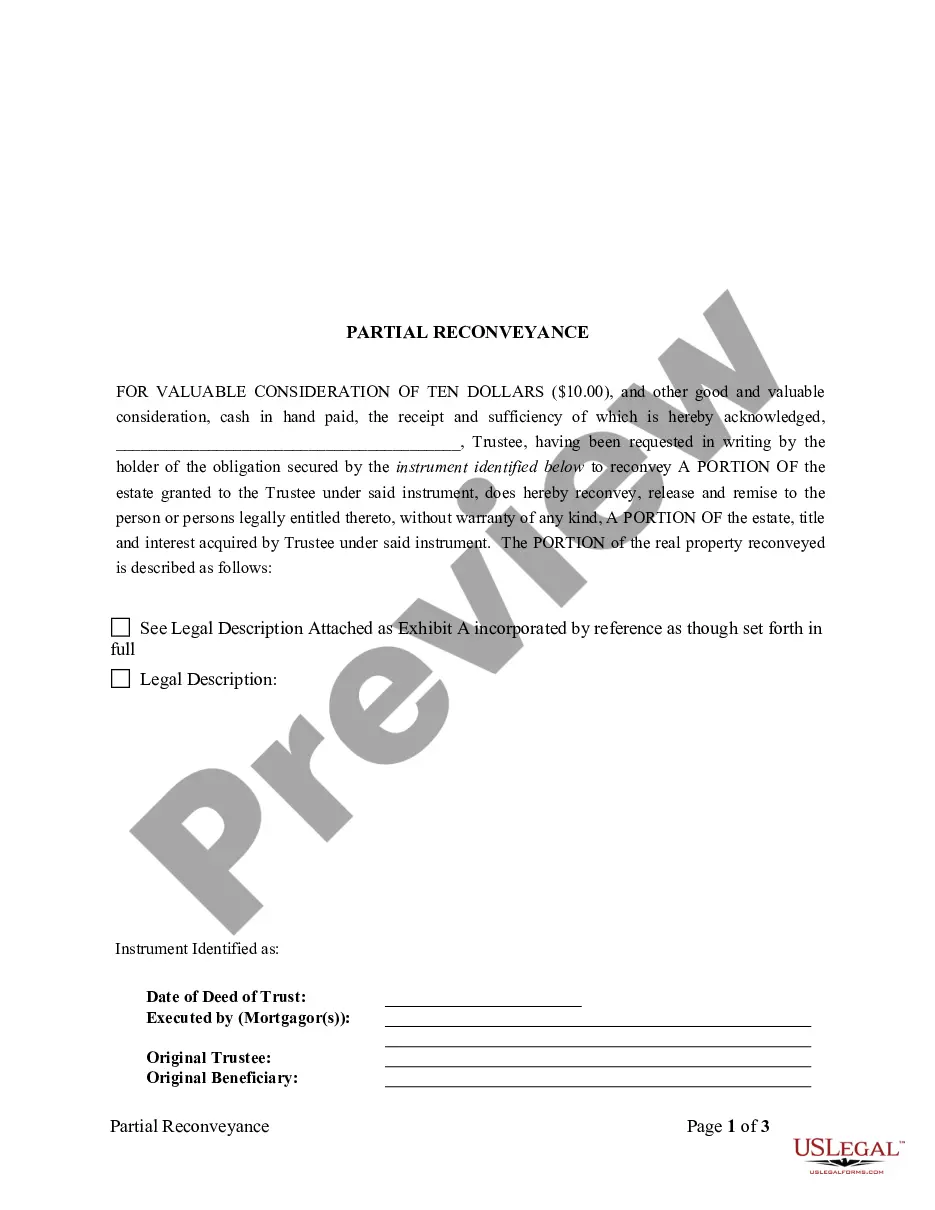
- Details about the property secured by the mortgage.
- A clause stating that the mortgage can be released after payment in full.
- Information regarding the delivery of the notice of intent to release the mortgage.
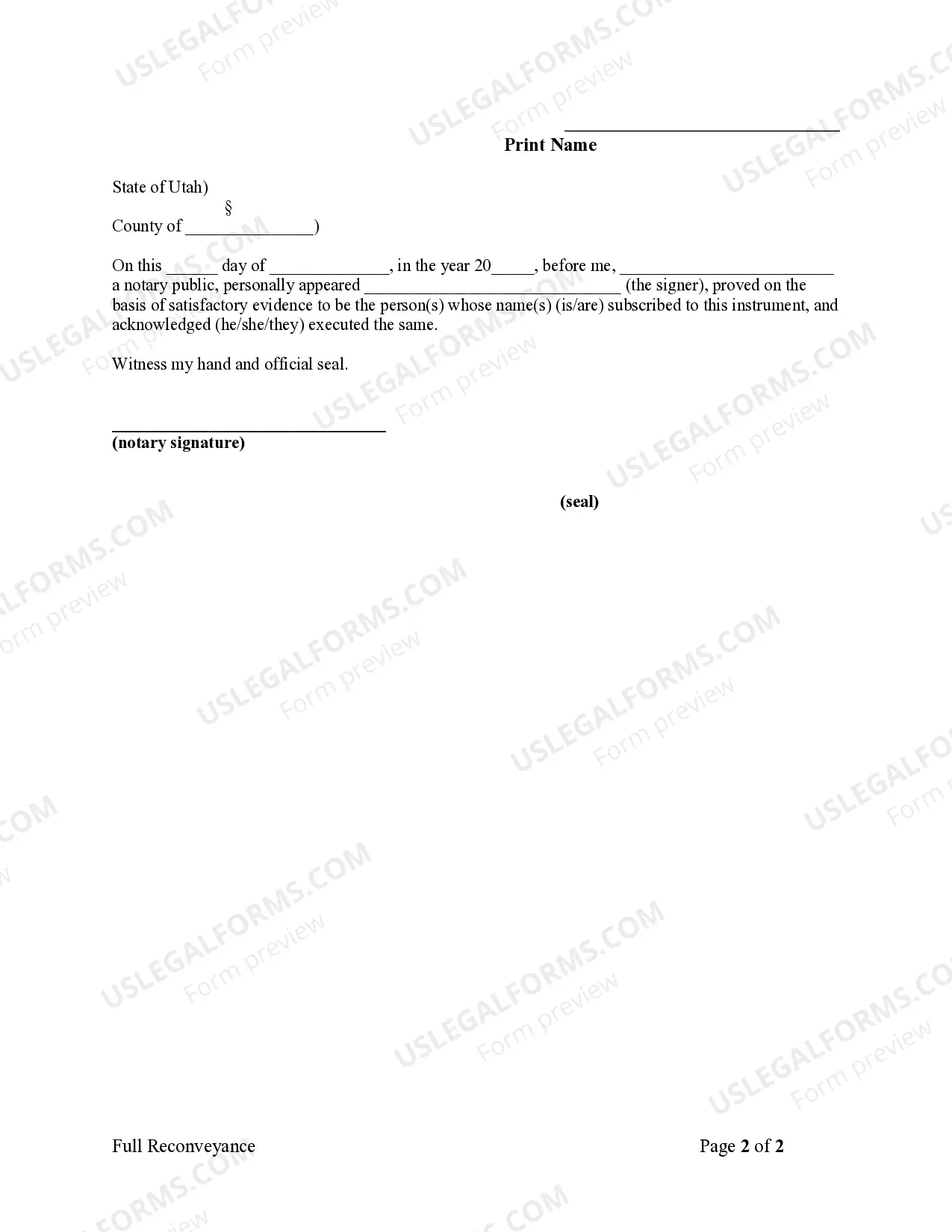
- Signatures and acknowledgment by a notary public, confirming the completion of the document.
When to use this form
This form should be used when an individual borrower has completely paid off their mortgage and needs to formally release the mortgage lien from the property title. It is typically used after the final payment has been made and is a critical step in ensuring that the borrower's property records accurately reflect their ownership status.
Who needs this form
- Individuals who have paid off their mortgage in full.
- Homeowners wishing to release a mortgage recorded against their property.
- Anyone involved in real estate transactions needing to clear mortgage liens.
Instructions for completing this form
- Identify the parties involved by entering the names of the mortgagor (borrower) and mortgagee (lender).
- Specify the property being released, including the address and legal description.
- Enter the date when the mortgage obligation was paid in full.
- Provide details as required, particularly the acknowledgment by a notary public.
- Sign the document to formalize the release and obtain proper notarization.
Does this document require notarization?
Yes, this form must be notarized to be legally valid. US Legal Forms offers integrated online notarization, allowing users to complete the process via secure video calls with licensed notaries. This service is available 24/7, providing convenience and accessibility without the need for travel.
Get your form ready online
Our built-in tools help you complete, sign, share, and store your documents in one place.
Make edits, fill in missing information, and update formatting in US Legal Forms—just like you would in MS Word.
Download a copy, print it, send it by email, or mail it via USPS—whatever works best for your next step.
Sign and collect signatures with our SignNow integration. Send to multiple recipients, set reminders, and more. Go Premium to unlock E-Sign.
If this form requires notarization, complete it online through a secure video call—no need to meet a notary in person or wait for an appointment.
We protect your documents and personal data by following strict security and privacy standards.

Make edits, fill in missing information, and update formatting in US Legal Forms—just like you would in MS Word.

Download a copy, print it, send it by email, or mail it via USPS—whatever works best for your next step.

Sign and collect signatures with our SignNow integration. Send to multiple recipients, set reminders, and more. Go Premium to unlock E-Sign.

If this form requires notarization, complete it online through a secure video call—no need to meet a notary in person or wait for an appointment.

We protect your documents and personal data by following strict security and privacy standards.
Common mistakes to avoid
- Failing to ensure the mortgage has been paid in full before signing the release.
- Not properly identifying the parties, leading to potential disputes.
- Omitting required signatures or notarizations, which can invalidate the document.
Benefits of using this form online
- Immediate access to a professionally drafted template ensures legal compliance.
- The online format allows for easy editing and customization according to specific needs.
- Reduces the need for in-person visits, saving time and effort.
Looking for another form?
Form popularity
FAQ
A Utah (UT) quitclaim deed is a legal document that allows a property owner to transfer real property to a buyer. It names the buyer and seller, the property, and any terms, interest, or conditions conveyed in the transfer of property.
A Mortgage Release is where you, the homeowner, voluntarily transfer the ownership of your property to the owner of your mortgage in exchange for a release from your mortgage loan and payments.Depending on your situation, you may be required to make a financial contribution to receive a mortgage release.
A Satisfaction of Mortgage, sometimes called a release of mortgage, is a document that acknowledges that the terms of a Mortgage Agreement have been satisfied, meaning that a borrower has repaid their mortgage loan to the lender.
More than likely, your lender holds the original mortgage. The deed would be recorded with the county recorder of deeds. Most other closing documents, including copies of the aforementioned, would or should be in your...
A Mortgage Release is where you, the homeowner, voluntarily transfer the ownership of your property to the owner of your mortgage in exchange for a release from your mortgage loan and payments.Depending on your situation, you may be required to make a financial contribution to receive a mortgage release.
A Satisfaction of Mortgage, also known as a Mortgage Lien Release, is a legal document provided by the mortgagee (financial institution) advising that the mortgage has been paid in full, all terms of the loan have been satisfied and there will no longer be a lien on the property.
When you pay off your loan and you have a mortgage, the lender will send you or the local recorder of deeds or office that handles the filing of real estate documents a release of mortgage.On the other hand, when you have a trust deed or deed of trust, the lender files a release deed.
People can just let the home go to foreclosure, and this will affect their scores for seven years. Or they can do a deed in lieu of foreclosure. With a deed in lieu, you voluntarily give your home to the lender in exchange for the cancellation of your loan. This, too, can create a negative mark on your credit history.